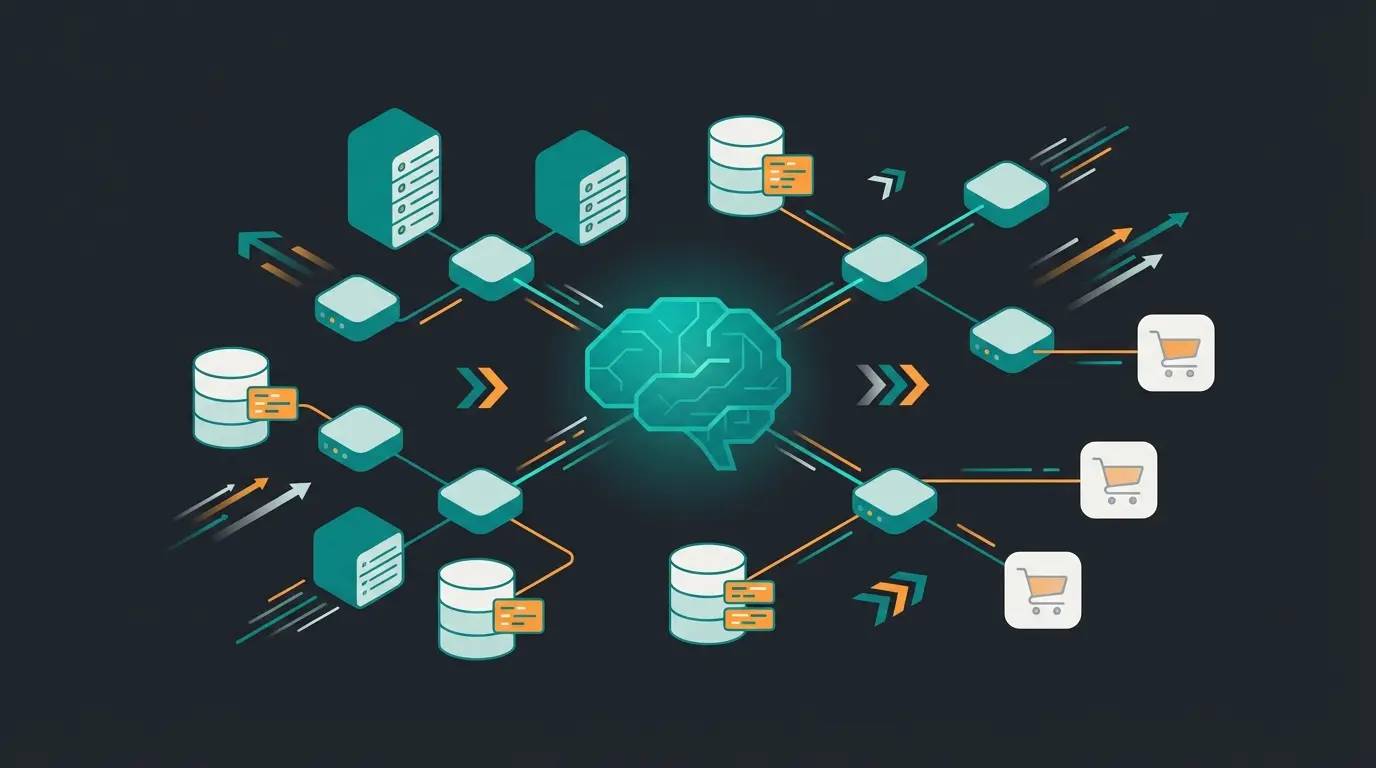
Introduction: The End of the Speed-Only Era
When you search for "Shopware hosting" today, you'll be flooded with promises: "Ultra-fast loading times," "NVMe SSDs," "99.9% uptime," and "Varnish caching." These are valid arguments—for the e-commerce landscape of 2020. For more details, see our Cloud vs Self-Hosted comparison.
But we're now in 2025. In an era where Shopware 6 has evolved into the central platform for Agentic Commerce, pure server speed has become a commodity—an interchangeable product. According to Maxcluster, every serious hosting provider now offers fast NGINX servers and SSDs. When everyone is fast, nobody stands out for being fast anymore.
The true competitive advantage today no longer lies in how quickly your shop can deliver a static product page, but in how intelligently it can advise your customers. The market is shifting radically from transactional shops (customer searches → customer buys) to consultative platforms (customer has a problem → AI advises → customer buys). This evolution aligns perfectly with Shopware AI features that are transforming how online stores interact with customers.
This article is aimed at e-commerce managers and technical decision-makers who have recognized that their hosting partner must be more than just an infrastructure administrator. We'll show you why your Shopware hosting is the foundation for your AI strategy and why standard solutions slow down your intelligent sales assistants. Understanding the importance of Shopware page speed optimization is just the beginning—the future demands much more.
The 3 Pillars of Modern Shopware Hosting
To understand why an upgrade in thinking is necessary, we need to examine the foundation. A future-proof hosting solution for Shopware 6 today rests on three pillars. Most providers only cover the first two, leaving a critical gap that affects your ability to implement AI-powered product consultation effectively.
Pillar 1: Performance (The Basics)
This is the classic "bread and butter" business of hosting providers. It's about running the Shopware PHP application as quickly as possible.
- Technology: Using NGINX instead of Apache for better parallel processing, as documented in Shopware's official requirements
- Caching: Varnish for HTTP caching and Redis for sessions and model caching are standard here
- Hardware: NVMe storage and current CPU generations (e.g., AMD EPYC) are mandatory to handle the I/O load from database queries, according to Hetzner's infrastructure specifications
Pillar 2: Security & GDPR (The German Standard)
For the German market, this is non-negotiable. Data protection requirements are particularly strict when implementing AI Customer Service solutions that handle customer interactions.
- Location: Data centers in Germany (Frankfurt, Nuremberg) guarantee legal security
- Certification: ISO 27001 certifications for the data centers, as highlighted by Brandcrock's hosting standards
- Backups: Automated, geo-redundant backups are essential
Pillar 3: Intelligence (Your Competitive Advantage)
This is where the wheat is separated from the chaff. An "AI-Ready" hosting environment understands that a shop doesn't just deliver HTML—it processes data in real-time. This capability is essential for implementing AI product consultants that can respond instantly to customer queries.
- Vector Search: Support for vector databases (e.g., Redis Stack or Qdrant) to enable semantic product searches, as explained by Qdrant's technical documentation
- Inference Latency: Minimizing "Time to First Token" (TTFT) when communicating with AI models, a critical metric according to Weka.io's research
- Sidecar Services: The ability to run Python or Node.js services (for AI agents) performantly alongside PHP without compromising shop performance, following best practices from iCore's technical guides

Why Consultation-First Commerce Needs Special Hosting
Why isn't hosting from large providers like Hetzner or Ionos often sufficient for AI-driven Shopware shops? The problem lies in the architecture of the workload.
Static Delivery vs. Dynamic Consultation
Classic Shopware hosting is optimized to cache static content. When a customer visits a category page, Varnish delivers a ready-made HTML page from memory. The server's CPU is barely utilized.
With AI-powered product consultation (e.g., via a chat agent or dynamic search function), the opposite happens. This is where solutions like AI-powered product consultation require specialized infrastructure:
- The customer asks a complex question ("Which bicycle suits me if I have back problems?")
- The system must vectorize this query (convert it into numbers)
- It must perform a vector search (Similarity Search) in the database, as described by Redis's vector search documentation
- A Large Language Model (LLM) must generate the response
This process is computationally intensive and cannot be cached like a static page. Standard hosting packages often limit CPU time per process (PHP `max_execution_time`) or memory for such operations, as noted in Shopware's system requirements. The result: the AI advisor "thinks" for too long. Studies from WebcluesInfotech show that latency times in AI responses can massively reduce conversion rates.
The Infrastructure's Conversion Gap
Most hosting providers sell you "fast servers" but not "better sales." If your infrastructure slows down AI requests (e.g., through slow database connections or missing vector support), your expensively developed AI tool becomes useless. The customer abandons the process because the "advisor" responds too slowly. This is why AI consultants boost conversion rates only when properly supported by the right infrastructure.
Customers leave when AI responses take longer than 3 seconds
Target latency for AI consultation to feel natural and conversational
Customers interact 3x more frequently when AI responds instantly
Average basket size improvement with fast AI product consultation
Evolution of E-Commerce Hosting: From Speed to Intelligence
To understand where we're heading, it helps to look at how hosting requirements have evolved. The e-commerce industry has gone through distinct phases, and we're now entering a new era that demands fundamentally different capabilities. This evolution directly impacts how businesses can leverage AI product consultation effectively.
Slow and cheap, multiple websites sharing resources. Acceptable for basic catalogs, but performance was unpredictable.
Fast and scalable with dedicated resources. Current competitors focus here—Varnish, Redis, NVMe SSDs. This is now the baseline.
Fast PLUS AI capabilities. Vector databases, inference optimization, sidecar services for AI agents. This is where leaders differentiate.
Most hosting providers are still selling solutions designed for Stage 2, while the market has already moved to Stage 3. When evaluating your hosting partner, consider whether they understand the requirements of intelligent commerce or are simply offering faster versions of yesterday's infrastructure.
Top Criteria for Choosing a German Shopware Host
When evaluating a hosting provider in 2025, use this checklist. It goes beyond standard specifications and tests for "AI-Readiness"—essential for businesses considering AI-powered customer service implementations.
A. Hardware & Basic Performance
- NVMe SSDs: Ensure that the database also runs on NVMe, not just the web files
- CPU Cores: Dedicated cores are better than vCores to avoid "noisy neighbor" effects during AI load spikes
- RAM: Shopware 6 is memory-hungry. Plan for at least 8 GB RAM for smaller shops, significantly more for AI integrations, as recommended by Shopware's official documentation
B. Software Stack (Shopware 6.6+ Ready)
Shopware evolves quickly. Your hosting provider must keep pace. According to Apmac's technical requirements guide, staying current with versions is essential:
- PHP Version: Support for PHP 8.2 and 8.3 (mandatory for Shopware 6.6)
- Database: MySQL 8.0+ or MariaDB 10.11+. Outdated versions (e.g., MySQL 5.7) are no longer supported
- Node.js: For administration and storefront builds, Node.js version 20 is required. Many shared hosting providers offer outdated versions here
C. The AI Check (The New Criteria)
These new requirements separate forward-thinking hosting from commodity infrastructure. They're particularly important when comparing Shopware vs WooCommerce for AI-ready e-commerce:
- Redis Stack / Vector Support: Does the provider offer Redis modules like RediSearch or RedisJSON? Standard Redis is often insufficient for vector search, as explained by AWS's documentation on Redis capabilities
- Python/Node.js Support: Can you run your own services (e.g., a Python-based RAG service) on the server? Many managed hosting providers prohibit this
- API Rate Limits: Are there hard limits on internal API calls? AI agents often fire hundreds of requests per minute at the Shopware API
- Elasticsearch/OpenSearch: Is a dedicated cluster available? From Shopware 6.6, OpenSearch is virtually mandatory for large catalogs according to Shopware's official recommendations
D. Support Quality
- Application Knowledge: Does support understand what a "Message Queue Consumer" is, or do they only check whether the server is "on"?
- Response Time: With AI problems, every minute counts as they often directly affect the checkout process
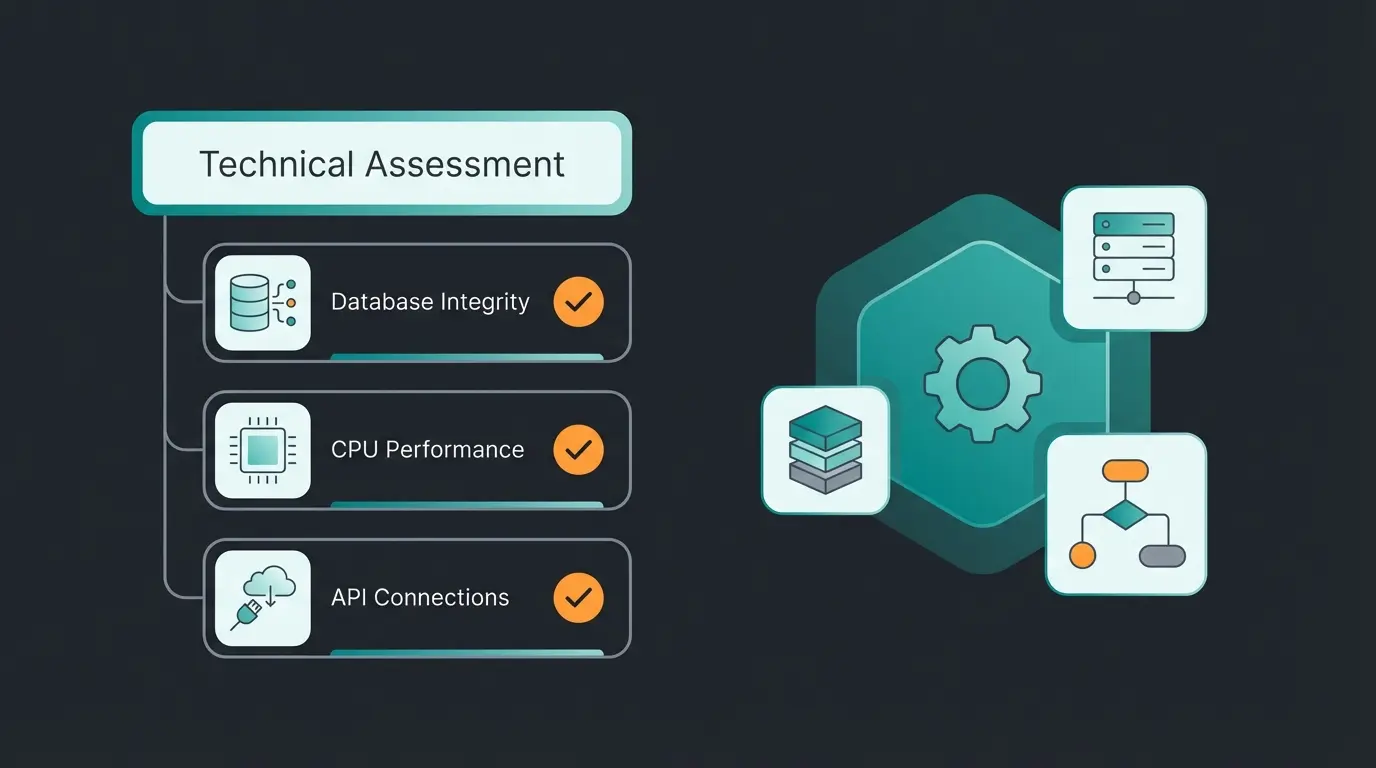
Comparison: Standard Hosting vs. AI-Ready Hosting
To clarify the difference, let's compare classic managed hosting with an approach optimized for intelligent systems. This comparison highlights why AI consultation closes the gap between what customers need and what standard hosting can deliver.
| Feature | Traditional Managed Hosting | AI-Optimized Hosting (Consultation-First) |
|---|---|---|
| Primary Goal | Maximum uptime & caching rate | Maximum conversion & interaction speed |
| Bot Handling | Often blocks bots indiscriminately (security concern) | Intelligently distinguishes between spam bots and useful AI agents |
| Resource Focus | Optimized for static delivery (Varnish) | Optimized for dynamic compute load (Inference/Vector Search) |
| Database | Standard MySQL/MariaDB | Extended with vector databases (e.g., Redis Stack, Qdrant) |
| Customer Experience | Fast catalog browsing | Real-time product consultation without waiting |
| Scaling | Reacts slowly to load spikes (Black Friday) | Elastic scaling for AI compute load |
The Noisy Neighbor Problem
With cheap standard hosting (shared), you share resources with hundreds of other websites. When your AI agent suddenly needs computing power for a complex customer query, those resources may be occupied by another customer. The result: the chatbot stutters. AI-ready hosting therefore almost always relies on dedicated resources or isolated container technologies, as documented by Maxcluster's enterprise hosting specifications.
Discover whether your current infrastructure can support intelligent product consultation. Get a free analysis of your Shopware hosting's AI-readiness and learn how to optimize for consultation-first commerce.
Get Your Free AI-Readiness AnalysisThe Solution: Hosting for Intelligent Commerce
We believe the future of e-commerce lies in active consultation. Your shop shouldn't be a mute vending machine but a competent advisor. This is exemplified by success stories like AI Employee Kira, which demonstrates the transformative potential of AI-powered customer interaction.
Our Infrastructure Philosophy
Our hosting solution was specifically developed to bridge the gap between technical performance and intelligent applications. Following data sovereignty principles outlined by Budibase's self-hosting guides and Plural's infrastructure documentation:
- Dedicated AI Lanes: We reserve computing power specifically for AI processes so that consultation runs smoothly even when many customers are in the shop simultaneously
- Data Sovereignty First: All data—including the vector data from your AI—remains on German servers. We don't use US cloud services for storing sensitive customer interactions
- Integrated Vector Search: We offer pre-configured instances for vector search (based on technologies like Redis Stack or Qdrant) that communicate seamlessly with Shopware, as recommended by RagAboutIt's technical implementation guides
Case Study: How One Client Increased Cart Value by 20%
A client from the "Technical Supplies" sector faced the problem that customers were overwhelmed by the complexity of their product range. Their challenge exemplifies what many businesses experience when implementing AI product consultation on inadequate infrastructure.
- The Solution: Integration of an AI advisor that translates technical requirements into product recommendations
- The Challenge: On the old hosting, each response from the advisor took 4-6 seconds. The abandonment rate was high
- The Result: After switching to our AI-optimized infrastructure, latency dropped to under 800ms. Customers interacted 3x more frequently with the advisor, leading to a 20% increase in average cart value

Passive vs. Active Hosting: A Strategic Comparison
Understanding the fundamental difference between passive infrastructure management and active commerce optimization is crucial for making the right hosting decision. The table below illustrates how these approaches differ in their core philosophy and outcomes:
| Dimension | Passive (Traditional) Hosting | Active (AI-Optimized) Hosting |
|---|---|---|
| Strategic Focus | Infrastructure maintenance | Commerce conversion optimization |
| Success Metric | Uptime percentage | Revenue per visitor increase |
| Bot Philosophy | Blocks all automated traffic | Distinguishes AI agents from spam |
| Resource Allocation | Static caching priority | Dynamic processing power priority |
| Customer Journey | Fast catalog browsing | Personalized guidance experience |
| Peak Handling | Pre-allocated capacity | Elastic AI compute scaling |
| Data Processing | Page delivery only | Real-time consultation engine |
The shift from passive to active hosting represents more than a technical upgrade—it's a strategic realignment of your e-commerce infrastructure toward revenue generation rather than mere availability.
FAQ: Common Questions About Shopware Hosting & AI
Here we answer questions that go beyond the standard concerns and address the intersection of hosting infrastructure and AI capabilities.
For Shopware 6.6, you absolutely need PHP 8.2 (or higher), MySQL 8.0 or MariaDB 10.11, and Node.js 20 for administration tasks. Additionally, Redis 7.0 is recommended for optimal caching performance. These requirements are documented in Shopware's official system requirements and represent the minimum baseline for modern operations.
AI features shift the load from disk (loading images) to CPU and memory (calculating responses). While a normal visitor barely generates CPU load, an intensive AI consultation session can cause short-term high computing spikes. Good hosting catches this through elastic resources. Expect AI workloads to require 3-5x more CPU headroom than traditional e-commerce operations during peak consultation periods.
Yes. Unlike solutions that send all data to OpenAI in the USA, we enable architectures where customer data (PII) is anonymized on our German servers or processed locally before using external APIs. We also offer the option to host open-source LLMs (like Llama 3 or Mistral) directly on dedicated servers ('Self-Hosted LLM'), ensuring no data leaves your jurisdiction. This approach follows best practices outlined by data sovereignty experts.
Standard Redis is a key-value store. For AI applications, you often need vector search (Vector Similarity Search). This requires special modules (like those included in Redis Stack) or configurations that many standard hosting providers don't offer or support. Without vector capabilities, semantic product searches and AI-powered recommendations cannot function properly.
Yes. We understand that modern e-commerce stacks are polyglot. In addition to PHP for Shopware, we support container environments for Python or Node.js to run your AI middleware performantly and securely alongside the shop. This enables custom integrations, specialized AI models, and advanced consultation logic beyond out-of-the-box solutions.
Conclusion: The Future Demands Intelligent Infrastructure
E-commerce stands at a turning point. Anyone still buying hosting in 2025 based solely on "price per gigabyte" is saving in the wrong place. Your shop's ability to advise intelligently will determine your market success.
The infrastructure requirements for consultation-first commerce extend far beyond what traditional hosting metrics measure. Vector databases, inference optimization, GDPR-compliant AI processing, and elastic scaling for AI workloads are no longer nice-to-haves—they're essential differentiators.
The hosting providers who understand this shift are positioning themselves as partners in your AI commerce journey, not just infrastructure vendors. For a detailed provider-by-provider analysis, see our Best Shopware Hosting Providers Compared guide. As you evaluate your options, look beyond the standard feature checklists and ask the questions that matter for intelligent commerce: Can your hosting support real-time consultation? Does it distinguish between harmful bots and helpful AI agents? Will it scale when your AI advisor becomes your best salesperson?
Make sure your hosting partner is ready for this future. The shops that thrive in 2025 and beyond will be those that recognized early that speed without intelligence is no longer enough.

Don't let outdated hosting infrastructure hold back your intelligent commerce strategy. Discover how AI-ready hosting can transform your Shopware shop from a product catalog into an intelligent sales consultant.
Start Your AI Commerce Journey
Kevin is CTO and co-founder of Qualimero. As an AI architect with over 15 years of experience as CTO and CPO in the tech industry, he designs the AI systems that automate tens of thousands of customer interactions daily for Qualimero's clients — reliably, securely, and at scale.