
The New Currency in E-Commerce: Beyond Milliseconds
When you search for Shopware cloud hosting, you likely have a clear goal in mind: you want a Shopware 6 store that loads fast, never goes down, and remains secure. You're probably comparing specification tables from providers like Timme Hosting, Maxcluster, or Profihost. You're checking PHP versions, SSD storage capacity, and caching technologies.
That's understandable. That's necessary. But in 2025, it's no longer enough.
The hard truth is: hosting has become a commodity. A fast server is no longer a competitive advantage—it's the absolute minimum requirement to even participate in the game. If your store loads in 0.2 seconds but your customer spends 5 minutes searching for the right product, you've lost despite having perfect infrastructure. According to Simplified.chat, users expect chatbot responses within 2 seconds, highlighting how speed expectations have evolved beyond page loads.
In this article, we go beyond standard comparisons. We analyze the current hosting landscape in Germany, clarify the technical differences between SaaS and self-hosted cloud solutions, and then reveal the crucial missing link: how to use your cloud infrastructure not just as storage space, but as an intelligent brain for AI product consultation.
We'll show you why choosing the right hosting is the foundation for the next generation of e-commerce—AI-powered selling. If you're weighing your platform options, our comprehensive Shopware vs Shopify comparison provides additional context for your decision.
The Basics: Shopware Cloud (SaaS) vs. Self-Hosted/PaaS
Before we discuss artificial intelligence, we need to clarify the foundation. The first decision you must make regarding Shopware cloud hosting is choosing the operating model. Shopware has massively restructured its offerings in recent years with the Rise, Evolve, and Beyond plans, pushing strongly toward SaaS (Software as a Service), as detailed on Shopware.com. But is this the right path for an AI strategy? Our detailed Shopware editions comparison breaks down exactly what each tier offers.
Shopware Cloud (SaaS) Explained
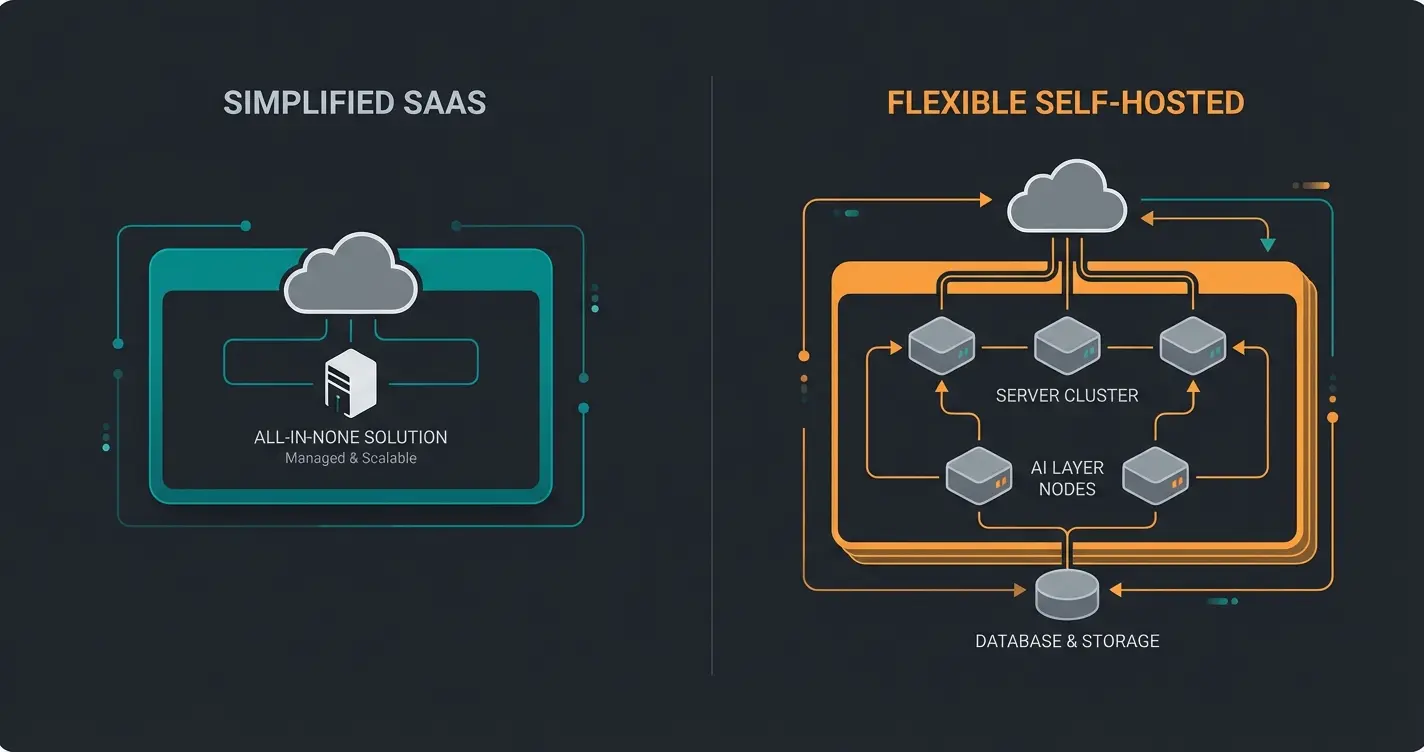
With SaaS, you rent the shop directly from Shopware. Hosting, updates, and maintenance are all handled for you.
- Peace of mind: No server administration required
- Automatic updates: You're always on the latest version
- Scalability: The shop automatically scales with traffic
However, there are significant disadvantages for AI projects:
- Limited flexibility: You don't have full access to the server root. Installing special vector databases (like Weaviate or Milvus) or Python-based AI scripts is often impossible or heavily restricted, as noted by BitBag
- Plugin limitations: Custom plugins are subject to strict sandbox rules
Self-Hosted & PaaS (Platform as a Service)
This is the classic approach in Germany. You rent server capacity from specialized hosts (Timme, Maxcluster, etc.) and install Shopware there.
- Full control: You determine PHP versions, caching strategies, and database configurations
- Data privacy (GDPR): You know exactly which data center (e.g., Frankfurt or Hamburg) houses your data
- AI-readiness: You can run additional services (Docker containers for AI models, vector databases) parallel to the shop
The main disadvantage is higher maintenance effort, though managed hosting minimizes this significantly.
Decision Guide for 2025
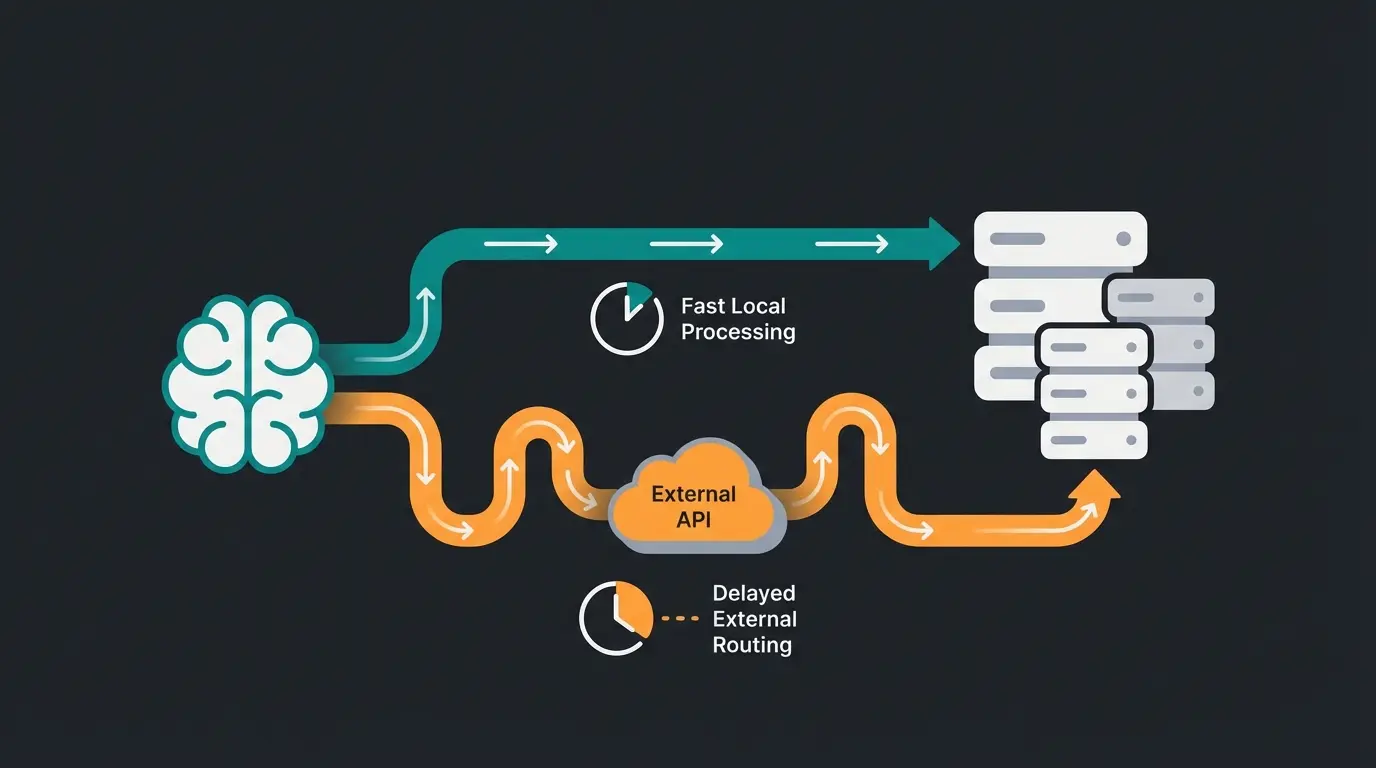
If your goal is a standard shop, SaaS is sufficient. However, if you plan to use Shopware cloud hosting as a foundation for advanced AI product consultation, a self-hosted or PaaS solution is often mandatory. Only here do you have the freedom to host the "intelligence" (the AI models) directly next to the data to minimize latency times.
| Feature | Shopware Cloud (SaaS) | Standard Self-Hosted | AI-Ready Setup |
|---|---|---|---|
| Setup Time | Immediate | 1-2 days | 2-5 days |
| Custom Plugins | Limited | Full access | Full access + Custom scripts |
| AI Capability | Standard AI Copilot only | Possible | High (Vector DBs, Custom LLMs) |
| Scalability | Automatic | Manual/Managed | Scales with intelligence |
| GDPR Control | Shopware-managed | Full control | Full control + AI compliance |
Top German Hosting Standards: Must-Haves for Performance
Regardless of whether you want to use AI or not—your hosting must meet certain technical standards to run Shopware 6 performantly. Based on current system requirements from Shopware and offerings from top hosts, these are the non-negotiable requirements for 2025:
The Tech Stack: Minimum Requirements
1. PHP 8.2 or higher: Shopware 6.6 and upcoming versions absolutely require modern PHP versions. PHP 8.2+ offers JIT compiler improvements that are critical for execution speed, as documented in the Shopware documentation.
2. Databases (MySQL 8.0+ / MariaDB 10.11+): For complex product queries and filters, a current database engine is essential. Outdated versions (like MySQL 5.7) are no longer supported.
3. Elasticsearch / OpenSearch: Beyond a certain product count, standard MySQL search is too slow. Elasticsearch (min. 7.8) or OpenSearch are mandatory for fast filtering and faceting. This is especially critical for shops implementing AI-driven search functionality.
4. Redis (Version 7.0+): Redis is indispensable for caching sessions and shopping carts. It massively relieves the database load. According to GitHub documentation, proper Redis configuration can reduce database queries by up to 70%.
5. Varnish Cache: An HTTP accelerator that stores static content and entire pages in RAM, delivering them before Shopware even needs to start PHP.
Minimum required for Shopware 6.6 with JIT compiler benefits
Essential for session and cart caching
Required for complex product queries and modern features
Potential improvement with proper Redis caching
Market Leaders in Germany
Who delivers this performance? A look at the search results shows three dominant players specialized in Shopware:
Timme Hosting: Their specialty is Nginx servers. Unlike the widely used Apache, Nginx is extremely resource-efficient and fast under high traffic loads. They strongly emphasize NVMe SSDs and green energy, making them appealing for environmentally conscious businesses. For shops focused on Shopware page speed optimization, Timme provides an excellent foundation.
Maxcluster: Their specialty is Managed Web Clusters. They focus on high availability and scalability for enterprise customers. They offer their own "Managed Center" for easy configuration of services like Elasticsearch and Redis. Their e-commerce stack includes integrated profiling tools (Tideways/Blackfire) for bottleneck analysis, as detailed on their website.
Profihost: Their specialty is Cloud Hosting with FlexServers. They offer a good balance between managed service and flexibility. According to Profihost, their managed services reduce technical overhead while maintaining customization options.
The Missing Link: From Cloud Hosting to Cloud Intelligence
Here we leave the path of conventional hosting comparisons. Most articles stop at infrastructure. We take it a step further.
The Problem: The "Dumb Cloud"
Your host guarantees 99.9% server uptime. That's great. But do you also have 99.9% conversion uptime?
A conventional Shopware shop is passive. It waits for the customer to set the right filters. If the customer doesn't know exactly what they're looking for (e.g., "Which tent is suitable for Iceland in November?"), even the fastest server in the world won't help them. They leave the shop.
The Solution: Hosting as a Living Space for AI
Shopware cloud hosting must be rethought: not as a warehouse for data, but as an intelligent environment where an AI lives that understands your products. This is where Shopware AI features become your competitive advantage.
Imagine your cloud infrastructure hosts not just Shopware, but also an AI Product Consultant. This agent:
- Accesses the database directly (low latency)
- Uses a vector database (running on the same cluster) to find semantic similarities, as explained by Liveblocks and StackGenie
- Actively guides the customer to purchase
Why "Latency" Must Be Redefined
In technical SEO, we talk about TTFB (Time to First Byte). In AI applications, we talk about Inference Latency (time until the AI responds).
Studies show that users expect a response time of under 2 seconds from chatbots. If your hosting setup first has to route the request through slow APIs to third-party providers in the USA and back, you lose valuable time.
A self-hosted Shopware setup with a German provider allows you to host AI models—or at least the vector search index—locally. The result: lightning-fast, intelligent responses while complying with GDPR. For businesses exploring this approach, implementing a Shopware chatbot becomes significantly more effective when hosted alongside your data.
Hosting providers (Timme/Maxcluster) deliver security and speed—this is your base layer
Shopware 6 features and plugins provide checkout and catalog functionality
AI Product Consultation layer transforms visitors into buyers through active guidance
Most shops optimize only the foundation. Market leaders invest in reaching the top of this pyramid. The caption says it all: speed alone stops at the bottom layer.
Discover how AI Product Consultation running on your Shopware infrastructure can revolutionize your conversion rates. See real results from merchants who've made the switch.
Explore AI ConsultationComparison: Standard vs. AI-Enhanced Cloud Hosting
To illustrate the difference, let's compare the classic hosting model with the AI-enhanced approach you should be targeting for 2025.
| Feature | Standard Shopware Cloud Hosting | AI-Enhanced Shopware Hosting |
|---|---|---|
| Primary Goal | Maximum server speed (TTFB) | Maximum relevance & consultation speed |
| Database | MySQL (Relational data) | MySQL + Vector database (Semantic data) |
| Search | Keyword matching (Elasticsearch) | Intent matching (Vector search / RAG) |
| Customer Interaction | Passive (Filters, categories) | Active (Dialog, consultation) |
| Infrastructure | Web server + DB + Cache | Web server + DB + Cache + AI Inference Layer |
| Success Metric | Page views per minute | Solved customer problems per minute |
Key insight: AI-enhanced hosting requires more resources (RAM for vector indices, potentially GPU support for inference, as noted by Hetzner and Snel), but it transforms costs into direct revenue. This approach aligns perfectly with implementing AI customer service automation across your entire operation.
Case Study: The Hiking Boot Dilemma
Let's play through this with a concrete example that demonstrates the difference between standard and AI-enhanced Shopware cloud hosting.
Scenario: A customer, let's call him Hans, visits your outdoor shop. He's searching for: "Waterproof hiking boots for wide feet, suitable for light mountain hikes, budget up to $220."
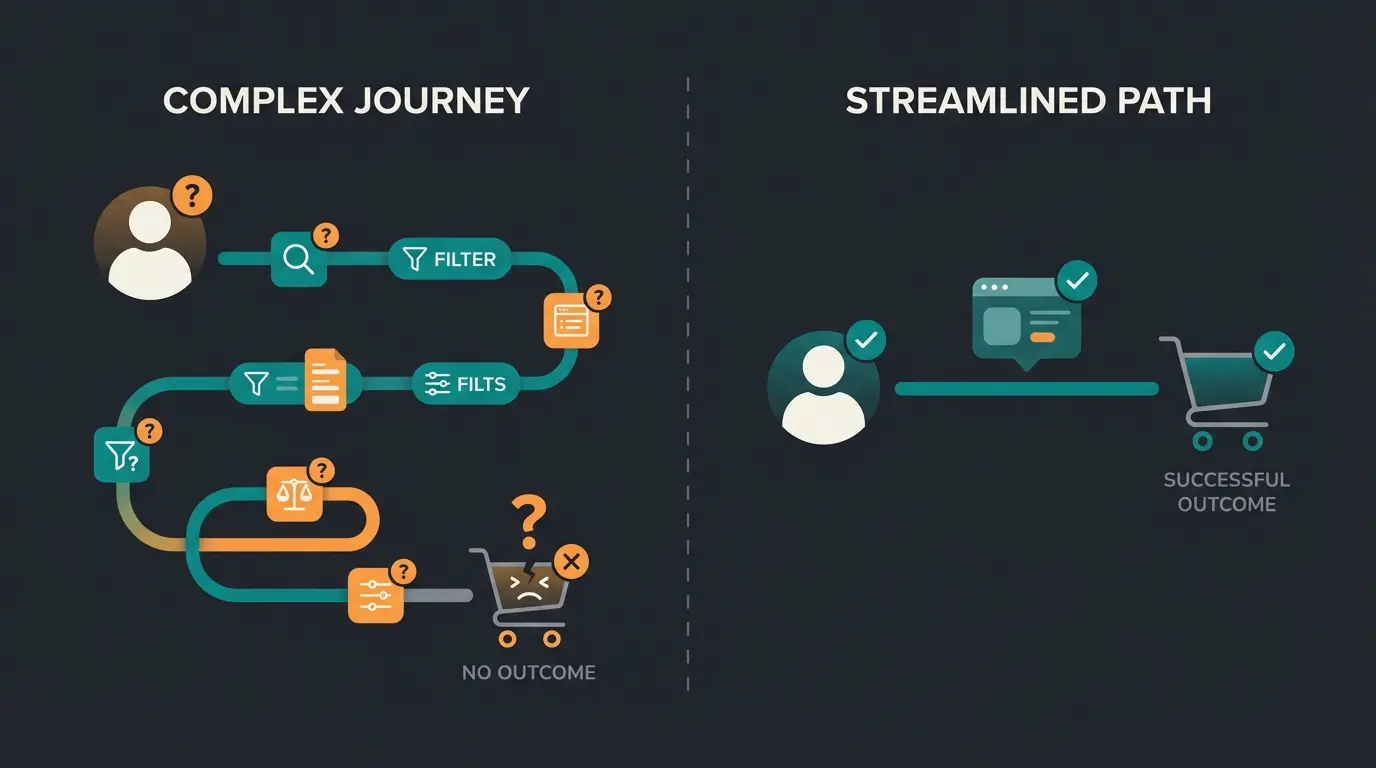
Scenario A: Standard Shopware Hosting (Fast but Unintelligent)
- Hans enters "hiking boots waterproof" in the search
- The server (thanks to Timme/Maxcluster, extremely fast) delivers 450 results in 0.1 seconds
- Hans must now set filters: "Men's", "Waterproof"
- He doesn't know which shoe is "for wide feet" since this isn't a standard filter. He must read through 10 product descriptions
- Result: Hans is frustrated and abandons the site. The server was fast, but the sale failed
Scenario B: AI-Enhanced Hosting (The Intelligent Way)
- Hans types his complex query into the AI Product Consultant chat
- The query is processed on your cloud server
- The vector index (e.g., Weaviate on your server) analyzes the meaning of "light mountain hikes" and "wide feet" (semantic search)
- The AI matches this with attributes and reviews in your database
- In 1.5 seconds, the AI responds: "Hi Hans, for wide feet and light tours, I recommend the Meindl Comfort Fit or the Hanwag Banks. Both are under $220. The Meindl offers a bit more toe room."
- Result: Hans feels advised like in a specialty store. He clicks on the Meindl and buys
This scenario illustrates why many successful merchants, especially those in the Shopware B2B sector, are investing heavily in AI-enhanced hosting. The complexity of B2B purchasing decisions makes intelligent guidance even more valuable.
Practical Tips: Making Your Hosting AI-Ready
When reviewing your hosting contract or signing a new one, pay attention to the following points to be prepared for the AI future:
RAM is King
Vector databases and AI processes are memory-hungry.
Tip: Calculate at least 30-50% more RAM than needed for pure Shopware operation. If Shopware requires 16 GB, go with 32 GB or 64 GB. This investment pays off when implementing solutions like AI Employee Kira, which requires substantial resources to deliver real-time consultation.
Flexibility for Background Processes (Workers)
AI analyses (e.g., generating embeddings for new products) run in the background.
Tip: Ensure your host supports Supervisor or similar tools to keep permanent background processes (message queue consumers) running stably, as outlined in Shopware's message queue documentation. With cheap shared hosting, these processes are often killed due to timeouts.
Redis as Vector Store?
Did you know that Redis (which you already need for Shopware) now supports vector search?
Tip: Ask your host if the Redis Stack Server module (including RediSearch and RedisJSON) is available. This saves you from installing a separate database like Milvus, simplifying your architecture while maintaining AI capabilities.
Data Privacy and Server Location
AI often processes sensitive customer data (preferences, sizes, budgets).
Tip: Use the "Made in Germany" card. Hosts like Timme or Profihost guarantee server locations in Germany. If you host your AI models locally on these servers (instead of sending data to OpenAI in the USA), you have a massive argument for privacy-conscious customers. This approach has proven successful in implementations like AI product consultation for Rasendoktor, where data privacy was a key concern.
30-50% more than base Shopware requirements
GDPR compliance with local AI processing
User expectation threshold for chatbot interactions
Modern Redis supports semantic search capabilities
Beyond Shopware: Comparing Platform Approaches
Understanding how Shopware cloud hosting compares to alternatives helps inform your decision. Our Shopware vs WooCommerce comparison reveals that while WooCommerce offers flexibility, Shopware's enterprise focus makes it better suited for AI integration at scale.
For merchants needing comprehensive support, working with a Shopware full service agency can accelerate the implementation of AI-enhanced hosting solutions while ensuring best practices are followed from day one.
Conclusion: Don't Just Host—Empower Your Shop
The market for Shopware cloud hosting is full of providers trying to outdo each other with technical superlatives. "Even faster Nginx," "even more optimized PHP." That's good, but it's yesterday's game.
In 2025, the winner isn't the shop that delivers pages fastest, but the shop that guides customers to their goal fastest.
The Strategy for Your Success
- Choose a powerful foundation (self-hosted/PaaS with experts like Timme, Maxcluster, Profihost)
- Use the technical freedom of these platforms to host not just Shopware, but intelligence
- Integrate AI Product Consultation to bridge the gap between technical performance and human consultation needs
Stop seeing hosting as a cost center for storage space. See it as the brain of your business.
Frequently Asked Questions About Shopware Cloud Hosting
Standard Shopware Cloud (SaaS) offers integrated AI features through AI Copilot, but is limited for deep, customized AI solutions like custom vector databases. For tailored AI consultation, we often recommend a PaaS or self-hosted solution to optimally connect external services. This gives you the flexibility to implement advanced conversational AI that truly understands your product catalog.
Beyond standard requirements (PHP 8.2+, MySQL 8.0), AI tools often need additional RAM for vector indices and stable background processes (message queues). A managed server with at least 32 GB RAM is recommended. If you're planning to run inference locally, GPU support may also be beneficial for faster response times.
Unlike passive filters, AI actively guides customers through the purchasing process. It answers questions, resolves uncertainties, and recommends suitable products based on context. This reduces cart abandonment and significantly increases average order value. Merchants implementing AI consultation typically see conversion improvements of 15-40% on complex product categories.
Yes, if you choose a German hosting provider like Timme Hosting, Maxcluster, or Profihost, your data resides in German data centers and is subject to strict German data protection laws. This applies equally to self-hosted cloud solutions. When you host AI models locally rather than using US-based APIs, you maintain complete data sovereignty.
Shopware SaaS plans start around €600/month for basic tiers, while self-hosted solutions with AI-ready specifications typically range from €200-500/month for hosting alone, plus setup and maintenance costs. However, the revenue increase from AI-powered consultation often provides 5-10x ROI within the first year, making the investment highly worthwhile.
See how AI Product Consultation running on your Shopware cloud can revolutionize customer experience and dramatically improve your conversion rates. Join merchants already experiencing the future of e-commerce.
Start Your AI Journey
Kevin is CTO and co-founder of Qualimero. As an AI architect with over 15 years of experience as CTO and CPO in the tech industry, he designs the AI systems that automate tens of thousands of customer interactions daily for Qualimero's clients — reliably, securely, and at scale.