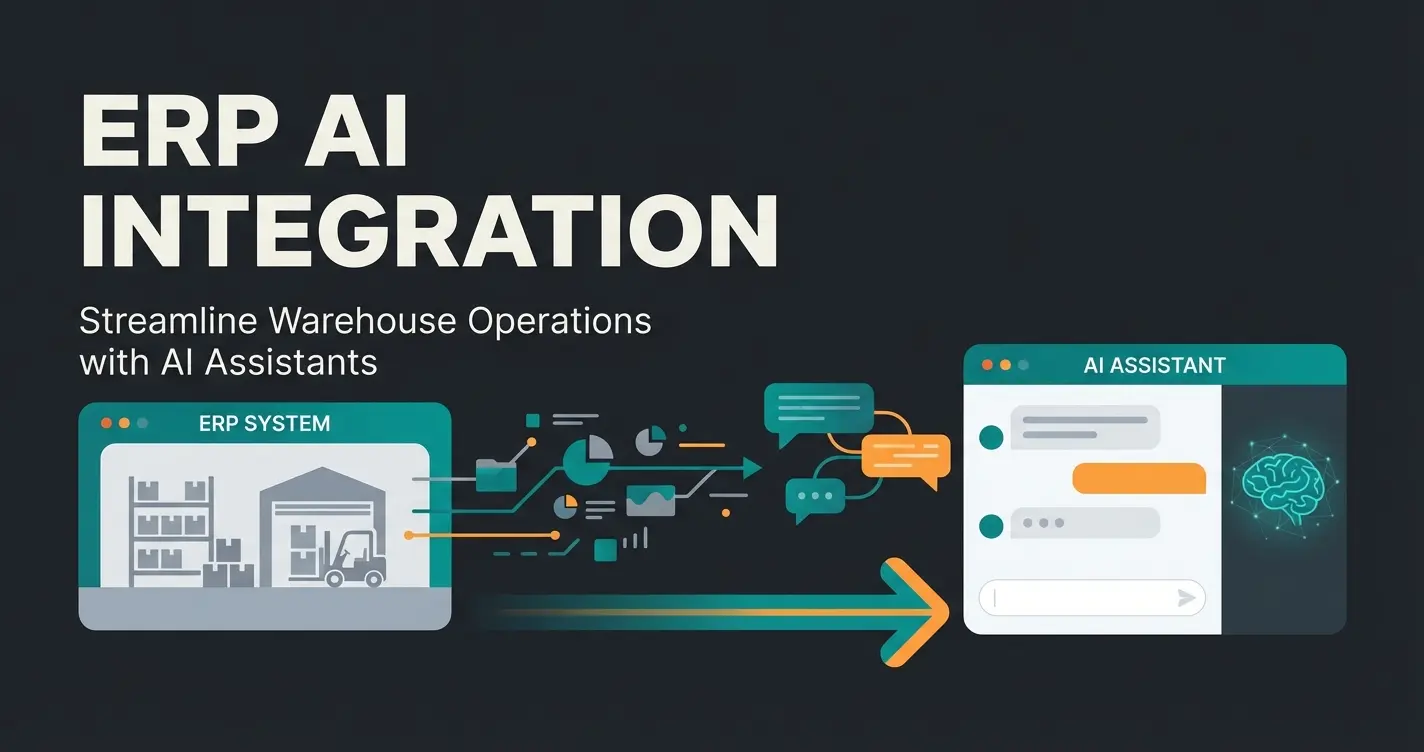
Introduction: Your ERP Is More Than a Stock Manager
When online retailers discuss growth, conversations typically revolve around marketing budgets, frontend conversion optimization, or new social media channels. However, the true backbone of any e-commerce operation—and often its biggest bottleneck—lies hidden deeper: in the Shopware inventory management system (ERP).
In 2025, the role of the inventory management system (German: Warenwirtschaft or WaWi) or ERP (Enterprise Resource Planning) has fundamentally transformed. Previously, it was all about managing stock levels and printing shipping labels. The goal was purely operational: get the package out the door. Today, in an era where Artificial Intelligence (AI) and automated product consultation are revolutionizing e-commerce, your ERP becomes the central data source for your entire customer experience.
An analysis of top search results reveals that many merchants still think in outdated patterns: "Which system is cheapest?" or "Which has the best accounting software integration?" These are important questions, but they fall short. The decisive question for 2025 is: Which Shopware ERP delivers the data quality that my AI tools need to actively sell?
In this comprehensive guide, we compare market leaders like JTL, Pickware, and Xentral not only based on their classic features. We introduce a new dimension: AI Readiness. We'll show you why a poorly maintained attribute in your ERP can silence your AI sales agent, and how to find the right system for scaling your business effectively.
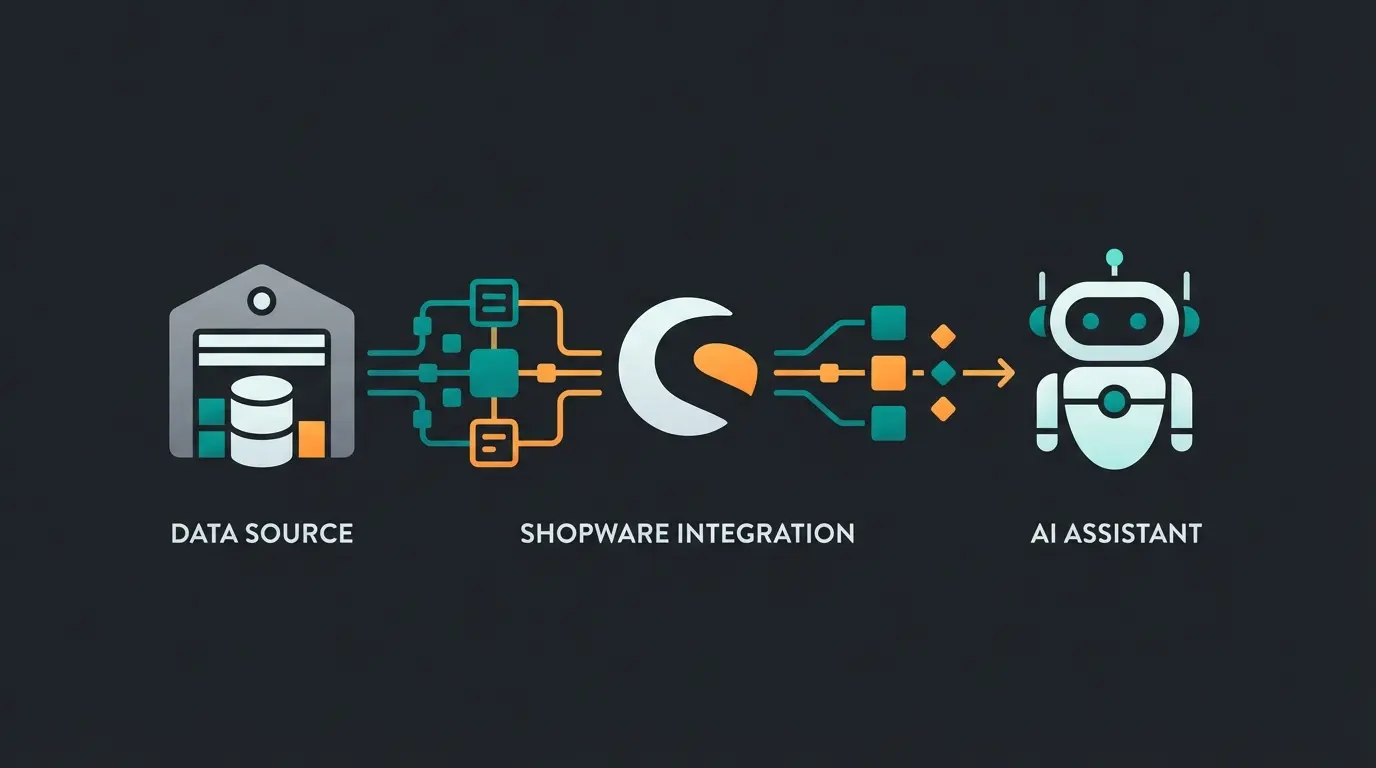
The Fundamental Decision: Native vs. External Systems
Before diving into the details of individual providers, you need to make a strategic decision. The world of Shopware inventory management divides into two camps: Native Solutions and External Systems. Understanding this distinction is crucial for long-term success and determines how your business can leverage Shopware AI features effectively.
Native Integration: The Apple Approach
With a native solution, primarily Pickware, the inventory management runs directly within your Shopware backend. There are no separate databases, no synchronization headaches, and no middleware to maintain.
- Real-time data: A sale at your physical store (POS) immediately reduces stock in your online shop. Zero synchronization delay.
- No interface conflicts: You don't need to maintain 'connectors.' When Shopware releases an update, the native ERP typically follows seamlessly.
- Usability: You and your team work in one single interface. Anyone who can operate Shopware can operate the ERP.
However, native solutions come with trade-offs. Performance load becomes a consideration—since everything runs on the shop server, massive order volumes can impact frontend performance if proper Shopware hosting isn't in place. Additionally, you're platform-dependent: switching shop systems means switching your entire ERP infrastructure.
External Systems: The Best-of-Breed Approach
External systems like JTL-Wawi, Xentral, or Weclapp are standalone software solutions connected to Shopware via API or connector. This architecture offers fundamentally different advantages and challenges, and understanding the various ERP Integration Methods is essential before committing to one approach.
- Multichannel power: These systems are designed to manage dozens of channels simultaneously—Amazon, eBay, Kaufland, Shopify, and Shopware. Your Shopware store is just one sales channel among many.
- Performance isolation: The ERP runs on its own servers (or locally). Resource-intensive warehouse processes don't slow down your shop.
- Independence: You can switch shop systems (e.g., from Magento to Shopware) without changing your internal logistics processes.
The downsides of external systems deserve careful consideration. The 'connector pain' is real: data must be synchronized, which often leads to errors ('Why wasn't that attribute transferred?'). Particularly with Shopware 6 updates, external connectors frequently lag weeks behind, as reported in JTL community forums. This creates data silos where not all fields sync cleanly—especially complex variant properties or custom fields—which can be fatal for AI applications.
Top 5 Shopware ERP Systems Compared for 2025
Based on market share, feature scope, and future-readiness, we've analyzed the five most relevant systems for e-commerce businesses. This comparison goes beyond standard feature lists to include the critical AI Readiness factor that most reviews overlook.
Comparison Table: The Hard Facts
| Feature | Pickware | JTL-Wawi | Xentral | Billbee | Weclapp |
|---|---|---|---|---|---|
| Type | Native (Plugin) | External (On-Premise/Cloud) | External (Cloud ERP) | External (Cloud SaaS) | External (Cloud ERP) |
| Target Audience | Shopware purists, D2C brands | Efficiency focus, marketplace sellers | Scaling startups, D2C | Small merchants, multichannel beginners | B2B, service providers |
| Starting Costs | from €99/month | Free (Start) / from €99 (Advanced) | from approx. €200+ (tiered) | Revenue-based / transaction-based | User-based |
| Shopware Integration | ⭐⭐⭐⭐⭐ (Seamless) | ⭐⭐⭐ (Connector) | ⭐⭐⭐⭐ (API-First) | ⭐⭐⭐ (SaaS Sync) | ⭐⭐⭐ (Solid) |
| AI-Readiness Score | High (Direct data access) | Medium (Strong data, sync barriers) | High (Modern API structure) | Medium (Basic data) | Medium (Strong processes, weaker product data) |
AI-Readiness Score: A qualitative assessment of how well product data is accessible and structured for external AI tools like [AI product consultation](/blog/ai-product-consultation-complete-guide-2025) systems.
Pickware: Native Power for Shopware Enthusiasts
Pickware is more than just an ERP—it's an integral part of Shopware. For merchants building their entire strategy on Shopware 6 without complex marketplace operations beyond their own shop, it's often the first choice. According to Pickware, their solution offers the tightest possible integration with Shopware's ecosystem.
The features and strengths are compelling. The WMS and mobile scanning capabilities include extremely robust barcode scanner solutions (iOS-based) that dramatically reduce picking errors—up to 99% error reduction according to Brainstreamtechnolabs. The POS integration means your checkout system is directly integrated, so a sale in-store updates online inventory in real-time. Perhaps most importantly for modern commerce, data sovereignty ensures that since Pickware uses the Shopware database directly, all custom fields, properties, and variants are immediately available—a massive advantage for AI applications that need to access this data.
The weaknesses require honest assessment. At extremely high order volumes (enterprise level), database load can become an issue. Merchants primarily selling on Amazon who use Shopware only as a 'digital business card' will find less marketplace automation compared to JTL. Understanding the Shopware pricing structure helps determine if this native approach fits your budget.
JTL-Wawi: The Efficiency Giant for Marketplace Sellers
JTL is the dominant player in German e-commerce when pure volume and logistics matter most. The approach is 'Efficiency First,' and it shows in every aspect of the system's design. When comparing Shopware vs JTL, it's essential to understand that JTL isn't a shop system—it's a logistics powerhouse that connects to shop systems.
The features and strengths make JTL compelling for high-volume operations. It's free to start—the basic version is extremely powerful and costs nothing, which has made JTL the standard for many startup founders according to Taxandbytes. JTL-WMS provides professional warehouse management that handles even chaotic storage perfectly. The marketplace connection via eazyAuction offers deeply integrated, extremely robust Amazon and eBay connectivity. Notably, JTL has begun integrating ChatGPT for product text generation directly into the ERP, accelerating content creation as reported by Go-Ecommerce.
However, weaknesses exist that must be considered. Community reports consistently reveal challenges with synchronizing special Shopware 6 features like custom fields or image attributes, according to JTL-Software forums. This is critical when this data is needed for AI consultation in the frontend. The usability also feels somewhat dated compared to modern cloud tools (Windows-based), though functionally very deep.
Verdict: The best choice for 'box movers' who prioritize logistics and marketplaces and are willing to invest time learning a complex software system. Consider how Shopware automation can bridge gaps in JTL's frontend capabilities.
Xentral: The Cloud ERP for Modern D2C Brands
Xentral has established itself as the darling of D2C startups (Direct-to-Consumer). It's a modern cloud ERP that runs browser-based and focuses heavily on automation, making it attractive for brands thinking about KI E-Commerce integration from day one.
The features and strengths position Xentral for modern operations. Its API-First architecture means Xentral is built very openly, with Shopware 6 connection via modern interfaces that are often more stable than old connectors, according to Great2Gether and Xentral. Scalability handles everything from 10 to 10,000 packages per day as your business grows. The 'Autopilot' process automation can handle many standard tasks (invoice generation, shipping handoff) completely without human intervention.
Weaknesses deserve attention, though. The pricing model has been adjusted in recent years and can be a hurdle for very small merchants, as noted by G2 and OMR. Rapid growth occasionally led to support bottlenecks in the past, though the company actively addresses this.
Verdict: Ideal for modern brands wanting location-independent operations with clean IT infrastructure for rapid growth. Pairs excellently with Shopware product recommendations systems.
Billbee: The Lean Multichannel Entry Point
Billbee isn't technically a full ERP but rather an extremely capable middleware for order processing. It fills an important niche for merchants not ready for enterprise-level complexity, according to Billbee.
The value proposition centers on price-performance ratio. The model is transaction-based or very affordable at entry level, ideal for startups. Connectivity is exceptional—hardly any tool connects as many platforms (Etsy, Avocado Store, Shopware, Amazon) as easily. Setup often takes minutes, not weeks, making it accessible for non-technical merchants.
The weaknesses become apparent as you scale. It lacks deep warehouse functions (complex pick path optimization) or deep purchasing/disposition management compared to JTL or Xentral, as noted in the Shopware community. Product data management is often rudimentary—Billbee is more of a 'distributor' than the 'source of truth' for complex product data.
Verdict: Perfect for small teams and multichannel starters, but often a transitional solution before upgrading to Xentral or JTL as order volume grows.
Weclapp: The B2B Specialist
Weclapp comes from the classic ERP world and excels when dealing with services, projects, or complex B2B invoicing scenarios that pure e-commerce ERPs handle poorly.
The all-in-one approach combines CRM, project management, and inventory management. The B2B focus means contract management and recurring invoices are often better handled here than in pure e-commerce ERPs. This makes it particularly suitable for businesses combining product sales with service offerings.
However, weaknesses exist in the e-commerce space. Past reports indicated a 'basic' integration to Shopware 6 that didn't support all e-commerce features (like variant handling) as deeply as Pickware, according to the Shopware store.
Verdict: For merchants who also have strong project business or B2B sales alongside their online store. Compare this with Shopware vs Shopify if you're evaluating platform options.
Your ERP is only the foundation. Turn clean, structured data into active revenue with AI-powered product consultation that guides customers to purchase.
Discover AI Product ConsultationThe Game Changer: AI Readiness and Data Quality
Here lies the true 'blue ocean' for your decision. Most comparisons end at shipping labels. But in 2025, the data quality in your ERP determines whether you can use AI to increase your revenue. This is where merchants working with a Shopware full service agency gain significant advantage.
The Problem: Garbage In, Garbage Out
Imagine you want to deploy an AI product consultant (like a chatbot or dynamic buying advisor) in your Shopware shop, similar to what's possible with Shopware 6 chatbots. This agent needs to know what it's selling—intimately.
Product attributes, variants, and properties are entered and maintained in your inventory management system
Data transfers to your shop—quality depends on connector capabilities and field mapping
Your AI consultant queries product data to understand what it's recommending
AI provides personalized recommendations based on available structured data
Scenario A: Poor ERP Data
Product: 'Blue Shirt XL'
Description: 'Nice shirt, 100% cotton.'
Attributes: None maintained.
Result: The AI agent is helpless. When a customer asks: 'Do you have something breathable for high summer?', the AI cannot answer because the 'material property' or 'season' attribute is missing. The sale is lost to a competitor with better data.
Scenario B: AI-Ready ERP Data
Product: 'Shirt Model Capri'
Attributes (maintained in ERP): Material=Cotton (Piqué), Fit=Slim Fit, Property=Breathable, Occasion=Business Casual.
Result: The AI agent responds confidently: 'Yes, the Capri model is perfect for you. Thanks to the piqué weave, it's very breathable and ideal for hot days at the office. Would you like me to check your size availability?'
Why Your ERP Is Decisive for AI Success
Many merchants maintain data 'somehow' in the shop backend but not cleanly in their ERP. This creates fundamental problems when implementing AI sales forecasting or product consultation systems.
JTL and connectors present a specific challenge. If you maintain attributes in JTL, they must be correctly mapped as Shopware properties or custom fields. Reports consistently show that errors happen precisely here—HTML formatting gets lost, fields don't update properly according to the Shopware community. This makes the data unusable for AI applications.
Shopware AI Copilot introduces another consideration. Shopware 6 now offers native AI features to generate properties from product texts, as documented by Shopware and Steireif. If you use Pickware, these tools access your database directly. With external ERPs, there's a risk that the next ERP sync overwrites these AI-generated data points if the ERP is the 'leading system.'
Improvement when products have complete attribute data vs. basic descriptions only
Picking accuracy improvement with native ERP barcode scanning solutions
Customers receiving accurate AI recommendations convert at significantly higher rates
Decrease in product-related support tickets when AI can answer detailed questions
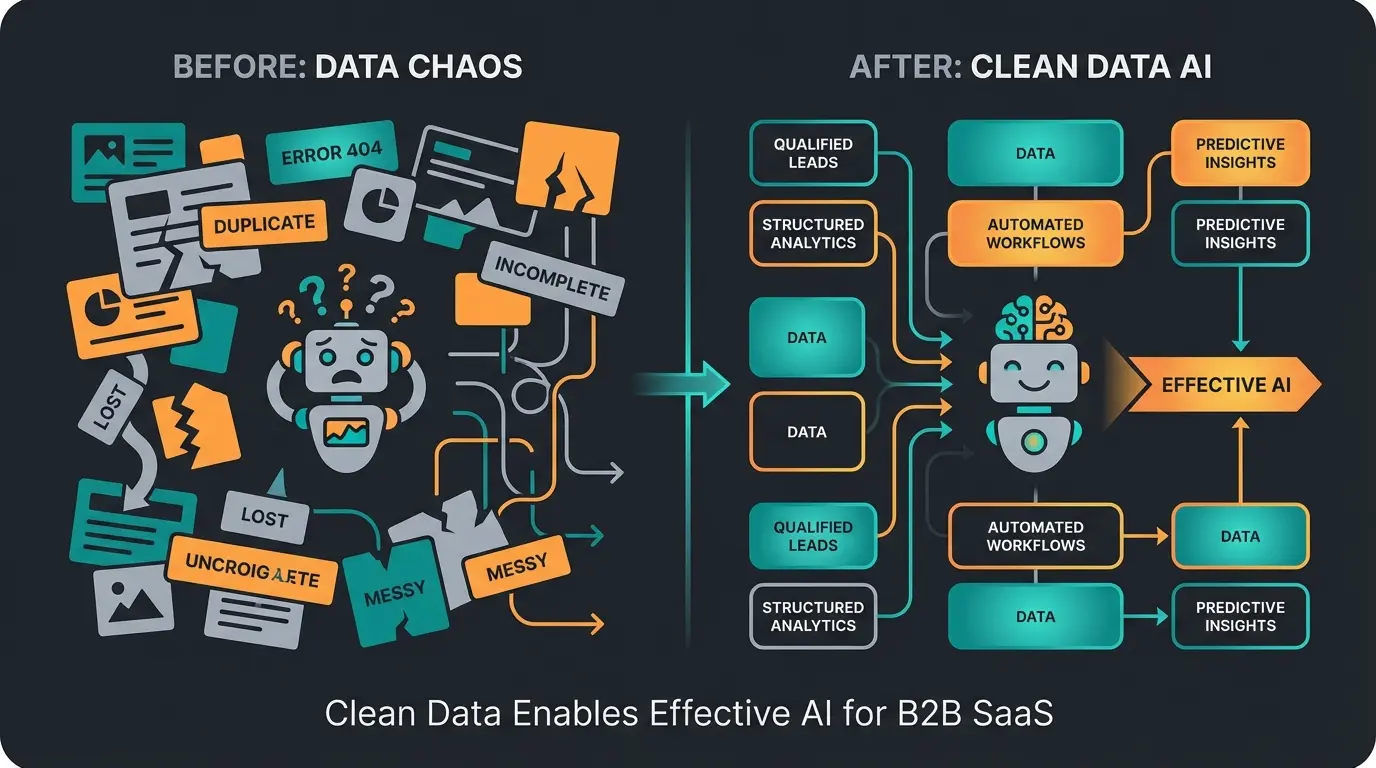
The Product Data Flow: From ERP to AI Consultant
Understanding how data flows through your e-commerce stack is essential for making the right ERP choice. Most merchants view their ERP as a standalone logistics tool, but in the AI era, it's the foundational layer of your entire customer experience.
The flow works like this: Your ERP holds the 'source of truth' for all product information. This data syncs to your Shopware shop, where it populates product pages and search functionality. When you implement an AI consultant, this tool queries your product data to understand what it's recommending. Finally, the AI interacts with customers, providing personalized recommendations based on available structured data.
The critical insight is that any weakness in this chain breaks everything downstream. If your ERP doesn't capture material properties, your AI cannot recommend products based on material. If your connector doesn't sync custom fields, those carefully maintained attributes never reach your AI. This is why the AI-Readiness score matters more than you might initially think.
Successful merchants treat their ERP as the 'brain' that feeds every customer-facing touchpoint. This perspective shift—from logistics tool to knowledge database—fundamentally changes how you evaluate ERP options. See how AI Product Consultation success stories demonstrate this principle in action.
Decision Guide: Checklist for Your Choice
Before committing to any system, ask providers these tough questions. They go beyond the standard and test future-readiness for AI-powered commerce.
The Consultation Checklist: AI and Data Focus
- Attribute depth: Can I create unlimited custom fields in the ERP (e.g., 'care instructions', 'style direction') and are these natively transferred to Shopware custom fields?
- Media sync: Are image tags or alt texts (important for image AI) synchronized cleanly without data loss?
- API access: Does the ERP have an open API so external AI tools (e.g., for demand forecasting) can have read access to historical sales data?
- Bidirectional sync: If I enrich data in Shopware (via AI Copilot or manually), does it sync back to the ERP or get overwritten?
- Variant handling: How does the system handle complex product variants with individual attributes per variant?
The Operations Checklist: Logistics Focus
- Real-time inventory: What is the latency between a sale on Amazon and inventory adjustment in the shop? (JTL/Xentral are typically very fast; Pickware is real-time)
- Returns process: Can I scan a return and have the system automatically decide whether the item is B-stock or goes back into regular inventory?
- Scaling costs: What does the system cost when I have 1,000 orders per day tomorrow? (Watch out for transaction-based models like Billbee where costs scale linearly)
- Multichannel capability: If I want to add new sales channels, what's the integration timeline and cost?
- Backup and recovery: What happens if something goes wrong? How quickly can operations resume?
ERP Selection by Business Type
| Business Type | Recommended ERP | Key Reason |
|---|---|---|
| Pure Shopware D2C Brand | Pickware | Seamless integration, real-time data, best AI-readiness for native stack |
| High-Volume Marketplace Seller | JTL-Wawi | Robust multichannel, proven at scale, cost-effective for high volume |
| Fast-Growing Startup | Xentral | Modern cloud architecture, automation-first, scales smoothly |
| Small Multichannel Beginner | Billbee | Easy setup, low cost, connects many platforms quickly |
| B2B + Service Hybrid | Weclapp | Strong CRM integration, project management, recurring billing |
Implementation Best Practices
Choosing the right ERP is only half the battle. Implementation determines whether you realize the potential of your decision. These best practices come from merchants who successfully transitioned to AI-ready operations.
Data Migration Strategy
Before migrating, audit your existing product data thoroughly. Identify which attributes exist, which are missing, and which contain inconsistent or outdated information. Create a data model that includes all attributes your AI consultant will need—think beyond basic product information to include use cases, occasions, compatibility, and detailed specifications.
Plan for a 'data enrichment phase' post-migration. Even the best ERP won't magically fix poor data. Budget time and resources to clean, standardize, and enhance product information. This investment pays dividends when your AI starts selling.
Integration Testing Protocol
Never trust that 'it should work.' Test every field mapping between your ERP and Shopware with real product data. Create test products with complex variants, custom fields, and special characters. Verify that updates in the ERP correctly propagate to Shopware—and test what happens when you edit in Shopware.
Pay special attention to how rich text fields (product descriptions with formatting) transfer. Many connectors strip HTML or introduce formatting errors. These might seem minor but can significantly impact how AI processes product information.
Team Training Considerations
Your ERP is only as good as the people using it. Invest in thorough training that emphasizes not just 'how to enter data' but 'why data quality matters for AI.' When team members understand that their attribute entries directly impact customer experience and sales, data quality improves dramatically.
Create clear documentation and processes for product data entry. Standardize attribute values (is it 'Cotton' or 'cotton' or '100% Cotton'?) to ensure consistency that AI systems can reliably interpret.
Frequently Asked Questions
Native ERPs like Pickware run directly within your Shopware backend, sharing the same database for real-time synchronization and seamless integration. External ERPs like JTL, Xentral, or Weclapp are standalone software connected via APIs or connectors, offering multichannel capabilities but requiring careful data synchronization management.
AI-powered product consultants and chatbots need structured, detailed product data to provide accurate recommendations. Your ERP is the source of this data. If attributes like material properties, use cases, or compatibility information aren't properly maintained and synced, your AI cannot answer customer questions or make personalized recommendations, directly impacting conversion rates.
Pickware is typically the best choice for merchants building exclusively on Shopware. Its native integration eliminates synchronization issues, provides real-time data access, and ensures all custom fields and properties are directly available for AI tools. This makes it the cleanest path to AI-ready product data.
Yes, but it requires careful configuration. You must ensure that all product attributes, custom fields, and properties are correctly mapped between JTL and Shopware. Community reports indicate this mapping can be problematic, particularly for complex attributes. Test thoroughly and consider working with an integration specialist.
Test whether your AI could answer detailed customer questions using only your current product data. Can it explain material properties, recommend products for specific occasions, compare variants, and check availability? If your data can't support these queries, you need either a new ERP or a significant data enrichment initiative.
Conclusion: From Stock Manager to Growth Engine
The search for the best Shopware ERP system in 2025 is no longer a pure IT question. It's a business decision that directly impacts your ability to leverage AI for sales growth.
Choose Pickware if you seek maximum integration and want to secure your data quality for AI applications without interface losses. It's the safest path to 'clean data' and the most straightforward implementation of AI-powered customer experiences.
Choose JTL-Wawi if you need a logistics powerhouse and are willing to invest time in connector configuration to ensure your product data arrives cleanly in the shop. Its multichannel capabilities and cost-effectiveness at scale make it ideal for marketplace-focused operations.
Choose Xentral if you seek modern cloud infrastructure that grows with your D2C brand. Its API-first architecture and automation capabilities position you well for AI integration from day one.
The most important takeaway: Regardless of which system you choose—stop viewing your ERP as a dusty stock ledger. It's your company's brain. Only when this brain delivers clean, structured data can modern tools like AI Product Consultants work their magic in the frontend and convert visitors into customers.
Next step: Review your current product data. Is it ready for the AI era? Are attributes complete, consistent, and structured? If yes, it's time to think about the next step: integrating an AI consultation that uses this data to actively sell.
Note: Prices and features are based on late 2024/early 2025. Since software prices (especially for cloud providers) change dynamically, we always recommend checking current information on provider websites.
You've got the foundation—clean, structured product data. Now transform it into revenue with AI product consultation that guides every customer to the perfect purchase.
Start Your AI Consultation Journey
Lasse is CEO and co-founder of Qualimero. After completing his MBA at WHU and scaling a company to seven-figure revenue, he founded Qualimero to build AI-powered digital employees for e-commerce. His focus: helping businesses measurably improve customer interaction through intelligent automation.