Introduction: From Data Chaos to Single Source of Truth
Picture this scenario: It's Black Friday. Your Magento shop is running hot. Orders are pouring in every second. But behind the scenes, a catastrophe is brewing. Your inventory is only synchronized every 15 minutes. The result? You've just sold the last blue cashmere sweater three times. Two customers will soon receive cancellation emails—and will probably never buy from you again.
This is the classic problem of isolated data silos. But in 2025 and beyond, Magento ERP integrations are about far more than just avoiding overselling. It's about the transition from pure logic (logistics) to magic (AI-powered experience). According to rapidinnovation.io, real-time data synchronization and AI-powered inventory management are becoming essential competitive advantages for modern e-commerce operations.
While most merchants still view their Magento inventory management system as a pure backend tool for accounting and shipping, market leaders are already using their ERP data as fuel for the next generation of e-commerce: Artificial Intelligence. An AI shopping assistant can only provide competent advice ("Do you have matching shoes in size 42?") if it has access to clean, structured real-time data from the ERP. This approach, similar to what we explore in AI e-commerce consultation, transforms static product data into dynamic sales conversations.
In this comprehensive guide, you'll learn not just how to connect your ERP with Magento, but how to build your system landscape so that it's compliant, scalable, and ready for the AI era.
Why You Need Dedicated Inventory Management for Magento
Many startups begin by trying to "misuse" Magento—as inventory management, invoicing tool, and CRM all in one. But Magento is a sales machine, not administrative software. Here's why separating the systems is essential for survival.
Data Silos vs. Single Source of Truth
Without a central ERP (Enterprise Resource Planning), your data exists in fragments. Inventory sits in the WMS (Warehouse Management System), invoices in accounting software like DATEV, customer data in the shop. A Magento ERP acts as the "Single Source of Truth"—the only source of reality. When the ERP says there are 5 pieces left, there are 5 pieces left—regardless of what the shop, Amazon, or eBay currently display.
The German Context: GoBD and Legal Compliance
One aspect that many international "Ultimate Guides" ignore is the specific legal situation in the DACH region (Germany, Austria, Switzerland). Understanding this context is crucial, especially when planning a Shopware ERP integration or any enterprise system connection in the German market.
- GoBD Compliance: The German regulations for proper management and storage of books, records, and documents in electronic form require that bookings be immutably recorded. According to PwC Germany and MobilExpense, these regulations are fundamental to German business operations. Magento often allows deletion or modification of orders, which can be legally problematic in Germany. A German ERP system (like JTL or Xentral) or a correctly configured global system (like SAP or Odoo) ensures data immutability and complete procedural documentation, as noted by MuchConsulting.
- Invoicing: German invoices have specific mandatory information. An ERP automates the creation of correct invoices, cancellation invoices, and credits while considering current VAT rates (including cross-border trade via the OSS procedure).
Logistics Efficiency in the DACH Region
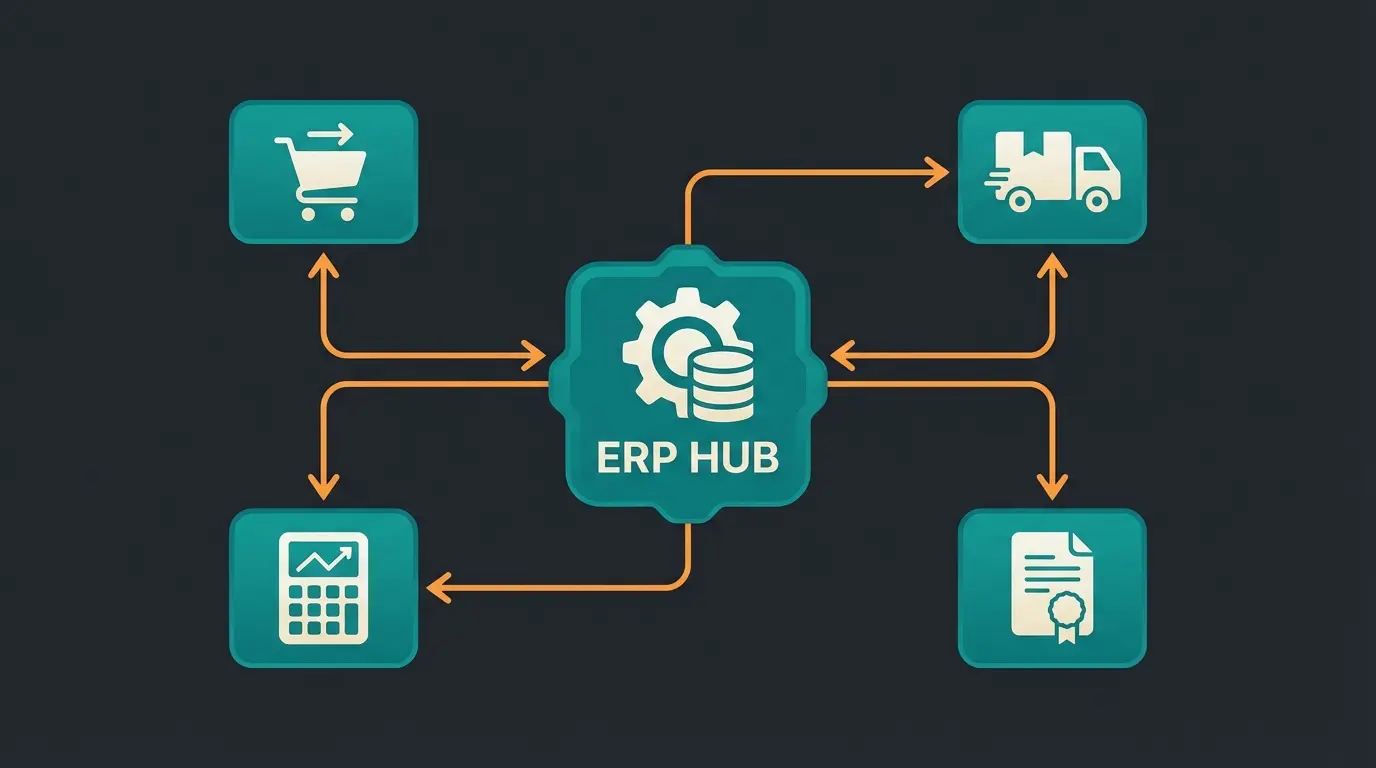
A specialized inventory management system for Magento often offers native interfaces to the locally relevant shipping providers like DHL (Versenden), Hermes, or DPD. Instead of manually copying addresses, the ERP automatically prints the label as soon as the order is set to "Processing" in Magento and plays the tracking number back to the shop. This level of automation is comparable to what's achievable with Shopware JTL Wawi integrations.
The 3 Levels of Integration: A Maturity Model
Not every Magento ERP integration is created equal. We can often recognize an e-commerce company's maturity level by how deep the integration reaches. Similar principles apply when implementing AI product consultation systems that rely on real-time inventory data.
Level 1: Manual Data Exchange (The Starting Point)
In this phase, data is often transferred via CSV export and import.
- Process: At the end of the day, the shop manager exports orders from Magento and imports them into the accounting software.
- Risk: High error susceptibility, time delay, no real-time inventory.
- Suitable for: Hobby shops with fewer than 5 orders per day.
Level 2: Automated Synchronization (The Standard)
This is the status quo for professional merchants. Data is automatically exchanged via interfaces (APIs) or middleware.
- Orders: Shop to ERP
- Inventory levels: ERP to Shop
- Shipping status & tracking: ERP to Shop
- Product master data: ERP to Shop
The technology typically involves REST API or file-based cronjobs. The goal is operational efficiency and avoiding overselling.
Level 3: Intelligent Commerce (Your 2025 Advantage)
This is where leaders separate from the pack. Level 3 views the Magento ERP integration not just as a logistical necessity but as a data source for the customer experience. This approach aligns perfectly with strategies outlined in AI-powered sales for B2B commerce.
Level 3 technology involves real-time APIs (GraphQL), vector databases for product search, and AI-powered inventory optimization. According to Qualimero, this intelligent layer transforms traditional e-commerce into consultative selling at scale.
Data truth, GoBD compliance, master data management
Data flow, transformation, real-time synchronization
Customer experience, intelligent recommendations, revenue growth
Standard vs. AI-Ready Integration: A Critical Comparison
To make the difference tangible, here's a direct comparison of how integration depth affects the customer experience. This distinction becomes even more important when implementing AI product consultation across platforms.
| Feature | Standard ERP Sync (Level 2) | AI-Ready Sync (Level 3) |
|---|---|---|
| Inventory Data | "In Stock" / "Out of Stock" | "3 pieces available, restock on Oct 20" |
| Product Data | SKU + Price + Title | SKU + Tech Specs + Usage Context |
| Customer Interaction | Order is processed | Customer is proactively advised |
| Returns | Manual inspection in warehouse | AI checks return reason & suggests alternatives |
| Search | Keyword-based ("Red dress") | Semantic/Vector ("Something elegant for a summer wedding") |
Discover how to transform your Magento ERP integration into an intelligent sales engine. Get a free assessment of your current system landscape.
Start Free AssessmentWhich System Fits Your Business? The Comprehensive Comparison
The choice of the right system depends heavily on your company size, budget, and technical resources. Here's an analysis of the top players for the German market and beyond.
DACH Specialists (Focus: SMB & E-Commerce)
These systems are often "Made in Germany" and have GoBD and interfaces to DHL/DATEV integrated "out of the box."
JTL-Wawi
JTL is the dominant player in German e-commerce SMB. The base software is free—you pay for modules and hosting. According to JTL Software and Magento Connector, the JTL Connector for Magento 2 is highly mature. It synchronizes articles, images, categories, inventory, and prices (including tiered pricing).
- Advantages: Huge community, cost-effective, extremely feature-rich for e-commerce (own warehouse management JTL-WMS)
- Disadvantages: Requires Windows server environment; UI sometimes feels dated ("gray windows")
- Ideal for: Merchants starting with small budgets who want to scale massively
Xentral
The modern cloud ERP, known from "Die Höhle der Löwen" (German Shark Tank). Strong focus on automation and D2C brands. According to Netz98 and Xentral, it offers a native interface for Magento 2 and supports multi-channel (Amazon, eBay, Magento) centrally.
- Advantages: Browser-based (no installation), modern UI, strong process automation ("Auto-Ship"), integrated PIM approach
- Disadvantages: Pricing model has increased in recent years; support for complex issues sometimes challenging
- Ideal for: Modern D2C startups and fast-growing brands that don't want to maintain their own server infrastructure
Weclapp
Popular cloud ERP for service providers and merchants. Very user-friendly according to Weclapp. Features bidirectional interface with workflow-based synchronization (e.g., invoice creation in weclapp triggers email in Magento).
- Advantages: Very intuitive, quick setup, GoBD-certified
- Ideal for: Smaller to medium teams that value usability
Global Players (Focus: Enterprise)
SAP (S/4HANA or Business One)
The world market leader. Magento integration usually realized through complex middleware or partner solutions. For enterprises already invested in SAP, the Shopware SAP integration guide provides valuable insights that apply to Magento implementations as well.
- Advantages: Infinite scalability, covers every business process (production, HR, corporate accounting)
- Disadvantages: Extremely high costs and long implementation times (months to years)
- Ideal for: Corporations and large mid-sized companies with complex manufacturing
Microsoft Dynamics 365
Strong integration into the Microsoft world (Office, Teams, Power BI). Often connected via iPaaS solutions.
- Ideal for: Companies already deeply embedded in the Microsoft ecosystem
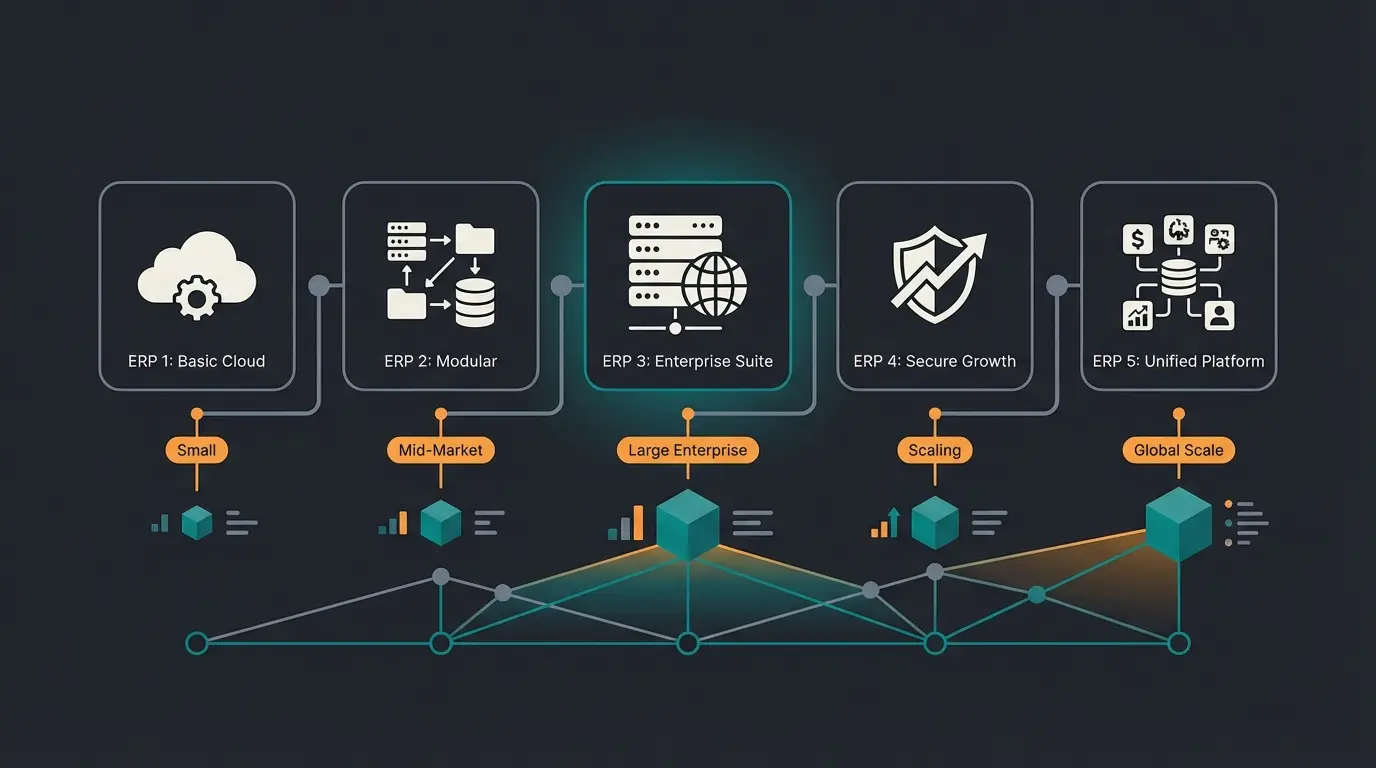
ERP System Comparison: Target Audiences & Focus
| System | Type | Target Audience | Strength | Magento Connection |
|---|---|---|---|---|
| JTL-Wawi | On-Premise/Hosting | SMB to Enterprise | Price/Performance, Logistics | JTL-Connector (Plugin) |
| Xentral | Cloud (SaaS) | Startups, D2C | Automation, UI | Native API |
| weclapp | Cloud (SaaS) | SMB | Usability, CRM | Native Integration |
| SAP | Enterprise | Corporations | Scalability, Finance | Via Middleware/Partner |
| Odoo | Modular/Open Source | All Sizes | Flexibility, Modularity | Community/Partner Modules |
Technical Implementation Strategies: How Data Flows
Deciding on an ERP is just the beginning. The technical implementation of the Magento ERP integration determines stability and performance. Understanding these principles also helps when exploring Shopware API automation for similar system architectures.
Integration Methods
- Point-to-Point (Direct API): An extension in Magento speaks directly with the ERP. Pro: Cheap, quickly set up (e.g., JTL Connector). Con: If you change the ERP, you have to rebuild everything. Scales poorly with many connections.
- Middleware / iPaaS (Integration Platform as a Service): A hub (e.g., Synesty, Alumio) sits between Magento and ERP. Pro: Flexible. Data can be transformed "in transit" (e.g., field "Color" in Magento = field "Attribute 3" in ERP). Decouples the systems. Con: Additional monthly costs.
- ESB (Enterprise Service Bus): For corporations. A central data highway for all company data.
The 2025 Tech Trend: REST vs. GraphQL
For a long time, REST API was the standard. But for 2025, a shift is emerging, especially if you're using "Headless Commerce" or PWAs (Progressive Web Apps). According to Magetop and MGT Commerce, this transition is accelerating across the industry.
- REST API: Good for bulk data updates in the background (e.g., nightly price synchronization). It's robust but often loads more data than necessary ("Over-fetching").
- GraphQL: The new standard for frontend and AI. GraphQL allows you to request exactly the data needed.
Expert Tip: When choosing your ERP, pay attention to whether it supports modern API standards. A slow API slows down your entire shop if you want to query inventory in real-time.
GraphQL vs. multiple REST calls for complex queries
AI-ready systems update inventory in under 5 minutes
Automated middleware vs. manual CSV imports
Common Mistakes (And How to Avoid Them)
From analyzing hundreds of integration projects, the same mistakes consistently emerge. According to 5MS, MGT Commerce, and WebSolutionsNYC, these pitfalls can derail even well-planned implementations.
The "Dirty Data" Problem
An ERP system doesn't forgive sloppy data. In Magento, it might not matter if a customer has "Munich" or "München" entered. The ERP (and the tax office) sees it differently. This principle is equally important in AI consultation 2025 scenarios where data quality directly impacts AI performance.
Missing "Source of Truth" Definition
Who wins when data contradicts itself? If the price is changed in Magento, does it overwrite the ERP? Or vice versa?
- Product data & prices: ERP is leading (Master)
- Inventory: ERP is leading
- Customer data: Often mixed (new creation in shop, credit check in ERP)
- Order status: Bidirectional
"Log and Continue" Error Handling
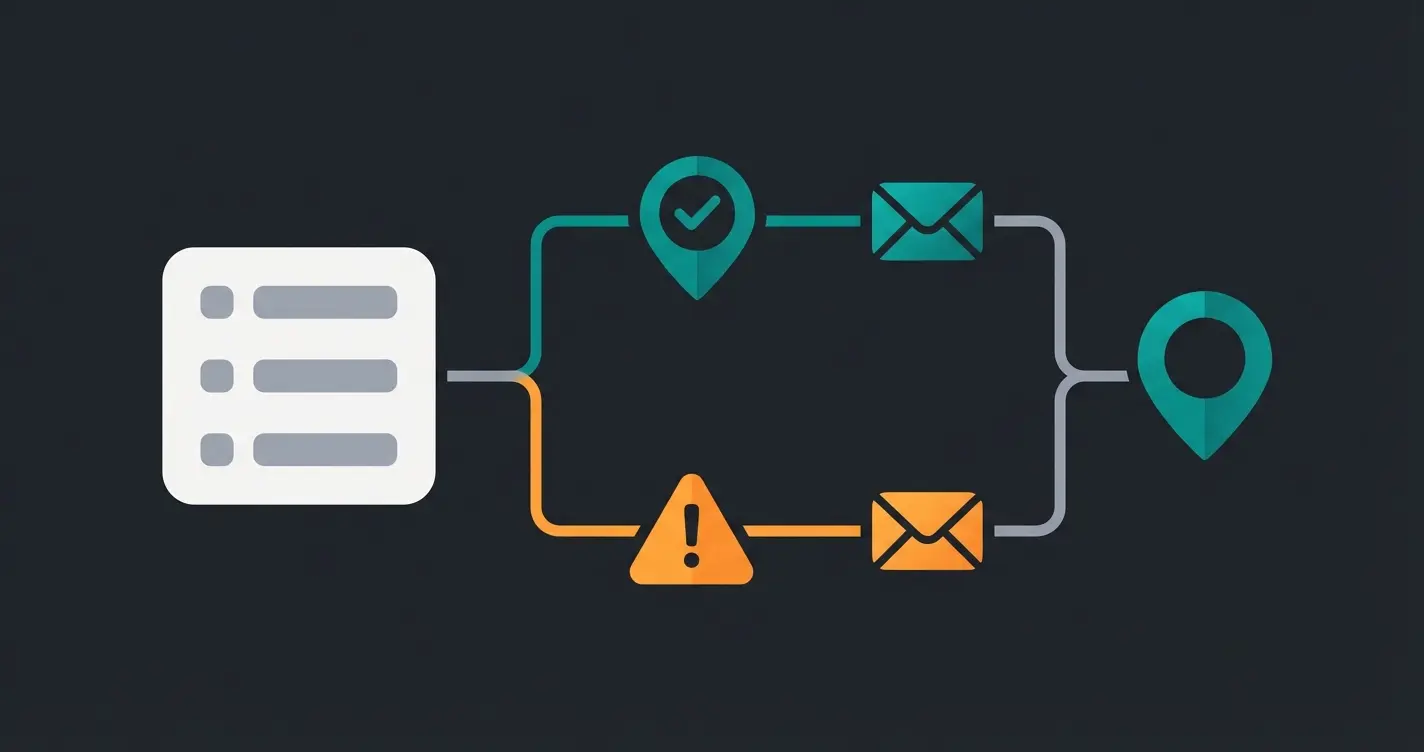
The worst mistake: An order isn't transferred to the ERP (e.g., due to a special character in the address), the system writes an error to a log file that nobody reads, and continues. The result: The order is never shipped.
Solution: Use "Queueing" and active alerting. When a sync fails, an email must go to the admin or a ticket must be created in the support system. This proactive approach aligns with best practices for AI product consultation implementations.
Checklist: Is Your Data Structure Ready for AI?
Before you think about AI tools, your homework in the ERP must be done. According to FastSimon, data structure is the single most important factor determining AI consultation success. Use this checklist when planning your AI product consultation 2025 implementation:
- ☐ Structured Attributes: Are product properties (color, material, size) maintained in separate fields or hidden in flowing text descriptions? AI needs structure.
- ☐ Real-Time Capability: Can your ERP provide inventory data in under 5 minutes?
- ☐ Vector Readiness: Do you have clean product descriptions that can be used for semantic search?
- ☐ Relationship Knowledge: Are cross-selling relationships ("Goes with") stored in the ERP? This is gold for recommendation algorithms.
- ☐ Alternative Products: Are substitute items linked when primary products are out of stock?
- ☐ Contextual Data: Do product records include usage scenarios and technical specifications beyond basic attributes?
Future Outlook: ERP as the Brain, AI as the Voice
The Magento ERP integration of the future is invisible but omnipresent. We're moving away from monolithic systems toward "Composable Commerce," where ERP, shop, PIM, and AI services work together as modular building blocks. This architectural shift is already visible in successful AI product consultation migrations.
The ERP remains the rational "brain" of the company—it knows the facts (prices, inventory, margins). The AI in the Magento shop becomes the "voice" that uses these facts to advise customers empathetically and competently. For merchants exploring similar transformations, the WooCommerce ERP guide provides additional platform-specific insights.
Frequently Asked Questions
In Germany, these terms are often used interchangeably, but they're distinct. Inventory management (Warenwirtschaft) focuses specifically on goods flow—purchasing, storage, and sales. ERP (Enterprise Resource Planning) is broader, encompassing finance, HR, production, and CRM alongside inventory management. Most modern systems blur this line, with inventory management solutions like JTL offering ERP-like features, while enterprise ERPs like SAP include comprehensive inventory modules.
Timeline varies significantly by complexity. A standard JTL or Xentral integration for a mid-sized shop typically takes 4-8 weeks including data cleanup and testing. Enterprise SAP integrations can take 6-18 months. The critical factor is data quality—shops with clean, structured data integrate much faster than those requiring extensive data normalization first.
Yes, but your data structure determines success. AI systems need structured attributes (not just free-text descriptions), real-time inventory updates (under 5 minutes), and relationship data between products. Level 3 integration specifically prepares your ERP data for AI consumption, enabling intelligent features like contextual recommendations and natural language product search.
Standard (Level 2) integration syncs basic data: inventory counts, prices, order status. AI-ready (Level 3) integration adds context: expected restock dates, product relationships, technical specifications in structured format, and customer behavior patterns. This additional data allows AI assistants to answer complex questions and make intelligent recommendations rather than just reporting stock status.
If you're selling to German customers and operating a business in Germany, yes. GoBD requires immutable booking records and complete procedural documentation. Non-compliance can result in tax authorities estimating your revenue (usually unfavorably) and significant penalties. German ERP systems like JTL, Xentral, and weclapp are designed with GoBD compliance built-in, making this automatic rather than a manual burden.
Ready to move from Level 2 to Level 3? Our AI commerce specialists will analyze your current setup and create a roadmap for AI-ready integration that drives revenue growth.
Get Your Free Integration Assessment
Lasse is CEO and co-founder of Qualimero. After completing his MBA at WHU and scaling a company to seven-figure revenue, he founded Qualimero to build AI-powered digital employees for e-commerce. His focus: helping businesses measurably improve customer interaction through intelligent automation.