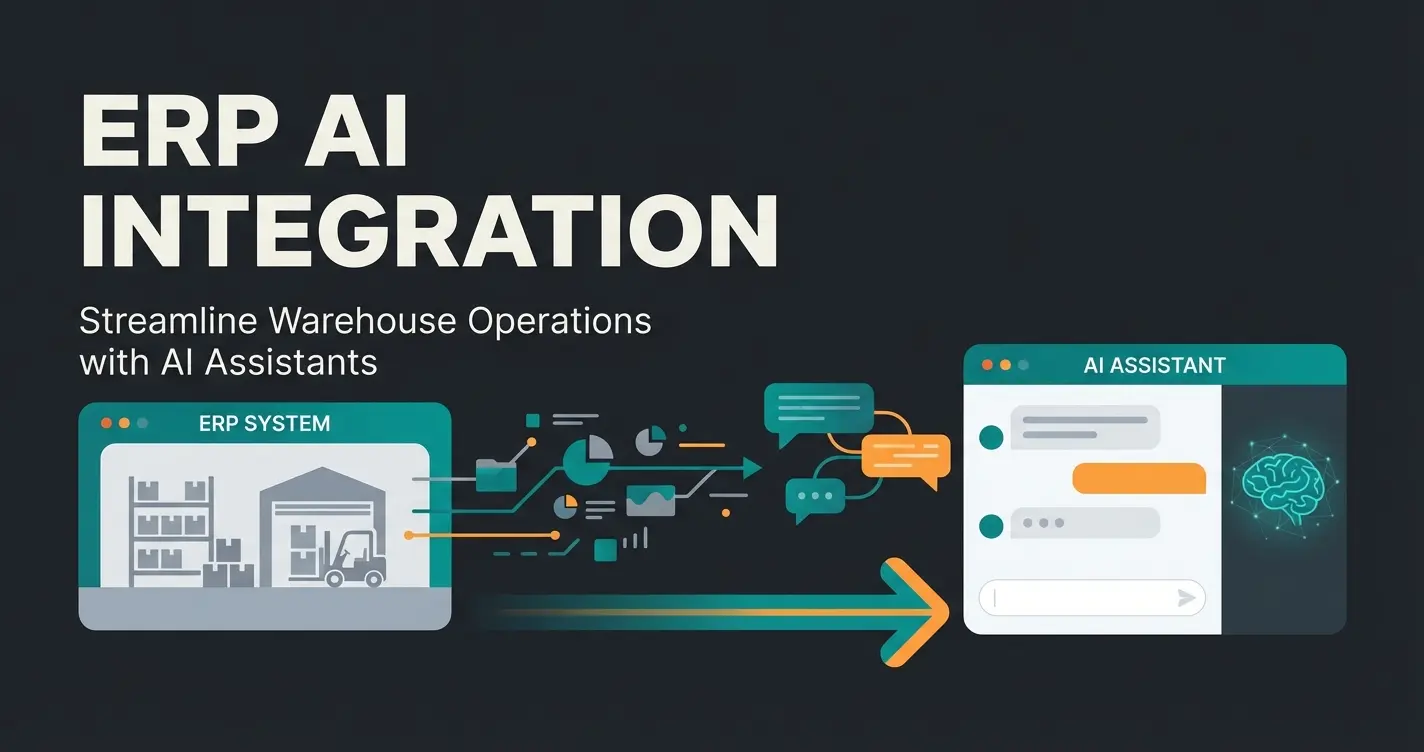
Pickware Guide 2026: ERP, WMS & Turn Inventory Data into Sales
Complete Pickware guide 2026: Learn how ERP, WMS & POS modules transform your inventory data into AI-powered sales. Pricing, pros, cons & ROI analysis.

Key Points at a Glance
- Single Source of Truth: Pickware integrates directly into Shopware (and increasingly Shopify) without error-prone interfaces, making your backend the central data foundation according to 8mylez.com and e-nitio.com.
- Mobile Process Optimization: The system consistently relies on iOS devices and barcode scanners to drastically accelerate warehouse processes, inventory counts, and shipping while reducing error rates as detailed by pickware.com and Apple's enterprise solutions.
- Data as Gold: An often overlooked advantage is data quality. Clean inventory data is the fuel for modern AI tools that function as "product consultants" on the frontend.
- Cost Structure: Pickware is a premium solution. Costs consist of software subscriptions (e.g., Shopify starting at approximately $114/month according to Shopify's app store, Shopware starting at €99 per kennersoft.de) and hardware purchases (Apple devices, scanner cases).
Introduction: Why Logistics Is the New Marketing
In e-commerce 2026, having a great product is no longer enough. Customers expect Amazon-like delivery speeds, complete transparency about availability, and consultation that understands their needs. This is where many online retailers fail – not due to the quality of their products, but the quality of their processes.
Anyone still managing inventory with Excel spreadsheets or manually entering orders loses not only time but real money through overselling and returns. However, there's a deeper level that many retailers overlook: The connection between the warehouse (backend) and the customer (frontend).
In this comprehensive guide, we analyze Pickware, the market leader for integrated merchandise management in the Shopware ecosystem (and emerging player in the Shopify world). We go beyond standard features and show you how to use Pickware not just as an administrative tool, but as a data foundation for artificial intelligence (AI) to massively increase your conversion rate. For more details, see our how Pickware compares to JTL and Xentral. Companies like those featured in the K5 Commerce Award are already leveraging this strategic approach.
The Pickware Ecosystem: More Than Just Inventory
Pickware differs from traditional ERP systems (Enterprise Resource Planning) through one decisive factor: It's not external software that gets "connected." As part of a comprehensive Shopware erp integration approach, it is – especially with Shopware – directly integrated into the shop system. This eliminates the most common source of error in e-commerce: synchronization problems between shop and inventory management.
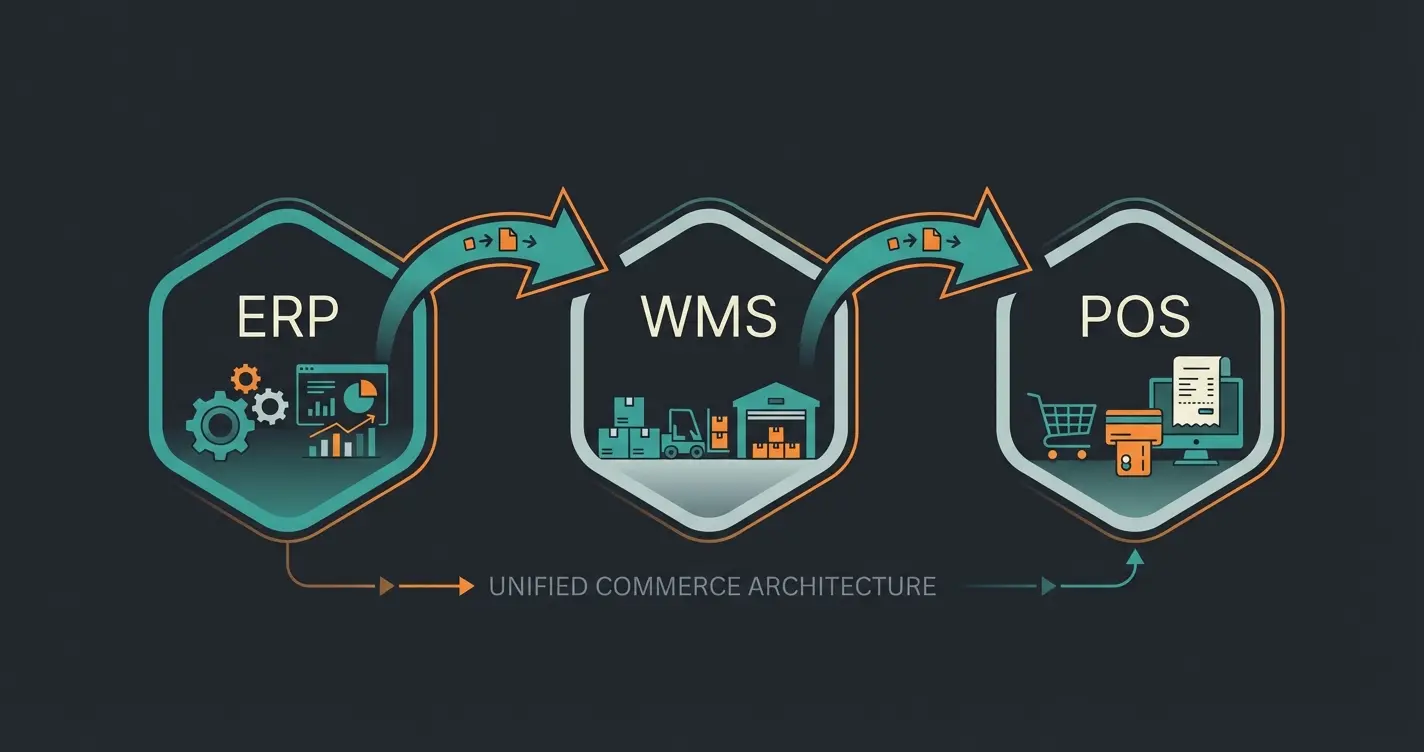
Within the broader Shopware erp landscape, the ecosystem consists of three main pillars that seamlessly interlock:
Pickware ERP: The Brain of Your Shop
The ERP module is the central control hub. Instead of maintaining data in two locations, Pickware uses your shop's database as the "single source of truth." According to pickware.com's feature documentation, this architecture provides significant advantages.
- Central Inventory Management: Whether sales come through the online shop, marketplaces, or retail store – inventory is synchronized in real-time, a key aspect of Shopware inventory management. OMR reviews consistently highlight this as a key differentiator.
- Purchasing & Suppliers: Order suggestions are based on historical sales data. You know exactly when to reorder to avoid running "out of stock" according to industry analyses from 8mylez.com.
- Returns Management: Returns are recorded directly in the system, inventory is automatically corrected, and credits are created.
Pickware WMS: The Muscles in the Warehouse
This is where the physical work happens. Pickware WMS (Warehouse Management System) replaces paper lists with mobile barcode scanners.
- Digital Pick Lists: Employees see exactly which item to find where on the iPod/iPhone. Walking routes are optimized as detailed in Apple's enterprise documentation.
- Error Prevention: The system forces employees to scan barcodes. If the wrong item is picked, the device sounds an alarm. This reduces shipping errors to near zero according to OMR's detailed analysis.
- Automatic Shipping: After picking, shipping labels (DHL, DPD, UPS, etc.) are automatically printed and tracking numbers sent to customers as documented by 8mylez.com.
Pickware POS: The Customer-Facing Interface
For retailers with physical stores (omnichannel), the POS (Point of Sale) system is essential.
- iPad Register: A modern cash register system that directly accesses online shop inventory.
- Click & Collect: Customers buy online, pick up in-store – the system processes everything correctly according to e-nitio.com's integration guide.
- Gift Cards: Gift cards purchased online can be redeemed offline and vice versa.
Hardware Requirements: Why Apple Devices?
One point that often sparks discussion is the hardware dependency. Pickware relies almost exclusively on Apple devices (iOS/iPadOS) for WMS and POS.
The Apple-Only Strategy
Why no affordable Android scanners? The reasons lie in stability, security, and fleet uniformity.
- WMS Devices: iPod Touch or iPhones are required. These are placed in special barcode scanner cases (sleds) containing a professional 1D/2D imager according to pickware.com's hardware specifications. The phone's camera is too slow for high-performance logistics.
- POS Devices: iPads are used here, often combined with receipt printers and cash drawers as outlined in Pickware's POS setup guide.
Hardware Checklist for Getting Started
If you want to implement Pickware, you'll need to plan for the following hardware investments:
- Mobile Devices: Minimum iOS 15 (iPhone SE Gen 2, iPhone 8 or newer) according to Apple's compatibility guidelines and pickware.com requirements.
- Scanner Cases: These transform smartphones into robust industrial tools.
- Printers: Network-capable label printers (e.g., Zebra ZD420) for shipping labels and document printers for delivery notes as specified in Pickware's printer documentation.
Pickware Experiences 2026: Reality Check with Pros & Cons
Based on current user reviews and forum posts (as of 2025/2026), a differentiated picture emerges. Understanding real-world Pickware experiences helps you make informed decisions about implementation.
What Users Love (Pros)
- Native Integration: "It doesn't feel like third-party software." Working directly in the Shopware backend is often cited as the biggest advantage according to Shopify app reviews and OMR user feedback.
- Support Quality: Pickware's support is frequently praised in reviews – both for availability and competence as documented by Shopify reviews and pickware.com testimonials.
- Onboarding: Training time for new warehouse employees is extremely short because the app UI is intuitive according to 8mylez.com's implementation guide. Similarly, companies implementing AI employee onboarding find that proper training accelerates adoption significantly.
Where Challenges Exist (Cons)
- Price: For very small retailers, monthly fixed costs (software + Shopware license) plus hardware are a hurdle as noted in OMR's pricing analysis.
- Shopify Limitations: While the Shopware version is deeply integrated, the Shopify app (although improving rapidly) is not yet at the same feature level regarding customization options according to e-nitio.com's comparison.
- Complexity with Customizations: Those with very specific warehouse processes that deviate from standards sometimes hit limitations, as Pickware is designed for "best practice" workflows as noted in OMR user reviews.
Users rating Shopware integration as excellent or very good
Average reduction in order fulfillment time
Error-free shipment rate with barcode scanning
Average customer support satisfaction score
The Missing Piece: From Managed Inventory to Active Sales
Now we come to the strategic core of this article. Most retailers see Pickware as a cost center ("I have to manage my warehouse"). That's too short-sighted. Pickware is your data foundation for revenue growth.
The Problem: "Data Garbage" Prevents AI Success
We live in the age of "AI Consultants." Retailers want chatbots and AI assistants (like the Shopware AI Copilot or Shopify Sidekick) that advise customers like a salesperson in a store. Companies featured at EHI Tech Days are actively exploring these frontiers.
But: An AI is only as smart as the data it receives.
- If your inventory isn't accurate, the AI recommends products that aren't available.
- If attributes (size, color, material) aren't properly maintained, the AI can't filter effectively.
- If return reasons aren't captured, the AI doesn't learn which products are problematic.
The Solution: Pickware as "Data Cleaner" for Your AI
This is where Pickware becomes a competitive advantage. Through enforced process discipline (scanning, warehousing, attribute maintenance in ERP), you generate High-Quality Data. This is the same principle that makes AI product consultation so effective – clean data enables intelligent recommendations.
Use Case: The AI Product Consultant
Imagine integrating an AI agent (e.g., based on GPT-4 or specialized e-commerce models) into your shop, similar to how AI employees transform customer interactions.
Scenario without Pickware (Data Chaos):
- Customer: "I need a red winter jacket in size M that's available immediately."
- System: Shows three jackets.
- Reality: Jacket 1 is actually sold out (inventory error), Jacket 2 is a fall jacket (wrong attribute).
- Result: Customer buys, order gets canceled, customer lost.
Scenario with Pickware + AI:
- Pickware WMS guarantees that the "5 units" inventory is accurate in real-time according to Zendesk's inventory management best practices.
- Pickware ERP delivers structured data on variants and warehouse locations.
- The AI accesses this clean data.
- AI Response: "Since you're heading to your ski vacation tomorrow, I recommend the 'AlpinX' model. We have exactly 2 pieces in Red/M in stock. If you order in the next 30 minutes, the package ships today (warehouse location A4 is already prioritized for shipping)."
Strategic Roadmap: The Commerce Stack 2026
| Layer | Technology | Function |
|---|---|---|
| Frontend (Experience) | AI Agent / Shopware Storefront | Customer consultation, personalization, upselling |
| Middleware (Logic) | Shopware 6 / Shopify | Business rules, pricing, checkout |
| Backend (Truth) | Pickware ERP & WMS | Inventory accuracy, shipping speed, returns data |
Conclusion: Invest in Pickware not just to pack packages. Invest to make your data "AI-ready." This approach is how leading retailers, including those implementing sales consulting AI solutions, are gaining competitive advantages.
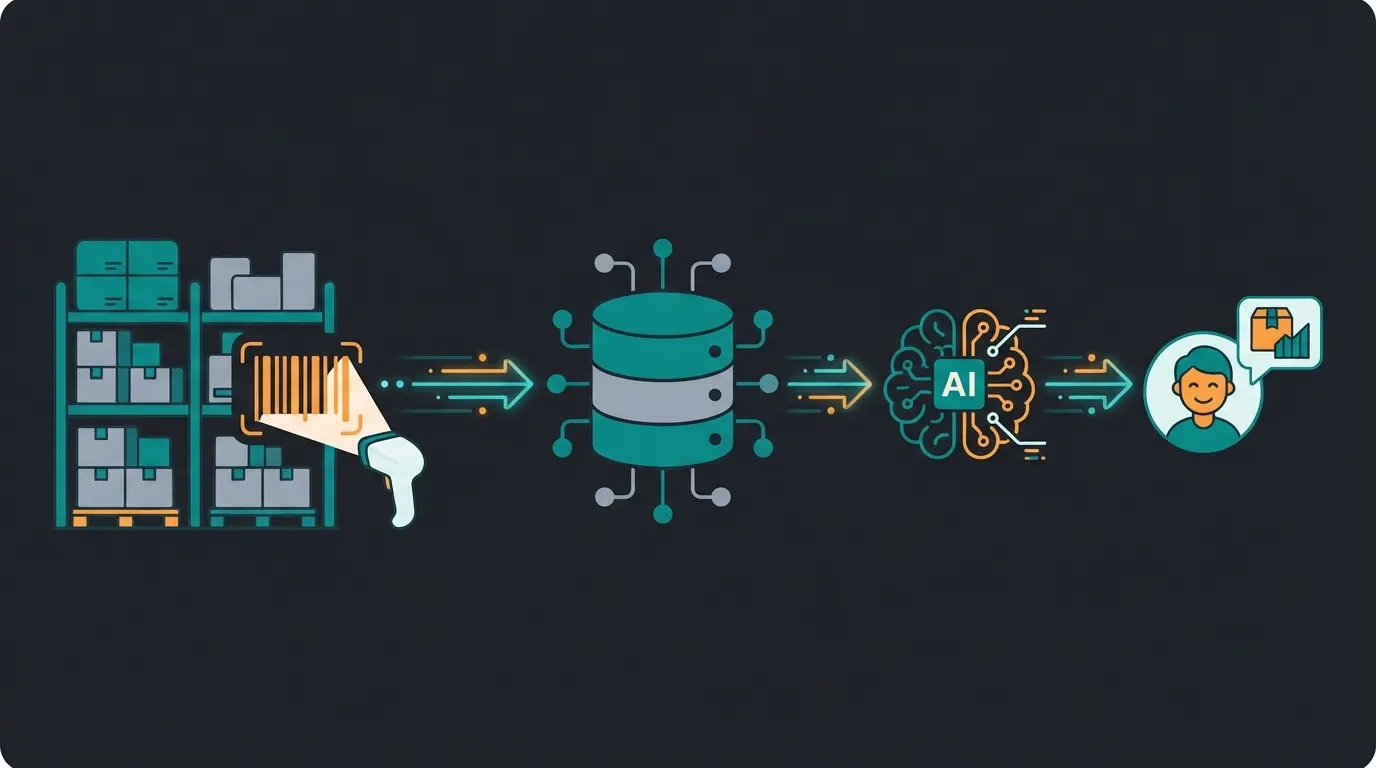
Products scanned via Pickware WMS with barcode validation
Inventory instantly updated in Shopware/Shopify backend
Clean structured data feeds AI product consultant
Customer receives accurate, personalized product suggestions
Discover how AI-powered product consultation can turn your clean Pickware data into higher conversions and happier customers.
Get Started with AI SalesPickware Pricing & ROI Calculation 2025/2026
Is Pickware too expensive? That's the wrong question. The question is: When does it pay for itself?
Pricing Structure Overview
For Shopware
Prices depend heavily on the Shopware edition.
- Pickware ERP: Often included in higher Shopware plans (e.g., Beyond) or available from approximately €99/month as an add-on according to kennersoft.de's pricing guide.
- Pickware WMS: Monthly costs apply per license/device.
- Hardware: One-time approximately €400-600 per workstation (iPod + scanner case + charging station) according to Pickware's hardware pricing.
For Shopify
Here there are clear subscription models according to Shopify's app listing:
- Starter: Approximately $114/month (includes 1000 orders).
- Scaling: Additional orders cost extra (approximately $0.23 per order in the Starter plan).
- This means: The more successful you are, the more you pay – but the more you also save through process automation.
The ROI Calculation (Return on Investment)
Let's do a calculation example for a medium-sized shop:
- Shipping Volume: 1000 packages/month.
- Manual Packing Time: 5 minutes per package (print label, find items, check).
- Pickware Packing Time: 2 minutes per package (route optimization, scan, auto-print).
- Time Savings: 3 minutes x 1000 = 3000 minutes = 50 hours/month.
At a warehouse worker hourly wage of $25, you save purely operationally $1,250 per month.
Additionally:
- Fewer returns due to packing errors (a packing error costs an average of $18-25 in handling).
- Higher conversion through AI-supported availability display.
Result: Even with monthly costs of $350-550 for Pickware, ROI is often positive within just a few months.
50 hours saved at $25/hour
Fewer picking errors mean fewer costly returns
AI-powered availability and recommendations
Typical time to positive ROI
Comparison: Shopware vs. Shopify Integration
Since Pickware was originally developed for Shopware, there are differences in integration depth as analyzed by e-nitio.com.
| Feature | Shopware (Pickware Native) | Shopify (Pickware App) |
|---|---|---|
| Integration | Direct in Core (Plugin) | Via API (App) |
| Data Storage | Own database tables in shop | Synchronization with external Pickware servers |
| POS | Fully integrated (TSE compliant DE) | Separate app connection |
| Target Audience | Complex B2C/B2B shops | D2C brands, fast-growing |
Recommendation: For Shopware users, Pickware is almost a "no-brainer" - our dedicated Shopware pickware guide covers setup details. For Shopify users, it's a strong option, especially when seeking German legal compliance (DATEV, TSE) and professional Shopware accounting workflows that many US apps don't provide.
Backend vs. Frontend Automation: The Complete Picture
Understanding the distinction between backend and frontend automation is crucial for building a modern commerce stack. While Pickware excels at backend operations, combining it with AI-powered frontend tools creates a complete solution.
| Feature | Pickware (Backend) | AI Consultant (Frontend) |
|---|---|---|
| Stock Management | Real-time inventory tracking and updates | Displays accurate availability to customers |
| Shipping Labels | Automatic generation and printing | Informs customers of shipping timelines |
| Customer Questions | N/A | Handles social media inquiries and chat |
| Product Recommendations | Provides structured product data | Delivers personalized suggestions like AI assistants |
| Returns Handling | Processes and restocks returns | Learns from return reasons to improve recommendations |
This combined approach is why businesses implementing both backend optimization through Pickware and frontend AI tools are seeing the highest conversion improvements.
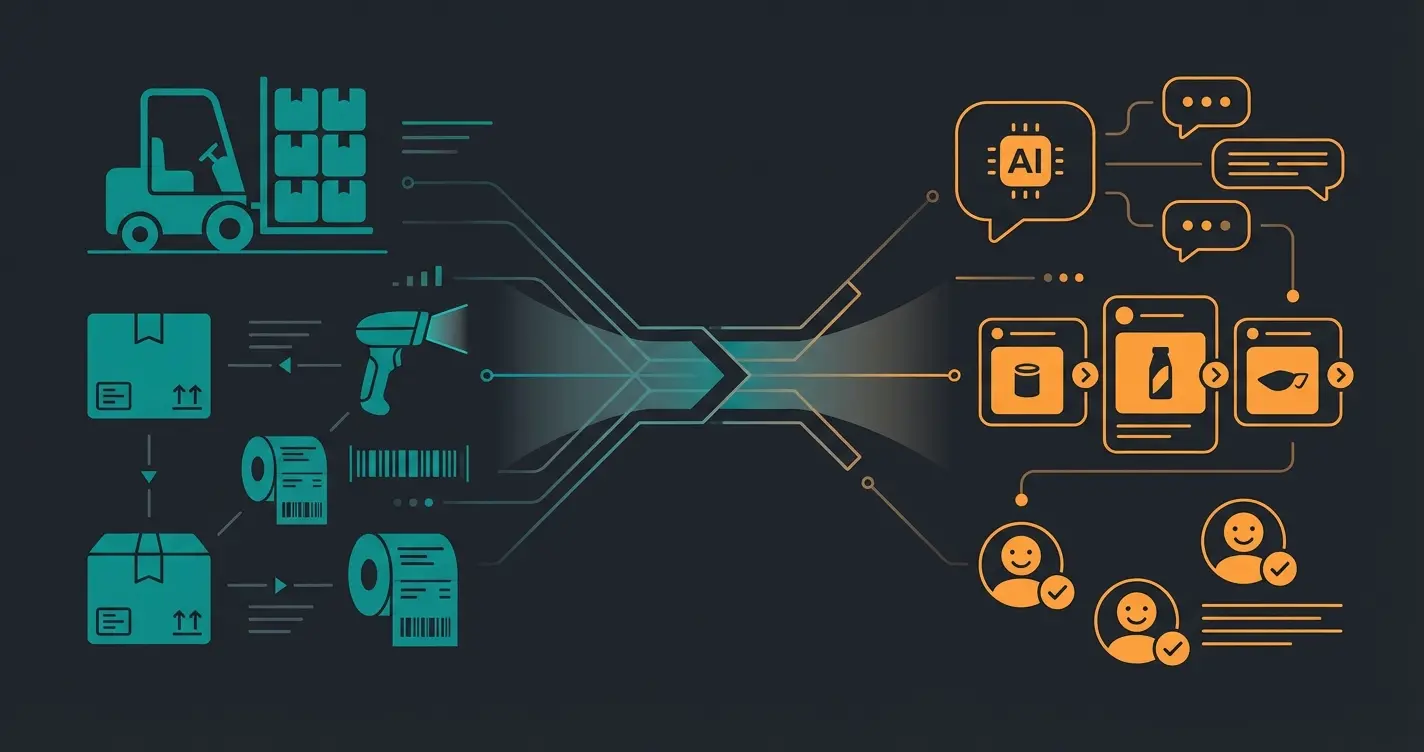
Is Pickware Right for You? Decision Checklist
Before investing in Pickware, use this checklist to determine if it's the right fit for your e-commerce operation:
- ☐ Do you use Shopware or Shopify as your shop system?
- ☐ Do you operate your own warehouse (not dropshipping)?
- ☐ Do you ship more than 50-100 packages per day?
- ☐ Are you willing to invest in Apple hardware for long-term stability?
- ☐ Do you have complex inventory with multiple variants (size, color, etc.)?
- ☐ Is reducing picking errors and shipping times a priority?
- ☐ Do you want to prepare your data for AI-powered sales tools?
- ☐ Do you operate physical retail locations (omnichannel)?
If you answered "yes" to 5 or more questions, Pickware is likely a strong fit for your business. Companies have found that the combination of clean backend data and intelligent frontend tools delivers exceptional results.
Conclusion: Your Next Strategic Steps
Pickware in 2026 is far more than a tool for scanning barcodes. It's the operational backbone of successful e-commerce companies in the Shopware and increasingly Shopify ecosystems.
Key Takeaways
- Create Order: Use ERP and WMS to eliminate chaos in your warehouse.
- Eliminate Errors: Barcode-guided process management saves real money on returns.
- Secure the Future: Use clean data from Pickware to feed AI tools that offer your customers a better shopping experience on the frontend.
Is Pickware Right for You?
- Yes, if you operate your own warehouse.
- Yes, if you ship more than 50-100 packages per day.
- Yes, if you're willing to invest in Apple hardware for long-term peace of mind.
Your Next Step
Get your logistics in order. When the data foundation is in place, the path is clear for the next stage of e-commerce evolution: Intelligent, AI-driven sales.
Frequently Asked Questions About Pickware
Pickware ERP is the central management system handling inventory data, purchasing, supplier management, and returns processing in your Shopware or Shopify backend. Pickware WMS (Warehouse Management System) is the mobile component that optimizes physical warehouse operations through barcode scanning, digital pick lists, and automated shipping label generation. ERP is the 'brain' for data management, while WMS is the 'muscles' for physical execution.
Currently, Pickware WMS and POS rely almost exclusively on iOS devices (iPhone, iPod Touch, iPad). This Apple-only strategy ensures stability, security, and consistent performance across all devices. While Android alternatives would be cheaper initially, Apple devices offer better update security, longer support cycles, and higher resale values, often making the total cost of ownership comparable.
Implementation typically takes 2-4 weeks depending on warehouse complexity and data migration requirements. Most businesses see positive ROI within 2-3 months. For a shop shipping 1000 packages monthly, time savings alone (50+ hours) often exceed monthly software costs. Additional savings from reduced picking errors and increased conversions accelerate payback further.
Pickware is a premium solution best suited for shops shipping 50+ packages daily. For smaller volumes, the monthly costs (software plus hardware investment) may not justify the automation benefits. However, if you plan to scale significantly or want to implement AI-powered sales tools that require clean data, early investment in Pickware builds a solid foundation.
Pickware creates the clean, structured data that AI tools need to function effectively. Real-time inventory accuracy ensures AI product consultants never recommend unavailable items. Structured product attributes enable intelligent filtering and personalization. The integration typically works through the shop system's API, where AI tools read Pickware-managed data to provide accurate recommendations and availability information to customers.
See how combining clean inventory data with intelligent AI sales tools can transform your e-commerce conversion rates and customer experience.
Start Your AI Journey Today
Lasse is CEO and co-founder of Qualimero. After completing his MBA at WHU and scaling a company to seven-figure revenue, he founded Qualimero to build AI-powered digital employees for e-commerce. His focus: helping businesses measurably improve customer interaction through intelligent automation.