Is Your Online Shop a Digital Shelf or an Active Salesperson?
The decision between Shopware vs JTL is more complex than ever for online retailers in 2025. It's no longer just a choice between two software solutions—it's a decision between two fundamentally different e-commerce philosophies: Maximum logistics efficiency (JTL) versus Emotional brand building (Shopware).
But while retailers argue over features and licensing costs, many overlook a third, crucial dimension that will determine market success in 2025: Active customer consultation through AI. According to amexus.com, the distinction between these platforms has become even more pronounced in recent years.
In this comprehensive guide, we analyze not only the technical and financial differences between these two market leaders—taking into account the latest pricing models (Shopware Fair Usage Policy & JTL Editions). We also uncover the content gap that both systems leave behind—and how you can close it to turn visitors into buyers. For more insights on leveraging AI in online retail, explore our guide on AI-powered e-commerce solutions.
Executive Summary: The Quick Verdict for Decision-Makers
If you're short on time, here's the compressed decision guide for 2025:
- Choose JTL-Shop if: Your focus is on process efficiency, marketplace integration (Amazon/eBay), and inventory management. You have many SKUs (articles), need a free, powerful merchandise management system (JTL-Wawi), and want to keep ongoing fixed costs manageable. You're more of a 'distributor' than a 'brand.'
- Choose Shopware 6 if: Your focus is on brand building, storytelling, and scalability. You need maximum design freedom, rely on content marketing, and have the budget for agencies and hosting. You're a D2C brand or a growing mid-sized company that needs to offer a unique shopping experience.
- The problem with both: Both systems are excellent at displaying products and processing transactions. But by default, both are 'self-service stores.'
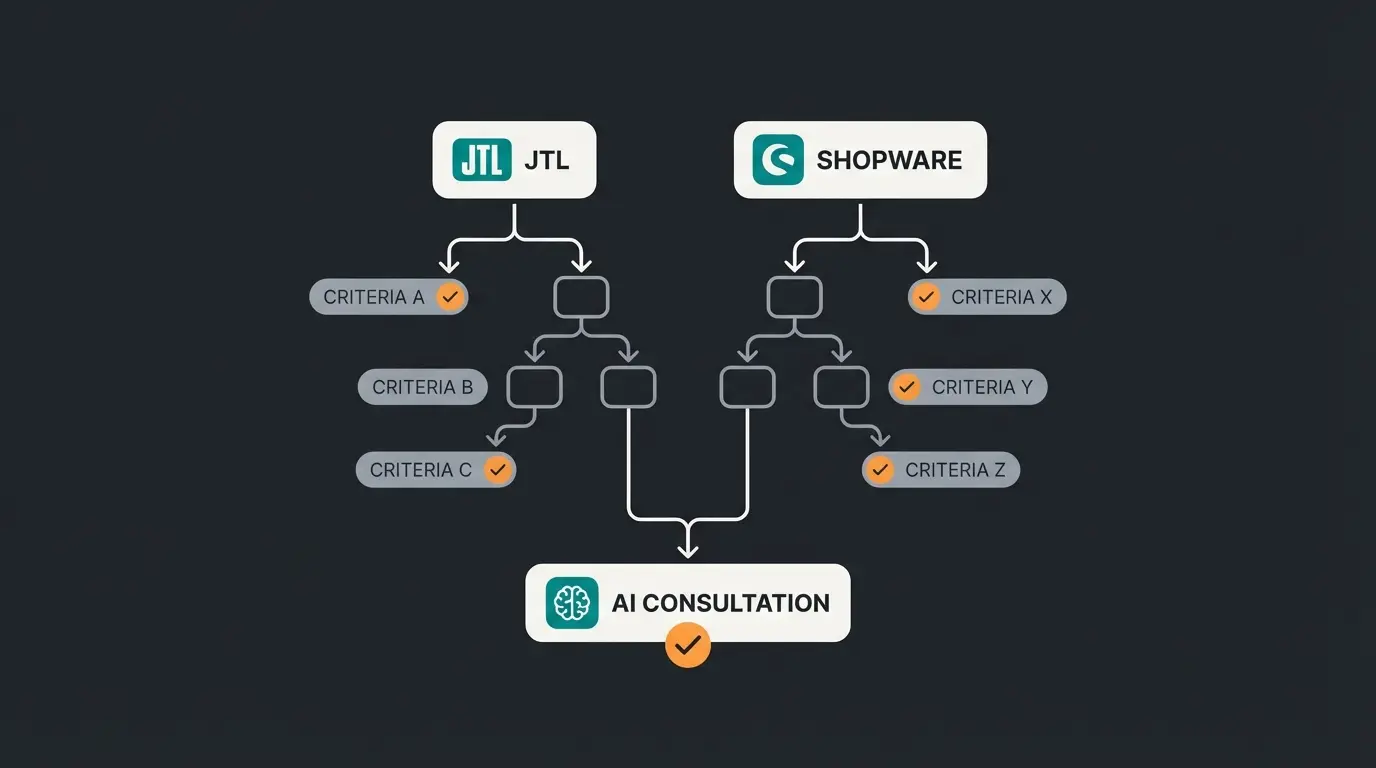
- The solution (The game changer): Regardless of which system you choose—to remain competitive in 2025, you need an AI consultation layer. While Shopware and JTL provide the infrastructure, a specialized AI solution takes on the role of the active salesperson who advises customers before they bounce.
The Core Philosophy: The Warehouse Manager vs. The Designer
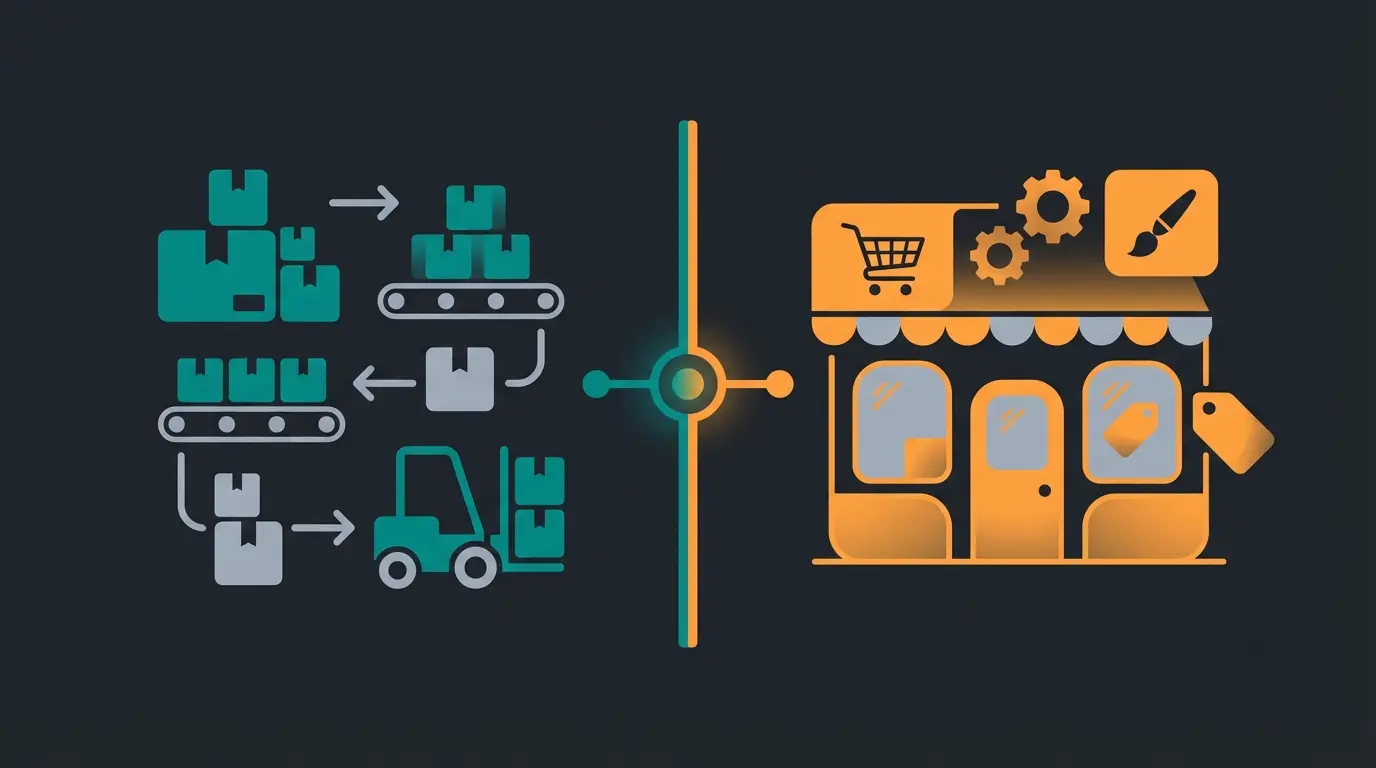
To understand which system suits you, we need to examine the DNA of both providers. This origin determines every feature and every workflow.
JTL: 'The Warehouse Manager' (Efficiency First)
JTL comes from merchandise management. The JTL-Wawi is the heart of the system; the online shop is 'just' another sales channel alongside Amazon, eBay, and Kaufland. As webiprog.de notes, this heritage shapes everything about the platform.
- The approach: Data-driven, pragmatic, functional.
- The strength: Seamless synchronization. When you change a price in Wawi, it's updated in the shop and on Amazon within seconds.
- For whom? Retailers who 'move boxes.' If you sell 50,000 spare parts, you don't need emotional imagery—you need a high-performance search and stable inventory management.
Shopware: 'The Brand Builder' (Experience First)
Shopware comes from marketing. The platform was developed to emotionally charge products. According to powercommerce.ba, this design-first approach has made Shopware particularly popular among lifestyle brands. For a deeper comparison of platform approaches, see our analysis of Shopware vs Shopify.
- The approach: Design-driven, flexible, API-First.
- The strength: The Shopping Experiences (Erlebniswelten). You can build landing pages via drag-and-drop that merge content and commerce without writing a single line of code.
- For whom? Lifestyle brands, fashion, supplements—anything that needs explanation and emotion to be sold.
Feature Showdown: The Direct Comparison (2025 Edition)
Here you'll see the hard facts in comparison. Pay particular attention to the new pricing structures for 2025.
| Feature | JTL-Shop 5 | Shopware 6 |
|---|---|---|
| Core Focus | Inventory Management & Marketplaces | Content & Customer Experience |
| ERP / Wawi | Included & Powerful (JTL-Wawi is free core) | Requires external connection (e.g., Pickware, Xentral, SAP) |
| CMS / Design | Solid (OnPage Composer), but limited | Excellent (Shopping Experiences), full design freedom |
| Technology | PHP, Smarty (Monolithic with API approaches) | Symfony, Vue.js (API-First / Headless Architecture) |
| B2B Functions | Good (Customer groups, tiered pricing native) | Very strong (B2B Suite in Evolve/Beyond plans) |
| Marketplaces | Natively integrated (JTL-eazyAuction) | Requires middleware (e.g., Channable) or apps |
| Entry Costs | Affordable (Start Edition free up to 500 items) | Expensive (Community Edition only free up to €1M GMV*) |
| AI Features (Native) | Rudimentary (Focus on plugins) | 'AI Copilot' (Content creation, but no selling) |
Key Technical Insight
Shopware 6 follows a headless approach. This means the frontend (what the customer sees) is decoupled from the backend (database). This makes Shopware extremely flexible for integrating cutting-edge tools—like external AI sales agents. As 2hatslogic.com explains, this architecture opens up significant possibilities for innovation.
JTL-Shop 5 is more tightly integrated. This makes setup easier ('everything from one source'), but modifications to the core are often more difficult and less flexible. For more on Shopware's AI capabilities, check out our detailed guide. Solution25.com provides additional technical comparisons between these approaches.
The AI Gap: Where Both Platforms Fall Short
Here lies the biggest misconception in current e-commerce discourse. When Shopware talks about 'AI,' they mean back-office efficiency. When JTL talks about automation, they mean warehouse processes.
Nobody talks about who actually sells the product to the customer.
Shopware AI Copilot: The Assistant for the Editor
Shopware has invested heavily in the 'AI Copilot' in 2024/2025. The features are impressive but purely operational. According to Shopware's official documentation, the capabilities include:
- Creating product descriptions at the push of a button.
- Summarizing reviews.
- Generating image keywords for SEO.
- Export assistants for data.
The problem: This AI helps you maintain the shop. It doesn't actively help the customer with their decision. When a customer asks: 'Which bicycle is right for my back pain history?'—the Shopware AI Copilot stays silent. Learn more about the difference between operational AI and conversational commerce solutions that actively engage customers.
JTL & AI: The Search for Plugins
JTL is more conservative. There are hardly any native AI features in the core. JTL relies on partners like Doofinder or Clerk.io for intelligent search and product suggestions ('Customers also bought...'). As noted by Doofinder and JTL Software, these integrations provide basic smart search capabilities.
Here too: It's reactive AI. It reacts to search terms, but it doesn't lead a conversation.
The Solution: The 'Consultation Layer'
Here lies your opportunity to stand out from the competition. Instead of relying solely on Shopware or JTL, you should integrate an AI consultation layer (AI product consultation).
- The concept: An AI agent that acts like an experienced salesperson in a store.
- The difference: It doesn't wait for filter clicks. It asks: 'What do you need the product for?' and recommends based on answers, not just keywords.
- Integration: Thanks to Shopware's open API structure (and JTL's REST-API), such a solution can be seamlessly integrated today.
Shopware AI Copilot | JTL Native | AI Sales Agent
Shopware AI Copilot | JTL Native | AI Sales Agent
Only specialized AI agents provide real consultation
Significant advantage for dedicated AI solutions
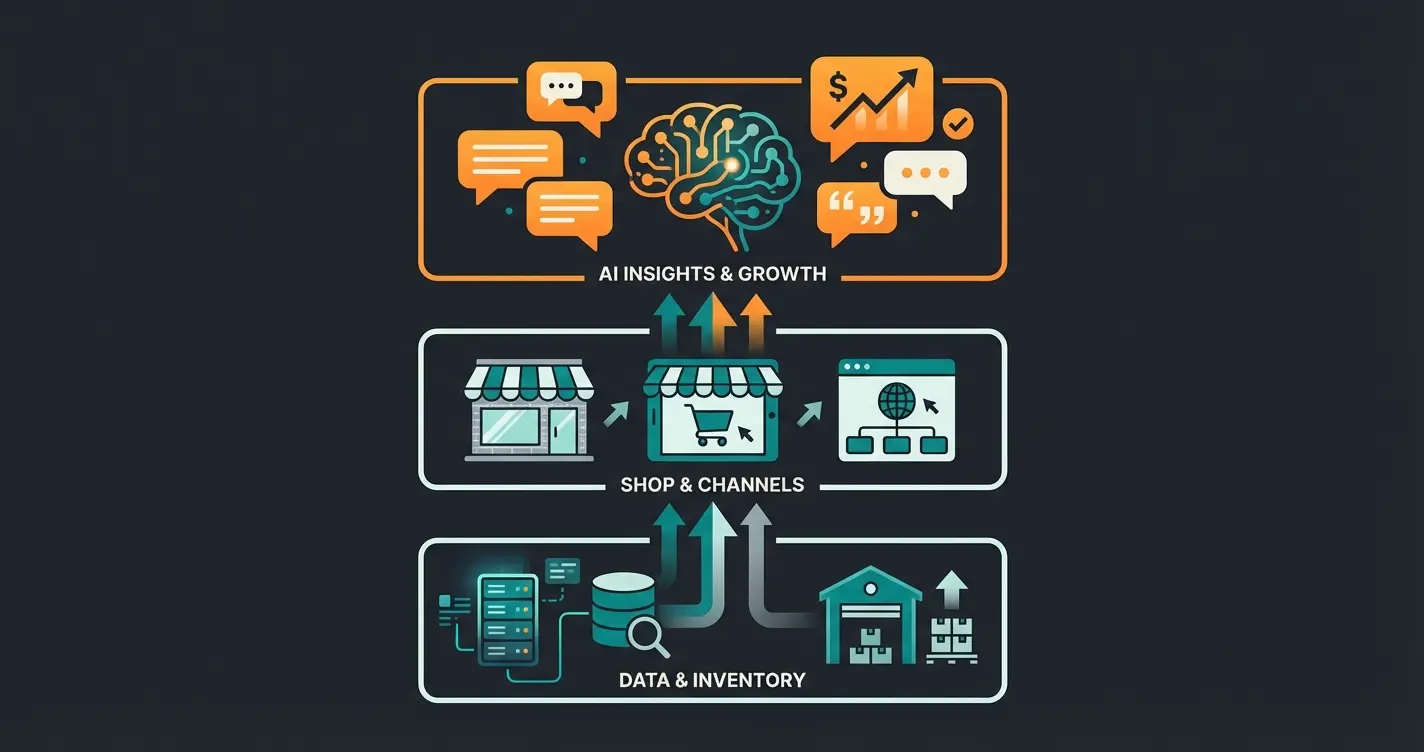
The E-Commerce Tech Stack 2025: A Layered Approach
Understanding your shop as a layered system helps clarify where each platform excels—and where the consultation gap exists.
JTL-Wawi (or another ERP). This is where inventory lives. JTL almost always wins here.
Shopware 6 or JTL-Shop. This is where the transaction happens.
AI Consultation Layer. This is where the actual selling happens.
This layered view reveals why many successful retailers use JTL-Wawi as their backend (for efficiency) and Shopware 6 as their frontend (for design and API capability). As JTL-Software.com explains, this combination ('JTL Connector for Shopware') is extremely popular because it combines the best of both worlds—and provides the perfect foundation for AI tools. For businesses deciding between B2B and B2C approaches, our Shopware B2B vs B2C comparison offers additional insights.
Whether you choose Shopware or JTL, close the consultation gap with AI-powered product advice that converts browsers into buyers.
Start Your Free TrialPricing & Total Cost of Ownership (TCO): The 2025 Reality
In 2025, both providers have radically adjusted their pricing models. The days of 'buy once, use forever' are over.
Shopware: The 'Fair Usage Policy' Trap
Until recently, the Shopware Community Edition (CE) was the holy grail: Free and powerful. According to erock-marketing.de and webwirkung.ch, the new policy represents a significant shift. For a detailed breakdown of Shopware editions Rise, see our comprehensive guide.
As of March 2025, the Fair Usage Policy (FUP) applies:
- Under €1M GMV (revenue): The CE remains free to use.
- Over €1M GMV: You must upgrade to a paid plan (Rise, Evolve, or Beyond).
- The costs: Shopware Rise starts at €600/month. Evolve (important for B2B) is often €2,400/month.
Conclusion: Shopware penalizes success with high license jumps. Plan for these costs if you want to grow. As themeware.design and stefanpilz.ltd note, understanding these tiers is crucial for long-term planning.
JTL: The New Editions Model
JTL has also raised prices and restructured into 'Editions.' According to uptain.de and taxandbytes.de, the new structure includes:
- JTL Start: Free (up to 500 items/orders). Ideal for beginners.
- JTL Advanced: Approx. €99/month. Required for more items and support.
- JTL Pro: Approx. €299/month.
- Wawi costs: The Wawi itself is often included in the package, but hosting (Cloud) or multi-user licenses cost extra.
Conclusion: JTL is significantly cheaper in direct comparison, especially for retailers with high turnover but low margins.
The Hidden Costs
Don't forget the 'invisible' costs when comparing:
- Hosting: Shopware 6 is performance-hungry. Good Shopware hosting often costs €150–300/month. JTL is often more frugal here.
- Agency: Shopware developers are more expensive. Hourly rates of €120–160 are normal. JTL service partners are often slightly lower.
- Opportunity costs: What does it cost you to not offer consultation? If 98% of your visitors leave without buying because they were unsure, that's the most expensive item on your bill.
Technical Deep Dive: Headless & Integration Capabilities
Why is 'Headless' the buzzword of 2025, and why does it affect your choice between Shopware and JTL? Understanding this is crucial for anyone considering Shopware AI integration.
The 'Headless' Reality
In a headless architecture, the backend (database, logistics) is separated from the frontend (design, website). They communicate only via APIs.
- Shopware 6: Is built API-First. Every function in the shop is accessible via an API. Advantage: You can extremely easily integrate third-party tools (like your AI consultation, mobile apps, voice commerce). The AI can directly access the shopping cart or filter products.
- JTL-Shop 5: Is more traditionally built. There is a REST-API and modern approaches with the NOVA template, but the core is monolithic. Disadvantage: Deep integrations often require complex plugin development. Connecting an AI that 'controls' the shop is more complex here than with Shopware.
For those comparing other platforms, our Shopware vs WooCommerce analysis and Shopware vs OXID comparison provide additional context on how headless architecture impacts platform selection.
Customer Journey Comparison: Standard vs. AI-Assisted
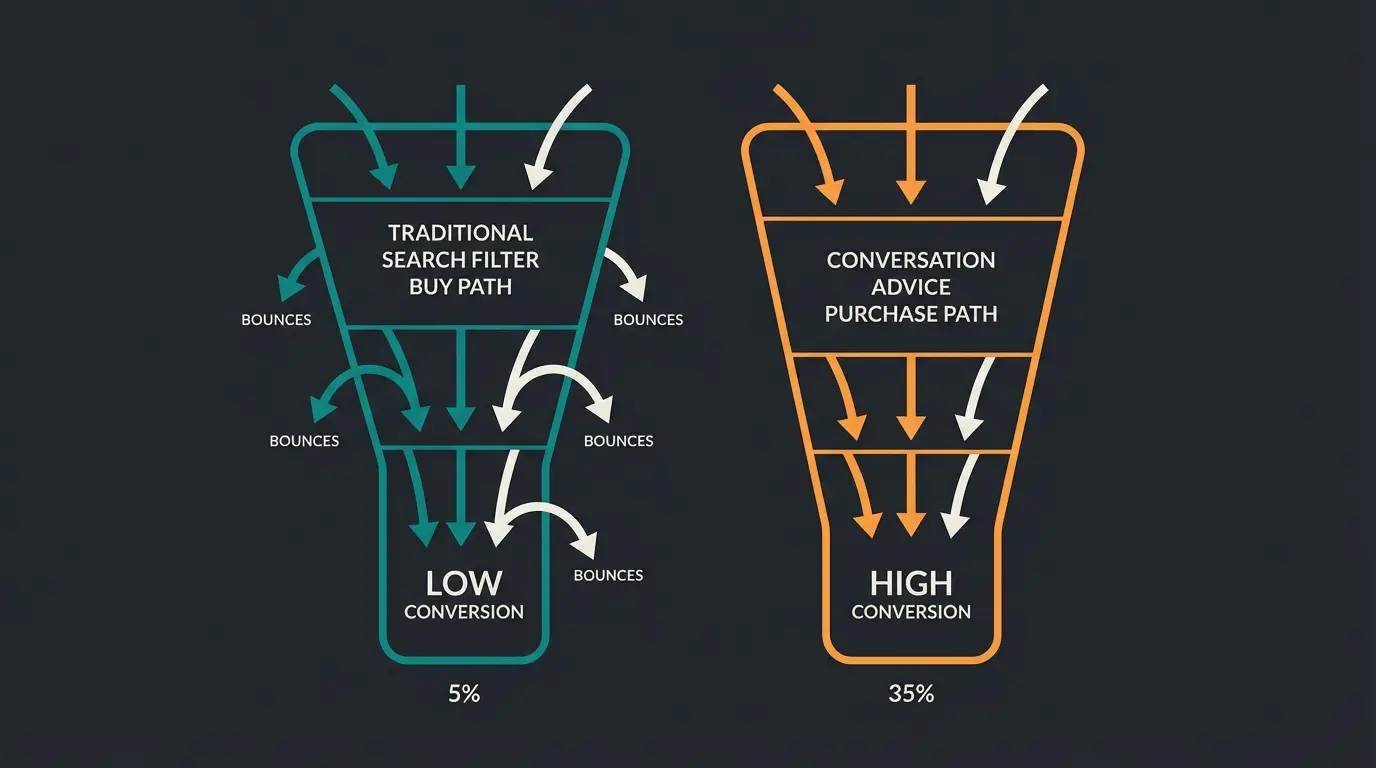
The difference between a standard shopping experience and an AI-assisted one becomes clear when you map the customer journey:
| Stage | Standard Journey (Shopware/JTL) | AI-Assisted Journey |
|---|---|---|
| Discovery | Search → Filter → Browse | Ask Question → Get Personalized Recommendations |
| Consideration | Read Specs → Compare → Doubt | Guided Conversation → Expert Advice |
| Decision | Add to Cart / Bounce (98%) | Confident Purchase → Higher Conversion |
| Result | High Traffic, Low Conversion | Lower Bounce, Higher AOV |
This is where AI sales agents and Shopware 6 chatbots become essential—they bridge the gap between showing products and actually selling them. The integration of Shopware product finders can further enhance this guided selling approach.
Strategic Recommendation
Many successful retailers use JTL-Wawi as their backend (for efficiency) and Shopware 6 as their frontend (for design and API capability). This combination ('JTL Connector for Shopware') is extremely popular because it combines the best of both worlds—and provides the perfect foundation for AI tools.
German Market Specifics: Legal Compliance Matters
For retailers operating in the German market, 'Rechtssicherheit' (legal compliance) is a major consideration. Both platforms offer strong German-language support and GDPR compliance features, but implementation differs:
- JTL: Built in Germany, deeply integrated with German tax requirements, automatic legal text updates through partnerships.
- Shopware: Also German-made, strong plugin ecosystem for legal compliance, regular updates for changing regulations.
- AI Integration: Any AI consultation layer must also comply with German privacy laws—ensure your solution offers GDPR-compliant data handling.
Conclusion & Action Recommendations
The question 'Shopware vs JTL' can no longer be answered generically in 2025. It depends on your strategy.
The Decision Matrix
| Scenario | Recommendation | Rationale |
|---|---|---|
| Startup / Small Budget | JTL-Shop (Start Edition) | Free entry, Wawi included, ready to go immediately. |
| Marketplace Focus (Amazon/eBay) | JTL-Shop | The native connection via JTL-eazyAuction is unmatched. |
| Lifestyle Brand / D2C | Shopware 6 | Shopping Experiences and storytelling are mandatory here. |
| B2B Mid-Market | Shopware 6 (Evolve) | The B2B suite and customer portals are market-leading. |
| Tech Innovator (AI Focus) | Shopware 6 | API-First architecture facilitates integration of AI agents. |
The Final Advice: Think Beyond the Shop
Choosing only between JTL and Shopware is like choosing between two shelving systems. Both are stable, both work.
But in 2025, the winner isn't the retailer with the best shelf, but the one with the best salesperson.
- If you choose JTL: Invest the saved license money in external tools to improve UX.
- If you choose Shopware: Use the API freedom to integrate real innovations like AI-powered product consultation.
FAQ: Common Questions About Shopware vs JTL
Yes, this is a very common combination ('Best of Breed'). Via the JTL-Connector, you can connect Shopware 6 to JTL-Wawi. You use JTL for logistics and Shopware for marketing. Many successful mid-sized retailers use this exact setup to get the best of both worlds.
Above €1M in revenue, yes. The license costs (starting at €600/month) plus higher hosting and agency costs make Shopware the premium solution. JTL remains more cost-efficient even when scaling. However, the investment may be worth it for brands that need the design flexibility and API capabilities.
Both are technically solid. Shopware offers better opportunities for content marketing (landing pages, blogs) through Shopping Experiences, which indirectly strengthens SEO. JTL is technically clean but often requires more manual work for content strategies.
No, but it's easier. Since Shopware is designed 'headless,' chatbots and AI agents can be more deeply integrated into the user journey (e.g., cart manipulation by the AI). With JTL, this is possible but often requires custom interface programming.
Focusing only on the platform's native features without considering the consultation gap. Both platforms excel at transactions but lack active selling capabilities. The smartest retailers add an AI consultation layer regardless of which platform they choose.
Regardless of whether you choose Shopware or JTL, add the missing AI consultation layer that transforms visitors into buyers. Start converting today.
Get Started Free
Lasse is CEO and co-founder of Qualimero. After completing his MBA at WHU and scaling a company to seven-figure revenue, he founded Qualimero to build AI-powered digital employees for e-commerce. His focus: helping businesses measurably improve customer interaction through intelligent automation.