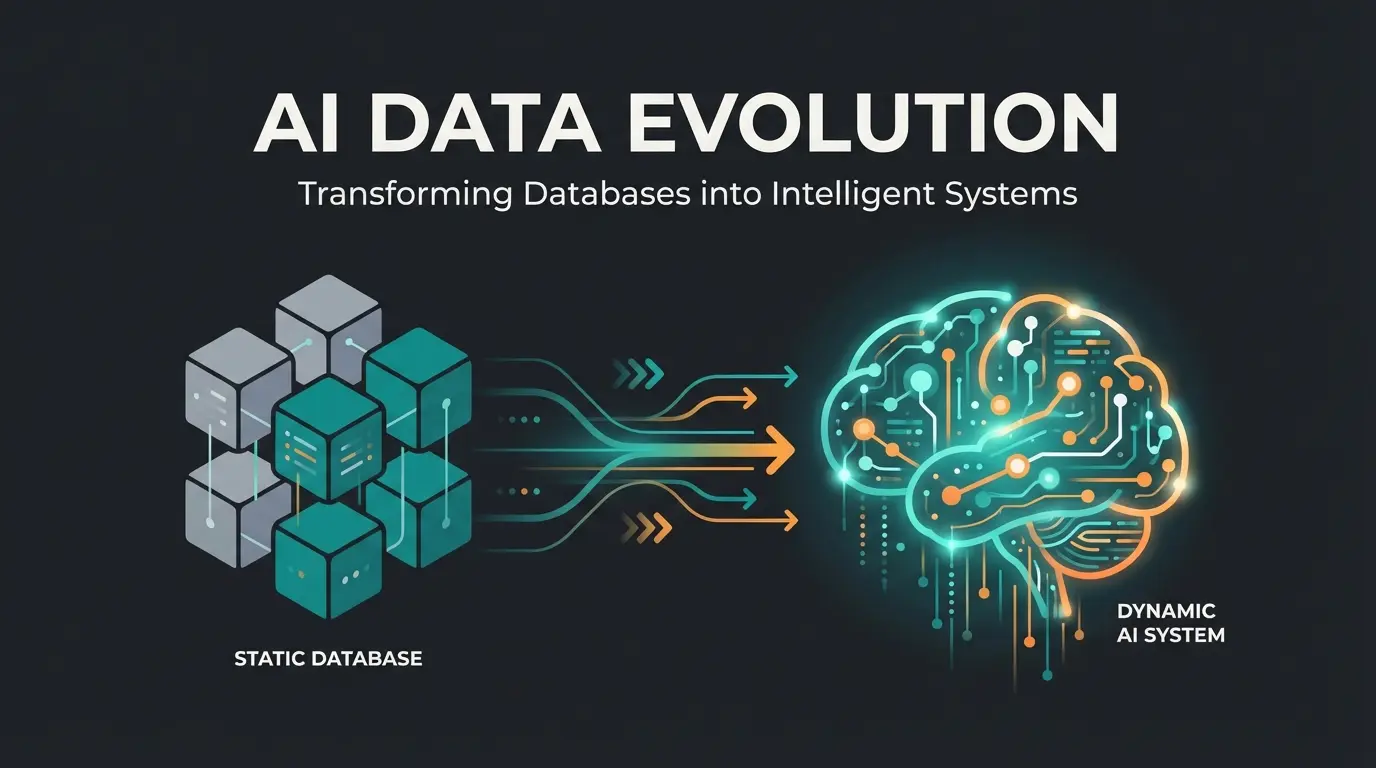
Introduction: Why the Paperless Office Was Just the Start
When you hear the term process digitization, what comes to mind first? Probably scanning incoming invoices, digital vacation requests, or implementing a CRM system. That's understandable, because over the past decade, the German economy has focused precisely on this: administrative efficiency.
But we're now in 2025, and the rules of the game have changed. While many companies in the German SME sector are still struggling to replace their filing cabinets with PDFs, the technological frontier has long since shifted. Studies from cancom.info show that while 9 out of 10 companies have a digital strategy, nearly half report problems with implementation. Even more alarming: many digitization initiatives remain stuck in the "back office" – where costs are reduced, but no new revenue is generated.
The real potential of process digitization today no longer lies in administration, but in value creation. It's no longer just about digitizing analog processes to save paper. It's about scaling expert knowledge.
In this article, you'll learn why the conventional definition of digitization is no longer sufficient for your sales success and how you can make the leap from mere data management to automated decision-making through the use of intelligent AI systems. We'll show you how to resolve the "human bottleneck" in consulting without sacrificing quality.
What Is Process Digitization Today? A Redefinition
To understand where the journey is heading, we must first clarify where we stand. In the classic reading, process digitization refers to the conversion of analog workflows into digital formats. However, this definition falls short in the age of Artificial Intelligence (AI).
Definition and Differentiation
Traditionally, there is often no distinction made between digitization, automation, and Intelligent Process Automation (IPA). Understanding these differences is crucial for making strategic decisions about your digital transformation journey.
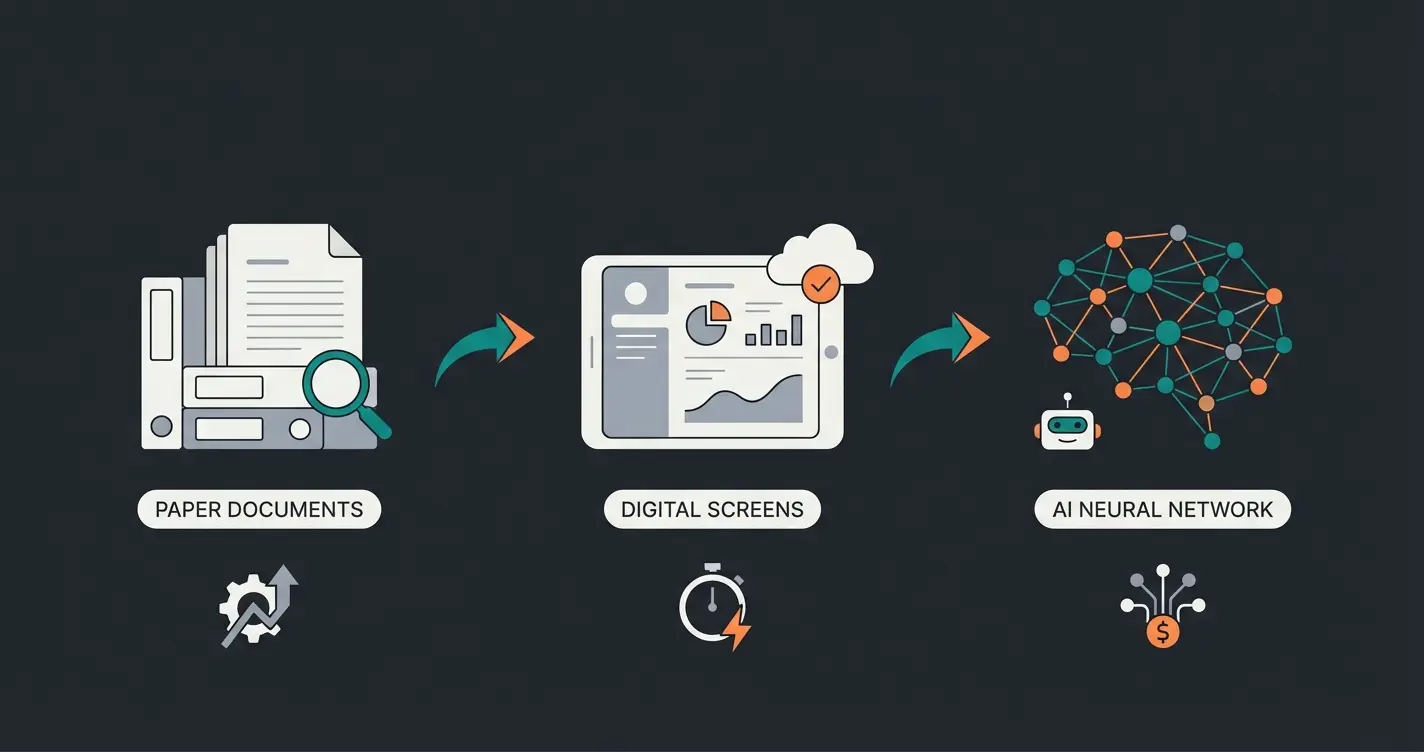
- Digitization: Converting information from analog to digital formats (e.g., paper to PDF)
- Automation (RPA): Automatically executing recurring tasks through software robots (e.g., transferring data from Excel to SAP). According to Automation Anywhere, this represents the foundation of modern process improvement.
- Intelligent Process Digitization: Using AI to understand unstructured data and make decisions. As explained by Encord, this represents the cutting edge of business process transformation.
The crucial difference lies in cognition. Conventional tools "do" what they're told. Modern tools "understand" what needs to be done. This distinction fundamentally changes how businesses can approach their most complex challenges.
The Evolution of Process Digitization
The following comparison illustrates why many companies are still stuck in the past and what the future of digitizing business processes truly looks like:
| Feature | Analog (Past) | Digitization 1.0 (Standard Today) | Digitization 2.0 (The Future/AI) |
|---|---|---|---|
| Medium | Paper, phone, fax | PDF, email, web forms | Data streams, AI models, chat interfaces |
| Process Logic | Manual by humans | Rigid, rule-based (if-then) | Adaptive, context-aware, learning |
| Data Structure | Unstructured (notebook) | Structured (database fields) | Unstructured (language, text, image) |
| Sales Example | Field rep visits customer | Customer fills out contact form | AI conducts needs analysis & consultation |
| Goal | Execution | Efficiency & storage | Scaling expertise & closing deals |
Why Standard Digitization Falls Short for Sales
Most digitization projects in Germany focus on the so-called "back office" or "middle office" – areas such as accounting, HR, or compliance. According to eFinancialCareers, this focus is important for the cost side, but it doesn't solve the most pressing problem facing many B2B companies: the shortage of skilled workers in sales and technical consulting.
The Problem of "Dumb" Automation
Classic automation tools (RPA - Robotic Process Automation) are excellently suited for processing structured data. If an invoice always has the same format, a bot can book it perfectly. But what happens in a sales conversation or technical consultation?
- Unstructured Data: Customers don't express themselves in database fields. They say: "I need a solution that's somehow similar to X, but cheaper."
- Context: A good consultant knows that the customer might not actually need Product A, even though they asked for it, but rather Product B.
- Empathy and Nuance: A rigid form or simple chatbot ("Press 1 for sales") cannot capture these nuances.
The Expert Gap: Your Hidden Revenue Bottleneck
Here lies the massive content and technology gap. Companies have digitized their administration, but their consulting is still analog. It depends 100% on human experts. This creates significant business risks and limitations:
- The Risk: Your best sales engineers or consultants are a limited resource. They can only conduct a certain number of conversations per day.
- The Consequence: Potential customers wait days for a quote or are fobbed off with static FAQ pages.
- The Market Pressure: According to research from SuperAGI, Gartner predicts that by 2025, 80% of B2B sales interactions will occur digitally. Customers want to inform themselves digitally, but they don't want to give up consultation.
If you want to digitize analog processes, you can't stop at paperwork. You must digitize the conversation itself.
Gartner prediction for B2B sales interactions occurring digitally
Current digitization efforts concentrated on administration, not sales
Companies reporting problems executing their digital strategy
Round-the-clock availability for consultation and support
The 3 Levels of Process Digitization
To achieve a true transformation, it's worth dividing digitization into three levels of maturity. Many companies remain stuck at Level 1 or 2. Your goal should be Level 3 – where the real competitive advantages emerge.
Level 1: Storage (Storage and Access)
This is the foundation. Here, the physical medium is eliminated and information becomes searchable and shareable.
- Action: Paper files are scanned, invoices sent as PDFs, documents stored in cloud repositories.
- Added Value: Space savings, faster search, remote access, basic disaster recovery.
- Limitation: The process itself doesn't change. A human still has to read and understand the PDF. No intelligence is added to the workflow.
Level 2: Workflow (Flow and Rules)
This is where workflow management systems and classic RPA come into play, introducing automation for routine tasks.
- Action: A vacation request is submitted in the system and automatically forwarded to the supervisor for approval. A webshop accepts an order and sends it to the warehouse. Email routing follows predefined rules.
- Added Value: Speed, transparency, fewer errors in routine tasks, audit trails, compliance documentation.
- Limitation: The system is "dumb." It follows rigid rules. As soon as an exception occurs ("custom order"), the process breaks down and requires human intervention. It cannot handle ambiguity or context.
Level 3: Decision Making (Decision and Consultation)
This is the era of AI-powered process digitization. Here, it's not the document that's digitized, but the cognitive performance of the employee. This represents the true frontier of digital transformation.
- Action: An AI agent analyzes a customer's inquiry, understands the context ("customer is looking for a replacement part for a 10-year-old machine"), checks technical compatibilities in milliseconds, and proactively suggests the appropriate solution – including upselling options.
- Added Value: Scalability of expert knowledge. The AI can conduct 1,000 consultations simultaneously, 24/7, in 50 languages, with consistent quality.
- Technology: Large Language Models (LLMs), RAG (Retrieval Augmented Generation), vector databases, knowledge graphs.
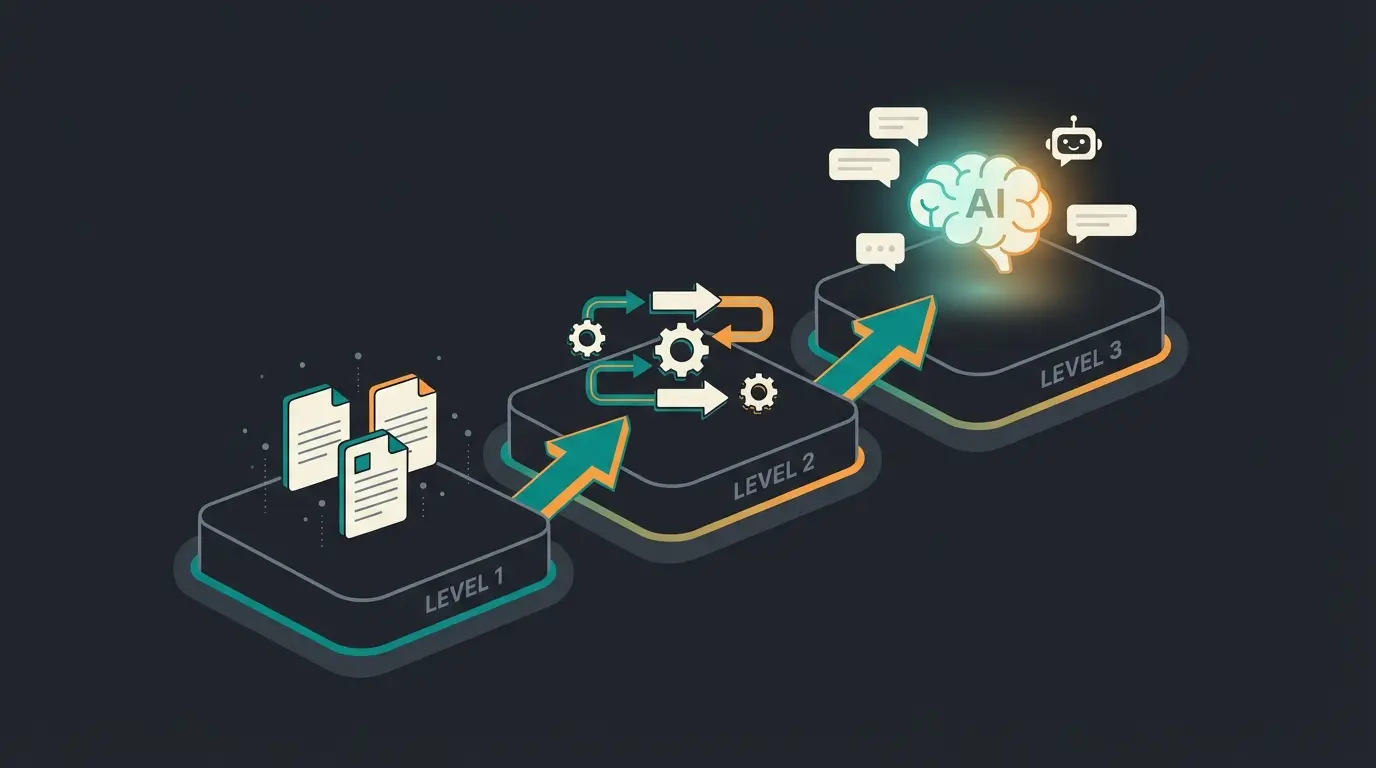
Convert paper to digital files. Enable search and remote access. Foundation for all future improvements.
Automate routing and approvals. Implement rule-based processing. Reduce manual handoffs and delays.
Deploy AI for context-aware decisions. Scale expert knowledge. Enable 24/7 consultative interactions.
Deep Dive: Digitizing Product Consultation
Let's get concrete. What does the digitization of business processes look like in sales and consulting? This is the area that most competitors ignore in their articles, even though it promises the highest ROI (Return on Investment). The front office represents your profit center, not your cost center.
Scenario: The Machinery Customer
Imagine you sell complex industrial components. Your products require technical expertise to configure correctly, and mismatches can be costly for customers.
The Status Quo (Analog / Digital 1.0)
A prospect visits your website. They find a product catalog (PDF) or a search mask with 50 filters. They're overwhelmed by options and technical specifications they don't fully understand.
- Option A: They call. Your sales engineer is in a meeting. The customer leaves a message. The callback happens the next day – if you're lucky.
- Option B: They write an email to `info@...`. Processing takes 2 days while the inquiry sits in a queue.
- Result: High friction losses, risk of defection to the competitor who responds faster. Lost revenue that's invisible in your metrics.
The Solution (Digital 2.0 / Intelligent)
The prospect visits your website and interacts with an AI Consultant that engages them in a natural conversation.
- Dialog: "I'm looking for a pump for a chemical plant that's acid-resistant and can handle up to 150 degrees."
- AI Response: The AI understands not only the keywords "pump" and "acid," but also the physical implications. It asks follow-up questions: "What is the viscosity of the medium? Do you need ATEX certification? What's your expected flow rate?"
- Result: The customer feels consulted, not processed. They receive an immediate technical recommendation and a quote. Your sales team gets qualified leads with complete context.
Comparison: Chatbot vs. AI Consultant
To illustrate the difference in quality and customer experience, here's a direct comparison of dialog quality between traditional rule-based systems and modern intelligent consultation:
| "Dumb" Chatbot (Rule-Based) | AI Consultant (Intelligent) |
|---|---|
| Customer: "My machine is rattling." | Customer: "My machine is rattling." |
| Bot: "I didn't understand that. Please choose: 1. Invoice, 2. Shipping, 3. Returns." | AI: "That sounds like a mechanical issue. Which model is it, and does the noise occur more at idle or under load?" |
| Customer: Frustrated, leaves the page. | Customer: "Model X500, under full load." |
| AI: "For the X500, that often indicates a bearing problem on the main shaft. I recommend maintenance kit C. Should I show you the installation guide and check availability?" | |
| Outcome: Lost customer, negative brand impression | Outcome: Solved problem, potential sale, positive experience |
This is the core of modern process digitization: The transformation from a reactive answering machine to a proactive solution finder. The AI doesn't just respond – it guides the customer toward the right outcome.
Discover how AI-powered consultation can scale your expert knowledge and capture revenue 24/7. See the difference intelligent process digitization makes.
Start Your Free TrialStep-by-Step Guide to Intelligent Process Digitization
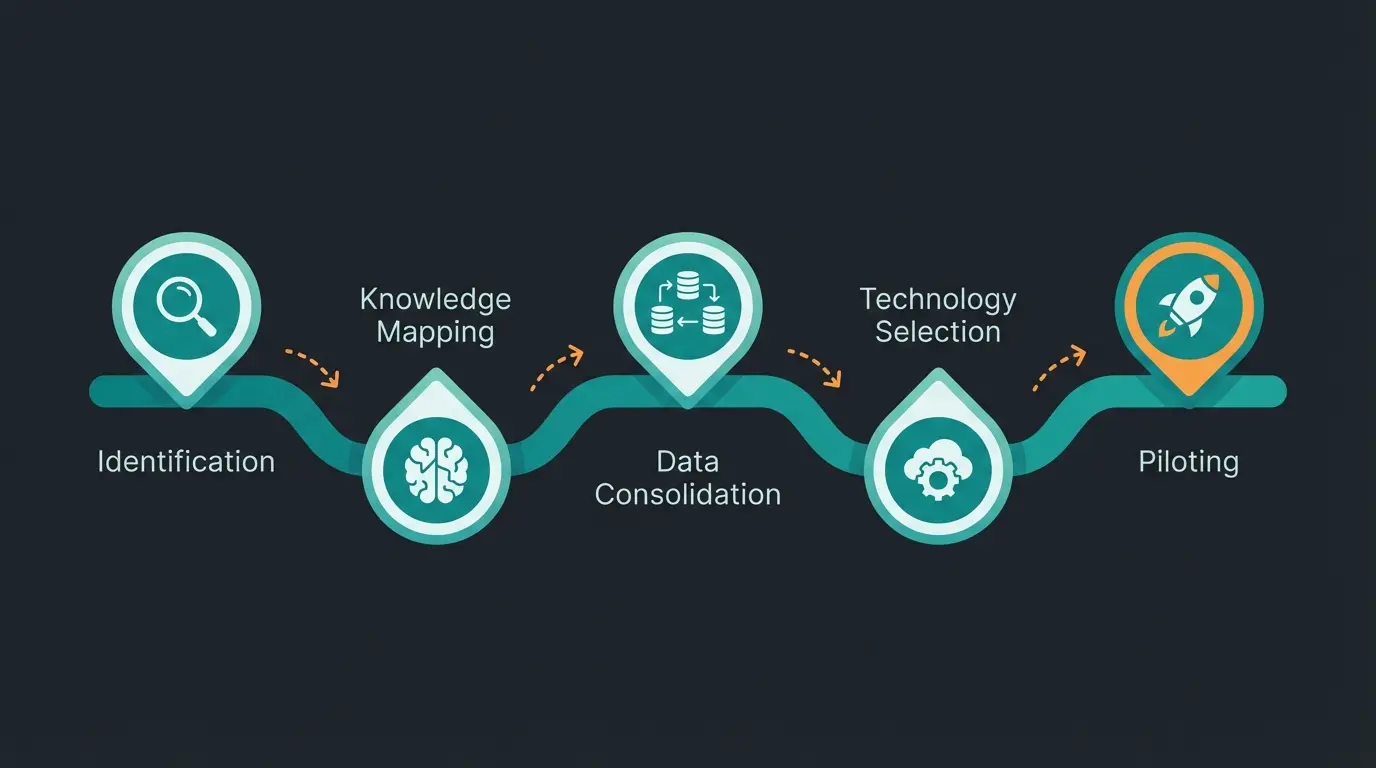
How do you get from Level 1 to Level 3? Many German companies fail due to complexity or lack of strategy. According to bidt.digital, implementation challenges derail most digital transformation initiatives. Here's a pragmatic roadmap that actually works.
Step 1: Identify the Knowledge Bottleneck
Stop digitizing processes that are already running well. Search where it hurts – where expert knowledge creates constraints on your growth.
- Where do your most expensive experts spend the most time on repetitive questions?
- Where do you lose customers because the response time is too long?
- What questions are asked repeatedly in sales that require technical expertise?
- Which processes have the longest wait times for customer responses?
Step 2: Knowledge Mapping Instead of Just Process Mapping
Classic process diagrams (BPMN) aren't enough here. You need to cartograph the knowledge that drives decisions, not just the workflow steps.
- Collect not just documents, but "implicit knowledge." How does your best salesperson decide which product fits?
- What follow-up questions do they ask? In what order?
- What data sources do they use (data sheets, CRM, experience, tribal knowledge)?
- What edge cases have they learned to handle over years of experience?
Step 3: Data Consolidation (The Truth Lies in the Chaos)
AI needs data. But this data is often scattered across multiple systems and formats:
- PDF data sheets and technical specifications
- Old email conversations (a goldmine for Q&A patterns!)
- Internal wikis and knowledge bases
- ERP data and product databases
- Sales call recordings and chat logs
Step 4: Technology Selection (Wrapper vs. Engine)
Beware of "AI wrappers" that just put a thin layer over ChatGPT. For true process digitization in your company, you need enterprise-grade capabilities:
- Data Protection Compliance (GDPR): Your data must not be used to train public models. Enterprise isolation is non-negotiable.
- RAG Technology: The AI must be based on your company knowledge, not general internet knowledge (avoiding hallucinations that damage credibility).
- Integration: The solution must fit into your existing landscape (SAP, Salesforce, HubSpot, custom systems).
- Audit Trail: Every recommendation should be traceable to source documents for compliance and quality control.
Step 5: Piloting and Human-in-the-Loop
Don't start fully automated. Build trust and refine quality through a staged rollout approach.
- Let the AI initially support your employees internally (Co-Pilot mode). They review and approve responses.
- Measure the quality of answers. Track accuracy, customer satisfaction, and resolution rates.
- Gather feedback from your experts to continuously improve the knowledge base.
- Only when the AI achieves high accuracy, release it directly to customers – and maintain monitoring.
Challenges and Pitfalls to Avoid
Why do projects that aim to digitize analog processes fail? Often it's not the technology, but the expectations and organizational factors. Understanding these pitfalls helps you avoid them.
1. The Belief in "Plug & Play" Magic
AI is powerful, but it's not a magic wand. It must be fed with the right data and curated continuously. "Garbage in, garbage out" applies to AI just as much as to traditional software – perhaps even more so, because AI can generate confident-sounding nonsense from bad data.
2. Underestimating Data Quality
If your product descriptions are contradictory, the AI will also provide contradictory advice. Digitization often mercilessly reveals where internal documentation is incomplete or outdated. See this as an opportunity for cleanup – the audit alone often improves operations.
3. Lack of Team Acceptance
Sales staff often fear being replaced by AI. This resistance can sabotage even the best technology implementations.
Counter-argument: Position the AI as an assistant that takes over the tedious small stuff (standard questions, data maintenance, initial qualification) so humans can focus on complex deals and relationship building. The AI makes experts more effective, not obsolete. Early involvement of the team in development builds ownership and trust.
The Evolution Matrix: Where Does Your Company Stand?
To help you assess your current position and identify opportunities, consider how different business functions typically evolve across the three digitization levels:
| Business Function | Analog Process | Digitization 1.0 (Current Standard) | Digitization 2.0 (Intelligent AI) |
|---|---|---|---|
| Customer Service | Phone calls, walk-ins | FAQ pages, simple chatbots | AI consultant that understands context |
| Data Management | Notebooks, filing cabinets | Excel, basic CRM | Predictive insights, automated enrichment |
| Product Consultation | In-person meetings | Static configurators, forms | Adaptive AI that guides to solutions |
| Lead Qualification | Manual review by sales | Scoring rules, basic filters | Contextual AI qualification with reasoning |
| Technical Support | Expert callbacks | Knowledge base search | AI that diagnoses and recommends |
Most companies find they have a mix of levels across different functions. The strategic opportunity lies in identifying where Level 3 capabilities would have the greatest impact on revenue and customer satisfaction.
Conclusion: The Future Is Frictionless
Process digitization stands at a turning point. In recent years, it was about making the office paperless. In the coming years, it's about making business frictionless – removing the barriers between customer needs and solutions.
The German SME sector has an enormous opportunity here. We have deep technical expertise and complex products – exactly the scenario where simple webshops fail and intelligent AI consulting shines. Your knowledge is your moat, and AI is the way to scale it.
Summary of Benefits
- Scalability: Your best sales conversation, reproducible as many times as needed, simultaneously, without quality degradation.
- Availability: Consultation on weekends and at night, across time zones, meeting customers when they're ready to buy.
- Consistency: Every customer receives the same high consultation quality, regardless of which expert is available.
- Speed: Immediate responses instead of days of waiting, capturing opportunities before competitors can respond.
- Insights: Every interaction generates data to improve products, messaging, and customer understanding.
The question is no longer whether you digitize your processes, but how intelligently you do it. Those who now take the step from administration to intelligent consulting secure the decisive competitive advantage for 2026 and beyond. According to Markt und Mittelstand, already one-third of German SMEs are using AI to stay competitive – and that number is growing rapidly.
Ready for the Next Step?
Do you want to know how much "consulting DNA" is already hidden in your data? Let's analyze together how you can digitize your expertise and turn your knowledge into a scalable competitive advantage.
Digitization converts analog data into digital formats (paper to PDF). Automation uses this data to complete tasks without human intervention (routing invoices automatically). Intelligent process digitization combines both with AI-powered decision-making that can understand context, handle ambiguity, and provide consultative guidance – essentially scaling the cognitive work that previously required human experts.
Absolutely. SMEs often suffer most from skilled labor shortages. By digitizing consulting processes, they can handle more customer inquiries with high quality using less staff. Studies show that already one-third of German SMEs are using AI to remain competitive. The ROI is often faster for SMEs because they have less bureaucracy and can implement changes more quickly than enterprise organizations.
Don't start with the most complex core processes. Begin where high volumes meet standard questions – typically in first-level support or product pre-consultation. Look for processes where your experts repeatedly answer similar questions, where response time directly impacts revenue, and where the knowledge required is well-documented but simply not accessible quickly enough.
With modern RAG approaches (Retrieval Augmented Generation), it can be ensured that the AI only responds based on your approved company data and doesn't "hallucinate" false facts. Enterprise-grade solutions include audit trails, source attribution, and human oversight capabilities. The key is choosing a solution designed for business use, not consumer chatbots repurposed for enterprise.
A pilot project can typically be launched within 4-8 weeks, starting with a specific use case and limited scope. Full deployment depends on the complexity of your product range and the state of your existing documentation. Most companies see meaningful results within 3-6 months, with continuous improvement thereafter as the system learns from interactions.
Stop losing sales to slow response times. Discover how intelligent process digitization can clone your best consultant and serve every customer instantly.
Get Started Free