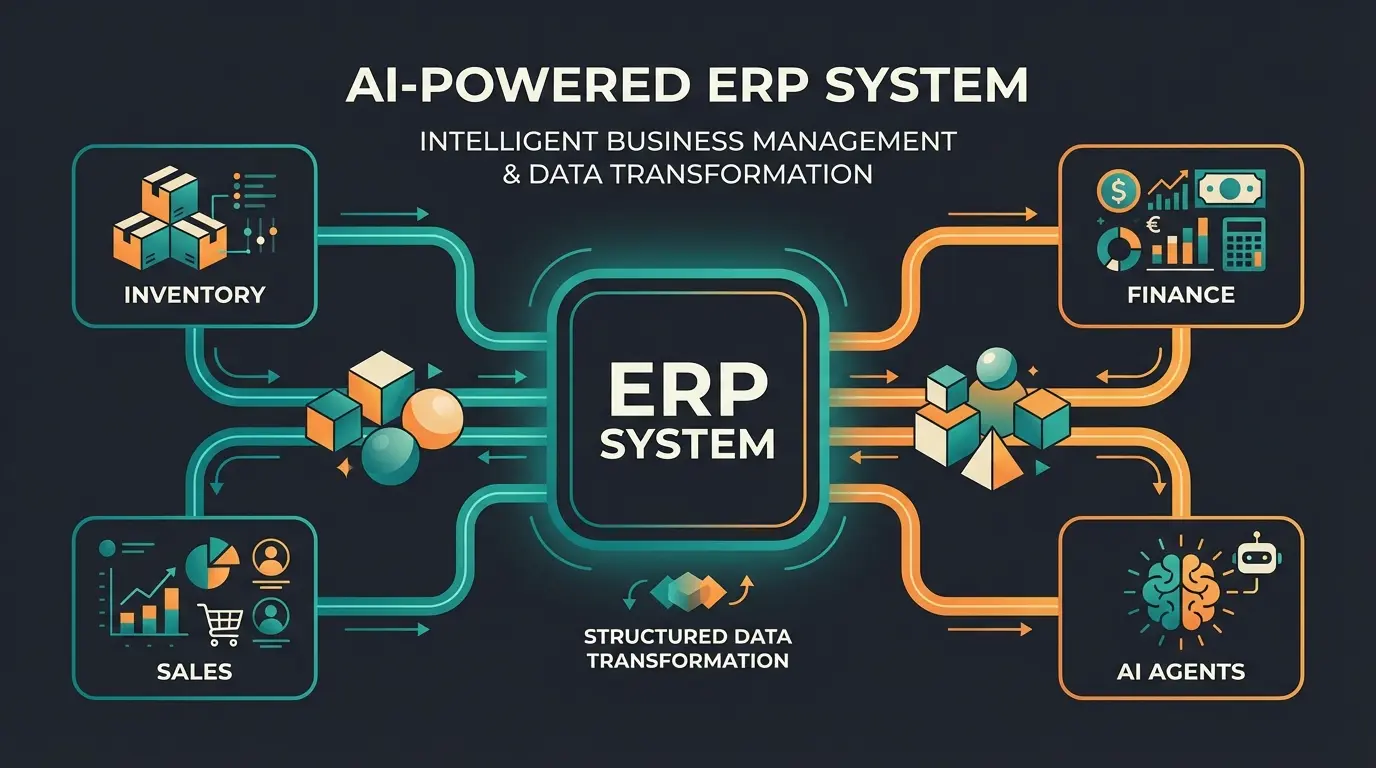
Why Standard Digitalization No Longer Cuts It
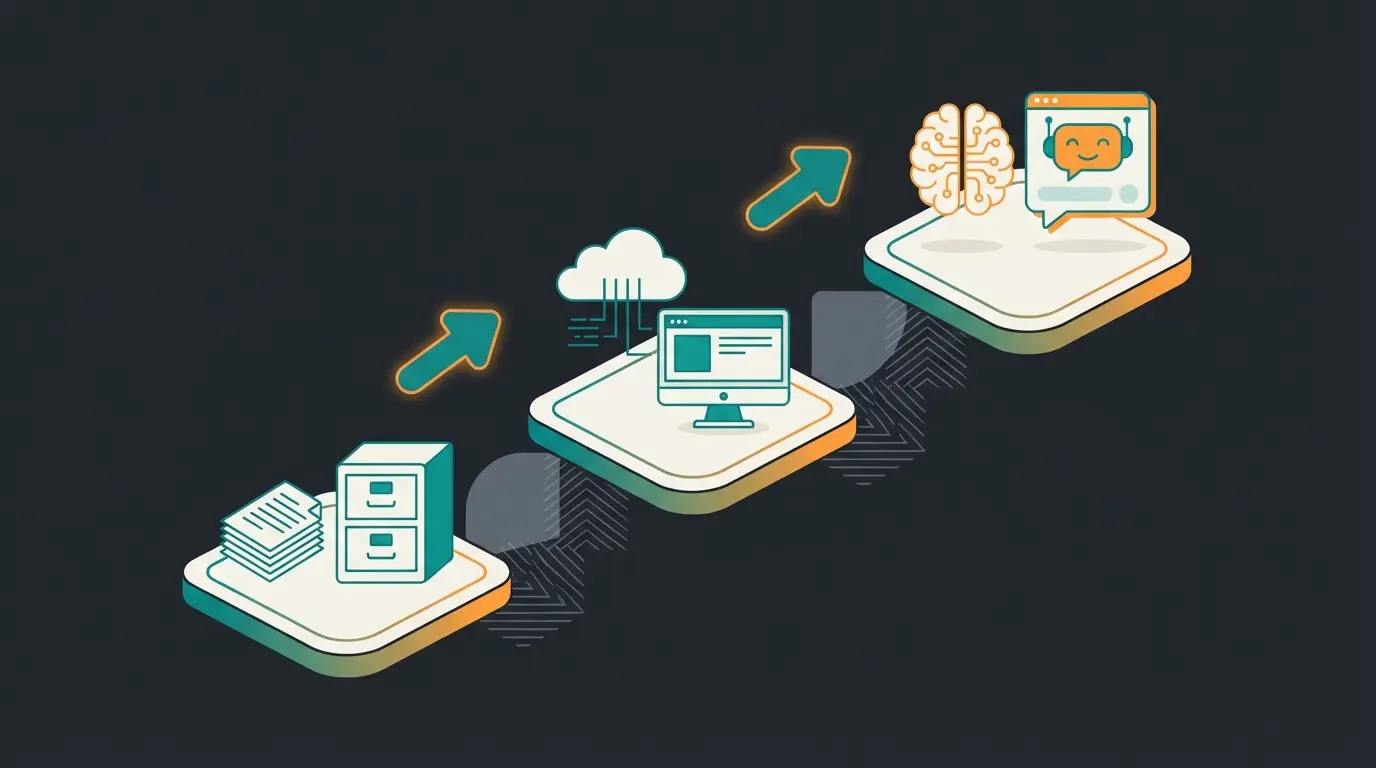
German SMEs (small and medium-sized enterprises, known as the 'Mittelstand') stand at a crossroads. For years, 'digitalization' primarily meant one thing: efficiency. We replaced paper with PDFs, filing cabinets with cloud storage, and fax machines (mostly) with emails. The goal was clear: reduce costs, accelerate processes, achieve the 'paperless office.'
But in 2025, that's no longer enough. While you've automated your accounting, the market has changed. Customers today expect not just a fast invoice, but immediate, digital consultation—around the clock. The danger for many hidden champions and SMEs no longer lies in being too slow in administration, but in losing ground to digital platforms and AI-powered competitors in sales and service.
This article isn't another plea to finally abandon the fax machine. It's a strategic guide for business owners and decision-makers who want to understand how SME digitalization truly creates value today: not just by managing, but by selling and advising—supported by intelligent technologies.
We'll examine current data, analyze funding gaps after the end of programs like 'go-digital,' and show you how to digitally scale your most valuable asset—your expert knowledge. According to Bitkom Research, the digital divide is growing, making strategic action more critical than ever.
Current State: Where Do German SMEs Really Stand?
To choose the right strategy, we must understand where we currently are. The latest figures from KfW and Bitkom paint a picture with plenty of light, but also significant shadows.
The Digital Divide
Current research reveals a dangerous trend: the gap between 'pioneers' and 'laggards' continues to widen. Despite economic slowdowns, 35% of SMEs are maintaining their digitalization projects—a significant increase compared to pre-pandemic times, as reported by KfW.
However, self-perception is alarming. According to Bitkom, 64% of companies now see themselves as laggards in digitalization. Only 32% consider themselves pioneers. Size matters significantly: while large enterprises (500+ employees) are often well-positioned, small companies (20-49 employees) have massive catch-up needs—only about one-third consider themselves digitally well-equipped.
Companies with some form of digitalization strategy in place
Businesses that consider themselves behind in digital transformation
SMEs continuing digitalization projects despite economic challenges
Companies operating completely without paper—doubled in two years
Where Has Investment Gone?
The focus has been heavily on administration. According to Bitkom Research, 91% of companies use CRM systems, and 100% employ at least one digital office solution. Meanwhile, 15% of businesses now operate completely paperless—a doubling within two years, but still a minority.
The Problem: These investments optimize internal processes. But they don't solve the most pressing issue facing SMEs: the skilled labor shortage. When positions remain unfilled, the best accounting software is useless if no one is available to answer customer inquiries or explain complex products. Research from the IfM Bonn confirms this is the number one challenge for German SMEs.
The 3 Pillars of SME Digitalization
When people say 'digitalization,' they often mean three completely different things. To successfully manage projects, we must separate these levels.
Pillar 1: Internal Processes (The Foundation)
This is the foundation. It covers ERP systems, digital accounting (DATEV/Lexware), HR software, and document management systems (DMS). The goal is to reduce costs, avoid errors, and ensure compliance (GoBD in Germany). By 2025, this exists in at least rudimentary form in most SMEs. Anyone still working with Excel spreadsheets and physical folders is losing real money every day.
Pillar 2: Infrastructure & Security (The Backbone)
Here we're talking about cloud solutions, broadband connections, cybersecurity, and hardware. The challenge: with increasing connectivity, the risk of cyberattacks rises massively. Security is no longer optional. By 2025, cloud usage is standard, but many SMEs underestimate the necessity of managed security services.
Pillar 3: Customer Interface & Sales (The Value Opportunity)
This is where the greatest untapped potential lies for digitalization in small businesses and SMEs. Most company websites today are still 'digital brochures.' They show a product image and a phone number.
The Problem: Today's customers want answers now—even on Saturday evening at 10:00 PM. The Solution: Active Digital Consultation. Instead of waiting for a customer to call (which often ends in voicemail limbo due to staff shortages), digital systems must take over the consultation itself.
Example: A Specialized Building Materials Dealer
- Analog approach: Customer calls, asks: 'Which insulation for facade X?' Expert is on another call, customer waits.
- Digital (Pillar 3): An interactive product advisor (or AI) on the website queries parameters and recommends the correct product including installation instructions.
AI in SMEs: Beyond the Hype
When you hear 'artificial intelligence,' you might think of ChatGPT writing poetry or robots in the automotive industry. But for the traditional SME sector—from machinery manufacturers to wholesalers—the reality lies elsewhere.
The Problem: The Dumb Chatbot
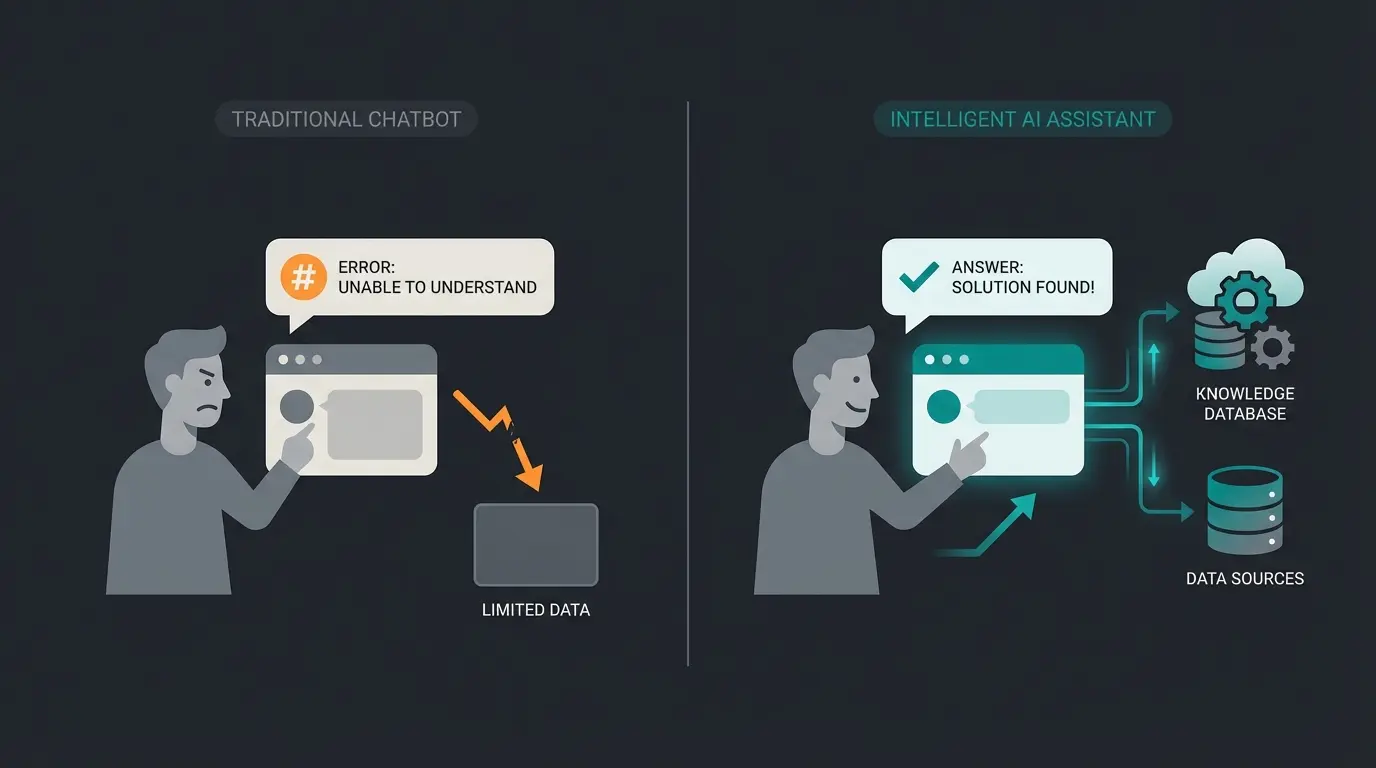
Many companies have introduced chatbots in recent years ('Do you have a question?'). These were based on rigid rules. When a customer asked a question not exactly in the script, the bot responded: 'I'm sorry, I didn't understand that.' This frustrates customers more than it helps.
The Solution: Digitizing Expert Knowledge
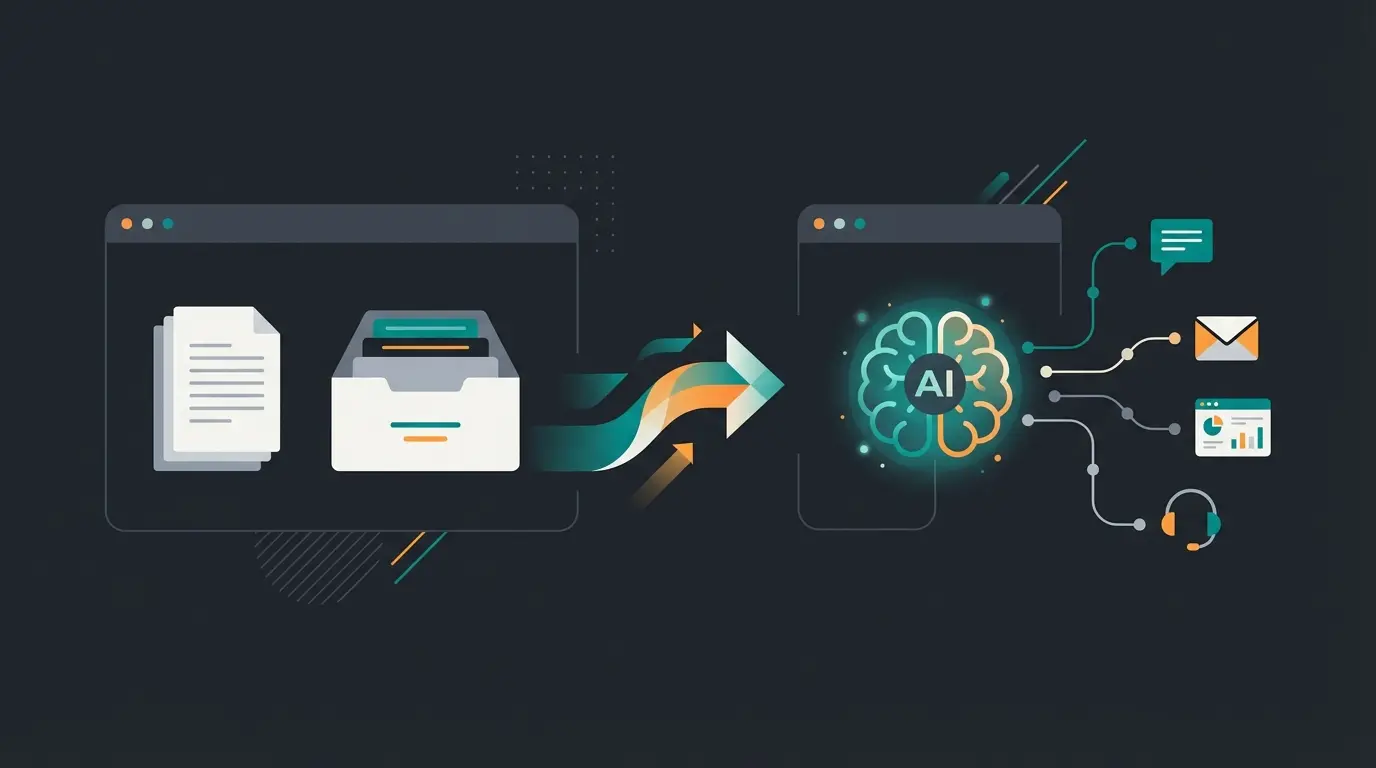
Modern AI models (Large Language Models) trained specifically on your company data change the game. We're talking about 'Consultation as Code'—the digitization of your company's unique selling proposition: its expert knowledge.
Practical Example: The Hidden Champion in Machinery
A manufacturer of packaging machinery has 5,000 machines in operation worldwide. The challenge: when problems occur, technicians from Asia or South America call the German headquarters. Due to time differences and language barriers, solutions often take days.
The AI Solution: The company feeds a protected AI with all manuals, repair guides, and email protocols from the last 10 years (problem solutions). The Result: A service technician in Brazil can send the AI a photo of the error and describe the problem in their language. The AI responds immediately with the solution from the German manual (translated).
The Value: The service hotline is relieved by 60%. Experts in Germany can focus on genuine new developments instead of routine support. According to Bitkom, this represents the new frontier of digital transformation.
Why This Addresses the Labor Shortage
There's often fear that AI will eliminate jobs. In SMEs, the opposite is true: you don't have enough people to handle all inquiries with high quality in the first place.
- Level 1 Support: Handled by AI (24/7, immediate, scalable)
- Level 2 & 3 Support: Handled by your human experts (complex cases, relationship building)
This is the true digital transformation for SMEs: scaling your knowledge, independent of time, location, and limited personnel resources. As KfW research indicates, this approach directly addresses the productivity challenges facing German businesses.
Discover how AI-powered product consultation can transform your customer service—handling routine inquiries 24/7 while your team focuses on high-value deals.
Start Your Free TrialFunding & Financing for SME Digitalization (2025 Update)
This is the section where many online articles provide outdated information. The funding landscape changed massively at the turn of 2024/2025. Many of the well-known 'flagship programs' from the federal government have ended.
Here's the current status (as of 2025) for those searching for SME digitalization funding:
Status of Federal Programs
| Program | Status 2025 | Analysis |
|---|---|---|
| go-digital | Ended (Dec 31, 2024) | Was the most popular program for consulting. Currently no restart announced. Ongoing projects still being processed. |
| Digital Jetzt | Ended (Dec 31, 2023) | Investment grants for hardware/software. No new applications possible, only usage verification. |
| Mittelstand-Digital | Active (Knowledge Transfer) | Offers no direct monetary grants, but free workshops and knowledge transfer through competence centers. |
As reported by Konex Marketing and Innovation Beratung Förderung, the go-digital program's end marks a significant shift in the funding landscape.
The Alternative: Strong State Programs
Since the federal government has stepped back, German states have filled the gap. Depending on your company's location, attractive grants (non-repayable!) are still available.
- Bavaria (Digitalbonus.Bayern): Very popular. Funds hardware, software, and IT security. Standard: Up to €10,000 grant (50% rate). Plus: Up to €50,000 for particularly innovative projects.
- Baden-Württemberg (Digitalisierungsprämie Plus): Loan with repayment grant! You take out a loan from L-Bank and receive part of the repayment waived after successful implementation (essentially a grant).
- North Rhine-Westphalia, Hesse, Saxony: Almost every state has its own programs (e.g., DIGI-Zuschuss Hessen, Digitalisierungszuschuss Sachsen).
The 'Joker': ERP Digitalization and Innovation Credit (KfW)
When grants are unavailable, favorable financing is the way forward. The KfW (German development bank) offers the ERP Digitalization and Innovation Credit (Program numbers 380/390/391).
According to Unternehmenswelt, this program offers very favorable interest rates and often long terms. Additionally, there are partial liability exemptions, making it easier to obtain the loan from your house bank. It can be used for digitalization projects as well as developing new digital products.
Visit your state's economic ministry website for current digital grants
Chamber of Commerce advisors know regional funding opportunities
For projects over €25,000, consider favorable development bank financing
An ROI-strong project financed independently often beats waiting months for approval
5 Steps to Implement Digital Transformation
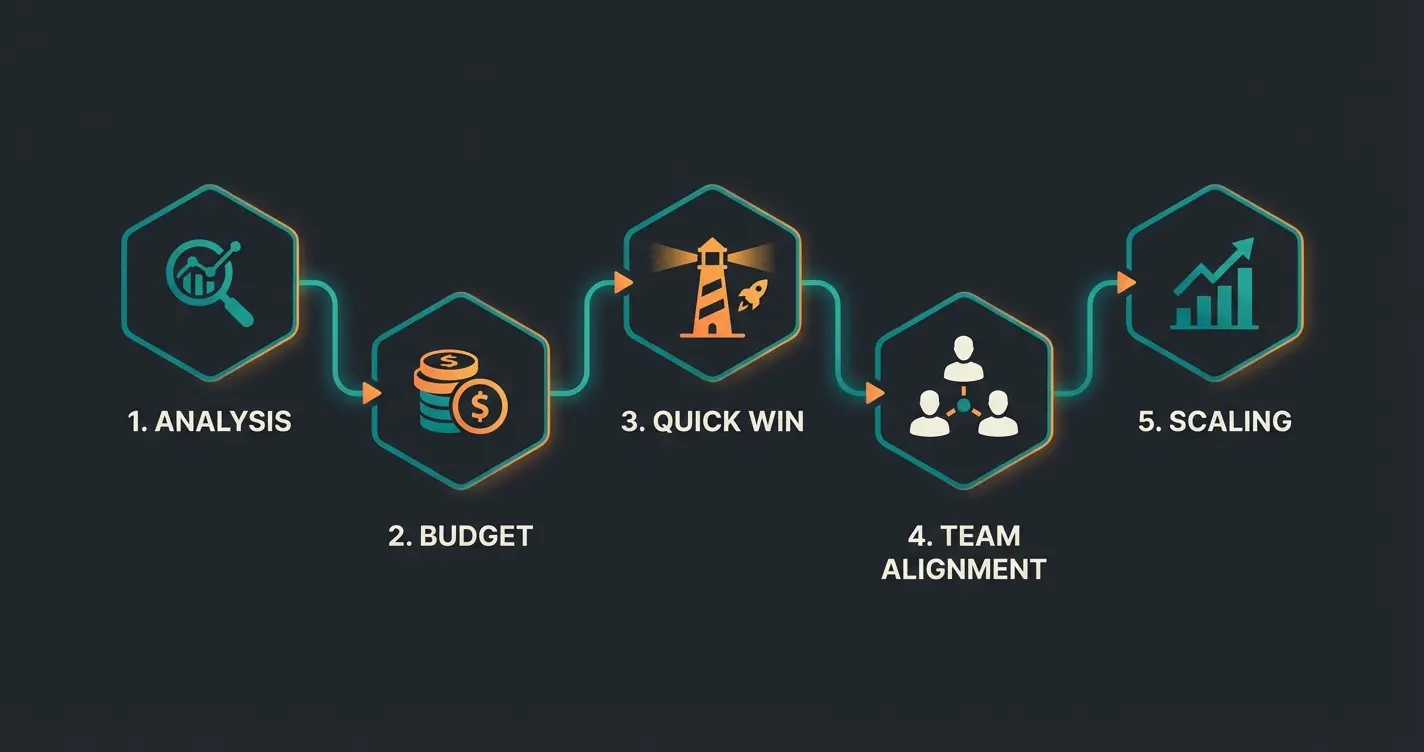
How do you put this theory into practice? Here's a concrete roadmap that reduces complexity.
Step 1: The Pain Analysis
Don't start with technology ('We need AI'), start with the problem. Ask yourself: Which process causes us the most headaches? Which question does our sales team answer 20 times a day in exactly the same way? Your goal is to identify a 'repetitive task.'
Step 2: Secure Financing & Clarify Budget
Before contacting service providers, clarify your budget. Check now for state funding programs at your location (e.g., Bavaria or Baden-Württemberg). Talk to your house bank about KfW digitalization loans if the volume exceeds €25,000.
Step 3: The Lighthouse Project (Quick Win)
Start small. Replacing an entire ERP system takes years. Choose a project with high visibility and low risk. An idea: a digital product advisor on your website for a specific product group. The advantage: the result is immediately visible (to customers and employees) and motivates further steps.
Step 4: Team Onboarding & Fear Reduction
Digitalization often fails due to the human factor ('AI will take my job'). Communicate clearly: 'We're introducing this tool so you don't have to deal with boring standard inquiries anymore, giving you time for important customers.' Make employees 'key users' who help shape the system.
Step 5: Scale & Measure
After the lighthouse project, evaluate. Has response time improved? Have we generated more leads? Then roll out the principle to other departments.
Comparison: Traditional vs. Modern vs. AI-Powered
Why the switch to AI consultation is so crucial becomes clear in this overview. Many SMEs are stuck in the 'Standard Digital' column while the market moves right.
| Feature | Traditional (Analog) | Standard Digital (Status Quo) | AI-Powered Consultation (Future) |
|---|---|---|---|
| Availability | 8:00 AM - 5:00 PM (Mon-Fri) | 24/7 (Website/Shop) | 24/7 (Interactive) |
| Interaction | Personal conversation | One-way (customer reads PDF) | Dialogic (customer asks, AI answers) |
| Knowledge Depth | High (in expert's head) | Medium (static texts) | High (AI accesses expert knowledge) |
| Scalability | Low (1:1 support) | High (website) | Unlimited (1:n personalization) |
| Goal | Close deal | Provide information | Solve problem & close deal |
Is Your SME Ready for AI? A Quick Assessment
Before diving into implementation, use this checklist from Perspektiven Schaffen and Federal Ministry for Economic Affairs recommendations to assess your readiness:
- Is your product data available digitally (not just in the master craftsman's head)?
- Do you regularly receive the same questions from customers?
- Do you have processes that follow strict rules but consume a lot of time?
- Are you prepared to invest in technology to relieve personnel long-term?
- Can you identify one specific 'pain point' that causes the most frustration?
If you answered 'yes' more than twice, the path from paperless office to intelligent company is the next logical step for you.
Conclusion: Digitize Your Knowledge, Not Just Your Files
SME digitalization has reached a new evolutionary stage in 2025. It's no longer primarily about saving costs in administration—this potential is largely exhausted for most companies.
The real challenge—and massive opportunity—lies in addressing the skilled labor shortage through technology. If you can translate the decades of knowledge built up by your employees into digital systems, you make your company independent of time, location, and limited personnel resources.
Don't let the complex funding landscape discourage you. The fact that programs like 'go-digital' have ended is a sign that digitalization should now be 'business as usual.' Use favorable loans or state programs, but above all: start. Not with a 5-year plan, but with a concrete problem you can solve digitally today.
As Bitkom emphasizes, the shift from internal efficiency to external innovation is what separates tomorrow's market leaders from those who fall behind.
Frequently Asked Questions About SME Digitalization
No, the go-digital program ended on December 31, 2024. There is currently no announcement of a restart. However, ongoing projects approved before the deadline are still being processed. Alternatives include strong state-level programs (like Bavaria's Digitalbonus or Baden-Württemberg's Digitalisierungsprämie Plus) and KfW development loans.
Digitalization typically refers to converting analog processes to digital (e.g., paper invoices to electronic invoices). Digital transformation goes further—it's about fundamentally changing business models and customer interactions using digital technologies. For SMEs, this means moving from simply digitizing internal processes to creating new value through AI-powered customer consultation and automated expertise delivery.
AI doesn't replace your experts—it amplifies them. By training AI systems on your company's product knowledge, repair guides, and historical customer interactions, you can automate Level 1 support (repetitive, standard questions) available 24/7 in any language. This frees your human experts to focus on complex cases and high-value customer relationships, effectively multiplying their impact.
With federal programs like go-digital and Digital Jetzt ended, focus on: (1) State programs—Bavaria's Digitalbonus offers up to €50,000 in grants, Baden-Württemberg's Digitalisierungsprämie Plus provides loans with repayment waivers; (2) KfW ERP Digitalization and Innovation Credit (Programs 380/390/391) offering favorable interest rates; (3) The Mittelstand-Digital initiative for free workshops and knowledge transfer.
A 'lighthouse project' approach can show results in weeks, not years. Unlike replacing an entire ERP system (which takes years), implementing an AI product advisor for a specific product group can be launched quickly with high visibility and low risk. The key is starting with a well-defined scope—one product category, one type of customer inquiry—and scaling from there.
Join forward-thinking SMEs who are digitizing their expert knowledge. Our AI-powered product consultation handles routine inquiries 24/7, letting your team focus on what matters most—building relationships and closing complex deals.
Get Started Free