
What is the GDPR and why does it affect your Shopify store?
The General Data Protection Regulation (GDPR) is the EU's data protection framework that governs how businesses collect, store, and process personal data of individuals in the European Economic Area and the United Kingdom. It applies to any business that offers goods or services to people in these regions, regardless of where that business is physically located.
If your Shopify store accepts orders from Germany, France, or any other EU member state, GDPR applies to you. This is true whether you operate from New York, London, or Sydney. The regulation covers every piece of personal data your store handles: names, email addresses, IP addresses, payment details, and browsing behavior.
The consequences of non-compliance are not abstract. Under Art. 83 GDPR, supervisory authorities can impose fines of up to EUR 20 million or 4% of global annual turnover, whichever is higher. By early 2026, cumulative GDPR fines exceeded EUR 7.1 billion, with EUR 1.2 billion imposed in 2025 alone. European regulators now process 443 breach notifications per day.
Beyond the legal risk, GDPR compliance is a trust signal. Customers increasingly expect transparency about how their data is used. A store that handles privacy well earns loyalty. One that does not loses customers before they even reach checkout. For a broader overview of legal requirements for Shopify stores, see our Shopify legal compliance guide.
Is Shopify GDPR compliant?
Shopify provides a solid foundation for GDPR compliance, but it does not make your store compliant by default. The platform acts as a data processor under Art. 28 GDPR, meaning it processes customer data on your behalf according to your instructions. You remain the data controller, responsible for how data is collected and used.
Shopify offers several built-in tools: a Data Processing Addendum (DPA) that is automatically incorporated into your merchant agreement, a Customer Privacy API for managing consent signals, built-in tools to access, edit, or delete customer data upon request, and SSL encryption on every store by default.
However, Shopify cannot control what third-party apps you install, how you configure tracking, whether your privacy policy reflects your actual data practices, or whether your cookie banner meets GDPR requirements. These are your responsibilities.
| Responsibility | Shopify handles | You must handle |
|---|---|---|
| Data Processing Agreement | Provides DPA as part of ToS | Sign DPAs with all third-party apps |
| SSL encryption | Enabled by default on all stores | Ensure no insecure third-party scripts |
| Customer data requests | Tools to access, edit, delete data | Respond within 30 days, coordinate with app providers |
| Cookie consent | Customer Privacy API available | Implement a compliant consent banner |
| Privacy policy | Basic template provided | Customize to reflect your actual data practices |
| Third-party app compliance | App Store review process | Audit each app individually for GDPR compliance |
| Data breach notification | Notifies merchants of platform breaches | Notify your supervisory authority within 72 hours |
The short answer: Shopify gives you the tools. Using them correctly is on you. If you are still evaluating the platform itself, our guide on what Shopify is covers how it works and what it actually costs.
GDPR compliance checklist for Shopify
This checklist covers every GDPR requirement relevant to a Shopify store. Each item notes whether Shopify handles it automatically or whether you need to take action. For a deeper dive into configuring privacy settings in your Shopify admin, see our guide on Shopify data privacy settings in detail.
- SSL certificate active - Shopify enables this by default. Verify in Settings > Domains.
- Privacy policy published - Go to Settings > Legal. Customize Shopify's template to match your actual data practices. Include: data controller info, processing purposes, legal basis (Art. 6 GDPR), third-party services, and data subject rights.
- Cookie consent banner installed - Must block all non-essential cookies and tracking before user consent. Shopify's built-in banner is too basic for full compliance. Use a dedicated CMP.
- Google Analytics 4 consent mode configured - GA4 requires Consent Mode v2 (mandatory since March 2024). Your CMP must send consent signals to Google before any analytics tracking fires.
- Marketing tracking pixels consent-gated - Meta Pixel, TikTok Pixel, and all marketing scripts must only fire after explicit consent.
- Email marketing double opt-in enabled - Required in most EU jurisdictions. Configure in your email marketing tool (Klaviyo, Mailchimp, etc.).
- Data deletion process documented - Customers can request data erasure under Art. 17 GDPR. You have 30 days to respond. Shopify provides tools in the admin; also coordinate with third-party apps.
- DPA signed with Shopify - Automatically included in Shopify's Terms of Service. Verify at shopify.com/legal/dpa.
- DPAs signed with all third-party processors - Every app that handles customer data (payment, analytics, email, fulfillment) needs its own DPA.
- Third-party app audit completed - Review each installed app: what data it collects, where it stores data, and whether it offers a DPA. Remove non-compliant apps.
- Data subject access request (DSAR) workflow defined - Document your process for handling access, rectification, portability, and deletion requests.
- Terms and conditions published - Include order processing, refund policy, and dispute resolution. Link prominently in footer and checkout.
Cookie consent and tracking
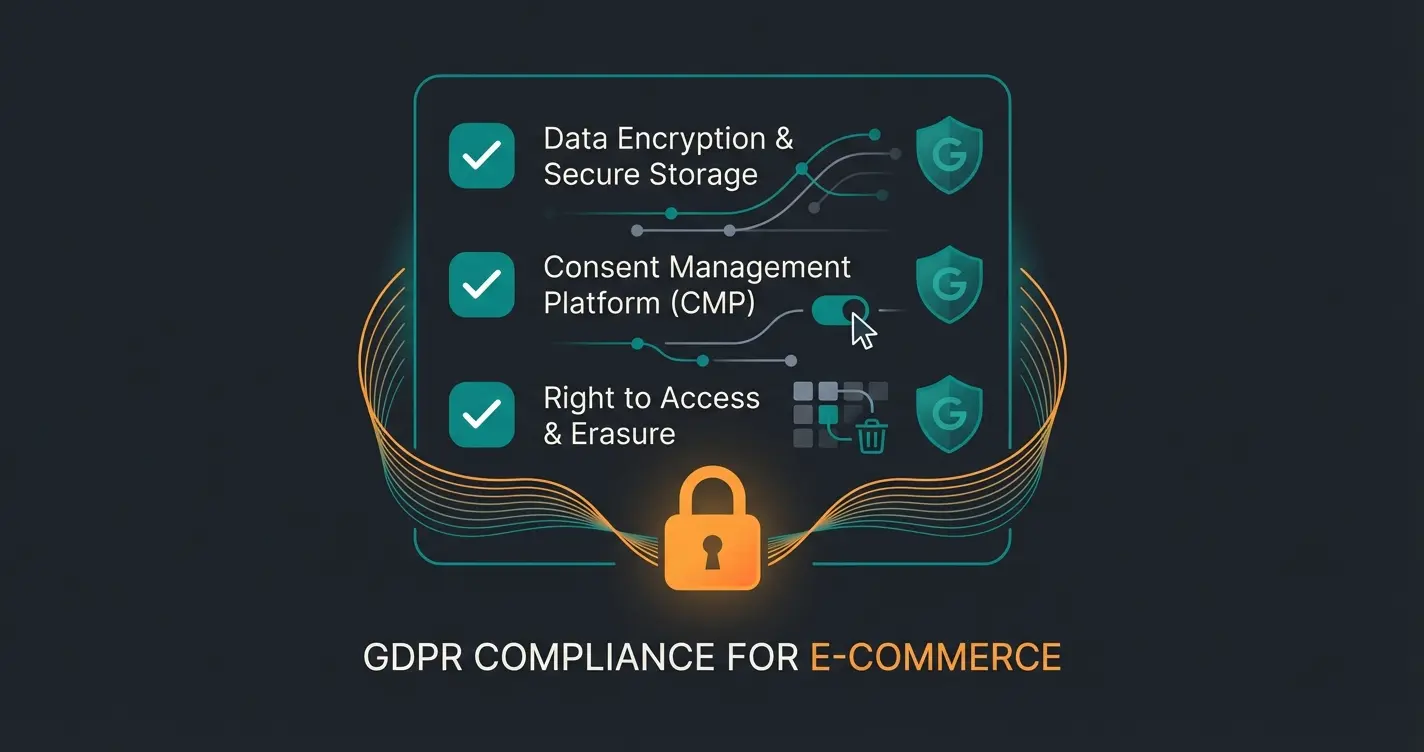
Cookie consent is the most visible GDPR requirement, and the one most Shopify stores get wrong. Under GDPR and the ePrivacy Directive, you must obtain explicit consent before loading any non-essential cookies. That includes Google Analytics, Meta Pixel, TikTok tracking, and every marketing script.
Shopify offers a native Customer Privacy API that lets apps check whether a visitor has given consent. However, the built-in cookie banner that Shopify provides is limited. It does not block scripts before consent, does not log consent for audit purposes, and does not meet the technical requirements of most EU supervisory authorities.
Google Consent Mode v2, mandatory since March 2024, adds another layer. Your consent management platform must send consent signals to Google's tag infrastructure before any GA4 or Google Ads tags fire. In Advanced Mode, anonymous pings are sent even without consent, allowing Google to model conversions. In Basic Mode, all tracking is fully blocked until consent.
For a step-by-step walkthrough of setting up cookie consent correctly, including CMP installation and script blocking, see our dedicated guide on how to set up cookie consent for Shopify.
Privacy policy for Shopify stores
Your privacy policy is a legal document that explains how your store collects, uses, shares, and protects personal data. Under Art. 13 and Art. 14 GDPR, you must inform users about data processing before or at the time of collection.
Shopify provides a basic privacy policy template under Settings > Legal. It is a starting point, but it does not cover your specific third-party integrations, marketing practices, or data retention policies. You must customize it.
- Data controller information - Your business name, address, and contact details. If you have a Data Protection Officer, include their contact.
- Processing purposes and legal basis - List every reason you collect data (order fulfillment, marketing, analytics) and the corresponding legal basis under Art. 6 GDPR (contract, consent, legitimate interest).
- Third-party services - Name every service that receives customer data: Shopify Payments, Google Analytics, Klaviyo, Meta, fulfillment providers. Include links to their privacy policies.
- Data subject rights - Explain how customers can exercise their rights: access, rectification, erasure, restriction, portability, and objection. Provide a direct contact method.
- Data retention periods - Specify how long you keep different types of data and why.
- International data transfers - If data is transferred outside the EU/EEA (Shopify's servers are in North America), explain the safeguards in place (Standard Contractual Clauses).
A privacy policy is only accurate as long as your integrations stay the same. Every time you install an app that touches customer data, update the policy in the same session. That habit prevents the gap regulators find most often: a policy describing a store that no longer exists.
Terms of service and legal pages
Beyond the privacy policy, Shopify stores selling to EU and UK customers need several legal pages to operate compliantly. Each serves a distinct purpose and is often required by consumer protection law in addition to GDPR.
- Terms and conditions - Governs the contractual relationship between you and your customers. Covers order processing, payment terms, liability, and dispute resolution.
- Refund and return policy - Required under EU consumer protection directives. Must clearly state the 14-day withdrawal right for online purchases.
- Cookie notice - A separate, detailed explanation of all cookies your store uses, organized by category (essential, analytics, marketing). Often integrated into your CMP.
- Imprint / legal notice - Required in several EU jurisdictions (especially Germany and Austria). Lists business registration, tax ID, and responsible person.
Shopify lets you create these pages under Settings > Legal and Online Store > Pages. Link them prominently in your footer and during checkout. For an automated approach, see our comparison of Shopify terms and conditions generator tools.
Data Processing Agreement (DPA) with Shopify
A Data Processing Agreement is legally required under Art. 28 GDPR whenever a data controller (you) engages a data processor (Shopify, or any third-party app) to handle personal data. Without a valid DPA, the processing is unlawful.
Shopify makes this straightforward. The Shopify Data Processing Addendum is automatically incorporated into your merchant agreement when you accept Shopify's Terms of Service. It covers the EEA, UK, and Switzerland under GDPR, US state privacy laws, and includes the EU's 2021 Standard Contractual Clauses for international data transfers.
- Verify the Shopify DPA - Visit shopify.com/legal/dpa to confirm you are covered. No separate signature is required.
- Identify all third-party processors - List every app, plugin, and service that touches customer data: payment gateways (Stripe, PayPal), email marketing (Klaviyo, Mailchimp), analytics (Google Analytics), fulfillment services, review platforms.
- Request or locate each DPA - Most major services publish their DPA on their legal page. Some require you to countersign. Document every agreement.
- Review subprocessors - Shopify maintains a subprocessor list. Check that no subprocessor introduces unacceptable risk.
- Set a review cadence - Re-audit your DPA coverage every time you install a new app or change a service provider.
Best GDPR compliance apps for Shopify
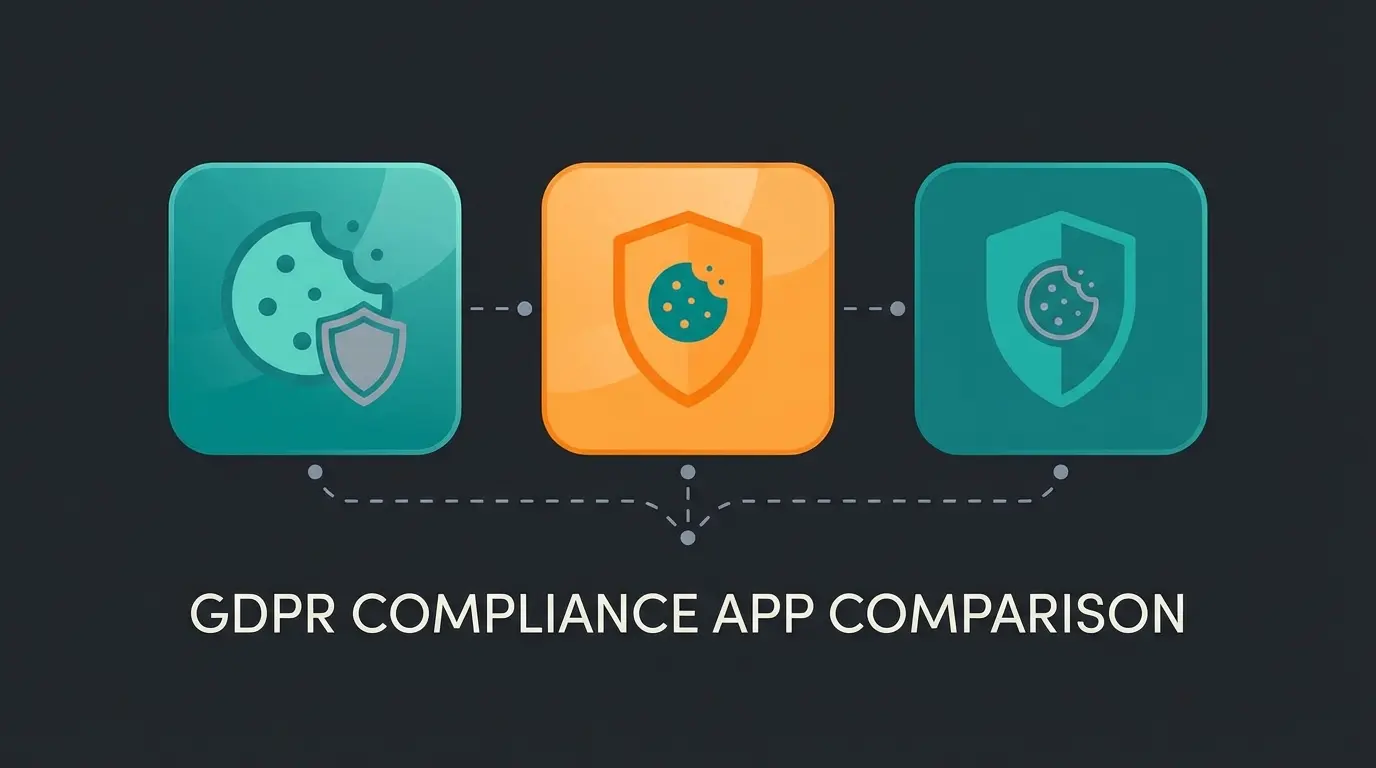
Shopify's native privacy tools cover the basics, but most stores need a dedicated Consent Management Platform (CMP) to meet GDPR requirements fully. The right CMP blocks non-essential scripts before consent, logs consent for audit purposes, handles data subject requests, and integrates with Google Consent Mode v2.
| Feature | Pandectes | Consentmo | CookieYes |
|---|---|---|---|
| Shopify App Store rating | 5.0 (2,700+ reviews) | 5.0 (1,780+ reviews) | 4.9 (800+ reviews) |
| Google CMP Partner | Yes (Silver) | Yes | Yes |
| IAB TCF v2.2 certified | Yes | Yes | Yes |
| Google Consent Mode v2 | Yes | Yes | Yes |
| Automatic cookie scanning | Yes | Yes | Yes |
| Script blocking before consent | Yes | Yes | Yes |
| DSAR handling | Yes | Yes | Limited |
| Geo-targeting (show different banners by region) | Yes | Yes | Yes |
| Free plan available | Yes (basic) | Yes (basic) | Yes (basic) |
| Paid plans from | USD 9/month | USD 8/month | USD 12/month |
| Shopify Plus support | Yes | Yes | Yes |
All three are solid choices. Pandectes leads in review volume and offers unlimited page views on paid plans. Consentmo stands out for automatic geo-detection and built-in accessibility features. CookieYes provides a clean interface and strong privacy policy generation tools.
The critical test: does the app block all non-essential cookies and scripts before consent? Many cheaper alternatives only display a banner without actually preventing tracking. That is not compliance.
Common GDPR mistakes in Shopify stores
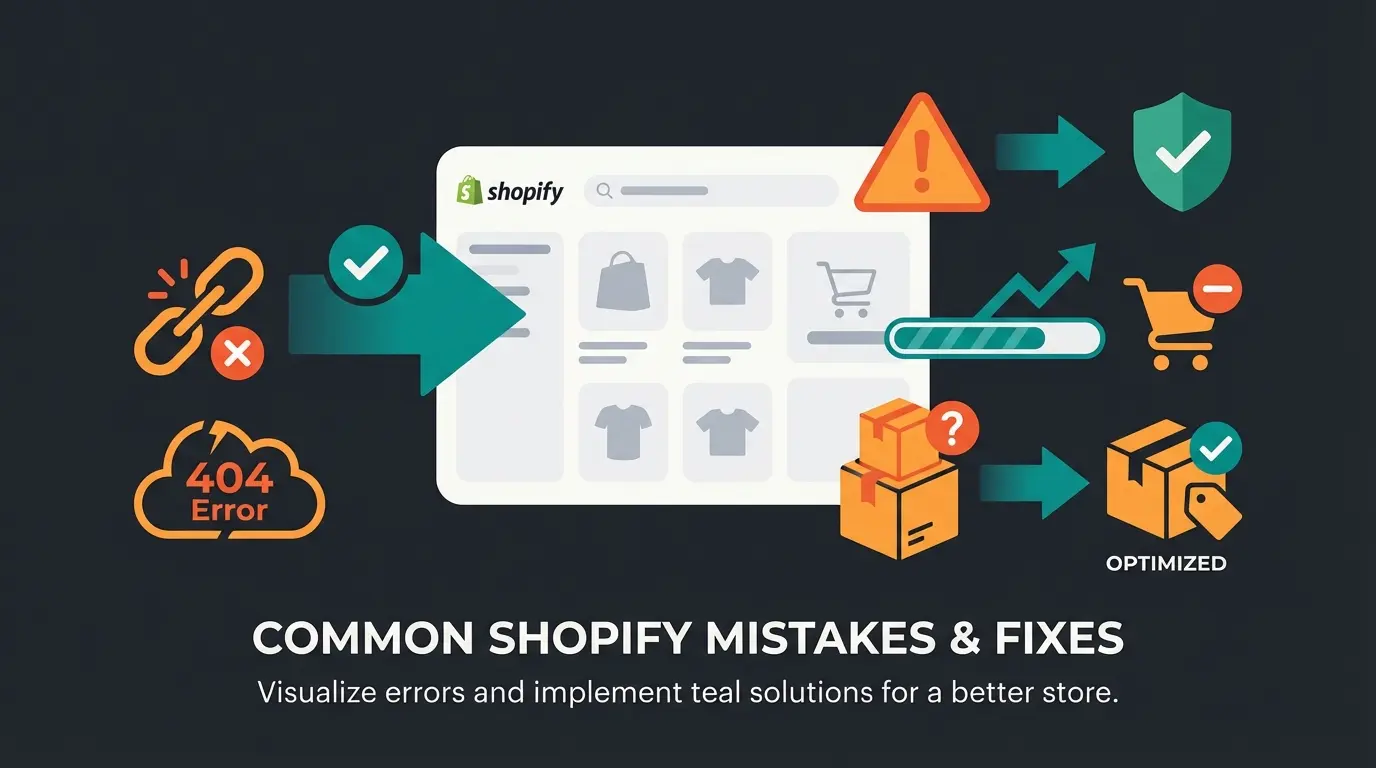
I have audited dozens of Shopify stores for GDPR compliance. The same mistakes appear repeatedly, and most are easy to fix once you know what to look for.
- Pre-checked consent boxes - Any consent checkbox (newsletter, marketing, cookies) must be unchecked by default. Pre-checked boxes do not constitute valid consent under GDPR.
- Loading tracking scripts before consent - Google Analytics, Meta Pixel, and other scripts fire on page load without waiting for cookie consent. This is the most common technical violation.
- Missing DPAs with third-party apps - Every Shopify app that processes customer data needs a signed DPA. Many merchants forget about fulfillment services, review platforms, and analytics tools.
- Generic privacy policy - Using Shopify's default template without customization. It does not list your specific third-party services, data retention periods, or legal bases.
- No double opt-in for newsletters - Required in Germany and best practice across the EU. Single opt-in for email marketing is a compliance risk.
- Ignoring data deletion requests - Under Art. 17 GDPR, customers can request erasure of their personal data. You must respond within 30 days and coordinate deletion across all third-party apps.
The pattern is clear: most violations come from passive negligence, not intentional misconduct. A quarterly audit of your store's data practices catches these issues before a complaint does. The UK Information Commissioner (ICO) provides free compliance self-assessment tools that work well as a starting framework.
How GDPR compliance connects to customer experience
GDPR compliance is not just a legal checkbox. It directly impacts how customers experience your store. A transparent privacy setup, where visitors understand exactly what data you collect and can manage their preferences easily, builds trust that translates into conversion.
One of our clients, Rasendoktor, an online specialist for professional lawn care products, faced 2,000 to 3,000 consultation-intensive inquiries per season. After implementing an AI employee from Qualimero that operates fully within their data framework, they achieved a 16x return on investment, 100% automation of webchat inquiries, and 40% support cost savings. The AI employee handles customer data in compliance with their privacy policies, delivering product recommendations without compromising data protection.
The takeaway: getting your data infrastructure right, including GDPR compliance, is the foundation that makes automation and personalization possible. Without it, you cannot scale customer interactions responsibly.
That foundation matters most on the channels where consent and data handling get messy. A WhatsApp Business conversation, for example, needs a documented legal basis before the first message goes out. The same applies when you buy conversational AI as a managed service: the provider becomes a processor, and the DPA is what proves it.
Over 60% of all cumulative fines have been imposed since January 2023
A 22% year-over-year increase
Or 4% of global annual turnover, whichever is higher (Art. 83 GDPR)
Shopify provides GDPR-supportive tools including a Data Processing Addendum, customer data request handling, and SSL encryption. However, full compliance depends on how you configure your store: privacy policy, cookie consent, third-party app audits, and DPAs are your responsibility.
Fines can reach EUR 20 million or 4% of global annual turnover, whichever is higher. By early 2026, cumulative GDPR fines exceeded EUR 7.1 billion. Even small businesses can face enforcement actions, as regulators increasingly target SMEs alongside large corporations.
Most small Shopify stores do not need a formal DPO. A DPO is required when your core activities involve regular, systematic monitoring of data subjects on a large scale, or when you process special categories of data (health, religion, ethnicity) on a large scale. Standard e-commerce operations typically do not meet this threshold.
When a customer requests access to or deletion of their data, you have 30 days to respond. Use Shopify's built-in tools under Settings > Privacy to access and delete customer data. Remember to also contact every third-party app that holds that customer's data.
The top three are Pandectes GDPR Compliance (5.0 stars, 2,700+ reviews), Consentmo (5.0 stars, 1,780+ reviews), and CookieYes (4.9 stars). All three offer cookie consent banners, script blocking, Google Consent Mode v2, and IAB TCF support. Free plans are available.
Yes, if you sell to or collect data from individuals in the EU or UK. GDPR jurisdiction is based on where your customers are located, not where your business is registered. A US store with even one EU customer must comply.
A GDPR-compliant store builds trust. An AI employee turns that trust into revenue. Our clients see up to 16x ROI and 7x higher conversion rates through intelligent product consultation that respects your customers' data.
Book a demo
Lasse is CEO and co-founder of Qualimero. After completing his MBA at WHU and scaling a company to seven-figure revenue, he founded Qualimero to build AI-powered digital employees for e-commerce. His focus: helping businesses measurably improve customer interaction through intelligent automation.