Introduction: Why 'Being Everywhere' No Longer Suffices
The German e-commerce market is undergoing a radical transformation. Just a few years ago, having a well-optimized Shopify store and perhaps listing some products on Amazon was sufficient. For more details, see our Shopify Amazon Integration. But the reality of 2026 looks vastly different. The customer journey is more fragmented than ever before. A customer might discover your product on TikTok, compare prices on Kaufland.de, search for reviews on Otto, and ask a detailed question via WhatsApp before finally making a purchase in your Shopify store.
The statistics speak clearly: merchants who use three or more channels often see revenue increases of over 190% compared to single-channel sellers. However, with expansion into Shopify multichannel comes a problem that hardly anyone discusses: the service gap.
While tools like Billbee or Magnalister now synchronize logistics (inventory and prices) quite well, consultation falls by the wayside. Who answers the technical questions on the Otto marketplace? Who advises customers on WhatsApp at 11 PM? This is where AI Chatbots become essential for scaling your business.
In this guide, you'll learn not only how to technically get your products onto the most important German platforms but also how to scale your sales consultation. We're moving away from pure 'multichannel' toward an intelligent 'omni-consultation' strategy that transforms your Shopware multi channel approach into a competitive advantage.
Multichannel vs. Omnichannel: What German Customers Expect
Before we dive into the tools, we need to clarify the terminology, because Shopify multichannel and Shopify omnichannel are often used interchangeably—which is incorrect.
The Definitions Explained
- Multichannel: You sell on multiple channels (e.g., Shopify, Amazon, Instagram). However, these channels often operate as silos. A customer who buys on Amazon often doesn't exist for your Shopify store. The data remains separate.
- Omnichannel: All channels are interconnected. The customer is at the center. They can buy online and return in-store. Customer service on WhatsApp knows what the customer viewed in the webshop yesterday, as noted by ShopXCommerce and ClearGo.
The German Market Context
In Germany, the expectation for omnichannel is particularly high. German consumers are security-conscious and thorough researchers. The 'ROPO' phenomenon (Research Online, Purchase Offline—or vice versa) is strongly pronounced here.
Why is this important for your Shopify strategy? When you operate multiple channels with Shopify, you cannot simply 'dump' products everywhere. You must create a consistent brand experience. A customer who buys on Otto.de (a marketplace with high trust in Germany) expects the same service standard as in your Direct-to-Consumer (D2C) store. If the data doesn't flow, you disappoint this expectation.
Merchants with 3+ channels vs. single-channel sellers
Amazon.de dominates German online retail
Making it ideal for conversational commerce
Kaufland.de traffic as a rising marketplace
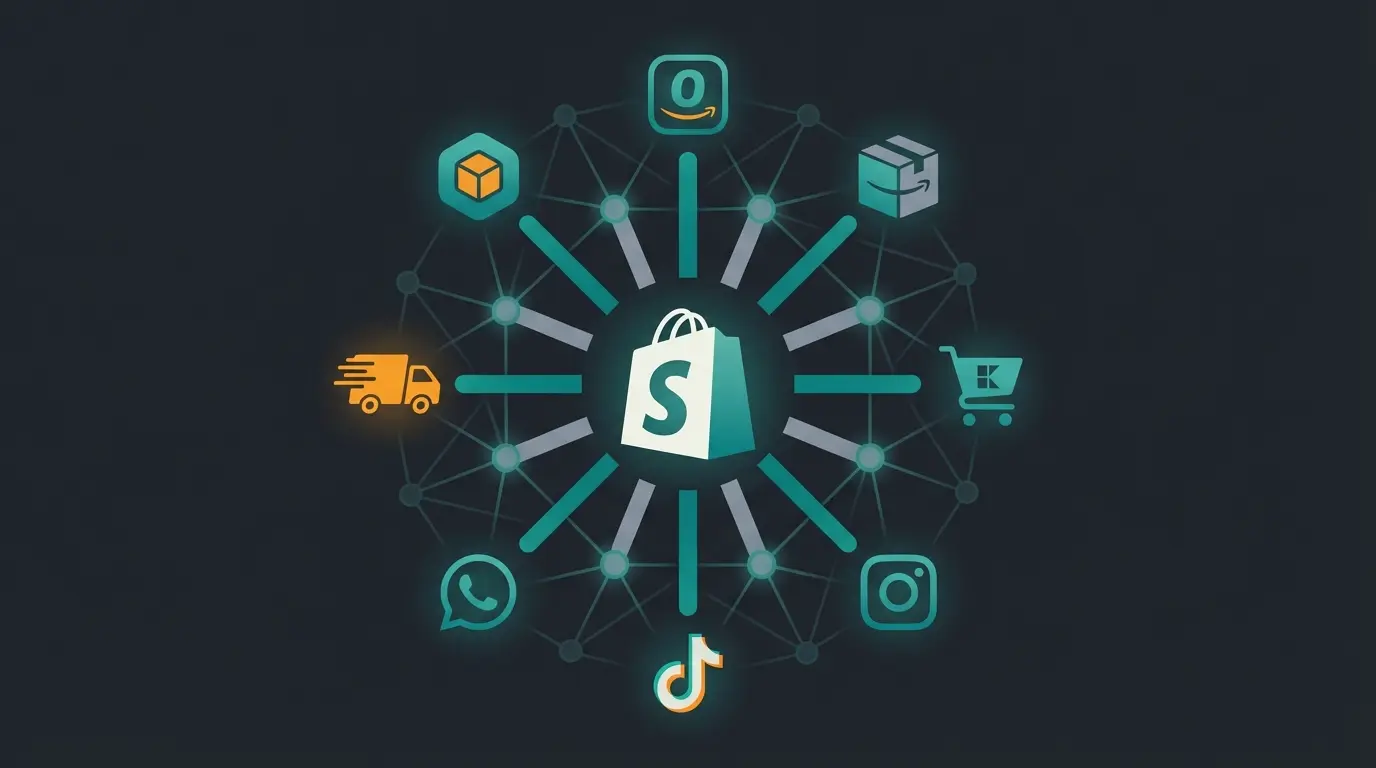
The 'Big 4' Channels for Shopify Merchants in Germany
While international guides often focus on Walmart or eBay.com, the multichannel Shopify landscape in Germany looks quite different. To remain relevant in 2026, you need to be where German customers are shopping.
A. The Marketplace Giants: Amazon & Otto
Amazon.de is unavoidable with over 50% market share of German online revenue, according to Everstox and Statista. However, dependency is dangerous. This is where Otto.de enters the picture.
- Otto Market: Otto has successfully transformed into a marketplace and recently recorded a GMV (Gross Merchandise Value) of around 6.5 to 7 billion euros, as reported by Fulfin.
- Advantage: Otto offers a curated environment. Return rates are often lower than Amazon, and the customer base is affluent and loyal.
- Challenge: Technical integration is more strictly regulated than with Amazon.
B. The Challenger: Kaufland.de
Formerly Real.de, Kaufland.de is one of the fastest-growing marketplaces in Germany. With approximately 32 million monthly visitors according to CedCommerce and GetByrd, it's a 'generalist' marketplace that's particularly interesting for merchants who want to avoid price wars on Amazon.
Integration: Shopify offers various apps (like M2E or CedCommerce) to connect Kaufland. Inventory synchronization is critical here to avoid overselling, as highlighted by HulkApps and Shopify.
C. Social Commerce: Instagram & TikTok
For Generation Z and Millennials, these are no longer 'social media' channels but shopping destinations. Shopify offers native integrations to tag products directly in feeds. The trend in 2026 is strongly moving toward 'Live Shopping' and video commerce, according to Digiteon. Understanding Conversational AI is essential for capitalizing on these emerging channels.
D. Conversational Commerce: WhatsApp
In Germany, WhatsApp is the dominant messenger. Conversational Commerce—selling via chat—will be one of the biggest growth drivers in 2026, as noted by WhatzCRM.
The Potential: Open rates of over 90% make WhatsApp the perfect channel for retention marketing and direct sales, according to MailTheGap. This is precisely where an AI Chatbot for E-Commerce can transform your customer engagement strategy.
The Hidden Challenge: The 'Service Gap'
This is where most Shopify multichannel strategies fail. Imagine you list 500 products on Otto, Kaufland, and Amazon. Suddenly your support inquiries explode:
- 'Is this cream also suitable for neurodermatitis?' (WhatsApp)
- 'Does this spare part fit my 2018 model?' (Otto question function)
- 'How sustainable is the packaging?' (Email)
The Traditional Problem
Most merchants respond to this with FAQ bots or static help pages. These 'dumb' bots can only answer standard questions ('Where is my package?'). As soon as it comes to consultation, they fail.
The consequence? The customer abandons the purchase. On marketplaces like Amazon or Otto, slow or poor response times also directly lead to a lower ranking of your products. This is why many businesses are turning to AI sales assistants to bridge this gap.
The 2026 Realization
Scaling logistics is simple (there are fulfillment service providers for that). Scaling excellent consultation was almost impossible—until now. The emergence of AI expert consultants has fundamentally changed this equation.
AI-Driven Product Consultation: The New Solution
To close the gap between 'listing products everywhere' and 'serving customers everywhere,' you need a Digital Sales Assistant strategy that leverages modern AI capabilities.
From Support Bot to Sales Assistant
Modern AI solutions (based on LLMs like GPT-4o or specialized e-commerce models) no longer act as a defense mechanism for support tickets but as active sellers. The concept of AI sales consultants represents this fundamental shift in approach.
A Practical Example
A customer asks on WhatsApp: 'I'm looking for a gift for my wife, she likes Scandinavian design, but we have a small living room.'
- Old Approach (Rule-Based Bot): 'Please select a category: 1. Furniture, 2. Decor.' → Customer is frustrated.
- New Approach (AI Sales Assistant): 'That sounds exciting! For small spaces in Scandi style, I often recommend our modular wall shelves 'NordicLight' or the compact floor lamp 'Svenja.' Would you like me to show you pictures?'
Why This Is Crucial for Shopify Multichannel
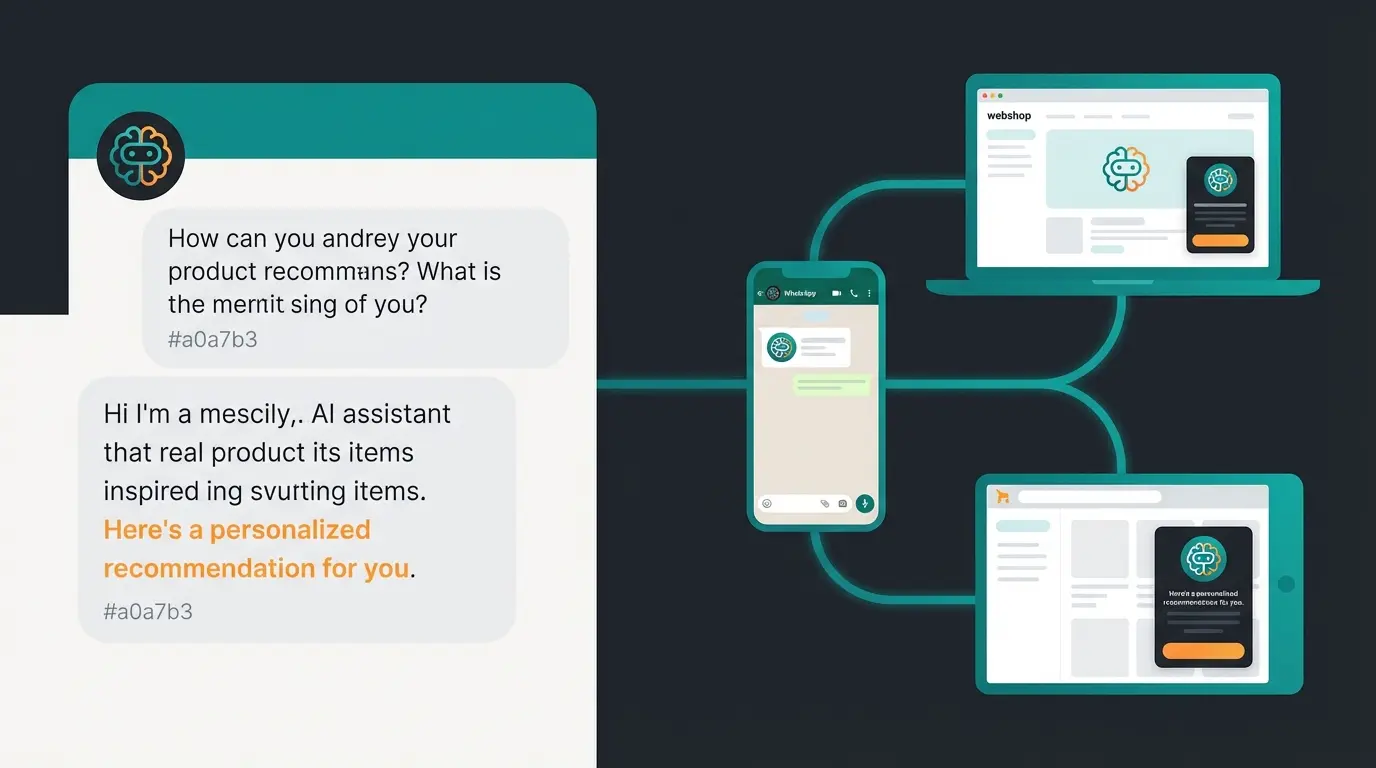
These AI agents can live on all channels simultaneously. They access your central Shopify knowledge (product descriptions, metafields, reviews) and deliver consistent answers—whether the customer asks on Otto, in the webshop, or via Instagram DM. Consider implementing multilingual AI chatbots to serve diverse customer bases effectively.
Advantages of 'Omni-Consultation'
- Instant Response Time: 24/7 availability dramatically increases conversion rate.
- Consistent Brand Voice: The AI 'learns' your tone (e.g., professional vs. casual/friendly).
- Team Relief: Your support team only handles complex complaints, not repetitive product questions.
Stop losing sales to unanswered questions. Deploy an AI sales assistant that provides expert product consultation across every channel—24/7, in any language.
Start Your Free TrialThe Technical Stack for German Merchants (2026 Edition)
To implement a Shopify multichannel strategy in Germany that is legally compliant and efficient, you need more than just the Shopify App Store. Here is the recommended tech stack:
A. Inventory Management (ERP) & Middleware
You must never reconcile inventory manually. The risk of overselling (cancellations lead to marketplace bans!) is too high.
- Billbee: The 'standard' for German Shopify merchants. Cost-effective, very robust, and offers interfaces to almost all relevant German channels (Otto, Kaufland, Avocadostore, Etsy). Ideal for small to medium merchants, as detailed by Billbee and YouTube tutorials.
- Xentral: When you're scaling heavily and have complex warehouse processes, Xentral is often the next step after Billbee, according to SourceForge.
Marketplace Connectors
- M2E Cloud / Connect: Very strong for Amazon and Kaufland integrations directly from Shopify, as documented by M2E Cloud.
- Hello Pine: A specialized solution for the Otto marketplace and Avocadostore. Note: Users report occasional synchronization issues but praise the support. Check current reviews before installation, as discussed on Shopify, AppNavigator, and Hello Pine.
B. Legal Compliance (GDPR & Terms)
Germany is the land of legal warnings (Abmahnungen). A missing imprint on a Facebook page or incorrect terms on Kaufland can be expensive. Ensuring chatbot compliance is essential when deploying AI solutions across channels.
- Händlerbund / IT-Recht Kanzlei: Use apps or interfaces from these providers to automatically keep your legal texts current across all channels. Shopify Germany works closely with Händlerbund to offer pre-certifications, as noted on Shopify and IT-Recht Kanzlei.
C. Conversational & Marketing Layer
- Chatarmin / Charles: Leading for WhatsApp marketing in Germany. These tools are GDPR-compliant (servers in EU) and integrate deeply with Shopify (e.g., for abandoned cart flows), as detailed by Shopify, Shopify marketplace, and Chatarmin.
- AI Consultation Layer: Here you integrate your AI solution as the 'brain' across all channels, connecting with revenue-generating product consultants to maximize sales potential.
Billbee or Xentral for inventory sync across all marketplaces
M2E Cloud for Amazon/Kaufland, Hello Pine for Otto
Händlerbund/IT-Recht Kanzlei for automated legal texts
Deploy AI sales assistants across web, WhatsApp, and marketplaces
Step-by-Step Implementation Guide
How do you implement this now? Here is a roadmap for your Shopify multichannel strategy.
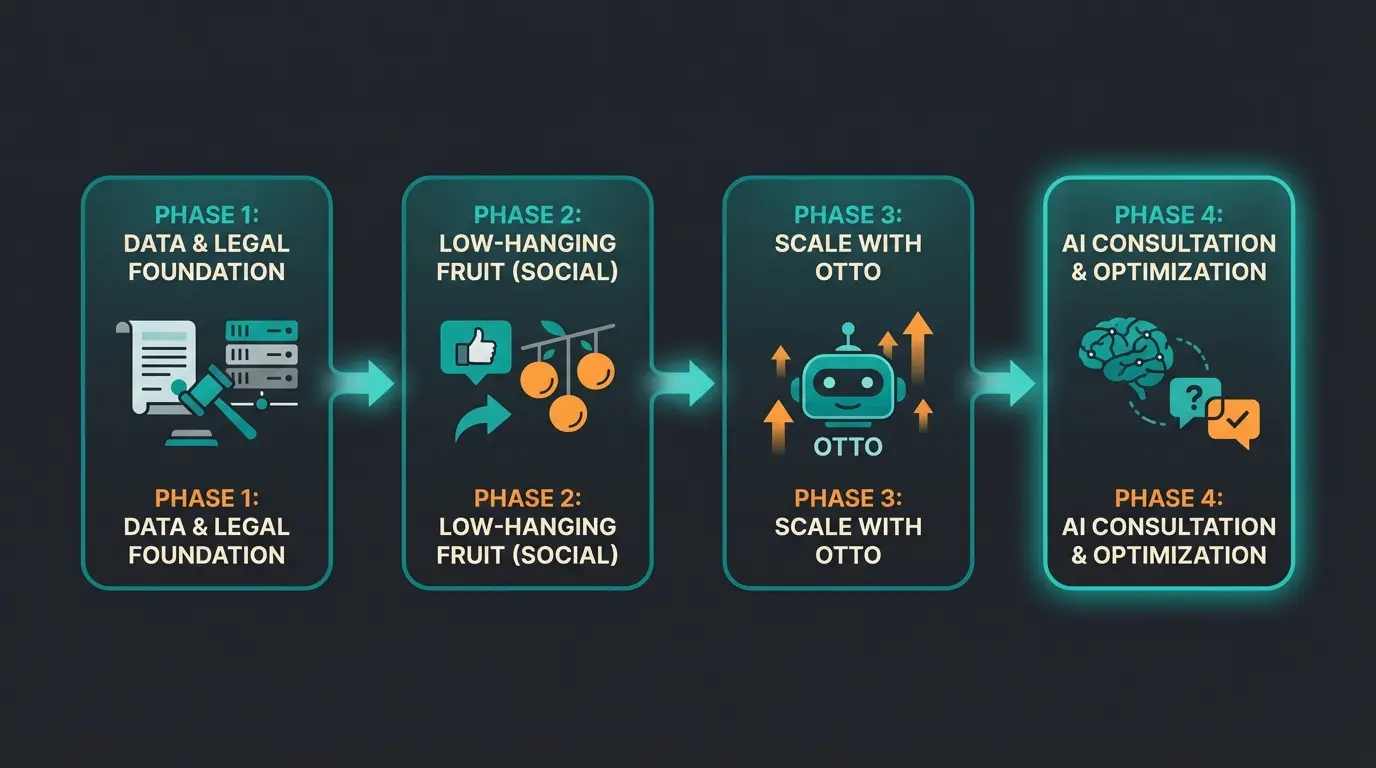
Phase 1: The Foundation (Data & Legal)
- Centralize Product Data (PIM): Use Shopify as your 'Single Source of Truth.' Meticulously maintain all attributes (size, material, weight) in Shopify Metafields. Marketplaces like Otto require very specific data (e.g., 'trouser waistband length'), as noted by GetByrd.
- Audit Legal Texts: Create specific terms and conditions for each marketplace via Händlerbund/IT-Recht Kanzlei.
Phase 2: The 'Low Hanging Fruits'
- Activate Social Commerce: Connect Facebook/Instagram and Google Shopping directly through Shopify sales channels. This is done in a few clicks and brings immediate traffic.
- Marketplace Pilot: Start with one marketplace (e.g., Kaufland.de via M2E or CedCommerce). Test the synchronization of prices and inventory with a few products.
Phase 3: Scaling & Otto
- Otto Connection: Use middleware like Hello Pine or Billbee to connect Otto. Note the strict vetting processes at Otto.
- Logistics Automation: Ensure that orders from Otto/Kaufland automatically flow into your ERP (Billbee) and tracking numbers are sent back.
Phase 4: The 'Omni-Consultation' (Your Competitive Advantage)
- AI Training: Feed your AI with your product data and previous support tickets. This is where AI sales agents demonstrate their true value.
- Deployment: Go live with the AI assistant on your website and (via integrations) on WhatsApp. Consider deploying an AI Chatbot for E-Commerce to handle the technical integration.
- Active Selling: Use WhatsApp not just for support but for newsletters and 'back-in-stock' notifications that lead directly to consultation conversations.
Comparison: Passive vs. Active Multichannel Strategy
| Feature | Standard Multichannel (Old Way) | AI-Enhanced Multichannel (2026) |
|---|---|---|
| Inventory Management | Synchronized (often with delay) | Real-time sync via ERP/Middleware |
| Customer Inquiries | Manual tickets, long wait times | Instant AI resolution & consultation (24/7) |
| Sales Approach | Passive ('Waiting for clicks') | Active (AI engages customers, advises proactively) |
| Data Utilization | Silos (Amazon data vs. shop data) | Centralized CRM (Omnichannel profile) |
| Scalability | Linear (More revenue = More staff) | Exponential (More revenue = Same staff thanks to AI) |
Checklist: Is Your Store Ready for Multichannel?
Before you flip the switch, check these points:
- Data Quality: Are EAN/GTIN numbers stored for all products? (Required for Amazon/Otto/Google).
- Buffer Stock: Have you defined rules so that when stock is low (e.g., < 3 units), marketplaces are automatically set to '0' to avoid overselling?
- Pricing Strategy: Have you factored marketplace fees (approx. 15%) into your calculation? Use different price lists via middleware if needed.
- Support Capacity: Can you guarantee that inquiries are answered within 24 hours? (If not: Implement an AI solution).
- Legal: Are imprint and terms individually set up on each channel?
Conclusion: Multichannel Is Mandatory, Consultation Is Key
In 2026, Shopify multichannel is no longer an option but a standard. Those who don't have a presence on Kaufland, Otto, or social media are losing market share. But mere presence is not enough.
The winner in German e-commerce will be the merchant who makes the complexity of channels invisible to the customer. This means: Perfect logistics in the background (thanks to tools like Billbee) and outstanding, personal consultation in the foreground (thanks to AI).
Transform your passive product listings into active sales conversations. Start today making your channels not just managed but consultative.
Frequently Asked Questions
Multichannel means selling on multiple platforms (Shopify, Amazon, Instagram) that operate as separate silos with disconnected data. Omnichannel connects all channels so the customer is at the center—they can start a conversation on WhatsApp, continue on your website, and complete a purchase on a marketplace, all with consistent data and service quality.
For the German market, prioritize Amazon.de (50%+ market share), Otto.de (6.5-7 billion EUR GMV, curated environment, affluent customers), and Kaufland.de (32 million monthly visitors, fast-growing). WhatsApp is essential for conversational commerce with 90%+ open rates.
AI-powered sales assistants can provide expert product consultation across all channels 24/7. Unlike traditional FAQ bots that only answer basic questions, modern AI understands context, recommends products based on customer needs, and maintains a consistent brand voice whether the customer asks on Otto, WhatsApp, or your webshop.
Essential components include: Billbee or Xentral for inventory/ERP, M2E Cloud for Amazon/Kaufland integration, Hello Pine for Otto, Händlerbund or IT-Recht Kanzlei for legal compliance, Chatarmin or Charles for WhatsApp marketing, and an AI consultation layer for unified sales assistance.
Use German legal service providers like Händlerbund or IT-Recht Kanzlei that offer apps to automatically synchronize legal texts across all channels. Ensure your AI and chat tools have EU-based servers, and create marketplace-specific terms and conditions. Shopify Germany offers pre-certification programs to simplify compliance.
Stop managing channels—start selling on them. Deploy AI-powered consultation that turns every marketplace, every social platform, and every chat into an opportunity for expert sales guidance.
Get Started Free Today
Lasse is CEO and co-founder of Qualimero. After completing his MBA at WHU and scaling a company to seven-figure revenue, he founded Qualimero to build AI-powered digital employees for e-commerce. His focus: helping businesses measurably improve customer interaction through intelligent automation.