Introduction: Why Magento 2 Is More Than a Shop System
E-commerce stands at a turning point. It is no longer enough to simply make products available online. Customers are drowning in choices, and the classic navigation through hundreds of filters often leads to frustration rather than completed purchases. This is where Magento 2 enters the picture—not just as a technical framework, but as the foundation for intelligent, consultation-intensive shopping experiences.
In this comprehensive guide, we examine the current state of Magento 2 (as of late 2025), analyze the critical updates of Magento version 2 release 2.4.8, and show you how to master the specific challenges of the German market (GDPR, B2B complexity). Above all, we close the gap that is missing from most discussions: how to use modern AI technology to bridge the "consultation gap" and transform your online shop from a silent catalog into an active sales consultant. Companies leveraging AI Product Consultation are already seeing dramatic improvements in customer satisfaction and conversion rates.
What Is Magento 2? Status Quo and Evolution
Magento 2 is an open-source e-commerce platform written in PHP that gives merchants unprecedented control over the appearance, content, and functionality of their online shop. Since the acquisition by Adobe and the rebranding to Adobe Commerce, the platform has evolved strongly toward the enterprise market, but remains accessible to mid-sized businesses through the Open Source Edition (formerly Community Edition). According to Wikipedia, Magento powers some of the world's largest online retailers.
The Evolution Through 2026
The development of Magento 2 has been rapid in recent years. While earlier versions were often criticized for performance problems, the tide has turned. The platform now stands as one of the most robust solutions for complex products AI implementations.
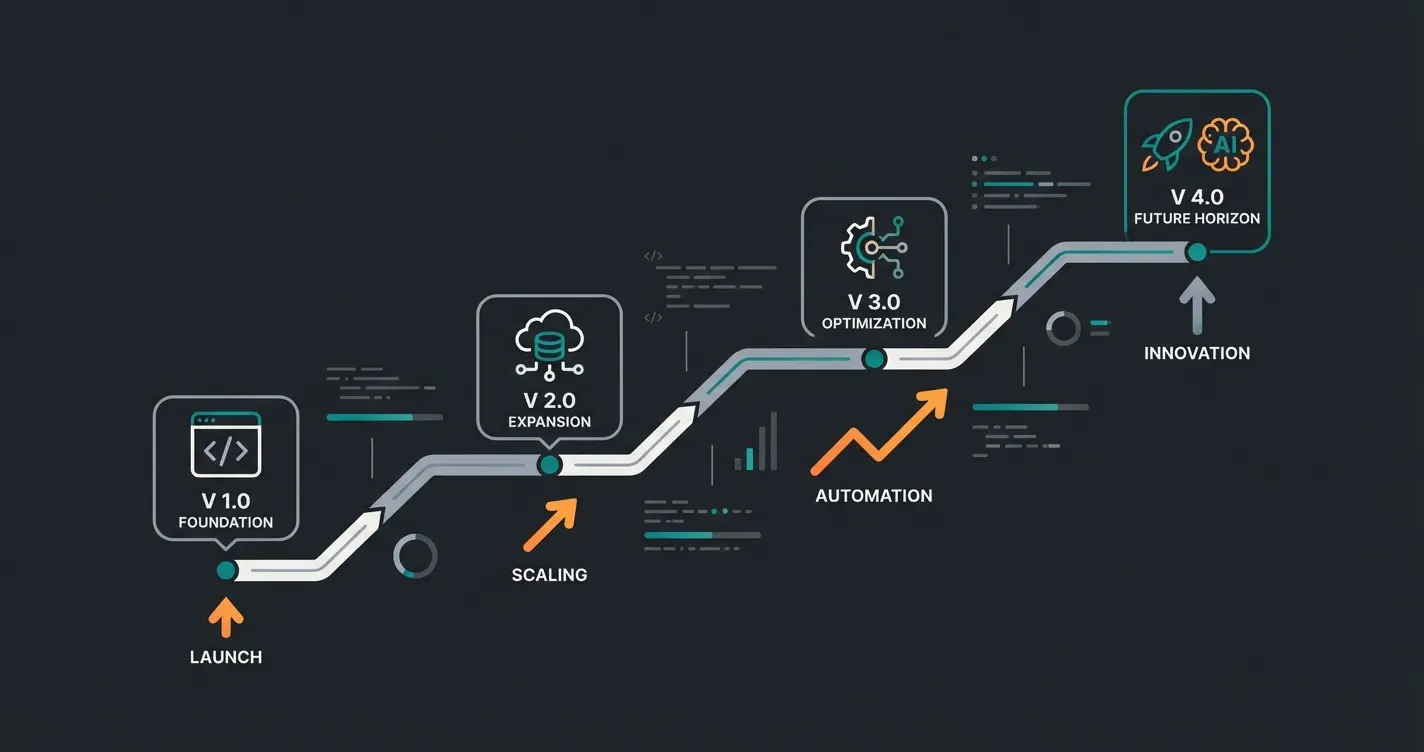
- Release 2.4.8 (April 2025): This milestone brought massive performance improvements, support for PHP 8.4, and the complete shift from Elasticsearch to OpenSearch as the standard search engine. As Chilliapple reports, this version marks a significant leap forward.
- Future Plan: Starting January 2026, Adobe is switching to a monthly patch cycle, which increases security and reduces "Big Bang" upgrades. Adobe has confirmed this shift in their official release documentation.
Core Features of Magento 2 (Magento 2 Features)
Magento 2 is known for its enormous feature set "out of the box." But which Magento 2 features are truly decisive today? Understanding these capabilities is essential for any business considering the platform for their e-commerce operations.
Standard Features: The Foundation
- Page Builder: A drag-and-drop tool that enables marketing teams to create content without IT help. In newer versions, the performance of the generated code has been significantly optimized.
- Multi-Source Inventory (MSI): Essential for merchants with multiple warehouses or branches. MSI allows management of inventory across different physical locations and optimizes the shipping route to the customer.
- PWA Studio: Adobe's toolkit for creating Progressive Web Apps. However, this approach is increasingly being challenged by more performant alternatives like Hyvä (see Frontend section).
- B2B Suite (Adobe Commerce): Contains features such as company accounts, quick orders, quote requests (Quotes), and customer-specific price lists. Abbacus Technologies provides extensive documentation on these enterprise capabilities.
The Technical Revolution: Hyvä Themes
A feature that, while not from Adobe, is almost indispensable for Magento 2 success today is the Hyvä Theme. This represents one of the most significant shifts in how merchants approach frontend development.
The Problem: The standard Luma theme from Magento is technologically outdated, loads too much JavaScript, and achieves poor Google Lighthouse scores. This directly impacts search rankings and user experience.
The Solution: Hyvä removes the "ballast" (RequireJS, KnockoutJS) and relies on Alpine.js and Tailwind CSS. This modern stack delivers dramatically better performance.
Active stores using Hyvä Theme as of 2025
Reported conversion rate increases
Reduction in page loading speed
According to Mavenbird, the market relevance is particularly high in Germany and the Netherlands, where performance and SEO (Core Web Vitals) are extremely weighted. Aureate Labs confirms these findings with detailed case studies.
Intelligent Commerce & AI: The New Frontier
Most feature lists end with the standard capabilities. But the most important feature of the future is the intelligence of the platform. With version 2.4.8, AI-powered merchandising features were introduced that offer 13 types of dynamic product recommendations. However, this is just the beginning.
The real innovation lies in the integration of AI that goes beyond simple recommendations ("customers also bought") and provides genuine consultation. This is where Conversational Commerce transforms the shopping experience entirely. Businesses implementing AI product finder solutions are seeing remarkable improvements in customer engagement and satisfaction.
Magento Open Source vs. Adobe Commerce
The decision between the free version and the licensed version is often a budget question, but also a question of required features. Understanding these differences is crucial for making the right platform choice.
| Feature / Aspect | Magento Open Source | Adobe Commerce (On-Premise & Cloud) |
|---|---|---|
| Costs | License-free (only hosting & development) | License fees based on revenue (GMV) |
| Target Group | SMBs, Startups, Tech-savvy merchants | Enterprise, Wholesale, Corporations |
| B2B Features | Basic (often must be extended by extensions) | Fully integrated (company accounts, quotes, credit limits) |
| Support | Community-based (GitHub, Forums) | 24/7 Support by Adobe, Account Manager |
| Search | OpenSearch (Basic) | Live Search (AI-powered, Adobe Sensei) |
| Marketing | Standard Promotions | Advanced Segmentation, Content Staging |
| Hosting | Freely selectable | Adobe Cloud or On-Premise possible |
Decision Guide: For many German mid-sized businesses, Magento Open Source in combination with high-quality modules (e.g., for B2B) and the Hyvä Theme is often the more economical and flexible solution. Adobe Commerce usually only pays off from a GMV (Gross Merchandise Volume) of approximately 5-10 million euros or when specific B2B features are absolutely necessary "out of the box."
Why Magento 2 Reigns Supreme in Germany (DACH Region)
The German e-commerce market is one of the most demanding in the world. German customers expect precision, security, and specific payment methods. Magento 2 provides the ideal foundation for this, but must be adapted accordingly. Working with digital product consultants can help navigate these complex requirements.
Legal Security & GDPR Compliance
Germany is known for its strict warning waves (Abmahnwellen). A standard Magento shop is not immediately legally compliant. Understanding the EU AI Act implications is also becoming increasingly important for e-commerce operators.
- Cookie Consent: Integration of Consent Management Platforms (CMP) like Usercentrics or Cookiebot is mandatory.
- Checkout Process: The "button solution" (buy button must be clearly labeled) and the transparent display of shipping costs and delivery times directly on the product are essential.
- Data Storage: Magento allows hosting on German servers, which is often decisive for GDPR compliance (data sovereignty).
Local Payment & Shipping Methods
Invoice Purchase: Still extremely popular in Germany, especially in B2B. Modules for "purchase on invoice" (often via PayPal Plus, Klarna, or Ratepay) must be seamlessly integrated.
Shipping: Connection to DHL (including Packstations) and Hermes is standard. Magento 2 offers robust interfaces for this, which can also handle complex scenarios like partial shipments.
Handling Complex Catalogs (German Thoroughness)
German merchants, especially in the "Hidden Champion" B2B sector (mechanical engineering, spare parts), often have extremely complex catalogs.
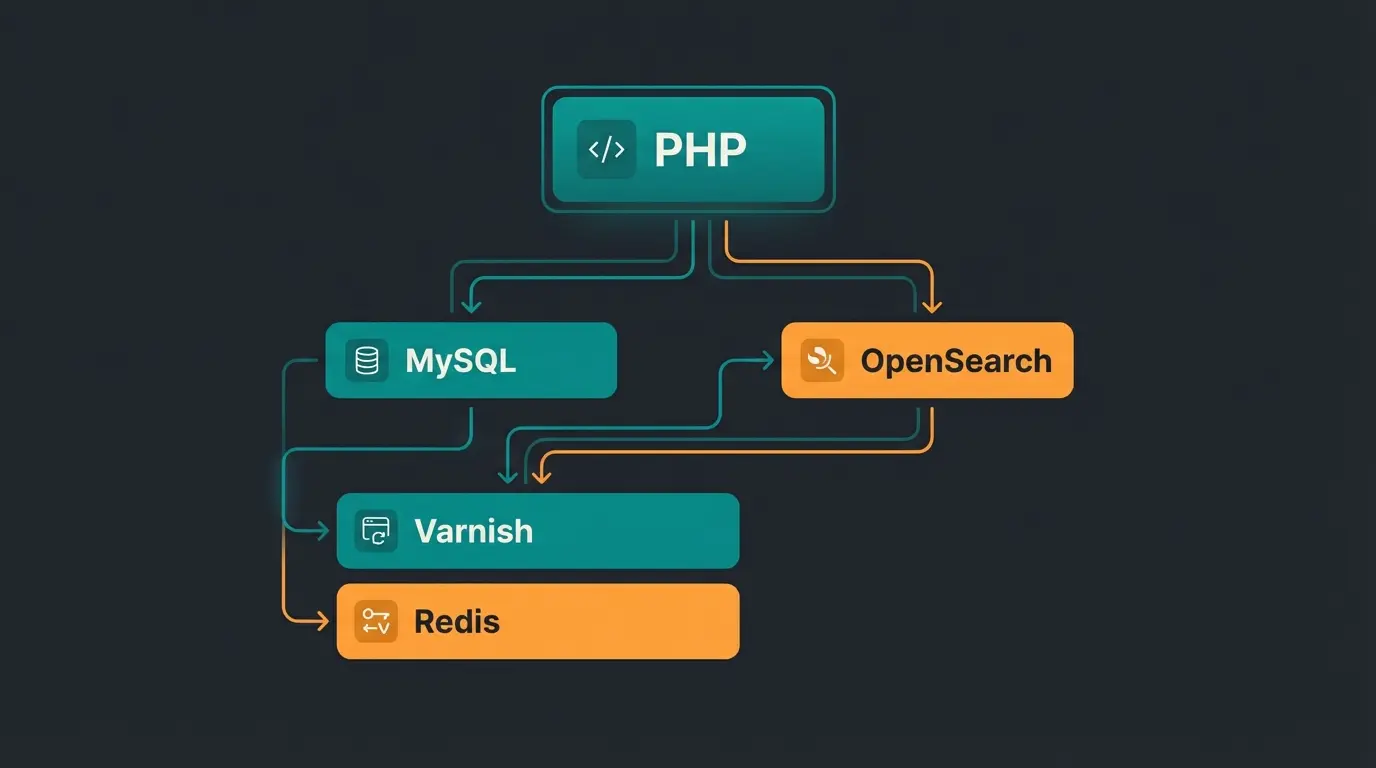
Attribute Depth: A product can have hundreds of technical attributes (length, DIN standard, material). Magento 2 is one of the few systems that uses EAV (Entity-Attribute-Value) and can thus manage millions of SKUs with complex attributes without buckling—provided the caching (Varnish/Redis) is correctly configured. This is where AI consulting in e-commerce becomes invaluable.
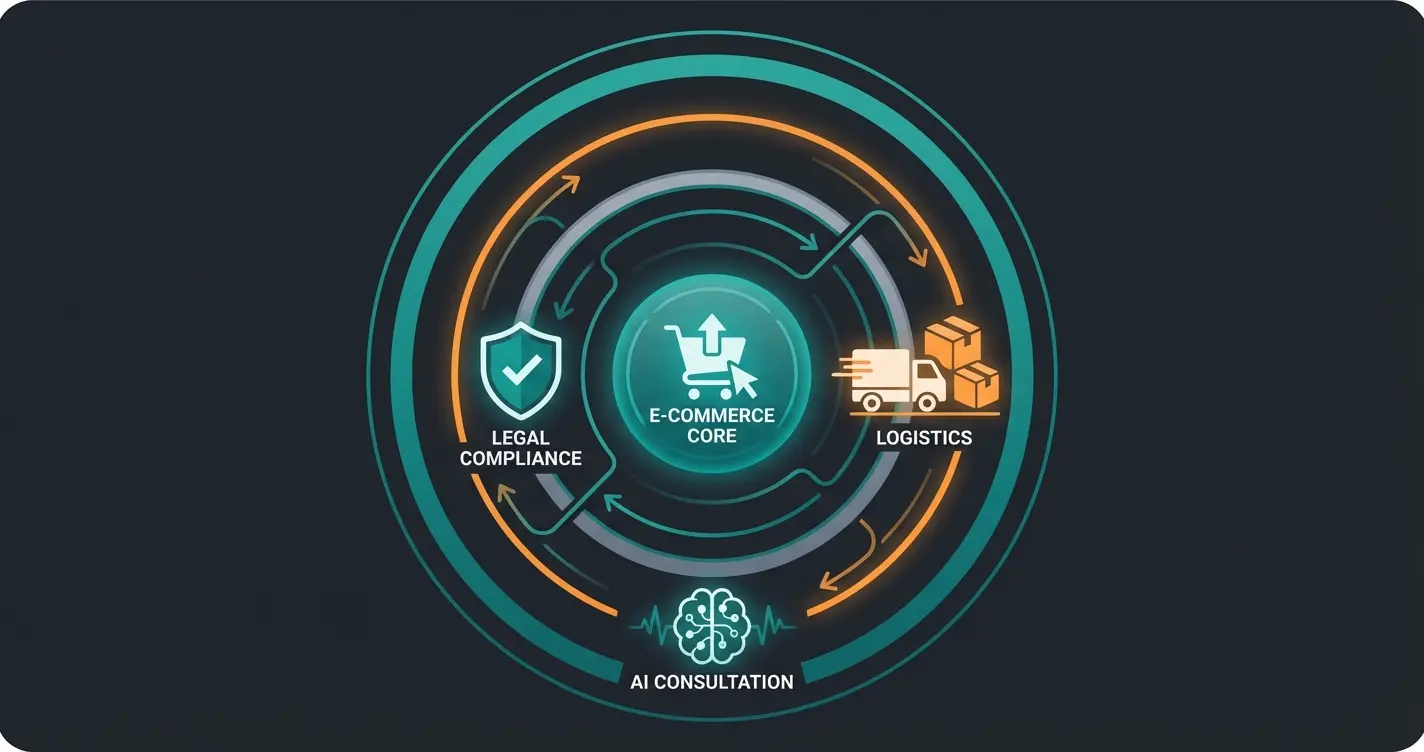
The Missing Piece: AI-Powered Product Consultation
Here lies the biggest content gap in current discussions. Most competitors talk about technical caching strategies. But what good is a fast shop if the customer cannot find the product? This section addresses what truly differentiates successful e-commerce operations in 2025 and beyond.
The Problem: Filter Fatigue
Imagine a B2B customer looking for a specific industrial seal. They face a category with 5,000 items and 40 filters (diameter, material, pressure resistance, temperature).
The Reality: The customer is overwhelmed. They randomly click filters, receive "0 results," and leave the shop (bounce rate increases). This scenario plays out thousands of times daily across e-commerce platforms.
The Old Way: Better search algorithms (Fuzzy Search) only help to a limited extent because they don't understand what the customer really needs. Traditional AI chatbot E-Commerce solutions often fall short in these complex scenarios.
The Solution: Conversational Commerce & Guided Selling
With modern AI models (LLMs) that can be integrated into Magento 2, search transforms from a passive tool into a Digital Sales Assistant. Multilingual AI chatbots enable this transformation across global markets.
Customer faces 100+ filters, clicks randomly, gets frustrated, leaves shop
Customer describes their need in natural language to the AI assistant
AI asks clarifying questions about use case, requirements, and constraints
AI presents optimal product with clear explanation of why it fits
Customer buys with confidence, dramatically reducing return probability
Comparison: Standard Search vs. AI Consultation
| Feature | Standard Magento Search (OpenSearch) | AI-Powered Consultation (Conversational) |
|---|---|---|
| Interaction | Customer enters keywords ("seal 5mm") | Customer describes problem ("I need a seal for a high-pressure pipe at 200 degrees") |
| Logic | Keyword matching & filtering | Intent recognition & context understanding |
| Result | List of products | Concrete recommendation with justification ("Take product X because it's heat-resistant up to 250 degrees") |
| Goal | Finding (if you know what you're looking for) | Consulting & convincing (Guided Selling) |
AI sales assistants represent this evolution in customer service, moving beyond simple queries to genuine consultation experiences. Similarly, AI product advisors are transforming how businesses approach customer engagement.
The Business Case: Reducing Return Rates
Especially in the German market, where return rates in the fashion sector reach up to 50% and in the technical sector are often double-digit, AI is the lever for profitability.
Precision: When the AI guides the customer to the right product through targeted follow-up questions ("What is the use case for this component?"), the probability of a wrong order drops drastically.
Trust: A "consultation conversation" in chat builds trust, similar to a salesperson in a brick-and-mortar store. This increases the Average Order Value (AOV). Implementing consultative AI strategies can dramatically transform these metrics.
Bridge the consultation gap and turn your online catalog into an active sales consultant. Reduce returns, increase AOV, and deliver the personalized shopping experience your customers expect.
Start Your AI JourneyTechnical Requirements & Architecture (2025/2026)
To run Magento 2.4.8 and subsequent versions performantly and securely, your server environments must be up to date. Outdated stacks are a massive security risk and performance killer.
System Checklist for Magento 2.4.8+
Based on the release notes from April 2025 as documented by MGT Commerce and Meetanshi:
- PHP Version: PHP 8.4 is required (or at least 8.3 as a transition). Warning: Support for PHP 8.1 has been completely dropped. Those still running old versions risk incompatibilities and security vulnerabilities. As GitHub discussions confirm, this is a hard requirement.
- Database: MySQL 8.4 LTS or MariaDB 11.4 LTS are required. Older versions like MariaDB 10.6 are reaching their end-of-life.
- Search Technology: OpenSearch is now the sole standard. Elasticsearch support was removed in version 2.4.8. This requires mandatory migration of search infrastructure when upgrading from older versions (e.g., 2.4.6). Magetop provides detailed migration guides.
- Caching & Performance: Varnish version 7.x is recommended for Full Page Caching. Redis version 7.2+ for session storage and backend cache. RabbitMQ version 4.x for message queues (important for asynchronous processes like order confirmation emails). Mageplaza offers comprehensive system requirement documentation.
Magento 2 in 2026: Future-Proofing Your Investment
Looking ahead, Magento 2 continues to evolve with clear strategic direction. Understanding the roadmap helps businesses plan their investments wisely.
The Monthly Patch Cycle Revolution
Starting January 2026, Adobe's shift to monthly patches represents a fundamental change in how merchants manage their stores. As Ayko notes, this reduces the stress of major upgrades while maintaining better security posture.
AI Integration Deepening
Adobe continues to invest in AI capabilities through Adobe Sensei integration. However, the most innovative merchants are combining native capabilities with specialized AI solutions that deliver genuine conversational commerce experiences rather than simple product recommendations.
According to Adobe's official lifecycle policy, Magento 2.4.8 support extends to April 2028. Adobe's release schedule provides detailed information on version-specific timelines.
Conclusion: Building the Future of E-Commerce
Magento 2 has evolved from a mere shop system to a comprehensive digital commerce platform. Version 2.4.8 marks a technical cut that removes old baggage (PHP 8.1, Elasticsearch) and makes the platform fit for the future.
Summary for Decision Makers
- Upgrade Obligation: Those still running versions before 2.4.6 are acting negligently. Support for older versions is expiring, and security risks are increasing.
- Frontend Switch: Budget for a switch to Hyvä. Luma is dead. The performance gains from Hyvä are directly revenue-relevant.
- AI Strategy: Don't implement AI just as a gimmick. Use Conversational AI to extend your German sales team's consulting competence into the digital space.
Magento 2 provides the foundation—robust, scalable, and secure. AI provides the experience. The combination of both is the key to not just surviving in the competitive German market of 2026, but dominating it.

FAQ: Frequently Asked Questions About Magento 2
Magento Open Source is license-free. However, costs arise for hosting, development, themes (like Hyvä), and extensions. Adobe Commerce is paid with license fees based on your gross merchandise volume (GMV).
Support for individual versions varies. For Magento 2.4.8 (released April 2025), regular support runs until April 2028. Always check Adobe's official lifecycle policy for the most current information.
A direct "migration" is not possible—it's a re-platforming process (rebuild). Since Magento 1 has been "End of Life" since 2020, a switch to Magento 2 (or another platform) is mandatory for security and compliance.
As of version 2.4.8, Magento no longer supports Elasticsearch. OpenSearch is a fork of Elasticsearch and offers a compatible, legally secure, and performant alternative for catalog search functionality.
Magento 2 excels in the German market due to its flexibility for GDPR compliance, support for local payment methods (invoice purchase, Klarna), integration with German shipping providers (DHL, Hermes), and its ability to handle complex product catalogs common in German B2B sectors.
Discover how AI-powered product consultation can bridge the gap between your complex Magento catalog and your customers' needs. Reduce returns, increase conversions, and deliver the personalized shopping experience that drives loyalty.
Get Started Today
Lasse is CEO and co-founder of Qualimero. After completing his MBA at WHU and scaling a company to seven-figure revenue, he founded Qualimero to build AI-powered digital employees for e-commerce. His focus: helping businesses measurably improve customer interaction through intelligent automation.