Shopware Community Edition 2025: Complete Guide + Free AI Upgrade
Master Shopware Community Edition in 2025. Learn the Fair Usage Policy, compare CE vs Rise, and discover how AI consultation boosts sales without costly upgrades.

Executive Summary
This article provides an in-depth analysis of the Shopware Community Edition (CE) in 2025. It's designed for e-commerce managers and shop operators in the DACH region who are looking for a cost-effective yet powerful Enterprise alternative.
The key findings: The Community Edition remains open-source but is now subject to a new Fair Usage Policy as of March 2025 (free up to €1M GMV). While Shopware offers an "AI Copilot" in its paid plans (Rise, Evolve), this feature focuses almost exclusively on backend processes like content creation and data export. According to themeware.design, these licensing changes create new opportunities for strategic shop owners.
The opportunity: There is no native solution for frontend sales AI in the CE. This article shows you how to save on licensing costs and instead invest in AI-powered product consultation to massively increase your conversion rate. Use the CE as a flexible technical foundation and retrofit "sales intelligence" through specialized tools, rather than signing expensive subscriptions for backend features.
Why Shopware CE Is More Than a Starter Solution
In the German e-commerce landscape, there's a persistent myth: The Shopware Community Edition is supposedly only for hobbyists, startups, or small shops that can't afford "the real software." Anyone who wants to sell professionally, so the assumption goes, needs an Enterprise contract.
In 2025, this assumption is not only wrong—it's expensive.
With the maturity of Shopware 6, the Community Edition has evolved into a powerful headless commerce core that technologically stands on the same foundation as the expensive "Beyond" plans. Yet many merchants face a dilemma: While the standard version offers excellent management tools, the frontend—where customers actually buy—often still resembles the "filter wasteland" of the 2010s. As covered in our Shopware Editions comparison, understanding these differences is crucial for making the right choice.
In this guide, we don't just analyze the technical features and the new Fair Usage Policy 2025—we show you a strategy that's missing from most comparisons: How to upgrade the Shopware Community Edition with external AI intelligence so it beats expensive Enterprise solutions in sales—at a fraction of the Total Cost of Ownership (TCO).
What Is Shopware Community Edition? Status Quo 2025
The Shopware Community Edition (CE) is the free, open-source version of the Shopware platform, released under the MIT license. It allows merchants full access to the source code and hosting on their own servers, which is particularly crucial for data sovereignty and GDPR compliance in Germany. According to icreativetechnologies.com, this self-hosted approach provides significant advantages for European businesses.
Core Features: What's in the Box?
Even without licensing fees, the CE offers an impressive feature set that covers 90% of all B2C requirements:
- Shopping Experiences (Erlebniswelten): A drag-and-drop editor for landing pages and category pages that connects content and commerce
- Rule Builder: A powerful tool to create complex business rules (e.g., 'Free shipping over €50, but only for VIP customers in DACH') without code
- Flow Builder: Automation of business processes (e.g., email sending after status change). Basic functions are included in CE, while webhooks are partially reserved for higher plans
- API-First Architecture: Enables connection of any third-party systems (ERP, PIM) or frontends (PWA)
These capabilities are confirmed by Shopware's official documentation and speardevs.com, making the Community Edition a robust foundation for serious e-commerce operations.
The 2025 Update: The Fair Usage Policy (Important!)
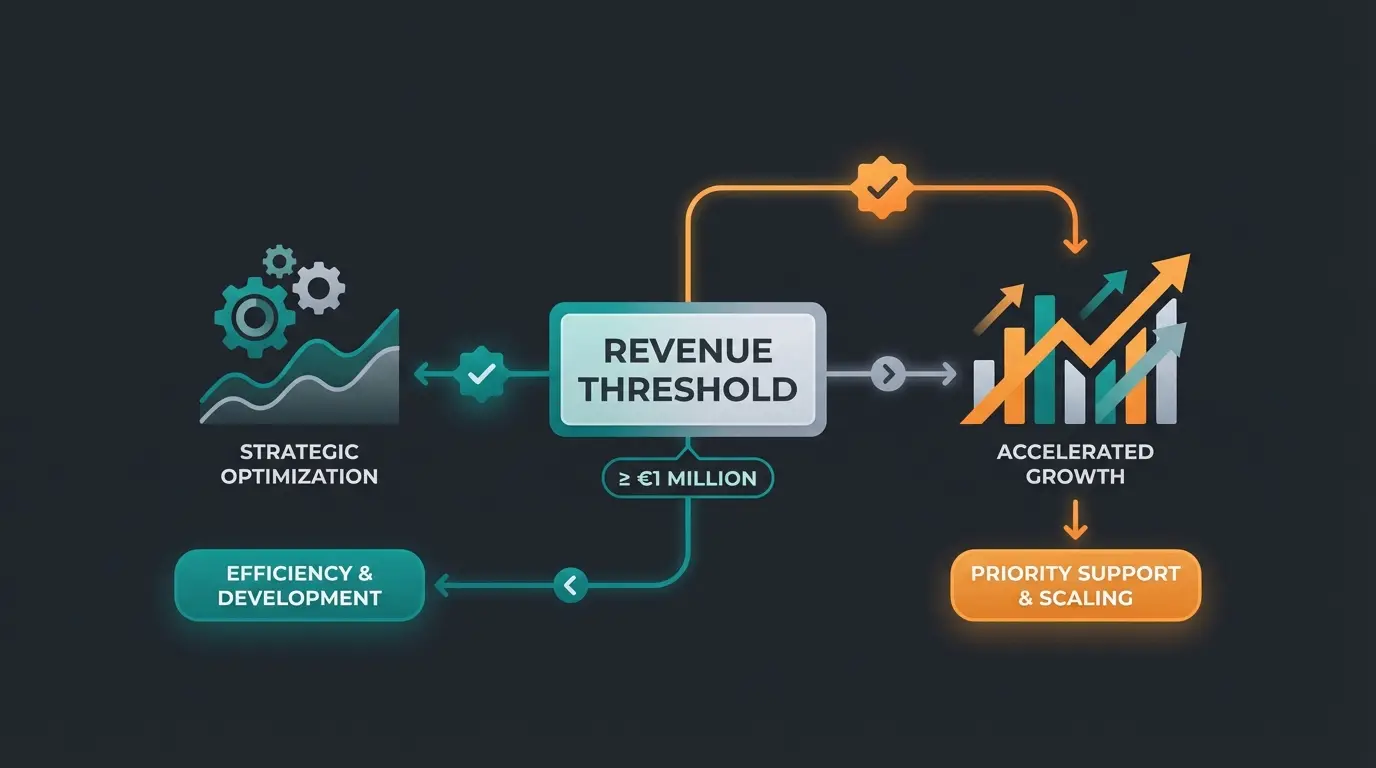
The biggest change in 2025 is the introduction of the Fair Usage Policy (FUP) on March 24, 2025. Shopware is drastically changing the rules for free usage here.
The consequence: Technically, the shop continues to run (since it's open source), but you cannot purchase new plugins or update existing rental plugins. For professional merchants, switching becomes effectively mandatory once you cross this revenue threshold. This change has been documented by eazycode.de and hexamain.de.
Expert assessment: For merchants under this revenue threshold, the CE is more attractive than ever, as Shopware has officially confirmed it remains free for this segment. For merchants approaching the million-euro turnover mark, strategic planning of licensing costs now becomes essential. When comparing platforms, our analysis of Shopware vs Shopify shows why CE often wins for complex product catalogs.
Shopware CE vs Commercial Plans: Rise and Evolve
Many agencies quickly push merchants toward the Shopware Rise plan (starting at approximately €600/month). But is the upgrade really worth it if you're still under the €1M GMV threshold?
Comparison Table: The Feature Reality
| Feature | Community Edition (CE) | Shopware Rise (from €600/mo) | Shopware Evolve/Beyond |
|---|---|---|---|
| License Costs | €0 (up to 1M GMV) | from €600/month | Individual (often €2,000+) |
| Support | Community Forum | Manufacturer Support | 24/7 Support & CSM |
| B2B Suite | No (only via plugins) | Limited | Yes (Quote Management, Roles) |
| AI Copilot (Native) | No | Yes (Backend Focus) | Yes (Extended) |
| Rule Builder | Yes | Yes (+ Preview Function) | Yes |
| Flow Builder | Yes | Yes | Yes (+ Webhooks/Delays) |
| Hosting | Self-Hosted | Self-Hosted or Cloud | Self-Hosted or Cloud |
This comparison data has been compiled from multiple sources including datrycs.com, scope01.com, and Shopware's pricing page.
The AI Trap in Commercial Plans
A main argument for upgrading to Rise is often the Shopware AI Copilot. But here you need to look closely. The native AI features from Shopware, included in paid plans starting with version 6.7, focus almost exclusively on backend efficiency. This is confirmed by Shopware's AI documentation and folio3.com.
- Text Generation: Generate product descriptions via AI
- Image Keywords: Automatic tagging of images for search
- Summaries: Summarize customer reviews
- Export Assistant: Create database queries via natural language
The problem: These features save your content team time, but they don't actively sell. A customer visiting your shop notices nothing about your product description being AI-generated. They still lack consultation. For a comprehensive overview of what native Shopware AI features actually include, our detailed guide breaks down each capability.
The Hidden Gap: Why CE Shops Suffer From Filter Fatigue
When we set aside the technical data sheets and look at the User Experience (UX), the biggest deficit of a standard Shopware installation reveals itself—regardless of whether it's CE or Rise.
The Problem: Administration Instead of Sales
Shopware excels at managing products (prices, inventory, variants). But it's inherently poor at selling products by default. The standard shop only offers customers a search bar (which often requires exact terms) and static filters (color, size, price, manufacturer).
The Filter Fatigue Phenomenon
Imagine you sell tools. A customer is looking for a drill. In a Standard Shopware CE setup, the customer must know whether they need "SDS-Plus," "18V," or "Brushless." They have to set filters. If they don't know what they need, they abandon the purchase.
The reality: German customers want consultation. They want to be asked: "What do you want to drill? Concrete or wood? How often will you use this tool?" This is where Shopware product finders become essential for modern e-commerce success.
Here lies the gap. The native Shopware features—even in the expensive plans—offer no Guided Selling experience in the frontend. The "AI Copilot" helps you in the office, but not the customer at the shelf. This insight is supported by analysis from qualimero.com.
Customers leave when facing too many filter options without guidance
Shops with consultation features convert significantly better
License fees saved that can fund AI consultation tools
Strategy: Upgrading Shopware CE to a Sales Powerhouse
Here lies your strategic opportunity for 2025. Instead of spending €600 to €2,000 per month on license fees (provided you're under €1M GMV), invest this budget in a frontend AI that closes this consultation gap. AI eliminates waiting times and creates the kind of instant, personalized experience modern customers expect.
The Concept: The Digital Specialist Consultant
Instead of a basic chatbot that only answers FAQs ("Where is my package?"), you integrate an AI Product Consultation. This approach represents a fundamental shift from reactive support to proactive sales assistance.
Backend AI vs Frontend AI: The Critical Difference
| Attribute | Shopware Native AI Copilot (Rise/Evolve) | AI Product Consultation (Add-on for CE) |
|---|---|---|
| Target Audience | Shop Manager / Admin | End Customer / Buyer |
| Primary Purpose | Time savings in data maintenance | Increasing Conversion Rate |
| Function | "Write a text about this shoe" | "Which shoe do you recommend for marathon running?" |
| Interaction | Static (in backend) | Dialogic (in frontend) |
| ROI | Cost reduction (efficiency) | Revenue increase (sales) |
This distinction is crucial for understanding why AI product consultation delivers fundamentally different value than backend automation tools.
How to Retrofit AI Consultation in Community Edition
Since the CE has an open architecture, you can connect specialized AI tools via plugin or API:
- No upgrade necessary: You don't need to switch to Rise to use AI. External solutions work excellently with the CE.
- Data sovereignty: Good AI solutions use your product data (from the Shopware feed) to advise customers but don't hallucinate about prices or availability.
- The psychological lever: Position the tool not as "search" but as a "Digital Consultant." Studies show that interactive consultation can significantly increase conversion rates by solving decision paralysis ("too much choice") for customers.
Stop losing customers to filter fatigue. Our AI Product Consultation integrates seamlessly with Shopware Community Edition, delivering Enterprise-level guided selling without the Enterprise price tag.
Start Free AI Consultation TrialThe Real Cost Comparison: Solving Problems Differently
Traditional comparisons focus on feature checkboxes. But what really matters is how you solve the actual business problem: selling more products to more customers. For complex B2B scenarios, AI-powered digital sales portals offer another dimension of capability.
| Problem to Solve | Shopware CE (Standard) | Shopware Rise (Paid) | Shopware CE + AI Consultation |
|---|---|---|---|
| Product Advice | Static Filters (Low Conversion) | Static Filters | Active AI Consultation (High Conversion) |
| AI Features | None | Backend Copilot (Text Gen) | Frontend Sales Agent |
| Customer Guidance | Self-Service Only | Self-Service Only | Conversational Guided Selling |
| Annual Cost (License) | €0 | €7,200+ | €0 (invest in AI instead) |
| Competitive Advantage | Low | Medium | High (Differentiated Experience) |
This approach to AI product consultation represents a paradigm shift in how Shopware merchants think about their technology investments.
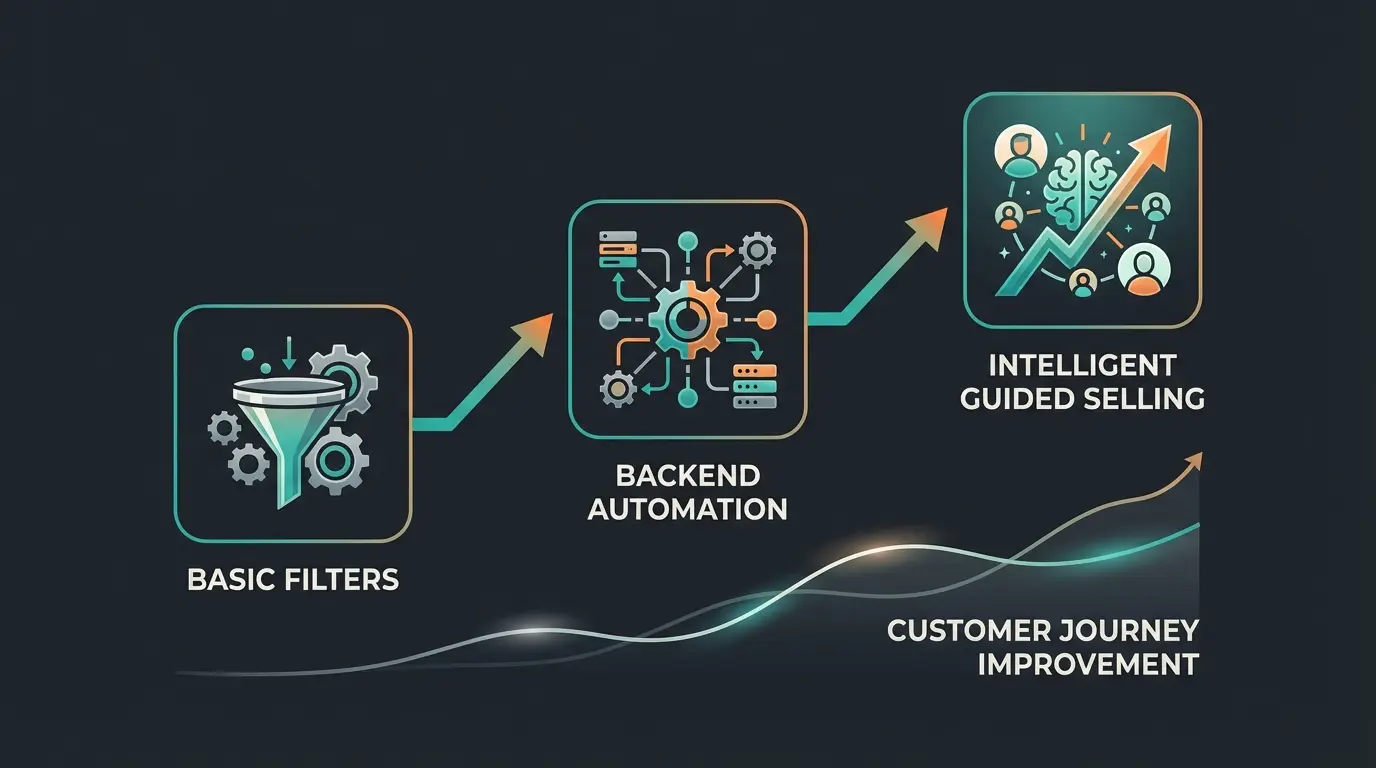
Product lists, basic filters, self-service browsing. Functional but undifferentiated.
Backend automation, faster workflows, AI text generation. Efficiency gains but no sales improvement.
CE + AI Consultation = Focus on customer experience and guided selling. True competitive advantage.
Installation and Hosting: Getting the Foundation Right
For your "Smart CE" strategy to work, the technical foundation must be solid. Since you don't receive support from Shopware, the responsibility lies with you or your agency. If you encounter issues, our guide on AI product consultation support can help navigate technical challenges.
Hosting Requirements 2025
Shopware 6 is based on Symfony and Vue.js. Cheap shared hosting won't cut it here.
- Recommendation: Managed VPS or cloud hosting (e.g., Hetzner, Timme Hosting, Maxcluster) with NGINX, PHP 8.2+ and Elasticsearch/OpenSearch
- Important for Germany: Pay attention to server location in Germany. Since you have full control over the database with CE, this is often more secure in terms of data protection than US-based SaaS solutions like Shopify
- Performance: Plan for adequate resources as AI integrations will add API calls to your infrastructure
Installation Best Practices
Professional installation today no longer happens via ZIP upload but through the Shopware Installer or directly via Composer and Docker. This facilitates later updates and integration into CI/CD pipelines. According to kenner-soft.com and LitExtension, modern deployment practices significantly reduce maintenance overhead.
Essential Plugins for Your Smart CE Stack
While many guides list standard plugins like PayPal and DHL, the "essential plugins" category needs updating for 2025:
- Payment: PayPal, Stripe, Klarna – standard for any professional shop
- Shipping: DHL, DPD integrations with tracking
- Marketing: Email automation, social commerce connectors
- NEW Essential Category - AI Sales: AI Product Consultation for guided selling and conversion optimization
This new category represents the shift from shops that merely manage products to shops that actively sell them. AI-powered product consultation integrations are becoming as essential as payment processing.
Decision Tree: Is the CE + AI Strategy Right for You?
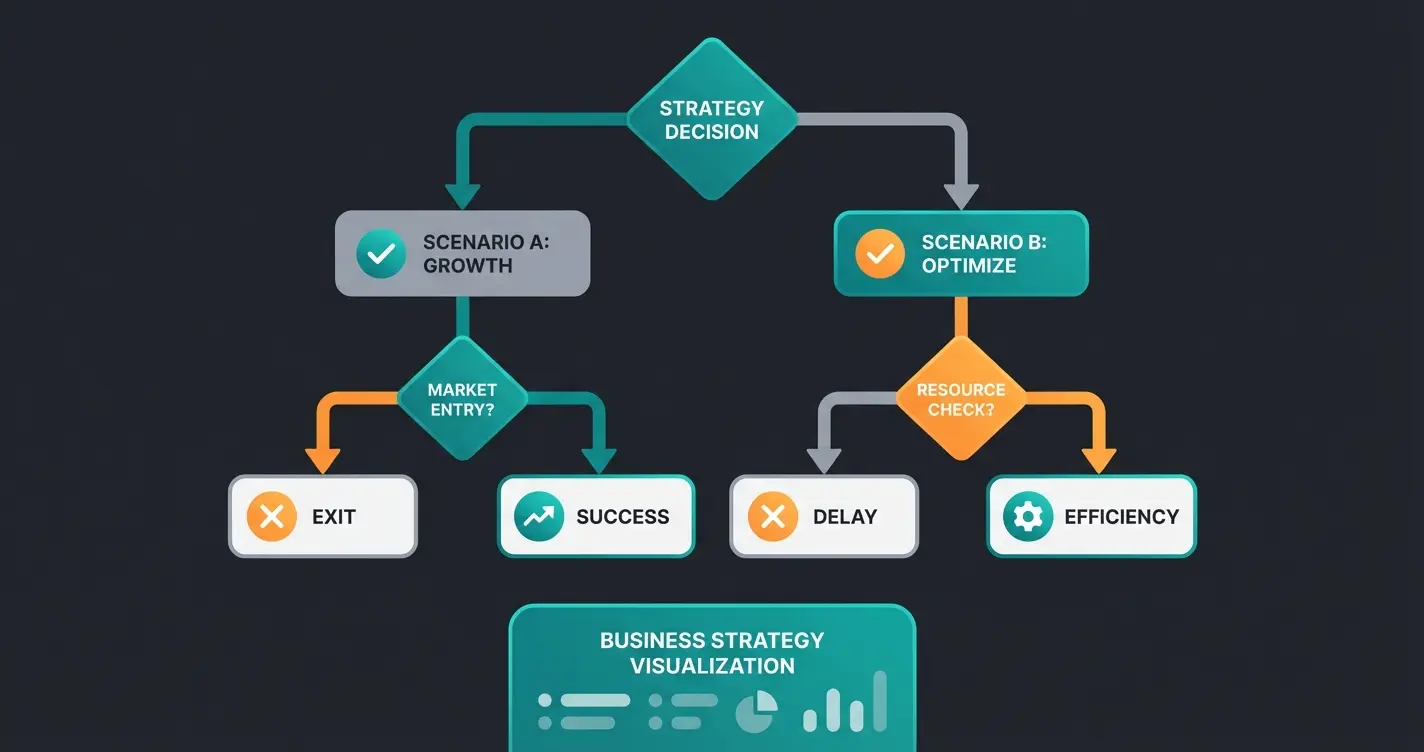
Use this checklist to define your strategy for 2025:
Revenue Check
- Is your GMV under €1 million? → YES: Stay with the Community Edition. You save on license costs.
- Is your GMV over €1 million? → You must upgrade to Rise or Evolve (Fair Usage Policy). But: Frontend consultation is still missing even there. The AI strategy remains relevant; only the cost basis changes.
Team Check
- Do you have developer resources (internal/agency)? → YES: CE is perfect.
- Do you need someone to call when things break? → Without an agency, CE is risky. Consider partnering with a Shopware-certified agency.
Sales Check
- Are your products explanation-intensive? (e.g., electronics, sports equipment, cosmetics, B2B parts) → YES: This is where the leverage for AI Product Consultation is greatest. Standard filters often fail here.
- Do customers frequently abandon due to choice overload? → YES: Guided selling directly addresses this conversion killer.
For products requiring explanation, AI consultation builds customer confidence through personalized recommendations that static filters simply cannot provide.
GDPR and Legal Compliance: The CE Advantage
One often-overlooked advantage of Shopware Community Edition deserves special attention for German and European merchants: complete data sovereignty.
With CE, you have full control over your database and can guarantee that customer data stays on German servers. This provides a significant compliance advantage over US-based SaaS solutions where data may cross international boundaries. For businesses where data protection is a key selling point, this is invaluable.
Conclusion: Don't Just Manage Products – Sell Them
The Shopware Community Edition in 2025 is far more than a free trial version. With the introduction of the Fair Usage Policy, Shopware has created clear conditions: For ambitious SMEs under €1 million in revenue, it's arguably the most powerful e-commerce gift on the market.
But technology alone doesn't sell. While your competitors might upgrade to the expensive "Rise" plan to generate AI texts in the backend, you can take a smarter path:
- Use the Community Edition as a robust, cost-free core
- Accept that standard filters are no longer state-of-the-art
- Integrate an AI Product Consultation that actively advises your customers in the frontend and guides them to purchase
This way, you build an Enterprise-level setup that not only saves costs but does what a shop should do: Actively sell. The B2B potential documented at qualimero.com shows that this approach scales across both B2C and B2B scenarios.
Frequently Asked Questions About Shopware CE
Yes, the software itself is license-free. However, starting March 24, 2025, the Fair Usage Policy applies: From €1 million GMV (gross merchandise value) per year, you must switch to a paid plan to continue accessing updates and the Store.
No, the native "Shopware AI Copilot" is reserved for paid plans (Rise from version 6.7 onward). However, you can integrate third-party plugins or external AI services that are often more specialized and powerful for sales purposes.
Yes, even better than many cloud solutions. Since you operate the software on your own servers (self-hosted), you have full control over where data is stored and which third parties have access.
Yes, the native "B2B Suite" (budgets, approval processes, quick orders) is reserved for the Evolve and Beyond plans. For simple B2B shops (net prices, customer groups), CE is sufficient; for complex requirements, you need plugins or an upgrade.
Standard search requires customers to know exact product terms. AI Product Consultation engages in dialogue, asking questions like 'What will you use this for?' to guide customers to the right product—mimicking an in-store sales consultant experience.
Join hundreds of merchants who've upgraded their Community Edition with AI-powered product consultation. Enterprise-level sales performance without the Enterprise price tag. Start your free trial today.
Get Started Free
Lasse is CEO and co-founder of Qualimero. After completing his MBA at WHU and scaling a company to seven-figure revenue, he founded Qualimero to build AI-powered digital employees for e-commerce. His focus: helping businesses measurably improve customer interaction through intelligent automation.