
The Shopware Reviews Dilemma: Decoding the Confusion
You're facing a decision. Perhaps you're planning a relaunch, maybe you're dissatisfied with Shopify or Magento, or you're evaluating Shopware 6 for an enterprise project. Your first step: You search for Shopware reviews on Google.
The result is utterly confusing.
On one side, you see gleaming "Leader" badges on G2 and OMR Reviews with average scores of 4.5 stars. On the other side, Trustpilot screams at you with a score of 1.5 ("Poor"). How does this fit together? Is Shopware the leading e-commerce system in the DACH region or a sinking ship?
The truth lies—as so often—in the details that get lost in simple star ratings. As an experienced e-commerce analyst, I've dissected the data behind the reviews. This article isn't a superficial feature comparison. It's a practical reality check for 2026 that analyzes what Shopware actually delivers, where hidden costs lurk, and why the classic concept of "reviews" may no longer be sufficient for your revenue success.
We're not just clarifying whether Shopware is good, but how you can use the system to make your customers not just satisfied, but truly delighted. If you're looking to leverage Shopware AI capabilities, understanding the platform's strengths and weaknesses is essential first.
The Hard Facts: What Top Review Portals Really Say
To objectively assess Shopware's quality, we need to understand the sources of reviews. A review on OMR typically comes from an agency or e-commerce manager. A review on Trustpilot often comes from a frustrated small business owner stuck in a support queue.
Here's the analysis of the current data situation (as of 2026):
Review Platform Comparison: The Complete Picture
| Platform | Score (approx.) | Who Reviews Here? | Focus of Criticism/Praise | Analysis |
|---|---|---|---|---|
| OMR Reviews | 4.5 / 5 | E-commerce managers, agencies, developers | Praise: Flexibility, API-first approach, community. Criticism: High initial costs, complexity. | Reflects the technical quality and market viability of the software |
| G2 | 4.4 / 5 | International users, enterprise customers | Praise: B2B features, scalability. Criticism: Learning curve for beginners. | Confirms Shopware as a strong player in the mid-market and enterprise segment |
| Trustpilot | 1.5 / 5 | Smaller merchants, Shopware AG end customers | Criticism: Support response times, subscription cancellations, costs. | Reflects administrative problems with the manufacturer, rarely software bugs |
Analyzing the Rating Discrepancy
Why this massive gap in ratings? The answer reveals important insights for potential Shopware users:
The "Support Bias": On Trustpilot, users often complain about contractual issues or support tickets. A typical quote reads: "I've been waiting 3 days for a response from support." That's frustrating, but it says nothing about whether the software's checkout process converts well. According to G2's detailed analysis, the software functionality receives consistently high marks.
The Target Audience Factor: Shopware has developed strongly toward the mid-market and enterprise segment with version 6. Smaller merchants expecting a "plug-and-play" solution like Shopify are often overwhelmed by the technical complexity and agency costs. The negative reviews often stem from this expectation mismatch.
The Agency Perspective: On OMR and G2, professionals who appreciate the freedom of the code rate the platform. For them, Shopware 6 is a powerful toolkit that enables custom solutions impossible on locked-down platforms.
Based on technical professionals and agency developers
International enterprise users and B2B customers
Primarily reflects support experience, not software quality
Trustpilot reviews focus on administrative issues
Shopware in Practice: The "Hidden" Review
Let's set aside the stars and look into the engine room. Based on current developer documentation and release notes for 2026, the following picture emerges for practical use. Understanding Shopware 6 support requirements is crucial before making your decision.
Usability & Backend: Powerful but Learning-Intensive
Shopware 6 relies on modern administration based on Vue.js, offering both advantages and challenges for different user types:
Pro: The "Shopping Experiences" (CMS) allow marketing teams to build landing pages without code. This is a huge plus compared to older systems and reduces dependency on developers for content changes.
Con: The menu structure runs deep. Anyone who just wants to "quickly" create products finds themselves in a flood of options for variants, rule builders, and SEO settings. The learning curve is real.
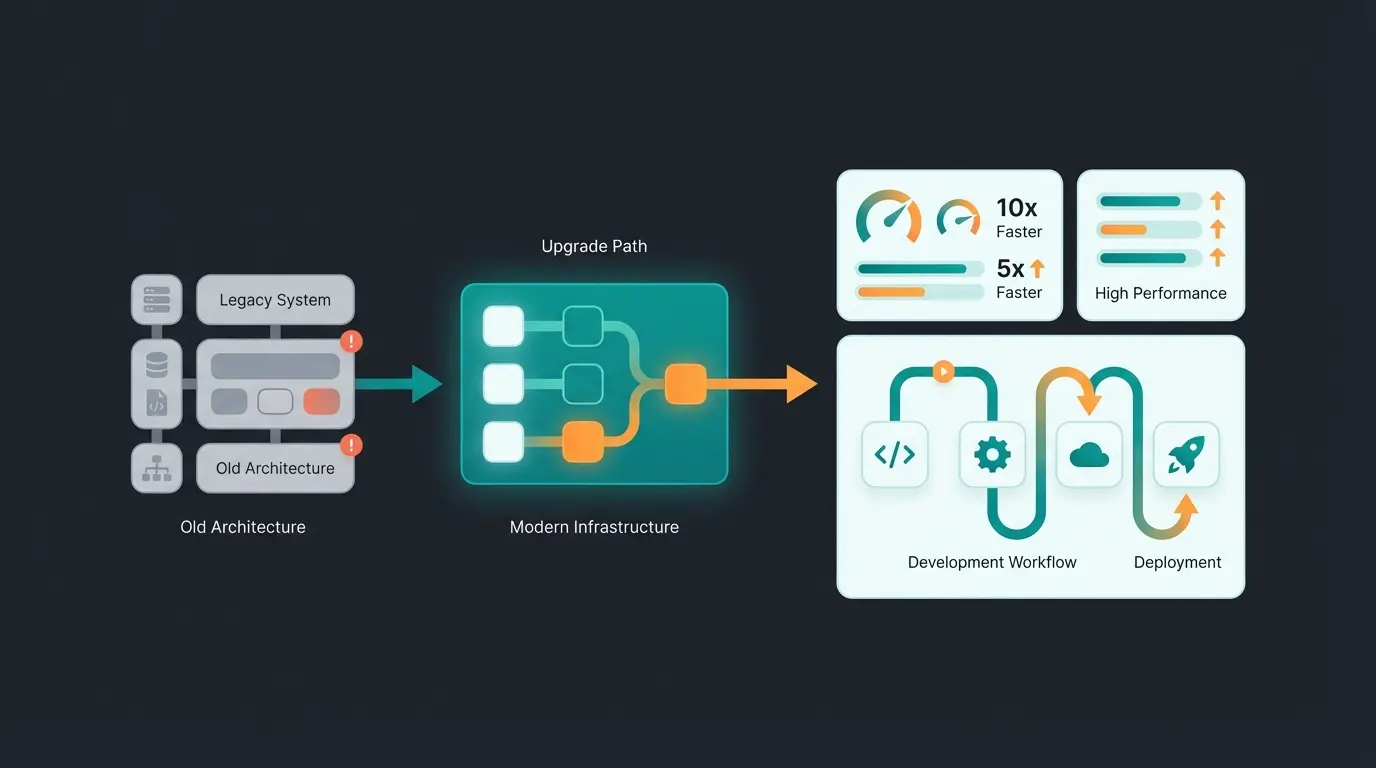
New in 2026: With the update to Shopware 6.7 (release May 2026), the administration becomes significantly faster through the switch to Vue.js 3 and Vite, as documented by Shopware. The annoying waiting when saving articles is minimized, improving daily workflow efficiency. For merchants needing Shopware help and guidance, this update addresses many common pain points.
Performance & Technology: The Leap to 6.7
Here lies both the greatest strength and the greatest hurdle for 2026. The technical foundation determines long-term success.
Technology: Shopware is "headless-ready." This means you can completely replace the frontend (e.g., for an app or PWA), giving you ultimate flexibility for omnichannel experiences.
The Update Dilemma: The upcoming major release 6.7 removes Webpack in favor of Vite and switches to Vue.js 3, according to iCreative Technologies.
- What this means: It's a "breaking change." Plugins and themes must be adapted. If you're entering now, ensure your agency is already planning "6.7-ready."
- Performance gains: Through "Delayed Cache Invalidation," database load during many simultaneous accesses is massively reduced. For shops with high traffic, this is a gamechanger.
- Future-proofing: The modern tech stack ensures Shopware remains competitive for years to come.
Costs: The Invisible Fees Most Reviews Miss
In many "Shopware experiences" only the license fee (Rise, Evolve, Beyond) is mentioned. The reality looks different, and understanding true costs is essential for planning. Here's what G2 pricing reviews often miss:
Hosting: Shopware 6 is resource-hungry. A €5 shared hosting package isn't sufficient. Count on specialized hosting (e.g., Timme, maxcluster) that quickly costs €100+ per month for adequate performance.
Plugins: Many features you'd expect as "standard" (e.g., complex B2B permission management or specific SEO features) require paid plugins or the more expensive license plans (Evolve/Beyond).
Agency Costs: Unlike SaaS platforms, Shopware implementations typically require professional development support. Budget €10,000-50,000+ for initial setup depending on complexity.
Ongoing Maintenance: Factor in 15-20% of initial development costs annually for updates, security patches, and continuous improvements. Exploring ways to automate Shopware support can significantly reduce these ongoing operational costs.
The Missing Feature: From Reviews to Consultation
Here we come to the strategic core that most test reports overlook. You search for "Shopware reviews" to gain trust in the software. But how do you gain the trust of your customers? This is where modern AI e-commerce solutions become essential.
The Problem: Reviews Are "Web 2.0" Thinking
Shopware offers a solid review system by default: Customers buy, give 1 to 5 stars, and write a text. The problem: It's passive and retrospective.
- A review happens after the purchase—too late to influence the buying decision
- A bad review is often the result of missing consultation before the purchase
- For complex products (e-bikes, supplements, technical components), a "Great product, 5 stars" only helps the new customer to a limited extent
- Customers have specific questions: "Does this part fit my machine?" or "Is this bike suitable for my height?"—questions that static reviews can't answer
The Solution: AI-Powered Product Consultation
To increase conversion rates in 2026, it's not enough to collect reviews. You need to fill the gap that exists before the purchase. Conversational AI technology is revolutionizing how online shops engage with customers.
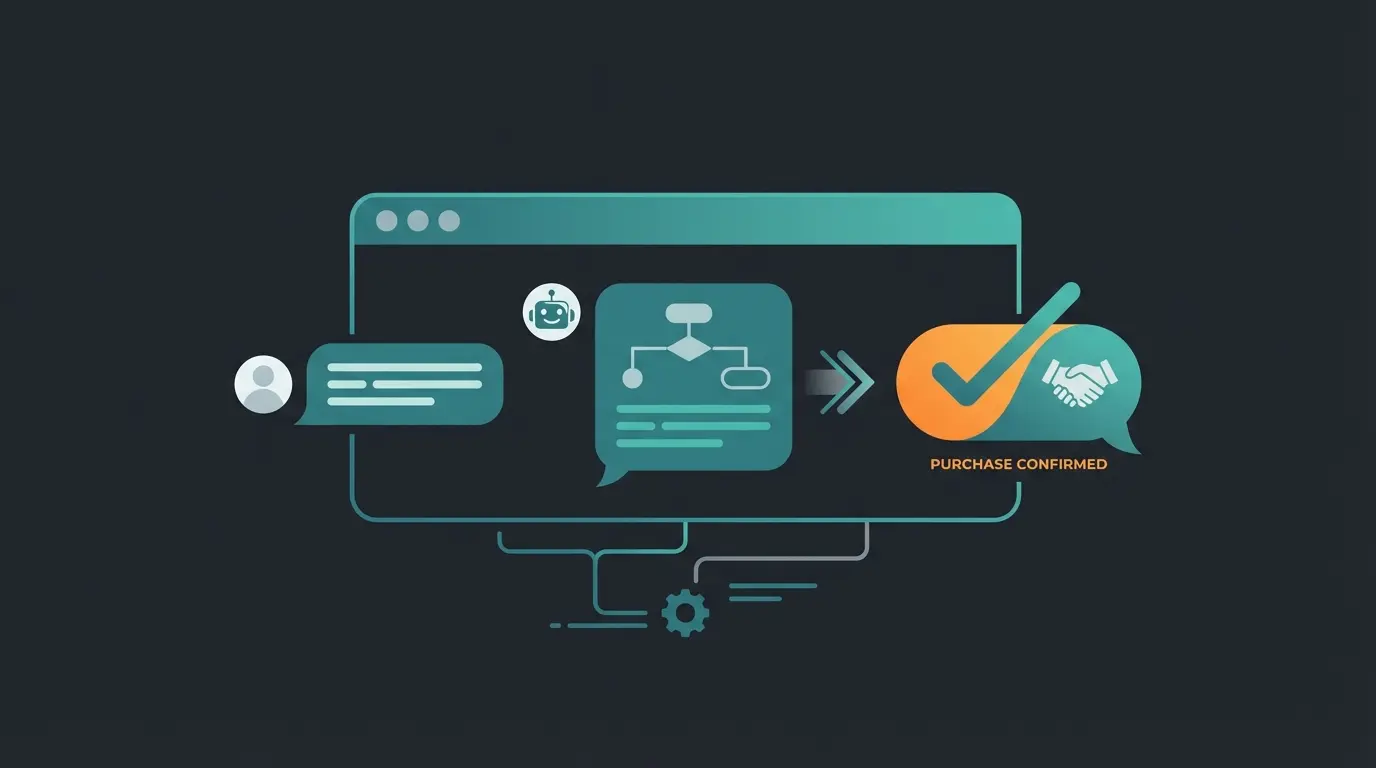
Imagine you could use the intelligence from thousands of Shopware reviews to advise customers live. Instead of a customer reading 50 reviews to find out if a shoe runs small, they ask an AI assistant and get an immediate, personalized answer.
Customer reads static star ratings and text reviews after others' purchases
AI summarizes reviews but still provides one-way information only
AI engages in dialogue, answering specific questions before purchase
Questions resolved instantly, reducing cart abandonment and negative reviews
Native Shopware vs. AI-Enhanced Commerce
| Feature | Shopware Standard (Native) | Shopware + AI Consultation |
|---|---|---|
| Customer Interaction | Passive (reading texts) | Active (dialogue & questions) |
| Timing | After purchase (post-mortem) | Before purchase (conversion driver) |
| Data Basis | Static texts | Dynamic knowledge from product data & reviews |
| Availability | Email/form submission | 24/7 instant responses |
| Goal | Social proof | Problem-solving & purchase completion |
| Conversion Impact | Low (indirect) | High (direct engagement) |
The Strategic Pitch for Your Shop: Shopware offers the AI Copilot with initial approaches, such as summarizing reviews on the product detail page, as detailed by Atwix. That's good, but it's still a one-way street.
An external AI solution that integrates with Shopware can act as a digital sales consultant. It intercepts the customer before they frustratedly bounce (or later leave a bad review) by clarifying questions that get buried in static reviews. Leading AI product consultation providers now offer seamless Shopware integration.
Don't just collect reviews—use AI to answer the questions that would have led to bad reviews. Our intelligent product consultation turns passive browsers into confident buyers, 24/7.
Start Free Consultation DemoHow to Manage Reviews in Shopware: Technical Guide
For the 30-40% of readers who are here to learn how to technically implement reviews in Shopware, here's the compact guide for version 6. This complements your broader Shopware customer support strategy.
Activating Native Review Functions
Shopware 6 has a built-in review system that's solid but basic. Here's how to set it up:
- Activation: In the admin under Settings > Shop > Products, you'll find the "Reviews" section
- Moderation: Reviews land by default in an approval queue. You'll find these under Catalogs > Reviews
- Limitation: The system is text-based. There's no native option for photo uploads in reviews (without plugins)
- Display settings: Configure where and how reviews appear on product pages
Best Plugins for Social Proof Integration
Since the native function often isn't sufficient, most professional shops rely on integrations. Here are the top solutions from the Shopware Store, as recommended by Bay20:
1. Trusted Shops: The classic in Germany. Offers buyer protection and collects reviews. The Shopware 6 integration is deep and automates email sending.
2. Trustpilot Integration: Allows embedding TrustBox widgets via drag-and-drop in Shopping Experiences. According to Trustpilot's integration guide, this is crucial for international shops building global credibility.
3. Google Reviews: Various plugins exist to display Google reviews (which are often more important for SEO than shop-internal reviews) directly in the footer or on the homepage.
Legitimate Shopware Criticism: What's Not Working
To provide a balanced view, let's address the legitimate criticisms that appear across review platforms. Understanding these helps set realistic expectations:
Support Response Times: Multiple reviewers report waiting 3-7 days for support tickets, especially for non-enterprise customers. For urgent issues, knowing your Shopware support phone options can be business-critical.
Documentation Gaps: While improving, some areas lack comprehensive English documentation, creating challenges for international teams.
Plugin Quality Variance: The marketplace contains plugins of varying quality. Some are abandoned or poorly maintained, requiring careful vetting before purchase.
Upgrade Complexity: Major version upgrades (like 6.6 to 6.7) require significant testing and sometimes code modifications, adding to ongoing costs.
These criticisms are valid but contextual. Enterprise customers with dedicated account managers report significantly better support experiences. The key is understanding what tier of service your business requires. Implementing intelligent AI chatbots can help bridge support gaps by handling routine inquiries automatically.
Outlook: Shopware 6.7, AI, and the Accessibility Act
Anyone evaluating Shopware today must look to the future. Two topics dominate 2026:
The European Accessibility Act (EAA)
From June 28, 2026, online shops in the EU must be accessible, as explained by EXWE. This affects every e-commerce platform:
The Danger: Many older shop systems (and themes) don't meet these standards (contrasts, screen reader capability). Non-compliance can result in significant fines.
The Shopware Solution: With Shopware 6.7 (release May 2026), Shopware delivers an EAA-compliant standard theme. According to Shopware's accessibility documentation, there are improvements in contrasts, HTML semantics, and screen reader support.
Assessment: Here Shopware scores massively against builders where you have to wait for the provider. Shopware delivers the tool; the implementation is up to you. Working with agencies experienced in EAA compliance is recommended, and proper Shopware service and AI integration becomes increasingly important.
Native AI Features in Shopware 6.7
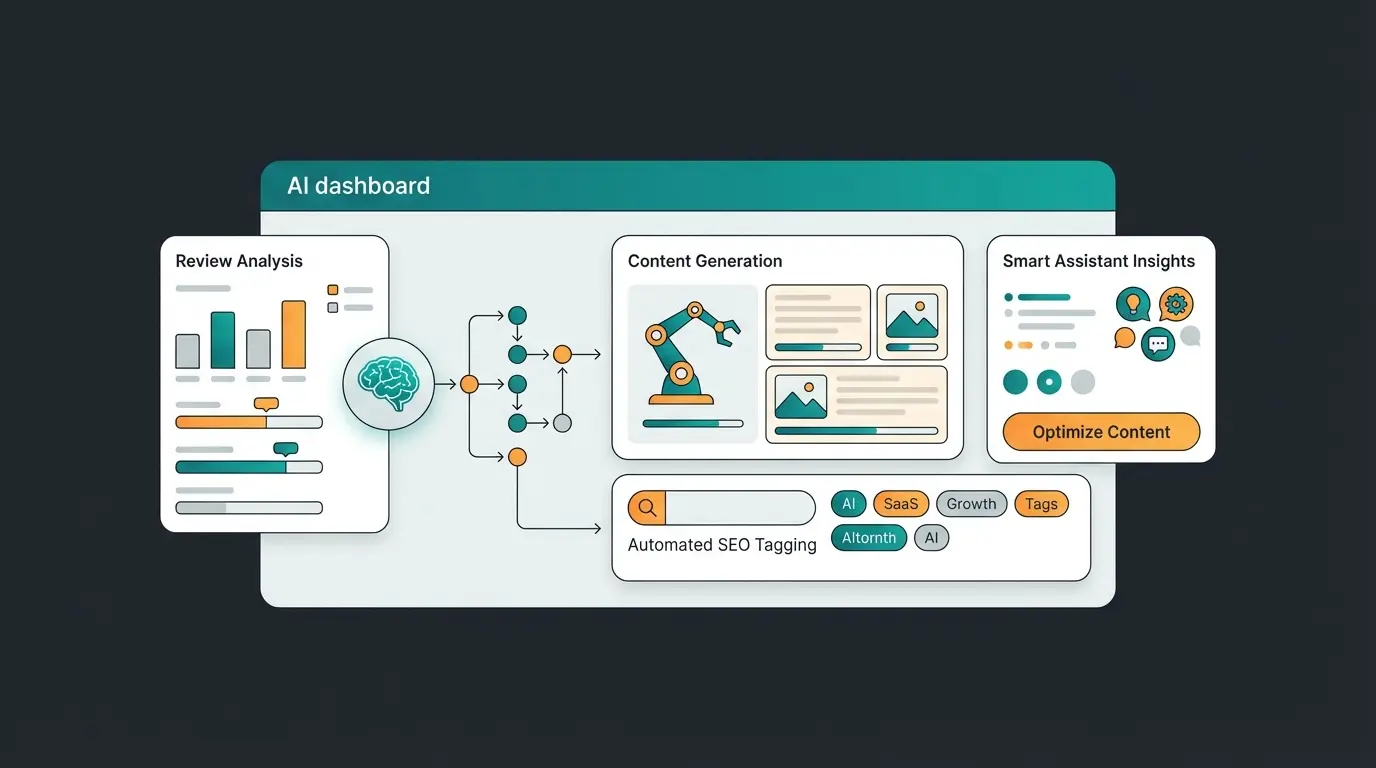
Shopware integrates AI not just as a gimmick. The new features for 2026, according to Shopware's AI documentation, include:
- Image Keyword Assistant: AI analyzes images and sets SEO tags automatically, saving hours of manual work
- Review Summaries: AI summarizes long review lists into a conclusion, helping customers make faster decisions
- Content Generation: Creation of product texts directly in admin, maintaining consistent brand voice
- Smart Search: Improved search algorithms that understand customer intent better
Shopware vs. Alternatives: Who Should Consider Switching?
Many searches for "Shopware reviews" come from merchants unhappy with their current platform. Here's how Shopware compares for specific use cases:
From Shopify: If you've outgrown Shopify's limitations on customization, B2B features, or German market requirements (invoicing, tax handling), Shopware offers significant advantages. The trade-off is complexity and higher initial investment.
From WooCommerce: If you're dealing with performance issues, security concerns, or need better enterprise features, Shopware provides a more robust foundation. Migration tools exist but budget for 2-4 months transition time.
From Magento: If Magento's complexity and costs have become unmanageable, Shopware offers similar power with a more approachable learning curve. Many agencies now specialize in Magento-to-Shopware migrations.
The AI guided selling revolution is changing how platforms compete. Shopware's openness to AI integration makes it particularly attractive for forward-thinking merchants. For specific returns challenges, check our guide on Shopware returns management.
Conclusion & Verdict: Who Is Shopware Right For?
Let's return to the initial question: Is Shopware good?
The answer depends on your resources, technical capabilities, and business stage:
Stay away if: You're making less than €50,000 annual revenue and have no technical knowledge. The 1.5 stars on Trustpilot warn of exactly this scenario (overwhelm, costs, support frustration).
Go for it if: You're a growing merchant or brand that needs scalability. The 4.5 stars on OMR confirm: Technologically, Shopware 6 (especially with the upcoming 6.7 update) is one of the most modern systems on the market.
The Decisive Next Step
Shopware delivers the foundation—the engine. But an engine alone doesn't win the race.
In a world where customers expect instant answers, static 5-star reviews are no longer sufficient. They're "dead capital"—valuable information locked in a format that doesn't drive conversions.
Recommendation: Use Shopware for the technology. But use modern AI consulting tools to close the gap between "visitor" and "buyer." Transform your shop from a digital catalog into an interactive consultant.
The success story of Gartenfreunde with their AI employee demonstrates how this transformation works in practice—turning product questions into confident purchases around the clock.
FAQ: Common Questions About Shopware Reviews
This is primarily due to complaints about support and contractual conditions of Shopware AG, not the software itself. Technical users rate the software on G2/OMR significantly better (4.4-4.5 stars). Trustpilot attracts frustrated users seeking resolution, while satisfied customers rarely leave reviews there.
Yes, through migration assistants or apps like "Cart2Cart," reviews can be imported. Tools like Trusted Shops also synchronize these cross-platform. Budget 2-4 weeks for a complete review migration including data cleanup and validation.
Shopware 6.7 introduces AI features that can automatically summarize reviews to give customers a quicker overview. Additionally, the technical foundation (Vue.js 3) is being modernized, improving admin performance significantly. The update releases in May 2026.
It depends on your definition of 'small.' For solo entrepreneurs without technical knowledge expecting plug-and-play simplicity, Shopify or Squarespace may be better choices. For growing businesses (€500k+ revenue) willing to invest in proper setup, Shopware offers excellent long-term value and scalability.
Budget €15,000-50,000 for a professional Shopware 6 implementation including theme customization, essential plugins, and initial training. Enterprise implementations with custom functionality can reach €100,000+. Ongoing costs include hosting (€100-500/month), plugin licenses, and maintenance (15-20% of initial development annually).
Shopware provides the foundation. But to turn visitors into fans, you need active consultation. Our AI solution integrates seamlessly with Shopware 6 to answer customer questions instantly—before they become negative reviews.
Try AI Consultation Free
Lasse is CEO and co-founder of Qualimero. After completing his MBA at WHU and scaling a company to seven-figure revenue, he founded Qualimero to build AI-powered digital employees for e-commerce. His focus: helping businesses measurably improve customer interaction through intelligent automation.