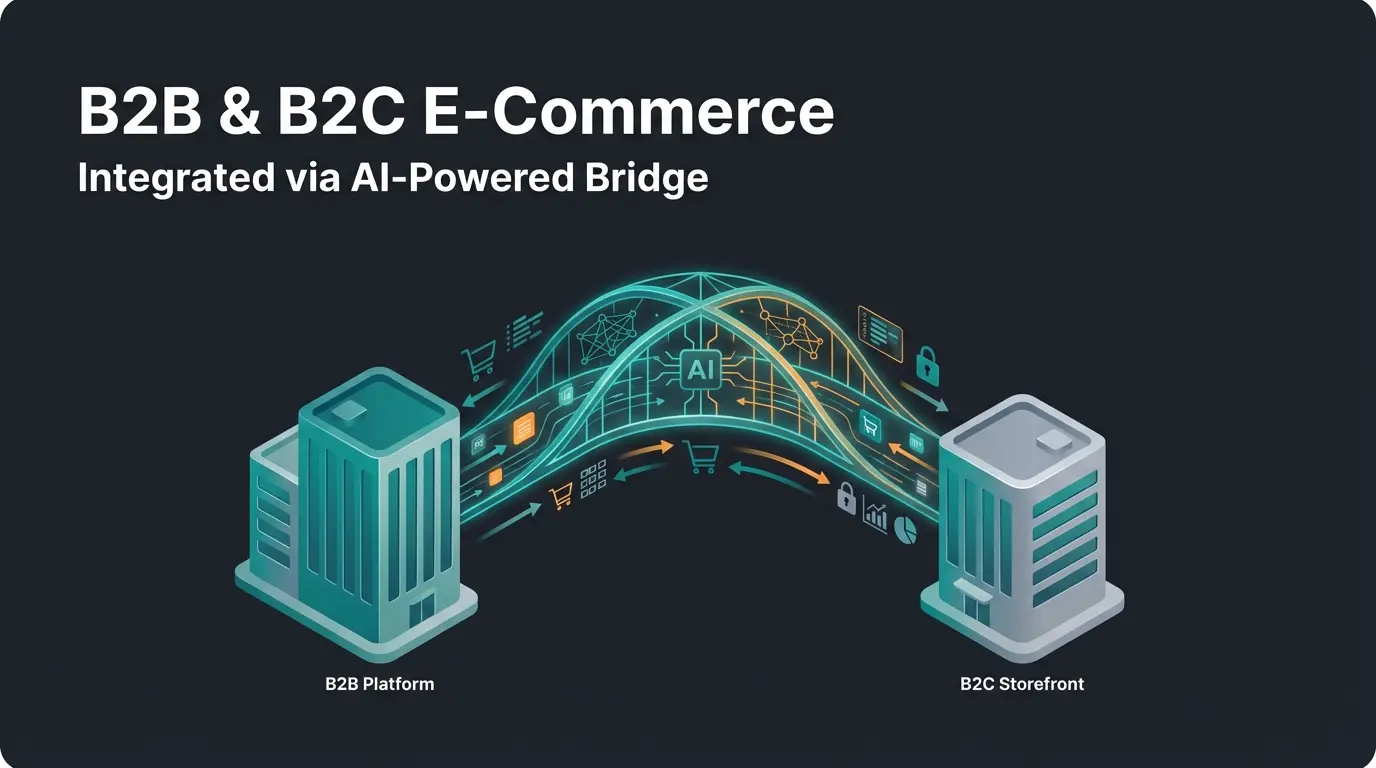
Why Your B2B Portal Must Be More Than a Digital Fax Machine
B2B e-commerce has reached a critical turning point. For a long time, a "B2B customer portal" was merely considered a hygiene factor – a place where procurement officers could download their invoices, review past orders, and replenish their inventory via quick order forms (CSV upload). It was essentially a digital fax machine: efficient, but unintelligent.
However, expectations have shifted dramatically. According to Gartner, approximately 80% of all B2B sales interactions will be processed through digital channels by 2025. For more details, see our comprehensive B2B online store. At the same time, the "B2B Buyer Report 2025" from Sana Commerce reveals an alarming statistic: 85% of B2B buyers are frustrated with their online purchasing experience, often due to missing information or poor usability.
What's the problem? Most Shopware B2B projects focus almost exclusively on administrative efficiency (Who is allowed to buy what? For more details, see our Shopware B2B Components. What's the budget?). They forget the most important part of commerce: Sales and consultation.
In this comprehensive guide, we analyze how you can build a B2B customer portal with Shopware 6 that not only automates administrative processes but becomes a true digital consultant through the use of Artificial Intelligence (AI). We bridge the gap between technical administration (Shopware B2B Components) and modern sales excellence. The way AI e-commerce is transforming the industry makes this shift not just beneficial, but essential for competitive survival.
Expected B2B sales via digital channels by 2025
B2B buyers unhappy with online purchasing experience
Modern buyers expect round-the-clock service and support
What Makes a Modern Shopware B2B Customer Portal?
Before we dive into the AI strategy, we need to clarify the foundation. When we search for "Shopware B2B customer portal" today, we usually find technical feature listings. But what does this mean for business success?
A B2B customer portal in Shopware is a closed or semi-closed environment within your online shop, specifically tailored to the complex procurement processes of business customers. Unlike the B2C shop, where impulse purchases dominate, B2B is about:
- Process optimization: The customer wants to save time.
- Hierarchy mapping: The customer is not an individual, but an organization with departments and approval levels.
- Individual conditions: Each customer sees their prices and their catalog.
The Three Pillars of a Successful Portal
A successful portal must serve three levels. Understanding this framework is crucial when considering your Shopware customer account configuration, Shopware dealer portal setup, and overall sales strategy:
- Transaction: Seamless checkout, reordering, OCI connection to ERP systems.
- Administration: Customer self-management (Self-Service). The customer creates their own employee accounts instead of calling your support.
- Information & Consultation (The often forgotten pillar): Technical data sheets, compatibility checks, and problem-solving.

The Technical Challenge: B2B Suite vs. B2B Components
Anyone planning a Shopware B2B customer portal today inevitably stumbles upon two terms: B2B Suite and B2B Components. Understanding this distinction is crucial, as it determines the future viability of your investment.
The Legacy Solution: Shopware B2B Suite
The B2B Suite was the standard for years. It's a comprehensive extension that deeply integrates into Shopware. However, according to Burg Digital, several critical factors must be considered:
- Status: It is no longer actively developed.
- End of Life: Support will be discontinued with Shopware version 6.8 (expected 2025/2026).
- Disadvantage: It is monolithic and often difficult to customize when you want to connect special AI services.
The Future: Shopware B2B Components
Shopware has changed its strategy and now relies on B2B Components. These are modular building blocks that are natively integrated into the Shopware Core. This approach aligns perfectly with how Shopware AI is evolving to support automation and product consultation.
- Advantage: API-First approach. This means each module (e.g., quote creation) can be addressed individually and – this is important for our AI strategy – linked to external tools.
- Flexibility: You can use only the components you really need (e.g., only "Quick Order" but no "Budgets").
- Performance: Since they are part of the core, they are often faster and more stable than the old Suite extension.
The Must-Haves: Essential Features Every Buyer Expects
To be relevant on Google for "Shopware B2B customer portal" and meet the basic expectations of your customers, your portal must not lack the following features. These form the backbone of administrative efficiency.
Rights and Role Management (Employee Management)
This is the heart of every B2B portal. Your customer (e.g., a large hospital) doesn't want the intern to have access to the management's invoices. Proper configuration of the Shopware B2B ordering process ensures that access and procurement rules are enforced.
- Function: The main admin at the customer's company can create sub-accounts for employees.
- Granularity: They can define: "Employee A may order", "Employee B may only fill the shopping cart", "Employee C does not see prices".
- Self-Service Advantage: Your own customer support is relieved because you don't have to reset passwords for your customers' employees.
Budgets and Approval Processes (Order Approvals)
In many companies, a department head may only order independently up to €500. Everything above that requires approval. For larger transactions, Shopware B2B invoice purchasing streamlines the payment process.
- Workflow: If the employee orders for €600, the order is "parked" in the portal. The supervisor receives a notification (email or in the portal) and can approve or reject the order with one click.
- Shopware Implementation: With the B2B Components, this can be set up very flexibly via the Flow Builder and Rule Builder without programming, as explained by SpearDevs.
Quick Order & Order Lists
Professionals don't shop, they procure. They don't want to browse through categories. This is exactly where Shopware quick order functionality becomes essential.
- CSV Upload: The customer uploads an Excel list with 200 item numbers and adds them directly to the shopping cart.
- Input form: Entry of SKU and quantity in a table.
- Recurring Lists: "Monthly cleaning supplies requirement" as a saved list that can be ordered again and again with one click.
Quote Management
In B2B, prices are often negotiable, and Shopware B2B pricing strategies play a central role. This is where understanding different types of chatbots becomes relevant, as consultative AI can assist in the Shopware quote creation process.
- The Process: The customer adds items to the cart but doesn't click "Buy", instead clicking "Request Quote".
- Negotiation: Your sales team sees the request in the Shopware Admin, grants a discount, and sends the quote back digitally. The customer accepts it in the portal.
| Feature | Classic Shopware B2B Portal | Intelligent B2B Portal (AI-Enhanced) |
|---|---|---|
| Main Purpose | Administrative processing (Reorder) | Problem-solving & Consultation (Pre-Sales) |
| Product Search | Keyword-based (Exact match required) | Semantic (Understands paraphrases & problems) |
| Support | Phone, Email, Ticket System | 24/7 Instant response via AI bots & Doc-Chat |
| Customer Approach | Static ("Welcome Customer X") | Predictive ("You'll need X again soon") |
| Product Selection | Manual filters (Customer needs expertise) | Guided Selling (AI leads to the product) |
| ROI Factor | Cost reduction (less support effort) | Revenue increase (higher conversion & cross-sell) |
The Gap: Why Standard Portals Fail at Selling
Up to this point, we've been talking about administration. That's the standard that agencies excellently cover. But here's the problem:
An admin tool doesn't sell.
Imagine an engineer is looking for a spare part for a 15-year-old machine.
- Scenario in a Standard Portal: They enter the old item number. Result: "Item not found". They search for "gasket 50mm". Result: 500 hits, unsorted.
- Consequence: They pick up the phone (cost for your sales team) or go to Amazon/Google (revenue loss).
The current top search results ignore the pre-sales phase. They assume the customer knows what they need. But in a world of complex products (mechanical engineering, electrical engineering, chemistry), identifying the solution is the real problem. Whether you run a Shopware wholesale operation or a niche parts supplier, this is exactly where AI-powered product advice creates massive competitive advantage.
This opens your "Blue Ocean": The B2B portal not as a processing machine, but as a Digital Consultant.
The Game Changer: AI-Driven Product Consultation
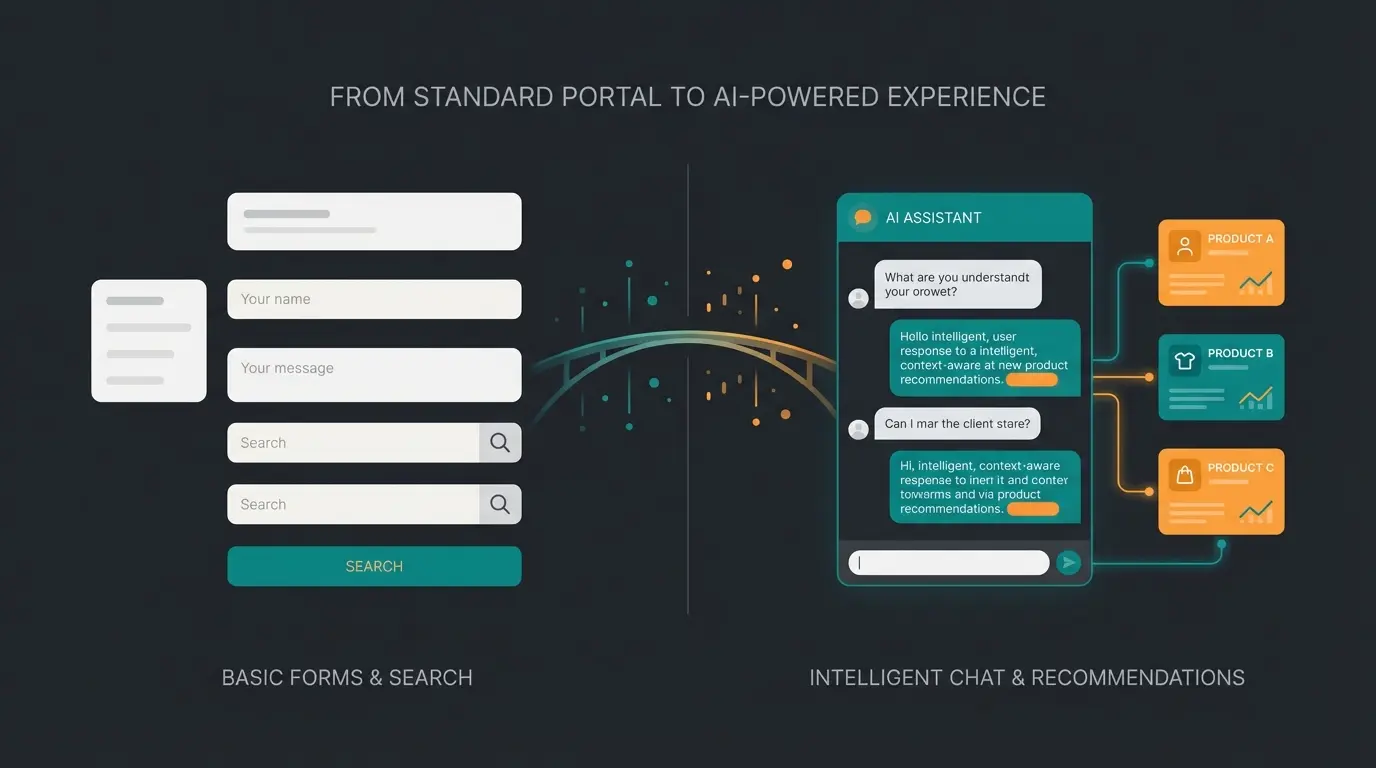
To differentiate your Shopware B2B customer portal from the competition, you need to integrate AI (Artificial Intelligence). Not as a gimmick, but as a problem-solving tool. Shopware already offers initial approaches with the "AI Copilot," as highlighted by Brainstreamtechnolabs, but for a true consultation portal, we need to think further. The way AI Chatbots transform customer service is directly applicable to B2B environments.
From Keyword Search to Semantic Problem-Solving
Standard search (Elasticsearch) looks for word matches. AI search understands intentions. This fundamental shift is how Conversational AI evolves to transform business interactions.
- Use Case: The customer types: "I need a cleaner for oil stains on concrete that is biodegradable."
- Standard Portal: 0 results (because no product has exactly this title).
- AI Portal: The AI understands the attributes "oil", "concrete", "bio" and suggests the product "EcoClean Heavy Duty", even if the word "stains" is missing from the description.
The Digital Sales Consultant (Guided Selling 2.0)
Instead of static filters (color, size), you use an AI-powered dialogue in the portal. This is where AI Selling revolutionizing the industry becomes most apparent.
Scenario: A customer is looking for a pump.
AI Dialogue:
- AI: "What medium is the pump for?" -> Customer: "Acid."
- AI: "What viscosity?" -> Customer: "Like honey."
- AI: "What pressure is required?" -> Customer: "About 10 bar."
Result: The AI filters the 3 suitable pumps from 5,000 and explains why they fit.
Technology: This can be connected via external AI services (like OpenAI API) that access your product data (PIM) and deliver results in the frontend via Shopware API. For Shopware shops specifically, implementing Shopware 6 chatbots provides the foundation for this capability.
Proactive Recommendations (Predictive Ordering)
AI can recognize patterns that humans overlook. This capability exemplifies how KI E-Commerce is reshaping the industry.
- Function: The portal analyzes the customer's ordering rhythm.
- Intervention: "You usually order toner every 6 weeks. Your last order was 7 weeks ago. Would you like to order now to avoid a shortage?"
- Added Value: The portal transforms from a passive tool to an active assistant.
Automated Support Within the Portal
Instead of "Call us," the portal offers instant help. This is the practical application of AI consulting in e-commerce.
- Document Chat: The customer can "chat" with your PDF manuals. Question: "What torque for M10 screw on machine X?" -> AI extracts the answer from page 45 of the PDF and displays it immediately.
Discover how AI-powered consultation can turn your Shopware B2B customer portal into a 24/7 digital sales expert that increases conversions and reduces support costs.
Start Your Free TrialImplementation: Building the Intelligent Portal in Shopware 6
How do you technically implement this strategy? Here's the roadmap for IT decision-makers and e-commerce managers. Understanding AI product consultation fundamentals will help guide your implementation choices.
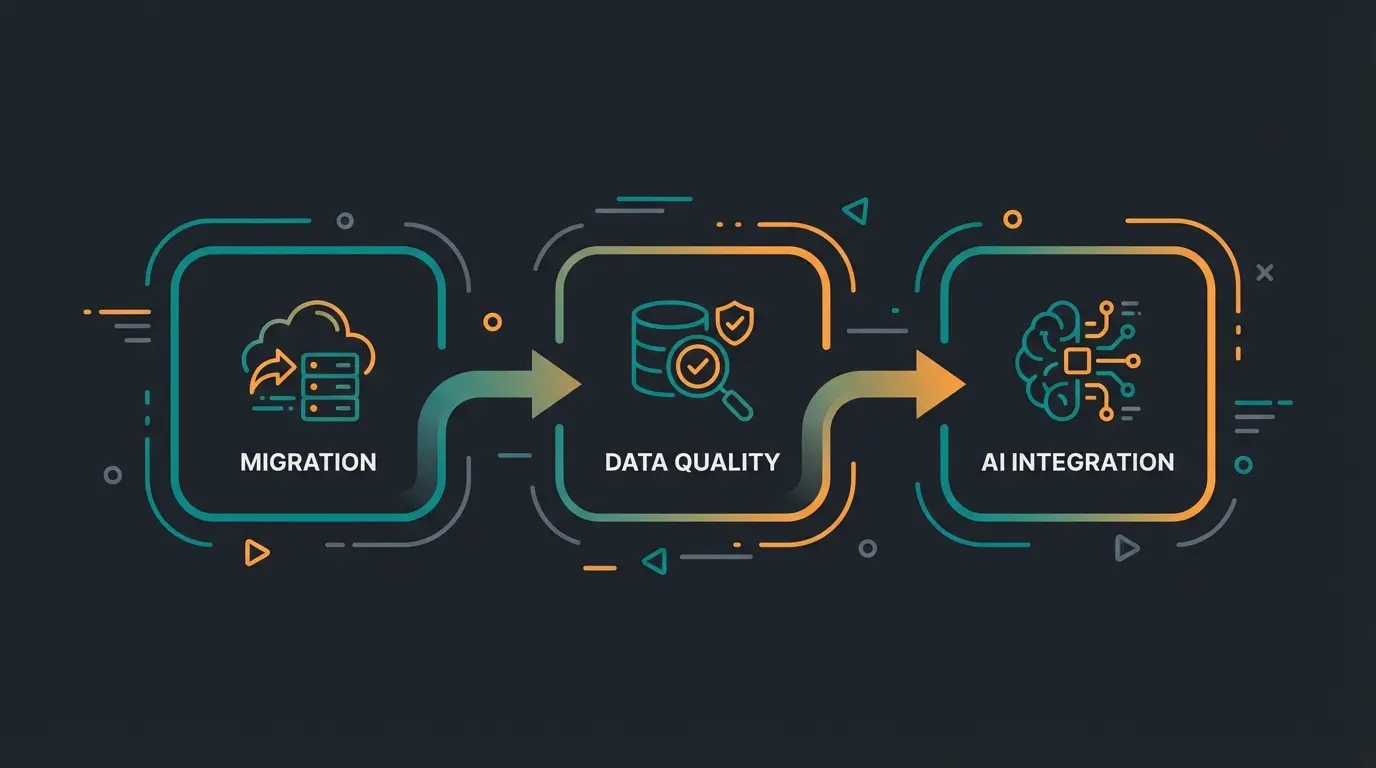
Step 1: Migrate Your Base to B2B Components
Ensure you're running on Shopware 6.5+ and using the B2B Components (part of the Evolve or Beyond plans), as detailed by Scope01.
- Activate the modules Employee Management, Quote Management, and Order Approvals.
- Avoid the old B2B Suite to prevent API blockages.
Step 2: Ensure Data Quality in Your PIM
AI is only as smart as your data. According to Codixio, this foundational step is often underestimated.
- Maintain technical attributes cleanly in Shopware's Properties.
- Use the Shopware AI Copilot to automatically generate missing product descriptions or properties, as explained by Communicode.
Step 3: Integration of the Intelligence Layer
This is where you differentiate yourself. You build a layer above the standard shop.
- Frontend: Use Shopware's Digital Sales Rooms for curated experiences, as showcased by Solution25.
- Backend/API: Connect an AI engine (e.g., via Custom App) with the Shopware API.
The process works as follows: The customer asks a question in the frontend. The app sends the question + product context to the AI. The AI responds with product IDs. Shopware displays the products.
Checkout, Payments, Order Processing - Handled by Shopware Core
Roles, Rights, Budgets, Approvals - Powered by Shopware B2B Components
Product Advice, Guided Selling, Problem-Solving - Enabled by AI Integration
Real-World Success: The AI Employee Advantage
The transformation from standard B2B portal to intelligent consultant isn't theoretical. Companies are already seeing remarkable results. A great example is the AI Employee implementation at Gartenfreunde, demonstrating how AI consultation directly impacts customer satisfaction and sales conversion.
When you deploy an AI-powered consultation layer, you're essentially giving every website visitor access to your best sales representative's knowledge, available 24/7, never tired, and continuously learning from every interaction. Combined with Shopware field sales capabilities, your team can cover both digital and in-person channels seamlessly.
FAQ: Common Questions About Shopware B2B Customer Portals
Here we answer questions that were identified as "content gaps" during research.
No. The B2B Suite is a "legacy" solution. Shopware has announced that it will be replaced by the B2B Components in the medium term. New projects should definitely opt for Components to remain upgradeable and flexible for AI integrations.
Absolutely. AI is particularly valuable in B2B because products require explanation. Shopware already offers native functions with the "AI Copilot" (e.g., summarizing reviews, generated checkout messages). For in-depth consultation, however, an individual integration via the API is recommended.
A B2B shop often focuses only on the catalog and shopping cart. A customer portal goes further: It integrates post-sales services (returns, invoice archive), team management (rights & roles), and individual workflows (approvals). A modern portal is the digital operating system for the business relationship.
Shopware offers native functions for this, such as "login requirement" or "prices only after login". With Dynamic Access (part of the Commercial Plans), you can even control so that certain customer groups (e.g., "Dealer A") see completely different categories than "Dealer B".
Through AI integration that connects to your product database (PIM) and uses natural language processing to understand customer queries. Instead of keyword matching, the AI understands intent and context, enabling semantic search and guided selling that leads customers to the right products even when they don't know the exact specifications.
Conclusion: The Future Belongs to the Consulting Portal
The B2B e-commerce market is growing rapidly, but buyer expectations are growing faster. Anyone still operating a portal in 2025 that is merely a "better Excel spreadsheet" will lose customers to competitors who combine simplicity with consultation.
A successful Shopware B2B customer portal today stands on two legs:
- Solid Technology: Using Shopware B2B Components for stable, upgradeable processes (rights, roles, budgets).
- Intelligent Consultation: Using AI to make the expertise of your best sales representatives digitally available 24/7.
Action Recommendation: Review your current portal strategy. Are you just an "admin tool" or already a "Digital Consultant"? The switch from the B2B Suite to Components and the integration of initial AI use cases is the safest way to sustainably secure your B2B revenue.
This article is based on current analyses of the Shopware roadmap (as of 2025) as well as market data from Gartner and Sana Commerce.
Join hundreds of B2B companies transforming their Shopware customer portals with AI-powered consultation. Get started today and see results within weeks.
Get Started Free
Lasse is CEO and co-founder of Qualimero. After completing his MBA at WHU and scaling a company to seven-figure revenue, he founded Qualimero to build AI-powered digital employees for e-commerce. His focus: helping businesses measurably improve customer interaction through intelligent automation.