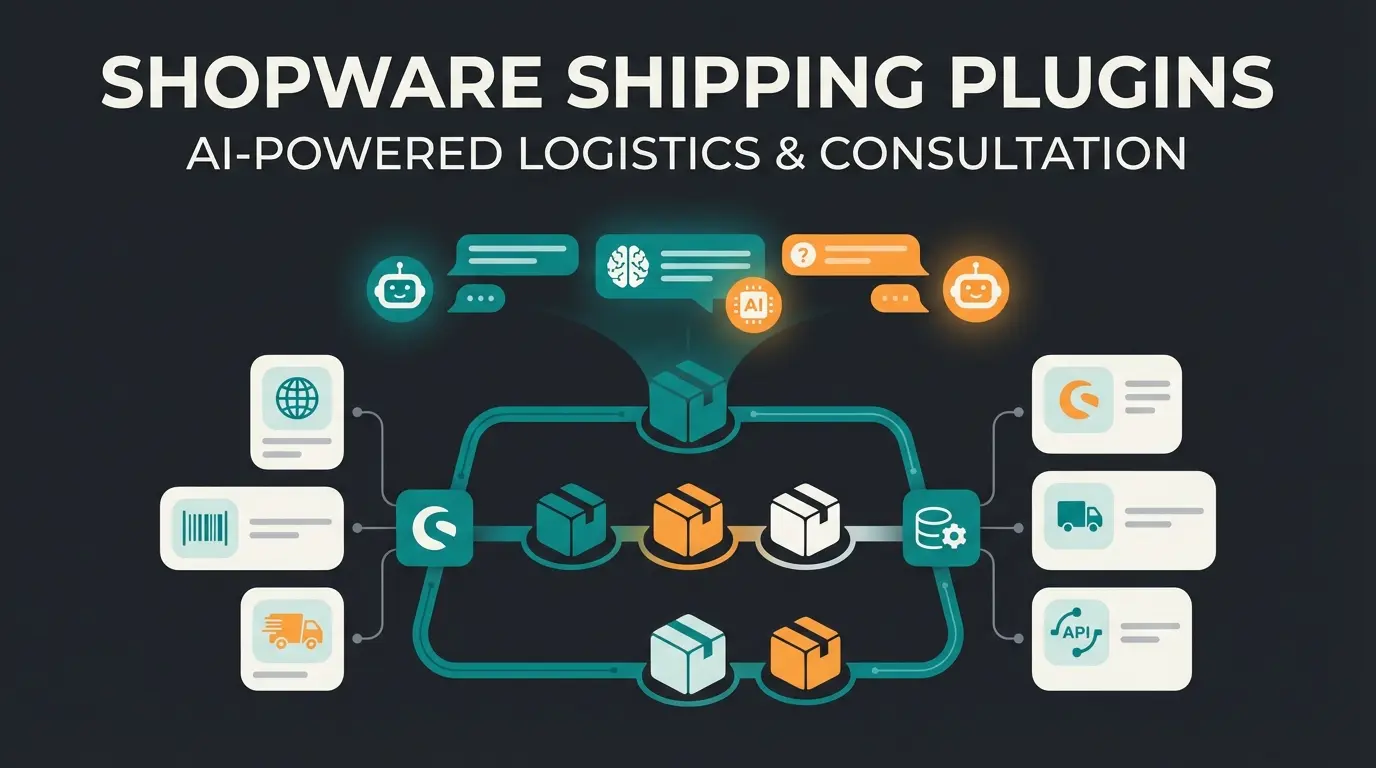
Introduction: The Trust Paradox in E-Commerce
Imagine walking into a physical store. The shop is clean, Visa and Mastercard stickers adorn the door, and a security guard stands at the entrance. You feel safe—no one will steal your wallet here. But there's a problem: the store is enormous, shelves are overflowing, and there's not a single sales associate in sight to help you. Do you buy anything? Probably not. You feel secure, but utterly lost.
This exact scenario plays out daily in thousands of Shopware stores. Merchants invest heavily in Shopware trust elements like SSL certificates, trust badges, and legal disclaimers. That's important and necessary. However, in 2025, these elements are no longer competitive advantages—they're the absolute baseline, the "hygiene factors" of e-commerce.
When every shop displays a Trusted Shops logo, which store does the customer trust most? The answer: the shop that doesn't just process payments securely but provides competent consultation. This shift represents a fundamental change in how we must approach Shopware SEO and trust-building strategies.
In this comprehensive guide, we'll analyze why the traditional concept of trust in e-commerce has become outdated and how you can build a new level of trust in Shopware 6—from the essential basics to high-end solutions using AI consulting.
The 3 Pillars of Trust in E-Commerce
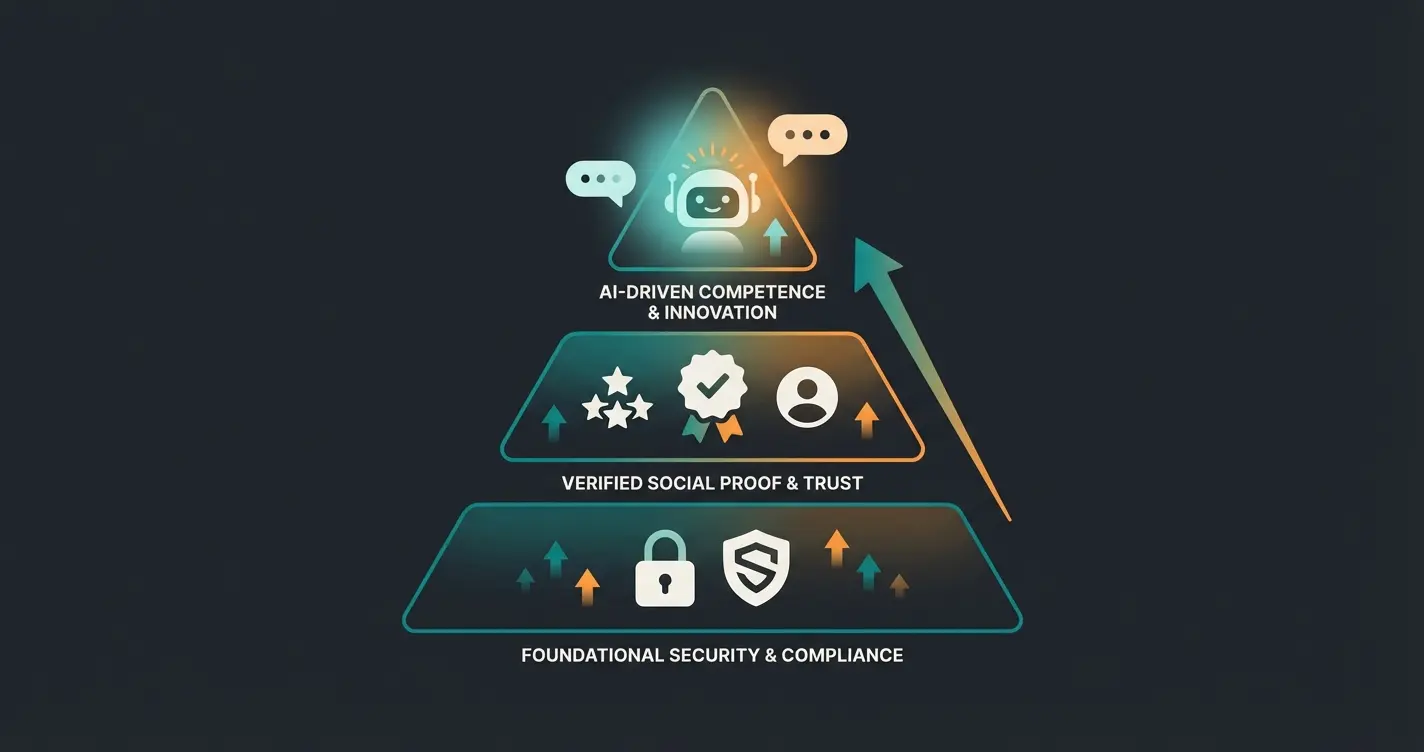
To understand which Shopware trust elements you truly need, we must deconstruct the concept of "trust." Psychologically, a customer passes through three stages before clicking the "Buy" button.
SSL encryption, GDPR compliance, legal pages, fast loading times—the foundation that prevents immediate bounce
Trust badges, reviews, user-generated content—third-party validation that builds credibility
Guided selling, AI advisors, product finders—demonstrating you understand customer needs
Level 1: Technical Trust (Security)
This is the foundation. The customer subconsciously asks: "Is my data safe here? Is this a fake shop?"
- SSL Encryption: The padlock symbol in the browser is non-negotiable
- GDPR Compliance: Privacy policy, cookie consent, data protection measures
- Legal Pages: Imprint and terms accessible within one click
- Performance: Fast loading times through optimized Core Web Vitals
Status: This is mandatory programming. Without this level, customers bounce immediately. However, as research from splendid-research.com shows, this is merely the entry ticket to the market.
Level 2: Social Trust (Reputation)
Here, customers seek validation from third parties. The question becomes: "Have others successfully purchased here? What do neutral authorities say?"
- Trust Seals: Trusted Shops, EHI certifications, industry-specific badges
- Product Reviews: Star ratings and detailed customer feedback on product pages
- User Generated Content: Real customer photos, social media mentions, testimonials
Status: Standard practice. Studies show that trust seals can increase price willingness by up to 15%. They're important but often static—a badge doesn't adapt to customer needs or concerns.
Level 3: Competence Trust (The 2025 Game-Changer)
This is the pyramid's peak and the biggest opportunity for 2025. The customer asks: "Does this shop understand my problem? Will I get the right product for my specific needs?"
- Guided Selling Tools: Interactive product finders and recommendation engines
- AI Shopping Assistants: Conversational interfaces that understand context
- Expert Content: High-quality guides and educational material in Shopware Experience Worlds
- Personalized Recommendations: Suggestions based on browsing behavior and stated preferences
Status: This is THE differentiating factor. While Levels 1 and 2 provide passive security, Level 3 creates active engagement. This is where most standard shops still fail—and where AI product consultation becomes invaluable.
Standard Trust Elements in Shopware 6 (The Must-Haves)
Before we dive into the advanced strategies of AI and competence building, let's ensure your foundational elements are perfectly integrated in Shopware 6. Google and your customers expect these signals as baseline requirements.
1. Trust Seals and Buyer Protection
The classic among Shopware trust elements. In Germany, the Trusted Shops seal leads the market with approximately 75% brand recognition, according to dgof.de.
Why it matters: Trust seals signal financial security through money-back guarantees and verified shop reviews.
According to Shopware, proper integration of trust elements requires attention to both placement and technical implementation to maximize their effectiveness.
2. Reviews and Social Proof
Nothing is more powerful than the opinion of other customers. This social validation works on two levels:
- Shop Reviews: Demonstrate merchant reliability regarding shipping, service, and communication
- Product Reviews: Help with purchase decisions for specific items by providing real-world usage feedback
Shopware Tip: Shopware 6 includes a built-in review system. However, for greater credibility, consider connecting external systems like eKomi or Trusted Shops. Customers often trust "verified" reviews more than internal shop systems that could theoretically be manipulated. This approach complements your broader AI Customer Service strategy.
3. Trusted Payment Providers
An often underestimated trust element is the display of payment service provider logos.
Leading online payment method in Germany
Second most popular payment option
Increased price willingness with trust seals
As reported by ehi.org, PayPal dominates the German market, followed by invoice purchasing.
Strategy: Display logos of PayPal, Klarna, Visa/Mastercard, and DHL in the footer of every page and on product detail pages. This signals: "We work with reputable partners you already trust."
4. Professional Design via Experience Worlds
A shop that looks like a construction site appears untrustworthy. First impressions matter immensely.
Shopware Feature: The Experience Worlds (Erlebniswelten) in Shopware 6 are a powerful tool for building trust, as noted by agencies like atloss.de and hexamain.de.
Implementation: Don't just use Experience Worlds for colorful images. Create "About Us" pages that showcase your team. Real photos of employees and your warehouse create more trust than any stock photo of "business handshakes." Transparency is a massive trust driver. These professional layouts support your overall Shopware AI features implementation.
The Missing Link: Active Trust Through AI & Consultation
We've covered the foundation. But why do many shops still have high abandonment rates and returns despite SSL, Trusted Shops badges, and PayPal integration?
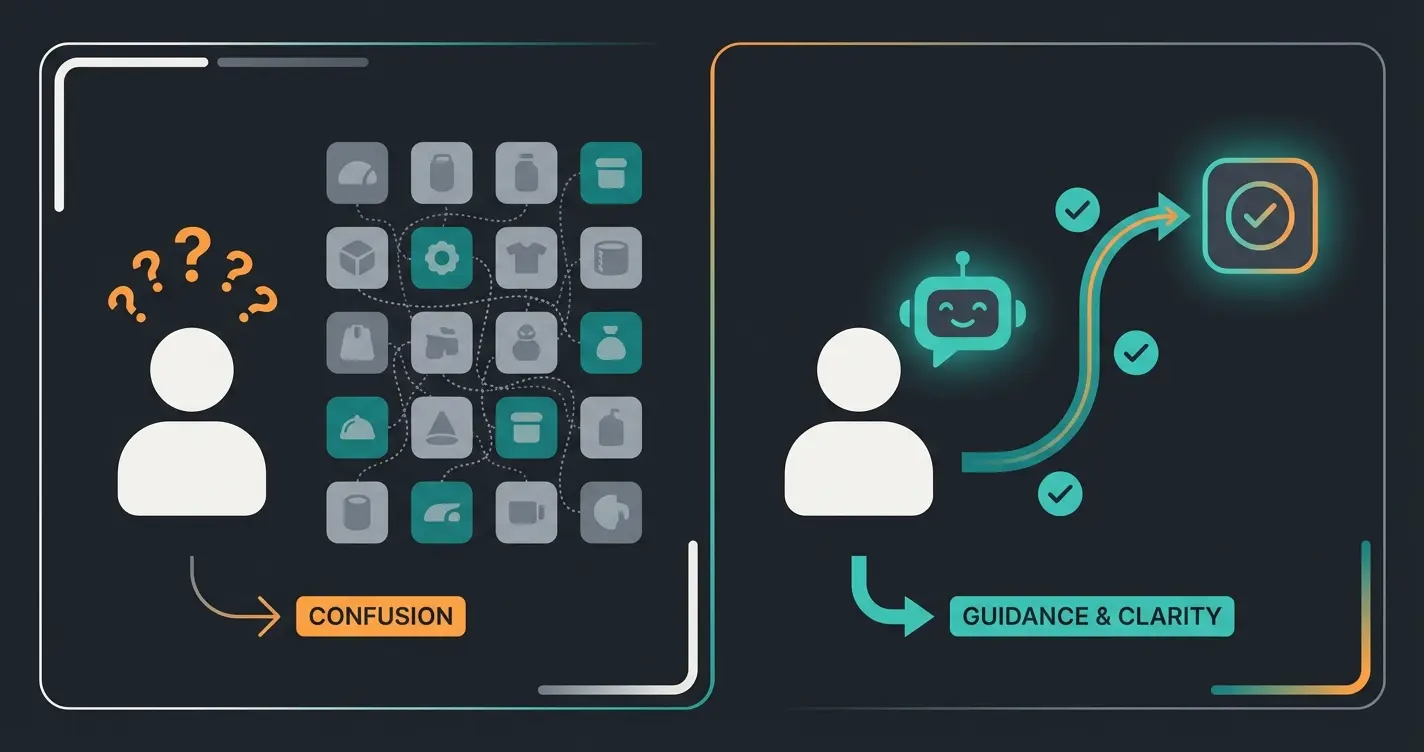
The Problem: Static trust elements don't solve the problem of overwhelm.
A customer facing 50 product variants without knowing which one they need feels insecure. A trust seal only tells them: "If you buy the wrong thing, you'll definitely get your money back." It doesn't help them buy the right thing.
This is where the competence layer comes into play—and where AI-powered consultation transforms the shopping experience.
From Security Seal to Competence Proof
In 2025, customers expect online shops to take on the role of expert sales associates. The era of self-service-only shopping is ending.
Research from envive.ai and Shopware demonstrates that personalization and AI-powered interaction can increase conversion rates by up to 23%.
The Approach: Instead of leaving customers alone with filters ("Color: Red", "Size: XL"), AI tools conduct a dialogue. They ask qualifying questions, understand context, and guide users to optimal choices. This is the essence of AI Selling.
AI Guided Selling as the Ultimate Trust Element
Imagine your Shopware shop had a digital employee greeting every visitor: "Are you looking for running shoes for asphalt or trail running?"
Why this builds trust:
- Understanding: The customer feels understood ("This shop knows what I need")
- Expertise: Through targeted questions, you demonstrate specialist knowledge
- Security: The recommendation is based on the customer's answers, massively reducing fear of wrong purchases
This approach represents what AI consulting e-commerce experts call the "consultation gap"—the space between customer confusion and confident purchasing decisions that AI can fill.
Interaction Beats Static Displays
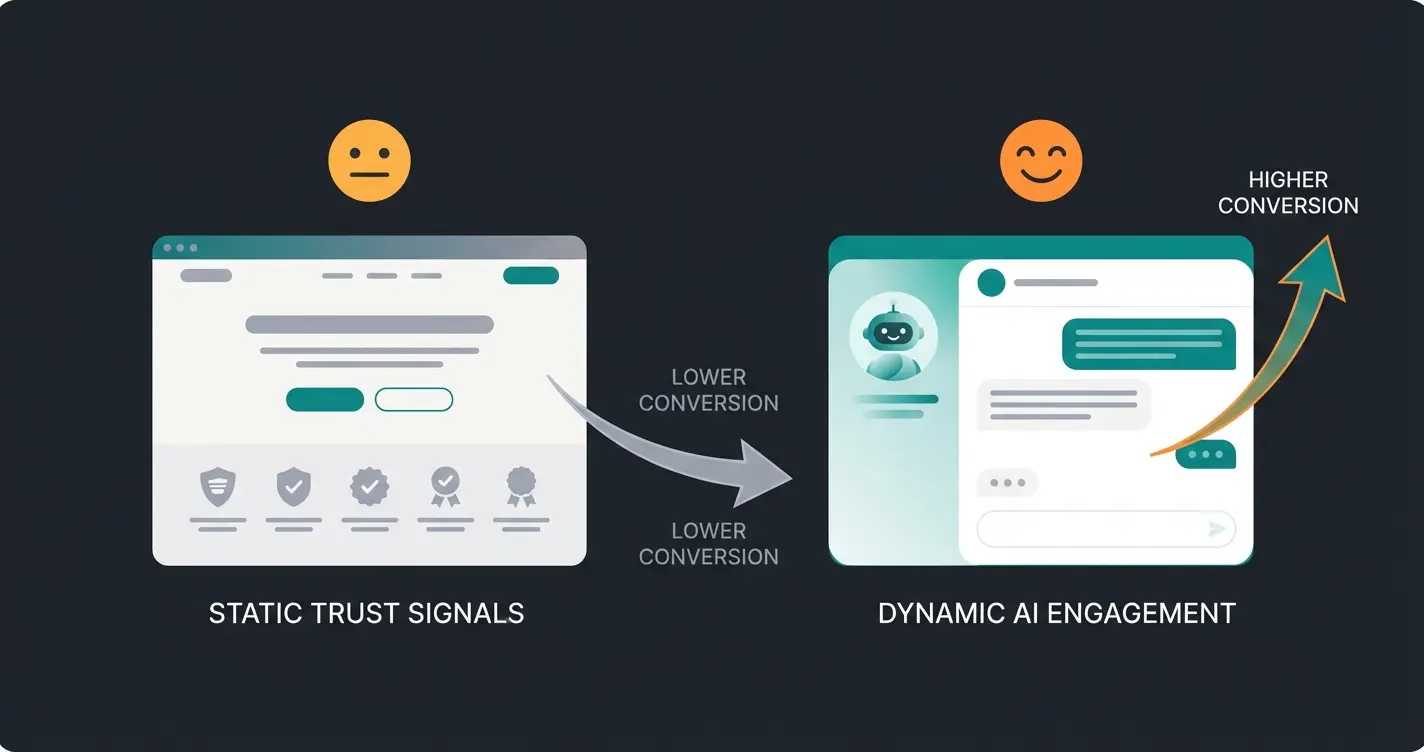
While badges passively sit in corners, AI shopping assistants (chatbots, quiz flows) are actively engaging.
Trend 2025: According to doofinder.com, 57% of consumers have already used an AI shopping assistant in recent months. The acceptance is there.
Impact: Merchants report up to 67% revenue increases through the use of retail chatbots and conversational commerce. This aligns perfectly with the broader trend of AI Chatbots E-Commerce adoption.
Discover how AI-powered consultation builds competence trust and increases conversions by up to 23%. Start guiding customers to the right products today.
Get Started FreeTechnical Implementation in Shopware 6
How do you bring both classic and modern trust elements into your shop? Here's a practical technical guide leveraging Shopware AI capabilities.
A. Integrating Static Elements (The Basics)
Footer Navigation Configuration:
- Navigate to Content > Experience Worlds in the Shopware Admin
- Edit the footer layout
- Add blocks for payment method logos and shipping provider badges
- Prominently link Imprint, Privacy Policy, and Terms & Conditions
Plugin Integration (e.g., Trusted Shops):
- Install the 'Trusted Shops Easy Integration' from the Shopware Store
- Link your Trusted Shops ID (TS-ID)
- Configure where the Trustbadge should appear (typically bottom right)
- Enable automatic review invitations to continuously generate fresh social proof
B. Integrating Interactive Elements (Advanced)
AI Consultants & Chatbots:
Modern solutions (such as ChatGPT-based sales bots or specialized guided selling apps) can often be embedded via JavaScript snippet. In Shopware 6, you can implement this through theme management or Google Tag Manager. Alternatively, there are increasingly apps in the Shopware Store that provide "Product Advisor" or "Quiz" functions as Experience World elements.
Experience Worlds for Content:
- Create landing pages for your top categories
- Use the 'Commerce > Product Slider' element combined with text blocks explaining why these products excel (demonstrate expertise!)
- Embed videos (e.g., product presentations from the founder) to create approachability and human connection
This implementation approach supports your AI-powered sales consultants strategy while maintaining a seamless user experience.
Comparison: Passive vs. Active Trust Elements
To clarify the difference, here's a comparison of how different trust elements affect customers:
| Characteristic | Passive Trust Elements (Badges, SSL) | Active Trust Elements (AI, Guided Selling) |
|---|---|---|
| Primary Feeling | "I am safe." (Security) | "I am understood." (Competence) |
| Customer Action | Checking (glance at footer) | Interacting (chat, quiz) |
| Problem Solved | Fear of fraud / data theft | Fear of wrong purchase / overwhelm |
| Conversion Impact | Baseline level (prevents abandonment) | Performance booster (drives completion) |
| Necessity | Hygiene factor (Must-have) | Differentiation factor (Competitive advantage) |
Checklist: Is Your Shopware Shop Trustworthy?
Work through this list to evaluate your shop's current status and identify improvement opportunities.
Level 1: Basics (Must Be Fulfilled)
- ☐ SSL certificate is active (padlock symbol visible in browser)
- ☐ Imprint and privacy policy are accessible with 1 click
- ☐ No technical errors (404 pages, broken images)
- ☐ Loading time is optimized (under 2 seconds)
Level 2: Social & Reputation
- ☐ A well-known trust seal (e.g., Trusted Shops) is visibly integrated
- ☐ Product reviews are active on detail pages
- ☐ Logos of known partners (DHL, PayPal, Visa) are present
- ☐ "About Us" page with real photos exists (Experience Worlds)
Level 3: Competence & Interaction (The 2025 Standard)
- ☐ Is there a digital consultation aid (product finder, quiz, AI chat)?
- ☐ Are complex products explained simply (videos, guide texts)?
- ☐ Is the contact option (phone/chat) prominently placed, not hidden?
- ☐ Does the customer feel "guided by the hand" during product search?
Implementing AI consultation helps you tick all the Level 3 boxes while enhancing personalization across your entire store.
FAQ: Shopware Trust Elements
The most important Shopware trust elements fall into three categories: Technical trust (SSL, GDPR compliance, fast loading), Social trust (trust seals like Trusted Shops, customer reviews, payment provider logos), and Competence trust (AI consultation, guided selling, product finders). While the first two are baseline requirements, competence trust through AI-powered consultation is becoming the key differentiator that drives conversions.
Studies show that AI-powered guided selling and personalization can increase conversion rates by up to 23%. Additionally, merchants using retail chatbots and conversational commerce report revenue increases of up to 67%. This significantly outperforms static trust badges, which typically increase purchase probability by only around 5%.
Trust badges should appear in multiple locations for maximum impact: in the footer of every page, prominently during checkout, and as a floating widget on the screen edge. For product detail pages, display payment method logos near the 'Add to Cart' button. Always ensure badges don't cover important buttons on mobile devices.
Passive trust elements (badges, SSL, legal pages) provide static reassurance that addresses fear of fraud. Active trust elements (AI consultants, guided selling, interactive product finders) engage customers in dialogue, understand their needs, and guide them to the right purchase. Passive elements prevent abandonment; active elements drive conversions.
AI consultation tools can be integrated into Shopware 6 through JavaScript snippets via theme management or Google Tag Manager. Many solutions are also available as apps in the Shopware Store, offering 'Product Advisor' or 'Quiz' functions as Experience World elements. The key is seamless frontend integration that doesn't disrupt the shopping experience.
Conclusion: Trust Is Currency You Must Earn
The days when you could simply install a plugin, stick a logo in the footer, and wait for revenue are over. Shopware trust elements have evolved dramatically.
Security seals and technical standards are today's entry ticket to the market—without them, you're not even in the game. But to win the game in 2025, you must focus on competence trust.
By using Shopware 6 not just as a sales machine but as a consultation platform—whether through carefully designed Experience Worlds or innovative AI assistants—you build a bridge to customers that's stronger than any certificate. You show them: "We don't just want to sell you something. We want you to buy the right thing."
This philosophy extends to every aspect of your e-commerce strategy, from implementing AI-powered consultation to optimizing your entire customer journey.
Action Recommendations
- Audit your hygiene factors: Ensure Level 1 and Level 2 trust elements are complete and properly integrated
- Identify your problem areas: Find the category in your shop with the highest abandonment rate or most returns
- Implement active trust: Deploy an interactive product advisor or AI consultation tool in that problem category to close the competence gap
- Measure and iterate: Track conversion rates before and after implementation to quantify the impact of competence trust
Trust is the beginning of everything in e-commerce. Start building it actively today.
Join leading Shopware merchants who are transforming their shops from self-service warehouses into trusted expert consultants. See how AI-powered consultation can boost your conversions.
Start Your Free Trial
Lasse is CEO and co-founder of Qualimero. After completing his MBA at WHU and scaling a company to seven-figure revenue, he founded Qualimero to build AI-powered digital employees for e-commerce. His focus: helping businesses measurably improve customer interaction through intelligent automation.