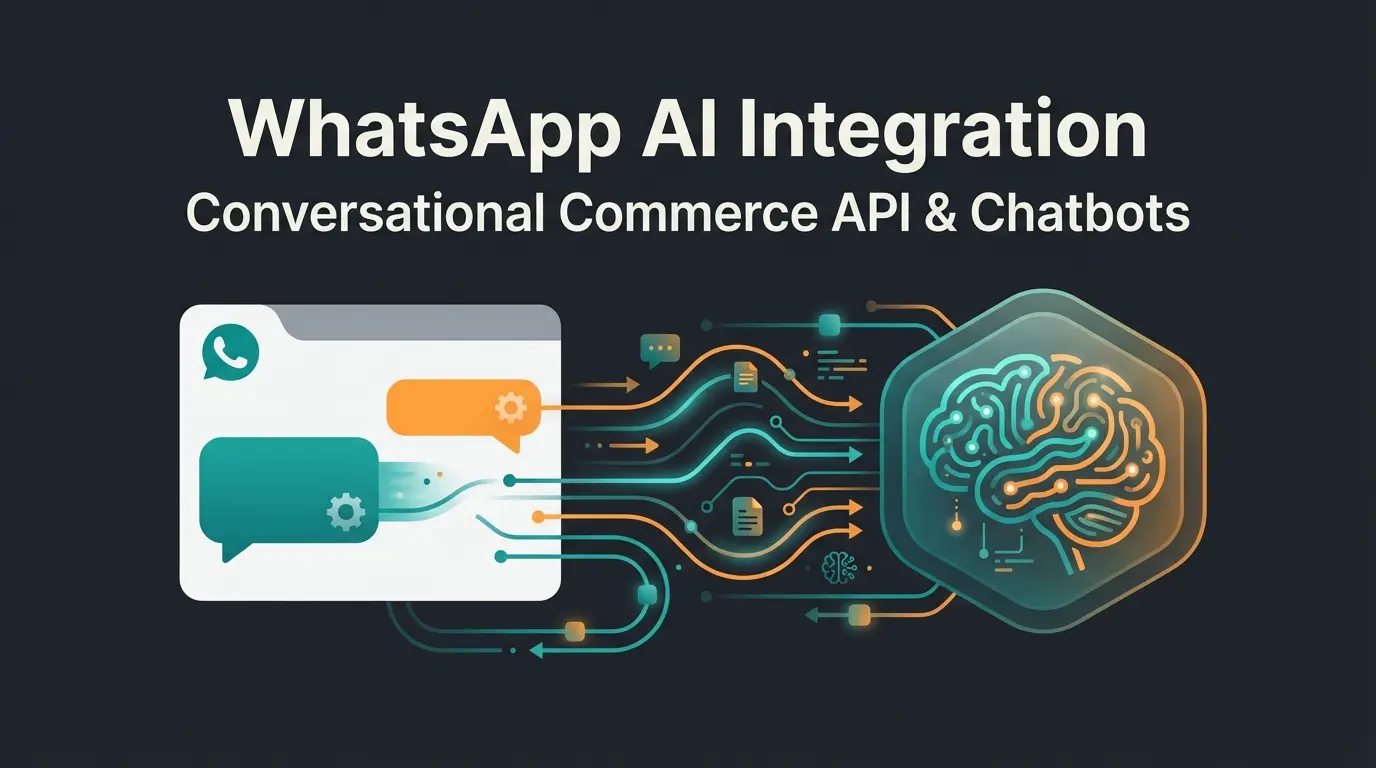
Business Chatbot 2026: Beyond Support – The AI Sales Consultant Guide
Discover how business chatbots evolved from FAQ tools to AI sales consultants. Learn RAG technology, GDPR compliance & implementation steps for 2026.

Introduction: The End of "Dumb" Answering Machines
Remember your last interaction with a classic business chatbot? It probably went something like this: You had a specific question, the bot presented you with a list of irrelevant keywords, and you ended up frustrated in the hotline queue. This scenario, which defined the reputation of chatbots for years, is now a thing of the past.
In 2026, we find ourselves in a new era. The days when an enterprise chatbot was merely a glorified FAQ directory are over. Through the integration of Generative AI (GenAI) and Large Language Models (LLMs), these tools have transformed into highly sophisticated digital employees. But the real breakthrough isn't in support—it's in sales.
While most companies are still discussing how to automate service tickets, market leaders are already using AI as scalable product consultants. Imagine a digital assistant that doesn't just answer "What are your opening hours?" but proactively asks a customer: "What use case are you looking for this tool for?" and provides a well-founded purchase recommendation based on technical data.
As Conversational AI evolves, we're witnessing a fundamental shift in how businesses interact with customers. This comprehensive guide shows you why the business chatbot of the future is a salesperson, how to understand the technology (RAG & PIM) behind it, and how to implement such a solution in compliance with data protection regulations in your company.
Why Companies Are Betting on AI Chatbots in 2026
The motivation for implementing a chatbot for companies has shifted. While the primary focus used to be cost savings, value creation now takes center stage. The statistics speak a clear language: According to Fullview, the market for AI chatbots is growing by over 23% annually, and by 2026, bots are expected to handle 10% of all contact center interactions completely autonomously according to StartUs Insights.
Explosive growth in AI chatbot adoption across industries
Nearly all customer interactions will involve AI assistance
Consistent year-over-year expansion of chatbot technology
Companies report significant savings through automation
1. Scalable Product Consultation (The "IKEA Effect")
The greatest, often overlooked advantage of modern AI is the ability to provide consultation. In brick-and-mortar retail, a good salesperson is worth their weight in gold because they navigate customers through the assortment. Online, this instance was missing until now.
A business chatbot that functions as a product consultant bridges this gap. Through digital product advice, companies can now offer online what was previously only possible in physical stores. It can:
- Conduct needs analyses (e.g., "How large is the room you want to cool?")
- Filter complex product catalogs based on specific requirements
- Identify cross-selling potential that a static webshop filter would overlook
- Provide personalized recommendations based on usage scenarios
According to AgentiveAIQ, this leads to a measurable increase in conversion rate and average cart value. Companies implementing AI product consultants are seeing dramatic improvements in customer engagement and sales performance.
2. Cost Efficiency and ROI
The economic arguments are overwhelming. While a human interaction in service costs an average of approximately $6.00, an AI-supported interaction costs about $0.50 according to Fullview. Research from Thunderbit shows companies report savings on support costs of up to 30%.
However, a word of caution: It's not about replacing employees, but freeing them from repetitive tasks ("Where is my package?") so they can focus on complex escalations. This is where AI Customer Service truly shines—augmenting human capabilities rather than replacing them entirely.
3. 24/7 Availability and Instant Responses
Customer patience is declining. Studies from Botpress show that 53% of customers frustratedly give up if they wait longer than 10 minutes for a response. A business chatbot eliminates wait times completely.
Especially in B2B, where purchase decisions are often made asynchronously and across time zones, constant availability is a decisive competitive advantage. When AI Chatbots transform customer service operations, they enable round-the-clock engagement that human teams simply cannot match.
4. Data Collection and Customer Understanding
Every conversation is a data point. Unlike a website that only tracks clicks, a chatbot provides qualitative data. You learn not only that a customer bounced, but why (e.g., "The bot recorded that many customers ask about a specific certification that's missing from the product page"). These insights are invaluable for product management and continuous improvement.

Decision Guide: Which Chatbot Type Fits Your Business?
Not every chatbot for companies is the same. The market has differentiated itself. To make the right choice, you need to understand which category supports your primary business goal.
Type A: The Service Agent (Reactive Support)
- Focus: Efficiency improvement in customer service (post-sales)
- Function: Answers FAQs, status queries (delivery status), returns management. Often connected to a ticket system
- Technology: Often a mix of rule-based processes and NLP (Natural Language Processing) for intent recognition
- Suitable for: Companies with high volumes of repetitive support inquiries (e.g., e-commerce, telecommunications, utilities)
- Example tools: Zendesk, Freshdesk, Userlike (support focus)
Type B: The Lead Collector (Marketing & Qualification)
- Focus: Lead generation and pre-qualification (pre-sales)
- Function: Replaces classic contact forms. Queries contact data, schedules appointments, or offers whitepapers in exchange for email addresses
- Technology: Mostly script-based decision trees ("click bots"). Less "intelligence," more process reliability
- Suitable for: B2B service providers, agencies, real estate agents
- Example tools: HubSpot, ManyChat, Drift
Type C: The Product Expert (Consultative AI)
- Focus: Revenue increase through consultation and closing sales (sales)
- Function: Simulates a sales conversation. Draws on deep product knowledge, compares variants, and gives recommendations based on usage scenarios
- Technology: Generative AI (LLMs) combined with RAG (Retrieval-Augmented Generation) and PIM systems
- Suitable for: Companies with products requiring explanation, large assortments, or technical B2B sales
- Example tools: Specialized AI solutions (like AgentiveAIQ, moin.ai with product focus) or custom builds based on Botpress/OpenAI
Consultative AI chatbots represent the cutting edge of this technology, enabling businesses to provide expert-level guidance at scale. The distinction between these types is crucial for selecting the right solution for your specific business needs.
Rigid decision trees (If A, then B). User experience: 'Press 1 for Support'. Frustrating, inflexible. Focus: Cost cutting.
Simple NLP recognizes keywords ('invoice', 'delivery'). User experience: 'I didn't understand you.' Often dead ends. Focus: FAQ automation.
Generative AI + RAG + PIM integration. Understands context and intent. Fluid conversation, individual product suggestions. Focus: Revenue & satisfaction.
Top Business Chatbot Solutions Compared
The market for chatbot company software is confusing. Here's a strategic classification of the top players, based on the types defined above.
| Category | Tool / Provider | Strengths & Focus | Ideal for... |
|---|---|---|---|
| Support & Service | Zendesk | Powerful ticket system, enterprise features, omnichannel support | Large support teams looking for an all-in-one solution |
| Support & Service | Userlike | Strong focus on data protection (servers in Germany), unified messaging (WhatsApp, Web), 'Made in Germany' | German SMEs and corporations with strict GDPR requirements |
| Marketing & Social | ManyChat | Market leader for social media automation (Instagram, Facebook, WhatsApp). Drag-and-drop builder | E-commerce brands focusing on social commerce & influencer marketing |
| Consultation & Sales | Moin.ai | AI chatbot with focus on lead gen and marketing. Self-learning ('Dreaming' feature for topic suggestions) | Companies seeking marketing automation without high setup effort |
| Custom AI / Tech | Botpress | Developer platform. Enables building highly complex, individual RAG bots | Companies with own IT resources wanting to build a custom product consultant |
According to Femaleswitch, Zendesk excels at enterprise-level support integration, while Kayako notes the importance of omnichannel capabilities for modern customer service.
For e-commerce specifically, an AI Chatbot for E-Commerce can transform your WhatsApp channel into a powerful sales tool. Meanwhile, KI-Produktberatung outperforms traditional support solutions when it comes to driving actual revenue growth.
Deep Dive: How AI Product Consultation Works
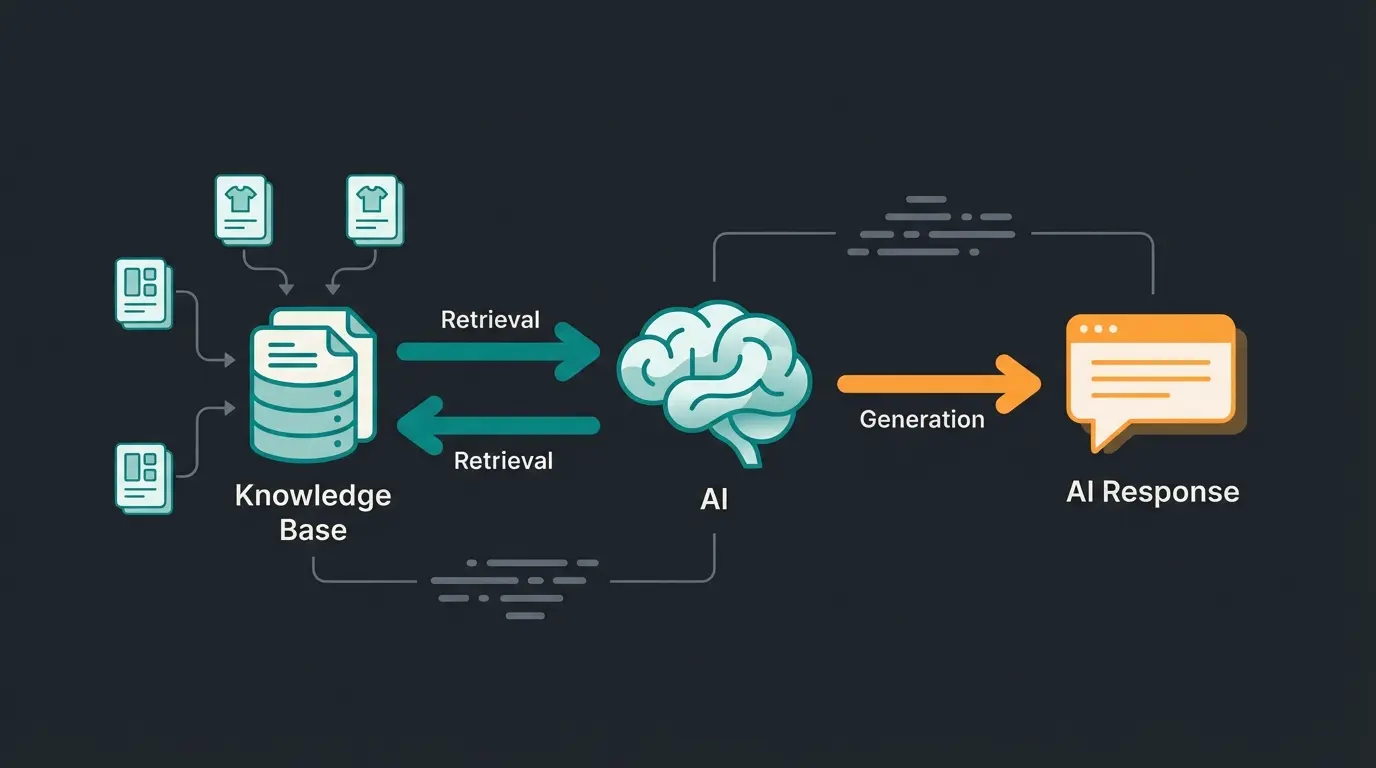
Most competitors vaguely mention "AI." But to operate a business chatbot that can truly advise, you need to understand the technology behind it. The magic word is RAG (Retrieval-Augmented Generation).
The Problem with Standard AI (ChatGPT)
If you ask ChatGPT: "Which spare part fits my machine Model X-200?", the AI will probably hallucinate (make up an answer) because it doesn't know your internal product data. It was trained with the "whole internet" but not with your inventory or technical data sheets.
The Solution: RAG + PIM Integration
RAG is the bridge between the AI's language skills and your company knowledge. According to research from Sprylab, this technology represents the next evolution in enterprise AI applications.
- The Knowledge Base (PIM): Your Product Information Management (PIM) system contains all truth: dimensions, compatibilities, prices, stock levels.
- The Retrieval Process: When a customer asks a question, the bot first searches your PIM data for relevant facts (Retrieval).
- The Generation: The bot takes these facts and hands them to the language model (LLM) with the instruction: 'Use only this data to formulate a friendly response for the customer.'
This approach, as detailed by Mesoneer, ensures factual accuracy while maintaining the conversational fluidity that customers expect from modern AI systems.
Example Scenario: The Bicycle Purchase
Customer: "I'm looking for a mountain bike for beginners, but I also often ride on the road."
Standard Bot (without RAG): "We have many great bikes. Check out our 'Mountain Bikes' category here." (Link to category). → Customer is left alone.
Consultant Bot (with RAG):
- Analysis: Recognizes need "beginner" + "hybrid use (terrain/road)"
- Data retrieval: Searches PIM for bikes with "Hardtail" (good for beginners), "Lockout fork" (can be blocked for road), and price range "entry-level"
- Response: "For the mix of terrain and road, I recommend a hardtail mountain bike with a lockable suspension fork. The 'Alpin-X 300' model would be ideal as it's robust for forest trails but rolls efficiently on asphalt. Should I show you the details?"
This context-based consultation is the key to converting visitors into buyers. As noted by Alex Genovese, the difference between showing products and actually selling them comes down to understanding customer intent and providing relevant recommendations.
For a deeper understanding of how this technology transforms customer interactions, explore our guide on KI Produktberatung. Companies implementing these digital expert consultants are seeing remarkable improvements in customer satisfaction and sales conversion.
See how AI product consultation can boost your conversion rates while reducing support costs. Our intelligent chatbot learns your product catalog and guides customers to purchase decisions.
Start Free TrialChecklist: GDPR-Compliant Chatbot Implementation
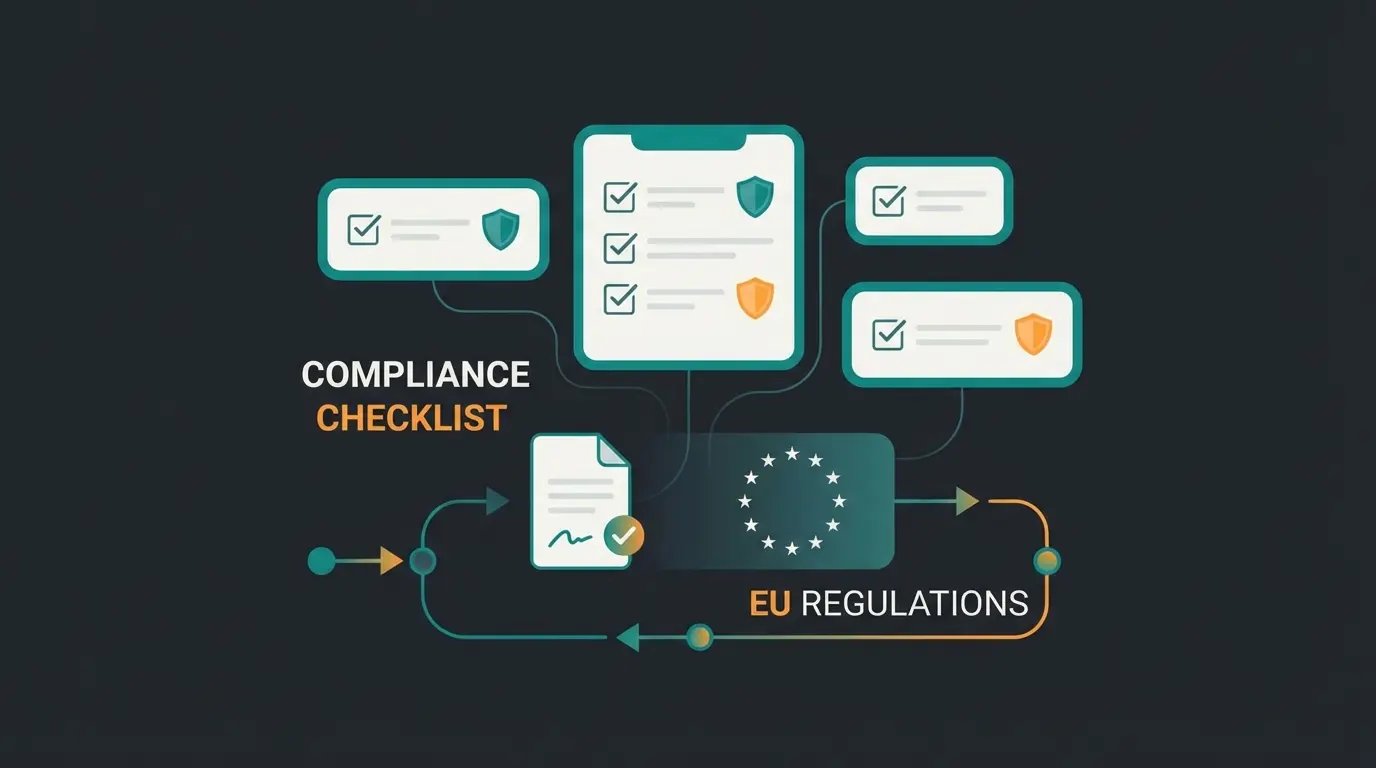
In Germany and the EU, the use of enterprise chatbots is strictly regulated. With the EU AI Act, which comes into full effect from 2025/2026, new obligations are coming.
1. Transparency Obligation (EU AI Act)
According to CMS Law-Now, from August 2026 (relevant for many systems even earlier), AI systems that interact with humans must be transparently labeled.
- Requirement: The user must know they're speaking with a machine
- Implementation: A notice like "I am a virtual assistant" at the beginning of the chat is mandatory. Don't fake a human identity (no "Hello, I'm Sarah from support" when Sarah is an AI)
Research from InsidePrivacy and Eyreact provides additional context on the regulatory landscape businesses must navigate.
2. Server Location & Data Processing (GDPR)
- Hosting: Use providers that host data in the EU (e.g., Userlike, Moin.ai) or enterprise solutions from US providers that guarantee EU data residency (Microsoft Azure Germany, AWS Frankfurt)
- Data Processing Agreement: Conclude a data processing agreement (DPA) with the chatbot provider
According to Next2Brain and Pexon Consulting, European hosting options have matured significantly, making compliance easier than ever.
3. Consent & Data Minimization
- Consent: Load the chat script only after the user has consented in the cookie banner, or actively obtain consent before the first chat starts ("By starting the chat, you agree to the processing...")
- No sensitive data: Train the AI to warn users not to enter credit card data or health data into the chat unless absolutely necessary and secured
Lime Technologies emphasizes that proper consent management is fundamental to maintaining customer trust while ensuring regulatory compliance.
Step-by-Step Guide to Integration
The implementation of a chatbot for companies often fails not due to technology, but due to a lack of strategy. Follow this roadmap for success:
Phase 1: Strategy & Goal Definition
- Goal: Do you want to reduce support costs (service bot) or increase revenue (sales bot)? Don't mix the goals at the beginning.
- Define KPIs: Set success metrics. For service: "Automation rate" (how many tickets does the bot solve alone?). For sales: "Conversion rate" (how many chatters buy?).
Understanding where consultative AI drives the most value for your specific business model is crucial before selecting any technology platform.
Phase 2: Create the Data Foundation
An AI bot is only as smart as the data you give it. This foundational work determines the success or failure of your entire implementation.
- For Service Bots: Collect existing FAQs, email threads, and manuals. Clean them up (delete outdated info!)
- For Sales Bots: Structure your product data. A RAG bot needs clean attributes (size, color, application area) in your PIM or shop system
Phase 3: Prototyping & System Prompt
Create a "System Prompt" (the character instruction for the AI). The quality of this prompt directly impacts the effectiveness of your chatbot.
- Bad: "You are a helpful bot."
- Good: "You are an experienced technical consultant for heating systems. You answer precisely, ask for square footage when unclear, and only recommend products from our catalog. You are polite but factual."
Phase 4: Testing & Human-in-the-Loop
- Start internally. Let sales and support "play" against the bot to identify gaps
- Go live, but with an "emergency exit": Always offer the option "Talk to an employee" if the bot gets stuck
- Monitor the first 1,000 conversations manually to refine the responses
The concept of an AI Employee goes beyond simple automation—it's about creating a true KI-Mitarbeiter that augments your human team's capabilities. According to Botpress documentation, this iterative approach to deployment ensures continuous improvement.
Comparison Table: What Each Bot Type Can Do
| Feature | Rule-Based Bot (Old) | Standard AI Bot (ChatGPT Wrapper) | AI Product Consultant (RAG) |
|---|---|---|---|
| Understanding | Only exact keywords | Understands almost everything | Understands context & jargon |
| Data Basis | Manually typed scripts | General internet knowledge | Your company data (PIM/ERP) |
| Risk | Dead ends | Hallucinations (false info) | Factual accuracy (via sources) |
| Goal | Avoid support tickets | Chat / Entertain | Sell & Consult |
| Setup Effort | High (script everything) | Low (plug & play) | Medium (data connection needed) |
Flowchart: Does Your Business Need a Consultant Bot?
Use this decision framework to determine if an AI product consultant is right for your organization:
- Question 1: Do you sell complex or configurable products? → If YES, continue
- Question 2: Do customers frequently ask "Which X should I buy?" or "What's the difference between A and B?" → If YES, continue
- Question 3: Is your sales team overwhelmed with repetitive consultation requests? → If YES, continue
- Result: You need a Product Consultation Bot with RAG technology
If you answered NO to the first two questions but YES to having high support ticket volume, a Service Agent bot might be more appropriate for your needs.
Conclusion: From Support Ticket to Shopping Cart
The business chatbot in 2026 is far more than an annoying pop-up at the edge of the screen. It's the answer to the skilled worker shortage in service and the increasing complexity in e-commerce.
While the first generation of bots (2015-2020) often disappointed, technologies like RAG and LLMs now finally enable fulfilling the promise: Digital empathy and expertise. According to Salesgroup AI, the convergence of conversational AI and sales technology represents one of the most significant opportunities for businesses in the coming decade.
Companies that act now and prepare their data foundation (PIM/Knowledge Base) for the AI age will have a decisive competitive advantage. They offer their customers not just answers, but solutions—around the clock, in any language, and with the patience of a machine but the charm of a top salesperson.
Are you ready to transform your customer service into a revenue driver? Don't start by searching for the tool, but by analyzing your data—because that's where the brain of your future AI colleague lies. The integration of social commerce capabilities, as explored by Sobot and HelloRep, further expands the possibilities for customer engagement.
A support chatbot primarily handles reactive tasks like FAQs, order status queries, and returns—focusing on post-sale efficiency. An AI sales consultant proactively guides customers through purchase decisions using RAG technology and PIM data, essentially replicating the experience of a knowledgeable in-store sales associate online. The key difference is value creation: support bots save costs, while sales consultants drive revenue.
Costs vary significantly based on complexity. Simple rule-based bots can start from a few hundred dollars monthly, while AI-powered solutions with RAG technology and custom PIM integration typically range from $500-$5,000+ monthly depending on conversation volume and features. However, the ROI calculation should include both cost savings (up to 30% on support costs) and revenue increases from improved conversion rates.
Yes, AI chatbots can be GDPR compliant when properly implemented. Key requirements include: hosting data in the EU, obtaining user consent before starting conversations, transparently disclosing that users are interacting with AI (mandatory under the EU AI Act from 2026), maintaining a data processing agreement with your provider, and training the AI to avoid collecting unnecessary sensitive data.
Implementation timelines vary: Simple FAQ bots can be deployed in 1-2 weeks. AI-powered service bots typically require 4-8 weeks for proper setup and training. Full-featured AI product consultants with RAG technology and PIM integration usually take 2-4 months, with the majority of time spent on data preparation and system prompt optimization rather than technical integration.
Yes, when implemented correctly as a product consultant rather than just a support tool. The key is using RAG technology to connect the AI to your actual product data, enabling contextual recommendations. Companies report significant conversion rate improvements when chatbots can guide customers through complex purchase decisions, essentially providing the 'in-store sales associate' experience online.
Join leading companies transforming their customer service into a competitive advantage. Get started with AI product consultation that understands your catalog and converts browsers into buyers.
Start Your Free Trial
Lasse is CEO and co-founder of Qualimero. After completing his MBA at WHU and scaling a company to seven-figure revenue, he founded Qualimero to build AI-powered digital employees for e-commerce. His focus: helping businesses measurably improve customer interaction through intelligent automation.