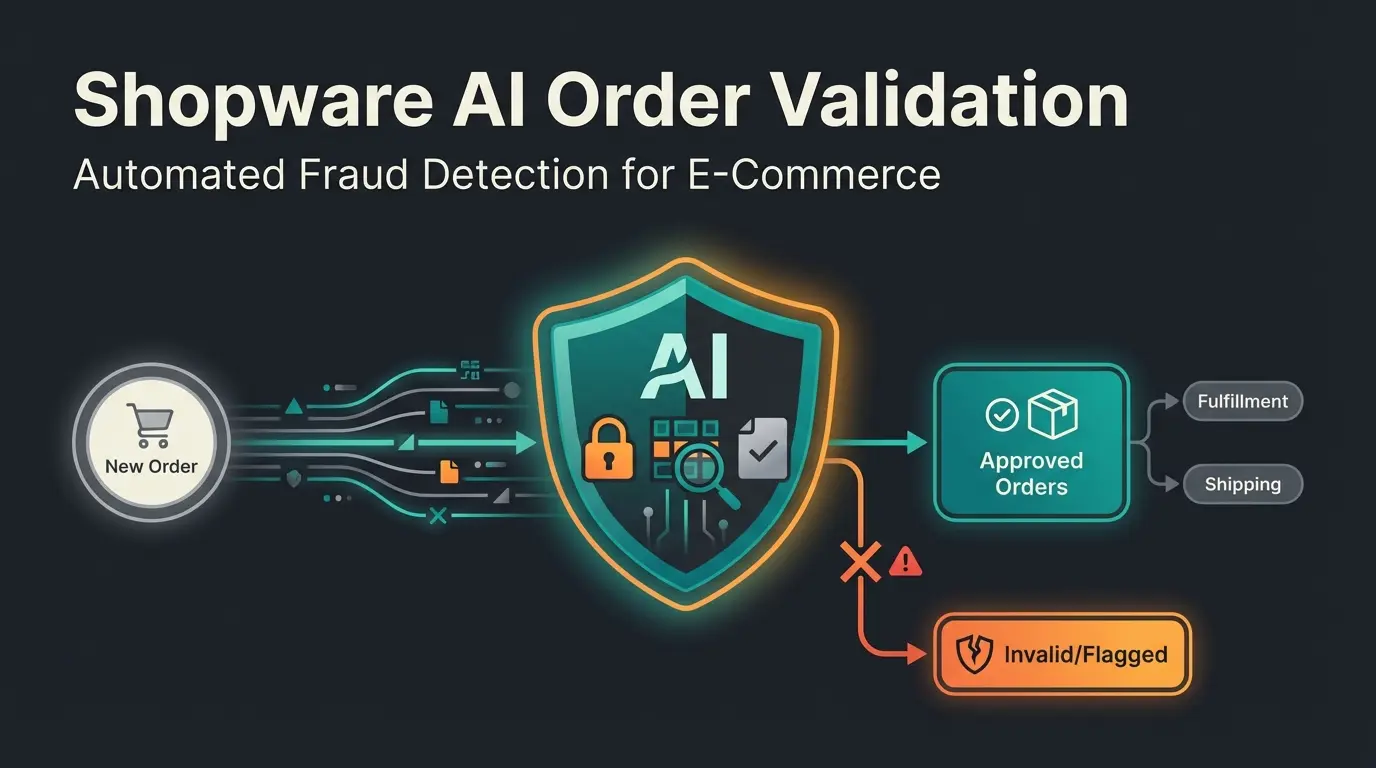
Process Automation: The Complete Guide for Businesses
Digital transformation has reached a critical turning point. While we've spent recent years discussing the digitization of paper files, 2025 and 2026 are about far more than simply saving paper.
Current studies paint a clear picture: companies can reduce operating costs by up to 60% and decrease error rates in manual data entry by up to 90% through automating standard processes, according to SystemSync. Yet while most companies immediately think of accounting or human resources when they hear process automation, they often leave the biggest lever for growth untapped: sales and customer consultation.
In this comprehensive guide, you'll learn not only how to automate your processes, but how to scale your expertise through cutting-edge business process automation (BPA) and AI agents—transforming a static admin bot into an intelligent product consultant.
Potential savings in operational costs through process automation
Decrease in manual data entry errors
Time sales reps actually spend selling vs. admin tasks
Growth potential when AI is deployed in sales
What Is Process Automation? Definition & Distinctions
To understand the full potential of this technology, we first need to sharpen our terminology. In practice, terms are often used interchangeably, even though they describe completely different technological maturity levels.
1. Business Process Automation (BPA)
BPA is the overarching approach. It involves technology-supported automation of complex business processes that often span multiple departments. The goal isn't just completing a task—it's optimizing the entire workflow from initiation to completion, as explained by XB Software.
2. Robotic Process Automation (RPA)
RPA is the "digital assembly line worker." Software robots (bots) mimic human interactions on user interfaces. They're perfect for repetitive, rule-based tasks (e.g., "copy data from Excel to SAP"). However, RPA fails as soon as a variable changes or an unstructured decision needs to be made, according to ComputerWeekly and Weissenberg Group.
3. Intelligent Process Automation (IPA) & Agentic AI
This is where the future lies. IPA combines RPA with Artificial Intelligence (AI), Machine Learning (ML), and Natural Language Processing (NLP). The system "understands" content, learns from data, and can make decisions, as detailed by Zvolv. The latest evolution here is Agentic AI (agent-based AI). These systems don't just wait for input—they autonomously pursue goals, plan steps, and self-correct, according to OpenAI and PagerDuty.
Comparison: Rule-Based vs. AI-Based Automation
| Criteria | Rule-Based Automation (RPA) | Intelligent Automation (AI Agents) |
|---|---|---|
| Data Basis | Structured data (Excel, databases) | Unstructured data (emails, speech, images) |
| Flexibility | Low (breaks with process changes) | High (adapts to new situations) |
| Decision Making | "If-Then" logic (rigid) | Probabilistic & context-aware (flexible) |
| Use Cases | Data entry, invoice verification | Customer consultation, complex problem-solving |
| Setup | Elaborate rule programming | Training with knowledge & guardrails |
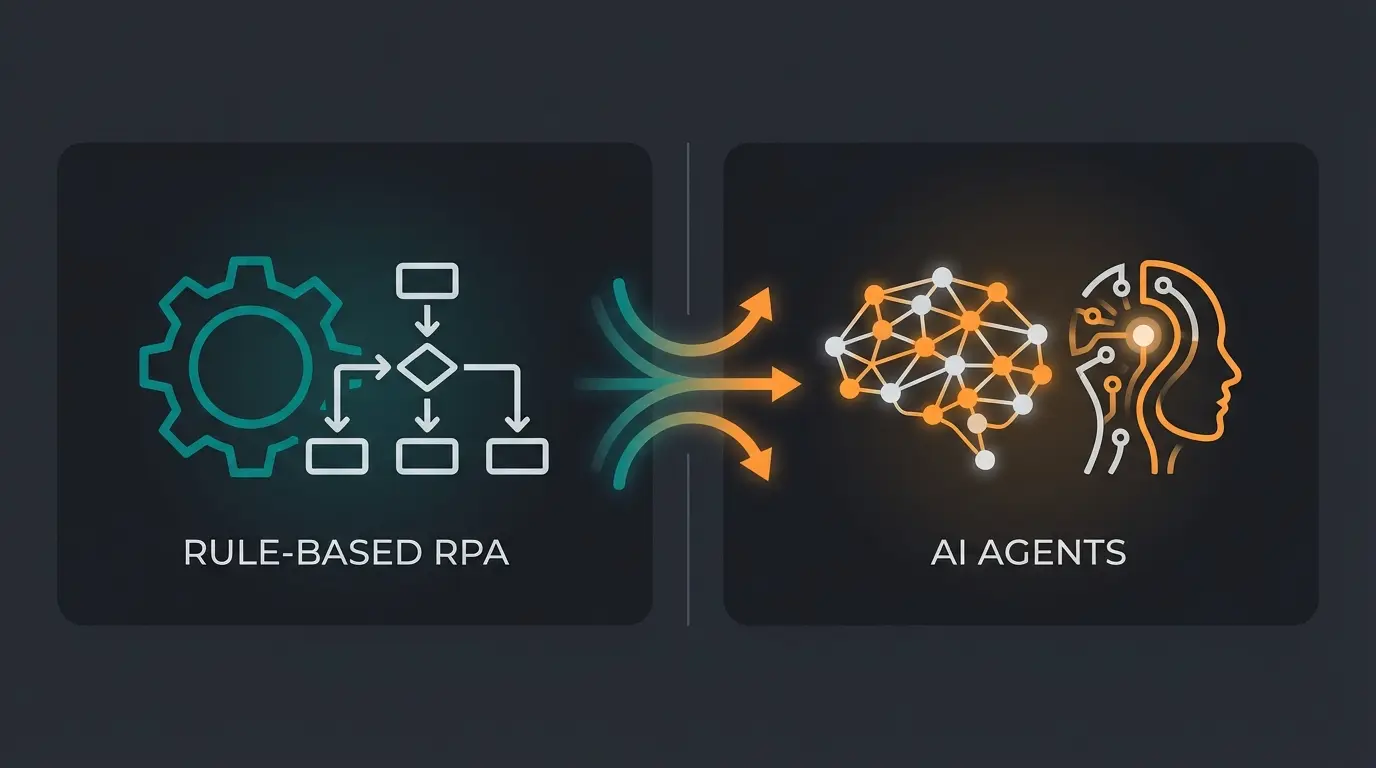
Why 2026 Is the Year of Intelligent Automation
We stand at the threshold of a new era. According to Gartner, Agentic AI is among the top technology trends for 2025 and beyond. Why is this relevant for your business now?
Previous automation solutions were "blind" to nuances. A chatbot could only respond if the customer used exactly the right keyword. Modern Large Language Models (LLMs) have changed this. They enable software to understand context.
An example: A customer sends an email with the sentence: "I'm looking for something similar to Machine X, but for a smaller budget and faster delivery."
- Old (RPA/Rule-Based): The bot recognizes "Machine X" and sends the data sheet. It ignores the context of "budget" and "delivery."
- New (Agentic AI): The AI agent understands the constraints, checks inventory of alternative products in the ERP, compares prices, and formulates a response with three suitable alternatives including delivery dates.
This ability to convert unstructured information (language, text) into structured actions opens the door to automation in the front office—where revenue is generated.
The Classic Benefits (And What's Often Forgotten)
When businesses think about process automation, cost savings usually take center stage. That's correct, but it's thinking too small.
1. The Classics: Efficiency and Compliance
- Cost Reduction: As mentioned at the outset, savings of up to 60% in operating costs are realistic.
- Error Prevention: Humans make mistakes when they're tired. Bots don't. This is essential in compliance and financial accounting.
- Speed: Processes that took days are completed in minutes.
2. The Blue Ocean: Scalability of Expert Knowledge
The biggest unsolved problem in B2B sales is time. According to the State of Sales report from Salesforce and HubSpot, sales representatives spend only about 30% of their time actually selling. The rest goes into administration, research, and data maintenance.
Here's your biggest lever:
- Automated Qualification: Instead of your top salesperson chasing every lead, an AI agent handles the initial consultation. It qualifies needs, clarifies budget questions, and only hands over "ready-to-buy" leads.
- Knowledge Transfer: In many companies, product knowledge is "trapped" in the heads of a few experts. When they're sick or leave the company, knowledge is lost. An AI system trained on this knowledge makes expertise scalable and available 24/7.
- Revenue Growth: McKinsey reports that companies deploying AI in sales achieve revenue increases of 3 to 15%.
Top 5 Examples of Process Automation in Business
To make the theory tangible, let's look at concrete use cases. We'll start with the "basics" and work our way to the "game changer."
1. Invoice Processing (The Classic)
Incoming invoices (PDF/paper) are read via OCR (text recognition), matched with purchase order numbers in the ERP, and automatically posted when there's a match. A human only intervenes when there are discrepancies.
- Benefit: Reduces process costs by up to 45%.
2. HR Onboarding
As soon as an employment contract is signed, the BPA software triggers a chain of actions: create IT account, order hardware, send welcome email, book training dates.
- Benefit: Professional first impression and relief for the HR department.
3. Customer Service Triage
Incoming support tickets are analyzed by AI, categorized (e.g., "Technical Issue" vs. "Billing Question"), and directly assigned to the right employee—including a solution suggestion from the knowledge base.
4. Automated Quote Generation
Based on configurator inputs, the system automatically creates a complex quote, pulls current prices from the database, and sends the PDF to the customer.
5. The Game Changer: Automated Product Consultation
This is the gap that most companies overlook. It's about complex products requiring explanation (machinery, specialized software, insurance, medical technology), as explained by Krauss GmbH and moin.ai.
The Scenario: A prospect visits your website at 8:00 PM. They're looking for a special industrial solution but don't know exactly which specification they need.
- Without Automation: They fill out a contact form. A sales rep gets back to them 2 days later. The customer has long since bought from the competition.
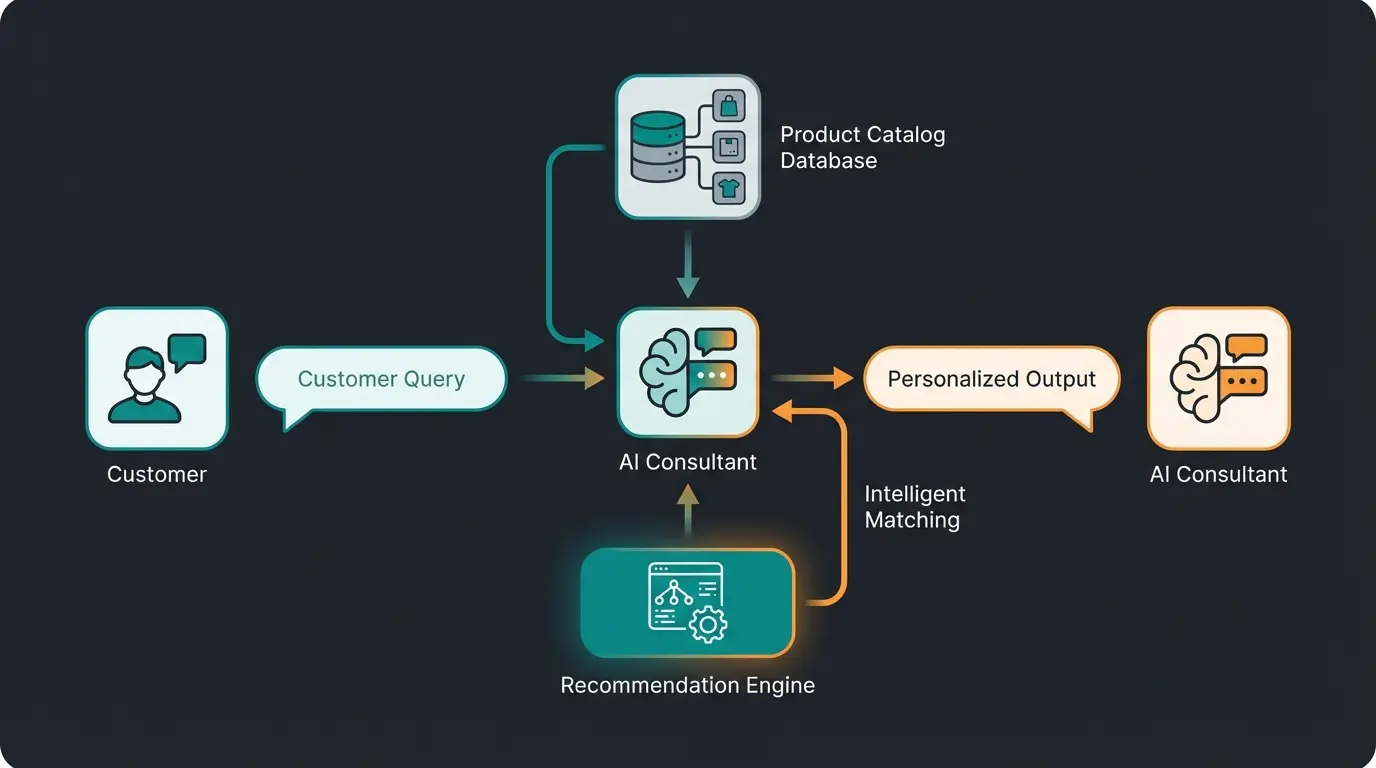
- With Intelligent Process Automation: An AI consultant (not a dumb chatbot) starts a conversation.
Here's how a modern AI consultation might unfold:
- AI: "What application will you be using the system for?"
- Customer: "For processing composite materials outdoors."
- AI: "I understand. Weather resistance is important then. What volume are you planning per hour?"
- AI (Analysis): Matches requirements with your product catalog.
- AI (Result): "Based on your specifications, I recommend Model X-200. It's specially certified for outdoor use. Would you like me to send you the data sheet or book a live demo appointment with Mr. Miller?"
This isn't future music. With modern AI agents, this type of consultation is possible today. You're not automating the process of "filling out forms"—you're automating the process of "expert consultation."
Stop losing leads to slow response times. Our AI-powered consultation platform turns your product expertise into a 24/7 intelligent advisor that qualifies leads and drives revenue.
Start Your Free TrialSoftware & Tools: More Than Just RPA
The landscape of BPA software is confusing. To automate processes in your company, you often need a "tech stack" of various components.
1. The Foundation: ERP & CRM
Systems like SAP, Microsoft Dynamics, or Salesforce are the backbone. They hold the data. Automation without clean data in these systems is impossible.
2. The Doers: RPA & iPaaS
- RPA Tools (UiPath, Blue Prism): Ideal for tasks that need to operate user interfaces (legacy systems without APIs).
- iPaaS (Zapier, Make, MuleSoft): Connect modern apps via APIs. When you want to push data from your webshop to your CRM, this is often the leaner path than RPA.
3. The Brain: AI & Consultation Layers
This is where innovation happens. Platforms that use LLMs (like GPT-4 or Claude) to layer a "consultation layer" over your data.
- Difference from before: Old chatbots were based on "decision trees." You had to pre-program every path.
- Today: You feed the AI your PDF manuals, product catalogs, and past email threads (RAG - Retrieval Augmented Generation). The AI navigates the conversation dynamically.
The Automation Maturity Model
Excel lists, email ping-pong, manual data entry. High error rate, no scalability.
Use of macros or simple bots for isolated tasks (e.g., invoice download).
Systems are connected (API). Data flows automatically between CRM and ERP. The process is end-to-end digital.
Systems "think along." They conduct complex consultations, make decisions, and optimize themselves. This is the goal for 2026.
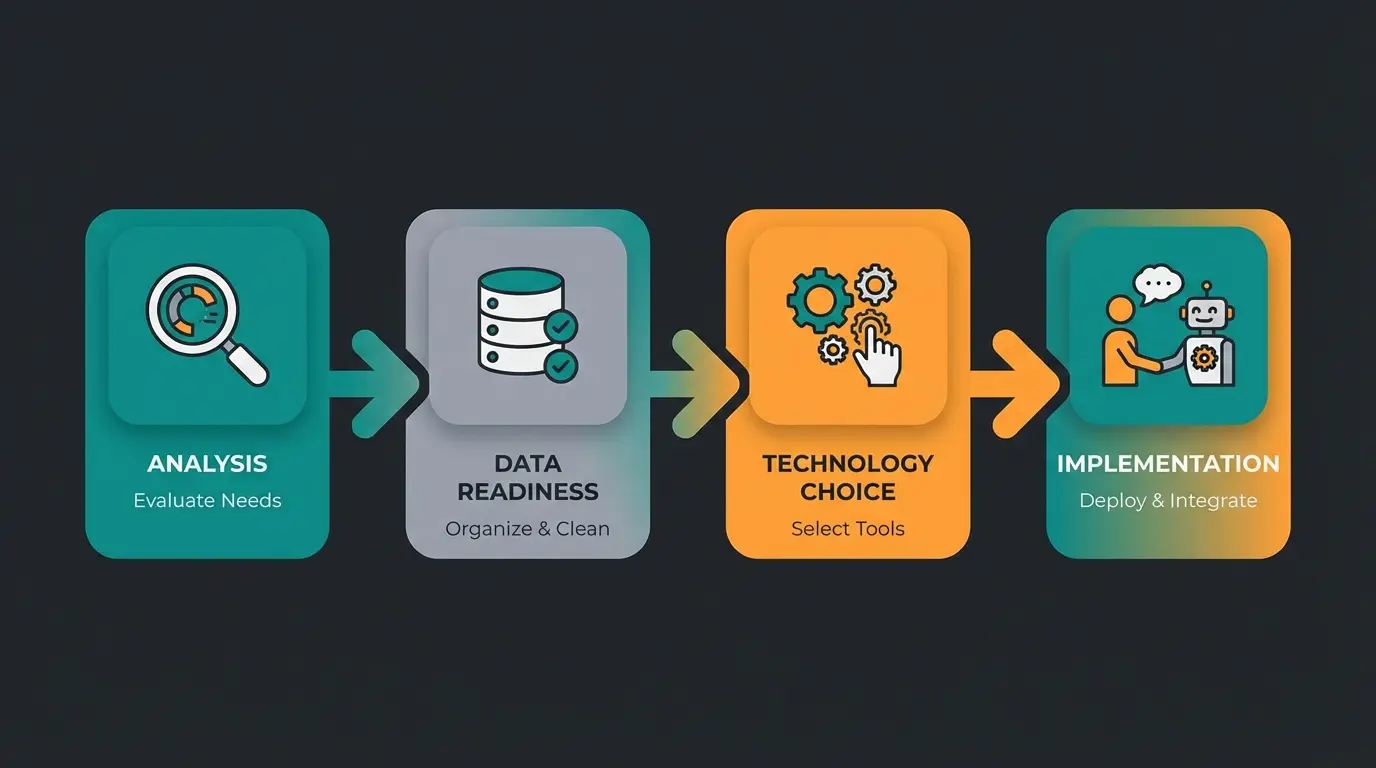
Step-by-Step Guide to Process Automation
How do you start without burning money? Many projects fail because they try to automate chaos. Remember: An automated bad process is just a faster bad process.
Phase 1: Process Analysis & Mining
Before you buy software, you need to understand what's happening. Use process mining tools or conduct workshops to identify bottlenecks.
Phase 2: Data Readiness (The Critical Factor)
For AI-powered process automation, data is the fuel.
- Are your product data current?
- Is your expert knowledge documented or only in employees' heads?
- Gartner emphasizes that "AI-ready Data" is one of the most important success factors for 2025.
Phase 3: Technology Selection
Don't buy a cannon to shoot sparrows.
- For simple data transfers: Make/Zapier
- For legacy systems: RPA
- For customer interaction & consultation: Agentic AI solutions
Phase 4: Human-in-the-Loop Implementation
Don't start fully autonomous. Let the AI make suggestions that a human approves ("copilot mode"). Only when the error rate approaches zero do you switch to autopilot. This builds trust within the team and ensures quality.
Challenges & Solutions in Process Automation
Despite all the enthusiasm, there are hurdles you need to know about.
1. AI Hallucinations
Generative AI can invent things. In sales, it would be fatal if the AI promised a discount that doesn't exist.
Solution: Use RAG (Retrieval Augmented Generation). Here, the AI is forced to generate answers only based on your provided documents, not from its general training knowledge. Implement "guardrails" that block certain topics, as recommended by Jeeva.ai.
2. Data Privacy & Compliance
Especially in Europe, GDPR is a topic of concern.
Solution: Use enterprise solutions that don't use data to train public models. Hosting in Europe is now standard for many providers, as noted by Ada.cx.
3. Fear of Job Loss
Employees might see automation as a threat.
Solution: Position the technology as a tool to eliminate unloved routine tasks. Show that the AI does the preliminary work so humans can close deals. Studies show that AI leads more to changes in job profiles than to mass layoffs, according to McKinsey and get-aimax.de.
ROI Calculator: Is Process Automation Worth It?
Many companies shy away from the investment. But the math is often simpler than thought. Use these formulas for your calculation:
Classic ROI (Cost Side)
Savings = (Hours per task × Number of tasks × Hourly rate) × 0.8
(Factor 0.8 because automation never saves 100% of time)
The Consultation ROI (Revenue Side - Often Much Higher!)
Additional Revenue = (Additional leads through 24/7 availability) × (Increased conversion rate through instant response) × Average order value
If your AI solution manages to qualify just 10% more leads that would otherwise have bounced, the software often pays for itself in the first month.
Frequently Asked Questions About Process Automation
Business Process Automation (BPA) is the overarching strategic approach to automating entire workflows across departments. Robotic Process Automation (RPA) is a specific technology that uses software bots to mimic human actions on user interfaces for repetitive, rule-based tasks. Think of BPA as the strategy and RPA as one tool in your automation toolkit.
The cost varies significantly based on complexity. Simple workflow automation using tools like Zapier or Make can cost under $100/month. RPA implementations typically range from $5,000-$50,000 depending on scope. AI-powered consultation solutions offer various pricing models but often deliver ROI within the first month through increased lead conversion and 24/7 availability.
Research consistently shows that automation leads more to changes in job profiles than to mass layoffs. Instead of replacing workers, automation typically eliminates repetitive, low-value tasks so employees can focus on strategic work, relationship building, and complex problem-solving that requires human judgment.
Use Retrieval Augmented Generation (RAG) to force AI to generate answers only based on your verified documents and data sources. Implement guardrails that block certain topics, start with human-in-the-loop approval before going fully autonomous, and continuously monitor and refine the system based on real interactions.
Start with processes that have high volume and low variance for RPA, or high consultation demand for AI agents. Don't try to automate chaos—fix the process first. Look for areas where you're losing leads due to slow response times or where expert knowledge is bottlenecked in a few employees.
Conclusion: The Future Is Consultative
The era when process automation only meant scanning invoices faster is over. In 2026, the companies that win will be those that use automation to improve their customer relationships, not just their administration.
The step from "admin bot" to "digital consultant" is the decisive competitive advantage. You make your best sales know-how infinitely scalable.
My advice to you: Don't wait for the perfect "all-in-one" solution. Identify a consultation-intensive process in your sales or service department and start a pilot project there with modern AI technology. The tools are here—use them.
Don't just automate your paperwork—automate your growth. Transform your product consultation into an AI-powered experience that works around the clock.
Get Started Now