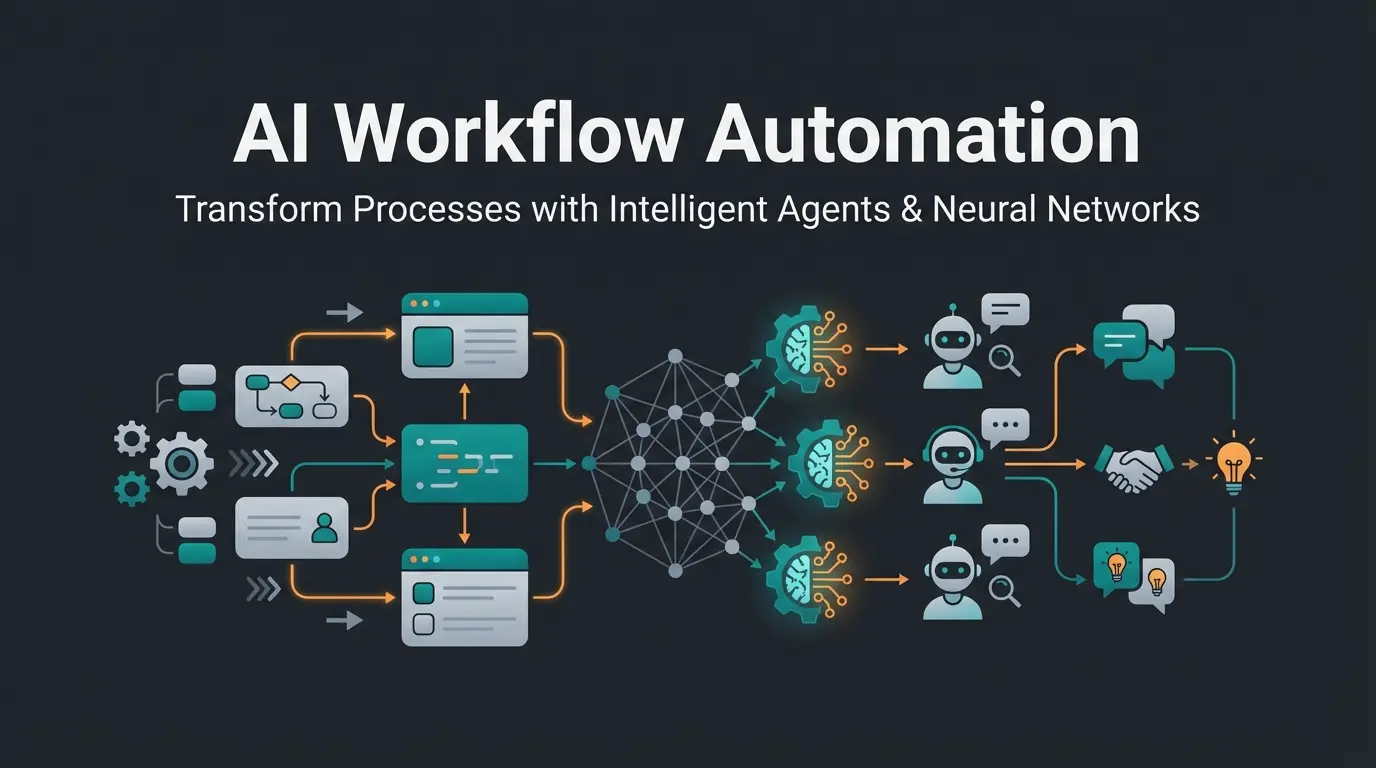
Executive Summary & Key Takeaways
This comprehensive guide analyzes the current state of SME automation and outlines a strategic path for 2025. While many small and medium-sized enterprises have primarily limited digitalization to administrative processes (accounting, HR), the greatest untapped potential lies in sales and technical consulting.
The Most Important Insights:
- Status Quo: German SMEs are digitizing at two speeds. While large enterprises forge ahead, small businesses often remain stuck in manual processes ("paper mode"), jeopardizing their competitiveness according to Handwerksblatt.
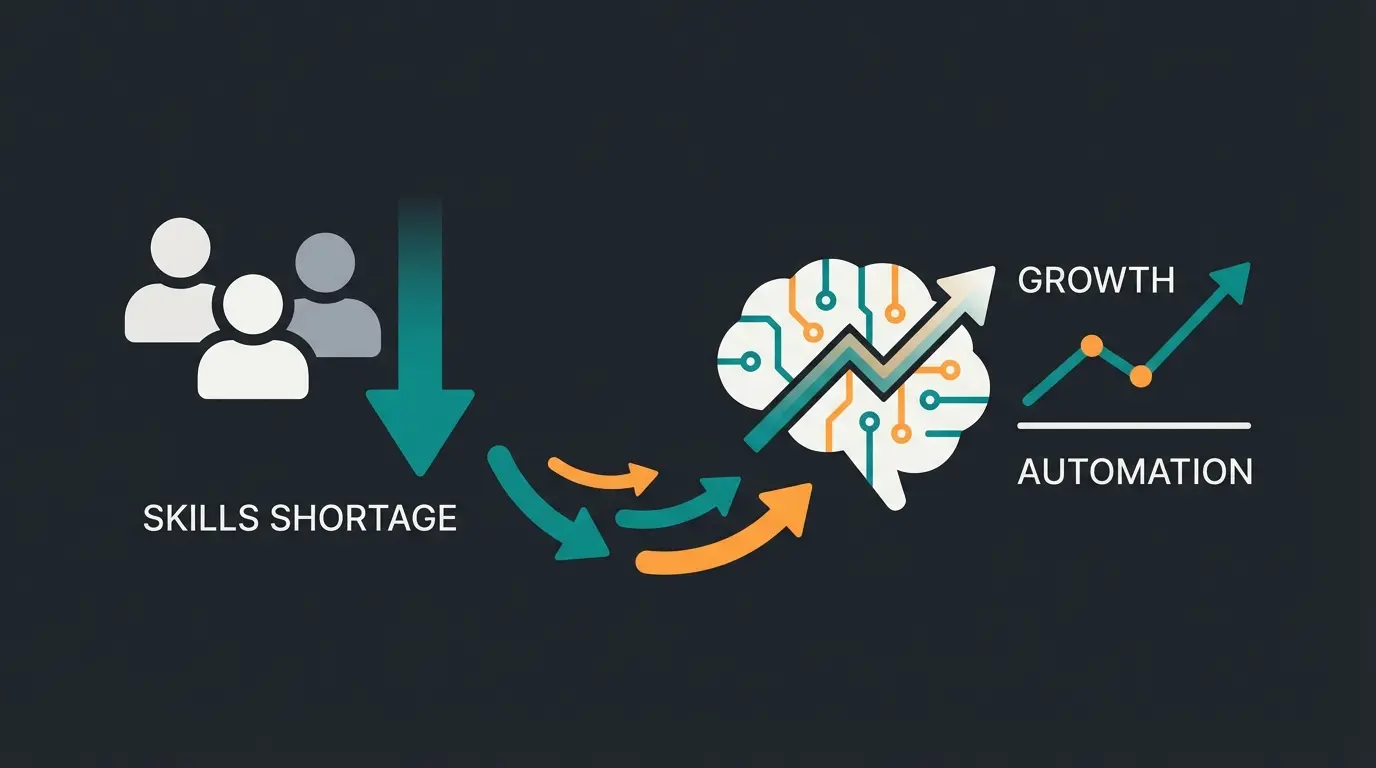
- The Problem: The skills shortage hits sales hard. By 2027, Germany is projected to be short approximately 37,000 sales professionals as reported by Springer Professional.
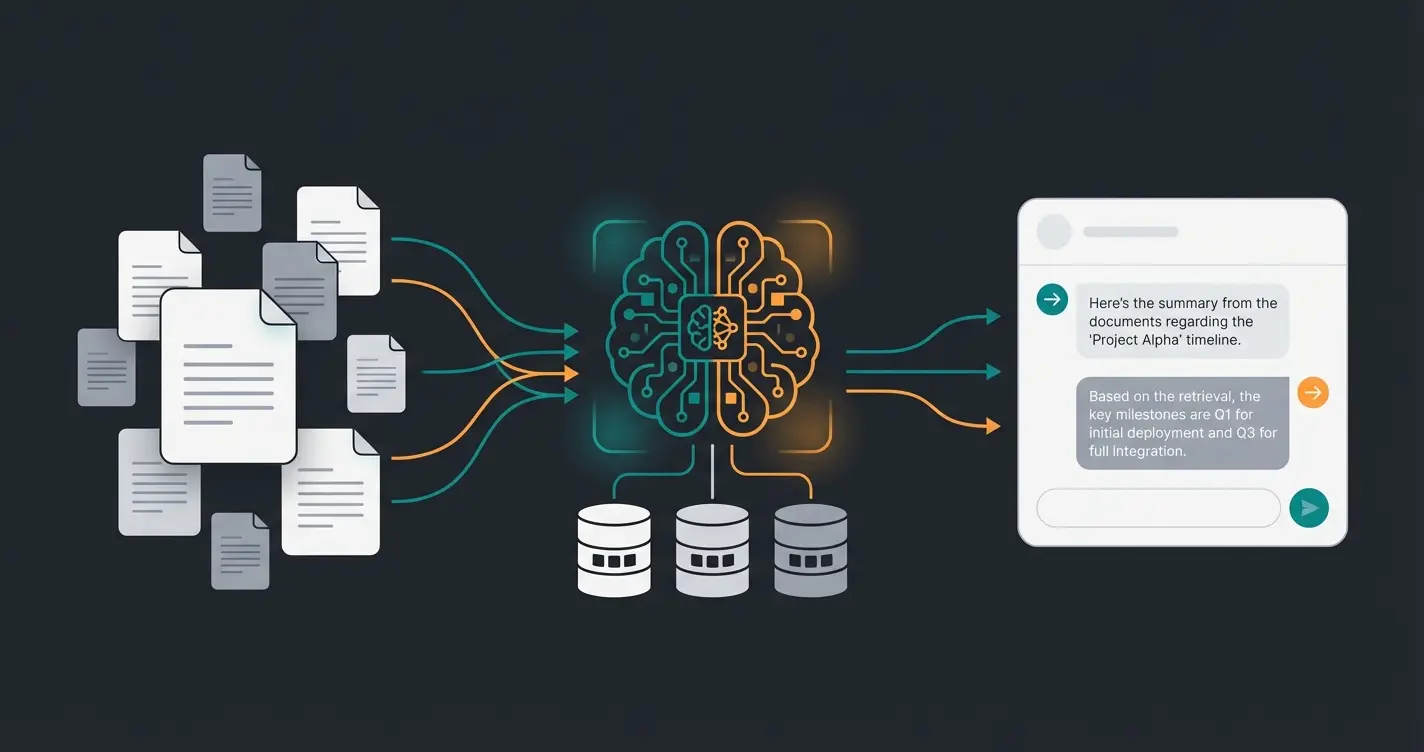
- The Solution: The transition from static chatbots to AI agents. Modern AI solutions (Agentic AI) no longer operate solely on rigid rules but use Retrieval Augmented Generation (RAG) to make complex expert knowledge scalable, as explained by moin.ai.
- The Added Value: AI-powered product consultation serves not only cost savings but revenue growth. Studies from HelloRep.ai show that AI chat solutions can increase conversion rates by up to four times.
Introduction: Why Efficiency Is No Longer Enough
The discussion around digitalization and SME automation over the past decade has revolved almost exclusively around one topic: efficiency. It was about digitally capturing invoices, automating payroll, or optimizing warehouse management systems. The goal was clear: reduce costs, save time, eliminate bureaucracy.
But in 2025, we stand at a turning point. The "low-hanging fruits" of administrative automation have been harvested in many businesses—or at least the tools for them (like DATEV interfaces or Zapier workflows) are known and available. The new, more pressing problem is no longer just managing what exists, but securing growth in a market running out of experts.
The New Reality: Skills Shortage as a Growth Brake
Current data paints a concerning picture: the skills shortage in sales is dramatically intensifying. Forecasts from the Institute of the German Economy (IW) suggest that by 2027, approximately 37,000 skilled workers will be missing in the sales sector alone. For SMEs, this means: even if the product is excellent, the personnel to explain and sell it to customers is often lacking.
First-generation hierarchical chatbots ("Press 1 for business hours") generated more frustration than relief among customers. They were incapable of replacing human advisors. But technology has made a quantum leap.
This article shows how you need to rethink automation in small businesses and mid-sized companies: away from pure cost savings, toward scalable expert knowledge. We'll examine how modern AI agents conduct complex consultation conversations that were previously reserved for your best engineers and sales professionals.
The 3 Levels of Automation: A Maturity Model for SMEs
To understand where your company stands and where the journey needs to go, it helps to categorize automation into three clear maturity levels. Many companies are currently stuck between Level 1 and Level 2.
Repetitive, rule-based back-office tasks. Standard tools like DATEV, Zapier, ERP systems.
Rule-based chatbots with decision trees. Limited context understanding, high frustration.
LLM + RAG technology. AI understands products, conducts needs analysis, drives revenue.
Level 1: Administrative Automation (The Standard)
This is the foundation. Here, repetitive, rule-based tasks in the back office are automated.
- Examples: Automatic invoicing, OCR text recognition for receipts, synchronization of customer data between CRM and email marketing.
- Technology: RPA (Robotic Process Automation), interface tools (Make, Zapier), ERP systems.
- Status in SMEs: Widespread in larger mid-sized companies, often still patchy in micro-businesses. According to a study by Hero Software, 30% of small craft businesses still use pen and paper for accounting.
Level 2: Simple Support & FAQ Bots (The Dead End)
Many companies have attempted to automate customer service by introducing simple chatbots.
- How it works: These bots are based on rigid decision trees (If customer says "price," show price list).
- The problem: They don't understand context. When a customer asks: "Which oil do I need for my 10-year-old milling machine at 40-degree ambient temperature?" the bot fails. It refers to a contact form.
- Result: The customer is frustrated, the ticket still ends up with a human employee. Automation has failed here because it possessed no intelligence, only scripts, as noted by Insale.ai and Salesforce.
Level 3: Expert Consultation & Agentic AI (The Opportunity)
Here lies the "blue ocean" for SMEs. It's about automating cognitive work.
- Concept: An AI agent that doesn't just retrieve text modules but understands your product portfolio. It acts like a digital sales engineer.
- Technology: Large Language Models (LLMs) combined with RAG (Retrieval Augmented Generation) and agent frameworks.
- Performance: The AI can conduct needs analyses, ask technical follow-up questions, and give specific product recommendations—24/7 and in any language.
Why Product Consultation Is the Next Big Step for SMEs
Why should you focus on automating consultation right now? The answer lies in the discrepancy between customer expectations and resource availability.
1. The End of "Dumb" Chatbots
Customers today expect immediate answers. Studies show that buyers with purchase intent ("high intent") are attracted by immediacy. Rule-based chatbots often have conversion rates of only 5-10% because they fail at complexity. AI sales assistants, however, achieve conversion rates of 15-25% and more because they can handle objections and guide customers through the funnel, according to research from GoVivace.
The difference lies in adaptivity: An AI agent (Sales Agent) learns from interactions, understands nuances and tonality, and doesn't force customers into a rigid corset of pre-made answer options.
2. Scaling Expert Knowledge (Bypassing the Skills Shortage)
Your best sales employee might be able to conduct 10 qualified consultation conversations per day. What happens when 50 inquiries come in? 40 potential customers wait or migrate to the competition.
An AI product consultant scales this knowledge infinitely. It conducts the first qualifying conversation. It clarifies technical parameters (dimensions, loads, environmental conditions) and then hands over a highly qualified lead to the human expert.
3. Revenue Instead of Just Savings
Most SME automation projects are sold under the aspect of cost reduction. That's too short-sighted. A digital product consultant is an investment in revenue.
- Conversion Uplift: Websites with AI chatbots see an average increase in conversion rate of 23% up to a quadrupling among buyers who interact with the AI, as documented by Amra and Elma.
- 24/7 Availability: B2B decision-makers often research outside business hours. If your AI can answer a technical question about component compatibility at 9:00 PM, you've often already won the order before the competition opens their office the next morning.
AI chat solutions vs. traditional contact forms
Projected shortage in Germany by 2027
Continuous customer consultation without staffing limits
Target accuracy rate before going live with AI consultant
Discover how AI-powered product consultation can transform your customer interactions and boost conversions—without adding headcount.
Start Your Free TrialTechnology Deep-Dive: How AI Understands Your Product
One of the biggest concerns of German SMEs regarding AI is "hallucination"—the fear that AI will talk nonsense or invent products that don't exist. This is where a technology comes into play that is crucial for business use: RAG (Retrieval Augmented Generation).
What Is RAG? (Simply Explained)
Imagine you're taking an exam.
- Without RAG: You must know everything by heart. If you've forgotten something, you guess (hallucination). This is what standard LLMs like ChatGPT do.
- With RAG: You're allowed to use the textbook (open book exam). Before answering, you look it up in the book and formulate the answer based on the text.
For your company, this means: The AI uses only your provided PDFs, technical data sheets, and product catalog as a knowledge source. It doesn't "guess" but quotes your own documents, as detailed by the Digital Center Chemnitz.
Why This Is Safe for SMEs
- Data Sovereignty: The AI's knowledge remains limited to your documents.
- Currency: When a price or specification changes, you simply swap out the PDF. The AI knows it immediately without needing retraining, as explained by Zweitag and Datasolut.
- Source Citation: Good RAG systems can even show customers which document (e.g., "Page 14 of the operating manual") the information comes from. This creates trust—a currency factor in German B2B business.
Practical Use Cases: The Difference in Daily Operations
To make the added value tangible, let's compare the classic process with the automated approach using a typical scenario in technical SMEs (e.g., mechanical engineering or building materials trade).
Scenario: Inquiry About a Spare Part
The Old Way (Status Quo)
- Customer: Searches the website, finds nothing specific. Writes an email: "I need a spare part for System X, it's rattling."
- Sales (Day 1): Reads the email. Must ask follow-up questions: "What year was it built? Do you have the serial number?"
- Customer (Day 2): Looks up the number, responds.
- Sales (Day 3): Researches in the catalog, creates a PDF quote, sends it by email.
- Result: 3 days throughput time. High manual effort. Risk of the customer buying elsewhere.
The New Way (Level 3 Automation)
- Customer: Goes to the website. The AI product consultant asks: "How can I help you?"
- Dialog: Customer describes the problem.
- AI Analysis: The AI recognizes the model, asks specifically about the year of manufacture (because it knows there was a change from 2018).
- Solution: The AI identifies the part, checks inventory, and sends the link to the shop or the pre-filled order form directly in the chat.
- Result: 5 minutes throughput time. Immediate closure. The human sales rep didn't need to intervene.
Additional Use Cases for SMEs
- Onboarding New Employees: An internal AI bot that knows all process instructions and explains to new colleagues how expense reporting works or how Machine Y is maintained.
- Complex Configurations: Support in assembling compatible components (e.g., IT hardware, solar system sets).
Comparison: FAQ Bot vs. AI Product Consultant
This table clarifies why you should say goodbye to simple bots if you sell complex products.
| Feature | Classic FAQ Chatbot (Level 2) | AI Product Consultant / Sales Agent (Level 3) |
|---|---|---|
| Technology | Rule-based (If-Then logic), Keywords | LLM (Language Model) + RAG (Vector Search) |
| Knowledge Base | Manually maintained question-answer pairs | Dynamic from your PDFs, websites, databases |
| Flexibility | Low: Fails with unknown phrasings | High: Understands context, synonyms, colloquial language |
| Objective | Avoid support tickets (Deflection) | Sales and consultation (Conversion) |
| Learning Ability | Must be manually expanded | Learns immediately through new documents |
| User Experience | "Robotic," often frustrating | Natural, dialogue-oriented, empathetic |
| Implementation | Labor-intensive script writing | Upload documents (Low-Code/No-Code) |
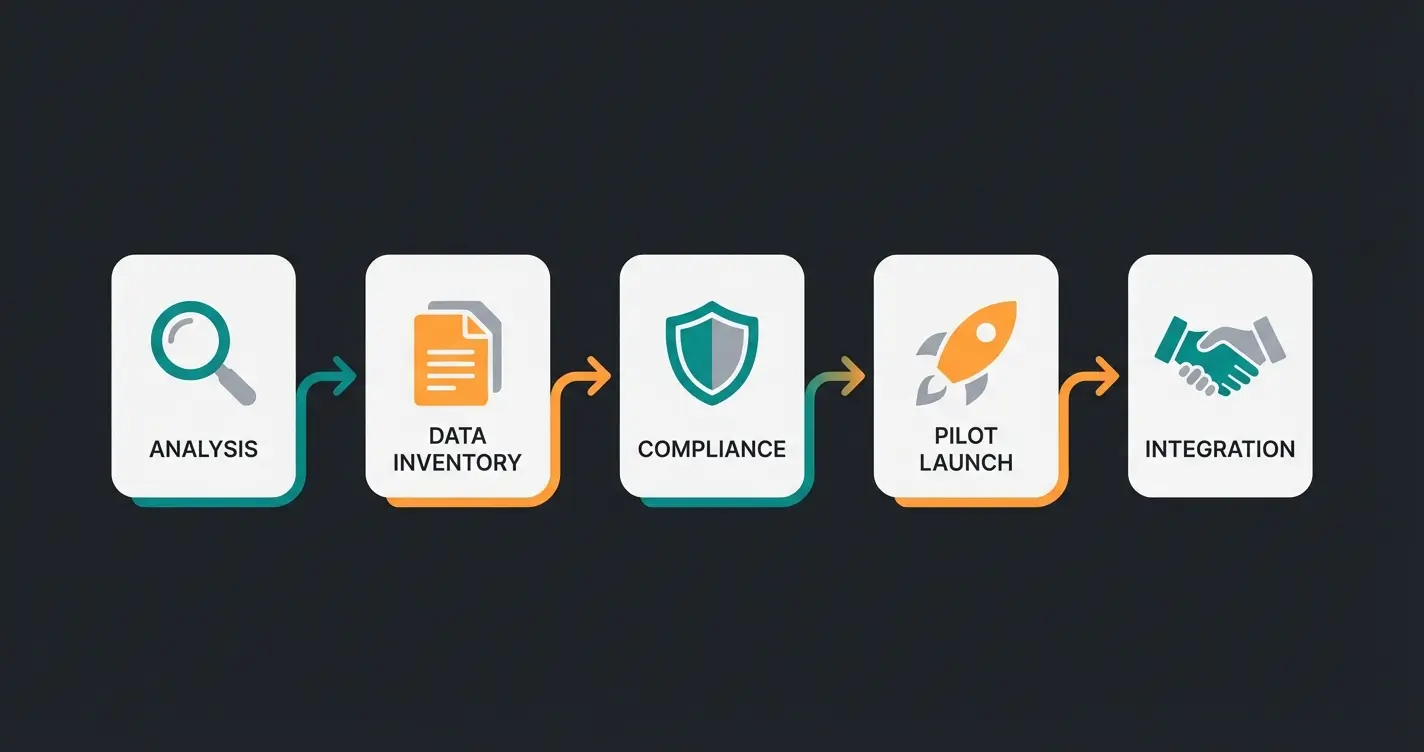
Step-by-Step Implementation: How to Get Started
The introduction of AI in SMEs often fails due to overly ambitious goals ("We have to do everything at once"). The better approach is iterative.
Step 1: The Pain-Point Analysis
Talk to your sales team.
- Which 5-10 questions do they have to answer every day?
- Which products require explanation but are standardizable?
- Where do you lose customers on the website?
Step 2: Data Inventory (No Fear of Big Data)
You don't need massive data lakes. For an AI product consultant, the following is often sufficient:
- Product catalogs (PDF)
- Technical data sheets
- Price lists
- Past email threads (anonymized) as examples of good answers.
- Tip: The quality of documents determines the quality of the AI. Structured, clean PDFs are worth their weight in gold.
Step 3: Technology Selection & Data Privacy (GDPR)
Data protection is non-negotiable for German SMEs. When selecting a provider, pay attention to:
- Server Location: Hosting in Germany or the EU, as recommended by Lime Technologies and Denkwerk.
- GDPR Compliance: Data processing agreements (DPA), deletion concepts.
- Model Selection: It doesn't always have to be OpenAI. There are powerful open-source models or European providers (e.g., Aleph Alpha, DeepL integrations) that are often less problematic from a data protection perspective.
Step 4: The Pilot (MVP)
Don't start with your entire product range. Choose one product category.
- Train the bot with data from this category.
- First let it compete internally against your sales reps ("Red Teaming"—try to make the bot make mistakes).
- Only go live when answer quality is >90%.
Step 5: Integration and Human-Machine Handover
The AI should not replace humans but support them. Set up a "Human Handover": When the AI doesn't know what to do or the customer explicitly wants a human, the chat must be seamlessly transferred to an employee—including a summary of the previous conversation, as detailed by Chatarmin.
Checklist: Is Your Company Ready for Level 3?
Use this checklist to determine if an AI product consultant is worthwhile for you:
- Complexity: Are your products explanation-intensive (not self-explanatory like a screw, but complex like an assembly)?
- Volume: Does your sales team receive daily recurring questions that consume time?
- Data Foundation: Do you have digital product information (PDFs, website texts) available?
- Mindset: Are you willing to see AI not just as a cost-saving measure but as a "digital employee"?
- Goal: Do you want to not only reduce support costs but increase the conversion rate on your website?
If you answered more than 3 questions with "Yes," your potential for automation is enormous.
Frequently Asked Questions About SME Automation
A traditional chatbot follows rigid rules and pre-written scripts—it can only answer questions it was explicitly programmed for. An AI product consultant uses Large Language Models (LLMs) combined with RAG technology to understand your entire product catalog and provide contextual, intelligent recommendations. It can handle complex technical questions, understand nuances in customer inquiries, and actively guide customers toward purchase decisions rather than just deflecting tickets.
Implementation costs vary significantly based on complexity and provider. Modern low-code/no-code solutions have made AI consultation accessible to SMEs with monthly costs ranging from hundreds to low thousands of euros. The key insight is that this should be viewed as a revenue investment, not just a cost. Companies typically see ROI within 3-6 months through increased conversion rates and reduced sales team workload on repetitive inquiries.
When choosing the right provider, absolutely. Look for solutions hosted in Germany or the EU, full GDPR compliance with proper data processing agreements (DPA), and the ability to use your own documents without them being used for model training. RAG-based systems keep your knowledge within your defined document boundaries, meaning the AI only accesses and references your approved materials.
No. Unlike traditional machine learning projects, modern AI product consultants don't require massive datasets or data science teams. Your existing product PDFs, technical data sheets, price lists, and website content are sufficient. The key is quality over quantity—well-structured, accurate documentation will produce better AI responses. Most implementations can be done with existing marketing and sales materials.
A pilot project for a single product category can typically be launched within 2-4 weeks. This includes document upload, initial testing, and internal "red teaming" to verify accuracy. Full deployment across your entire product range usually takes 2-3 months, depending on catalog complexity and the level of customization required.
Conclusion: The Future Belongs to the Augmented SME
SME automation is transforming. It's no longer enough to simply make processes faster. In an era where expert knowledge is becoming scarce, the company that can best digitize and scale this knowledge wins.
The leap from a simple FAQ bot to an intelligent product consultant is technologically easier today than ever before. Tools are available, affordable, and securely integrable. The hurdle is no longer technology but the courage to rethink the sales process.
Companies that take this step now secure a decisive competitive advantage: They're there for their customers when those customers have questions—immediately, competently, and around the clock. That's the service standard of 2025.
The shift from "efficiency automation" to "expert automation" represents the biggest untapped opportunity for SMEs today. By positioning AI not as a cost-cutting tool but as scalable expert knowledge, you transform your digital presence from a passive brochure into an active sales engine.
Join forward-thinking SMEs already using AI-powered product consultation to scale their expert knowledge and boost conversions 24/7.
Get Started Free