
Why the Crisp vs Intercom Debate Needs a New Perspective
Choosing the right customer messaging platform often feels like deciding between a Swiss Army knife and a fully automated industrial machine. On one side stands Crisp, the agile challenger that advertises flat-rate pricing and simplicity. On the other side stands Intercom, the market leader that shines with enterprise features and powerful (but expensive) AI capabilities.
However, for businesses in 2025, the simple comparison of 'cheap vs. expensive' is no longer sufficient. There are critical factors missing from most English-language comparisons: GDPR compliance (server locations), the quality of language processing in AI bots, and the fundamental difference between mere 'support' and genuine 'sales consultation.' As AI Customer Service continues to evolve, understanding these nuances becomes essential for making the right choice.
In this comprehensive guide, we analyze Crisp vs Intercom down to the smallest detail—from the hidden costs of AI models to the question of where your data actually resides. Additionally, we'll show you a third path: how to use AI not just to deflect tickets, but to actively generate revenue through intelligent product consultation.
Quick Comparison: Crisp vs Intercom at a Glance
Short on time? Here's a direct comparison of the most important factors for businesses seeking a customer messaging solution in 2025.
| Feature | Crisp | Intercom | AI Consultation Alternative |
|---|---|---|---|
| Pricing Model | Flat Rate (per workspace) | Per Seat + Usage (complex & expensive) | Value-Based (ROI focused) |
| Entry Price | Free (Basic) / €95 (Essentials) | ~$29/Seat (Essential) + add-ons | Varies by solution |
| AI Costs | Included (limited in Essentials, unlimited in Plus) | $0.99 per Resolution (min $50/month) | Typically included |
| GDPR / Servers | ✅ Excellent (EU servers, French company) | ⚠️ Complex (EU hosting only for new customers, US HQ) | ✅ Privacy-focused |
| Primary Purpose | Reactive support & simplicity | Enterprise support & marketing automation | Proactive product consultation & sales |
| Ideal For... | Startups, SMEs, bootstrappers | Corporations, VC-funded scale-ups | E-commerce & sales-focused teams |
Round 1: Pricing Models – Transparency vs Unpredictability
The pricing model is the biggest differentiating factor in the Crisp vs Intercom duel. While Crisp tries to keep costs predictable, Intercom uses a model that scales with your success (and your ticket volume)—which can quickly become expensive.
Crisp: The Flat-Rate Strategy
Crisp advertises having no 'pay-per-seat' costs (up to certain limits). The model is based on workspaces. According to crisp.chat, their pricing structure offers several tiers designed for different business sizes.
- Free Plan: Permanently free with 2 seats. Good for hobby projects but lacks automation capabilities as noted by checkthat.ai.
- Mini (~€45/month): 4 seats. Adds email integration and simple triggers.
- Essentials (~€95/month): The actual standard for businesses. 10 seats, omnichannel support (WhatsApp, Instagram), Knowledge Base. Caution: Only 50 AI responses per month are included—too few for real automation according to featurebase.app.
- Plus (~€295/month): The 'all-inclusive' package. 20+ seats and unlimited AI responses.
The advantage: You know exactly what will be charged at the end of the month. The disadvantage: If you want real AI power, you must almost inevitably switch to the expensive Plus plan (€295), even if you have a small team, since 50 AI credits in the Essentials plan are quickly exhausted as reported by eesel.ai.
Intercom: The Pay-for-Everything Model
Intercom's pricing is notorious for its complexity. It consists of three layers that businesses need to understand before committing.
- Seat Costs: Starts at approximately $29 (Essential) to $132 (Expert) per agent/month according to sparrowdesk.com and cloudstride.io.
- Fin AI Agent: This is where it gets critical. Intercom charges $0.99 per successful AI resolution. Additionally, there's often a minimum commitment of 50 resolutions ($50/month), even if you don't use them as documented by intercom.com and eesel.ai.
- Add-ons: Features like WhatsApp, SMS, or advanced 'Proactive Support' tools cost extra or are usage-based according to saasgenie.ai and customerly.io.
Fixed cost regardless of team growth
Escalates with each new seat and AI usage
Potential savings with flat-rate pricing
If you're a budget-conscious SME that needs cost certainty, Crisp wins this round decisively. Intercom only pays off when the ROI per resolved ticket is extremely high. This is why many businesses exploring Intercom alternatives for 2026 are seriously considering more predictable pricing models.
Round 2: Interface and Usability – Apple vs Microsoft
The user experience (UX) is decisive for team adoption. Nobody wants to use software that requires two weeks of training to understand.
Crisp: Radical Simplicity
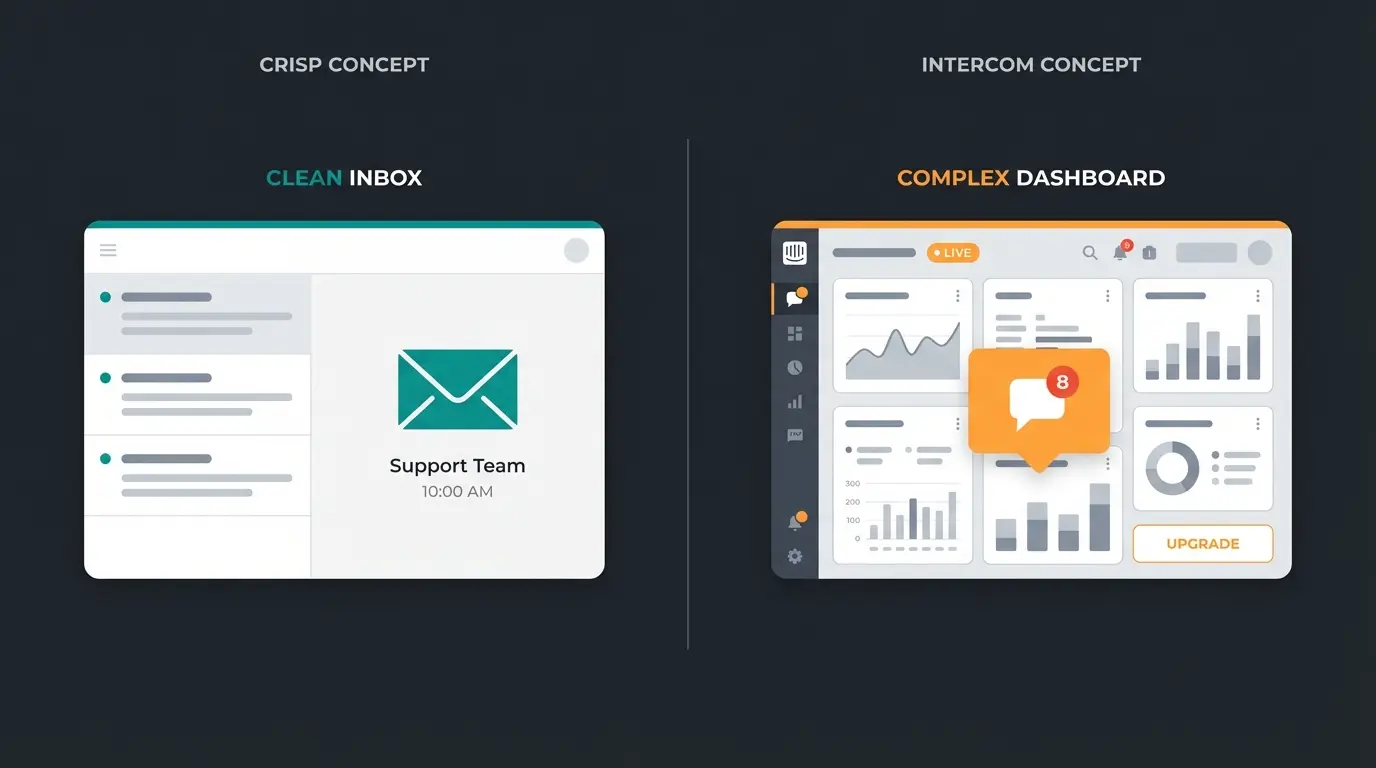
Crisp is often called the 'Apple of support tools.' The interface is minimalist, fast, and clean.
- Unified Inbox: All channels (email, chat, WhatsApp) flow into a central stream, creating a seamless experience for support agents.
- MagicBrowse: A killer feature from Crisp. You can (with permission) see the user's screen and even click for them ('co-browsing'). This often solves problems faster than 10 chat messages as highlighted by salesgroup.ai.
- Performance: The app feels lightweight and loads instantly, reducing friction for both agents and customers.
Intercom: Powerful but Overloaded
Intercom is a powerhouse. It's not just a support tool but a complete customer engagement platform with extensive capabilities.
- The 'Inbox' Workflow: Intercom is optimized for large teams with complex routing rules, SLAs, and ticket assignments.
- Learning Curve: The backend is packed with features (Outbound, Product Tours, Reporting). New employees often need time to find their way around.
- Customizability: Intercom offers deeper customization options for the messenger but often feels 'heavier' on the website as a result.
Conclusion: Crisp wins for teams that want to 'just get started.' Intercom wins for teams that need granular control over every pixel and every workflow. Understanding the history of chatbots helps explain why these platforms evolved with such different philosophies.
Round 3: AI and Automation – The Quality Gap
This is where the future of your customer service is decided. Both providers have invested heavily in AI during 2024/2025, but their approaches differ significantly. As AI Chatbots transform customer interactions across industries, understanding these differences becomes critical.
Intercom Fin: The Expensive Professional
Intercom's AI bot is called Fin. It's based on GPT-4 technology and uses your knowledge base to generate answers.
- Strength: Fin is extremely good at citing support articles and providing precise answers. The integration into the Intercom ecosystem is seamless according to intercom.com.
- Weakness: Fin is primarily a deflection tool. Its goal is to close the ticket so no human needs to intervene. It's less trained to guide a sales process. Additionally, the pricing model ($0.99 per resolution) puts a brake on experimentation as noted by ibbaka.com.
Crisp MagicReply: The Integrated Helper
Crisp calls its AI suite MagicReply (with plans for additional agents in the future).
- Strength: In the 'Plus' plan, you get unlimited AI responses. This encourages using AI everywhere without fear of the next bill. It also offers conversation summaries and live translations according to monkeyaitools.com and crisp.chat.
- Weakness: In the middle 'Essentials' plan, AI is practically useless (limited to 50 actions/month). You're essentially forced to upgrade. Users also report that AI setup with Crisp is more manual and less 'out-of-the-box' than with Fin according to eesel.ai.
The Gap: Consultation vs Support
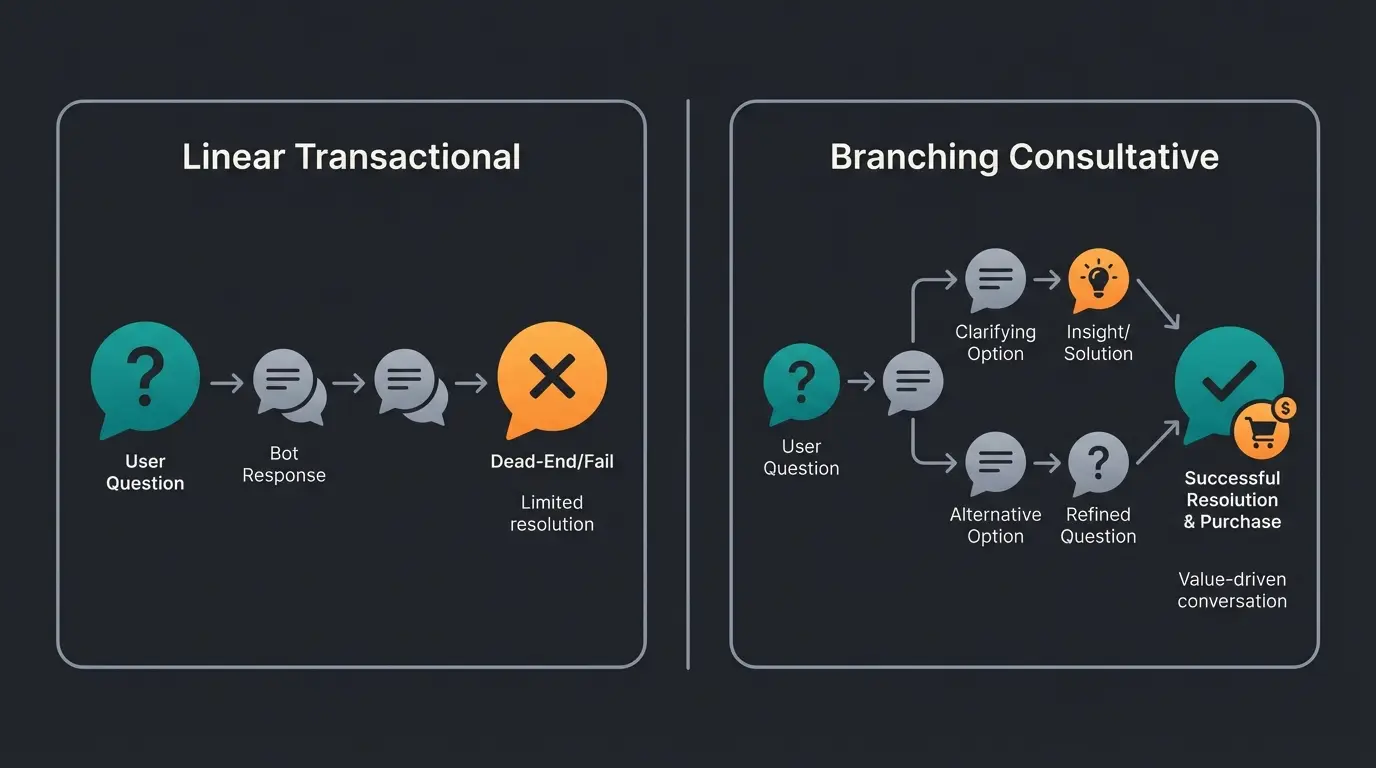
Both Crisp and Intercom primarily use AI reactively: 'Customer has problem → AI searches for solution.' What's missing is the consultative approach. When a customer asks: 'Which package is right for me?', both bots often just send a link to the pricing page.
A true AI Product Consultant would ask: 'How large is your team? What are your goals?' and then make a recommendation. Here, both tools leave revenue potential on the table. This is precisely where AI Product Consultation creates a competitive advantage that traditional support tools simply cannot match.
Customer asks about product fit → Bot sends generic help article link → Ticket closed, opportunity lost
Customer asks about product fit → AI searches knowledge base → Provides general information → Customer still confused
Customer asks about product fit → AI asks clarifying questions → Understands specific needs → Recommends exact solution → Guides to purchase
Round 4: GDPR and Data Privacy – The European Factor
For European businesses, this is often the knockout criterion. How do Crisp vs Intercom perform when it comes to data privacy and regulatory compliance?
Crisp: The European Model Student 🇪🇺
Crisp is a French company, which provides significant advantages for European businesses concerned about data sovereignty.
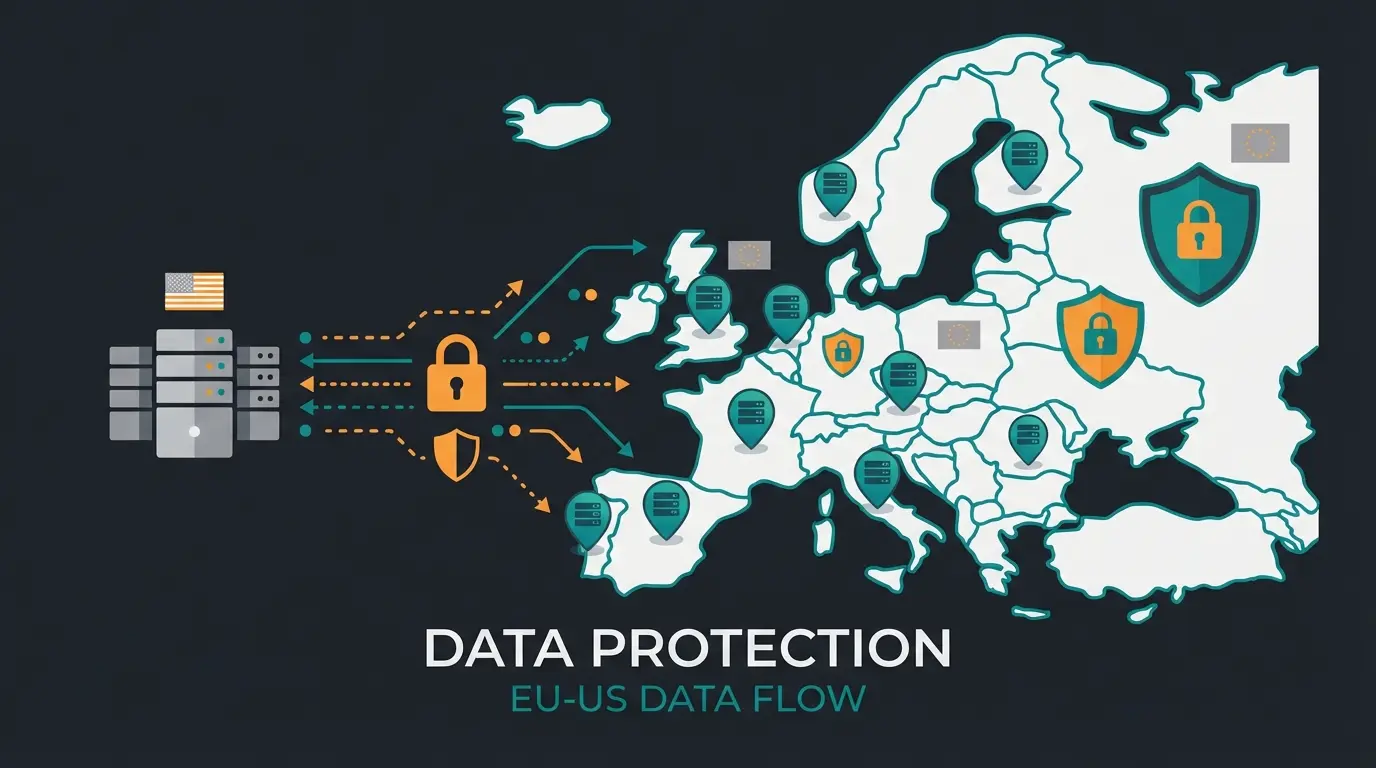
- Server Location: The core infrastructure is located in the Netherlands (Amsterdam), plugin data in Germany (Frankfurt) according to crisp.chat.
- Legal Status: As an EU company, Crisp is natively subject to GDPR. There are no discussions about 'Data Privacy Frameworks' or US access concerns.
- Transparency: Crisp communicates very openly about which sub-processors are used and offers standardized Data Processing Agreements (DPAs).
Intercom: The US Giant with Hurdles 🇺🇸
Intercom is a US company. While there are efforts toward EU hosting, the devil is in the details.
- EU Hosting: Yes, there are servers in Dublin (AWS). BUT: This 'Regional Data Hosting' is often only available for new customers in the 'Advanced' or 'Expert' plan.
- No Migration: Existing customers often cannot simply move their workspace to Europe. They would have to create a new workspace and lose all data or migrate manually—a nightmare for established teams according to eesel.ai.
- Data Flow: Even with EU hosting, certain data (billing data, admin data) continues to be processed in the USA according to intercom.com.
The Missing Puzzle Piece: Support vs Consultation
Most comparisons end here. But we need to talk about the actual goal of your chat solution and why the current paradigm falls short for revenue-focused businesses.
The Problem with Crisp and Intercom
Both tools are fundamentally helpdesk systems. They were built to manage tickets. Their AI bots are trained to reduce support costs ('deflection'). Consider this scenario:
A customer asks: 'Is this software compatible with SAP?' The Intercom/Crisp Bot responds: 'Here's an article about our integrations.' (Ticket closed).
This saves money, but it generates no revenue. The customer is left to figure things out themselves, often abandoning the purchase entirely. This is where AI Selling is revolutionizing the traditional approach to customer interactions.
The Solution: AI Product Consultation (The Third Way)
Modern businesses don't need 'bouncer AI' that turns customers away—they need 'salesperson AI' that actively helps customers make purchasing decisions.
Imagine if the bot responded like this: Customer asks: 'Is this software compatible with SAP?' Consultative AI responds: 'Yes, we offer a certified SAP interface. Are you planning to synchronize master data or transaction data? I can show you how this works for your specific use case.'
Why You Need a Consultation Layer
- Revenue Instead of Savings: Transform visitors into buyers, not just into 'resolved tickets.'
- Proactivity: Approach the customer before they have a problem or leave your site.
- Context: Use AI to understand the need, not just the question.
This shift from reactive support to proactive consultation represents the future of customer engagement. Conversational commerce and AI are fundamentally changing how businesses interact with potential customers, moving beyond simple FAQ responses to intelligent sales conversations.
Discover how AI-powered product consultation can turn your customer interactions into revenue-generating conversations. Stop deflecting customers—start converting them.
Start Your Free TrialReal-World Cost Analysis: Growing Team Scenario
To truly understand the financial implications of choosing between Crisp and Intercom, let's examine a realistic scenario for a growing business over 12 months.
| Month | Team Size | Crisp Plus Cost | Intercom Advanced Cost | Monthly Difference |
|---|---|---|---|---|
| 1-3 | 2 agents | €295/month | ~$420/month | $125 savings |
| 4-6 | 5 agents | €295/month | ~$675/month | $380 savings |
| 7-9 | 7 agents | €295/month | ~$875/month | $580 savings |
| 10-12 | 10 agents | €295/month | ~$1,200/month | $905 savings |
This analysis doesn't even account for Intercom's AI resolution costs. Adding 500 monthly AI resolutions ($495) to the Intercom total creates an even more dramatic cost difference. For businesses where AI employees are evolving to handle more complex tasks, these costs can escalate significantly.
The Bot Test: Support vs Consultation in Action
To illustrate the fundamental difference between traditional support bots and consultative AI, consider these two interaction scenarios with the same customer question.
Scenario: Customer Asks About Product Selection
Traditional Support Bot (Crisp/Intercom approach):
- Customer: 'Which subscription plan is best for my business?'
- Bot: 'Here's a link to our pricing page with all plan details.'
- Customer: Clicks link, sees complex comparison table, feels overwhelmed
- Result: Customer leaves without purchasing, ticket marked as 'resolved'
Consultative AI Approach:
- Customer: 'Which subscription plan is best for my business?'
- AI: 'Great question! To recommend the perfect plan, could you tell me: How many team members will need access?'
- Customer: 'About 5 people.'
- AI: 'And what's your primary goal—customer support, sales conversations, or both?'
- Customer: 'Mainly sales, but some support too.'
- AI: 'Based on your needs, I'd recommend our Business plan. It includes unlimited sales conversations and basic support features for €X/month. Would you like me to walk you through the key features?'
- Result: Customer makes informed decision, higher conversion rate
This consultative approach is exactly what KI-Produktberatung outperforms standard support tools achieve—transforming support interactions into sales opportunities.
Feature Matrix: Purpose-Driven Comparison
Beyond standard feature comparisons, understanding the primary purpose of each platform reveals their true strategic fit for different business models.
| Category | Crisp | Intercom | AI Consultation Solution |
|---|---|---|---|
| Primary Goal | Simple reactive support | Marketing automation & support | Revenue generation through consultation |
| AI Philosophy | Cost reduction via deflection | Ticket resolution efficiency | Sales conversion through guidance |
| Best For | Budget-conscious startups | Enterprise with complex needs | E-commerce & sales-focused teams |
| Hidden Strength | Co-browsing (MagicBrowse) | Deep integrations ecosystem | Product recommendation engine |
| Key Limitation | AI locked behind expensive tier | Unpredictable scaling costs | Requires product catalog setup |
| GDPR Readiness | Excellent (native EU) | Complicated (US-based) | Varies by provider |
| German Language AI | Good basic support | Advanced but expensive | Purpose-built for consultation |
This purpose-driven comparison highlights why choosing the right tool depends entirely on your business goals. If you're simply looking to reduce support ticket volume, Crisp or Intercom will serve you well. But if you want to turn customer interactions into revenue opportunities, you need a fundamentally different approach.
Implementation Considerations for Your Business
When to Choose Crisp
Crisp makes sense for your business if you meet several of these criteria:
- You're a startup or SME that values simplicity over feature abundance
- Data privacy (GDPR) is your top priority and you need guaranteed EU servers
- You need cost certainty: one price, everything included
- You want a fast, simple tool that 'just works' without extensive configuration
- Your team is small (under 20 people) and doesn't need complex workflows
- Warning: Be prepared to pay for the 'Plus' plan (€295) for usable AI capabilities
When to Choose Intercom
Intercom makes sense for your business if you meet several of these criteria:
- You're an enterprise company or rapidly growing scale-up with VC funding
- Budget plays a secondary role and you're willing to pay for power features
- You need deep marketing automation and complex workflows
- You're already deeply embedded in the US software ecosystem (Salesforce, HubSpot, etc.)
- You have a dedicated team to manage and optimize the platform
- Your support volume justifies the per-resolution AI pricing model
When to Choose AI Product Consultation
A dedicated AI consultation solution makes sense if you meet several of these criteria:
- Your goal isn't just 'support' but growth and sales acceleration
- You need AI that acts like an experienced sales consultant, not a librarian
- You want to close the gap between 'website visitor' and 'customer with items in cart'
- You're in e-commerce or any business where product selection guidance drives revenue
- You want to leverage the AI Chatbot for E-Commerce revolution for competitive advantage
Summary and Decision Guide
The customer messaging tool market has fragmented in 2025. The right choice depends entirely on your specific business profile, priorities, and growth trajectory. Here's our recommendation based on different scenarios.
Predictable flat-rate with unlimited AI
For small team with moderate AI usage
Only Crisp guarantees this natively
Intercom's unpredictable cost factor
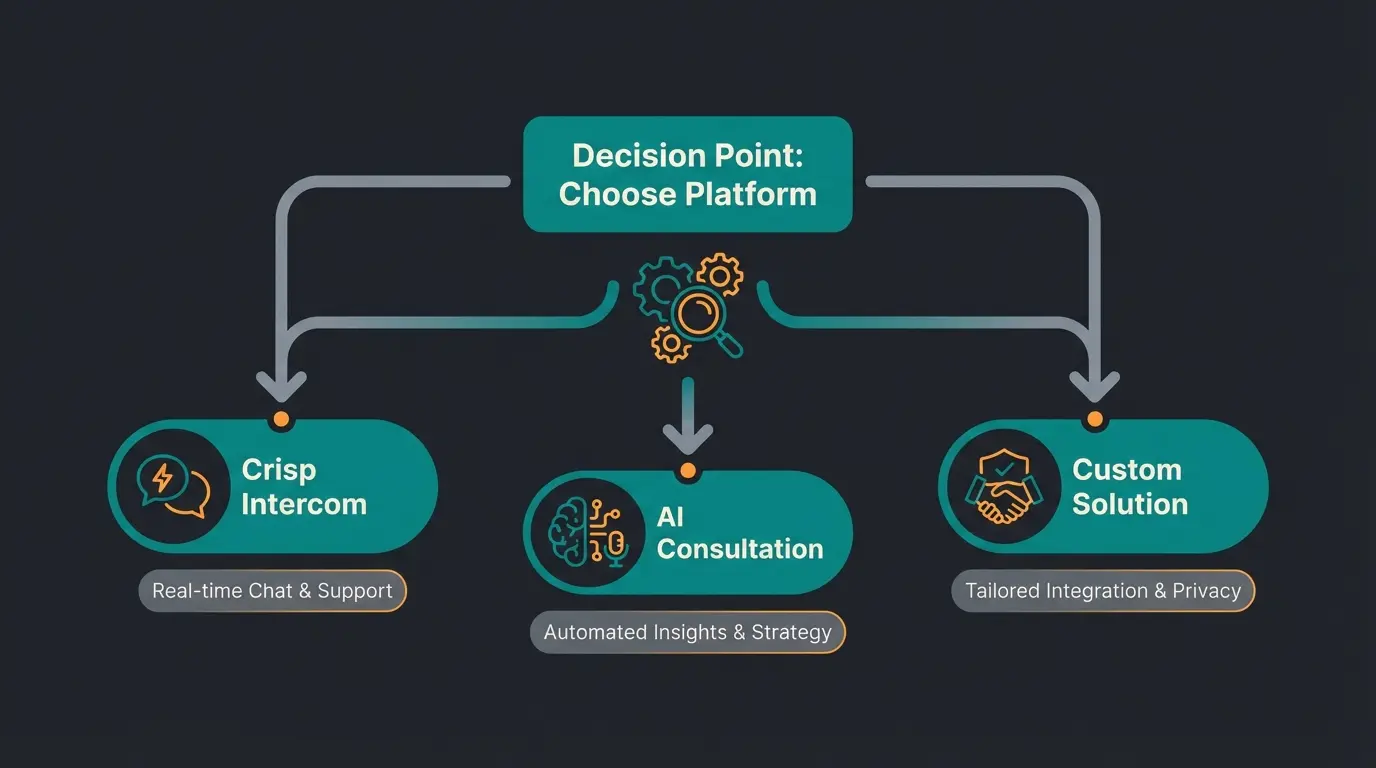
Choose Crisp if you're a startup or SME that prioritizes GDPR compliance, cost predictability, and simplicity. It's the clear winner for European businesses that want peace of mind about data privacy without complex legal reviews.
Choose Intercom if you're an enterprise with budget flexibility, need sophisticated marketing automation, and can justify the per-resolution AI costs with high-value ticket outcomes. It's powerful but demands ongoing cost management.
Choose an AI Consultation solution if your primary goal is revenue generation, not just cost reduction. When you want AI that actively helps customers make purchasing decisions rather than simply deflecting them to help articles, traditional support tools fall short.
Frequently Asked Questions
Yes, as a French company with servers in the EU (Netherlands/Germany), Crisp meets high data protection requirements by default. There's no need for complex legal frameworks or Data Privacy Framework discussions that come with US-based providers. You can implement Crisp with confidence that your customer data stays within EU jurisdiction.
Currently, direct migration of existing workspaces is often not possible. You would need to open a new account and transfer data manually, which involves significant effort and potential data loss. This is a major consideration for established teams who realize too late that their data is stored in US data centers.
Intercom charges per agent ('seat') plus additional fees for AI usage ('resolutions'). Crisp charges per workspace (company) and includes unlimited usage in higher plans. With growing teams, the price gap opens dramatically. A 10-person team can easily pay 4-5x more with Intercom than with Crisp.
Only if your support volume is high enough that the time savings exceed the costs of $0.99 per ticket. For many SMEs, the calculation is hard to justify. Consider that 1,000 AI-resolved tickets cost $990/month before any seat licenses. The math only works for high-volume enterprise support operations.
AI deflection aims to close tickets without human intervention—typically by sending links to help articles. AI consultation actively engages customers in dialogue, asks clarifying questions, understands their specific needs, and guides them toward purchasing decisions. Deflection saves costs; consultation generates revenue.
Traditional support tools treat AI as a cost-saving measure. Modern AI consultation treats every customer interaction as a revenue opportunity. See the difference for yourself.
Get Started Free