Introduction: Support Is No Longer Just About Tickets
There was a time when customer support was viewed purely as a cost center. The goal was simple: close tickets as fast as possible. This era gave birth to the giants we compare today: Help Scout and Intercom.
But we're writing 2025. The landscape has changed dramatically. Customers no longer expect mere ticket processing. They expect advice, empathy, and – especially in e-commerce and high-value B2B SaaS – active purchase guidance. AI Chatbots are transforming how businesses interact with customers, moving beyond simple FAQ responses to meaningful conversations.
If you're searching for helpscout vs intercom today, you're likely standing at a crossroads: Do you want a tool that feels invisible and human (Help Scout)? Or are you looking for a platform that proactively bombards users with pop-ups and bots to generate leads (Intercom)?
In this comprehensive guide, we'll analyze not just features and pricing. We'll look deep under the hood and illuminate aspects often missing from US-centric comparisons: GDPR compliance, server locations, the role of the German Works Council, and the question of whether AI actually advises your customers or just deflects them.
The Quick Verdict (TL;DR)
- Choose Help Scout if: You're a small to medium-sized team that loves email, needs budget predictability, and values simple, human communication. According to Tidio, Help Scout excels at creating personal customer relationships.
- Choose Intercom if: You're a VC-funded startup or enterprise company that needs aggressive marketing automation, budget is secondary, and you're willing to pay for complex workflows. As noted by eesel.ai, Intercom positions itself as an "Engagement OS" platform.
- Be cautious with both if: Your goal is genuine product consultation. Both tools are primarily designed to manage or prevent support requests (deflection), not to psychologically guide an undecided customer through to purchase.
The Philosophy: Mailbox vs Megaphone
To understand whether intercom vs helpscout is right for you, we need to examine the DNA of both tools.
Help Scout: The Invisible Helper
Help Scout was built with a clear mission: customer support shouldn't feel like a transaction. For end customers, a response from Help Scout looks like a perfectly normal email. There are no "Ticket #12345" subject lines (unless you enable them) and no clunky portals to log into. This philosophy aligns well with AI Customer Service best practices that emphasize seamless experiences.
- The approach: "Customer Centric". The tool fades into the background.
- The target audience: Teams that understand support as relationship building.
- The feeling: Calm, organized, focused.
Intercom: The Aggressive Growth Tool
Intercom invented the "Business Messenger". The philosophy here is: every second a visitor spends on your website is an opportunity for conversion. Intercom is loud. It uses chat bubbles, pop-ups, product tours, and banners to grab user attention.
- The approach: "Engagement First". The tool pushes itself to the forefront.
- The target audience: Growth hackers, sales teams, and product managers.
- The feeling: Dynamic, sometimes intrusive, data-driven.
The Cultural Factor: German Market Considerations
Here we need to put on a specifically German lens. While US customers often perceive proactive chat pop-ups ("Hey! Can I help you buy something?") as helpful, the German market often reacts more reservedly.
- Help Scout often fits better with conservative German expectations ("I'll reach out when I need something").
- Intercom can quickly be perceived as "annoying" in Germany if automation is set too aggressively. A chat window that pops up with every page change tends to lead to higher bounce rates rather than more leads.
Understanding these cultural nuances is essential when implementing AI Product Consultation solutions in the German market. The approach must respect local expectations while still driving engagement.
Feature Deep Dive: Where the Real Differences Lie
Let's compare the core functions. On paper, both offer "Shared Inbox", "Knowledge Base", and "Chat". In practice, they differ massively.
The Inbox (Your Agents' Workspace)
Help Scout offers an inbox that looks very similar to Gmail or Outlook. Onboarding often takes only minutes. Features like "Saved Replies", "Tagging", and "Collision Detection" (seeing who's currently responding) are intuitive.
- Advantage: Almost no training needed. Everyone understands it immediately.
- Disadvantage: Fewer options for complex routing rules in cheaper plans.
Intercom often calls its inbox the "Command Center". It's packed with information. On the right, you see which page the customer is currently visiting, their location, their last actions in your app, and their "Lead Score". According to Help Desk Migration, this provides enormous context for sales teams.
- Advantage: Enormous context for sales teams. You know exactly if the customer is "hot".
- Disadvantage: The interface is cluttered ("Feature Bloat"). New employees often need days to find their way around, as noted by Hiver.
Knowledge Base (Self-Service Help)
- Help Scout Docs: Simple, fast, SEO-friendly. You can host multiple knowledge bases (e.g., for different brands) even in cheaper plans.
- Intercom Articles: Visually more appealing and deeper integrated into the messenger. But: if you need multiple help centers (multibrand), Intercom forces you into the expensive "Expert" plan ($139/seat). For many SMBs, this is a dealbreaker.
AI & Automation: The Elephant in the Room
This is where the biggest battle of 2025 takes place: Help Scout AI vs Intercom Fin. Understanding how AI Agents function differently is crucial for making the right choice.
Intercom "Fin"
Intercom goes all-in on AI as a human replacement. The "Fin AI Agent" is powerful. According to fin.ai, it uses GPT-4 technology to generate answers from your knowledge base.
- Strength: Can often autonomously solve complex support questions ("How do I change my billing address?").
- Weakness: It's a "deflector". Its goal is to close the ticket. It's not a salesperson. When a customer asks: "Which bike suits me?", Fin will probably give them a link to the "Bikes" category instead of conducting a needs analysis.
Help Scout "AI Answers"
Help Scout is catching up but positions AI more as an "assistant". There are features for summarizing long threads ("AI Summarize") and improving drafts ("AI Assist"). There's also a chatbot that suggests articles.
- Strength: Cheaper (more on that shortly) and less "robotic".
- Weakness: Fewer granular control options than Intercom.
The Pricing Reality Check: Why You Need Your Calculator
When it comes to pricing, the comparison between help scout vs intercom becomes clearest. Intercom is notorious for complex pricing models that can explode when scaling.
Base Prices (As of 2025)
| Feature | Help Scout (Standard) | Intercom (Essential) | Intercom (Advanced) |
|---|---|---|---|
| Price per User/Month | $25 | $39 | $99 |
| Included Seats | None (Pay per Seat) | None (Pay per Seat) | None (Pay per Seat) |
| Minimum Revenue | No | Often hidden | Often hidden |
| Workflows/Automation | Basic included | Very limited | Complete |
| Multiple Help Centers | Included (2 Sites) | No (only 1) | No (only 1) |
Hidden Costs: AI Resolutions & Add-ons
This is where many CFOs get nervous. Both providers have moved to charging for AI responses per resolution. According to Help Scout's own comparison, their AI costs are significantly lower than Intercom's.
Intercom Fin: Costs $0.99 per resolution. Example: You have 5,000 chats per month. Fin resolves 30% of them (1,500). Additional costs: 1,500 × $0.99 = $1,485 per month – just for AI! On top of that come costs for WhatsApp ($0.07-$0.10 per conversation) and SMS, as detailed by Featurebase.
Help Scout AI: Costs $0.75 per resolution. Same scenario (1,500 resolutions). Additional costs: 1,500 × $0.75 = $1,125 per month. Advantage: Help Scout allows "Spending Caps" (cost limits) so you don't get an unpleasant surprise at month's end, as eesel.ai confirms.
At $0.99 per resolution (30% automation rate)
At $0.75 per resolution (30% automation rate)
Choosing Help Scout over Intercom for AI alone
Cumulative yearly difference in AI costs
Pricing conclusion: Intercom is not only more expensive in base price (often the "Advanced" plan for $99 is necessary for useful features like workflows), but also in variable costs. Help Scout is more predictable, but you still need to factor in AI costs.
Discover how consultative AI can transform your customer conversations into revenue-generating opportunities while providing genuine product expertise.
Try Consultative AI FreeData Privacy & Works Council: German Compliance Concerns
In most US comparisons, this point is ignored. For German companies, however, it's often decisive. When implementing any AI consulting in e-commerce solution, these factors cannot be overlooked.
GDPR and Server Locations (EU Hosting)
Intercom
Intercom offers "Regional Data Hosting" in the EU. BUT: This is exclusively available for new customers on expensive plans ("Advanced" or "Expert"), as Intercom's documentation confirms.
- If you're already an Intercom customer on a US server, you can't simply "move". You must delete your workspace, lose all data, and start manually from scratch, according to eesel.ai's research.
- For small businesses on the "Essential" plan ($39), there is no guaranteed EU hosting. Data often resides in the USA.
Help Scout
Help Scout primarily hosts on AWS in the USA, as stated in their security documentation. They are certified under the "EU-U.S. Data Privacy Framework" (DPF), which legalizes data transfer. However, there's no option to store data exclusively physically in Europe, as some strict compliance guidelines require. HelpSpot (another provider) offers this in Frankfurt, but Help Scout doesn't directly.
Works Council and Employee Monitoring
Here lies a massive trap for Intercom users in Germany. Intercom offers extremely detailed reports on individual employee performance: Who closed how many tickets? How long does Employee X take to respond? When was Employee Y online?
According to § 87 Abs. 1 Nr. 6 BetrVG, the Works Council has a mandatory co-determination right when introducing technical facilities that are intended or suitable for monitoring employee behavior or performance. As Kluge Seminare explains, this is a fundamental right in German labor law.
Since Intercom evaluates this data very granularly and personally, introducing Intercom in German corporations is often a months-long battle with the Works Council. Fokus Datenschutz confirms that such monitoring tools frequently conflict with German labor regulations.
Help Scout also offers reporting but traditionally focuses more strongly on team metrics and less on "monitoring" individuals, which often makes approval easier. Nevertheless: every ticket system is subject to co-determination, as Winheller notes. However, the "aggressiveness" of data processing at Intercom is a red flag for many employee representatives.
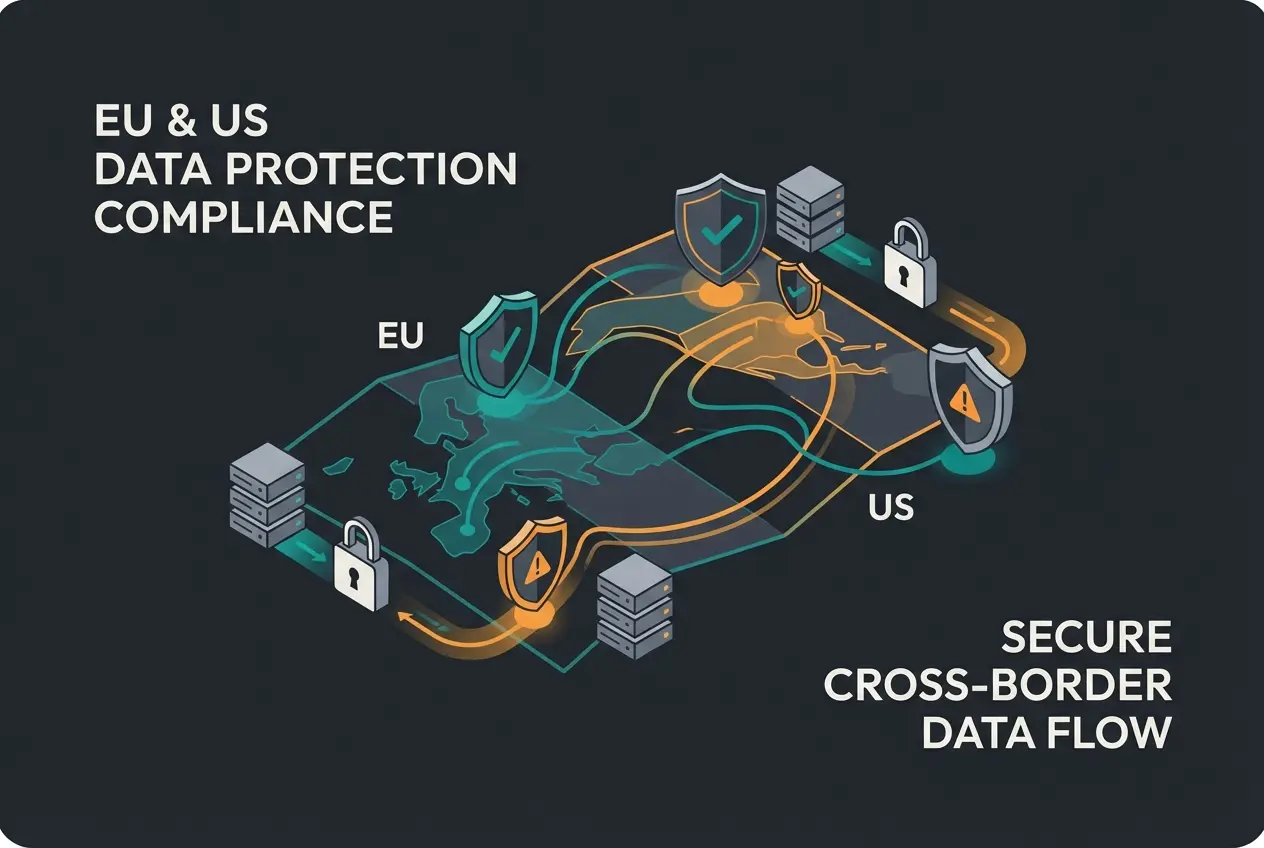
When Should You Choose Which Tool?
Let's walk through two typical scenarios to help you decide between these platforms.
Scenario A: The B2B SaaS Startup (Tech Focus)
You sell software to other businesses. Your customers need technical help.
- Recommendation: Intercom.
- Reason: You need integration into your product. When a user clicks "Error" in your app, Intercom should automatically pull technical metadata (browser, OS, logs). Intercom's "Product Tours" help with onboarding new users. The high price pays off through efficiency in technical support.
Scenario B: The E-Commerce Store or Service Provider
You sell fashion, furniture, or consulting services. This is where understanding different types of chatbots becomes essential for making the right choice.
- Recommendation: Help Scout (or an alternative).
- Reason: Intercom is often "overkill" here and too expensive. Your customers want to know via email where their package is. Help Scout integrates well with Shopify and WooCommerce.
- The problem: Neither Help Scout nor Intercom actively helps you sell. When a customer hesitates on the product page, Intercom might pop up a generic bot. With Help Scout, nothing happens (reactive).
The Third Option: Consultative AI
If your goal isn't "support" (reducing costs) but "sales" (increasing revenue), both tools fall short. This is where Consultative AI enters the picture.
- Intercom is a "loudspeaker" (broadcasts messages).
- Help Scout is a "mailbox" (receives messages).
- What's missing: A "salesperson". An AI that asks the customer: "Are you looking for running shoes for asphalt or trails?" and recommends products based on that answer.
New solutions are emerging in the market that close the gap between pure support (Help Scout/Intercom) and active selling. For businesses running Shopware 6 chatbots, this represents a significant opportunity to move beyond simple support automation.
Gmail/Outlook - Customer initiates all contact, no automation
Help Scout - Organized inbox, basic automation, team metrics
Intercom - Chat bubbles, pop-ups, aggressive lead generation
AI Sales Assistant - Proactive product guidance, needs analysis, personalized recommendations
Complete Feature Comparison: German Market Context
Here's a comprehensive comparison including factors particularly relevant for German businesses considering AI product consultants for their operations.
| Criterion | Help Scout | Intercom |
|---|---|---|
| Budget | Low to Medium (from $25/User) | High (from $39, realistically $99+) |
| Setup Time | Hours | Weeks |
| Complexity | Low (Email feeling) | High (Learning curve) |
| AI Costs | $0.75 / Resolution | $0.99 / Resolution |
| Data Privacy | US Server (DPF certified) | EU Server (only expensive plans) |
| Works Council | Critical but manageable | Very critical (Granular tracking) |
| German Interface | Fully translated | Fully translated |
| Best For... | Relationship building & Support | Automation & Tech SaaS |
| Multibrand Support | Included (2+ sites) | Expert plan required ($139/seat) |
| Spending Caps | Available | Not available |
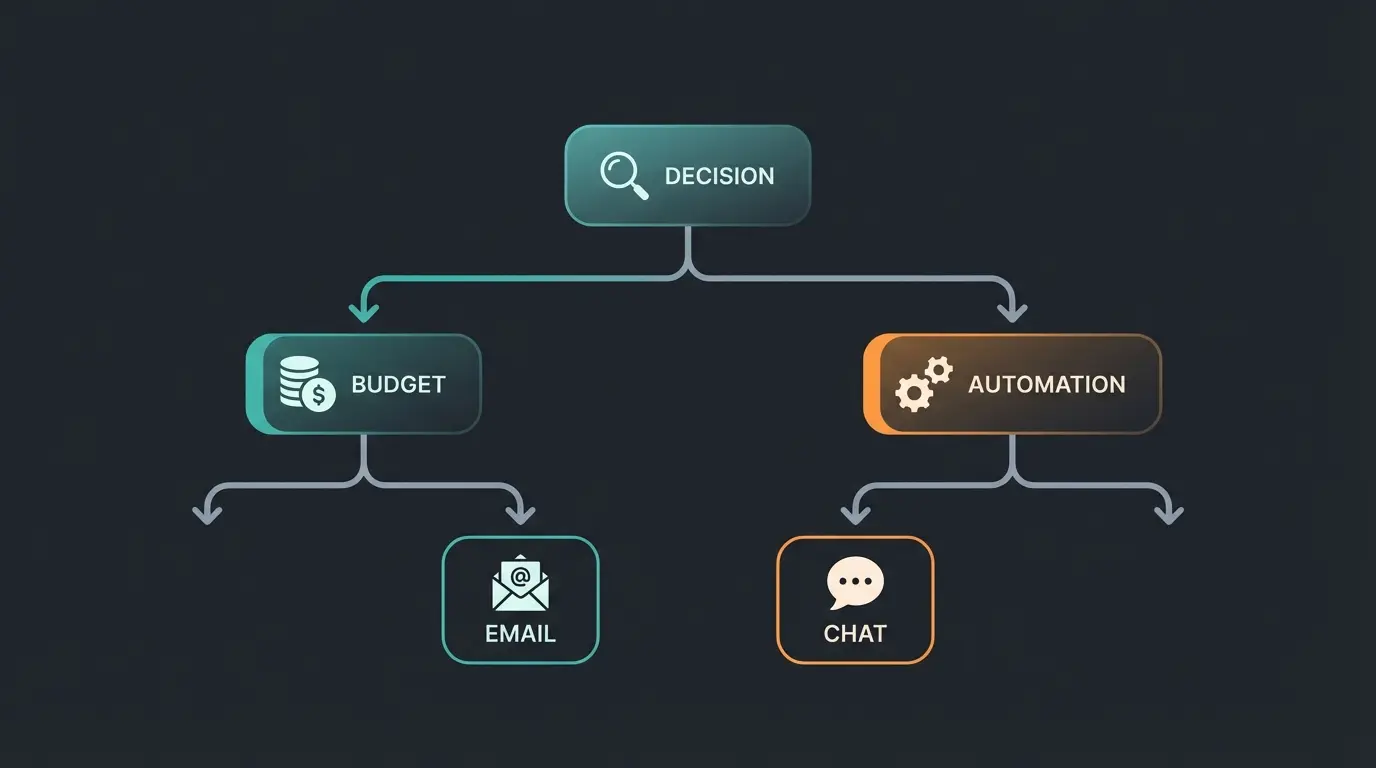
Summary & Decision Framework
To finalize your decision between helpscout vs intercom, use this framework. Both tools have their merits, but the right choice depends entirely on your specific situation and goals.
Choose Help Scout When:
- Budget predictability is essential for your business
- Your team values simplicity and quick onboarding
- Email-based communication fits your customer preferences
- You need multiple knowledge bases without premium pricing
- German Works Council approval is a concern
- You want lower AI costs with spending limits
Choose Intercom When:
- You're a well-funded startup with budget flexibility
- Complex automation workflows are business-critical
- Deep product integration is required (in-app messaging)
- Your customers expect real-time chat engagement
- You need advanced user tracking and lead scoring
- Marketing automation is part of your support strategy
Help Scout wins hearts and wallets. It's the tool you choose when you want support to simply work without hiring an administrator. It respects customer peace and fits culturally well in the DACH region.
Intercom is the Formula 1 car. Expensive, maintenance-intensive, but unbeatable fast when you master it. It's for companies that see support as part of their growth strategy and are willing to dig deep into their pockets.
But remember: Both tools come from the world of "support". If in 2025 you want to not just manage your website visitors but turn them into customers, you should consider whether a pure support bot is enough – or whether you need a solution that automates genuine consulting expertise. Exploring AI Product Consultation success stories can provide valuable insights into what's possible.
The evolution of AI-powered chatbots for e-commerce continues to accelerate. What KI-Produktberatung outperforms traditional support solutions demonstrates is that the future lies not in deflecting customers but in genuinely helping them make better purchasing decisions.
Frequently Asked Questions
Intercom offers EU data hosting, but only for customers on their Advanced ($99/seat) or Expert ($139/seat) plans. Customers on the Essential plan ($39/seat) cannot guarantee EU-only data storage. If you're already on US servers, migration requires deleting your entire workspace and starting fresh. For strict German compliance requirements, this limitation can be a significant barrier.
Help Scout is consistently cheaper. Base pricing starts at $25/user vs Intercom's $39/user (Essential) or $99/user (Advanced for meaningful features). AI resolution costs are $0.75 at Help Scout vs $0.99 at Intercom. For 1,500 monthly AI resolutions, you'd save $360/month choosing Help Scout – that's $4,320 annually just on AI costs.
Both tools require Works Council (Betriebsrat) approval under § 87 Abs. 1 Nr. 6 BetrVG as they can monitor employee performance. However, Intercom's granular individual agent tracking (response times, tickets closed per person, online status) often triggers more resistance than Help Scout's team-focused metrics. Many German companies report months-long approval processes for Intercom.
Neither tool is designed for active sales consultation. Both focus on support deflection – answering questions efficiently to reduce human workload. If you need AI that proactively guides customers through purchase decisions (asking about needs, recommending products, handling objections), you'll need consultative AI solutions specifically built for sales enablement rather than support automation.
Help Scout can typically be operational within hours due to its familiar email-like interface. Most teams require minimal training. Intercom, with its complex Command Center interface, multiple automation workflows, and extensive configuration options, often requires weeks for full implementation and staff training. This setup time difference can significantly impact your time-to-value.
Discover how AI-powered product consultation can transform your customer service from a cost center into a revenue driver. See how consultative AI outperforms traditional support bots.
Start Your Free TrialNote: Prices and features are based on 2025 data. Please check current conditions directly with providers, as SaaS prices (especially AI fees) can change dynamically.