Why the Intercom vs HubSpot Decision Matters in 2026
The choice between Intercom and HubSpot represents far more than a software decision for SaaS companies and digital service providers in 2026. It's a decision about your company philosophy: Do you want maximum speed and conversation (Intercom) or maximum data depth and process integration (HubSpot)?
However, the landscape has fundamentally changed. It's no longer just about tickets and live chat. With the rise of AI agents (Intercom Fin vs. HubSpot Breeze) and stricter GDPR requirements in the DACH region (Germany, Austria, Switzerland), new critical factors have emerged that are missing from most US-centric comparisons. Understanding how standard support tools compare to these market leaders helps put the full picture into perspective.
This article goes deep. We don't just analyze features—we uncover where both platforms leave gaps, especially when it comes to consultative selling and European data privacy realities. According to eesel.ai, these gaps become particularly apparent when businesses try to migrate or scale their operations.
Executive Summary: The Quick Comparison (TL;DR)
For decision-makers with limited time: Here's the direct comparison of strategic positioning between Intercom vs HubSpot Service Hub.
| Feature / Aspect | Intercom | HubSpot Service Hub | Consultative AI (The Gap) |
|---|---|---|---|
| Core Philosophy | 'Messenger First': Speed & Conversation | 'CRM First': Context & Data Unity | 'Consultation First': Sales Psychology & Solutions |
| AI Approach | Deflection: Fin AI resolves support tickets based on FAQs | Productivity: Breeze helps agents write faster & use data | Consultation: Conducts needs analysis and actively 'sells' solutions |
| Pricing Model | Variable & Usage-Based: High costs at scale through 'Resolution Pricing' ($0.99/resolution) | Fixed & Seat-Based: High entry costs (Pro/Enterprise), but predictable | Value-Based: Often ROI-driven |
| Data Hosting (EU) | Complex: Only for new customers on expensive plans (Advanced/Expert). No migration for existing customers | Standard: AWS Frankfurt as default for new customers since July 2021 | Varies by provider |
| Best Fit | High-Volume B2C/SaaS Support, Onboarding | B2B companies that need to unify Sales & Service | Companies with complex, explanation-heavy products |
The Philosophy: Messenger vs. CRM Approaches
To understand whether Intercom vs HubSpot is the right choice for you, you need to understand the DNA of these tools. Their fundamental approaches shape everything from user experience to long-term scalability.
Intercom: The 'Messenger First' Approach
Intercom was born to eliminate the impersonal ticket number. The heart of the platform is the Messenger. Everything is designed to lower the barrier between customer and company. This philosophy permeates every feature and design decision.
- Strength: Feels modern, fast, and 'app-like' for the end user. Perfect for in-app support in SaaS products where immediate response matters most.
- Weakness: CRM functionalities are 'lightweight.' If you have complex B2B sales cycles, you'll quickly hit limitations in data management and customer journey tracking.
HubSpot: The 'CRM First' Approach
HubSpot Service Hub is a module that sits on a powerful CRM foundation. Every ticket, every chat is just a data point in a comprehensive customer record. This creates unprecedented visibility into customer relationships.
- Strength: The support agent sees everything: Which marketing emails did the customer open? Which product did they almost buy during the sales process? What's their lifetime value?
- Weakness: The chat client and ticket interface often feel more 'bureaucratic' and less fluid than Intercom's sleek design.
The Gap: Transaction vs. Consultation
Both tools excel at managing transactions ('My login doesn't work', 'How much does X cost?'). They're built to resolve issues quickly and efficiently. However: Neither tool is natively designed to explain or sell complex products through genuine consultation.
When a customer asks: 'Which of your three machines is best for my factory in Bavaria?', Intercom's AI (Fin) will only cite a help article. HubSpot's AI (Breeze) will help the agent type a response faster. What's missing: An AI that acts like a sales engineer: 'That depends on your production volume. How many units do you produce per hour?' – This is the domain of Consultative AI, which both market leaders currently neglect. This is precisely where proactive Guided Selling becomes essential for revenue growth.
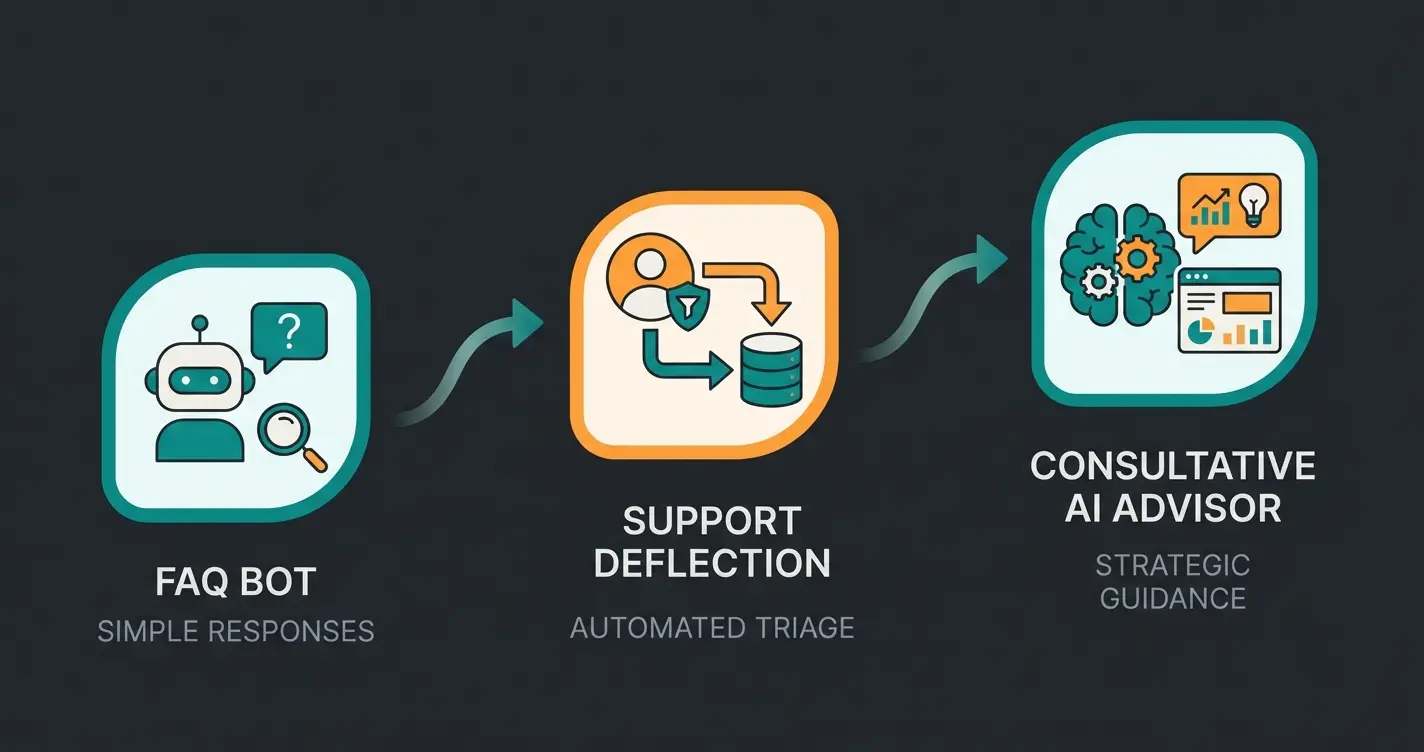
Basic keyword matching, rigid responses, no learning capability—the chatbots of 2015
Intercom Fin: Reads knowledge base, answers questions, closes tickets automatically
HubSpot Breeze: Assists agents with drafting, summarizing, and CRM data management
Proactively qualifies needs, asks discovery questions, guides customers to optimal solutions
Feature Deep Dive: Intercom vs HubSpot Service Hub
Let's examine the core features under the microscope that are crucial for your daily operations. These are the areas where your team will spend most of their time, so the differences here matter enormously for productivity and satisfaction.
Inbox & Ticketing Comparison
The inbox is where your support team lives. Small differences in workflow efficiency compound dramatically over thousands of interactions.
- Intercom: The inbox is optimized for speed. Keyboard shortcuts (Command-K), quick macros, and an interface reminiscent of WhatsApp or Slack make it very pleasant for support teams. It's ideal for 'real-time' communication where response time is measured in seconds.
- HubSpot: The inbox is functional but slower. The big advantage is the right sidebar: Here you see the entire CRM context. You can create a deal directly from the ticket or log a call without leaving the conversation.
- Verdict: Intercom for speed, HubSpot for depth and context.
Knowledge Base (Help Center) Capabilities
Your knowledge base serves both customers seeking self-service and AI systems learning to answer questions automatically.
- HubSpot: This is where HubSpot flexes its marketing muscles. The Knowledge Base is extremely SEO-friendly, offers detailed analytics about which search terms yielded no results, and can be visually customized perfectly to match your website branding.
- Intercom: The 'Articles' are sleek and integrate beautifully into the Messenger (the customer doesn't have to leave the page). But from an SEO perspective and customizability, it lags behind HubSpot's more robust offering.
Automation & Workflows
Automation separates efficient teams from those drowning in repetitive tasks. The approaches here differ fundamentally between platforms.
- Intercom (Series): A visual builder strongly based on user behavior in your app (e.g., 'When user clicks Feature X, send Message Y'). Very strong for onboarding campaigns and in-product engagement sequences.
- HubSpot (Workflows): Probably the most powerful automation engine on the market. You can control support processes based on any data field in the CRM (e.g., 'If deal size > €10,000 and ticket priority 'High', send SMS to Key Account Manager'). The flexibility is unmatched.
For teams exploring how digital product consultants can enhance their automation strategy, understanding these differences is crucial for making the right platform choice.
The AI Battle: Deflection vs. Intelligence
In 2026, AI is the decisive purchasing criterion. But beware: The approaches of Intercom and HubSpot differ fundamentally in their goals, implementation, and cost structure.
Intercom Fin: The Expensive Librarian
Intercom's 'Fin AI' is trained to prevent support tickets (deflection). It reads your help articles and responds directly to the customer, aiming to resolve issues without human intervention.
- The Model: Fin is a 'Resolution Bot.' It tries to find the answer and close the case automatically.
- The Cost Trap: Intercom charges $0.99 per successful resolution. According to SaaS Price Pulse and Intercom's pricing page, this can add up quickly.
- Quality: Fin is excellent at extracting facts from texts. But it doesn't 'think along.' It doesn't conduct sales conversations or understand complex product requirements.
HubSpot Breeze: The Background Assistant
HubSpot bundles its AI tools under 'Breeze.' This suite focuses on making human agents more efficient rather than replacing them entirely.
- Copilot: Helps employees write emails, summarize texts, or update CRM data automatically.
- Customer Agent: A chatbot that acts similarly to Fin but can dig deeper into CRM data for more contextual responses.
- Costs: HubSpot uses a credit system. Professional/Enterprise plans have a quota, after which additional credits must be purchased. It's often more predictable than the 'pay-per-resolution' model, but the entry barrier (Pro plan) is high. According to eesel.ai and resolve247.ai, this approach offers better cost predictability for growing teams.
The Strategic Gap: Consultative AI
Both AIs are reactive. They wait for a question and provide an answer based on existing knowledge. For companies with complex products (e.g., mechanical engineering, enterprise software, financial services), this is often insufficient.
What's needed is an AI that proactively asks questions, qualifies needs, and guides the customer to the right solution (Consultative Selling). If your goal isn't just 'reduce support costs' but 'increase conversion,' Fin and Breeze often fall short. This is exactly where AI product consultants create the most value.
Understanding how digital product consultants have evolved helps illustrate why traditional chatbots—even AI-enhanced ones—struggle with true consultation. The difference between answering questions and guiding decisions is fundamental.
Discover how consultative AI transforms customer conversations into qualified leads and closed deals—going far beyond what Intercom Fin or HubSpot Breeze can offer.
See Consultative AI in ActionPrivacy & Compliance: The European Perspective (GDPR)
For companies in the DACH region and throughout Europe, this is often the 'dealbreaker.' Here, massive differences in implementation become apparent that most US-centric comparison articles completely overlook.
Data Hosting (Data Residency) Options
The 'Schrems II' ruling and uncertainty around US data transfers make local hosting a requirement for many organizations. The US Cloud Act adds another layer of complexity that European businesses must navigate carefully.
HubSpot's Approach:
- Location: AWS Frankfurt (Germany). According to HubSpot's official documentation and MakeWebBetter, this has been standard since 2021.
- Availability: Standard for all new customers since July 2021.
- Advantage: Very transparent communication and simple assignment based on IP address during registration. No additional costs or complicated migration processes.
Intercom's Approach:
- Location: AWS Dublin (Ireland)—so EU, but not Germany.
- The Big Problem: EU hosting is only available for new customers on expensive plans (Advanced/Expert).
- The Migration Trap: There is no migration path for existing customers. If you already use Intercom (US hosting) and want to move to the EU, you must delete your account, lose all data (conversation histories!), and set up a completely new account and configure it manually. For established teams, this is a nightmare scenario.
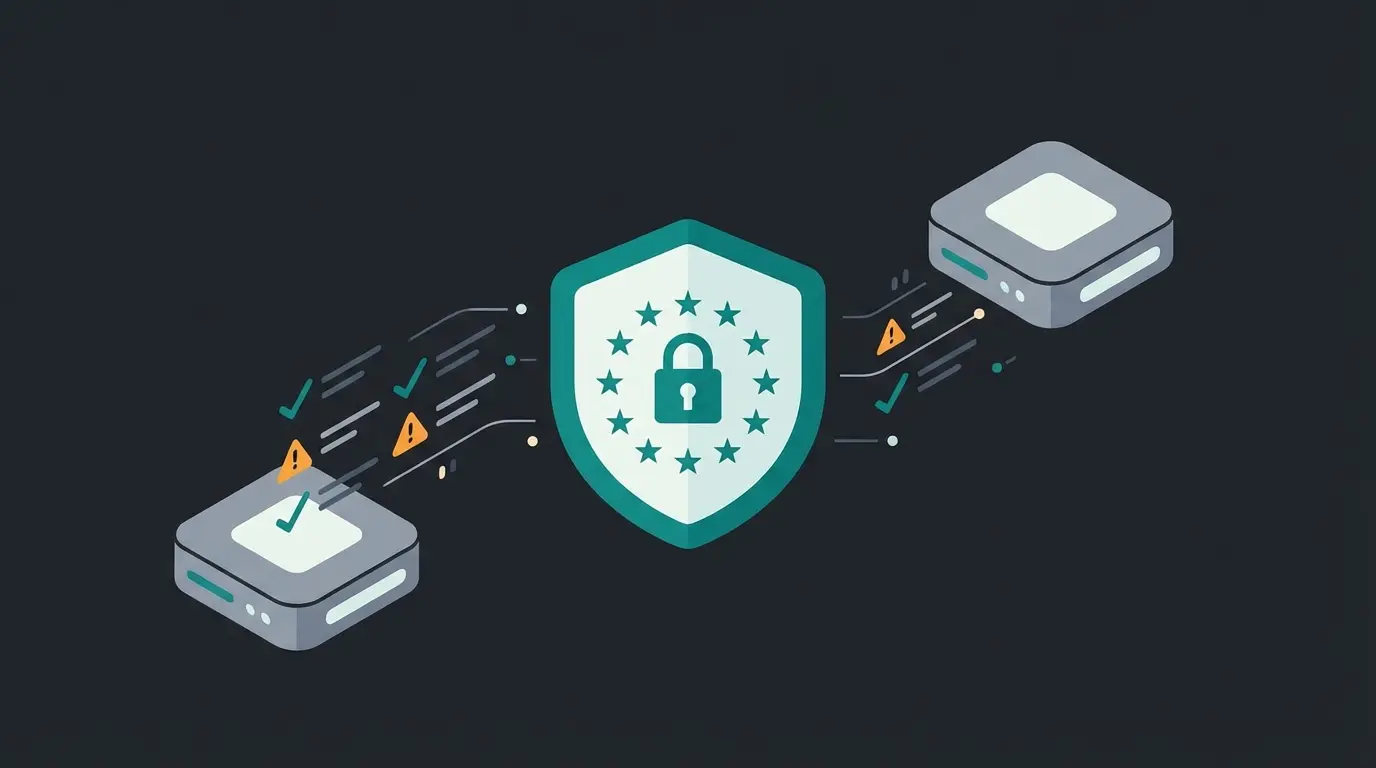
AWS Germany - full GDPR compliance with German data residency
AWS Ireland - EU but not Germany, US Cloud Act concerns remain
Existing US customers cannot migrate data to EU servers
Built-in support for Usercentrics, Cookiebot, and similar tools
Cookie Consent & Legal Notice Requirements
In Germany and throughout the EU, no chat widget may load before the user has consented in the cookie banner (e.g., Usercentrics, Borlabs). This creates implementation challenges that vary significantly between platforms.
- HubSpot: Offers native integrations and guides for tools like Cookiebot and Usercentrics. The chat widget respects the consent status often 'out-of-the-box' better when loaded via the HubSpot tracking code. As documented by Usercentrics and HubSpot's knowledge base, the integration is straightforward.
- Intercom: Technical tinkering is often required here. To hide Intercom GDPR-compliantly behind a Borlabs cookie banner, scripts must be manually adjusted so the Messenger only 'boots' when consent is given. According to Intercom's documentation and the Borlabs team, this requires developer involvement.
- Legal Notice Requirement: In Germany, the legal notice (Impressum) must always be reachable within max. 2 clicks—even in chat. Intercom makes it difficult to anchor links (like Legal Notice/Privacy Policy) permanently on the Messenger start screen without using 'Apps' or workarounds. Intercom's community forums confirm this is a common pain point.
Pricing: The Hidden Truth About Real Costs
At first glance, the prices seem similar, but the scaling effects are completely different. Understanding these dynamics is crucial for accurate budget planning, especially for growing companies.
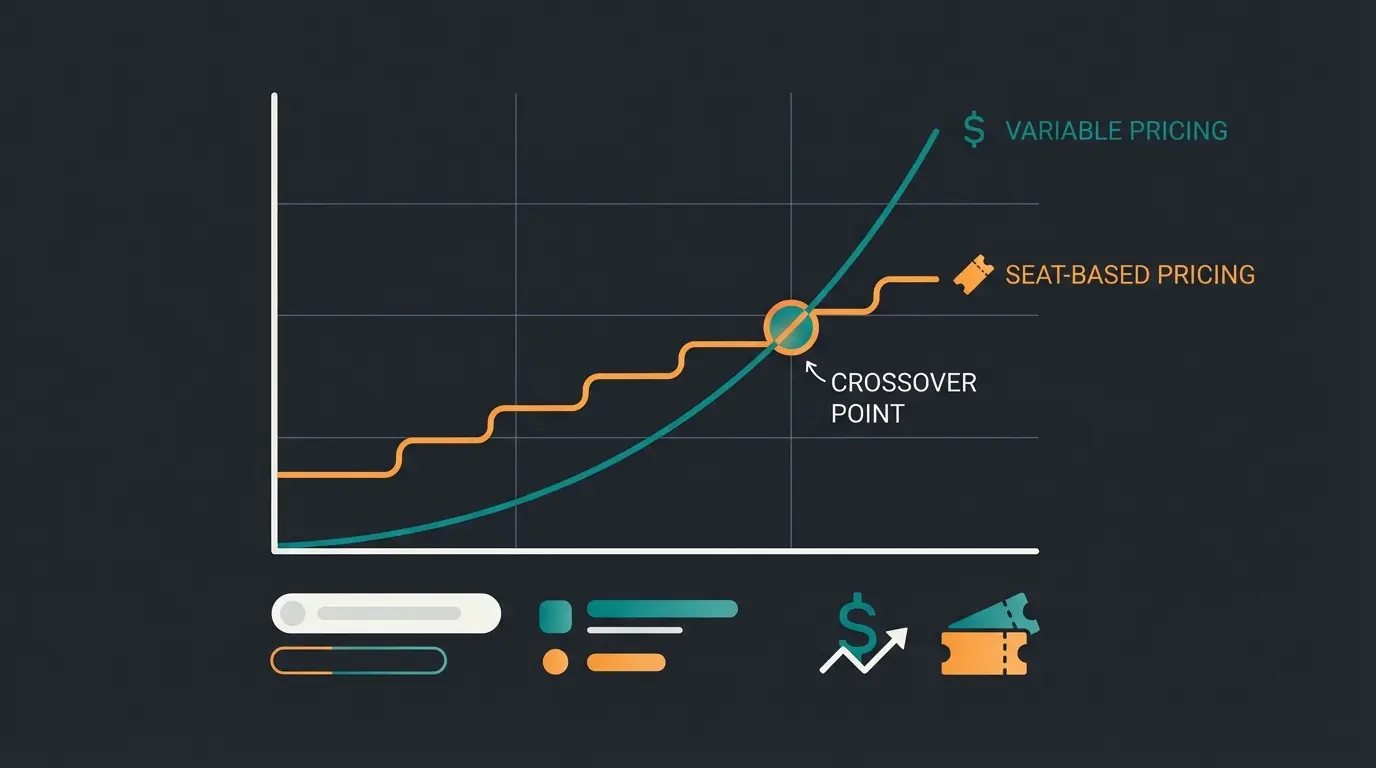
Intercom: The 'Taximeter' Model
Intercom attracts with affordable entry prices (Essential Plan) but becomes expensive with success. This variable cost structure creates uncertainty that many European finance teams find uncomfortable.
- Seat Costs: $39 - $139 per agent/month depending on plan tier.
- The Variable: Fin AI costs $0.99 per Resolution.
- The Risk: If you have a viral marketing campaign and 5,000 support inquiries come in that the AI resolves, you pay $5,000 extra the next month. German controllers hate this unpredictability, and it makes annual budgeting extremely difficult.
HubSpot: The 'Staircase' Model
HubSpot is expensive at entry but 'flat-rate' in usage. This provides the cost predictability that finance teams appreciate, though the initial investment is substantial.
- Service Hub Starter: Very affordable ($15-$20/Seat) but functionally severely limited (no automation capabilities).
- Service Hub Professional: The actual standard tier. Costs approximately $90-$100 per Seat/month (often with minimum purchase requirements or onboarding fee of $1,500). According to Stream Creative, this tier is where most serious teams operate.
- Advantage: Whether you process 100 or 10,000 tickets doesn't change the price (as long as you don't exhaust the AI credits, which are more generously allocated).
Real-World Scenario: Team of 5 Agents & 2,000 AI Resolutions
Let's calculate what a typical growing team actually pays on each platform:
Intercom (Advanced Plan):
- 5 Seats × $99 = $495/month
- 2,000 Fin Resolutions × $0.99 = $1,980/month
- Total: $2,475/month
HubSpot (Professional Plan):
- 5 Seats × $90 = $450/month
- AI usage (Breeze): Often included in quota (or minor surcharge for credits)
- Total: ~$450 - $600/month
Verdict: Which Tool for Which Team?
The Intercom vs HubSpot decision isn't a question of 'better or worse,' but of 'fit for business model.' Both platforms excel in their intended use cases—the key is understanding which aligns with your specific needs.
Choose Intercom If...
- You're a pure SaaS product: The in-app Messenger and Product Tours are unmatched for user engagement and onboarding.
- Support is your main focus: Your agents want a fast, chat-based interface that prioritizes response speed.
- You're starting fresh: You can start directly with EU hosting and avoid any migration pain entirely.
- Budget flexibility exists: You accept variable costs for AI resolutions and can absorb cost spikes during high-volume periods.
Choose HubSpot Service Hub If...
- You sell B2B: You need the full history (Sales & Marketing context) visible in the support ticket for informed conversations.
- You want cost certainty: Fixed prices per seat are important for your planning and annual budgeting cycles.
- You already use HubSpot: The integration is seamless and saves expensive interface tools (like Zapier) and reduces technical complexity.
- Data location Germany matters: AWS Frankfurt is mandatory for your compliance department and legal team.
The Third Option: When You Need Something Different
If your goal isn't just support (solving problems) but consultation (selling products), you'll hit limitations with both tools. Neither platform was designed with consultative selling as a primary use case.
- Intercom's Fin ends conversations by providing answers.
- HubSpot's Breeze manages data and assists agents.
For complex, explanation-heavy products (high-tech, industrial equipment, consulting services), you need a solution that closes the 'Consultative Gap'—an AI that qualifies and advises users before they even become a support case. Consider whether you need a specialized Sales AI in addition to one of these tools—one that functions as a virtual consultant on your website. This is where proactive product consultation delivers the highest ROI.
The evolution toward consultative expert systems represents the next frontier in customer engagement. While Intercom and HubSpot excel at their core functions, businesses with complex offerings increasingly need specialized solutions. Exploring AI virtual sales capabilities helps understand what's possible beyond traditional support tools.
The difference between classic chatbots and true consultative AI is substantial. While traditional bots answer questions, consultative AI understands context, asks qualifying questions, and guides customers toward optimal solutions—much like a skilled human sales engineer would.
Decision Checklist for European Teams
Use this checklist for your internal meeting when evaluating Intercom vs HubSpot Service Hub. These questions address the specific concerns of DACH-region businesses:
| Decision Factor | Key Question | Intercom | HubSpot |
|---|---|---|---|
| Data Hosting | Is AWS Dublin acceptable or must it be Frankfurt? | Dublin (Ireland) | Frankfurt (Germany) |
| Migration Risk | Are we existing Intercom customers? | Warning: No EU data migration possible | N/A - straightforward setup |
| Cost Risk | Can we pay $0.99 per AI resolution if volume explodes? | High variable cost exposure | Fixed, predictable pricing |
| Cookie Banner | Do we have developer resources for consent integration? | Manual integration required | Native integrations available |
| Primary Goal | Do we want to deflect tickets or develop customers? | Ticket deflection focus | Customer development focus |
Your Next Steps: Process Before Platform
Don't start with the tool—start with the process. Define your 'Customer Journey' first. Map out every touchpoint, every decision point, every opportunity for engagement.
If this journey requires deep integration of Sales and Service data, there's hardly a way around HubSpot's unified platform approach. If the 'User Experience' within your product is everything and speed matters most, Intercom remains the king of in-app engagement.
And if your products require explanation, consultation, and guided discovery? Then you might need to look beyond both platforms to specialized consultative AI solutions. Understanding AI Product Consultation options helps you evaluate what's available in this emerging space.
Frequently Asked Questions
Intercom can be GDPR compliant, but with significant caveats. EU data hosting (AWS Dublin, Ireland) is only available for new customers on Advanced or Expert plans. Existing US-hosted customers have no migration path—they must delete their account and start fresh, losing all conversation history. Additionally, implementing proper cookie consent requires manual technical work. HubSpot's AWS Frankfurt hosting with native consent tool integration is generally more straightforward for German compliance requirements.
The real cost difference depends heavily on your AI automation volume. Intercom's $0.99 per resolution pricing means a team handling 2,000 AI-resolved tickets monthly pays approximately $2,475 total, while HubSpot Professional at the same scale costs roughly $450-600. At 5,000 resolutions, Intercom's variable costs alone exceed $4,950. HubSpot's seat-based model provides more predictable budgeting, though entry costs for Professional tier are higher.
HubSpot Service Hub generally serves B2B companies better due to its deep CRM integration—agents see the full customer history including marketing engagement and sales pipeline status. However, neither platform excels at consultative selling for complex products. Both AIs (Fin and Breeze) are reactive, answering questions rather than proactively qualifying needs. Companies with explanation-heavy products often need to supplement either platform with specialized consultative AI solutions.
Migrating between platforms is possible but complex. Basic data like contacts and companies can be exported/imported, but conversation histories, automation workflows, and custom configurations require significant rebuild effort. The bigger concern for Intercom users is that existing US-hosted accounts cannot migrate to EU servers—you'd lose all data in that transition. Plan for 2-4 weeks of implementation work when switching platforms, plus time to retrain your team.
Intercom Fin focuses on 'deflection'—automatically resolving tickets by citing knowledge base articles, charged at $0.99 per resolution. HubSpot Breeze focuses on 'productivity'—helping agents write faster, summarize conversations, and leverage CRM data, included in Professional/Enterprise plans with credit limits. Fin is better for high-volume simple queries; Breeze is better for complex issues requiring human judgment with AI assistance. Neither conducts consultative conversations or proactive needs qualification.
While Intercom and HubSpot handle support, Qualimero's consultative AI transforms visitors into qualified leads by actually understanding and selling your complex products.
Start Your Free Consultation
Lasse is CEO and co-founder of Qualimero. After completing his MBA at WHU and scaling a company to seven-figure revenue, he founded Qualimero to build AI-powered digital employees for e-commerce. His focus: helping businesses measurably improve customer interaction through intelligent automation.