Introduction: The End of the Silent Online Store
Imagine walking into a specialty running shoe store. The shop is massive, shelves stacked floor to ceiling with options. But there's not a single sales associate in sight. Instead, someone hands you a clipboard that reads: "Please check the boxes: Color, Size, Material."
Sounds frustrating? That's exactly the reality in 99% of online stores today. We've grown accustomed to filters and search bars, but these tools are selection aids, not consultation. They assume the customer already knows exactly what they need. But what happens when a customer has a problem ("My knees hurt when I jog") but doesn't know the technical solution ("High cushioning, pronation support")? They abandon the purchase.
This is where the virtual sales consultant enters the stage.
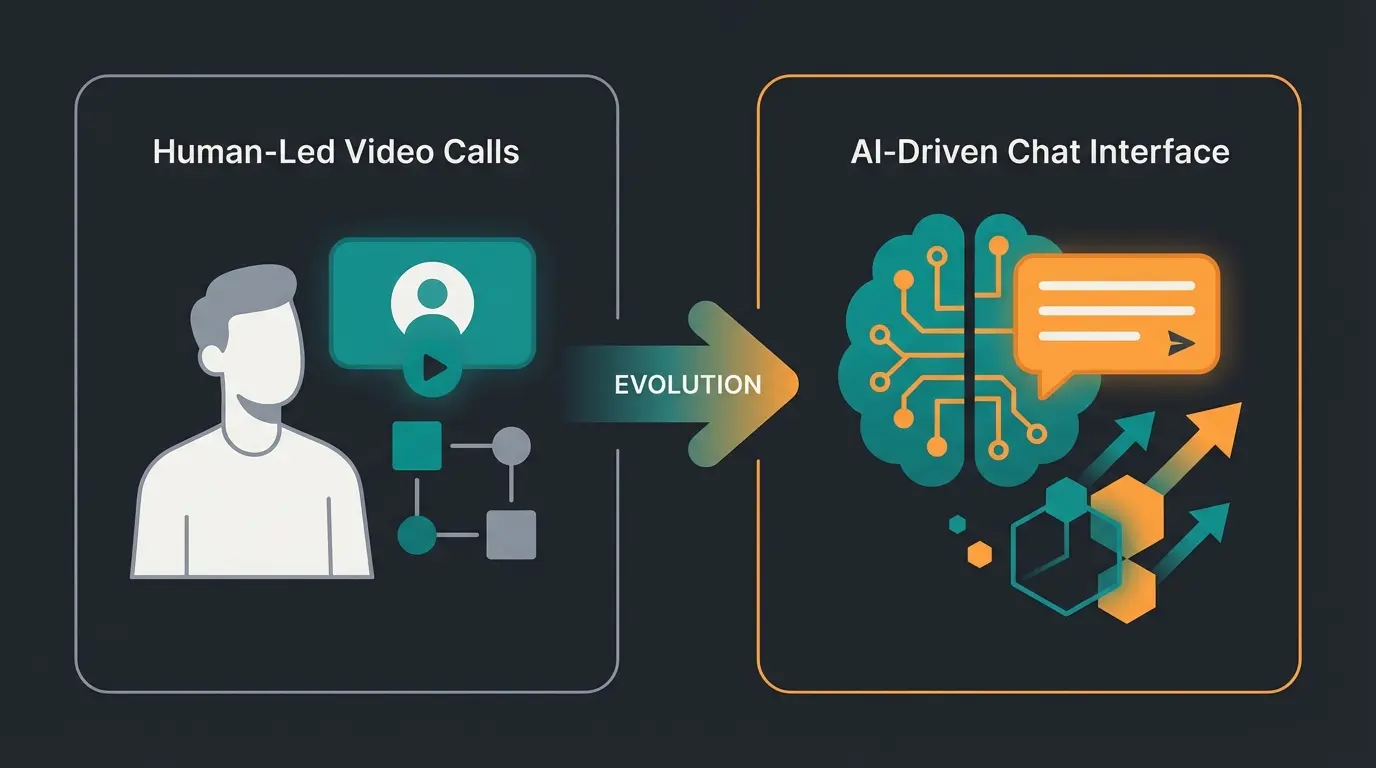
For a long time, this term simply referred to a human sales representative operating via Zoom or Microsoft Teams from their home office—so-called "Virtual Selling," as documented by Skaled. But in 2025, we're witnessing a paradigm shift. Thanks to the rapid development of generative AI (GenAI), a virtual sales consultant increasingly refers to intelligent software that simulates human dialogue—scalable, around the clock, with the expertise of a top salesperson.
In this comprehensive guide, we'll examine why traditional e-commerce is hitting its limits, how true AI chatbots differ from simple bots, and what you need to consider when implementing them in compliance with GDPR and the AI Act.
What Is a Virtual Sales Consultant? Definition & Intent
Before diving into the technology, we need to make a crucial distinction. Anyone searching for "virtual sales consultant" today encounters two completely different concepts. For a modern e-commerce strategy, it's vital to understand both but focus on scalability.
Type A: The Human in Remote Sales (Virtual Selling)
This is the traditional interpretation. These are real people using digital channels to conduct sales conversations.
- Context: B2B sales, high-ticket sales (e.g., real estate, complex software)
- Method: Video calls, screen sharing, digital demos
- Limitation: Not scalable. One person can only have one conversation at a time. They sleep, get sick, and cost significant money
- Status 2025: Virtual Selling is now standard but increasingly supported by AI assistants that assist human salespeople (e.g., through automatic summaries or lead scoring), according to research from Aexus
Type B: The AI Agent (Digital Sales Consultant)
This is the focus of this article and the future of e-commerce. This represents the AI guided selling revolution that's transforming online retail.
- Context: B2C & B2B e-commerce, online stores, lead generation on websites
- Method: An AI-powered dialogue system (text or voice) that lives on the website
- Function: It conducts a needs analysis ("What do you need the product for?"), understands context, and recommends tailored solutions
- Advantage: Infinitely scalable. The AI agent can consult 5,000 customers simultaneously—just as friendly at 3 AM as at 10 AM, as reported by SuperAGI
The Difference: FAQ Bot vs. Guided Selling vs. AI Consultant
Many shop owners are skeptical when they hear the word "chatbot." Rightfully so. The first generation of bots (circa 2015-2020) was often frustrating and unintelligent. To understand the value of a modern virtual sales consultant, we must distinguish it from its predecessors. Understanding the different types of chatbots is essential for making informed decisions.
We can divide the evolution of online consultation into three stages:
Stage 1: Static Guided Selling (The Decision Tree)
These are classic "product finders" or quizzes.
- Technology: Rigid if-then logic
- Example: "Click on 'Men's' -> Click on 'Pants' -> Click on 'Blue'"
- Problem: As soon as the customer gives an answer not anticipated in the tree, or has an open question, the system fails. It's essentially just a prettily packaged filter, as explained by Epoq
Stage 2: Rule-Based Chatbot (The FAQ Bot)
These bots react to keywords. They represent an early form of conversational AI but lack true understanding.
- Technology: Keyword recognition
- Example: Customer types "return." Bot responds with a link to the returns form
- Problem: They don't understand context. If a customer asks: "Can I also wear this shoe in winter?" a poor bot often responds: "We have shoes on sale." It doesn't understand the nuance "winter = cold/wet," as documented by Web-Strategen
Stage 3: The Virtual Sales Consultant (AI Agent)
This is where Generative AI (like GPT-4 or specialized e-commerce LLMs) comes into play. This represents the future of AI consulting in e-commerce.
- Technology: Large Language Models (LLM) + RAG (Retrieval Augmented Generation) + Sales Psychology
- Capability: It understands intention and context
- Example conversation:
- Customer: "I'm looking for something for my sister's wedding, but it's in a garden and might get chilly."
- AI Sales Consultant: "I understand, for a garden wedding an outfit that's festive but also warm would be ideal. I recommend dresses with longer sleeves or a combination with an elegant bolero. Since you'll be walking on grass, we should avoid heels that might sink in. Here are three suggestions..."
- The key: The AI consults proactively and thinks ahead, rather than just executing commands, as highlighted by Qualimero and Retresco
Comparison Table: The Evolution of Online Consultation
| Feature | Classic Chatbot | Guided Selling (Quiz) | Virtual Sales Consultant (AI) |
|---|---|---|---|
| Technology | Keywords / Scripts | Decision Tree | NLP / Generative AI / RAG |
| Flexibility | Low (rigid) | Medium (predefined paths) | High (free dialogue) |
| Goal | Service / Support (reduce costs) | Product filtering | Consultation / Sales (increase revenue) |
| Learning Capability | None | Manual updates required | Learns from interactions & data |
| User Experience | Often frustrating ("I don't understand") | Mechanical | Natural & Empathetic |
Basic keyword search with limited product discovery capabilities
Category filters and faceted search improving product selection
Rule-based FAQ bots providing scripted customer support
Intelligent virtual sales consultants with contextual understanding
Benefits of AI-Based Sales Consultants in E-Commerce
Why should companies invest in this technology in 2025? The statistics speak clearly. The market for AI in e-commerce is growing rapidly and is estimated to exceed 8 billion dollars by 2025, according to Citrusbug and Ecomposer. Here are the concrete benefits for shop operators:
Massive Conversion Rate Increases
The biggest lever is conversion rate. Average online stores convert only about 1.5% to 3% of their visitors, as noted by HubSpot and Envive AI. The reason: Lack of consultation.
A virtual sales consultant closes this gap. Studies show that personalized AI recommendations can boost conversion rates by 15% to 30%, as documented by Anchor Group. When a customer feels understood, they're more likely to buy. This is where AI product consultation providers can make a significant difference.
24/7 Availability and Scalability
The internet has no opening hours. A human sales consultant works 8 hours a day. A virtual sales consultant is always there.
- Scalability: Whether it's Black Friday or a viral TikTok trend—when suddenly 10,000 visitors flood the site, human support collapses. AI scales up in milliseconds, according to SmartConvo
- Instant Response: Customers today expect real-time answers. Wait times lead to purchase abandonment
Reducing Return Rates
A massive problem in e-commerce, especially in Germany, is returns. They often result from incorrect purchases ("Doesn't fit," "Wrong product for my purpose").
A virtual sales consultant clarifies questions about fit, compatibility, or application before the purchase. Through this precise consultation, the likelihood of incorrect purchases drops dramatically. AI-powered consultation can significantly reduce return rates because customer expectations are better matched with the product, as explained by TAOD AI and KI-Trainingszentrum.
Generating Zero-Party Data
In a world without third-party cookies (privacy concerns!), data that customers voluntarily provide is gold.
In dialogue with the virtual consultant, the customer reveals details: "I have dry skin," "I cycle 5,000km per year," "I don't like wool." This zero-party data isn't spied on but gifted in conversation. It enables hyper-personalized marketing campaigns in the future, as highlighted by Moin.ai and Neocom.
AI-powered personalized recommendations boost sales significantly
AI consultants serve customers around the clock without breaks
AI agents can consult thousands of customers at once
The AI e-commerce market continues rapid growth
Discover how AI virtual sales consultants can boost your conversion rates by up to 30% while providing 24/7 expert product guidance.
Start Your Free TrialHow Does AI Product Consultation Work Technically?
For decision-makers, it's important to understand that there's no "magic" at work here, but solid technology. Understanding AI chatbots is the foundation for grasping how modern virtual sales consultants operate.
The Brain: LLMs and RAG
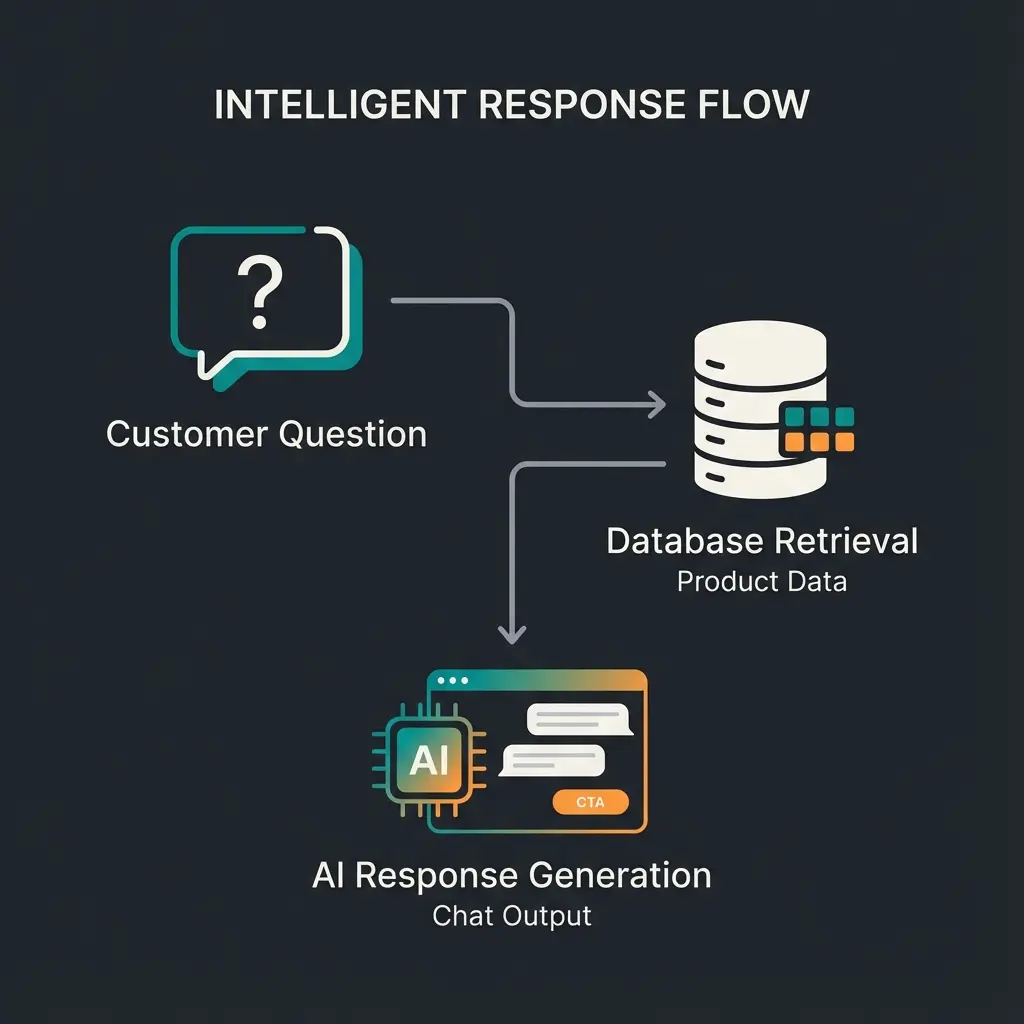
Modern virtual sales consultants use Large Language Models (LLMs). But to prevent the AI from hallucinating (making up facts), it's combined with a technique called RAG (Retrieval Augmented Generation), as explained by Retresco.
- The customer asks: The AI analyzes the language
- Retrieval (Search): The system searches your product data (PIM), manuals, and FAQs for relevant facts
- Generation (Response): The AI formulates a natural, friendly answer from the found facts
This guarantees that the consultant only recommends products you actually have in stock. The technology behind Conversational AI business transformation is becoming increasingly sophisticated.
Data Protection: GDPR and the EU AI Act
A critical point for the European market. Since 2024/2025, the EU AI Act is in effect. What does this mean for virtual sales consultants? Understanding the EU AI Act guidelines is essential for compliant implementation.
- Risk Classification: Most chatbots and sales consultants fall under "Limited Risk" or "Minimal Risk" (as long as they don't make autonomous decisions in critical areas like medicine or credit approval), according to Verbraucherzentrale and Lexware
- Transparency Requirement: You must inform users that they're communicating with an AI (e.g., "I'm your virtual assistant"). This is legally mandated, as explained by E-Recht24
- GDPR: Server locations and data processing must be GDPR-compliant. Many US tools are problematic here. It's recommended to use providers that guarantee EU hosting or have special enterprise contracts with Microsoft/OpenAI (via Azure Europe), according to Digitalzentrum Berlin and AFAIK
Use Cases: Where Does Implementation Pay Off?
Not every product needs a virtual sales consultant. Someone buying toilet paper doesn't need a needs analysis. But wherever complexity or taste plays a role, the ROI (Return on Investment) is enormous. The AI product finder growth opportunity varies significantly by industry.
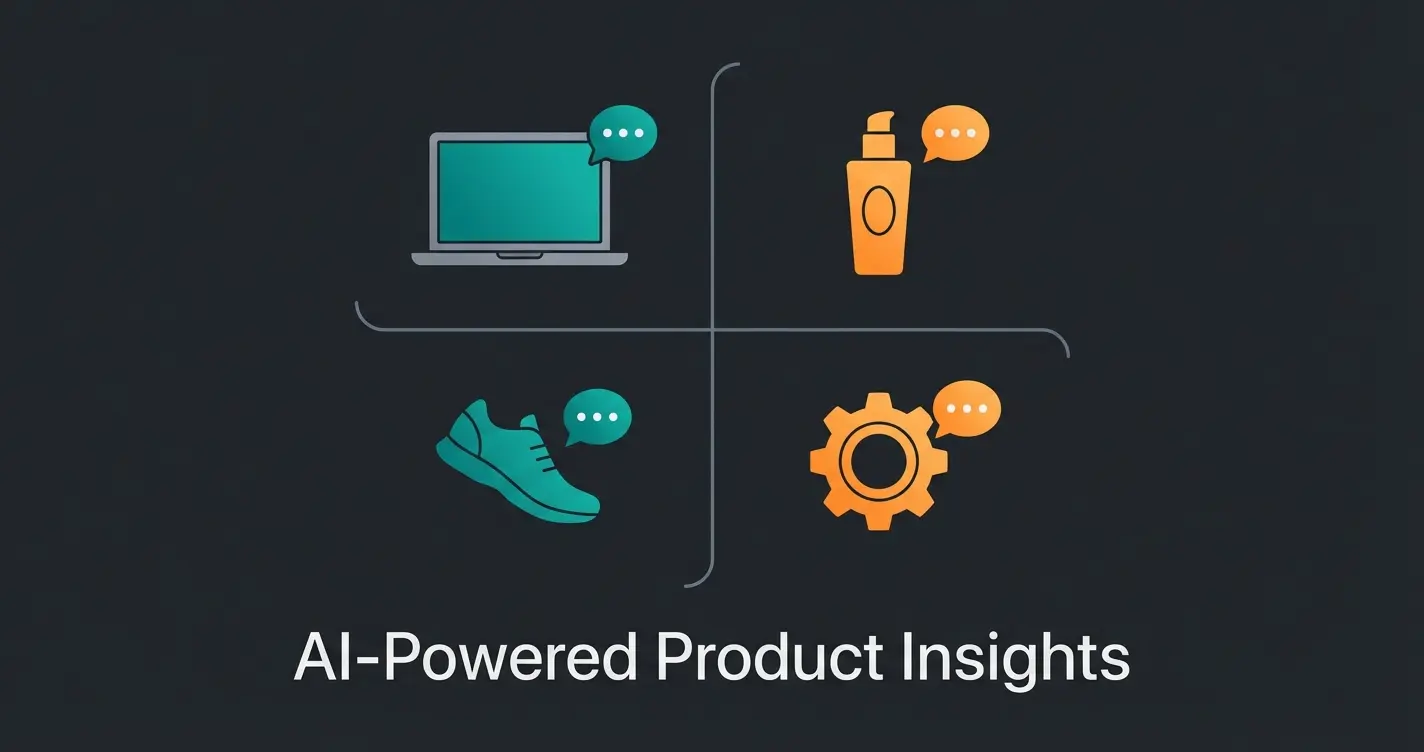
Consumer Electronics & Technology
- Scenario: A customer is looking for a laptop
- Problem: CPU, RAM, GPU—incomprehensible for laypeople
- AI Solution: "What do you want to do with the laptop? Just browsing, video editing, or gaming?"
- Result: The AI translates technical specs into user benefits ("For video editing you need this processor...")
Beauty & Cosmetics (Dermocosmetics)
- Scenario: Skincare routine
- Problem: Skin types are individual; wrong products cause harm
- AI Solution: The AI asks about skin type, allergies, and goals (anti-aging vs. blemishes) and creates a complete routine
- Psychology: Here the virtual consultant builds massive trust, similar to a pharmacy consultation
Sports & Outdoor Equipment
- Scenario: Running shoes or bicycles
- Problem: Surface, training frequency, and body type determine the right product
- AI Solution: Analysis of the usage profile. "Do you run more on trails or asphalt?"—This massively reduces the return rate for shoes
B2B Industry & Spare Parts
- Scenario: A buyer is looking for a specific spare part for a machine
- Problem: Thousands of article numbers
- AI Solution: The virtual consultant can analyze technical drawings or error descriptions and identify the compatible part. This enormously relieves the technical inside sales team, as explained by Encoway
Checklist: Finding the Right Provider
The market for "AI Sales Agents" is exploding. Beyond large US players, there are strong solutions from Germany and Europe that often better address data protection needs. The difference between various AI Agents and chatbots can be significant. What should you look for when selecting?
1. Sales Psychology vs. Support Focus
Is the tool a "support bot" (ticket deflection) or a true "sales bot"? Pay attention to whether the AI proactively asks questions and can visually present products (carousels, images) in the chat. Modern AI employees should be designed with sales outcomes in mind.
2. Integration & Onboarding
How does your product data get into the AI? Good providers use direct interfaces (APIs) to shop systems like Shopify, Shopware, or Magento and can automatically import product feeds, as explained by HubSpot.
3. Language Quality & Nuances
Does the AI understand dialects or colloquial language? Test the system not just in English but in all languages your customers use.
4. Data Protection (GDPR/AI Act)
Explicitly ask about server location and data processing agreements. A provider from Germany or the EU is often the safer choice for European companies, according to Informatik Aktuell.
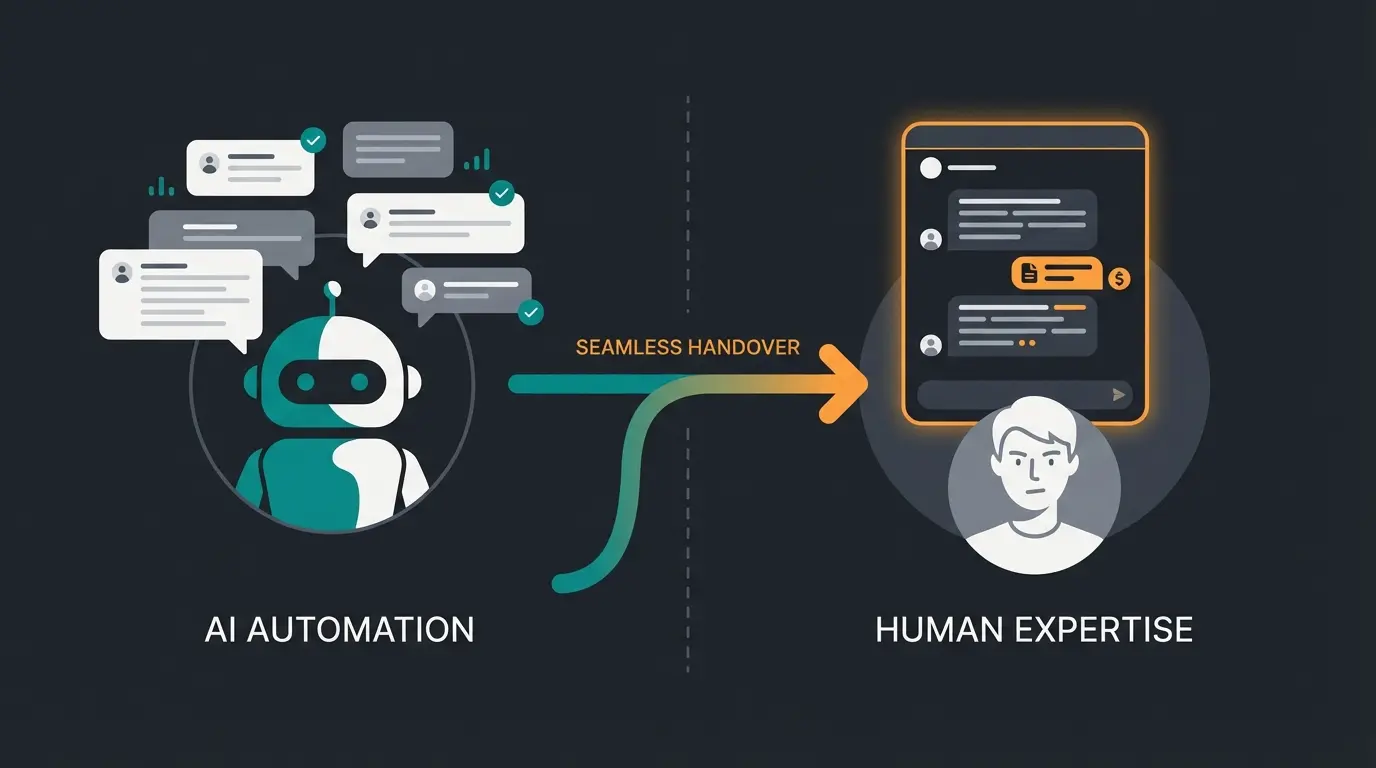
5. Hybrid Capability (Human Handover)
The AI should recognize when it doesn't know something or when order values are very high, and seamlessly hand over the conversation to a human employee ("Human Handover"), as noted by ZFK.
Comparison: Human Sales vs. Chatbot vs. AI Agent
To make the right decision, it helps to compare the three main approaches directly. This comparison addresses the core question many businesses face when evaluating consultation solutions:
| Criteria | Human Sales Rep | Traditional Chatbot | AI Virtual Consultant |
|---|---|---|---|
| Availability | 8 hours/day, business days | 24/7 | 24/7 |
| Scalability | 1 conversation at a time | Limited by scripts | Unlimited simultaneous |
| Cost per Interaction | $15-50 | $0.10-0.50 | $0.50-2.00 |
| Depth of Knowledge | Varies by individual | FAQ-limited | Full product catalog + context |
| Empathy/Emotion | High | None | Medium (improving) |
| Learning Capability | Individual learning curve | Manual updates only | Continuous improvement |
| Best For | High-ticket, complex sales | Simple FAQ deflection | Product consultation at scale |
Conclusion: The Future Is Hybrid
The "Virtual Sales Consultant" is no longer future music in 2025—it's a competitive advantage. While simple filters and unintelligent chatbots frustrate customers, AI agents offer the chance to bring the consultation experience of brick-and-mortar retail into the digital world—scalable for millions of visitors.
Does this mean the human salesperson is going extinct? No. The future is hybrid.
- AI takes over the 80% of standard inquiries, pre-qualification, and consultation for products in the low to medium price range
- Humans concentrate on the top 20%: The most complex cases, the most emotional decisions, and high-ticket closings where empathy makes the difference, as noted by Coursemonster
Those who begin now to transform their online store from a "self-service warehouse" into a "consulting store" will not only increase their conversion rate but also secure their customers' loyalty long-term.
Ready for the next step? Analyze your current bounce rates and ask yourself: Where do customers leave my store because they can't find answers? That's exactly where your new virtual employee belongs.
Frequently Asked Questions About Virtual Sales Consultants
A regular chatbot operates on predefined scripts and keyword recognition, only able to answer questions it was specifically programmed for. A virtual sales consultant powered by AI uses Large Language Models (LLMs) and Retrieval Augmented Generation (RAG) to understand context, conduct needs analyses, and provide personalized product recommendations—similar to how a human expert would consult customers.
Costs vary significantly based on features and scale. Basic solutions start around $200-500/month for small shops, while enterprise solutions with full customization can range from $2,000-10,000/month. However, the ROI often justifies the investment: with conversion rate increases of 15-30% and reduced return rates, most businesses see positive returns within 3-6 months.
AI sales consultants can absolutely be GDPR compliant, but you must verify several factors: server location within the EU, proper data processing agreements (DPA), transparent user notification about AI interaction, and defined data retention policies. Providers based in Germany or the EU typically offer better compliance guarantees for European businesses.
Yes, modern AI consultants excel with complex products. Using RAG technology, they can access your entire product database, technical specifications, and documentation to provide expert-level consultation. They're particularly effective for industries like industrial machinery, electronics, and technical equipment where customers need guidance navigating complex specifications.
Implementation timelines vary by complexity. Basic setups with product feed integration can be live within 1-2 weeks. More sophisticated implementations with custom training, multiple languages, and deep CRM integration typically take 4-8 weeks. Most providers offer pilot programs to demonstrate value before full rollout.
Join leading retailers using AI virtual sales consultants to boost conversions, reduce returns, and provide 24/7 expert product guidance. Start your free trial today.
Get Started Free
Lasse is CEO and co-founder of Qualimero. After completing his MBA at WHU and scaling a company to seven-figure revenue, he founded Qualimero to build AI-powered digital employees for e-commerce. His focus: helping businesses measurably improve customer interaction through intelligent automation.