Introduction: The End of the Digital Rolodex
Imagine hiring a new sales representative. They're highly motivated, but on their first day, you hand them nothing but a phone book and an empty notepad. You say: 'All the names are in here. Good luck.'
Sounds absurd? Yet that's exactly what most companies still do with their CRM software today.
For decades, we've defined Customer Relationship Management (CRM) as the digital storage of master data. We log calls, move deals through pipelines, and archive email threads. That was the model of the past. But in 2026, businesses—especially those with consultation-intensive products—face an entirely different challenge.
Today's customers are often better informed than the salespeople themselves. When a prospect asks a complex technical question, it doesn't help the sales rep to know when the customer's birthday is. They need product knowledge. They need a solution.
In this article, we're re-analyzing the CRM software market with a fresh perspective. We won't just compare prices and storage space—we'll ask the decisive question: Which system actively helps you provide better consultation and close more deals?
We'll examine the established market leaders, the German data privacy champions, and the new generation of AI-powered 'Consultative CRMs' that are transforming how businesses approach customer relationships.
What Is Modern CRM Software? (And Why the 2020 Definition Is Outdated)
To find the best CRM software for your business, we first need to clarify what this term actually means today. According to vtiger.de, the definition has radically transformed through three distinct phases.
The Evolution: From Database to AI Consultant
CRM 1.0 (The Database Era): In the 1990s and 2000s, everything revolved around storage. The goal was to digitize the physical Rolodex. Tools like early versions of Salesforce or Outlook add-ins dominated the market. The value proposition: 'We won't lose phone numbers anymore.'
CRM 2.0 (Cloud & Process Automation): Starting around 2010, led by HubSpot and Pipedrive, the focus shifted to processes. Cloud solutions made data accessible everywhere. Automations ('When customer X clicks, send email Y') became standard. The value proposition: 'We work more efficiently.'
CRM 3.0 (The Active AI Consultant – from 2025/2026): Now we're witnessing the biggest leap yet. Through Agentic AI, the CRM transforms from passive storage to active team member. According to digitalbusiness-magazin.de, it's no longer just about that you contact a customer, but what you tell them.
Digital Rolodex - static contact storage, replacing physical address books
Managed workflows - process automation, email sequences, pipeline visualization
Active advisor - intelligent product recommendations, real-time consultation support
Why 'Managing' Falls Short for Complex Products
For an online shop selling t-shirts, CRM 2.0 is perfectly sufficient. But what if you're selling custom machinery, complex IT services, or specialized building materials?
This is where traditional systems fail. Research from inriver.com shows that 86% of customers abandon a purchase when product information is inadequate. When your sales rep has to search through three different PDFs and a wiki to answer a question about Module A's compatibility with Module B, the deal is often already cold.
Modern CRM software must therefore be more than a management tool. It needs to be a Sales Enablement Tool that delivers product knowledge in real-time, enabling your team to provide immediate, accurate consultation.
Top Selection Criteria for SMBs in 2026
Before we dive into the CRM software comparison, let's establish the ground rules. The European market operates differently than Silicon Valley. The following criteria are non-negotiable for small and medium-sized businesses today:
1. GDPR and the New NIS-2 Directive
Data privacy in Europe isn't a 'nice-to-have'—it's an existential question. Since late 2024/early 2025, the NIS-2 Directive of the EU has come into effect, obligating many mid-sized companies (including those in supply chains) to implement stricter cybersecurity measures. According to iwkoeln.de and transferstelle-cybersicherheit.de, compliance is mandatory.
2. 'Consultation Depth' – The New 2026 Criterion
This is the breakthrough criterion that separates modern solutions from legacy systems.
- The Question: Can the software 'understand' the content of my products?
- The Test: Most CRMs can write an email ('Hello [Name], thanks for the call'). A Consultative CRM can respond substantively: 'Based on the customer's requirements from the last call, I recommend Product X instead of Y because...'
3. Usability vs. Feature Overload
Many SMBs suffer from 'Salesforce Fatigue.' They purchase massive enterprise suites but use only 5% of the features.
The Trend: CRM software for small businesses must be intuitive. If onboarding the software takes longer than onboarding the employee, something is fundamentally wrong. Companies leveraging AI Employee conversion rate solutions demonstrate how simplicity drives adoption.
4. Real AI vs. 'AI-Washing'
Beware of fake packaging. Many providers slap an 'AI' label on simple text templates.
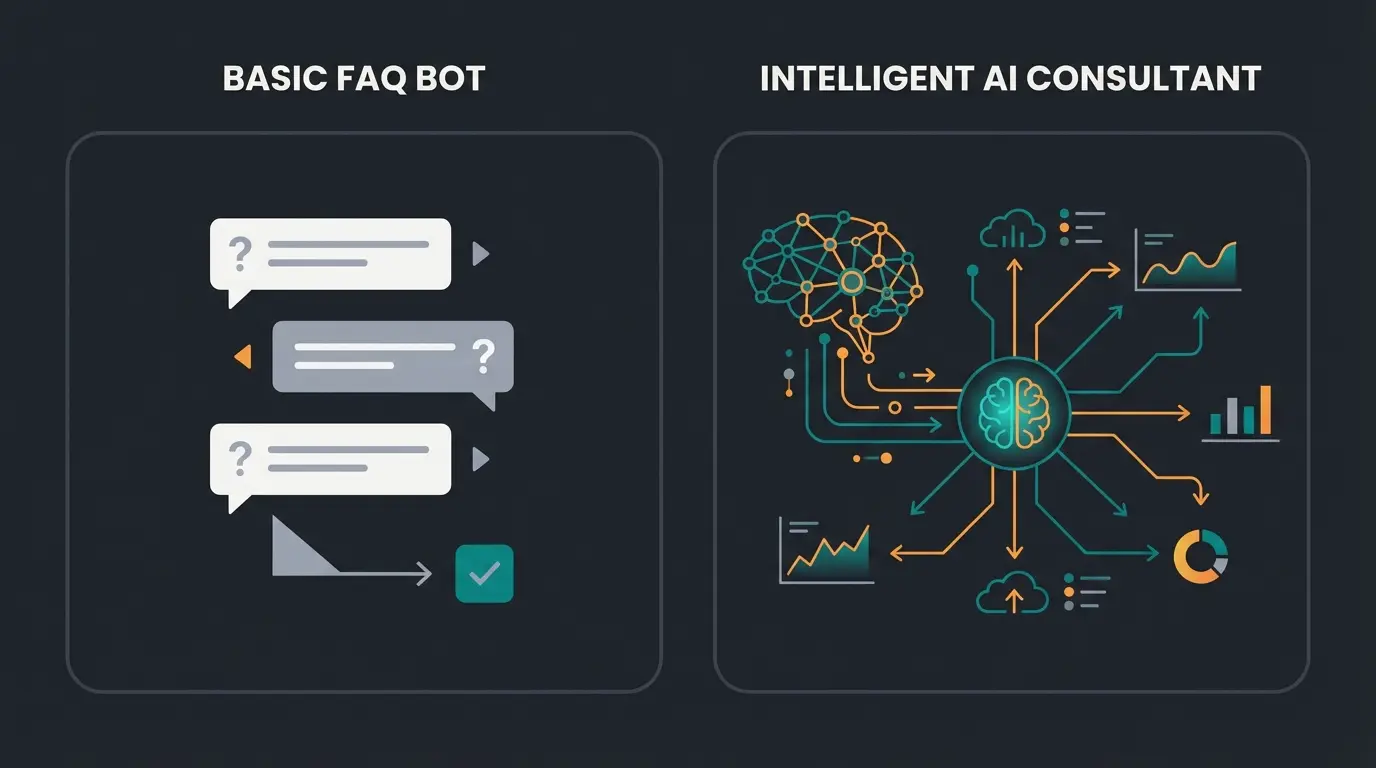
- Real AI (Agents): Acts autonomously, analyzes complex data, provides strategic insights. According to siliconangle.com, these systems are transforming enterprise sales.
- Fake AI: A chatbot that only sends FAQ links and requires constant human intervention.
Comparison of the Best CRM Solutions 2026
Here we compare market leaders and challengers from the perspective of consultation capability for complex products. This isn't just another feature list—it's an analysis of which systems can actually help you sell.
| CRM Software | Type | Best For... | Price Model | Consultation Depth (AI) | GDPR Focus |
|---|---|---|---|---|---|
| Salesforce | Enterprise Suite | Corporations & complex workflows | High (Modular + Implementation) | ⭐⭐⭐⭐ (Agentforce is powerful but complex) | ⭐⭐⭐ (US, but certified) |
| HubSpot | All-in-One | Inbound Marketing & Scaling | Medium to High (Seat-based Pricing) | ⭐⭐⭐ (Breeze AI, Marketing-Content focus) | ⭐⭐⭐ (US, EU Data Center) |
| Pipedrive | Sales CRM | Pure Sales Teams (Closing focus) | Budget to Medium | ⭐⭐ (AI for summaries & next steps) | ⭐⭐⭐ (US/EU Mix) |
| CentralStation | Basic CRM | Small German teams (Simplicity) | Budget (Package prices) | ⭐ (No AI consultation focus) | ⭐⭐⭐⭐⭐ (DE Server) |
| Consultative CRM | AI-Powered CRM | Complex products & SMBs | Transparent / Value-based | ⭐⭐⭐⭐⭐ (Specialized AI Sales Engineer) | ⭐⭐⭐⭐⭐ (Safe AI & GDPR) |
Detailed Analysis of Leading Providers
1. Salesforce: The Industry Giant
Salesforce remains the market leader and now offers powerful AI agents through 'Agentforce,' as reported by omr.com.
- Pro: Infinite customizability. If you can imagine it, Salesforce can (probably) do it.
- Con: The complexity overwhelms many SMBs. Implementation often takes months and consumes budgets that smaller teams simply don't have.
- Verdict: Best CRM software for corporations, often overkill for mid-market companies.
2. HubSpot: The Inbound Marketing Champion
HubSpot revolutionized the market but faces criticism in 2025/2026 for its pricing policy. The switch to strict 'seat-based pricing' has led to price increases for many existing customers, according to babelquest.co.uk, hubspot.com, and simplestrat.com.
- Pro: Excellent usability, strong integration of marketing and sales. The 'Breeze' AI excels at content creation.
- Con: Becomes very expensive at scale. The AI focuses more on marketing copy than deep technical product consultation.
3. Pipedrive: The Focus Specialist
Pipedrive is the tool for 'hunters.' It visualizes the sales process perfectly, as highlighted by pipedrive.com.
- Pro: Very intuitive, quick to set up, laser-focused on closing deals.
- Con: It's a pure sales tool. It lacks the depth to intelligently map complex product catalogs and provide advisory support.
4. CentralStationCRM: The German Basic Solution
For those who prefer simplicity. CentralStationCRM positions itself as a 'merchant's ledger' rather than an AI spaceship, according to centralstationcrm.de and trusted.de.
- Pro: Servers in Germany, extremely simple, fair pricing (still affordable even after the late 2024 increase, per centralstationcrm.de).
- Con: Anyone looking for automation or AI support is in the wrong place. It's a storage location, not an active consultant.
5. Consultative CRM: The New Category
This is where the market gap closes. While other systems manage data, consultative CRM solutions use AI to understand your products.
The Difference: Instead of just knowing that Customer Miller called, the system analyzes their needs and suggests to the sales rep in real-time: 'Customer Miller is asking about Solution A, but based on their technical requirements (from Email 3), Solution B is safer and more cost-effective.'
Target Audience: Companies whose products require explanation. Businesses implementing AI Product Consultation see immediate improvements in response quality and customer satisfaction.
Stop just managing customer data—start using it to provide instant, intelligent product advice. See how consultative CRM technology can reduce your team's ramp-up time by 70%.
Get Your Free DemoDeep Dive: AI in CRM – Beyond Just Writing Emails
When you search for CRM software comparison, you'll often read: 'Now with AI!' But usually, this just means you can have an email drafted at the push of a button. That's nice, but it doesn't revolutionize your revenue.
The Myth: AI as Secretary
Most CRMs use Large Language Models (LLMs) like ChatGPT merely as writing assistants. They summarize meetings or polish grammar. This saves time on administration but doesn't help with the core task: Selling.
The 2026 Reality: AI as 'Sales Engineer'
The real game-changer is multi-agent systems. According to the 'State of AI Agents 2026' report from databricks.com, usage of such systems has increased by 327%.
Why? Because these agents can solve tasks autonomously. Don't think of your CRM as a database—think of it as your most experienced technical sales representative who sits 24/7 next to every junior sales rep.
Multi-agent system adoption surge according to Databricks 2026 report
Customers leave when product information is inadequate
Time for new sales reps to become productive with complex products
A Practical Example
Scenario: A customer asks: 'Does your machine meet ISO standard 12345 and is it compatible with Control System Z?'
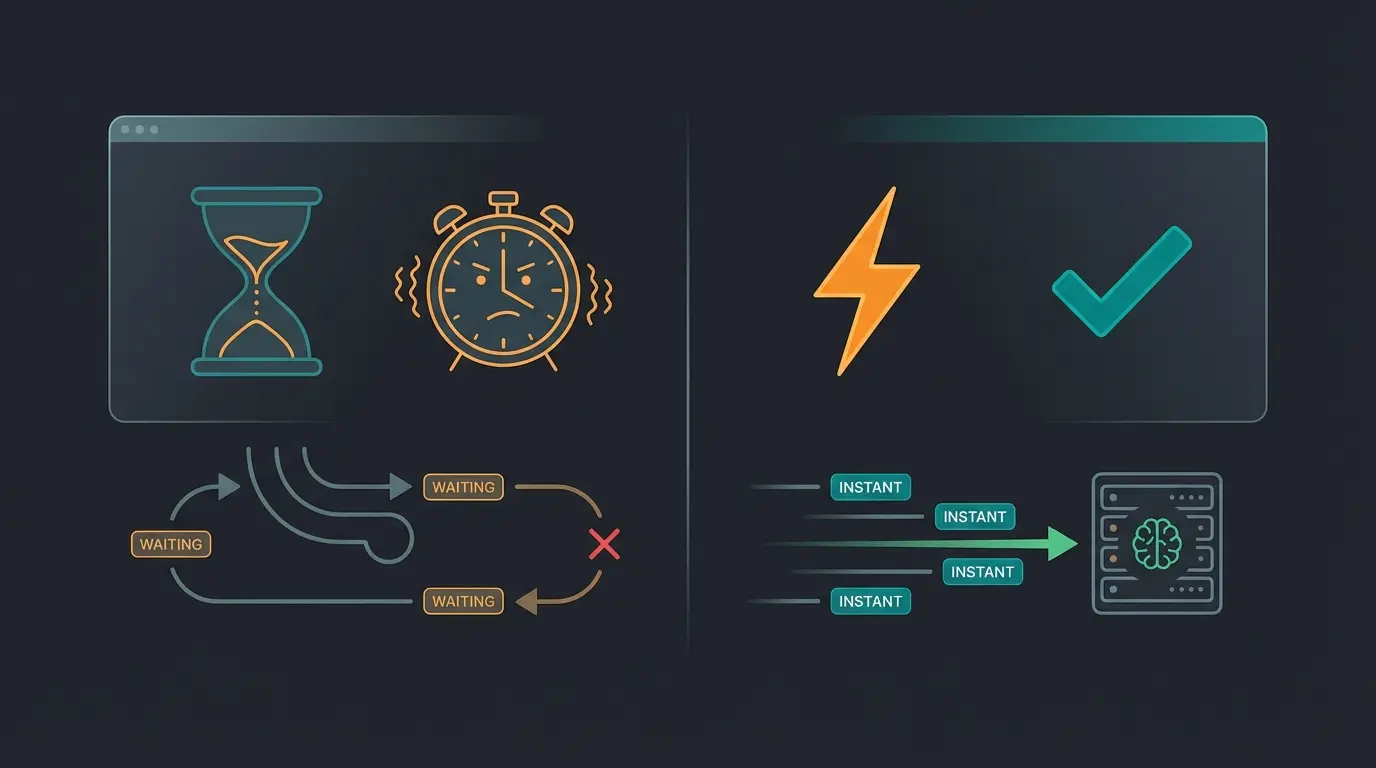
Standard CRM Response: The salesperson searches the drive for data sheets. They find nothing. They call engineering. Engineering is in a meeting. The customer waits.
Consultative CRM Response: The AI accesses your company's entire technical knowledge base (PDFs, wikis, previous tickets) and immediately delivers the answer: 'Yes, ISO 12345 is certified (see Certificate p. 4). Compatibility with Control System Z requires Adapter Cable Part No. 9988.'
That's the difference between data management and sales success. Companies using Produktberatung KI Mitarbeiterin have seen conversion rates improve dramatically through this instant consultation capability.
'German Angst' and Safe AI
A major barrier to AI adoption in Germany is the concern about 'hallucinations' (false responses) and data privacy violations.
Modern systems for the European market therefore work with RAG (Retrieval-Augmented Generation). This means: The AI is not allowed to make things up. It may only provide answers that it finds in your uploaded documents. If it can't find an answer, it honestly says: 'I don't know,' instead of fabricating information. This builds trust and ensures safety.
Costs & ROI: The Hidden Truth Behind License Fees
When companies search for free CRM software or budget options, they often only look at the price per user ('seat'). This approach is dangerous and can lead to expensive mistakes.
The Hidden Costs: Onboarding Time
The Sales Management Association found that it takes an average of 3 to 9 months before a new sales representative is fully productive with complex products, according to getmonetizely.com and performio.co.
Calculate the real cost:
- Salary for 6 months of unproductive time: approximately $35,000 - $60,000
- Lost revenue during this period: Potentially six figures
- Training and supervision costs: Often underestimated
The ROI of a Consultative CRM
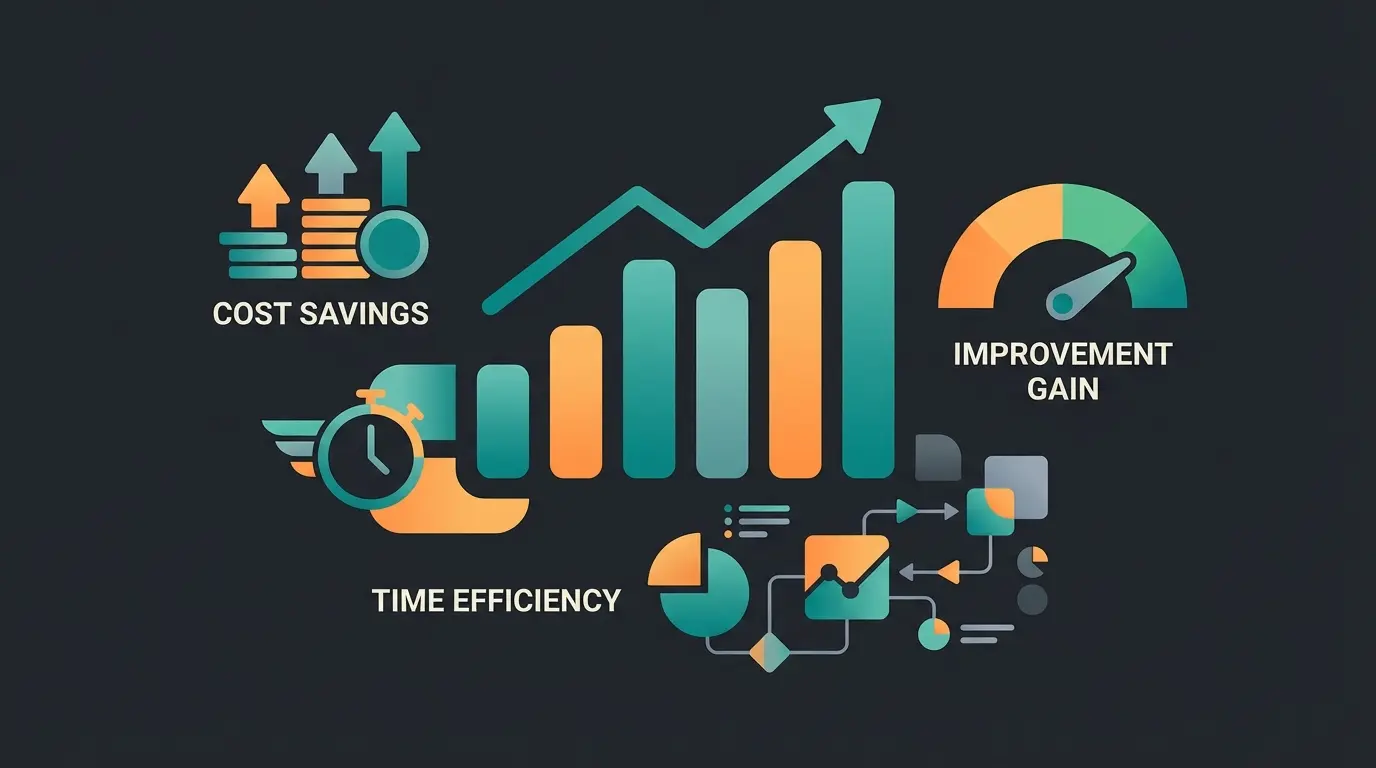
A CRM that functions as an active consultant drastically shortens this 'ramp-up time.' When the system provides product knowledge, the new employee doesn't need to accumulate 10 years of experience to appear competent.
- Traditional CRM: Costs $30/month, but the employee needs 9 months of onboarding.
- AI Consulting CRM: May cost more, but the employee sells confidently and competently from Month 2.
Solutions like AI Employee Theresa demonstrate how AI-powered consultation can transform new hire productivity from day one.
Conclusion: How to Make the Right Decision
The CRM software market in 2026 is more confusing than ever, but also more exciting. The dividing line no longer runs between 'Cloud' and 'On-Premise,' but between 'Dumb' (pure storage) and 'Intelligent' (active consultant).
Your Decision Checklist
- Check Complexity: Do you sell simple products (t-shirts) or complex solutions (machinery, IT, consulting)? The more complex, the more important the AI consultation component becomes.
- Verify Data Privacy: Does the provider meet NIS-2 and GDPR requirements? When in doubt, prefer European hosting structures.
- Run the Consultation Test: During the demo, don't let them show you how to create a contact (everyone can do that). Ask: 'How does the software help me when the customer asks a question I don't know the answer to?'
- Calculate Hidden Costs: Include your employees' onboarding time in the ROI calculation.
Why 'Managing' Is No Longer Sufficient
In a world where customers can Google everything, the salesperson's pure information advantage is gone. Your competitive edge lies in consultation quality. Use software that secures this advantage.
The businesses that will thrive in 2026 aren't those with the biggest customer databases—they're the ones that can transform data into instant, intelligent advice that closes deals.
Frequently Asked Questions About CRM Software
Traditional CRM focuses on storing and organizing customer data—contact information, interaction history, and deal stages. Consultative CRM goes further by using AI to understand your product catalog and provide real-time advice to sales teams. While traditional CRM tells you that a customer called, consultative CRM tells you what to recommend based on their specific needs and your product capabilities.
Free CRM software can work for very small teams with simple products, but it often comes with significant limitations: restricted user counts, limited automation, minimal AI features, and sometimes concerning data privacy practices. For businesses selling complex or explanation-heavy products, the hidden costs of free CRM (longer sales cycles, higher onboarding time, missed opportunities) typically outweigh the license savings.
For European businesses, GDPR compliance is non-negotiable. The new NIS-2 directive (effective 2024/2025) adds additional requirements for many mid-sized companies. Look for CRM providers with European data centers, clear data processing agreements, and transparent privacy policies. US-based solutions can work but require additional compliance verification through mechanisms like the Data Privacy Framework.
Implementation timelines vary dramatically. Basic CRMs like CentralStation can be operational in days. Mid-tier solutions like Pipedrive or HubSpot typically require 2-4 weeks for proper setup. Enterprise solutions like Salesforce often take 3-6 months or longer. AI-powered consultative CRMs require additional time for knowledge base training but can significantly reduce ongoing employee onboarding time.
AI-washing refers to marketing basic automation features as artificial intelligence. To identify it, ask vendors specific questions: 'Can the AI answer product questions it wasn't explicitly programmed for?' 'Does it learn from new documents automatically?' 'Can it provide strategic recommendations based on customer data analysis?' If the 'AI' only sends templated emails or FAQ links, it's likely AI-washing rather than genuine intelligent consultation capability.
See how AI-powered product consultation can transform your sales team's effectiveness. Get instant, accurate answers to complex customer questions—and watch your conversion rates climb.
Start Your Free Trial
Lasse is CEO and co-founder of Qualimero. After completing his MBA at WHU and scaling a company to seven-figure revenue, he founded Qualimero to build AI-powered digital employees for e-commerce. His focus: helping businesses measurably improve customer interaction through intelligent automation.