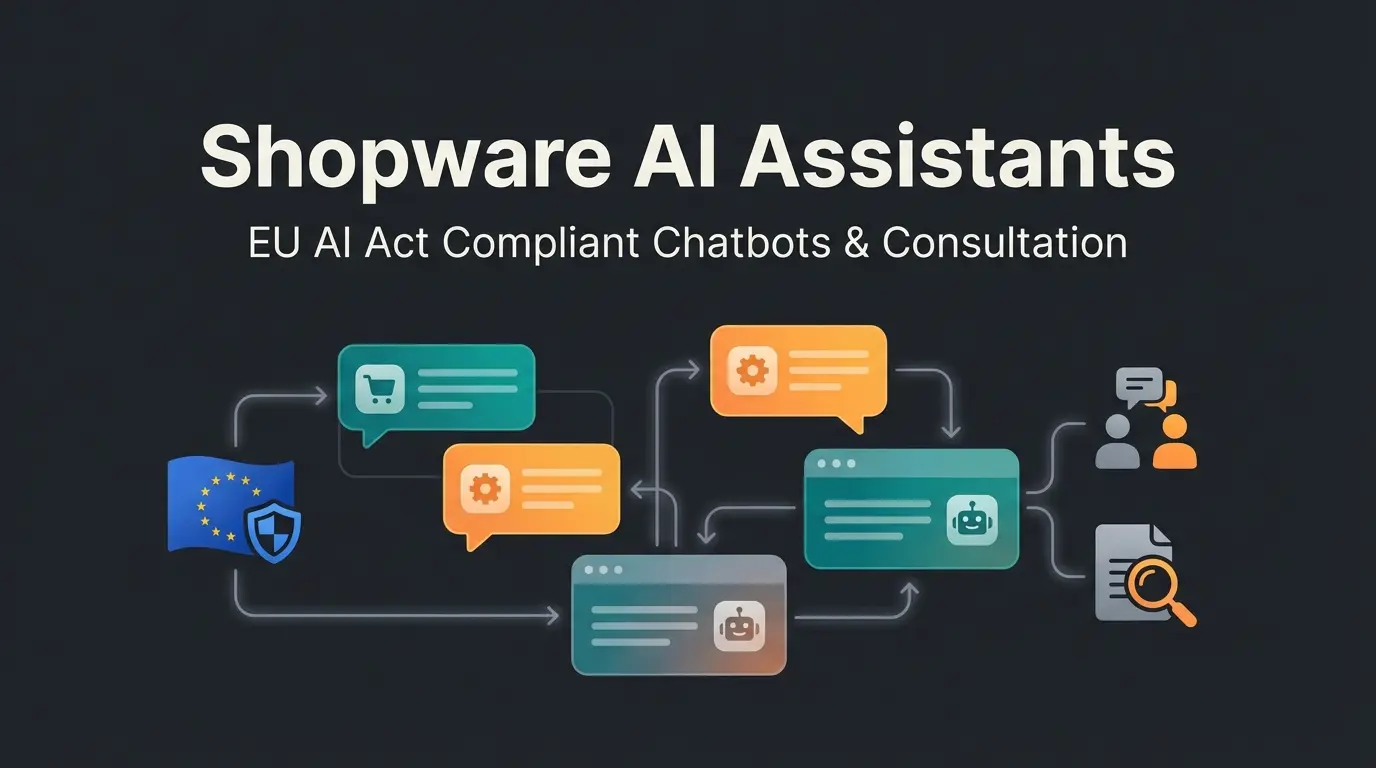
Why the Contact Form Has Become Obsolete
Imagine walking into a physical store. You have a question about a product, look around, but no one is there. Instead, you find a note at the checkout: "Please write your question on this slip and drop it in the box. We will get back to you within 24 to 48 hours."
Would you buy? Probably not. You would leave the store and go to a competitor.
This exact scenario plays out millions of times daily in e-commerce and on B2B websites across the globe. The static contact form is a relic from the early days of the internet. In an era where speed and user experience (UX) determine whether a purchase is completed, customers expect instant answers. According to research from SQ Magazine, instant communication has become the baseline expectation for modern consumers.
However, many businesses face a significant dilemma:
- Staff shortages: Small and medium-sized teams cannot provide 24/7 support through human employees alone.
- Chatbot frustration: Traditional rule-based chatbots ("Press 1 for sales") often frustrate users more than they help, leading to high abandonment rates as noted by GoVivace and MeetChatty.
The solution lies in the next generation of live chat website integration: The transformation from a reactive support channel to a proactive AI sales consultant. This comprehensive guide walks you through strategic planning, technical setup, and legally compliant integration (GDPR) of a modern chat system that doesn't just solve tickets—it actively sells. Understanding the fundamentals of AI Customer Service is essential for making this transformation successful.
Why a Live Chat Website is Essential Today
Before diving into technical details, we need to understand why the keyword "live chat website" appears at the top of marketing decision-makers' strategy documents for 2025/2026. This is no longer about "nice-to-have" features—it's about concrete competitive advantages.
Speed Beats Perfection
The attention span of online users continues to decline. Studies from Hiver HQ show that customers who receive an answer within 5 to 10 seconds demonstrate significantly higher satisfaction levels. A live chat eliminates the "friction" in the purchasing process. When a customer has a question about shipping costs or product compatibility, chat provides the shortest path to an answer—and thus to the shopping cart.
Conversion Rate and Revenue Growth
The data is clear and compelling:
Websites with live chat see significantly higher conversion rates according to SalesGroup.ai research
Customers who use chat spend more per purchase on average
Visitors proactively invited to chat are nearly three times more likely to complete a purchase
These statistics are backed by extensive research from SalesGroup.ai, Zoho, and Gorgias.
Trust Through Accessibility
Particularly in the German-speaking market (Germany, Austria, Switzerland), trust is a hard currency. A visible chat widget signals: "We're here. We're a real company with real contacts." Even if the user doesn't actively use the chat, the mere presence builds trust and lowers the psychological barrier to purchase, as confirmed by LiveChat research. This is where AI Chatbots transform customer service from a cost center into a revenue driver.
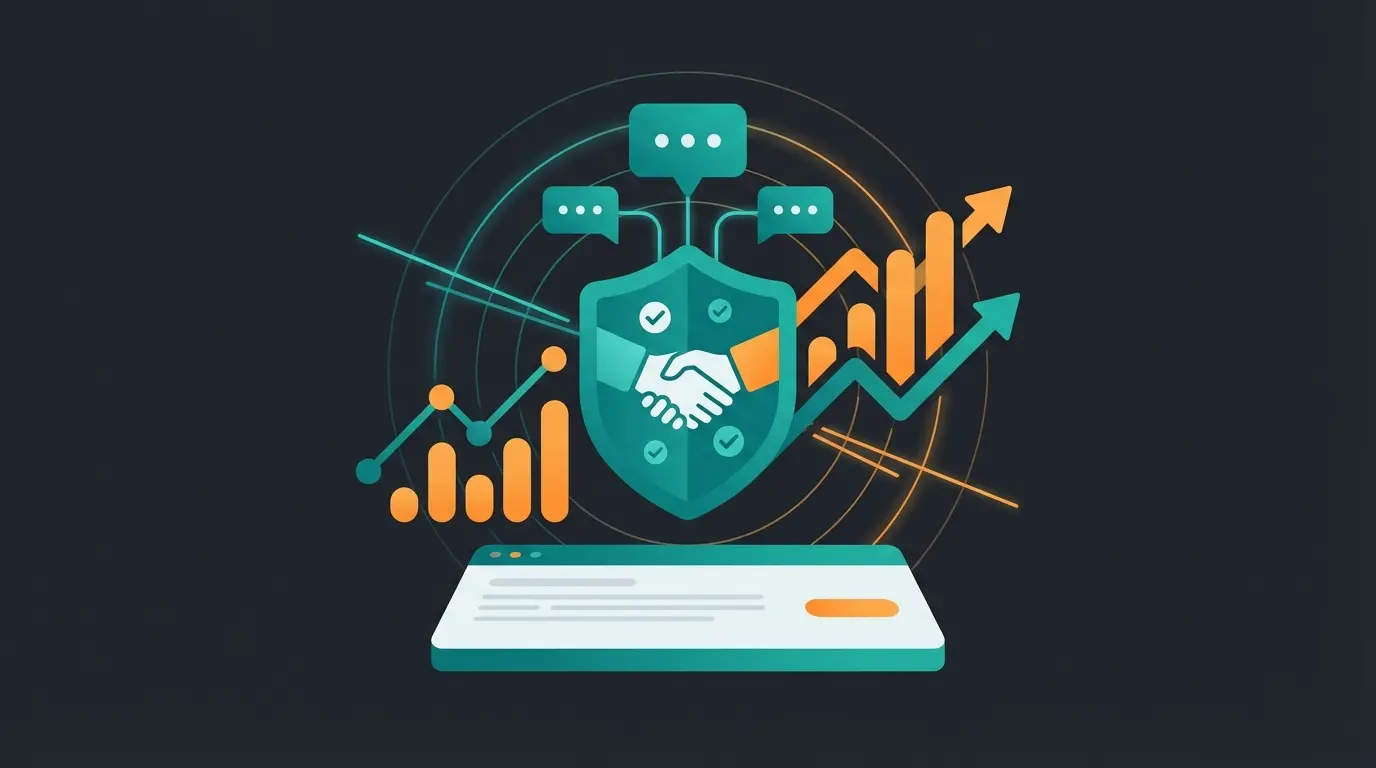
The 3 Types of Website Chat: Positioning Your Solution
When you search for "live chat setup," you'll be confronted with hundreds of tools. To make the right choice, you need to understand the three evolutionary stages of website chat. Most companies are stuck at Stage 1 or 2, while market leaders are already utilizing Stage 3. Understanding the various types of chatbots helps you make an informed decision.
Type 1: Classic Live Chat (Human-Based)
This is the traditional variant. A visitor writes, a human employee responds.
- Advantage: High empathy, complex problem-solving possible, personal touch.
- Disadvantage: Extremely expensive, not scalable, limited operating hours (no 24/7), waiting times for customers.
- Status: Good for high-ticket support, but often inefficient as a standalone solution.
Type 2: Rule-Based Chatbot (The Decision Tree)
These are the bots of the last decade. They operate on a rigid "if-then" principle, following predetermined scripts and decision trees.
- Advantage: Inexpensive, 24/7 available, handles basic FAQ queries.
- Disadvantage: "Dumb" in understanding nuances. If the customer asks a question not in the script, the bot fails ("I didn't understand that"). This often leads to frustration and high bounce rates according to Persana.ai research.
- Status: Outdated for sales purposes.
Type 3: AI Sales Consultant (AI Sales Agent)
Here lies your opportunity for differentiation. These systems are based on Large Language Models (LLMs) and Generative AI. They understand context, sentiment, and product nuances. The evolution toward conversational AI represents a fundamental shift in how businesses interact with customers.
- Advantage: Understands natural language, can advise ("Which shirt goes with these pants?"), available 24/7, learns from interactions as noted by HelloSprout.ai and Qualified.
- USP: It doesn't act like a support employee solving problems, but like a salesperson in the store who actively advises.
- Status: The new standard for 2026.
Modern AI product consultants represent this third evolutionary stage, capable of understanding customer intent and guiding them toward the right purchase decision.
| Feature | Human Agent | Rule-Based Chatbot | AI Sales Consultant |
|---|---|---|---|
| Availability | Limited (office hours) | 24/7 | 24/7 |
| Cost per Contact | High | Very Low | Low |
| Context Understanding | Excellent | Poor (keywords only) | High (semantic) |
| Scalability | Low (staff shortage) | High | Unlimited |
| Objective | Support & Relationship | Ticket Deflection | Active Sales & Consultation |
| Conversion Impact | High (when available) | Low | Very High |
Technical Guide: Setting Up Live Chat Integration
Integrating a chat on your website is no longer rocket science today. Whether you use WordPress, Shopify, or a custom solution, the process usually follows a similar pattern. Here we focus on the practical aspects of website chat integration that will get you up and running quickly.
Step 1: Choosing the Right Software
Before you copy any code, you need to choose the right tool. Pay attention to the following criteria for the European and international market:
- AI Capability: Can the tool be trained with your knowledge base (product data, FAQs)? This is essential for effective AI product consultation.
- GDPR Compliance: Does the provider offer servers in the EU and a Data Processing Agreement (DPA)? More on this in Chapter V.
- Omnichannel: Can the tool also route WhatsApp or Instagram DMs to the same inbox? This capability is highlighted by EasyChatDesk and Sobot as crucial for modern customer engagement.
Popular Tools for Different Use Cases:
- E-Commerce Focus: Gorgias, Tidio (strong with Shopify) according to Gorgias.
- All-Rounder & German Market: Userlike (strong data protection focus), Chatwoot (Open Source) as noted by Lime Technologies and Dev.to.
- Enterprise: Salesforce, HubSpot, Zendesk.
Step 2: Technical Integration (2 Methods)
Method A: Plugin Integration (WordPress / Shopify)
This is the easiest path for non-technical users and can be completed in minutes:
- Shopify: Go to the Shopify App Store, search for your provider (e.g., "Tidio" or "Gorgias"), and click "Add app." The app automatically injects the code into your theme.
- WordPress: Install the official plugin from your chat provider through the plugin directory. After activation, you usually just need to connect with your account.
Method B: Script Integration (Universal)
For maximum control or custom websites, use the JavaScript snippet approach:
- Log into your chat provider's dashboard.
- Look for the widget code under "Settings" or "Installation."
- Copy the script provided.
- Paste it into the `<body>` tag of your website (often just before the closing `</body>` tag) so the chat loading doesn't block page performance, as recommended by Dev.to.
Step 3: Design and Configuration (The Widget)
A common mistake is leaving the default design unchanged. Your chat widget is an extension of your brand:
- Color: Adjust the chat button color exactly to your Corporate Identity (CI).
- Position: The standard is bottom right. Make sure the button doesn't cover important elements on mobile devices (like the "Add to Cart" button) according to PopupSmart.
- Welcome Message: Avoid generic texts like "How can I help?" Use context-based greetings (see Chapter VI).
Experience how an AI-powered sales consultant can engage visitors, answer product questions, and drive conversions around the clock—without increasing your support team.
Start Your Free TrialBest Practices for GDPR Compliance and Data Protection
In Germany and across the EU, website chat integration without strict adherence to GDPR (General Data Protection Regulation) poses a significant legal risk. Many international "how-to" guides ignore this point, but for European businesses, it's absolutely essential. This is where AI consulting in e-commerce becomes crucial for understanding legal requirements.
The GDPR Checklist for Live Chats (2025/2026)
To avoid legal issues and build trust, you must check off the following points according to research from Lime Technologies, isico.de, and Pexon Consulting:
1. Server Location & Data Transfer
- Choose providers that host data in the EU (e.g., Frankfurt or Ireland).
- For US providers: Check if they are certified under the "Data Privacy Framework" and conclude Standard Contractual Clauses (SCCs).
2. Data Processing Agreement (DPA)
You must conclude a DPA (Data Processing Agreement, known as AVV in German) with the chat provider. With reputable providers, this is often possible digitally through the dashboard.
3. Consent Management
The most important point: The chat often may only be loaded after the user has consented.
- Integrate the chat into your Consent Management Platform (CMP) like Usercentrics or Cookiebot.
- Category: Usually "Functional" or "Marketing." Without consent, no connection to the provider's servers may be established (no IP transmission).
4. Privacy Policy Update
Supplement your privacy policy with a specific section about the live chat. Include: Which tool is used? What data is transmitted? What is the purpose (support/sales)? What is the legal basis (Art. 6 para. 1 lit. a GDPR - consent)? How long is data stored?
5. Deletion Concept
Ensure chat logs are not stored indefinitely. Define automatic deletion routines (e.g., after 30 or 90 days) unless legal retention periods apply, as recommended by Digital Samba.
Data Processing Agreement concluded with your chat provider
Verify server location in EU or adequacy decision compliance
Chat blocked in cookie banner until user consent is given
Specific live chat section added to your website privacy policy
Automatic deletion schedule for chat logs defined and implemented
Advanced Strategy: From Support to Sales Consultation
Here's where the wheat is separated from the chaff. Most companies passively wait for a customer to have a problem. To transform your live chat website into a revenue driver, you need to be proactive. Understanding how AI Agents are evolving helps you leverage these advanced strategies effectively.
Proactive Triggers: Guided Selling in Action
Instead of waiting, your AI agent approaches the customer—but intelligently, not annoyingly. This approach to AI virtual sales can dramatically increase your conversion rates.
Scenario A (Cart Abandoner): A customer has €200 worth of products in the cart but moves their mouse toward "Close" (Exit Intent).
- Trigger: "Hello! I see you're still thinking. Do you have a question about shipping times or return policies?"
Scenario B (Complex Product): A user spends more than 60 seconds on a complex product page without taking action.
- Trigger: "The selection is vast. Would you like me to quickly help you find the right size for your project?"
This strategy can massively increase conversion rates with undecided visitors, as confirmed by Gorgias research and SaaSworthy. For businesses looking to expand beyond web chat, automated sales consultation via WhatsApp offers similar opportunities.
The Hybrid Approach: AI + Human Collaboration
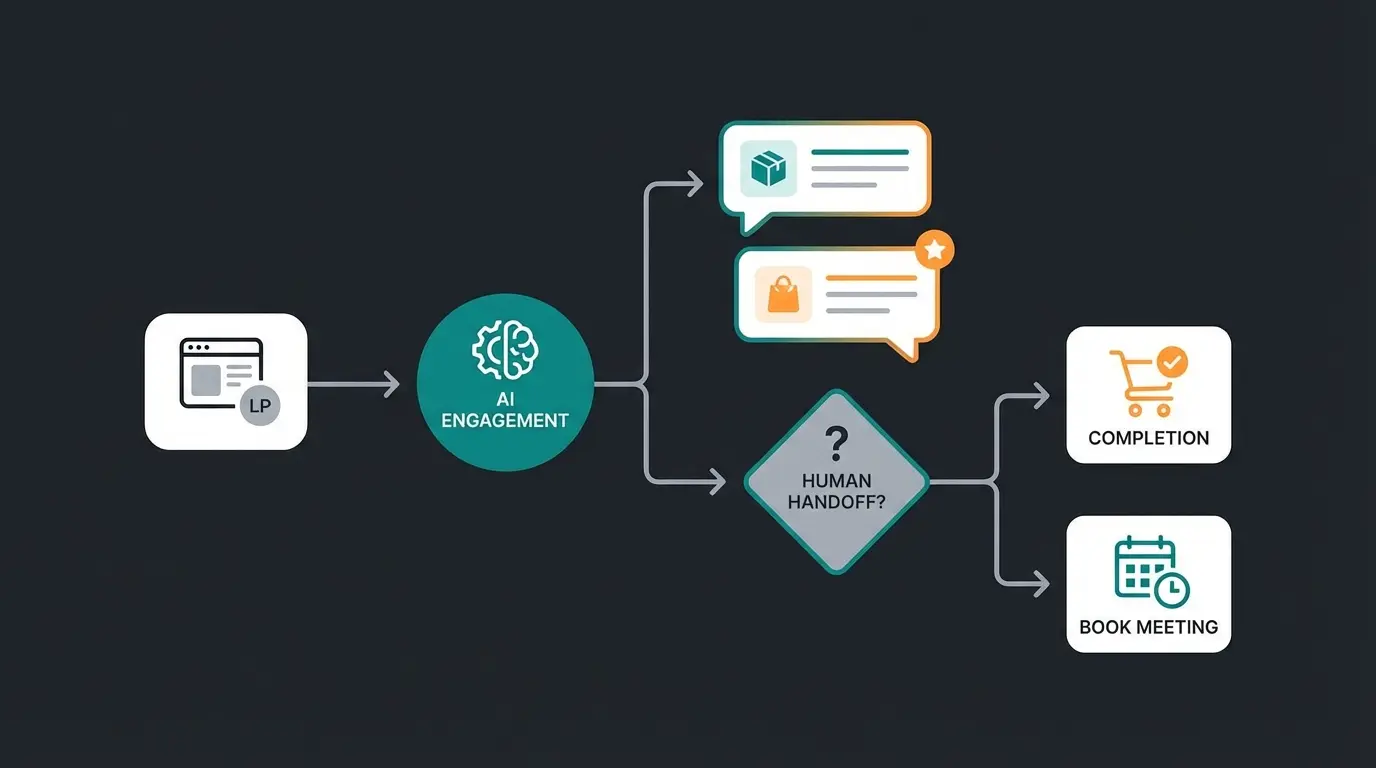
Complete automation isn't always the goal. The ideal workflow for 2026 looks like this, representing the evolution described in our AI chatbot guide:
AI agent greets, qualifies the lead, and answers standard questions (size, price, availability)
AI analyzes purchase intent and complexity of the request in real-time
High purchase interest or complex emotional complaint triggers handoff to human agent
Seamless transition to human agent with full conversation context preserved
If no human available, AI offers to book an appointment or save request as ticket
This hybrid model leverages the strengths of AI Customer Service while maintaining the human touch for complex interactions.
Tone and Branding: Your Chatbot as Brand Ambassador
Your chatbot is part of your brand identity and should reflect your company's personality:
- Formal or Informal? Match the address style to your website and target audience. B2B companies might prefer formal language, while D2C brands can be more casual.
- Persona: Give your AI agent a name and personality. A "Mike, the Digital Workshop Expert" feels more authentic in a B2B auto parts shop than a generic "Support Bot."
- Consistency: Ensure the chat's tone matches your email communication, social media, and other customer touchpoints.
The Future Belongs to Automated Consultation
Website chat integration is technically accomplished in just a few minutes today. But the technology alone is no magic bullet. The true value emerges when you understand the chat not as a "complaint box" but as a digital sales floor.
The data for 2025 and beyond clearly shows: Customers don't want to wait, and they want personalized consultation. An AI-powered live chat bridges the gap between the anonymity of e-commerce and the consulting expertise of retail.
Summary of Next Steps
- Check Current Status: Do you only have a contact form? You're leaving money on the table.
- Choose Tool: Decide on a solution that combines AI features and GDPR compliance.
- Integrate: Use plugins or scripts for technical integration—most take under 10 minutes.
- Ensure Legal Compliance: Get your data protection officer involved (DPA, cookie banner, privacy policy updates).
- Train: Feed the AI with your product knowledge to turn visitors into customers.
The transformation from support channel to AI sales consultant represents the next major evolution in e-commerce customer experience. Companies that embrace this shift now will have a significant competitive advantage as customer expectations continue to rise.
Frequently Asked Questions About Live Chat Websites
Basic integration typically takes 5-15 minutes using plugins for platforms like WordPress or Shopify. Script-based integration for custom websites takes about 30 minutes. However, optimizing triggers, training the AI with your product data, and ensuring GDPR compliance can take several days to fully complete for maximum effectiveness.
The ideal solution combines both: an AI-powered chatbot that can handle 80% of inquiries 24/7 with seamless handoff to human agents for complex issues. Pure live chat limits you to business hours and requires significant staffing, while rule-based chatbots frustrate users with limited capabilities. Modern AI sales consultants offer the best of both worlds.
You must ensure: EU server location or adequate data protection agreements for non-EU providers, a signed Data Processing Agreement (DPA), integration with your cookie consent tool to block chat until consent is given, an updated privacy policy section, and defined data retention and deletion schedules.
Yes, research consistently shows websites with live chat see up to 40% higher conversion rates. Customers who engage with chat spend 60% more on average, and proactive chat invitations make visitors 2.8x more likely to purchase. The key is using AI-powered consultation rather than basic support chat.
Traditional chatbots use rigid decision trees and can only respond to predefined questions. AI sales consultants use Large Language Models (LLMs) to understand context, provide personalized product recommendations, handle nuanced questions, and actively guide customers toward purchase decisions—functioning like a knowledgeable salesperson rather than a FAQ machine.
Deploy an AI-powered sales consultant on your website today. No coding required, GDPR-compliant, and proven to increase conversions by up to 40%.
Get Started Free