
Why Magento Is More Than Just a Shop System
Magento (Adobe Commerce) is globally recognized as the powerhouse among e-commerce platforms. It's scalable, robust, and handles complex product catalogs with ease. However, when the conversation turns to Magento CMS (Content Management System), many shop operators still cringe. The system's reputation precedes it: too technical, too rigid, too cumbersome for modern storytelling.
But this image is outdated. With the introduction of the Page Builder and the massive leaps toward AI integration in 2024 and 2025, as highlighted by Grazitti Interactive, the tables have turned. Anyone who views Magento today merely as "shopping cart software" is leaving massive revenue potential on the table.
In this guide, we examine Magento content management not through the rearview mirror of version 1.9, but through the windshield of version 2.4.8 and beyond. We'll show you how to move from simply managing static pages ("About Us," "Terms and Conditions") to a dynamic, sales-promoting content strategy. We bridge the gap between technical administration and modern customer experience—from Page Builder basics to the integration of AI-powered sales consultants that use your CMS data to actively advise customers.
How Magento Content Management Works: The Core
Before we look into the future of AI automation, we need to understand the foundation. A solid understanding of Magento page management functions is the basis for any advanced strategy. At its core, Magento distinguishes between three main components for content: Pages, Blocks, and Widgets.
The Trinity of Magento CMS
Many beginners confuse these elements. Here's the clear distinction for your daily work:
| Feature | Definition | Typical Use Case | Interaction |
|---|---|---|---|
| CMS Pages | Standalone URLs with full content | Homepage, About Us, Legal Notice, Campaign Landing Pages | Customer explicitly navigates to this URL |
| Static Blocks | Content snippets without their own URL | Header notices ('Free shipping over $50'), footer links, sidebar promotions | Injected into other pages or layouts |
| Widgets | Dynamic elements with logic | 'Recently Viewed Products,' 'New Products on Sale,' Rotating Banners | Display content based on rules or user behavior |
The Game Changer: Magento Page Builder
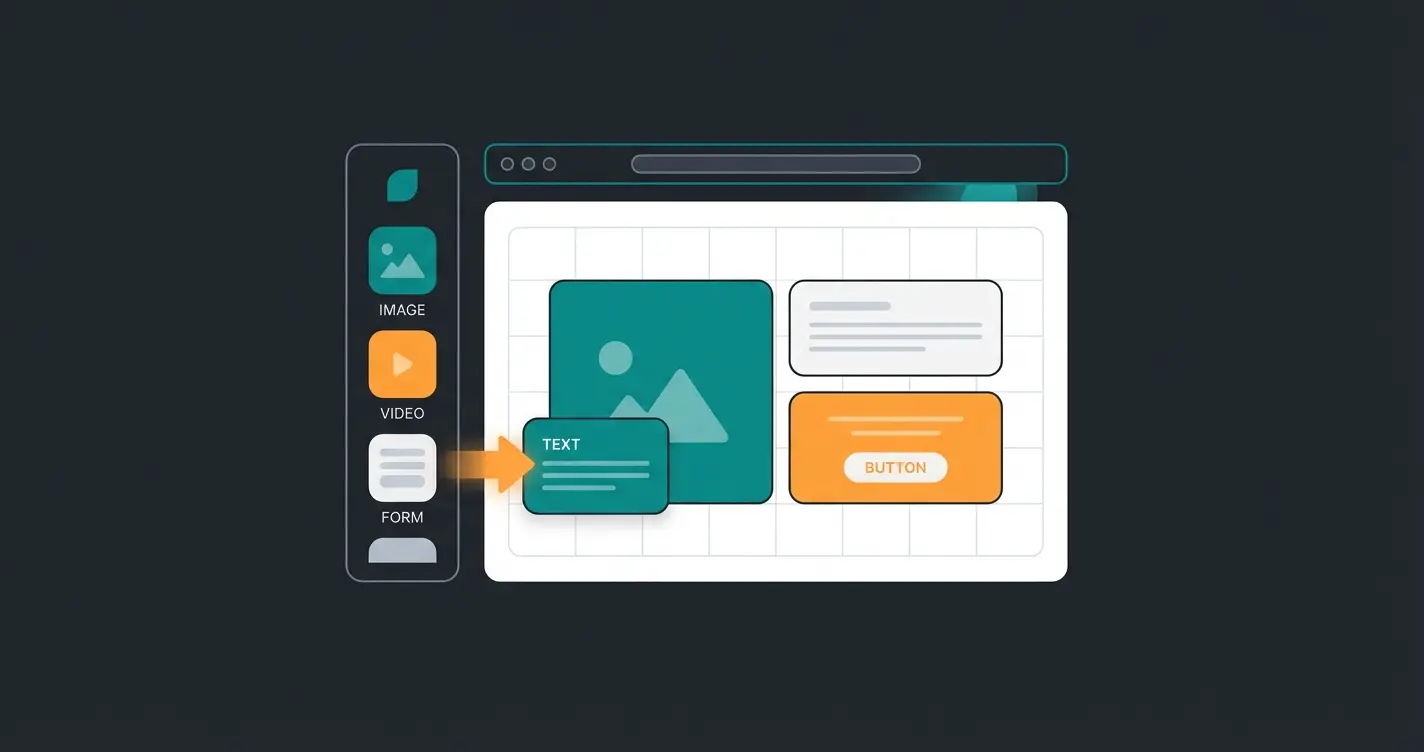
Since version 2.4.3 (and continued in the current roadmap to 2.4.8), the Page Builder has been integrated as standard, according to Meetanshi. It has democratized Magento content management. Where developers previously had to write HTML code to place an image next to text, marketing teams now accomplish this with drag-and-drop functionality.
The most important Page Builder features:
- Drag-and-Drop Layouts: Simply drag rows, columns, and grids onto the workspace
- Live Preview: See in the backend almost exactly what the customer will see in the frontend (WYSIWYG - What You See Is What You Get)
- Content Types: Pre-built elements for headings, buttons, images, videos, sliders, and Google Maps as documented by Webkul
- Time Scheduling: Plan content in advance. You can build a Black Friday landing page today, and the system will automatically go live on the scheduled date
Media Gallery: More Than Just a Folder
Image management was often a pain point in Magento. The modern Media Gallery (integrated with Adobe Stock in the Commerce Edition, but also significantly improved in Open Source) now allows:
- Tagging: Keyword tagging of images for faster retrieval
- Optimization: Automatic resizing (in connection with Fastly or CDNs)
- Duplicate Detection: Avoiding storage waste through multiple uploads of the same image
The Problem with Standard Magento CMS
If the Page Builder is so great, where's the problem? The problem lies not in the tool, but in strategy and scalability. Understanding these limitations is crucial before implementing AI capabilities that can overcome them.
The "Static Trap"
Most shops use the Magento CMS purely statically. They build a beautiful "Laptop Buying Guide" page. The customer must find this page, read it from top to bottom, and then make the mental leap themselves to determine which product suits them. That's Web 1.0. In an era where users are accustomed to TikTok algorithms and ChatGPT, wading through static text deserts feels archaic.
The Maintenance Nightmare (High Workload)
Imagine you run a shop for auto parts. You want to create a landing page for each car brand and model to capture SEO traffic.
- Brands: 50
- Models: 500
- Required CMS Pages: 500+
Creating this manually with the Page Builder is economic suicide. Even with "duplicate content" functions, you need weeks. This is where manual Magento page management reaches its limits.
Lacking Interaction
A CMS block doesn't respond. It only "transmits." When a customer is on the "Hiking Boot Care Instructions" page but actually wants to know whether their specific shoe needs wax or spray, the general text often doesn't help them. They abandon the page and ask Google (or the competition).
Average time to create one CMS page with Page Builder
For comprehensive product coverage in large catalogs
When customers can't find personalized answers quickly
Discover how AI-powered product consultation can turn your existing Magento CMS data into dynamic, personalized customer experiences that drive conversions.
Start Your Free TrialThe Future: AI-Driven Content Management
Here we pivot from managing static pages to active product consultation. In 2025, Magento content management no longer means typing text, but structuring data for AI models. This represents a fundamental shift in how we think about AI customer service and content strategy.
From Text to Consultation: Generative AI in Action
Instead of manually writing 500 static pages, modern Magento setups use AI extensions (such as modules for OpenAI/ChatGPT or Adobe Sensei GenAI) to dynamically generate content, as detailed by Webshop Extension.
The workflow of the future:
Maintain attributes in Magento (material, fit, occasion) cleanly
Define a prompt in the backend instead of writing text manually
The AI creates unique descriptions for thousands of products in seconds
Human review ensures quality before automated publishing
For example, instead of writing a product description, you define a prompt: "Create a product description for [Product Name] based on attributes [Material, Color], in an 'adventurous' tone for the target audience 'outdoor fans.'" The AI then generates unique descriptions for thousands of products in seconds.
Dynamic "Pages" Instead of Static FAQs
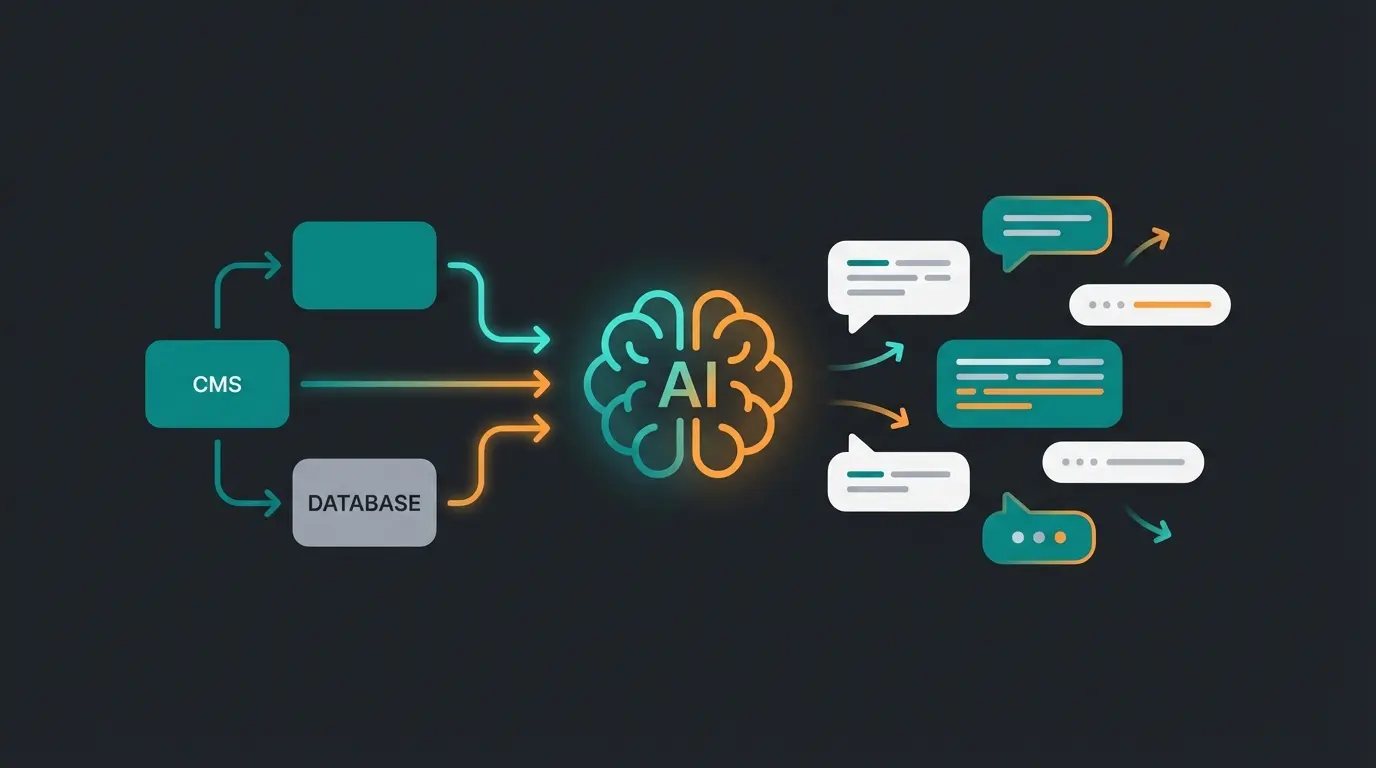
Imagine your Magento CMS feeds a chatbot. This is where AI Chatbots become transformative for customer experience.
- Old approach: Customer reads FAQ page "Returns"
- New approach: Customer asks in chat: "Can I return the shoes if I've already worn them?"
- The technology: The chatbot accesses CMS data (return policy page) and product data, responding: "According to our policies, we don't accept worn shoes for return unless there's a defect. Is this a complaint?"
The CMS becomes the knowledge base for your AI agents. This represents the evolution toward AI product consultation that actively engages customers rather than passively waiting for them to find information.
Automated Translation and Localization with DeepL
For German shops expanding internationally, the language barrier in CMS is often the biggest blocker. Manual translations are expensive and slow. This is where DeepL integrations for Magento 2 come into play. Extensions enable one-click translation of CMS pages, blocks, and product attributes, as documented by Extendware.
Benefits of DeepL integration:
- Context Understanding: DeepL is known for significantly more natural translations than older tools
- Glossaries: You can define technical terms (e.g., 'threaded fitting') that must always be translated consistently—essential for technical accessories, as explained by Web-Vision
- Bulk Processing: Translate your entire shop into French or Italian overnight, as demonstrated by Extendware.de
Best Practices for German Shops (DACH Region)
The German market has specific requirements for Magento CMS, particularly of a legal nature. Understanding the regulatory landscape, including the EU AI Act, is essential for compliant operations. Here are the essential best practices.
Legal Compliance: Impressum & Datenschutz
In Germany, the Impressum (legal notice) and Datenschutzerklärung (privacy policy) are not "nice extras" but mandatory content subject to legal warnings, as noted by Shopify's compliance resources.
- Technical Implementation: Create these as CMS Pages
- Linking: Use Static Blocks or Widgets to display links globally in the footer on every page
- Content: Use generators (e.g., eRecht24 or Trusted Shops), but copy the HTML code, not just the text, to preserve formatting, as shown in YouTube tutorials and by eBakery
- Privacy Update: Ensure your privacy policy dynamically references the cookies used (Cookie Consent Tool)
Using Store Views Correctly
Many German shops also sell to Austria or Switzerland. The common mistake is creating one CMS page for everyone and hoping it fits. The solution is to use Magento's "Store View" hierarchy effectively.
- Create a "Shipping Information" page
- Select the Store View "Austria" in the Page Builder
- Change only the block with shipping costs
- The rest of the content remains identical (fallback principle)
This approach enables efficient localization while maintaining content consistency across regions—a key consideration for AI consultation implementations.
Performance Is King: Core Web Vitals
Google penalizes slow pages. CMS pages with huge, unoptimized images from the Page Builder are often the culprits. This directly impacts your AI rankings potential.
- Image Formats: Use WebP. Magento supports this natively
- Varnish Cache: Ensure your CMS pages are "cacheable." Never insert blocks that have `cacheable="false"` in the layout XML, otherwise the entire page will be reloaded with every request, bringing the server to its knees
Comparison: Standard CMS vs. AI-Enhanced CMS
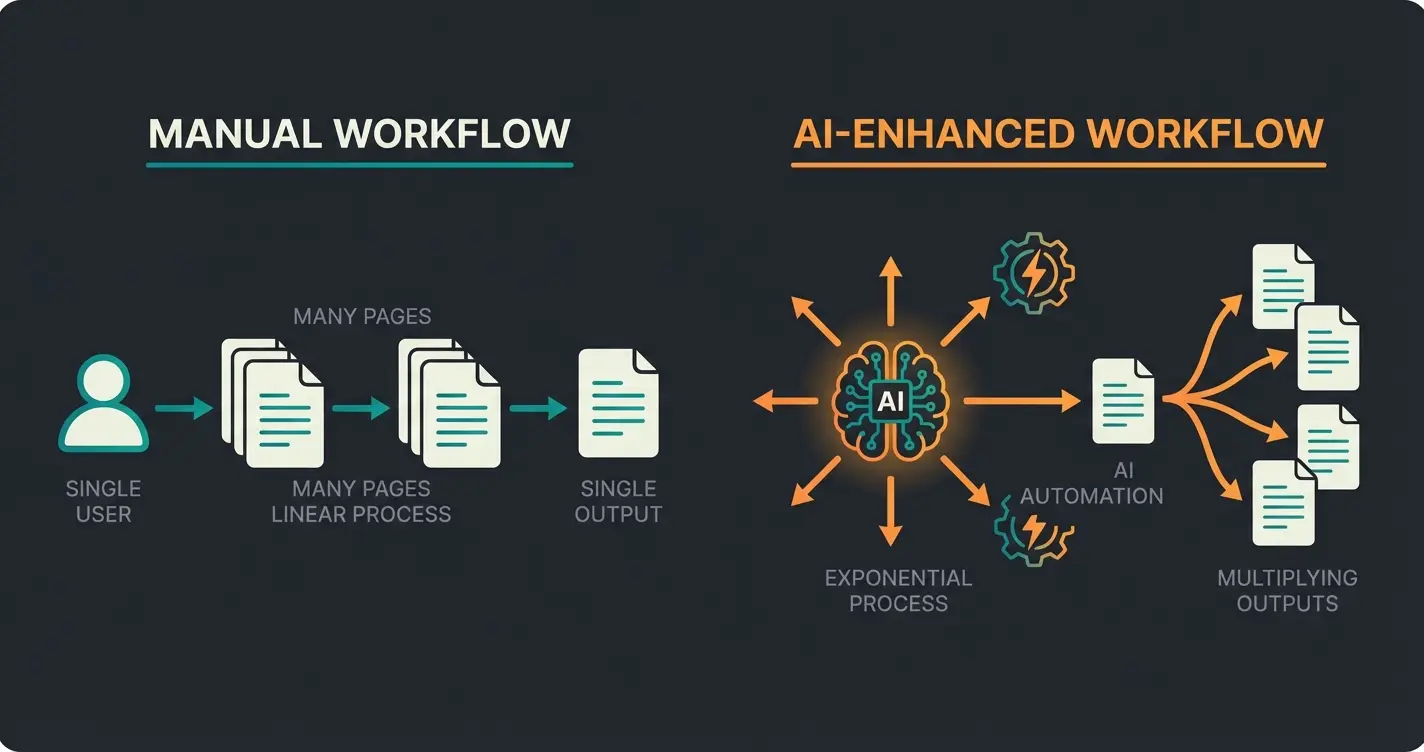
To illustrate the added value of modernization, here's a direct comparison that shows why AI product consultants are becoming essential:
| Feature | Standard Magento CMS | AI-Enhanced Magento CMS |
|---|---|---|
| Content Creation | Manual (typing, formatting) | Generative (prompting, review) |
| Scalability | Linear (1 hour per page) | Exponential (1 hour for 100 page prompts) |
| Translation | Agency / Manual | Automated (DeepL API) |
| Interaction | Passive (reading) | Active (chatbot / consultation) |
| Personalization | Segment-based (rough) | 1:1 Personalization (Adobe Sensei) |
| Maintenance | High (every change manual) | Medium (adjust rules & prompts) |
Step-by-Step: How to Start the Transformation
You don't have to rebuild your entire shop tomorrow. Start iteratively. Whether you're implementing AI employees or simply optimizing your content workflow, these steps apply:
Check under Content > Elements > Pages which CMS pages are outdated. Delete or deactivate 'zombie' pages
Convert recurring content (USPs, shipping info) into Static Blocks for easier maintenance
Train your team in using Page Builder. Use templates to keep design consistent
Install an AI content extension in a staging environment and test German text quality
Review Impressum and Datenschutz for current DDG compliance requirements
For those looking to implement an AI Chatbot solution, the structured content from your CMS blocks becomes the knowledge foundation that powers intelligent customer interactions.
Real-World Success: AI-Powered Consultation in Action
To understand the practical impact of combining Magento CMS with AI consultation, consider how AI Employee Kira transformed customer engagement for a garden supplies retailer. By leveraging existing product data and CMS content, the AI assistant provides personalized plant care advice, product recommendations, and instant answers to complex gardening questions—tasks that would be impossible with static FAQ pages alone.
Frequently Asked Questions
Magento is technically a hybrid. While its core strength is e-commerce functionality (product catalogs, checkout, orders), it includes robust CMS capabilities through Pages, Blocks, Widgets, and the Page Builder. Since version 2.4.3, the Page Builder has made Magento's CMS comparable to dedicated platforms for marketing content creation, though it's primarily optimized for commerce-related content.
Static Blocks are content snippets without their own URL that you manually insert into pages or layouts—they display the same content everywhere. Widgets are dynamic elements with built-in logic that display content based on rules or user behavior, such as 'Recently Viewed Products' or 'New Arrivals.' Use Blocks for consistent content like shipping notices, and Widgets for personalized or automated content displays.
AI transforms Magento CMS in three key ways: First, generative AI (GPT-4, Adobe Sensei) can create unique product descriptions and landing pages at scale through prompting instead of manual writing. Second, AI-powered translation tools like DeepL can localize your entire store overnight. Third, AI chatbots can use your CMS content as a knowledge base to actively answer customer questions, turning static information into dynamic consultation.
German law requires an Impressum (legal notice) and Datenschutzerklärung (privacy policy) on every page, typically linked in the footer. Since the DDG (Digital Services Act) replaced the TMG in May 2024, terminology and requirements have been updated. Use legal text generators like eRecht24 or Trusted Shops, but ensure your privacy policy dynamically references all cookies and tracking tools you use.
Version 2.4.8, planned for April 2025, introduces PHP 8.4 compatibility and updates TinyMCE to version 7.3. This improves backend editor performance and security. To benefit, ensure your hosting environment supports PHP 8.4. The update also maintains backward compatibility with existing Page Builder content, so your current CMS pages will continue working without modification.
Conclusion: The Path Forward
Magento CMS in 2025 is far more than a tool for managing "About Us" pages. It's the central hub for your customer communication. By combining the solid foundation (Page Builder, Blocks) with the efficiency of modern AI tools (ChatGPT, DeepL, Adobe Sensei), you transform your shop from a static catalog into a dynamic sales platform.
The key to success lies not in building more pages manually, but in using existing data more intelligently. Start today by not just "managing" your content, but making it work for you. The evolution from passive content to active consultation represents the future of e-commerce—and Magento's architecture, enhanced with AI, positions you to lead that transformation.
Additional Resources
- Official Documentation: Adobe Commerce Page Builder Guide
- Legal Templates: eRecht24 / Trusted Shops (for current German legal requirements)
- Extensions: Check the Adobe Commerce Marketplace for "AI Content Generator" and "DeepL" modules compatible with version 2.4.x
Stop managing static pages manually. Start leveraging AI-powered product consultation that uses your existing CMS data to actively engage and convert customers.
Get Started Free
Lasse is CEO and co-founder of Qualimero. After completing his MBA at WHU and scaling a company to seven-figure revenue, he founded Qualimero to build AI-powered digital employees for e-commerce. His focus: helping businesses measurably improve customer interaction through intelligent automation.