Why "Copy & Paste" Migration Is No Longer Enough in 2026
The e-commerce landscape in Germany and across Europe has undergone radical transformation. While just a few years ago, a Magento migration was often viewed as a purely technical necessity—required to close security gaps or escape end-of-support warnings—we now face an entirely new reality in 2026.
For many B2B merchants and ambitious B2C shops, the Magento data migration process has become the decisive lever for maintaining competitiveness. Why? Because the way customers search and purchase has fundamentally changed through Artificial Intelligence (AI). Customers no longer expect just keyword searches that spit out 500 results. They expect consultation.
In this comprehensive guide, we don't treat migration as mere "plumbing work" where data gets pushed from pipe A to pipe B. We view it as an upgrade of your data architecture. We'll show you how to leverage the transition to current versions (like Magento 2.4.8+) to make your shop "AI-Ready." If you're considering alternatives, our Magento alternative comparison provides valuable insights into the current platform landscape.
Simultaneously, we integrate the latest developments from 2025/2026: The Hyvä Theme is now open source according to hyva.io, fundamentally changing the cost structure of migrations. Additionally, the Accessibility Strengthening Act (BFSG) as documented by IHK Munich forces every shop operator to take action.
This article serves as your roadmap for a shop migration with Magento that doesn't just bring you up to current standards but prepares you for the next decade of e-commerce excellence.
Is Migration Actually Necessary? A Reality Check for 2026
Before diving into technical depths, we must clarify the "Why" question. Many shop operators shy away from the effort. However, in 2026, three external factors make migration or a massive upgrade unavoidable.
Security and End of Life (EOL) Concerns
The days when you could "just stay on Magento 1" are definitively over. But even older Magento 2 versions (2.4.4 - 2.4.6) are reaching their end-of-support dates, as confirmed by Chilliapple and MageComp.
- Security Risks: Without patches, your shop becomes an open gateway for attacks. In the era of GDPR, data breaches can result in existence-threatening fines.
- PHP Compatibility: Magento 2.4.8 (released April 2025) supports PHP 8.4 according to MGT Commerce. Old server environments are increasingly being shut down by hosts or maintained in expensive "Extended Support" arrangements.
- Compliance Requirements: Outdated systems struggle to meet evolving regulatory requirements across the EU market.
The Legal Deadline: Accessibility Strengthening Act (BFSG)
Since June 28, 2025, the BFSG (Barrierefreiheitsstärkungsgesetz) has been in full effect, as detailed by IHK. This legislation represents a seismic shift in e-commerce compliance requirements.
- What This Means: Online shops in the B2C sector (and effectively many B2B shops with B2C elements) must be accessible. This affects contrasts, screen reader compatibility, and keyboard navigation.
- Migration Relevance: Retroactively patching an old, cobbled-together shop for accessibility is often more expensive than a complete relaunch. Migration represents the perfect opportunity to introduce a modern, BFSG-compliant frontend (like Hyvä).
- Risk Factor: Anyone migrating now while ignoring this issue is building themselves a legal time bomb with potential fines up to €100,000 as noted by Visuell Verstehen.
The AI Opportunity: Why Legacy Shops Remain Unintelligent
This represents your greatest competitive advantage. Old Magento installations are often based on data structures designed for simple filters (color, size). Modern AI product consultation tools require semantic context to function effectively.
When you migrate Magento data without cleaning and restructuring it, no AI in the world can meaningfully explain your products. Migration is the only economically viable path to adapt your data foundation so that AI tools can integrate seamlessly.
Percentage of unpatched Magento 1 stores experiencing security incidents within 12 months
Potential penalty for accessibility non-compliance under German law
Average improvement in B2B conversion rates with AI-powered product consultation
Standard duration for professional B2B Magento migration projects
The 5-Phase Checklist for an AI-Ready Magento Migration
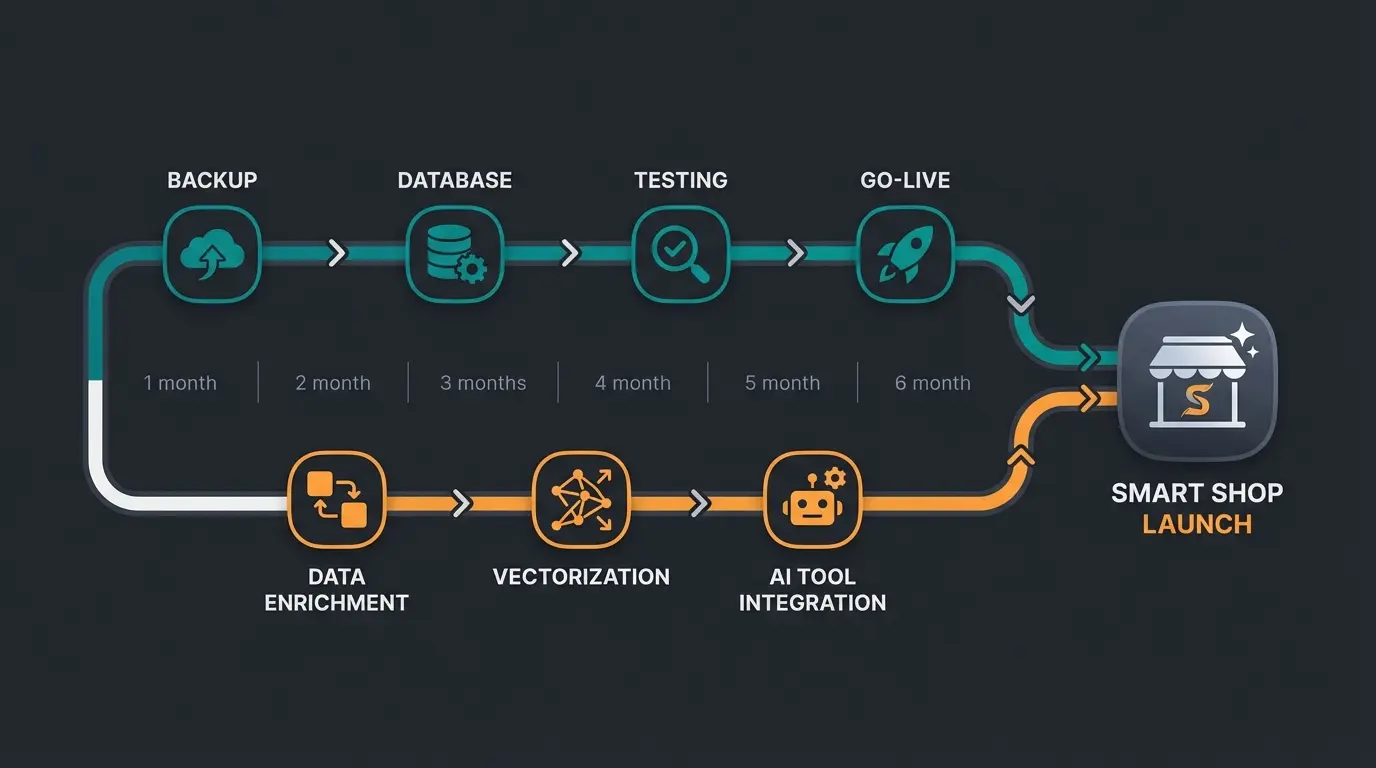
A successful Magento migration follows a clear process. We extend the classic workflow here with the crucial steps for AI readiness and modern performance standards. For additional guidance on migration best practices, our Shopware migration guide offers complementary insights.
Analyze product attributes, assess AI readiness, identify legacy modules for removal
Full system backup, staging environment with PHP 8.4, Elasticsearch configuration
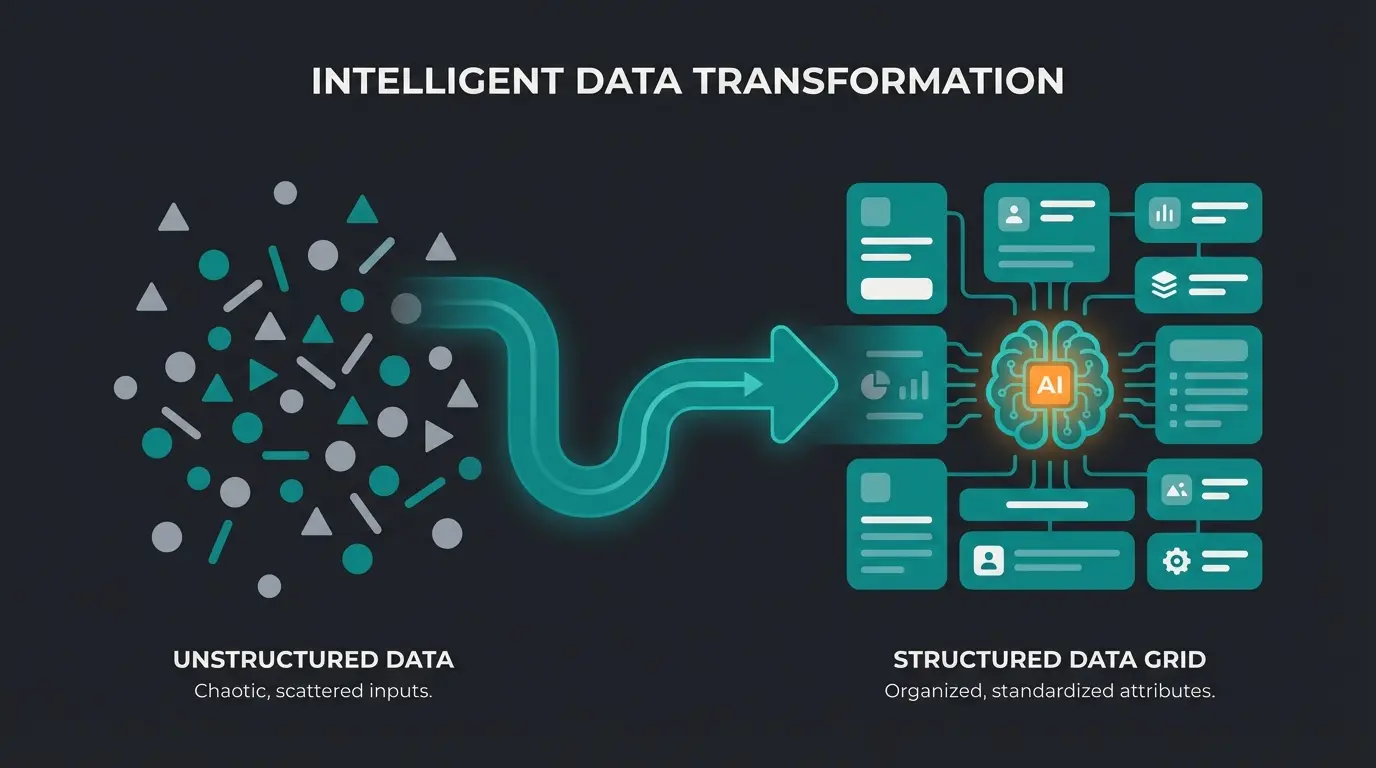
ETL processes for data cleaning, attribute standardization, semantic enrichment
Hyvä theme deployment, BFSG compliance, AI tool integration points
Functional tests, SEO verification, load testing, AI response validation
Phase 1: Planning and Data Audit (The AI Check)
Most agencies ask: "Which data should be transferred?" We ask: "How good is your data?" This distinction makes all the difference between a standard migration and an AI-ready transformation.
- Attribute Inventory: Analyze your product attributes thoroughly. Are technical specifications hidden in free-text fields? (e.g., "Weight: 5kg" in the description field instead of as a proper attribute).
- AI Readiness Assessment: For AI consultation, data must be granular. Free text like "Quiet laptop for gaming" is harder for AI to process than the attributes `Noise_Level: Low` and `Use_Case: Gaming`.
- Legacy Identification: Which modules are no longer needed? Magento 2.4.8 offers many functions natively that previously required extensions, according to Meetanshi.
Phase 2: Backup and System Environment
Before the first line of code is written, security must be guaranteed. This foundational step protects your business continuity throughout the migration process.
- Full Backup: Database, media files, and complete codebase—no exceptions.
- Staging Environment: Set up a fresh Magento 2.4.8+ instance. Use PHP 8.4 for maximum performance as recommended by current best practices.
- Server Selection: Pay attention to Elasticsearch or OpenSearch configurations, as these are mandatory for modern Magento versions. Our Shopware hosting AI guide covers similar infrastructure considerations.
Phase 3: The Data Transfer Process
Here is where the magic happens—or the chaos ensues. There are two main approaches for transferring your Magento data:
- Data Migration Tool (Adobe): The standard tool for M1 to M2 transitions. It's powerful but requires deep technical knowledge for XML file mapping configurations.
- Third-Party Tools (e.g., LitExtension): Often simpler for smaller shops but less flexible for complex B2B data structures.
Phase 4: Theme and Frontend (The Hyvä Revolution)
Here we find the biggest news for 2026 regarding frontend development and cost optimization.
- Hyvä is Now Open Source: Since November 2025, the Hyvä Theme is available under the OSL3 license, making it license-free as confirmed by Deploy.co.uk.
- Why This Matters: Previously, the license cost approximately €1,000. This budget can now be invested directly into customization or AI features. Hyvä offers excellent performance (Core Web Vitals) and massively reduces frontend complexity (no more RequireJS/KnockoutJS ballast).
- Accessibility Compliance: Ensure your new theme meets BFSG requirements (contrasts, ARIA labels). Hyvä already provides excellent foundations for this.
Phase 5: Testing and Go-Live
The final phase requires meticulous attention to ensure a smooth transition without losing rankings or functionality:
- Functional Tests: Checkout flow, payment processing, shipping calculations—test every customer touchpoint.
- SEO Verification: Are all redirects active? (See Section 5 for details). Reference our Magento SEO guide for comprehensive optimization strategies.
- Load Tests: Can the new server handle your traffic volume during peak periods?
- AI Testing: If you've integrated AI tools—do they provide correct answers based on the migrated data?
Don't just migrate—upgrade. Our AI-powered analysis identifies data structure opportunities that prepare your shop for intelligent product consultation and automated customer service.
Get Your Free AI Readiness AssessmentThe Hidden Step: Data Enrichment and AI Readiness
This is the section that distinguishes this guide from standard tutorials. Most competitors consider migration complete when the shop runs. We see it differently—and this perspective represents the critical difference between shops that merely survive and those that thrive.
The Problem: A "Dumb" Shop Despite New Technology
A new Magento 2 shop with old, unstructured data is like a Ferrari running on low-grade fuel. It runs, but it doesn't deliver full performance. When a B2B customer asks: "Which replacement part fits my machine from 2015?", the classic search fails if this information is only hidden in a PDF attachment within the product listing.
This limitation becomes particularly critical when comparing Shopware vs Magento capabilities—both platforms can only perform as well as the data quality allows.
The Solution: Migration as a Data Structuring Event
Use the moment when you migrate Magento data to make it readable for Large Language Models (LLMs). This approach transforms migration from a necessary burden into a strategic advantage.
From Keywords to Semantic Understanding
Classic Search: Customer types "M10 screw" and receives hundreds of results to sift through manually.
AI-Powered Search: Customer asks "I need a rust-resistant screw for outdoor use that can handle heavy loads" and receives precise, relevant recommendations.
For your shop to answer such queries effectively, you must enrich attributes during migration:
- Material: Stainless steel (instead of just writing "rust-free" somewhere in the text)
- Application Area: Outdoor (explicit, searchable attribute)
- Load Capacity: 800kg (structured data field with standardized units)
Vectorization of Product Data
Plan a step after migration where your product data gets "vectorized." This means an AI converts the meaning of your product descriptions into numerical arrays. This enables features like "Similar Products" that are truly based on technical similarity, not just category matching.
The Payoff: Automated Consultation
With clean data, you can integrate chatbots that don't just answer "Where is my package?" but conduct real sales conversations. For comprehensive platform guidance, our Adobe Magento guide details advanced implementation strategies.
Example: "Based on your previous purchases of Series X pipes, we recommend these matching flanges, as they share the same pressure rating and material compatibility."
This represents the difference between a Magento shop migration project and a genuine digital transformation. When comparing options like Shopify vs Magento, data architecture readiness should be a primary consideration.
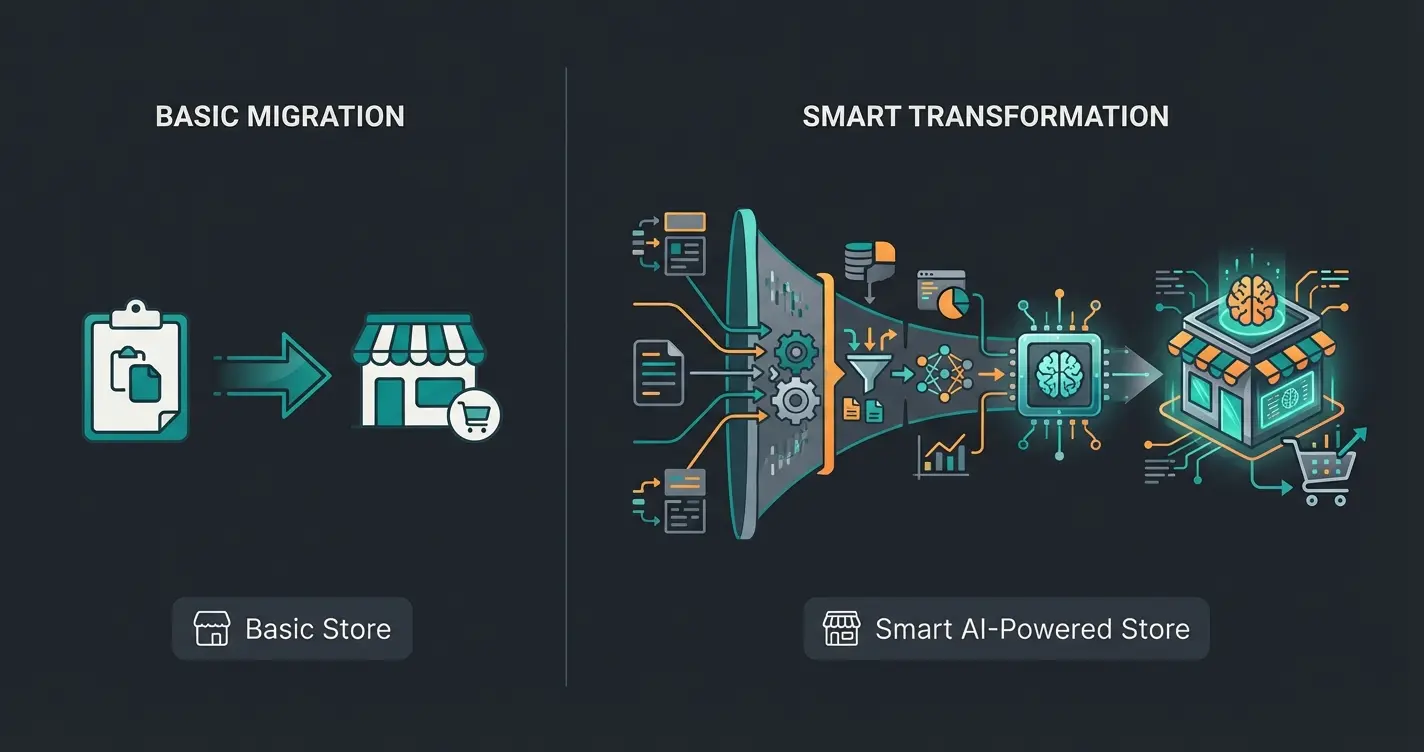
| Aspect | Standard Migration | AI-Ready Migration |
|---|---|---|
| Data Handling | Copy & Paste (preserving existing structure) | Clean, Structure & Enrich (transform for AI) |
| Search Capability | Keyword matching only | Semantic understanding with natural language |
| Customer Support | Static FAQ pages | AI-powered dynamic consultation |
| Product Discovery | Category browsing, basic filters | Intelligent recommendations, conversational search |
| ROI Timeline | Immediate (same capabilities as before) | 12-18 months (new revenue opportunities) |
| Future Readiness | Requires additional investment later | Ready for AI tool integration immediately |
Common Migration Pitfalls: SEO and Technical Traps
Even with the best planning, dangers lurk in unexpected places. Here are the points that agencies often overlook—and how to avoid them.
SEO Suicide: Missing 301 Redirects
When migrating from Magento 1 or another system, URL structures often change dramatically. This seemingly minor technical detail can destroy years of SEO work overnight.
- Danger: Google knows `yourshop.com/product-detail.html`. The new shop uses `yourshop.com/product`. Without redirects, customers (and Google) land on 404 error pages.
- Solution: Create a comprehensive mapping of all old URLs to new ones. Use tools like Screaming Frog before migration to capture every URL in your current structure.
- Verification: Test every redirect chain before go-live and monitor 404 errors closely in the weeks following launch.
Ignoring German Legal Requirements (BFSG and GDPR)
As mentioned, the BFSG has been fully enforced since June 2025. Non-compliance isn't just a technical oversight—it's a legal liability.
- Trap: Many themes from the USA or other markets aren't optimized for German legal requirements.
- Solution: Check checkboxes in the checkout, cookie consent banners, and especially accessibility. A BFSG violation can result in fines up to €100,000.
- Additional Consideration: For Magento to Shopware migration projects, ensure compliance requirements are addressed in the target platform configuration.
Performance Loss Through Over-Engineering
Magento 2 can be painfully slow when configured incorrectly. Performance optimization requires strategic restraint.
- Trap: Too many unnecessary modules and tracking scripts bloating page load times.
- Solution: Use the Hyvä Theme (now free/open source) to drastically reduce JavaScript overhead. Hyvä often achieves "out of the box" Google PageSpeed Scores of 90+ according to Stagebit.
- Best Practice: Audit every extension for necessity before including it in your new installation.
Cost and Timeline: What to Expect in 2026
The question "What does a Magento migration cost?" is difficult to answer universally, but we can provide benchmark figures for the German and European markets based on current project data.
Realistic Timeline Expectations
For a professional B2B shop, plan for 3 to 6 months from initial planning to post-launch stabilization:
- Month 1: Analysis, requirements documentation, data audit (AI readiness assessment)
- Month 2-3: Development, design implementation (Hyvä), data migration scripts
- Month 4: Interface connections (ERP, PIM), comprehensive testing—see our Magento ERP integration guide
- Month 5: User acceptance testing, bug fixing, performance optimization
- Month 6: Go-live and hypercare phase with intensive monitoring
Cost Factors: 2026 Market Update
Through Hyvä's open-source release, approximately €1,000 in license costs disappear. However, investments in data quality often increase proportionally as businesses recognize the AI opportunity.
- Small Shop (Standard): €15,000 - €30,000
- Medium B2B Shop (ERP Integration, Hyvä): €40,000 - €80,000
- Enterprise (Complex AI Integration, PIM, Custom Features): €100,000+
For teams considering the Shopware 5 to 6 upgrade, similar cost structures apply, though platform-specific factors may adjust these ranges.
Checklist for the German Market: Essential Compliance Points
To help you get started, we've compiled the most important checkpoints specifically for the German market—items that international guides often miss but that are critical for DACH region compliance.
- Impressum & Privacy Policy: Are all texts current and legally reviewed by a qualified attorney?
- BFSG Accessibility Check: Is the checkout keyboard-navigable? Are contrasts sufficient (minimum 4.5:1 ratio)?
- Base Price Regulations: For B2C products (per liter, kilogram), are base prices correctly calculated and displayed?
- Button Solution: Is the "Buy" button clearly labeled (e.g., "Order with Payment Obligation" or "Zahlungspflichtig bestellen")?
- Trusted Shops / EHI Badges: Have trust badges been correctly integrated into the new template with proper verification?
- 301 Redirects: Has the complete mapping list been imported and tested for every URL?
For businesses working with agencies in specific regions, partnering with a specialized Shopware agency in Hamburg or similar local experts can ensure these requirements are properly addressed.
Frequently Asked Questions About Magento Migration
A professional B2B Magento migration typically takes 3-6 months. This includes planning and data audit (Month 1), development and design implementation (Months 2-3), ERP/PIM integration and testing (Month 4), user acceptance testing and bug fixing (Month 5), and go-live with hypercare (Month 6). Smaller B2C shops with standard requirements may complete in 2-3 months, while enterprise projects with complex AI integrations may extend to 9-12 months.
Migration costs vary significantly based on scope. Small standard shops range from €15,000-€30,000. Medium B2B shops with ERP integration and Hyvä theme implementation typically cost €40,000-€80,000. Enterprise migrations with complex AI integration, PIM systems, and custom features start at €100,000 and can exceed €250,000. The 2026 market benefits from Hyvä being open source, saving approximately €1,000 in license fees.
Yes, since November 2025, the Hyvä Theme has been released under the OSL3 open-source license, making it completely license-free. This represents significant savings compared to the previous ~€1,000 license cost. However, you'll still need development resources for implementation and customization. The freed budget is often redirected toward data quality improvements and AI feature integration.
Non-compliance with the German Accessibility Strengthening Act (BFSG), which became mandatory on June 28, 2025, can result in fines up to €100,000. Beyond financial penalties, non-compliant shops may face removal from marketplaces, negative publicity, and legal action from affected users. Migration is the ideal time to implement accessibility features rather than attempting expensive retrofitting later.
Technically yes, but this approach is significantly more expensive. Restructuring data after migration requires revisiting your entire product catalog, potentially causing additional downtime and SEO disruption. The migration phase offers a unique window to clean, standardize, and enrich data for AI readiness. Taking advantage of this opportunity during migration typically costs 30-50% less than retrofitting AI capabilities later.
Conclusion: Embrace Migration as Transformation
A Magento migration in 2026 represents far more than a technical update. It's the defining strategic decision for your e-commerce future—a fork in the road between stagnation and transformation.
Through migration done right, you accomplish multiple critical objectives:
- Legal Protection: Full compliance with BFSG accessibility requirements and GDPR data protection standards
- Performance Gains: Massive speed improvements and cost savings through the open-source Hyvä Theme
- Competitive Advantage: You create the data foundation to enable AI-powered product consultation that transforms customer experience
- Future-Proofing: Your architecture is ready for the next wave of e-commerce innovation
Those who merely copy data today will have a new shop tomorrow with yesterday's problems. Those who structure and enrich data during migration will possess an intelligent sales assistant that serves customers around the clock—answering complex questions, providing personalized recommendations, and driving conversions that traditional shops simply cannot match.
Are you ready for the next step? Don't just migrate—transform. Contact us for a no-obligation analysis of your data structure and discover how we can make your Magento shop fit for the AI era.
Your migration is the perfect opportunity to build AI-ready infrastructure. Our experts analyze your data structure and create a roadmap for intelligent product consultation that drives measurable results.
Start Your Free Consultation
Lasse is CEO and co-founder of Qualimero. After completing his MBA at WHU and scaling a company to seven-figure revenue, he founded Qualimero to build AI-powered digital employees for e-commerce. His focus: helping businesses measurably improve customer interaction through intelligent automation.