Magento Cost Overview: What Budget Should You Plan?
The question "What does a Magento shop cost?" can be answered about as precisely as "What does a house cost?" – it depends. Nevertheless, decision-makers need clear figures for budget planning. Magento (now often operating under the Adobe Commerce umbrella) is considered the "Ferrari" among e-commerce systems: powerful, scalable, but maintenance-intensive.
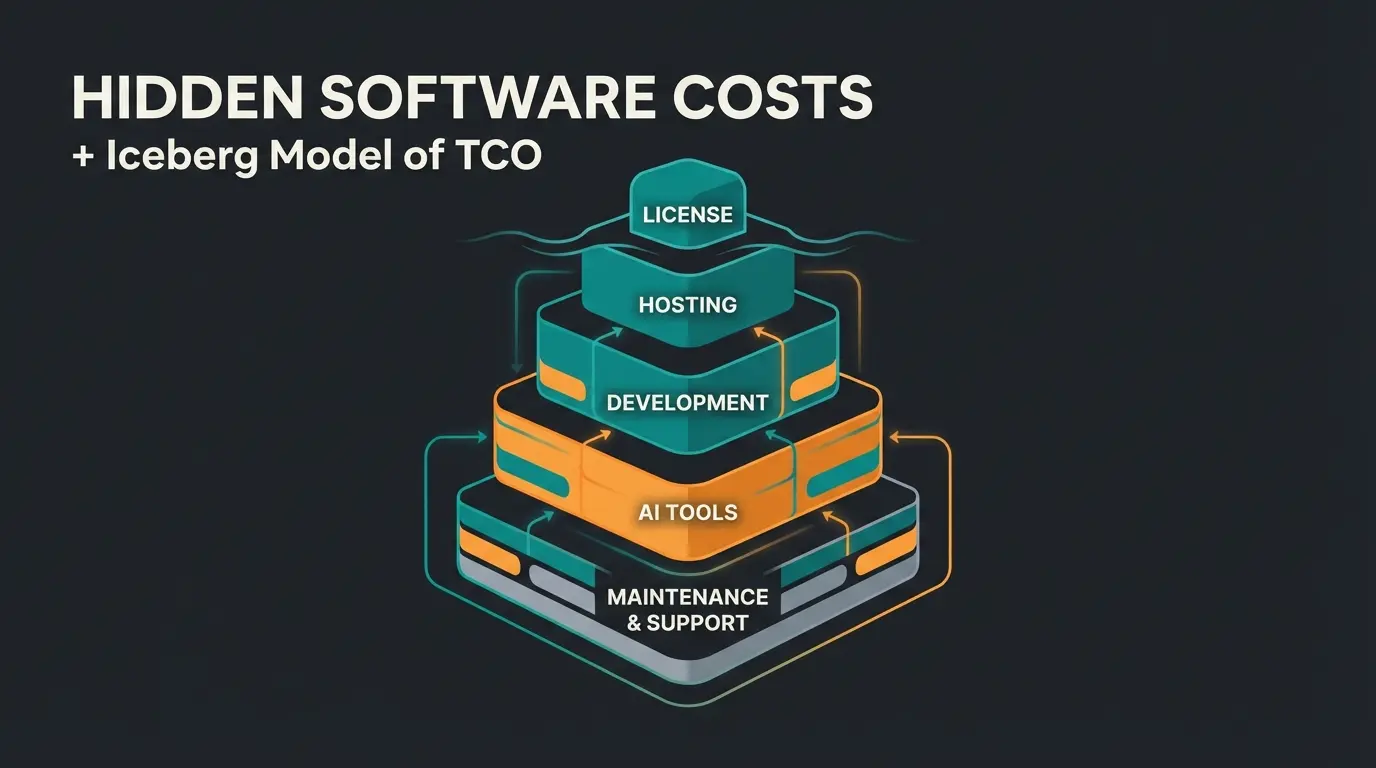
Many companies make the mistake of only considering the initial costs (setup). However, the true financial burden only becomes apparent in the Total Cost of Ownership (TCO) over 3 years. This involves not only servers and code but increasingly also the efficiency of your processes. When comparing platforms, understanding the differences between Magento vs Shopware is essential for making an informed decision.
Here is an initial rough orientation for the DACH market (Germany, Austria, Switzerland) for the year 2026:
| Cost Factor | Starter (Open Source) | Growth (Open Source + Hyvä) | Enterprise (Adobe Commerce) |
|---|---|---|---|
| License | €0 | €0 | from ~€20,000/year |
| Initial Setup | €15,000 - €30,000 | €40,000 - €80,000 | €100,000 - €500,000+ |
| Hosting (monthly) | €50 - €150 | €200 - €500 | Included (Cloud) or €1,000+ |
| Maintenance (monthly) | €200 - €500 | €1,000 - €3,000 | €5,000+ |
| TCO (3 Years) | ~€40,000 - €60,000 | ~€100,000 - €200,000 | ~€300,000 - €1 Million+ |
The 3 Cost Pillars of a Magento Project
To make Magento costs transparent, we must divide the budget into three main pillars: licensing, development, and ongoing operations.
1. License Costs (The Foundation)
The choice of edition is the first major fork in the road for your budget.
Magento Open Source (Formerly Community Edition)
This version is license-free. You can download and use the code without paying a cent to Adobe. According to Exinent and MGT Commerce, while the software itself is free, you bear full responsibility for hosting, security patches, and performance optimization. "Free" here refers only to the software usage, not to operations.
- Cost: €0 license fees
- However: You carry full responsibility for hosting, security patches, and performance optimization
- "Free" refers only to software usage, not to actual operations
Adobe Commerce (Formerly Enterprise Edition)
This version targets larger mid-sized companies and enterprises. It offers extended B2B features, marketing tools, and the Page Builder. The pricing model is based on your Gross Merchandise Value (GMV) and average order value (AOV). According to WebdeskSolution and CompanionLink, the license structure works as follows:
- On-Premise: You host yourself but pay the license. Starts at approximately $22,000 per year for revenues under $1 million. For revenues over $25 million, costs rise to up to $125,000
- Adobe Commerce Cloud: Here hosting (on AWS/Azure basis) is included. Prices often start at $40,000 per year and scale significantly upward according to LitExtension
Free software, but requires self-managed hosting and security
Starting annual license for revenues under $1M
Starting annual price with included cloud hosting
2. Development & Design (The Largest Block)
This is where most of the money flows in the first 12 months. Magento is complex. An "out-of-the-box" shop is rarely sufficient to compete effectively in the market. Understanding Shopware hosting costs can provide useful comparison data for your platform decision.
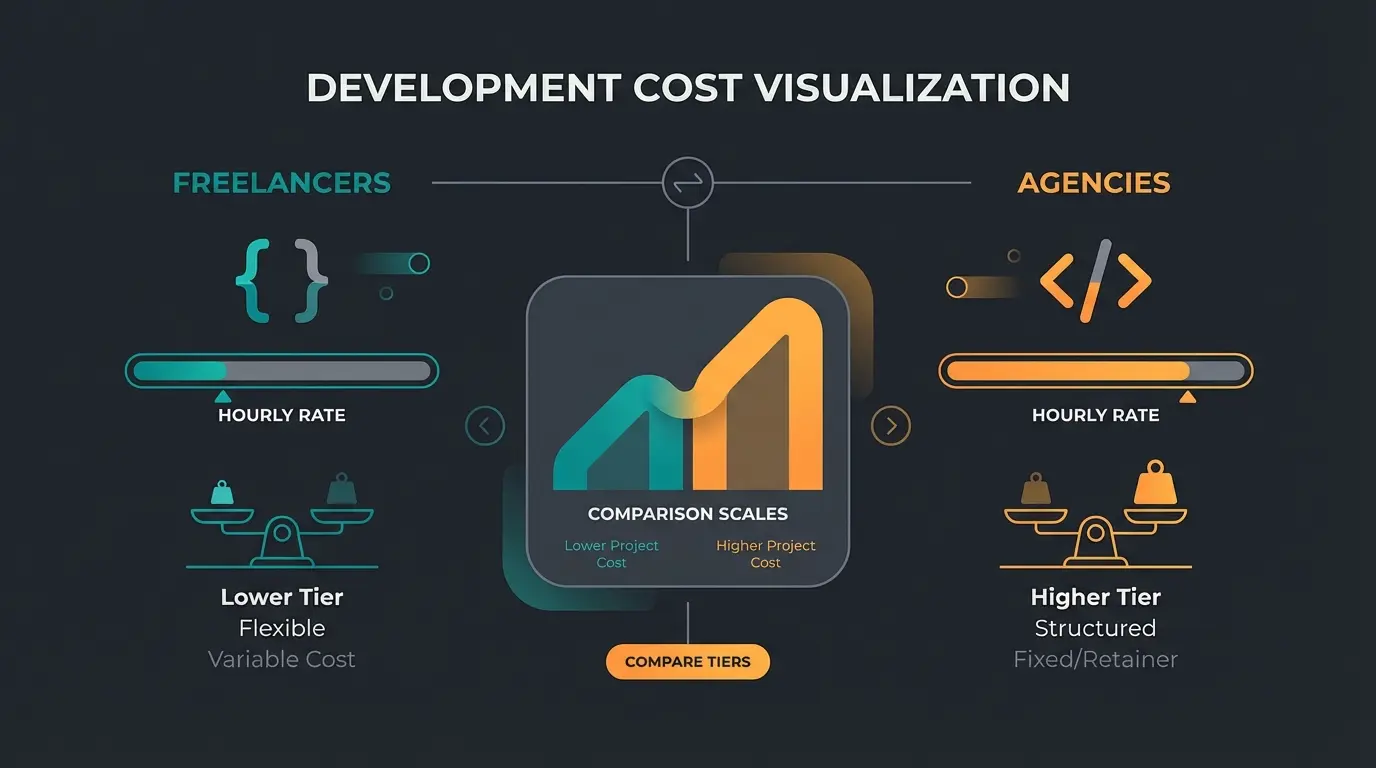
Agency vs. Freelancer Hourly Rates
The Magento prices for development depend heavily on whom you commission. In the DACH region, hourly rates are high due to high living costs and system complexity (Magento 2 requires specialized know-how). As reported by MageMonkeys and BSS Commerce:
| Provider Type | Hourly Rate | Advantages | Disadvantages |
|---|---|---|---|
| Freelancer | €60 - €100/hour | Lower cost, direct contact | Availability issues, "bus factor" risk, often less broadly skilled |
| Agency (DACH) | €90 - €150+/hour | Comprehensive support (PM, QA, Dev), reliability, certified developers | Higher costs due to overhead |
| Offshoring (Eastern Europe/India) | €30 - €60/hour | Significant cost savings on paper | Communication barriers, quality differences can consume savings through rework |
According to Advox Studio, Reddit discussions, and KonVis, the choice between freelancers and agencies significantly impacts both cost and project success rates.
Frontend Technology: The Hyvä Factor
A new, essential cost factor (that actually saves development costs) is the Hyvä Theme. The standard Magento frontend (Luma) is outdated and slow. Hyvä is the new standard for performance. According to Neklo and MGT Commerce, the investment breaks down as follows:
- License costs: One-time €1,000 per Magento installation
- Savings potential: Since Hyvä drastically simplifies development, you often save 30-50% of frontend development time compared to the standard Luma theme
- The €1,000 license fee usually pays for itself in the first week of development
3. Ongoing Costs (Hosting & Maintenance)
A Magento shop is never "finished." It's like a garden that needs constant care. For a detailed comparison of platform hosting expenses, check our guide on Shopware cost savings.
Hosting Requirements
Magento is resource-hungry (RAM, CPU). Shared hosting for €5 won't work. According to HostingRadar, your options include:
- VPS (Self-Managed): From approximately €50 - €100/month (e.g., Hetzner, DigitalOcean). However, this requires deep sysadmin knowledge
- Managed Magento Hosting: Providers like Hypernode or Maxcluster specialize in Magento. Costs: €100 - €500/month for medium-sized shops. This is strongly recommended for professional shops since support can solve Magento-specific problems
Maintenance & Updates
Magento regularly releases security updates and patches. These must be applied. According to Elementor, ongoing maintenance requirements include:
- Retainer: Most agencies work with maintenance contracts
- Costs: Plan for €500 to €2,000 monthly just for updates, backups, and small fixes
- A major upgrade (e.g., from 2.4.6 to 2.4.7) can cost €5,000+ as a separate project
Hidden Costs Nobody Mentions (Operational Expenditure)
Most articles about Magento costs stop after development. But this is where the actual cost block begins that eats into your margin. We call this "Operational Expenditure" (OpEx). This is where your biggest differentiation potential lies versus competitors.
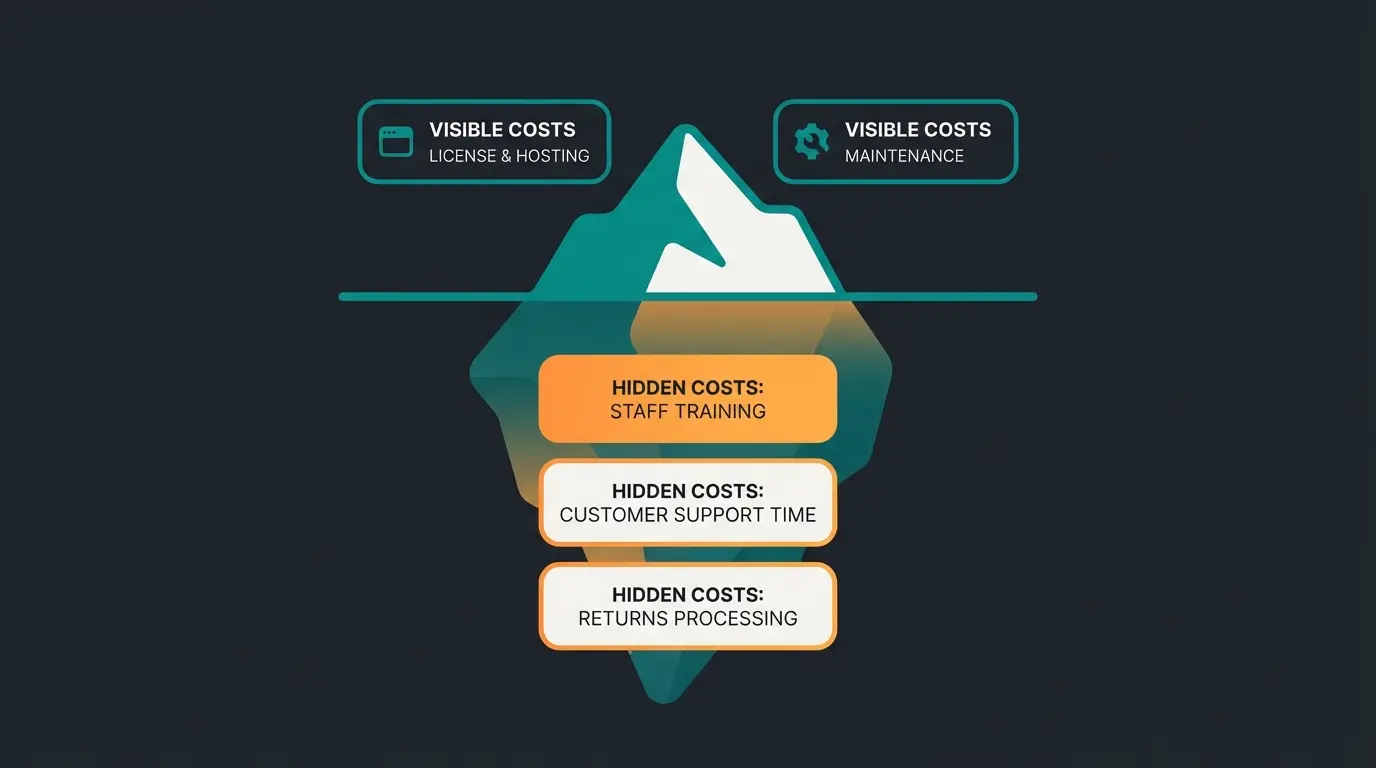
License fees, initial design, hosting, and development – what everyone budgets for
Updates, staff training, catalog management, and third-party SaaS subscriptions
Customer support time, returns processing, and consultation overhead that compounds yearly
1. The "Human Cost" Factor
A technically inexpensive shop can be extremely expensive operationally. Consider this scenario: Your shop has poor search functionality and inadequate product descriptions. The consequence? Customers call or write emails ("Does this spare part fit my BMW?"). This is where AI product consultation becomes a game-changer.
A support employee costs you (including payroll taxes) approximately €45,000 - €60,000 per year. If your shop is so inefficient that you need two additional employees, that's €100,000 in hidden costs per year. Understanding chatbot costs and pricing can help you evaluate automation alternatives.
2. The Returns Trap
Poor consultation in the shop leads to incorrect purchases. A return costs on average between €10 and €20 (shipping, inspection, repackaging, value loss). If you reduce the return rate by just 1% through better UX and consultation tools, with 10,000 orders per year you quickly save five-figure amounts.
3. SaaS & Third-Party Tools
A modern Magento shop doesn't consist of Magento alone. You need external services. According to Adobe and TrustRadius, typical additional costs include:
- Search: Standard Magento search is often inadequate. Tools like Klevu or Algolia cost €200 to €1,000+ per month depending on search volume
- PIM: A Product Information Management system (e.g., Akeneo) often incurs additional license and hosting fees
- Email Marketing: Dedicated email platforms for abandoned cart recovery and customer retention
Discover how AI-powered product consultation can reduce your operational costs by up to €25,000 annually while improving customer experience.
Get Your Free AnalysisROI Instead of Just Costs: Efficient Budget Allocation
Instead of viewing Magento only as a cost center, you should consider it an investment. The question isn't "How do I push down development costs?" but rather "How do I reduce my cost per acquisition (CPA)?" This perspective aligns with the approach many businesses take when exploring AI in customer service.
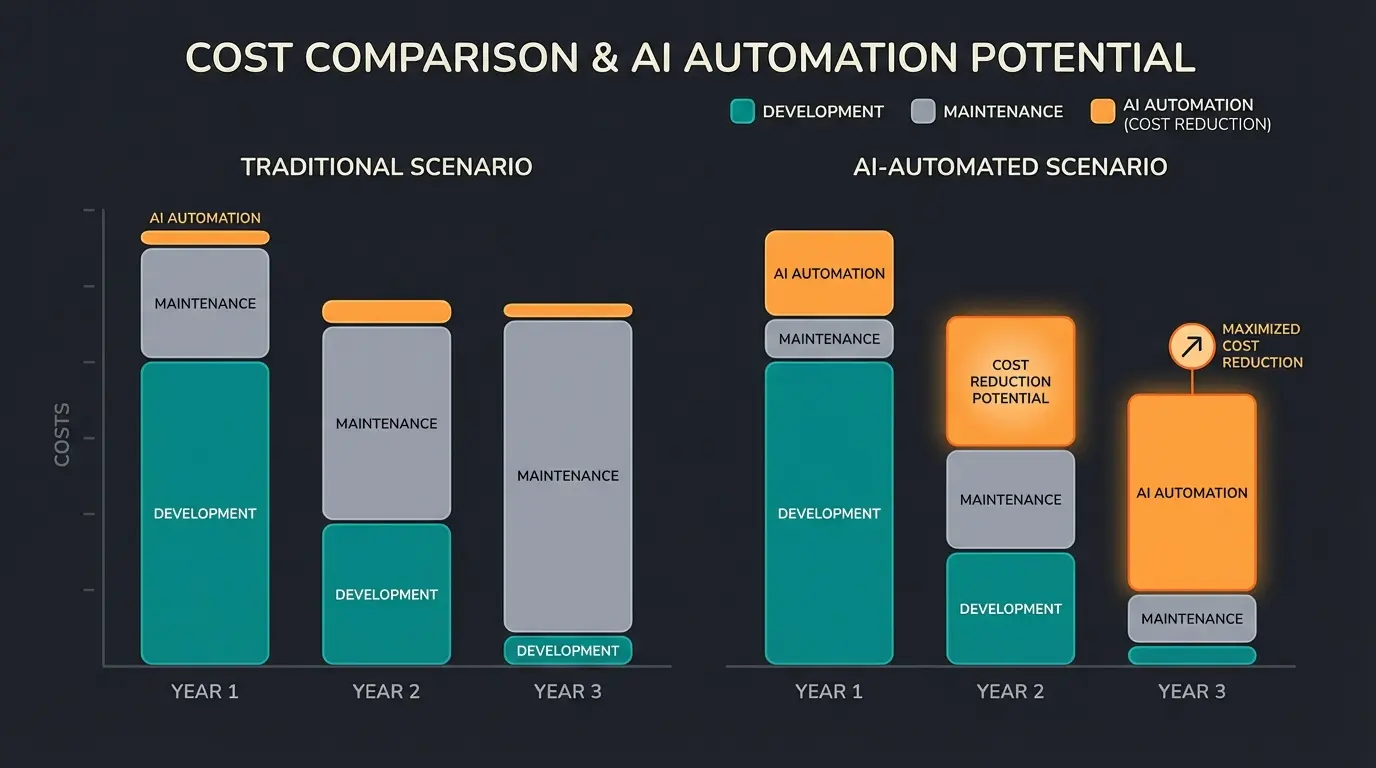
The AI Savings Potential (AI Automation)
Here lies your opportunity to justify the high Magento initial costs through operational savings. Modern AI tools can drastically reduce the expensive "human factor." Real-world examples like AI employee Flora demonstrate the practical implementation of these solutions.
AI Search & Recommendations
Instead of manually linking "accessory" products (which costs hundreds of hours of personnel time), use AI engines. According to Madgicx and ResultFirst:
- Example: Tools like Klevu or Nosto learn from user behavior
- ROI: Studies show that AI-powered product recommendations can increase conversion rates by 20-30%
- Cost comparison: A tool for €500/month is cheaper than an employee (€3,500/month) who manually maintains cross-selling rules
AI Chatbots & Support Automation
The use of AI chatbots (based on LLMs like GPT-4 or Claude) in Magento can intercept up to 80% of routine inquiries according to Sobot. For scaled customer consultation, see how other businesses have implemented this successfully.
- Function: The bot answers questions about delivery status, returns, or simple product information ("Is this gluten-free?")
- Savings: If you can eliminate half a support position, you save approximately €25,000 per year. This finances the entire Magento maintenance
- Integration: There are now various extensions for Magento 2 that connect OpenAI or other models to automate support and content creation according to MageComp and Webkul
Calculation Example: "Dumb" Shop vs. "Intelligent" Shop
| Cost Type | "Dumb" Shop (Standard) | "Intelligent" Shop (AI-Powered) |
|---|---|---|
| Development (Year 1) | €40,000 | €50,000 (incl. AI integration) |
| SaaS Costs (Year 1) | €0 | €6,000 (€500/month for AI tools) |
| Support Personnel | €90,000 (2 employees) | €45,000 (1 employee + AI) |
| Total Costs Year 1 | €130,000 | €101,000 |
| Savings | — | €29,000 in the first year |
Conclusion: Although the intelligent shop is more expensive to acquire (higher Magento shop costs in setup), it is significantly cheaper in the overall calculation (TCO). When evaluating alternatives, comparing Shopware vs Shopify can provide additional perspective on platform economics.
Price Examples for 3 Scenarios
To make Magento prices more tangible, we sketch three typical project scenarios for 2026.
Scenario 1: The Starter (B2C Niche Shop)
- Goal: Solid entry, focus on performance, minimal customization
- Setup: Magento Open Source + Hyvä Theme
- Hosting: Good VPS or small managed hosting (e.g., maxcluster)
- Development: Freelancer or small agency
Budget Year 1: Setup €20,000 + Hosting/Maintenance €3,000 = Total: ~€23,000
Scenario 2: The Growth Champion (B2B/B2C Hybrid)
- Goal: Automation, ERP connection (e.g., SAP/Microsoft), AI search
- Setup: Magento Open Source or Adobe Commerce (depending on revenue)
- Hosting: Scalable managed hosting (Hypernode)
- Development: Professional agency with SLA
Budget Year 1: Setup & Migration €60,000 + ERP Interface €15,000 + AI Tools & Licenses €10,000 = Total: ~€85,000 - €100,000
Scenario 3: Enterprise (International)
- Goal: Multi-store, multi-language, headless/PWA, Adobe Commerce Cloud
- Setup: Adobe Commerce Cloud
- Development: Large agency team (backend, frontend, DevOps)
Budget Year 1: License €40,000+ + Development €150,000+ = Total: ~€200,000+
B2C niche with Open Source, Hyvä theme, and basic hosting
B2B/B2C hybrid with ERP integration and AI tools
International multi-store with Adobe Commerce Cloud
Conclusion & Checklist
The question "What does Magento cost?" can no longer be answered in 2026 with just developer hourly rates. Magento costs consist of licensing, technology, and above all operational processes. For a comprehensive understanding of platform pricing, our Shopware Costs 2025 guide offers valuable comparison insights.
Magento is expensive in setup but unbeatable in flexibility. Those who use this flexibility to streamline processes through AI and automation quickly recoup the costs. However, those who use Magento merely as a "better website builder" and skimp on support will pay more in the long run.
Your Budget Checklist
- Check license: Is Open Source sufficient, or do we need B2B features from Adobe Commerce?
- Calculate TCO: Not just setup, but 3 years of operation + maintenance
- Don't underestimate hosting: Plan for at least €150-300/month for fast hosting
- Plan buffer: Software projects almost always become 20% more expensive than planned
- Reserve AI budget: Invest in intelligent search and chatbots to reduce personnel costs
Frequently Asked Questions About Magento Costs
Magento Open Source has no license fees, but it's far from free. You'll need to budget for hosting (€50-500/month), development (€15,000-€80,000+ for setup), maintenance (€500-€2,000/month), and third-party extensions. The true cost depends on your requirements and customization needs.
Magento Open Source is the free, self-hosted version requiring you to manage everything yourself. Adobe Commerce (formerly Enterprise Edition) starts at ~$22,000/year and includes advanced B2B features, marketing tools, Page Builder, and optional cloud hosting. The choice depends on your revenue, technical capabilities, and feature requirements.
In the DACH region (Germany, Austria, Switzerland), certified Magento agencies typically charge €90-€150+ per hour. Freelancers range from €60-€100/hour, while offshore development can be €30-€60/hour but often comes with quality and communication challenges that can increase total costs.
Yes, AI tools can significantly reduce operational costs. AI chatbots can handle up to 80% of routine customer inquiries, potentially saving €25,000+ annually by reducing support staff needs. AI-powered search and recommendations can increase conversion rates by 20-30%, offsetting the higher initial investment.
The most underestimated costs are operational: support staff (€45,000-€60,000/year per employee), returns processing (€10-€20 per return), third-party SaaS tools (search, PIM, email marketing), security updates, and ongoing maintenance. These operational costs often exceed development costs over a 3-year period.
A high initial price is daunting – but high ongoing costs kill the business. Use our expertise to build not just a shop, but an efficient e-commerce system that reduces your operational costs. Contact us for a detailed TCO analysis of your project.
Start Your Free Consultation
Lasse is CEO and co-founder of Qualimero. After completing his MBA at WHU and scaling a company to seven-figure revenue, he founded Qualimero to build AI-powered digital employees for e-commerce. His focus: helping businesses measurably improve customer interaction through intelligent automation.