The Pricing Model Explained: Revenue-Based Licensing
Before we discuss specific Euro amounts, you need to understand the fundamental principle behind Adobe's billing model. Unlike Shopify (monthly flat rate) or Shopware (often edition-based), Adobe Commerce uses a revenue-share model that directly ties your costs to your business success.
Your costs are based on your Gross Merchandise Value (GMV)—the gross annual revenue your shop generates. This approach positions Adobe as a growth partner: as you generate more revenue, your shop uses more resources, requires more support, and benefits more from enterprise features. According to Emerline, this model has become the industry standard for enterprise e-commerce platforms.
Understanding the Price Tiers
Although Adobe doesn't publish an official price list, clear tiers have emerged through market analysis and partner information. Understanding these tiers is essential for accurate budget planning:
- Tier 1: Under €1 million GMV (Entry segment)
- Tier 2: €1 million – €5 million GMV
- Tier 3: €5 million – €10 million GMV
- Tier 4: €10 million – €25 million GMV
- Enterprise: Over €25 million GMV
Adobe Commerce vs. Magento Open Source: Cost Comparison
The first question every decision-maker asks: 'Do I really need the paid Adobe Commerce license, or is Magento Open Source (free) sufficient?' This comparison is crucial for understanding where your investment delivers the most value.
Here's a direct comparison of the cost drivers and value drivers for 2026, helping you make an informed decision about which platform suits your business needs:
| Feature / Cost Factor | Magento Open Source (Free) | Adobe Commerce (Paid) |
|---|---|---|
| License Costs | €0 | From approx. €20,000/year |
| B2B Functionality | Must be expensively developed or use 3rd party extensions | Included (Company Accounts, Quotes, Requisition Lists) |
| Marketing & CMS | Basic Page Builder | Extended Page Builder, Customer Segmentation, Gift Cards |
| Search & AI | Standard (often weak) | Live Search (Adobe Sensei) integrated |
| Support | Community (Forums, StackOverflow) | 24/7 Adobe Support & Account Manager |
| Hosting | Must be organized separately | Choice of On-Premise or Adobe Cloud (PaaS) |
| Scalability | Depends on your infrastructure | Optimized for High-Traffic & Database Split |
The Rule of Thumb for 2026: If you're a pure B2C shop with under €5 million revenue and have a strong in-house technical team, Open Source can be more cost-effective. However, as soon as you need to implement B2B processes or require scaling security, the development costs for missing features in the Open Source version quickly consume your license savings. This is where understanding how AI can optimize your platform choice becomes critical.
The 4 Major Cost Blocks: Detailed Breakdown
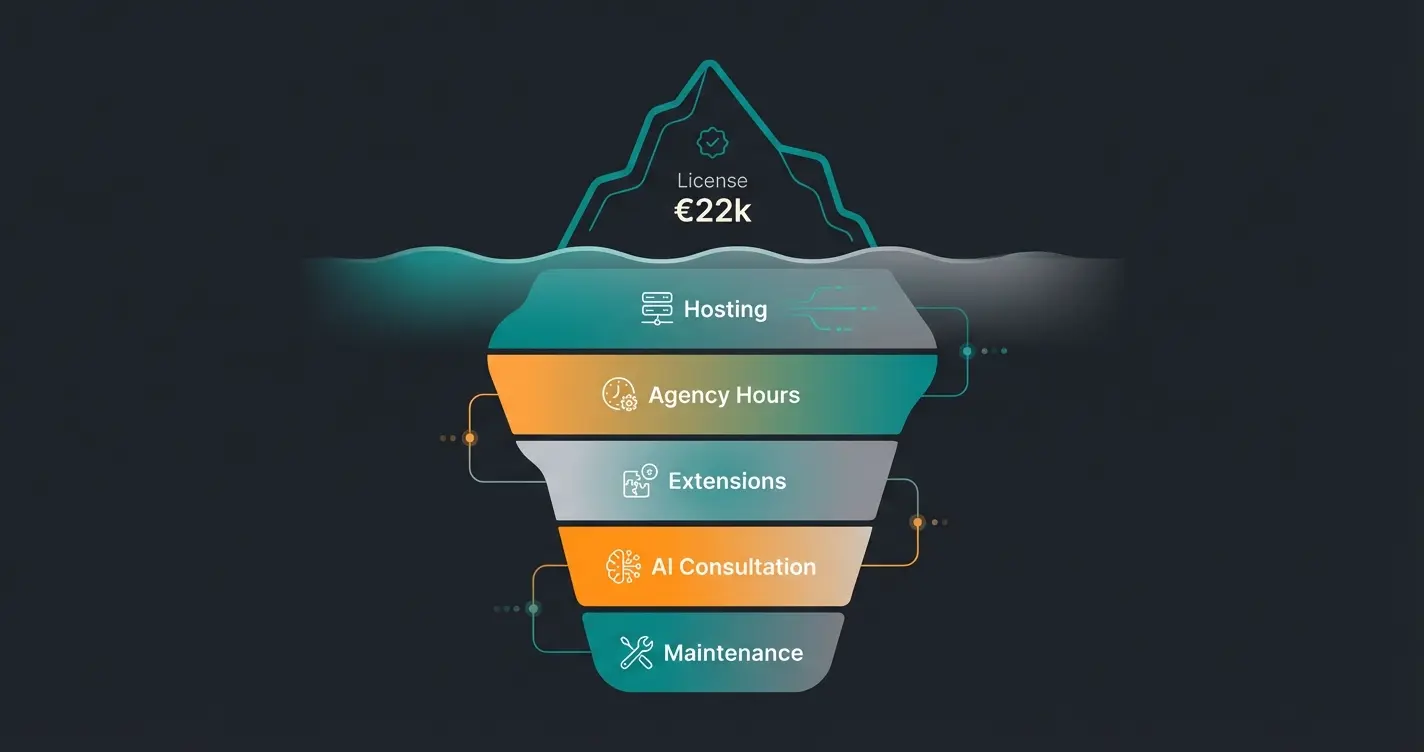
An Adobe Commerce project consists of four financial pillars. Many companies make the mistake of only budgeting for Pillar 1 (License) and are then surprised by Pillar 3 (Agency) and 4 (Tech Stack). Let's examine each in detail to ensure your budget planning is comprehensive.
1. License Fees: Cloud vs. On-Premise
Adobe is pushing customers heavily toward the Cloud but continues to offer two models. The prices are estimates based on current market data from late 2025/early 2026, compiled from sources including CleverPlusPlus and Eesel.ai.
A. Adobe Commerce On-Premise
You purchase only the software license. You organize hosting yourself (see Point 2). This gives you maximum control but requires more technical expertise:
- Entry Price: approximately €20,000 – €22,000 per year (for shops under €1 million GMV)
- Mid-Market: At approximately €5-10 million GMV, costs often range between €40,000 and €60,000 per year
- Enterprise: Over €25 million GMV, costs quickly rise to over €115,000 per year
B. Adobe Commerce Cloud (PaaS)
Here, license and hosting (via AWS/Azure, managed by Adobe) are included. This reduces complexity but comes at a premium:
- Entry Price: approximately €36,000 – €40,000 per year
- Mid-Market: Expect €60,000 to €90,000 per year
- Enterprise: Budgets of €180,000 and more are often required
2. Hosting & Infrastructure (DACH Focus)
If you choose On-Premise (which is often preferred in Germany due to GDPR and performance requirements), you need a specialized hosting provider. Budget hosting simply doesn't work for Adobe Commerce—the platform demands robust infrastructure.
Leading Providers in the DACH Region:
- Maxcluster (Paderborn): Known for extremely performant clusters and specialized support. According to Maxcluster, their infrastructure is specifically optimized for Magento/Adobe Commerce workloads.
- Mittwald: Strong partner for agencies with comprehensive managed services
Cost Indication for 2026:
- Small Shop: A managed cluster (Web + Database + Elasticsearch/Redis) starts at approximately €300 – €500/month
- Growth Phase: A redundant setup for failover protection costs approximately €800 – €1,500/month
- High Performance: Large clusters quickly reach €2,000 – €4,000/month
Don't forget the costs for SSL certificates (approximately €100 – €300/year for Extended Validation) and domains. These smaller costs add up over time.
3. Agency & Development
This is often the largest cost block that gets underestimated. Adobe Commerce is complex—you need professionals. Cutting corners here typically leads to expensive problems down the road.
Hourly Rates in Germany (2025/2026)
The days of €80/hour are over. Serious, certified Magento agencies in Germany now calculate differently, as reported by Konvis, Feedbax, and Clockify:
- Freelancer: €90 – €120/hour
- Standard Agency: €110 – €140/hour
- Top-Tier / Enterprise Agency: €150 – €200/hour
Project Costs (Setup)
Understanding the range of setup costs helps you plan your initial investment realistically:
- MVP (Minimum Viable Product): A solid shop based on a theme (e.g., Hyvä) with standard functions: €50,000 – €80,000
- Custom Design & Integrations: Individual UX design, ERP connection (SAP, Microsoft Dynamics), PIM integration: €100,000 – €250,000
- Enterprise: Headless approaches, complex B2B logic, international rollouts: starting from €300,000
Based on GMV tier
German market average
MVP to Enterprise
4. Extensions & Modern Tech Stack: The Game Changer
This is where 2026 determines whether your shop is profitable or just generating costs. The extensions you choose can make or break your return on investment.
Standard Extensions
You'll need plugins for essential functions:
- Payment (PayPal, Stripe, Adyen): Usually free (transaction fees apply), or approximately €200 setup
- Shipping (DHL, Shipcloud): approximately €200 – €500/year
- Legal Compliance (Trusted Shops, IT-Recht Kanzlei): approximately €300/year
The Frontend: Hyvä Themes (Important Update!)
A massive change shook the market in late 2025: Hyvä Themes is now Open Source (free)! As reported by Plumrocket, Amasty, and Magecomp, this represents a significant shift in the ecosystem.
- Savings: €1,000 license fee eliminated
- Costs: You may still pay for Hyvä UI (approximately €250) or the Hyvä Checkout (approximately €1,000) to save development time
- Why This Matters: Hyvä dramatically reduces development costs (Pillar 3) because it's much easier to program than the old Luma theme
The New Standard: AI & Product Consultation
Here lies your 'Blue Ocean.' Many retailers rely on standard search or simple filters. That's no longer sufficient in 2026. Understanding how AI customer service transforms the shopping experience is essential for competitive advantage.
The Problem: Customers can't find products. The 'Cost of Bad Advice' is enormous. If a customer searches for 5 minutes and finds nothing, they're gone—taking their purchasing intent to your competitors.
The Old Solution: More support staff in chat/phone. (Cost: approximately €45,000 per year per employee, plus training, management, and turnover costs.)
The Modern Solution: A specialized AI product consultation system. This is where AI Product Consultation providers are revolutionizing the industry.
- Costs: Variable (SaaS model), often between €200 and €2,000 per month depending on request volume
- Comparison: An AI solution costs a fraction of a support employee but is available 24/7, speaks all languages, and knows the entire catalog by heart
- Integration: Thanks to modern APIs in Adobe Commerce, integration is often completed in just a few days, in contrast to months-long search optimization projects
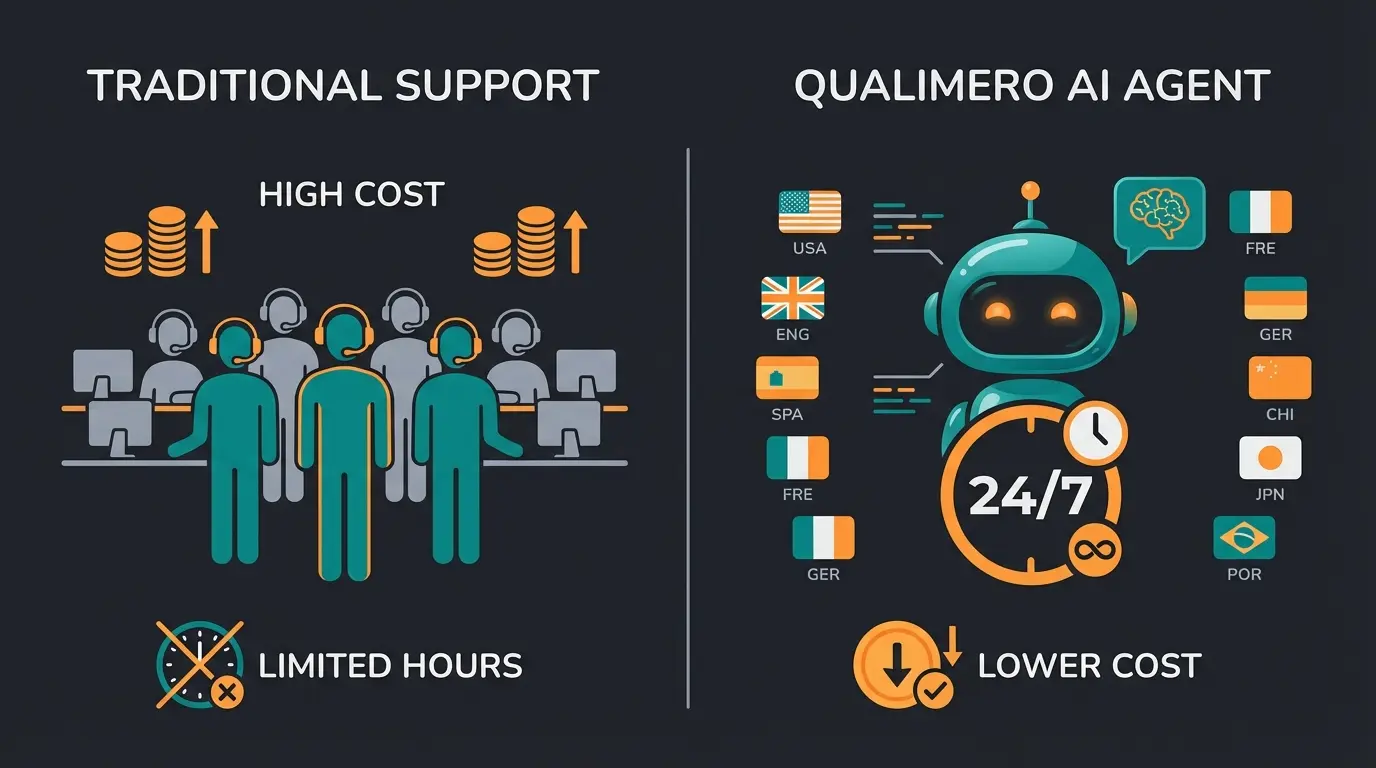
Discover how much you could save by replacing manual support with intelligent AI product consultation. Our ROI calculator shows your exact savings potential.
Start Free AnalysisHidden Costs Nobody Mentions
Beyond the obvious invoices, there are budget drains you must plan for. These hidden costs often surprise first-time Adobe Commerce adopters and can derail even well-planned budgets.
1. Maintenance & Patches
Adobe releases quarterly security updates. Installing and testing them takes time and expertise. Many companies underestimate this ongoing commitment.
Budget: Plan for approximately 20-40 hours per quarter (approximately €3,000 – €6,000). This is non-negotiable for maintaining security and compliance.
2. Migration Costs
Coming from Magento 1 or Shopware? Data migration is complex and labor-intensive. Customer data, order history, product catalogs—all need careful handling.
Costs: Often 15-20% of the initial project budget. Factor this in from the start.
3. Performance Optimization
A fast shop ranks better and converts better. Caching configuration (Varnish/Redis) must be continuously maintained and optimized as your catalog grows.
4. The 'Lost Sales' Costs
This is the biggest hidden cost block that rarely appears on any invoice. A complex Adobe Commerce catalog that customers cannot navigate burns marketing budget and destroys ROI.
Example: You spend €10,000 on Google Ads. The bounce rate is 60% because the search delivers irrelevant results. Loss: €6,000 in wasted advertising spend—money that went directly to Google with no return.
Investment in intelligent consultation tools, like product consultation bots, often pays for itself in the first month by dramatically reducing bounce rates and increasing conversions.
€20,000-€115,000+ annually based on your GMV tier
€3,600-€48,000 annually for GDPR-compliant German hosting
€50,000-€300,000+ setup plus €30,000+ annual maintenance
€5,000-€25,000 annually for modern tech stack
Potentially thousands in wasted marketing due to poor UX
Example Calculation: Total Cost of Ownership Over 3 Years
Let's take a realistic scenario for a German mid-market company to illustrate what you can actually expect to invest:
- Revenue (GMV): €5 million
- Model: Adobe Commerce On-Premise
- Hosting: Managed Cluster with German hosting provider
- Frontend: Hyvä Theme (Open Source)
| Cost Position | Year 1 (Setup & Launch) | Year 2 (Operations) | Year 3 (Operations & Optimization) |
|---|---|---|---|
| License (Adobe Commerce) | approx. €45,000 | approx. €45,000 | approx. €48,000 (revenue growth) |
| Hosting (DACH) | €9,600 (€800/month) | €9,600 | €12,000 (scaling) |
| Agency (Setup) | €120,000 | €0 | €0 |
| Agency (Maintenance/Development) | €15,000 (Post-Launch) | €30,000 (Retainer) | €30,000 (Retainer) |
| Hyvä & Extensions | €3,000 (Checkout/UI/Plugins) | €1,000 (Subscriptions) | €1,000 (Subscriptions) |
| AI Product Consultation | €6,000 (€500/month) | €6,000 | €6,000 |
| TOTAL | approx. €198,600 | approx. €91,600 | approx. €97,000 |
Analysis: The first year is investment-intensive due to setup costs. From the second year onward, costs drop below €100,000, which at €5 million revenue corresponds to an IT cost ratio of approximately 2%. This is a very healthy value in e-commerce and indicates efficient technology spending.
This is where the power of modern AI tools becomes apparent. Investing in KI E-Commerce solutions can further reduce your support costs while increasing conversion rates, improving your overall TCO significantly.
Manual Support vs. AI Consultation: The Real Cost Comparison
One of the most overlooked opportunities in Adobe Commerce cost optimization is the shift from manual support to intelligent AI consultation. Let's break down the real numbers that most pricing guides completely ignore.
| Factor | Manual Support | AI-Enhanced Consultation |
|---|---|---|
| Annual Cost | €80,000+ (2 support agents) | €6,000-€24,000 (AI solution) |
| Availability | Business hours only | 24/7/365 |
| Language Support | 1-2 languages | Unlimited languages |
| Product Knowledge | Requires ongoing training | Instant access to full catalog |
| Response Time | Minutes to hours | Instant |
| Scalability | Linear cost increase | Minimal additional cost |
| Consistency | Variable by agent | 100% consistent |
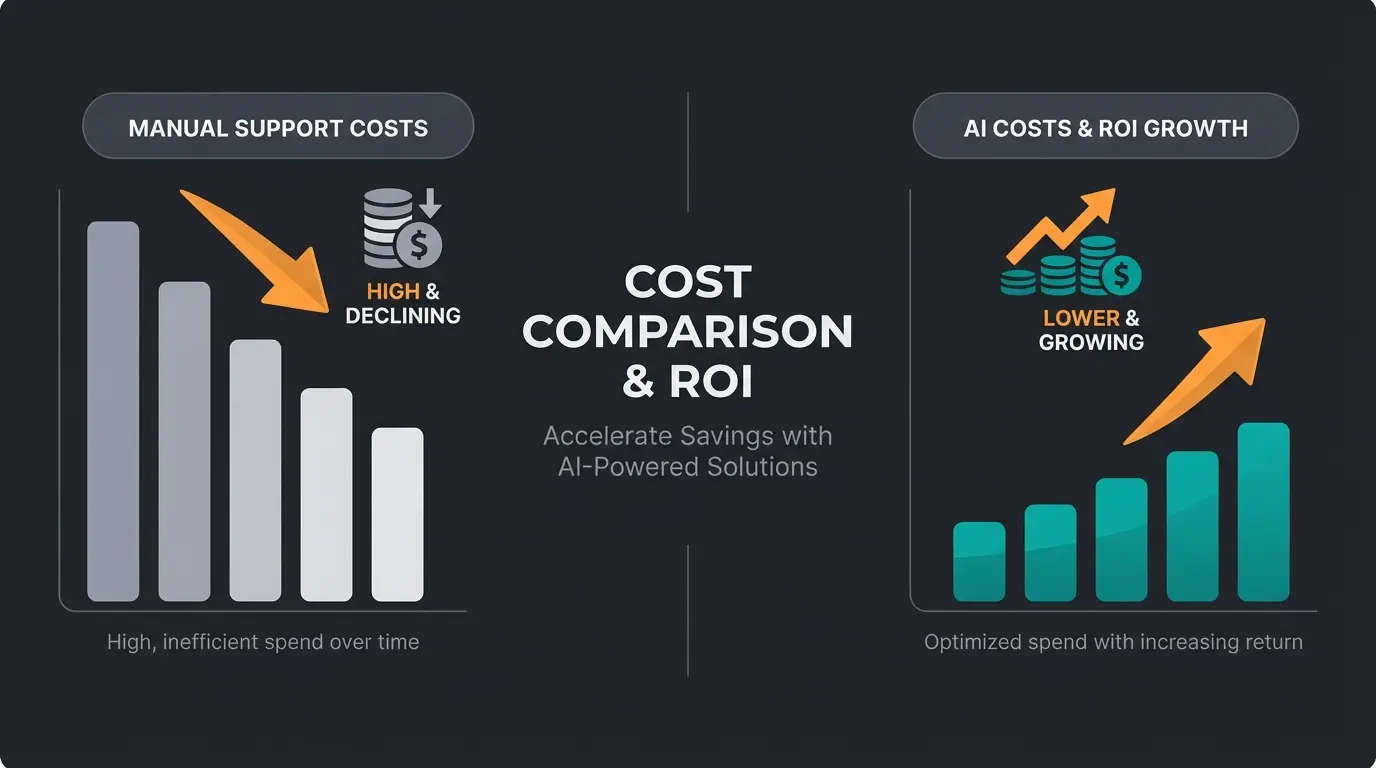
The math is compelling: a single AI product consultation solution can replace the equivalent of 2-3 full-time support agents while delivering superior customer experiences. This is exactly how AI product consultation transforms e-commerce economics.
When you factor in hiring costs, training time, employee turnover, sick days, and limited hours, the advantage of AI becomes even more pronounced. KI-Produktberatung outperforms standard support solutions across virtually every metric that matters.
Budget Planning Checklist for Decision-Makers
Before you sign the contract, check these 10 critical points. This checklist ensures you won't be caught off-guard by unexpected costs:
- License tier verified? Have you planned buffer for revenue growth that might push you into a higher tier?
- Hosting location: Is the hosting provider Magento-specialized (Varnish/Elasticsearch expertise)?
- Agency hourly rate: Is the rate realistic for 2026 (€120+)? Cheaper often becomes more expensive in the long run.
- Hyvä strategy: Does the agency use Hyvä (saves time) or Luma (outdated)?
- Data migration: Are the costs for importing old customer data included in quotes?
- Legal texts: Have you budgeted subscriptions for Terms & Conditions/Imprint (e.g., Trusted Shops)?
- Cookie consent: Is a paid tool (e.g., Usercentrics) planned and budgeted?
- AI layer: Do you have budget for intelligent search/consultation instead of just standard search?
- Test system: Does the staging system cost extra hosting fees?
- Internal resources: Who manages the agency relationship? (Internal personnel costs often overlooked)
For businesses also exploring other platforms, understanding the Shopify AI in ecosystem or how consultative AI boosts conversions can provide valuable comparative insights for your decision-making process.
The Modern 2026 E-Commerce Stack Approach
Instead of just listing standard costs, forward-thinking businesses are adopting a 'Modern 2026 E-Commerce Stack' pricing model. This approach recognizes that technology investments should be evaluated not just by their cost, but by their impact on revenue and operational efficiency.
The Standard Approach: License + Hosting. This gives you a functioning platform, but leaves optimization opportunities on the table.
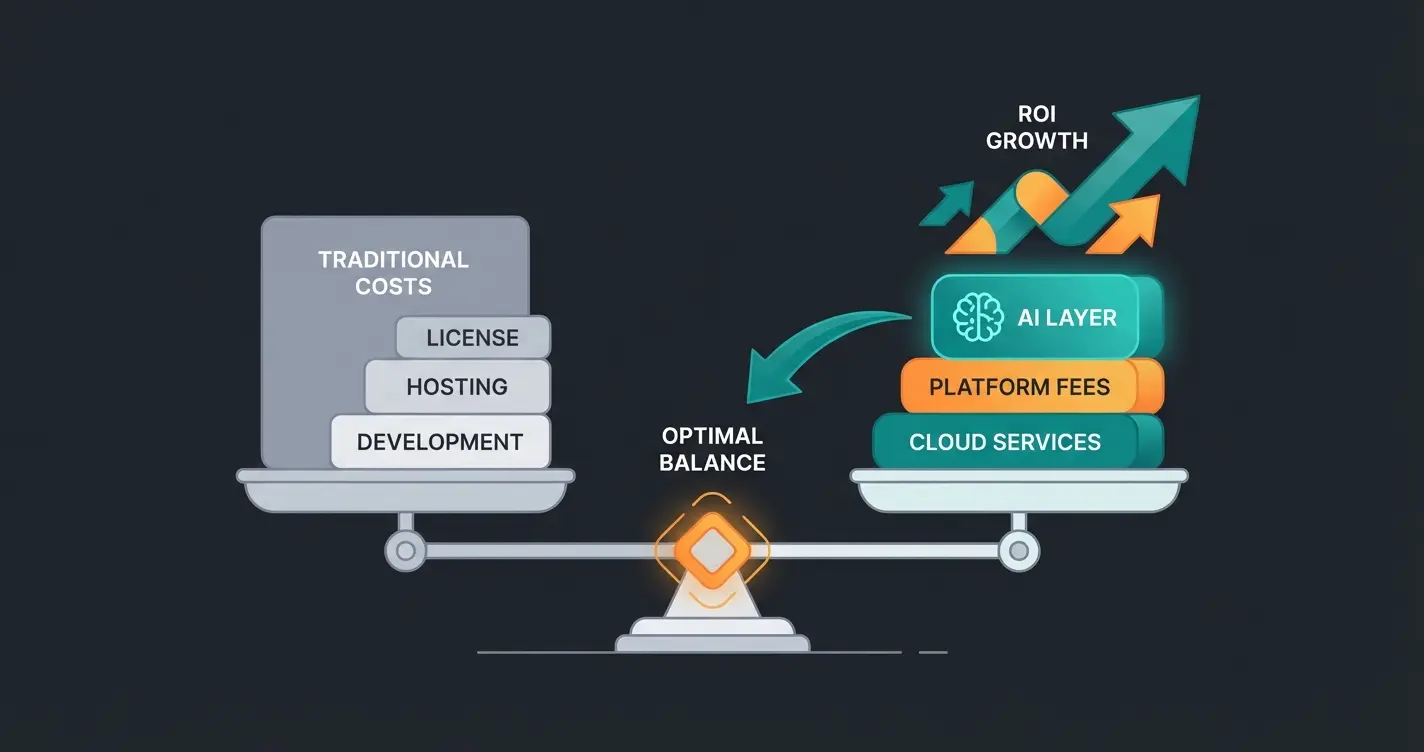
The Modern Approach: License + Hosting + AI Consultation Layer. This integrated approach shows how investing in your AI solution reduces the need for expensive custom development or heavy support staff, effectively lowering the TCO while improving customer experience.
The 'Cost of Bad Advice' calculator concept is transformative: consider the hidden cost of low conversion rates on Adobe Commerce if users can't find products. Framing AI solutions not as an 'added cost' but as a 'cost saver' compared to hiring more support staff completely changes the ROI calculation.
This is particularly relevant when implementing AI consultation to support multichannel strategies, or when deploying AI sales consultants across multiple customer touchpoints.
Frequently Asked Questions About Adobe Commerce Pricing
Magento Open Source is free to download and use, but Adobe Commerce (formerly Magento Enterprise) is a paid, licensed product. The key differences include built-in B2B features, Adobe Sensei AI, 24/7 support, and advanced marketing tools in the paid version. For businesses needing enterprise features, the development costs to add missing functionality to Open Source often exceed the Adobe Commerce license fees.
Adobe Commerce license costs range from approximately €20,000/year for smaller shops (under €1 million GMV) to over €115,000/year for enterprise-level businesses. However, the license is just one component—total annual costs including hosting, maintenance, and agency support typically range from €50,000 to €200,000+ depending on your scale and requirements.
Adobe Commerce Cloud combines license and hosting into one package, starting around €36,000-€40,000/year. While more expensive upfront, it eliminates separate hosting management. However, many German businesses prefer On-Premise with specialized DACH hosting providers like Maxcluster or Mittwald for better performance and GDPR compliance control.
AI product consultation tools can replace 2-3 full-time support agents while providing 24/7 multilingual service. At €6,000-€24,000/year compared to €80,000+ for human agents, the savings are substantial. Additionally, AI improves conversion rates by helping customers find products faster, directly increasing revenue without proportional cost increases.
Key hidden costs include: quarterly patch implementation (€12,000-€24,000/year), data migration (15-20% of initial project budget), performance optimization, legal compliance tools (Trusted Shops, Cookie consent ~€500-€1,000/year), and the often-overlooked 'lost sales' cost from poor product discovery—potentially thousands in wasted marketing spend.
Conclusion: Is the Investment Worth It?
Adobe Commerce remains the 'gold standard' in 2026 for retailers who need scalability, B2B depth, and internationalization capabilities. The costs are high but plannable—if you know the hidden items and approach budgeting comprehensively.
The Most Important Insight for Your Budget Planning: Don't save in the wrong places. Many retailers spend €150,000 on the 'engine' (license & development) but skimp on the 'tires' (user experience & consultation). This is like buying a sports car and never changing the oil.
A shop that runs technically perfectly but doesn't help customers find the right product is a failed investment. Every Euro spent on infrastructure is wasted if customers bounce because they can't navigate your catalog effectively.
- Use the savings from the free Hyvä Theme to free up budget for optimization
- Invest this freed budget in modern AI consultation tools that work around the clock
- This reduces your support costs and increases conversion rates—thereby improving the ROI of your entire Adobe Commerce platform
Companies like AI Product Consultation success stories demonstrate the tangible impact of this approach. The question isn't whether you can afford AI consultation—it's whether you can afford to operate without it in 2026's competitive landscape.
Would you like to know how much budget you could save by using AI compared to manual support? The difference can be substantial—often paying for your entire AI investment within the first quarter while simultaneously improving customer satisfaction and conversion rates.
Stop losing sales to poor product discovery. Our AI consultation solution integrates seamlessly with Adobe Commerce, reducing support costs while boosting conversions 24/7.
Get Your Free ROI Analysis
Lasse is CEO and co-founder of Qualimero. After completing his MBA at WHU and scaling a company to seven-figure revenue, he founded Qualimero to build AI-powered digital employees for e-commerce. His focus: helping businesses measurably improve customer interaction through intelligent automation.