Introduction: The Dual Nature of Magento Marketplace
Anyone searching for "Magento Marketplace" in 2025 stands at a crossroads. The search intent is fundamentally split, and understanding this duality is the first step toward success in the Adobe Commerce ecosystem.
On one side stands the Adobe Commerce Marketplace (formerly Magento Marketplace) – the official app store where shop operators search for Magento extensions to transform their monolithic systems into flexible sales machines. On the other side lies the ambition of many entrepreneurs to become platform operators themselves: the search for multi-vendor solutions to build the next Amazon, Otto, or niche marketplace based on Magento 2.
Yet while most discussions revolve around technical integrations, shipping modules, or checkout optimizations, a massive gap is opening up in e-commerce in 2025 that standard extensions have barely addressed: The gap of digital expert consultation.
In this comprehensive article, we analyze not only the status quo of the Magento ecosystem and the best Magento extensions for the coming year but also reveal why the next major revenue lever isn't in the checkout – it's in AI-powered AI Product Consultation.
Part 1: Current State – Magento & Adobe Commerce in 2025
Before diving into specific tools, it's worth examining the data landscape. Magento (now firmly integrated into the Adobe Commerce Cloud) continues to assert itself as one of the leading platforms for mid-market and enterprise customers.
Market Data and Relevance
Current analyses show that Magento remains a heavyweight in global e-commerce. According to MageComp, Magento processes an estimated gross merchandise volume (GMV) of $155 billion annually. It remains the preferred platform for complex B2B scenarios and scalable B2C shops.
Gross merchandise volume processed through Magento platforms
Active Magento-powered stores worldwide
Verified extensions available in the official marketplace
Germany ranks among top 3 markets after USA and UK
The spread is impressive: over 240,000 live websites use Magento worldwide, as reported by Envisage Digital. Particularly interesting for the DACH region: Germany accounts for approximately 6.1% of all Magento stores globally, placing it among the top 3 markets after the USA and UK. This underscores the necessity for German-language, legally compliant solutions (GDPR).
The ecosystem is massive: the official Marketplace lists between 3,800 and 5,000 verified extensions according to Amasty. The community is enormous, but quantity doesn't equal quality.
Technological Leap: Adobe Commerce 2.4.7
Anyone wanting to succeed in 2025 must stay technologically current. With the release of Adobe Commerce 2.4.7 (and subsequent patches), the course for the future has been set:
- PHP 8.3 Support: A critical factor for performance and security. Older versions (PHP 8.1/8.2) are reaching end-of-life, making updates mandatory according to Adobe and Brainvire.
- GraphQL Caching: For headless commerce and PWA applications (Progressive Web Apps), caching has been massively improved, meaning faster load times for mobile users as noted by Scandiweb and IOVista.
- Security: With the introduction of native rate-limiting functions for REST and GraphQL APIs, Adobe responds to increasing brute-force attacks in e-commerce, according to Skynet Technologies.
Part 2: Architecture of Success – Essential Extension Categories
To keep a Magento shop competitive in 2025, the vanilla standard isn't enough. Based on analysis of top search results and the requirements of international markets, Magento extensions can be divided into four indispensable pillars.

1. Foundation & Performance (The Bedrock)
Without visibility and speed, no shop sells. The standard SEO features of Magento 2 are solid, but for highly competitive markets, they're often too rudimentary.
- SEO Suites: Extensions like the Mageplaza SEO Suite or the Amasty SEO Toolkit are industry standards. They automate meta tags, canonical URLs, and hreflang tags, which is essential for international shops according to Commerce Pundit and Amasty.
- Caching & Speed: Despite native Full-Page-Cache (FPC) and Varnish support, many shops rely on additional optimizers like Amasty Google Page Speed Optimizer to pass Core Web Vitals.
2. Trust & Legal Compliance (The German Factor)
In German-speaking markets and throughout Europe, trust is currency. European consumers are cautious and well-protected legally. This aspect is crucial for any business leveraging AI consulting solutions.
- GDPR / Privacy: Extensions like Amasty GDPR or solutions from Trusted Shops are not optional but mandatory. They regulate cookie consent, the 'right to be forgotten,' and anonymization of customer data.
- Local Payment Methods: While PayPal dominates globally, in Germany invoice purchasing (e.g., via Klarna or Ratepay) and classic direct debit cannot be missing. Modules from Mollie or Adyen are leading here as they cover local preferences.
3. Checkout & Conversion (The Close)
The checkout is the bottleneck. The native Magento checkout comprises multiple steps, which leads to abandonment on mobile devices.
One-Step-Checkout: OneStepCheckout (the original) or alternatives from Mageplaza reduce the process to a single page. Studies show this can reduce abandonment rates by 15-25% according to Atwix. This optimization is essential before implementing advanced features like Conversational Commerce.
4. The Missing Pillar: Active Consultation & Sales
Here lies the greatest untapped potential. Most shops optimize up to the shopping cart but forget the path to get there.
The solution lies in AI-driven conversational commerce tools, which we'll examine in detail in Part 3. This is where AI-driven consultation becomes a game-changer.
Part 3: Deep Dive – Why Product Consultation Is the New SEO
Analysis of search results reveals a significant gap: almost all top rankings focus on transactional tools (payment, shipping). Focus on consultative tools is missing. Yet this is exactly where the market is shifting massively in 2025.
The Filter Navigation Paradox
Classic e-commerce navigation is based on exclusion: the customer clicks filters, and the result list shrinks. This works for commodities (e.g., printer paper) but fails for complex products (e.g., e-bikes, cosmetics, supplements).
The Consultation Gap: In brick-and-mortar specialty retail, the customer goes to the salesperson and describes their problem. In the online shop, they're left alone with 500 products and a sidebar full of technical attributes. This is precisely where digital product consultants provide immense value.
The Consequence: High bounce rates on category pages and high return rates because the wrong product was purchased. The need for an AI product finder has never been greater.
Full funnel – customers find your shop through search optimization
LEAKING – customers browse but can't decide, no guidance available
Optimized – one-step checkout, multiple payment options
Result: High bounce rates, abandoned carts, wrong purchases, returns
Evolution: From Chatbot to Digital Expert Consultant
Previous chatbots in the Magento environment were often glorified FAQ search engines ('Where is my package?'). The new generation of Magento extensions uses Large Language Models (LLMs) like GPT-4 or Llama 3 to conduct real sales conversations. These AI expert consultants represent a fundamental shift in customer engagement.
Comparison: Standard Search vs. AI Consultation
| Feature | Standard Magento Search | Rule-Based Chatbot | AI Product Consultation (2025) |
|---|---|---|---|
| User Input | Keywords ('running shoes red') | Click buttons ('Shipping', 'Returns') | Natural language ('I'm starting to jog and have knee pain') |
| Understanding | Zero (text matching) | Limited (keyword triggers) | Context & Intent (understands 'knee pain' = cushioning needed) |
| Result | List with 50 products | Link to FAQ page | Recommendation of 1-3 matching products with reasoning |
| Goal | Find product | Reduce support costs | Build conversion & trust |
This transformation represents what Consultative AI can achieve when properly implemented – moving from reactive support to proactive sales guidance.
The International Market: Digital Expert Consultation
Particularly in markets where 'expert advice' (Fachberatung) is a quality feature, AI consultation offers a tremendous opportunity. Implementing a consultative sales bot can significantly improve customer experience.
- Trust Through Competence: An AI agent that explains why a product fits imitates the experience in a specialty store.
- Data Privacy: Modern solutions integrate via API without unnecessarily storing customer data, which can be implemented GDPR-compliantly.
- Examples: Extensions like Meetanshi AI Chatbot (uses Google Gemini) or Webkul AI Chatbot (uses Llama/Mistral) show where the journey is heading according to Meetanshi and YouTube tutorials. They enable understanding the catalog rather than just searching it.
The implementation of AI product consultation across multiple channels, including messaging platforms, further expands the reach of these solutions.
Transform your Magento store from a static catalog into an intelligent sales conversation. Our AI product consultation solution guides customers to the right product – just like your best salesperson would.
Start Your Free TrialPart 4: Multi-Vendor Marketplaces – Building the Next Amazon
Now let's address the second search intent of 'Magento Marketplace': building your own platform. Many B2B companies and niche retailers want to expand their assortment without holding their own inventory (dropshipping/marketplace model).
Best Magento 2 Marketplace Extensions
To transform a standard Magento shop into a multi-vendor marketplace, you need specialized modules that enable vendor portals, commission billing, and separate order management.
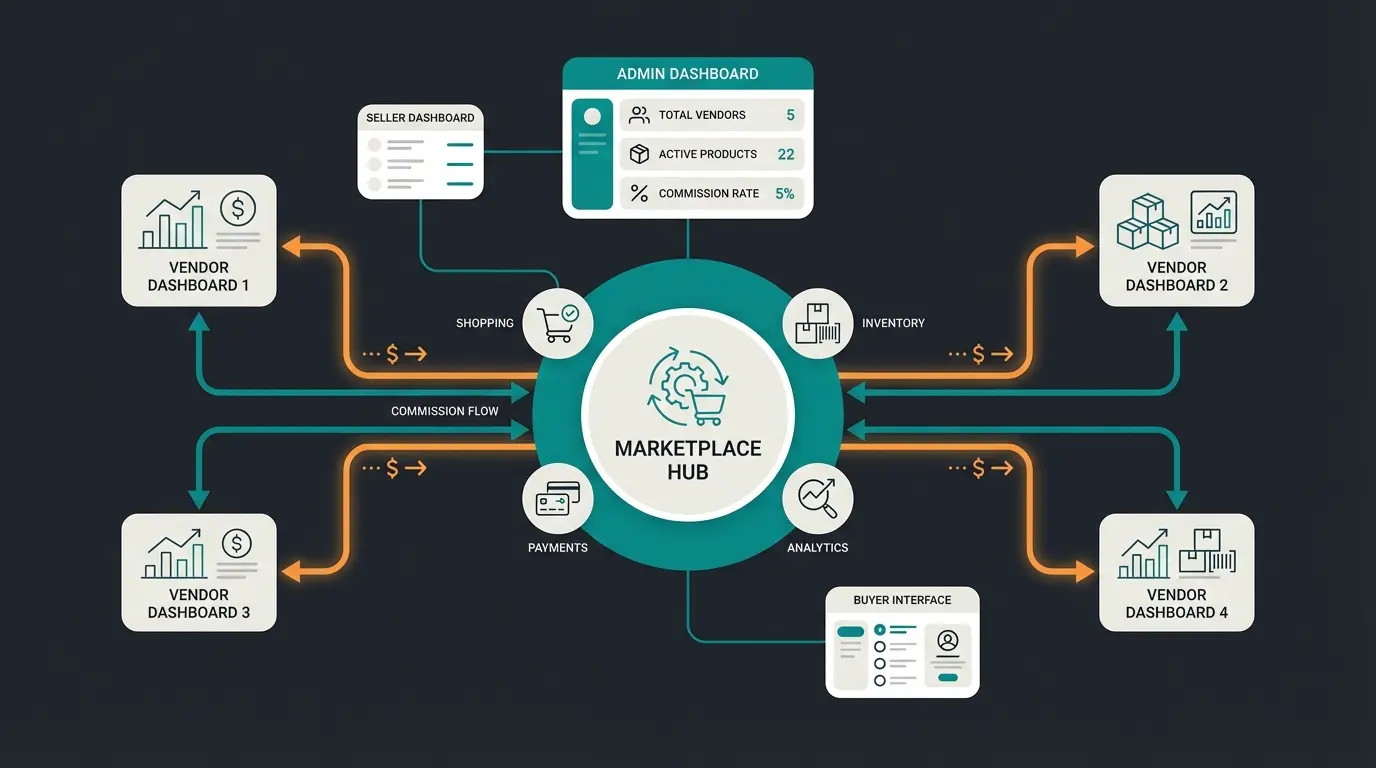
1. Webkul Marketplace Multi-Vendor: This is the market leader according to Amasty and CyberPanel. Features include a separate seller dashboard, commission management, and ratings for sellers (not just products). It's extremely modular with add-ons for almost everything (shipping per seller, split-cart, etc.).
2. CedCommerce Marketplace Solution: Strong focus on B2B and synchronization with other marketplaces (omnichannel). It allows B2B features like 'Request for Quote' for marketplace sellers as well.
3. Magebay & Apptha: Additional alternatives that often serve specific price points or niches (e.g., booking/events).
The Challenge: Curation vs. Automation
A marketplace stands or falls with data quality. If you let 100 merchants onto your platform, tomorrow you'll have 100 different ways of writing 'T-shirt.'
AI as Gatekeeper: Here too, AI becomes essential in 2025. Use AI tools to automatically standardize merchant product data (attribute mapping) before it goes live. This is where autonomous digital consultants can streamline operations significantly.
Part 5: Security & Quality – Choosing Extensions Safely
The Adobe Commerce Marketplace is curated, but responsibility ultimately lies with the shop operator. A bad plugin can crash the entire shop or open security vulnerabilities.
The Extension Quality Program (EQP)
Adobe has massively tightened the EQP. Every extension in the official Marketplace undergoes rigorous testing according to Adobe's documentation:
- Automated Tests: Code sniffers check for standards, malware, and plagiarism.
- Manual QA: An Adobe engineer checks installation, Varnish compatibility, and documentation.
- Marketing Review: Review of product description for misleading promises.
Checklist for Extension Selection
Before clicking 'Buy,' check these points – this careful evaluation is as important as implementing product consultation features correctly:
- Compatibility: Is the module explicitly released for your version (e.g., 2.4.7) and your PHP version (8.3)?
- Update Frequency: Has the module been updated in the last 3-6 months? (A sign of active maintenance and security patches).
- Support Score: Look for reviews that praise support, not just functionality. When things go wrong, you need fast help.
- Vendor Status: Prefer 'Adobe Gold/Platinum Partner.' These invest more in quality assurance according to Adobe Partner requirements.
Part 6: Technical Integration – Composer vs. ZIP
A common misconception among beginners is the installation method. In 2025, there's really only one professional way.
Why You Should Avoid ZIP Uploads
Previously, you'd download a ZIP file and push it via FTP to the server (`app/code`). The disadvantages are significant: no version control, difficult updates, conflicts aren't automatically detected. It's 'dirty coding.'
The Gold Standard: Installation via Composer
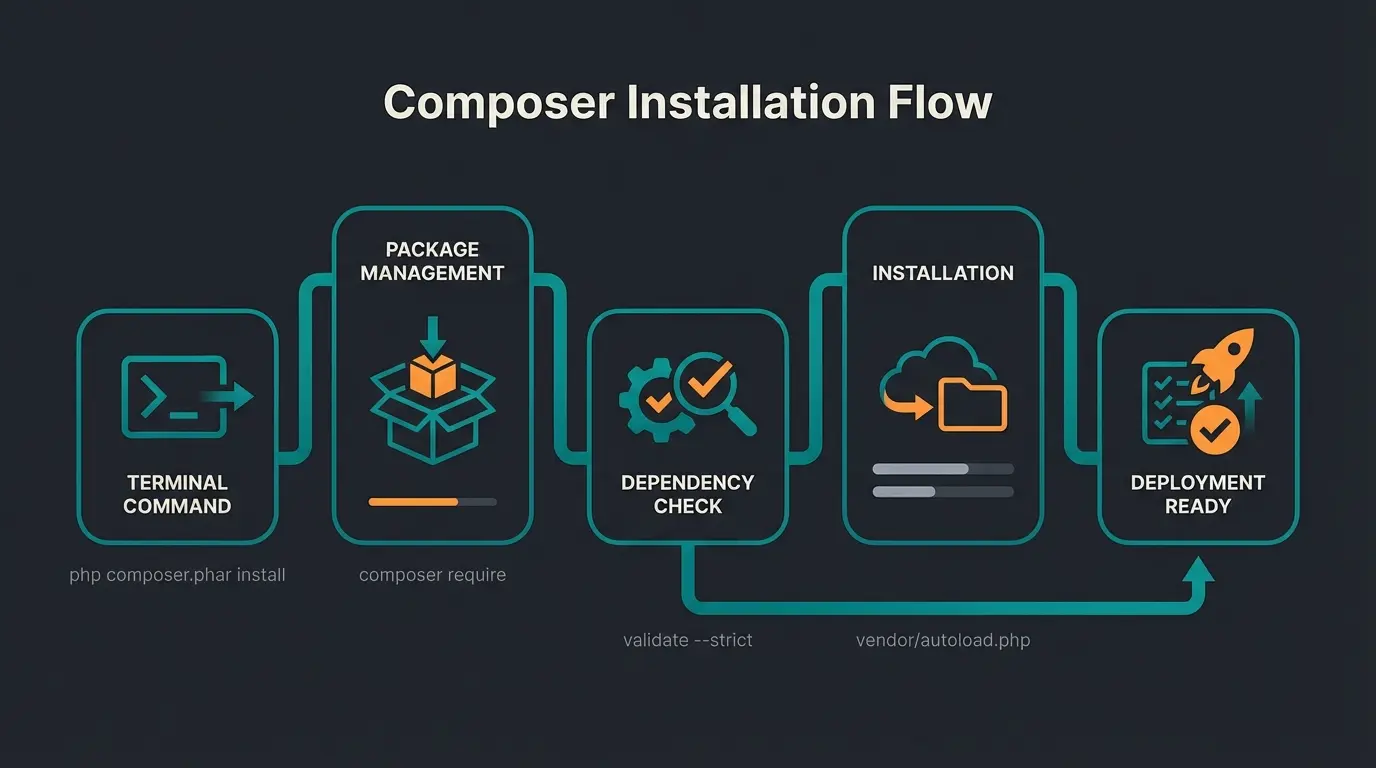
Composer is the package manager for PHP and the official way for Adobe Commerce according to Mageplaza, Magefan, and Liquid Web.
The Professional Workflow:
- Purchase: Acquire the license in the Marketplace.
- Sync: Store your Public/Private Keys in the `auth.json` of your project.
- Require: Use the terminal: `composer require vendor/module-name` – Composer immediately checks whether dependencies are missing or conflicts with other modules exist.
- Deploy: Run the following commands: `php bin/magento setup:upgrade`, `php bin/magento setup:di:compile`, `php bin/magento setup:static-content:deploy`
Advantage: When you need an update, a simple `composer update` suffices. The system automatically pulls the newest secure version that matches your core.
Part 7: Conclusion & Outlook – The Future Is Conversational
The Magento Marketplace in 2025 is more powerful than ever. With over 4,000 extensions, it offers a solution for almost every technical problem. But the era when you could differentiate through pure feature lists ('We have 50 payment methods') is coming to an end.
Strategy Summary
- Secure the Foundation: Use proven extensions for SEO, performance, and legal compliance (GDPR).
- Smooth Processes: Radically optimize the checkout (one-step).
- Dare Innovation: Close the 'Consultation Gap.' Integrate AI-powered consultation tools that actively guide your customers instead of just letting them filter.
The Competitive Advantage in 2025
While your competition is still thinking about how to color-optimize the 'Add to Cart' button, you should be thinking about how to digitize the knowledge of your best salesperson. The technology for this is now available in the Marketplace.
The e-commerce of the future is no longer just a catalog – it's a conversation. And Magento gives you the tools to lead that conversation.
FAQ: Common Questions About the Magento Marketplace
Yes, they go through Adobe's Extension Quality Program (EQP), which checks code for malware and standards. Nevertheless, you should apply updates regularly. The EQP includes automated tests, manual QA by Adobe engineers, and marketing review to ensure quality and security.
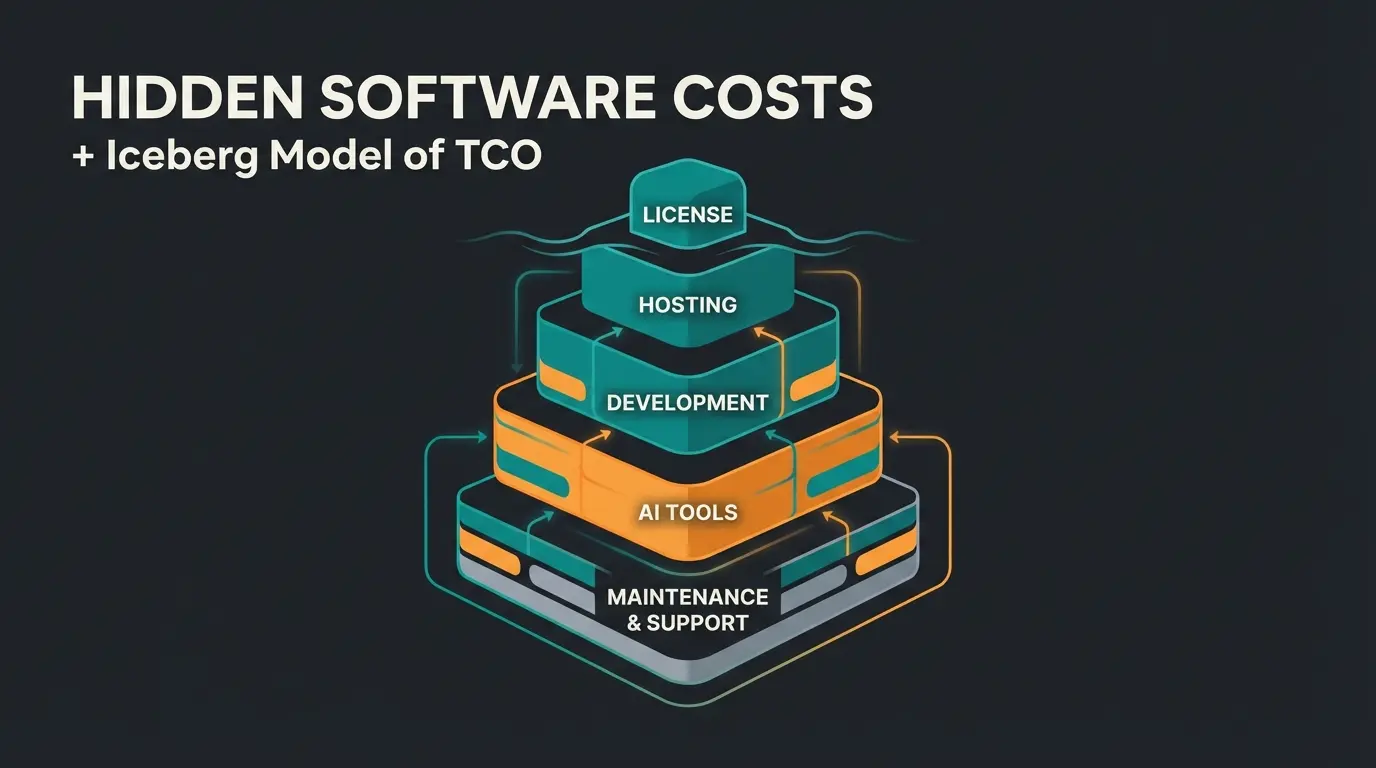
Prices vary widely. Simple tools are often free or cost around $50-100. Complex suites (multi-vendor, advanced SEO) often range between $200 and $600 as a one-time fee or annual subscription. Consider the total cost of ownership including updates and support.
If you have technical understanding of SSH and Composer: yes. However, for production environments, it's strongly recommended to have an experienced developer or agency test this in a staging environment first. Always backup your store before any installation.
Many extensions work for both platforms. However, some enterprise features (B2B modules, PageBuilder extensions) are exclusively available for Adobe Commerce (formerly Enterprise Edition). Always check the compatibility list in the Marketplace before purchasing.
Traditional chatbots are essentially FAQ search engines responding to predefined keywords. AI consultation extensions using LLMs like GPT-4 understand context and intent, can conduct actual sales conversations, and provide personalized product recommendations with explanations – mimicking an in-store expert consultant experience.
Don't let your customers struggle alone with product decisions. Implement AI-powered product consultation and watch your conversion rates soar while reducing returns.
Get Started Now
Lasse is CEO and co-founder of Qualimero. After completing his MBA at WHU and scaling a company to seven-figure revenue, he founded Qualimero to build AI-powered digital employees for e-commerce. His focus: helping businesses measurably improve customer interaction through intelligent automation.