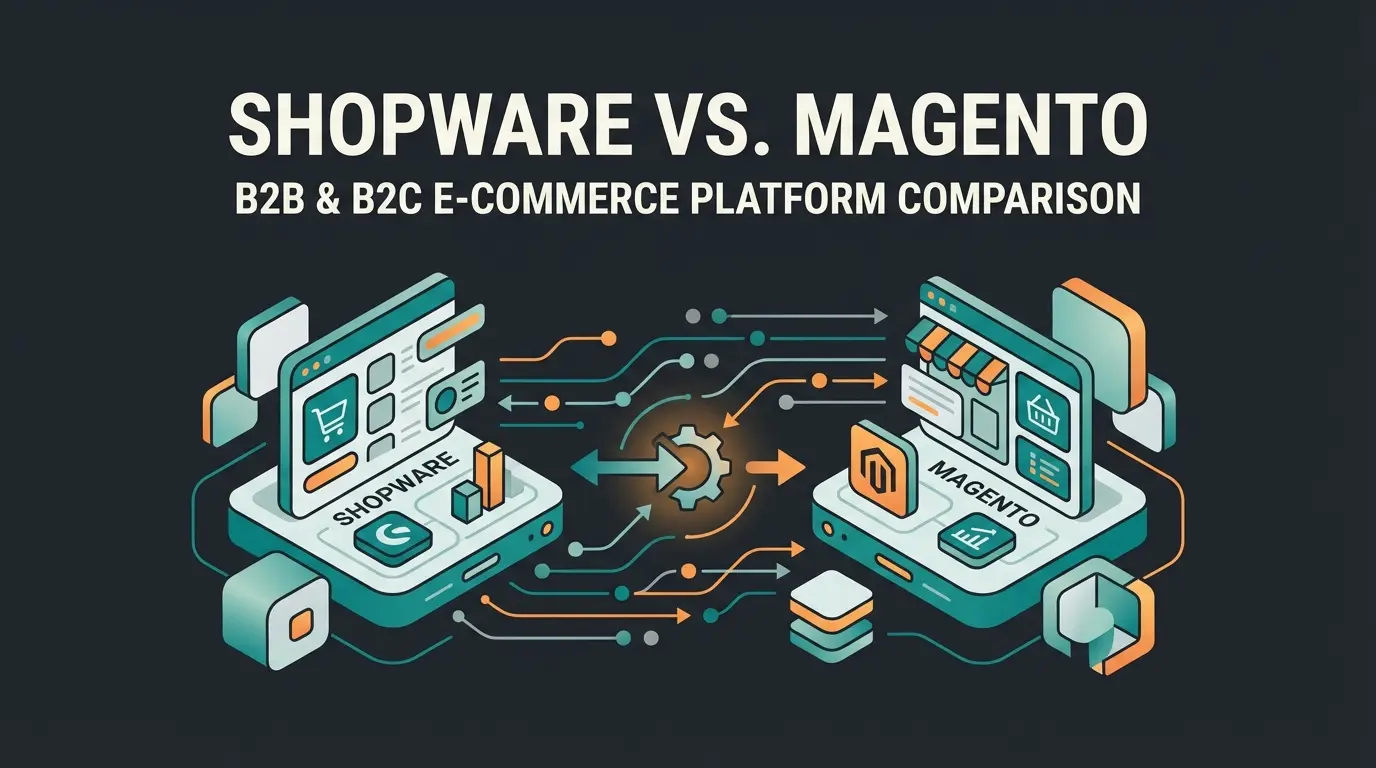
Executive summary: decision guide for e-commerce leaders
The choice between Shopware vs Shopify in 2025 is no longer simply a matter of Open Source versus SaaS. Whether you search for Shopify vs Shopware or the reverse, it is a strategic decision about how your business will grow, how you define data sovereignty, and how you sell complex products in an era where customers expect immediate, intelligent consultation.
While Shopify dominates among German SMBs with a market share of nearly 40%, Shopware remains the fortress for the German Mittelstand and complex B2B scenarios. But new pricing models (Fair Usage Policy 2025), the Accessibility Strengthening Act (BFSG), and the AI revolution are fundamentally changing the calculation.
| Criterion | Shopify (SaaS) | Shopware 6 (PaaS / Self-Hosted) |
|---|---|---|
| Best for | D2C brands, standard products, fast scaling, international markets | B2B, complex products, individual processes, strict GDPR requirements |
| Setup time | Very fast (days to weeks) | Medium to long (weeks to months) |
| Cost structure | Low entry, scales linearly with revenue (OPEX) | High entry, but often cheaper at high volume (CAPEX) |
| Maintenance | Minimal (managed hosting, automatic updates) | High (updates & server management required) |
| Data sovereignty | Data in the cloud (US corporation) | Full control (self-hosted possible, Made in Germany) |
| AI focus | Shopify Sidekick: backend admin assistance | Shopware AI Copilot: content & backend processes |
| B2B features | Catching up fast (B2B Markets, Company Profiles) | Historically very strong (complex pricing, approval workflows) |
| The consultation gap | Standard filters fail for complex products | Also offers no sales advisor out of the box |
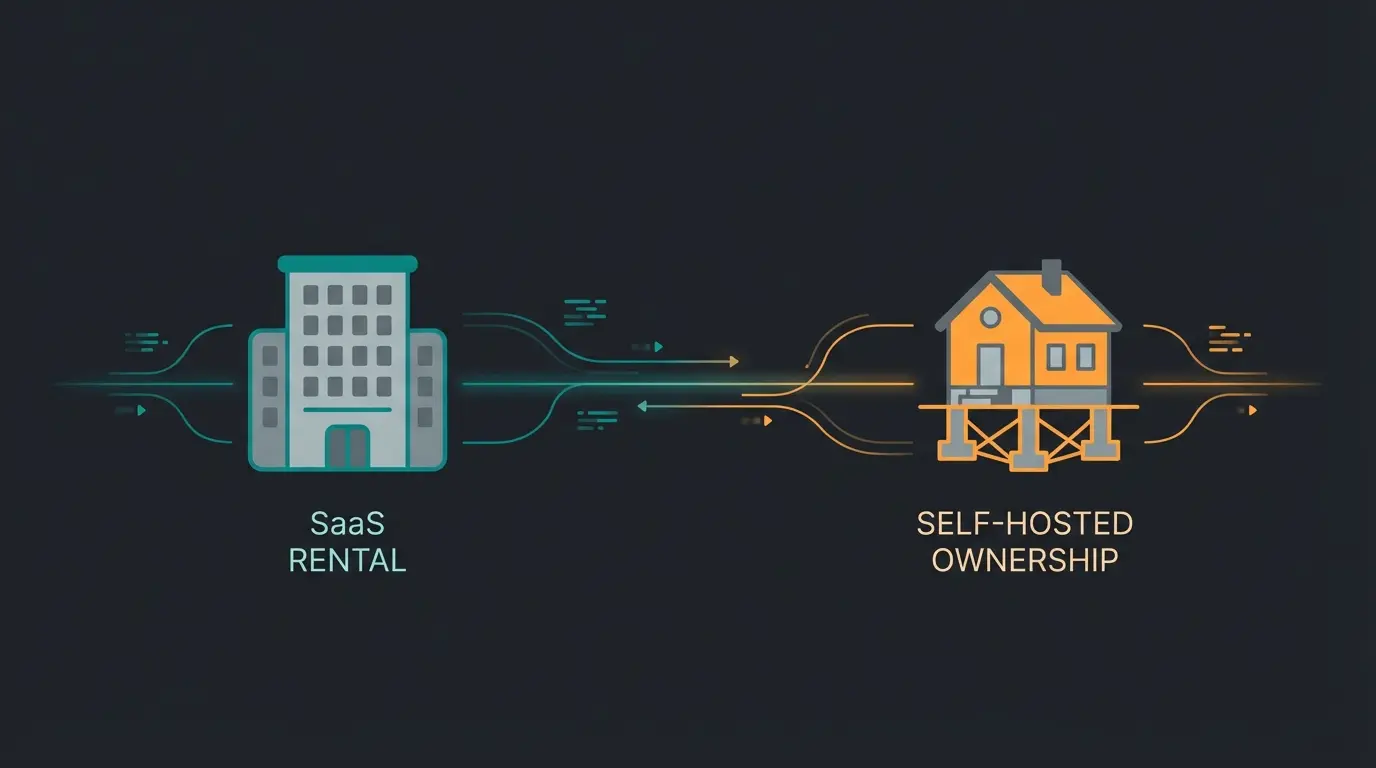
The fundamental philosophy: rent vs build
To truly understand the Shopware vs Shopify debate, you need to examine the DNA of both systems. This fundamental philosophical decision influences every aspect of your daily business operations.
Shopify: the all-inclusive rental apartment
Shopify is a classic SaaS solution. You rent a fully equipped shop with everything included, comparable to moving into a finished rental apartment.
- Advantage: You do not have to worry about the roof (server), the security door (SSL), or the plumbing (updates). Everything simply works from day one. Features like the One-Page Checkout are rolled out centrally and available immediately.
- Disadvantage: You cannot tear down walls. When Shopify decides the checkout process looks a certain way, that is how it looks, unless you invest in the expensive Plus plan (from approx. EUR 2,300/month). Certain URL structures (e.g. /products/) are not changeable.
- Target audience: D2C brands that want to start fast and scale internationally without worrying about technical details.
Shopware: the architect-designed house on your own land
Shopware follows the Open Commerce approach. Even though Shopware now offers cloud solutions, its strength lies in maximum flexibility, you build on your own land.
- Advantage: You own the code. You can customize every process, every button, and every database query to your complex B2B logic. You have complete data sovereignty. The API-first architecture is built on Symfony and Vue.js.
- Disadvantage: A house needs maintenance. You need a foundation (hosting) and craftsmen (agency/developers) for updates and security.
- The 2025 reality: With the introduction of the Fair Usage Policy in March 2025, the free Community Edition is effectively only usable for shops under EUR 1 million GMV.
- Target audience: Mid-market businesses with complex products that want full control over their data and processes.
Feature battle: the 2025 edition
Let us compare the hard facts. What do these platforms actually deliver in 2025? For comparisons with other platforms, see our Shopware alternatives overview.
Hosting, GDPR, and accessibility: the German compliance factor
This is often the knockout criterion for German businesses, and it deserves serious consideration in any Shopware vs Shopify comparison.
Shopware as a German company (headquartered in Schoeppingen) is GDPR-native. You can run Shopware on German servers (e.g. Hetzner, Timme Hosting). You know exactly where every bit of your customer data resides. For many B2B customers and data protection officers, this is non-negotiable.
Shopify has made massive improvements and offers EU hosting options. Nevertheless, it is a US corporation. Data flows to the USA are technically almost impossible to completely avoid. For strict compliance requirements, Shopify often requires additional apps (cookie banners, legal texts) to be legally compliant in Germany.
Customization: Liquid vs Twig and Vue
Shopify (Liquid): The template language Liquid is easy to learn. Frontend customizations are quickly done. But the business logic in the backend is a black box. You cannot simply intervene in the core to change complex warehouse logic.
Shopware (Symfony/Vue.js/Twig): Shopware 6 is based on standard technologies (Symfony Framework). You can operate the system completely headless via the API-first architecture or make deep changes to the core logic. Ideal for companies whose products do not fit the T-shirt in size M schema. For details on version evolution, see Shopware 5 vs 6.
B2B features: the 2025 battlefield
Long the clear dividing line, B2B capabilities in 2025 tell a more nuanced story. Both platforms have invested heavily.
The Shopware B2B Suite (from the Evolve Plan) remains the complexity king. You can map complex rights and role concepts (e.g. May order up to EUR 500, above that requires department head approval). Individual price lists per customer directly from ERP (SAP, Microsoft Dynamics), quick orders, budget approvals, and field sales connections are natively available.
Shopify has massively caught up with its B2B Markets features. You can group B2B customers into specific markets with individual catalogs and prices, create Company Profiles with multiple locations and buyers, and set up flexible payment terms (Net 30/60/90) for business customers. For 80% of B2B merchants, especially DTC brands that also sell to retailers, Shopify is now completely sufficient. For a deeper dive, see our Shopware B2B comparison.
All critical B2B features natively included in the Evolve plan
Basic features available, complex logic requires apps
Average number of paid apps for full B2B functionality
The consultation gap: where both systems fail
Here lies the strategic error in most comparisons. We discuss features like checkout or loading time. But we forget the most important thing: How do you sell a complex product online? The trend is moving from Search & Browse to Ask & Consult.
The problem of product complexity
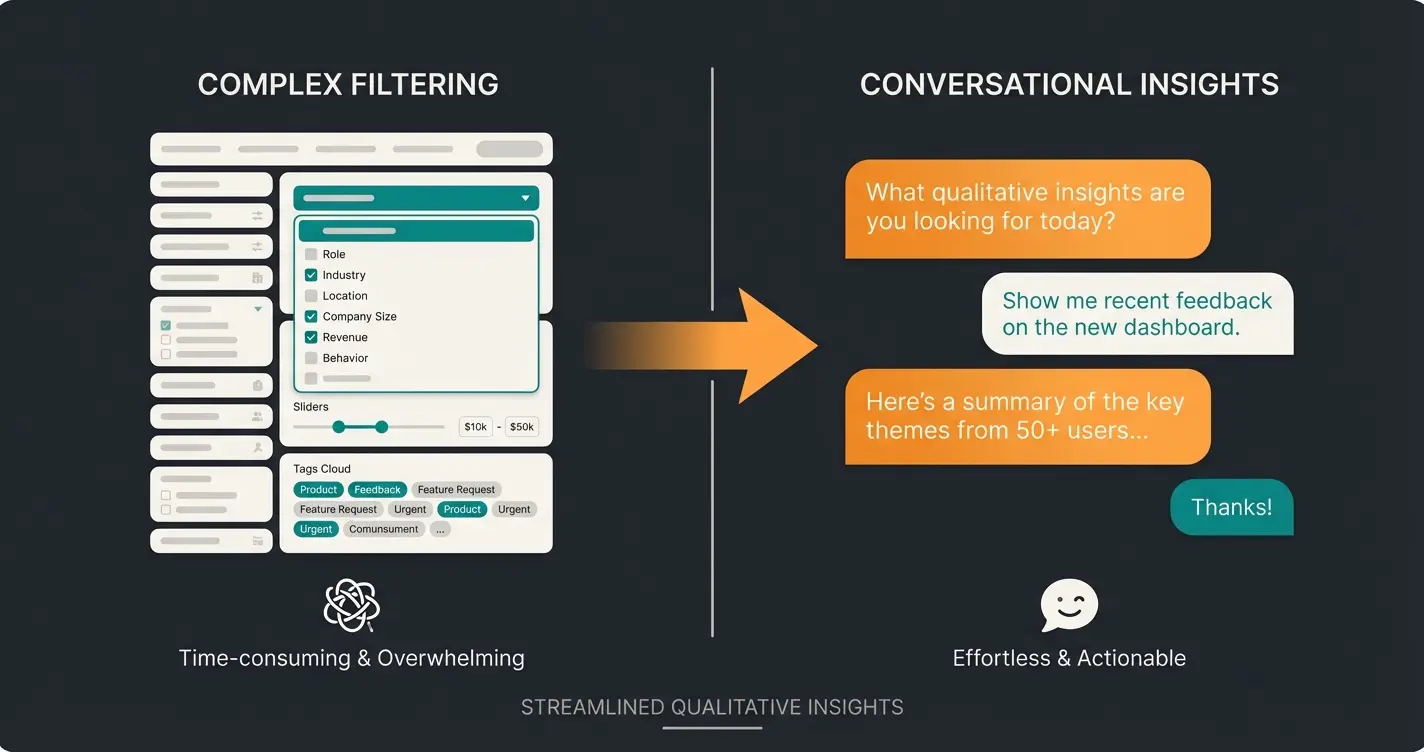
Imagine you sell industrial pumps or ergonomic office chairs. A customer searches: I need a chair for someone with a herniated disc, 6'3" tall, up to $500. With Shopify and Shopware standard, the customer has to use filters. They often do not even know which technical specification they need. They abandon the site. This is the consultation gap.
The AI comparison: backend vs frontend
Both platforms are massively upgrading with AI in 2025, but they focus on the merchant, not the customer.
Shopify Sidekick and Magic: An assistant for you, the merchant. Functions include creating discount codes, analyzing sales drops, and generating product texts. It saves time in the admin area but the end customer notices nothing.
Shopware AI Copilot: Similar tools for the backend. Generating product descriptions, summarizing reviews, AI-based search, and export assistants. Again, it is a tool for the shop manager, not for the buyer seeking consultation.
The solution: frontend AI consultation
Here lies your chance for differentiation. Regardless of whether you choose Shopware vs Shopify, for complex products you need a third layer: AI-powered sales consultation. This represents the AI guided selling revolution transforming e-commerce.
- With Shopify: Easier to integrate through the huge app store and standardized API. An AI app can be installed within minutes. But be careful with data privacy, data flows to the USA are often unavoidable with many apps.
- With Shopware: More deeply integrable thanks to open API architecture. The AI can directly access live inventory and complex B2B price lists without data risks. The integration requires individual development work, but GDPR-compliant implementation is straightforward.
Do your products need explanation? Do customers need consultation before purchase?
Is German server location or full GDPR control a must for your business?
Do you need complex price lists, approval processes, or sales rep logins?
Do you have IT capacity for Shopware or need Shopify's managed solution?
Budget for frontend AI is platform-independent and decisive for conversion.
More traffic is only half the equation. An AI employee converts visitors into buyers. Our clients increase cart value by up to 35% and checkout rates by 60%.
Book a demoTCO calculation 2025: the true cost reality
Prices are often opaque in the Shopware vs Shopify comparison. We calculate two realistic scenarios for 2025 with all hidden costs included.
Important change 2025: Shopware Fair Usage Policy
Cost comparison: scenario 1 (EUR 1.5M revenue)
Scenario: German B2B/B2C merchant with annual revenue (GMV) of EUR 1.5 million. Requirements: multi-language, ERP integration, GDPR-compliant.
| Cost item | Shopify (Plan: Advanced) | Shopware 6 (Plan: Evolve) |
|---|---|---|
| License / Subscription | ~EUR 384/month | ~EUR 2,400/month |
| Transaction fees | 0.6% with external payment provider = ~EUR 750/month | EUR 0 (no transaction fees) |
| Hosting | Included (SaaS) | ~EUR 150-300/month (managed hosting) |
| Apps / Plugins | ~EUR 300/month (B2B, multi-lang extra) | ~EUR 100/month (much included in Evolve plan) |
| Setup / Agency (initial) | ~EUR 15,000-30,000 | ~EUR 40,000-80,000 |
| Maintenance / Updates | ~EUR 0 (automatic) | ~EUR 500/month (security updates, patching) |
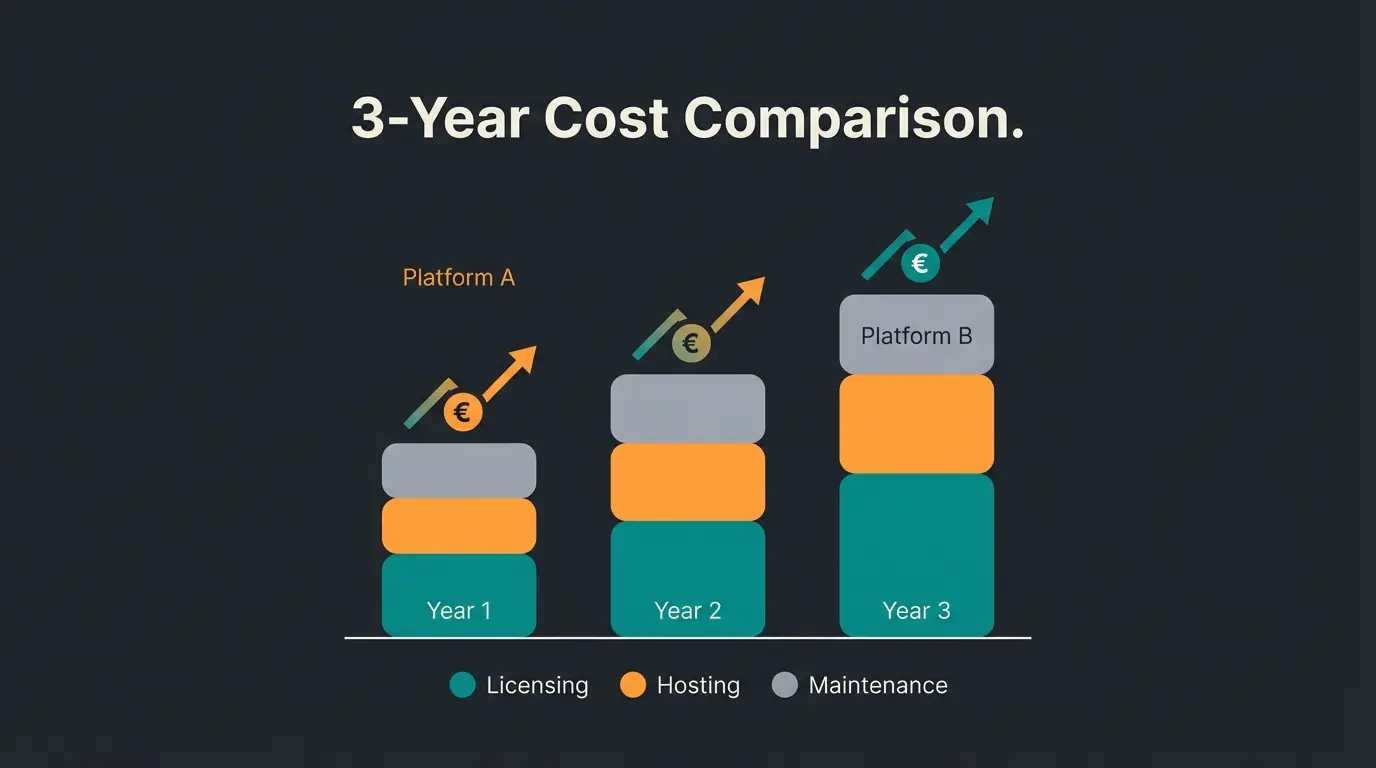
| TCO after 3 years | ~EUR 66,600 | ~EUR 168,000 |
Note on Shopify: If you use Shopify Payments, transaction fees are waived, but you pay credit card fees. If you use an external provider (e.g. PayPal, invoice payment), the fee applies additionally.
Cost comparison: scenario 2 (EUR 10M revenue)
At higher revenue, the calculation shifts. With Shopify Plus (from approx. EUR 2,300/month), transaction fees at scale can exceed Shopware's maintenance costs.
Including license, apps, and zero maintenance costs
Including license, hosting, and agency maintenance
Typical initial project costs
Typical initial project costs for comparable project
Cost analysis
- Shopify is financially almost always cheaper, especially at the start. The low entry and automatic updates reduce risk significantly.
- Shopware becomes more expensive due to license costs (especially Evolve for B2B) and agency costs for maintenance. The hidden costs: expect at least EUR 1,000-3,000 monthly for agency and maintenance.
- But: This calculation tips when you need individual customizations in Shopify that require hacks or extremely expensive enterprise apps.
- Above EUR 50M revenue, Shopware can become cheaper as the absence of transaction fees outweighs maintenance costs.
The hybrid reality: platform convergence in 2025
Most comparisons treat the Shopify vs Shopware decision as binary. The reality is more nuanced: both platforms are converging toward each other in significant ways.
Shopify is becoming more enterprise: With features like Shopify Hydrogen (headless commerce), Shopify Functions (custom backend logic), and expanded B2B Markets, Shopify now addresses use cases that previously required Shopware's flexibility.
Shopware is becoming more SaaS: The new cloud offerings (Rise, Evolve, Beyond) reduce the operational burden that made Shopware intimidating. Managed hosting options mean you can get Shopware benefits without managing servers yourself. For further comparisons, see Shopware vs Gambio or Shopware vs WooCommerce.
Conclusion and recommendation: which system for whom?
The decision between Shopware vs Shopify is a bet on the future of your business. For comparisons with other alternatives, see our Shopware vs OXID analysis, Shopware vs PrestaShop, or Magento vs Shopware comparison.
Choose Shopify if...
- You prioritize speed above all else. Time to Market is your most important KPI.
- Your focus is on marketing and sales, not IT infrastructure.
- You sell standard products or work D2C (Direct-to-Consumer).
- You want to scale internationally without worrying about server infrastructure.
- Your budget for initial setup is under EUR 20,000.
- You have a small team and no dedicated IT department.
Choose Shopware if...
- You sell complex products that require deep technical integrations.
- You run a B2B business with individual price lists, representative logins, and approval processes.
- Data sovereignty and German server location are part of your brand identity or compliance requirements.
- You already have a strong IT department or partner agency.
- You are willing to invest in a platform that you own (asset) rather than just rent.
- You plan long-term and see higher initial costs as an investment.
No matter which system you choose: The shop system alone does not sell your complex product. Both Shopware and Shopify offer excellent shopping carts but poor salespeople. If you have products that need explanation, invest the saved money (with Shopify) or the integration budget (with Shopware) in AI-powered product consultation. Close the consultation gap before your competitor does.

FAQ: common questions about Shopware vs Shopify
No, not without restrictions. Due to the Fair Usage Policy 2025, the Community Edition has effectively become paid for revenues over EUR 1 million if you need security updates and plugins. The free-forever era for growing businesses has ended.
Yes, Shopify is GDPR-compliant with proper configuration. Shopify offers data storage in Europe and appropriate contractual frameworks (DPA). For businesses with extremely strict compliance requirements, Shopware's data sovereignty on German servers can be a decisive advantage.
Neither platform solves the consultation gap out of the box. Both Shopify Sidekick and Shopware AI Copilot focus on backend tasks. For real customer consultation AI, you need an additional solution. Shopify offers faster integration through its standardized app store, while Shopware offers deeper integration with full GDPR compliance.
No, you cannot freely choose the server location with Shopify. Shopify uses a global CDN. For 95% of merchants this is legally solvable, for 5% (sensitive data, critical infrastructure) it is a knockout criterion.
Shopify to Shopware migrations typically take 2-6 months depending on catalog size and customization needs. The reverse is faster (1-3 months) but often requires giving up custom functionality. Budget EUR 20,000 to EUR 100,000 depending on complexity.
The biggest hidden costs are agency fees for maintenance, updates, and bugfixes (EUR 1,000-3,000 monthly), hosting (EUR 150-500+ monthly), and higher initial setup costs (often 2-3x a comparable Shopify project). These costs are frequently underestimated.
Both platforms now offer strong B2B features. Shopware's B2B Suite provides deeper native capabilities (approval workflows, ERP integration, complex pricing). Shopify's B2B Markets features cover 80% of B2B needs with better usability. For extremely complex B2B scenarios (10,000+ customer-specific price lists), Shopware still has the edge.
The platform choice is important, but even more important is how you sell complex products. An AI employee consults your customers like an experienced sales professional, 24/7, whether on Shopware or Shopify.
Book your demo
Lasse is CEO and co-founder of Qualimero. After completing his MBA at WHU and scaling a company to seven-figure revenue, he founded Qualimero to build AI-powered digital employees for e-commerce. His focus: helping businesses measurably improve customer interaction through intelligent automation.