Shopify SEO Agency: How to Find the Right Partner for Your Store in 2026
Compare Shopify SEO agencies, freelancers, and DIY apps. Learn what specialized agencies cost, what services they provide, and how to choose the right one.

Why you need a specialized Shopify SEO agency
Open the analytics dashboard of a mid-sized Shopify store in March and you see the gap immediately. Paid traffic: consistent but expensive. Organic traffic: flat. The store has products worth buying, solid conversion rates when people land on the right pages, and no strategy for getting them there through search.
This is where most store owners start looking for an SEO agency. The problem is that most SEO agencies treat Shopify like any other CMS. They run a generic crawl, hand over a spreadsheet of title tag recommendations, and call it a strategy. That approach misses the platform entirely.
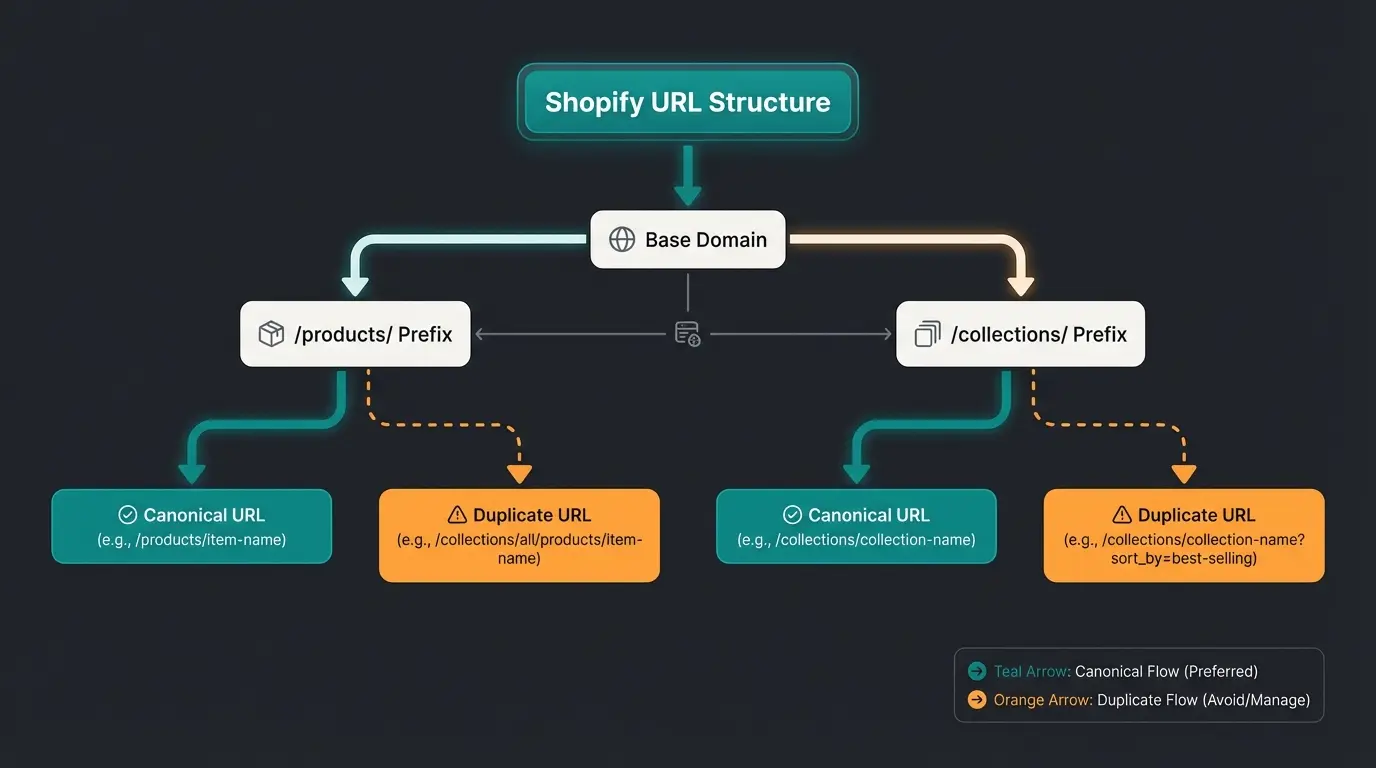
Shopify forces a URL structure that no other major platform uses. Every product URL starts with /products/, every collection with /collections/. You cannot change this without custom workarounds. Generic agencies either do not notice or do not know what to do about it. A specialized Shopify SEO agency understands these constraints from day one and builds around them instead of fighting them.
For a deeper look at how SEO works on Shopify specifically, the Shopify SEO Guide covers the full framework from keyword research to technical implementation.
- Shopify's URL structure is fixed. /products/ and /collections/ prefixes cannot be removed natively. Agencies must work within this constraint, not around it.
- Liquid templates create duplicate content by default. The `| within: collection` filter generates collection-based URLs for products, sending link equity to non-canonical pages.
- App bloat is the #1 speed killer. Most Shopify stores run 8 to 12 apps, each injecting JavaScript. Shopify Plus merchants achieved 20% speed improvements by optimizing Liquid code and removing unused apps alone (SpeedBoostr, 2025).
- Robots.txt is partially locked. Shopify auto-generates robots.txt with limited customization options, requiring creative approaches to crawl management.
- Canonical URL handling for variants is fragile. Product variants can create indexing confusion without proper canonical tag management.
Technical SEO challenges unique to Shopify
Every e-commerce platform has SEO quirks. Shopify has more than most, and they are deeply embedded in the platform architecture. Understanding them is not optional for any agency claiming Shopify expertise.
The most damaging issue is duplicate content from Liquid templates. By default, Shopify's theme files use the `| within: current_collection` filter, which generates collection-based URLs whenever products appear on collection pages. The result: internal links on collection pages point to non-canonical URLs, and link equity flows to duplicate pages rather than the canonical product URL. One documented case found a store with millions of indexed pages when it should have had roughly 200, caused by filter parameters creating exponential URL variations (NotProvided.eu).
| Challenge | Impact | What a specialized agency does |
|---|---|---|
| URL prefixes (/products/, /collections/) | Cannot match competitor URL structures, longer URLs | Optimizes slugs, builds internal linking strategy around fixed prefixes |
| Liquid template duplicate URLs | Link equity dilution, crawl budget waste, index bloat | Removes `| within: collection` filter, implements proper canonicalization |
| Limited robots.txt control | Cannot block specific crawl paths natively | Uses meta robots tags, Shopify-native workarounds, and strategic noindex directives |
| App bloat and page speed | Failed Core Web Vitals, lower rankings, 8-35% traffic loss | Audits app stack, removes unused scripts, optimizes Liquid render times |
| JavaScript rendering in themes | Content invisible to crawlers if not server-rendered | Ensures critical content renders server-side, tests with Google's URL inspection tool |
| Sitemap auto-generation | Includes unwanted pages, no manual exclusions | Uses canonical tags and noindex to manage what gets indexed |
| Product variant canonical tags | Variants indexed separately, cannibalizing parent product | Configures canonical tags to point all variants to the primary product URL |
Core Web Vitals matter here. Only 47% of websites pass all CWV thresholds as of early 2026, but Shopify stores perform better than average at roughly 65% mobile pass rates, ahead of WordPress at 44% (Core Web Vitals Technology Report, 2025). The catch: stores that fail lose 8 to 35% of traffic, conversions, and revenue. A specialized agency knows which Shopify-specific factors to fix first.
For stores struggling with page speed specifically, a detailed breakdown of optimization techniques is covered in the Shopify page speed guide. The overlap between speed and SEO is not a coincidence. Google uses Core Web Vitals as a ranking signal, and on Shopify, the primary lever is app management.
Services a Shopify SEO agency provides
A good Shopify SEO agency does not just "do SEO." The work breaks down into six distinct service areas, each requiring platform-specific knowledge. The agencies that get results are the ones that execute all six, not just the easy ones.
Crawl analysis, Core Web Vitals assessment, Liquid template review, app stack audit, canonical tag verification, structured data check. The foundation everything else builds on.
Title tags, meta descriptions, heading structure, image alt text, internal linking. Adapted to Shopify's block structure and Liquid template constraints.
Mapping commercial and informational keywords to product pages, collection pages, and blog content. Building topic clusters around your product categories.
Earning backlinks from relevant industry sites, product review platforms, and niche publications. Quality over quantity, focused on domain authority growth.
Page layout testing, product page structure, checkout flow analysis. Traffic without conversion is an expensive vanity metric.
Rank tracking, traffic analysis, revenue attribution. Monthly reports that connect SEO activity to business outcomes, not just keyword positions.
Technical SEO audits deserve special attention because they set the trajectory for everything that follows. A thorough Shopify audit covers crawlability (are search engines finding all your pages?), indexability (are the right pages being indexed?), renderability (is your content visible after JavaScript execution?), and rankability (do your pages meet the quality signals Google rewards?). On Shopify specifically, the audit must also evaluate Liquid template behavior, theme-level JavaScript impact, and the cumulative effect of installed apps on Core Web Vitals.
Link building for Shopify stores follows different patterns than for content sites. Product-focused outreach, supplier relationship links, industry publication features, and product review placements tend to deliver higher-quality backlinks than generic guest posting. The best agencies build link profiles that mirror how real businesses earn mentions: through product quality, customer stories, and industry participation.
The differentiator between a good agency and a great one is how they handle the intersection of technical SEO and Shopify marketing. SEO does not exist in isolation. It connects to email campaigns, paid advertising, and product page optimization. The best agencies think in systems, not silos.
I have seen agencies deliver flawless technical audits that produce zero revenue impact because they never connected their keyword strategy to the store's actual product catalog. The audit is the starting point, not the deliverable. What matters is whether more people find your products, land on the right pages, and buy.
Content marketing as part of your SEO strategy
Shopify's built-in blog is underrated. Most store owners ignore it entirely or publish a few generic posts and wonder why nothing happens. A dedicated content strategy, built around your product categories and customer questions, is one of the highest-ROI activities an SEO agency can execute. It also feeds every other channel you own, starting with your Shopify newsletter.
The approach that works: build content clusters around your core product categories. If you sell plant protection products, you need a pillar page on plant care, cluster articles on specific pests, seasonal guides, and product comparison content. Each piece targets a different search intent and links back to your product pages. Over time, this builds topical authority that Google rewards with higher rankings across the entire cluster.
Setting up your Shopify blog correctly matters more than most people realize. The URL structure, category taxonomy, and internal linking patterns all affect how search engines understand your content hierarchy. Get that foundation right before you scale output, because retrofitting a taxonomy across 80 published posts costs far more than building it properly on day one.
Content does not stop at blog posts. Product descriptions, collection page copy, and even Shopify Email Marketing feed into your overall SEO performance. Google evaluates your entire domain, not individual pages in isolation. A store with thin product descriptions and no supporting content will struggle to rank, regardless of how clean the technical foundation is.
Shopify SEO agency vs. inhouse SEO vs. freelancer vs. apps
Before committing to an agency, you should understand all four options. Each has clear strengths and limitations. The right choice depends on your store's size, budget, and how much you are willing to manage yourself.
| Criteria | Specialized agency | Inhouse SEO manager | Freelancer | Shopify SEO apps |
|---|---|---|---|---|
| Monthly cost | $1,500 - $5,000+ | $5,800 - $9,200 (salary) | $500 - $2,500 | $0 - $100 |
| Shopify expertise | Deep (if specialized) | Variable | Variable | Surface-level |
| Strategic depth | Full strategy across channels | Deep but limited bandwidth | Task-focused | Automated checks only |
| Scalability | Scales with retainer | Limited by one person | Project-based | Instant but shallow |
| Technical SEO capability | Team with diverse skills | Single skillset | Depends on individual | Template-based fixes |
| Reporting quality | Structured, revenue-focused | Customized to your needs | Varies widely | Dashboard metrics only |
| Availability | Business hours, team coverage | Full-time, dedicated | Project-based availability | 24/7 automated |
| Best for | SMBs without SEO team, $50k+ annual revenue | Companies with $500k+ revenue | Specific projects, tight budgets | Basic optimization, beginners |
The honest assessment: for most Shopify stores doing between $50,000 and $500,000 in annual revenue, a specialized agency is the most cost-effective option. An inhouse SEO manager costs $70,000 to $110,000 per year in salary alone, before tools and training. A freelancer can handle specific projects but rarely provides the strategic continuity that compounds over time. Apps handle surface-level optimizations but cannot replace human expertise on the technical and strategic decisions that actually move rankings.
The exception: if your store has fewer than 50 products and you are willing to invest the time, a combination of a good SEO app and a freelancer for quarterly audits can work. But the moment your catalog grows or competition intensifies, you will hit a ceiling that only dedicated expertise can break through.
One pattern I see repeatedly: store owners start with an SEO app, realize they need more, hire a freelancer for a one-time audit, implement half the recommendations, and then plateau. Six months later they hire an agency and essentially start over. The sequential approach wastes time and money. If your store has the revenue to support it, starting with an agency from the beginning is more efficient than working your way up through cheaper options that each only solve part of the problem.
For context on what a full Shopify app stack looks like and how to evaluate which apps are essential versus bloat, understanding the ecosystem helps you have a more informed conversation with any agency about what to keep and what to cut.
How to choose the right Shopify SEO agency
I have evaluated dozens of agency partnerships across the Shopify and Shopware ecosystems. The pattern is consistent: the agencies that deliver results share specific traits. The ones that waste your budget share different ones. Here is what to look for.
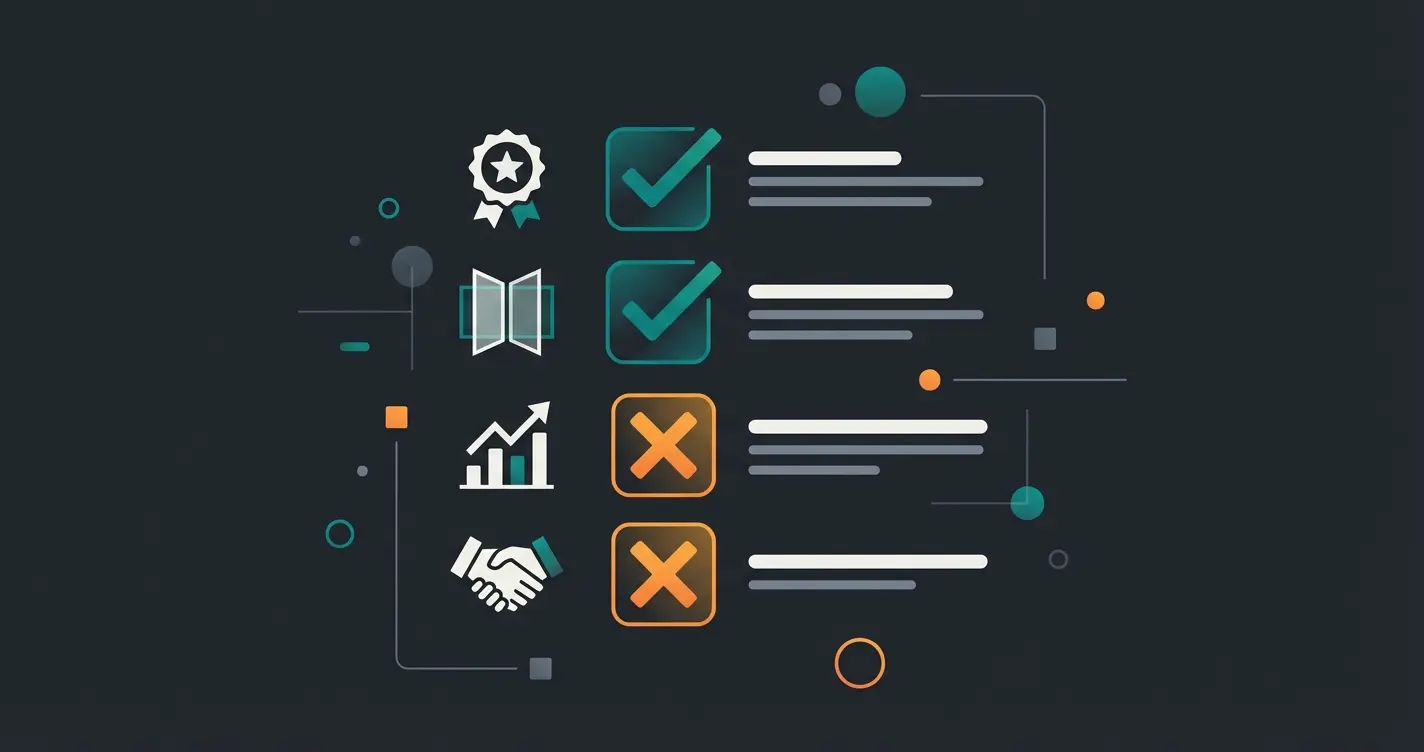
- Proven Shopify experience. Ask for case studies from Shopify stores specifically, not just "e-commerce" results. Platform expertise matters.
- Measurable results with real numbers. "We improved rankings" is not a case study. "We increased organic revenue by 40% over 6 months for a 2,000-SKU home goods store" is.
- Transparent pricing. If the agency will not discuss pricing before a sales call, that is a red flag. Good agencies publish ranges or provide them on first contact.
- No ranking guarantees. Any agency guaranteeing specific positions is either lying or using black-hat methods. Both end badly.
- Clear reporting cadence. Monthly reports connecting SEO activity to revenue, not just traffic. You need to see ROI, not just rankings.
- No mandatory long-term contracts. Month-to-month or quarterly agreements with clear exit terms. Lock-in contracts protect the agency, not you.
- Technical understanding of Liquid and Shopify architecture. Ask them about the `| within: collection` filter. If they do not know what it is, they are not a Shopify SEO agency.
- [Shopify Partner status](https://www.shopify.com/partners). Not required, but it signals investment in the platform and access to partner resources.
- References from similar stores. Ask to speak with a current client in your industry or store size range.
The evaluation process should include a trial period. Most reputable agencies offer a one-time audit or a short engagement before committing to a retainer. Use this to evaluate three things: communication quality (do they explain their findings clearly?), technical depth (do they catch Shopify-specific issues or just generic problems?), and business alignment (do they connect SEO recommendations to your revenue goals?).
Ask for a sample audit of your store during the sales process. Some agencies will run a surface-level crawl for free. The quality of that initial analysis tells you everything about how they will perform on a retainer. If the sample audit reads like a generic template with your URL pasted in, keep looking.
How much does a Shopify SEO agency cost?
Pricing transparency is rare in this industry. Most agencies hide behind "contact us for a quote," which makes comparison nearly impossible. Here is what the market looks like as of early 2026, based on published rates and industry surveys.
| Service type | Price range | What is included | Best for |
|---|---|---|---|
| One-time SEO audit | $500 - $2,000 | Technical crawl, on-page review, content gap analysis, priority recommendations | Stores that want a diagnosis before committing to ongoing work |
| Monthly retainer (standard) | $1,500 - $3,000 | Technical optimization, on-page work, content strategy, monthly reporting | Mid-sized stores with 100-500 products |
| Monthly retainer (premium) | $3,000 - $5,000+ | Full-service: technical, content creation, link building, CRO, bi-weekly reporting | Larger stores or competitive niches |
| Project-based | $3,000 - $15,000 | Site migration, major technical overhaul, content hub buildout | Specific initiatives with defined scope |
| Hourly consulting | $100 - $250/hr | Strategy sessions, specific technical questions, audit reviews | Stores with inhouse teams needing expert guidance |
The ROI math makes the investment clear. E-commerce SEO delivers a 317% average ROI over three years, with a 9-month break-even point (First Page Sage, 2026). 43% of all e-commerce traffic comes from organic search, making it the single largest traffic source for online retail (Charle Agency, 2026). Organic leads convert at 14.6% compared to 1.7% for traditional outbound methods.
Compare that to paid advertising: PPC delivers roughly a 4x return, while SEO delivers 8x over the same period. The difference compounds. Every dollar you spend on SEO builds an asset (rankings, content, domain authority) that continues producing traffic after the investment. Paid ads stop the moment you stop paying.
Share of all e-commerce traffic coming from organic Google search
Compared to 1.7% for traditional outbound methods
Average time to positive ROI from SEO investment
What happens after SEO brings traffic
Here is something most SEO agencies will not tell you: traffic alone does not pay the bills. I have seen stores double their organic traffic and barely move their revenue. The missing piece is what happens after someone lands on your site. Do they find the right product? Do they get the guidance they need to make a decision? Or do they bounce because your collection page shows 200 products with no way to navigate them?
This is where the gap between traffic and revenue becomes critical. SEO brings people to your store. But converting those visitors into buyers requires a different kind of intelligence. Product advisory, guided selling, real-time answers to customer questions during the buying process. These are not SEO problems. They are conversion problems.
At Qualimero, we solve the conversion side. Our AI employees work as digital team members inside your Shopify store, providing product advisory that understands your catalog, recognizes returning customers, and guides buyers to the right product. The results: +35% higher cart values, +60% checkout rates, and 16x ROI across our client base of 25+ active e-commerce brands. Rated 4.9/5.0 on OMR Reviews.
The combination is where the real leverage sits. A specialized SEO agency brings qualified traffic. An AI employee delivered as a service converts that traffic into revenue. One without the other leaves money on the table.
An AI employee turns your SEO visitors into buyers. Our clients see +35% cart values and 16x ROI. Book a demo to see how it works in your Shopify store.
Book a free demo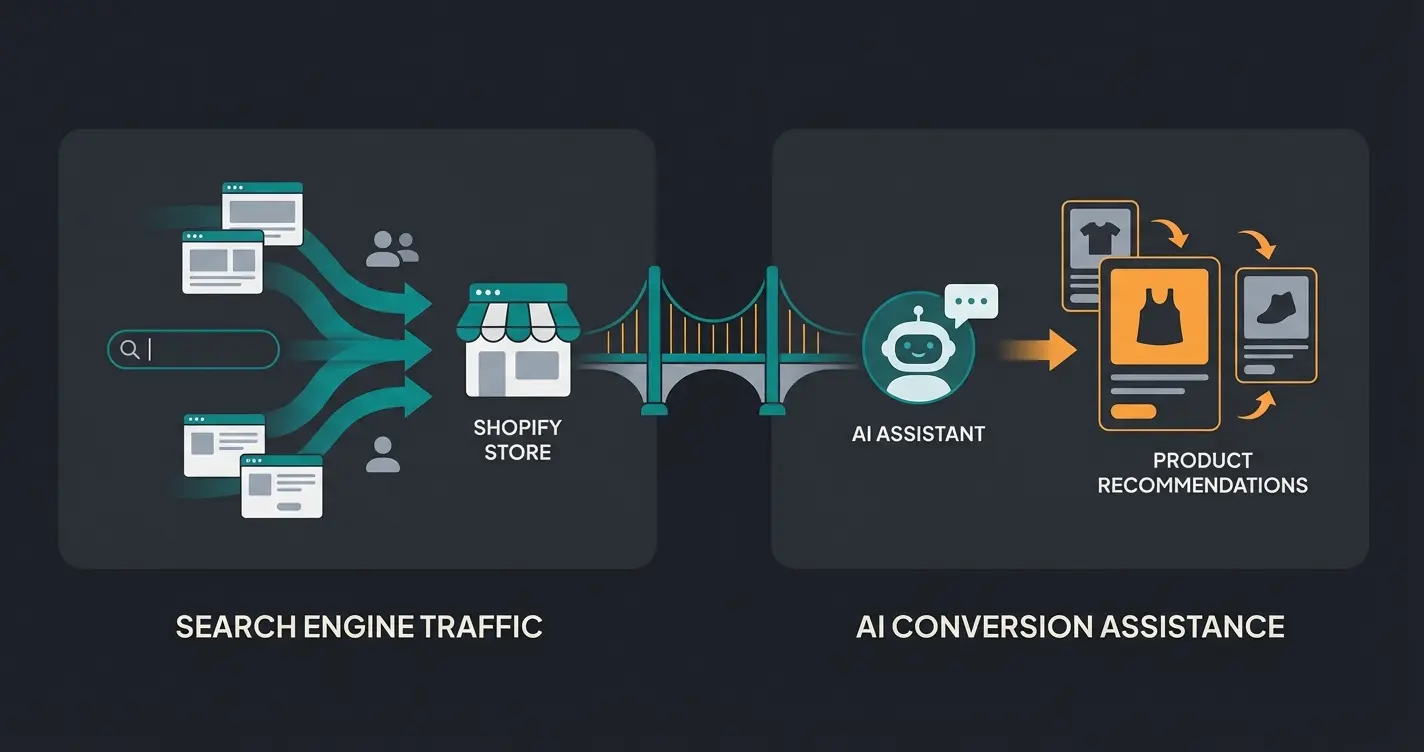
FAQ: common questions about Shopify SEO agencies
Most stores see measurable ranking improvements within 3 to 6 months, with significant traffic growth at the 6 to 12 month mark. The timeline depends on your starting position, competition level, and the scope of technical issues. Quick wins from technical fixes (duplicate content cleanup, page speed improvements) often show impact within weeks.
SEO apps like Yoast or SEO Manager handle basic optimizations: meta tags, sitemaps, and structured data templates. They cannot replace strategic decisions about content architecture, link building, or the Shopify-specific technical fixes (like the Liquid template duplicate URL issue) that require human expertise. For stores with over 100 products or in competitive niches, an agency adds value that apps cannot.
Yes, if you are willing to invest significant time learning the platform's technical constraints. Start with the basics: clean product titles, descriptive meta descriptions, proper image alt text. But technical SEO (canonical tags, Liquid template fixes, structured data) and strategic content planning are where most DIY efforts stall. A hybrid approach, doing basics yourself and hiring an agency for technical and strategic work, is cost-effective for many stores.
SEO builds long-term organic traffic that costs nothing per click once you rank. PPC (Google Ads, Meta Ads) delivers immediate traffic but stops when you stop paying. SEO delivers an 8x return over time compared to PPC's 4x. The best approach is usually both: PPC for immediate revenue while SEO compounds in the background.
Track four metrics: organic traffic growth (Google Analytics or Shopify Analytics), keyword rankings for your target terms (agency should provide monthly reports), organic revenue attribution (how much revenue comes directly from organic search), and return on investment (revenue generated vs. agency fees). If your agency only reports rankings without connecting them to revenue, ask why.
Shopify is solid for SEO out of the box, with built-in SSL, mobile responsiveness, and fast hosting via Cloudflare CDN. Its limitations are specific and manageable: fixed URL prefixes, limited robots.txt control, and Liquid template quirks. Shopify stores achieve a 65% mobile Core Web Vitals pass rate, ahead of WordPress at 44%. The platform is good for SEO. The question is whether you are using it correctly.
Qualimero's AI employees provide real-time product advisory in your Shopify store, converting organic visitors into buyers. 14-day free trial, no long-term contract.
Start your free trial
Lasse is CEO and co-founder of Qualimero. After completing his MBA at WHU and scaling a company to seven-figure revenue, he founded Qualimero to build AI-powered digital employees for e-commerce. His focus: helping businesses measurably improve customer interaction through intelligent automation.