Introduction: From Vending Machine to Intelligent Seller
When you search for Shopify store setup today, you'll mostly find guides that explain how to place products on a digital shelf. The problem? A shelf doesn't actively sell. In an era where customers expect personalized advice, many online stores fail because they function like silent vending machines: the customer arrives, searches, finds nothing suitable, and leaves.
This guide is different. We're not just walking through the technical steps to set up Shopify. We're showing you how to build your store from day one as an intelligent sales platform. We combine the necessary German legal compliance with cutting-edge AI strategies that set your store apart from the competition. According to Black Belt Commerce, the new Horizon themes introduced in 2025 make this transformation easier than ever before.
Whether you're starting completely fresh or migrating from another system, here's your roadmap for e-commerce success in Germany 2025. If you're comparing platforms, our detailed Shopware vs Shopify comparison can help you make the right decision.
Most e-commerce visitors browse on smartphones
Quiz and guided selling users convert significantly better
Most starters don't need expensive Shopify plans
Phase 1: Preparation & Strategy Before You Sign Up
Before you make your first click in the Shopify backend, you need to lay the foundation. Most beginners skip this step and pay for it later with low conversion rates. Taking time to develop a proper strategy will save you countless hours of optimization later.
The Consultation-First Strategy
Instead of only asking "What am I selling?", ask yourself: "How would I sell this product to a customer in a physical store?" This mindset shift is what separates successful online stores from digital product catalogs that nobody buys from.
- What questions do customers ask before buying? (e.g., "Which skin cream suits my type?" or "Which bicycle for which body height?")
- What objections do they have? Consider price concerns, quality doubts, or comparison shopping habits
- What accessories are often forgotten? Cross-selling opportunities that help customers and increase order value
- What information do they need to feel confident? Size guides, compatibility charts, usage instructions
These answers will later form the basis for your AI-guided selling elements. Understanding your customer's decision-making process is essential for implementing effective AI product consultation that actually converts browsers into buyers.
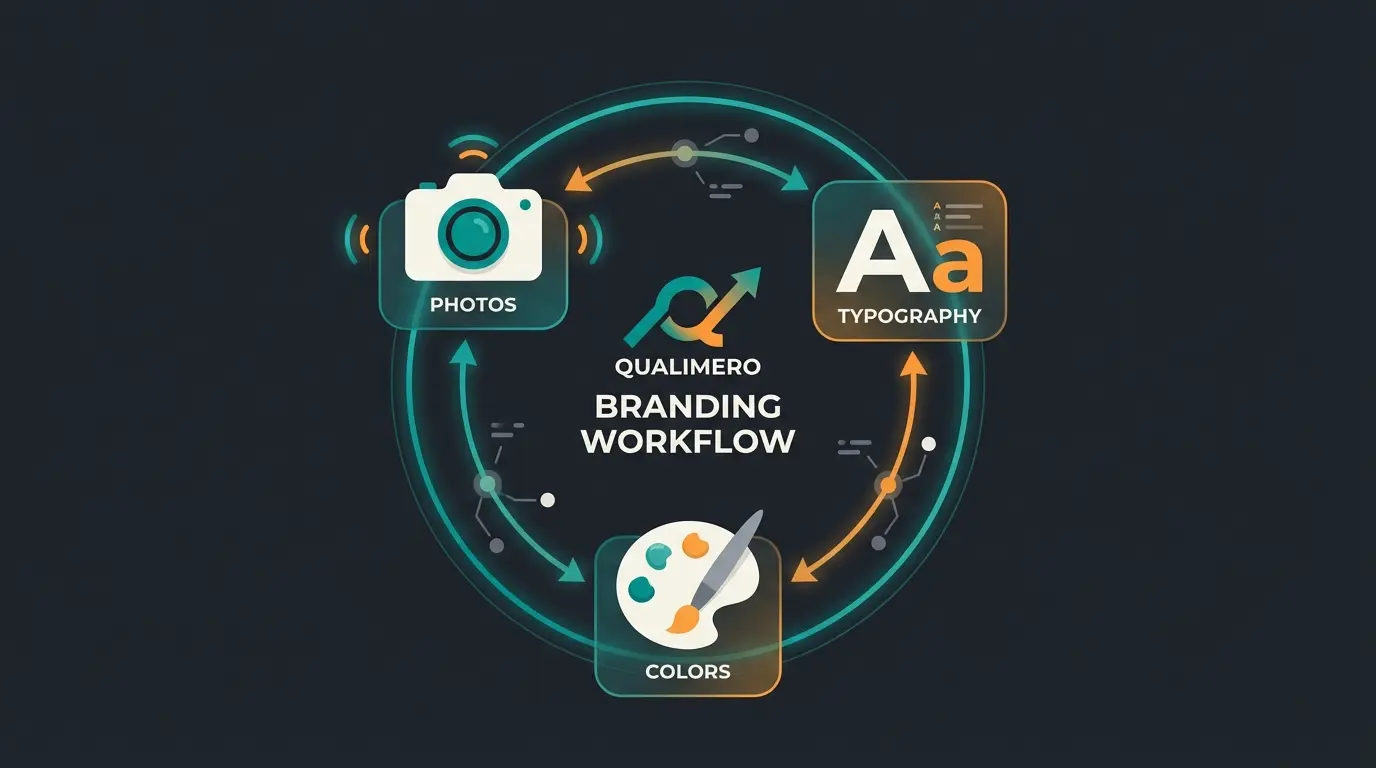
Visual Materials and Branding
Shopify is extremely visual. The new Horizon Themes introduced with the Shopify Editions Summer 2025 place even more emphasis on large, emotional images. According to Ecommerce Partners, these updates focus heavily on speed and flexibility.
- Product photos: At least 3-5 images per product (cutout shots + lifestyle images showing the product in use)
- Logo: As PNG with transparent background for seamless integration across themes
- Color scheme: Define 2-3 primary colors and have the hex codes ready for consistent branding
- Typography: Choose fonts that reflect your brand personality and remain readable on mobile devices
Phase 2: Step-by-Step Shopify Store Setup Guide
Now we get to the implementation. This Shopify tutorial guides you through the critical steps specifically for the German market, covering everything from initial registration to launching a fully compliant store.
Step 1: Registration and Basic Settings
Go to Shopify.de and start your free trial period. The initial setup process is straightforward, but there are important decisions to make right from the start.
- Store Name: Choose a name carefully (this becomes part of your temporary URL `yourshop.myshopify.com` and is hard to change later)
- Business Information: Fill out your address correctly – this is essential for your invoices and Impressum legal page
- Currency: Make sure Euro (EUR) is selected as the default currency for German customers
- Language: Set German as the primary language for your storefront
Step 2: Design and Theme Selection (Horizon Update)
With the 2025 updates, Shopify introduced the Horizon Themes optimized for speed and flexibility. As reported by Luna Templates, these new themes represent a significant leap in performance and customization options.
- Theme Store: Choose a theme that's "OS 2.0" capable (all current themes support this)
- Recommendation for starters: The free theme "Dawn" or the new Horizon themes are extremely powerful and well-optimized
- Customizer: Use the visual editor extensively. Thanks to the new "Theme Blocks" you can place elements via drag-and-drop anywhere without touching code
Step 3: Adding Products with Shopify Magic (AI)
Here we save massive amounts of time. Instead of laboriously typing texts ourselves, we use Shopify Magic. As explained by Shopify's official documentation, this AI feature streamlines content creation significantly.
- Navigate to Products > Add product in your Shopify admin
- Upload your product images (remember: 3-5 high-quality images per product)
- Description: Enter 3-4 bullet points (e.g., "organic cotton, breathable, Made in Germany") and click the Shopify Magic icon (the sparkle stars). The AI generates sales-optimized text in seconds
- SEO: Scroll all the way down to "Search engine listing". Customize the Page Title and Meta Description so you'll be found for keywords like "buy organic t-shirt"
This AI-powered approach to product descriptions is just the beginning. For more advanced AI consulting in e-commerce, you can implement intelligent product recommendations that truly understand customer needs.
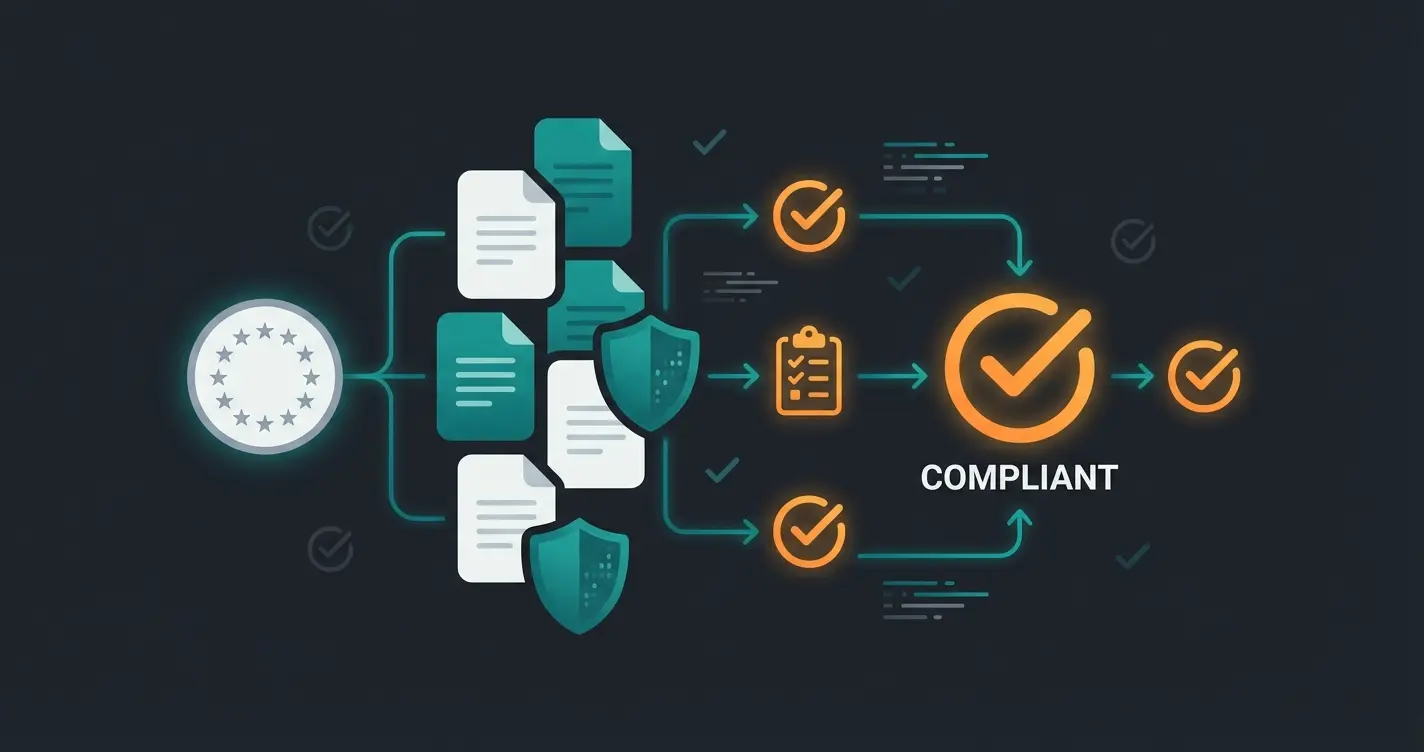
Step 4: Legal Compliance in Germany (Critical!)
This is the most important section for German retailers to avoid costly cease-and-desist letters (Abmahnungen). A proper Shopify tutorial for Germany must cover this part thoroughly, as non-compliance can result in fines of €5,000 or more per violation.
Required Legal Pages
Create the following content under Online Store > Pages. Each page must be easily accessible from every page on your site, typically linked in the footer:
- Impressum: Must be accessible from every page (usually in the footer). Include company name, address, contact details, and registration numbers
- Datenschutzerklärung (Privacy Policy): Must be GDPR-compliant and cover all data processing activities
- AGB (Terms and Conditions): Standard terms for B2C sales in Germany
- Widerrufsbelehrung (Cancellation Policy) & Muster-Widerrufsformular (Sample Cancellation Form): German consumers have 14-day return rights
- Shipping and Payment Information: Clear details on delivery times, costs, and accepted payment methods
VAT and Base Prices
- Go to Settings > Taxes and duties in your Shopify admin
- Activate "Show all prices including taxes" (mandatory for B2C in Germany – prices must always include VAT)
- For products sold by weight or volume (e.g., 100ml perfume), you must activate the base price (Grundpreis) display on the product
Cookie Banner Requirements
Shopify now offers native solutions through the Privacy & Compliance App, but for absolute certainty in Germany, many merchants use apps like Consentmo (formerly GDPR/CCPA) or Real Cookie Banner. These ensure you capture proper consent before any tracking cookies are set, which is essential under GDPR.
Step 5: Setting Up Payments and Shipping
Payments with Shopify Payments
In Germany, Shopify Payments is the gold standard for accepting payments. It offers significant advantages that make it the preferred choice for most German merchants:
- Advantages: No additional transaction fees to Shopify beyond the plan cost, seamless integration of credit card, Apple Pay, Google Pay, Klarna invoice, and instant bank transfer (Sofortüberweisung)
- PayPal: Must be linked separately but is essentially mandatory in Germany for high conversion rates – German customers expect PayPal as an option
- Klarna: Extremely popular in Germany for "buy now, pay later" options that can significantly increase average order value
Shipping Configuration (DHL and More)
- Navigate to Settings > Shipping and delivery in your admin
- Delete the default profiles ("Rest of World") that don't apply to your business model
- Create a zone for "Germany" and optionally "EU" for international shipping
- Define prices strategically (e.g., "Flat rate €4.90", "Free shipping over €50" – this threshold encourages larger orders)
Phase 3: The Secret Sauce – Making Your Shop Intelligent
Most tutorials end at this point. But we want to start with Shopify to actually sell, not just to be online. This is where your differentiation comes in, and where you separate yourself from the thousands of other Shopify stores competing for attention.
The Problem: Catalog Paralysis
Visitors land on your store, see 50 products, and become overwhelmed. They leave the store (high bounce rate) because nobody takes them by the hand to guide them through the selection process. This is exactly where KI E-Commerce solutions make a dramatic difference.
Map out all questions customers ask before buying your products
Create quizzes, chatbots, or guided selling flows that answer those questions
Deploy AI tools that provide personalized recommendations 24/7
Continuously improve based on customer interactions and conversion data
The Solution: Guided Selling and AI Integration
Transform your store from a passive catalog into an active consultant. This approach treats every visitor like a customer walking into a physical store where a knowledgeable salesperson asks the right questions to find the perfect product.
Interactive Product Finder (Quiz)
Use apps like Octane AI or RevenueHunt to create an interactive quiz that guides customers to the right product. According to Steireif, this approach dramatically improves the shopping experience:
- Example: A running shoe store asks: "Where do you run? (Forest/Road)", "How often per week?", "Do you have foot problems?"
- Result: The customer receives one perfect product suggestion instead of having to click through 50 options
- Effect: Conversion rates among quiz users are often 3-4x higher than traditional browsing
- Bonus: You collect valuable first-party data about customer preferences
AI Chatbots for Instant Consultation
Integrate tools like Tidio or the new Shopify Inbox AI Features to provide instant answers to customer questions. This approach to AI Guided Selling ensures no customer question goes unanswered, even at 3 AM:
- Train the AI with your FAQs and product knowledge base
- When a customer lingers on a product page for 30 seconds, the chatbot can proactively ask: "Not sure if the size is right?"
- Connect to your inventory to provide real-time availability information
- Escalate complex queries to human agents when needed
For a deep dive into implementing intelligent chat solutions, see our comprehensive guide on AI product consultant implementation.
Personalization Engines
Use apps like Rebuy or LimeSpot to offer intelligent cross-sells based on shopping cart contents. As CartCoders and Marpipe report, personalized recommendations significantly increase average order values:
- "Customers who bought this camera also purchased this memory card"
- Dynamic bundles that automatically suggest complementary products
- Personalized homepage content based on browsing history
- Abandoned cart recovery with personalized product suggestions
| Feature | Standard Shop | AI-Powered Shop |
|---|---|---|
| Product Discovery | Search bar and categories | Interactive quiz and guided selling |
| Customer Support | Contact form and FAQ page | 24/7 AI chatbot with instant answers |
| Product Recommendations | Static "Related Products" | Dynamic personalized suggestions |
| Customer Experience | Self-service browsing | Personalized shopping consultation |
| Conversion Rate | Industry average 2-3% | Optimized stores achieve 6-10% |
See how AI-powered product guidance can increase your conversion rates by 3-4x. Our solution integrates seamlessly with Shopify to turn browsers into buyers.
Start Free TrialPhase 4: Complete Cost Overview for Germany 2025
What does all this actually cost? Here's a realistic breakdown based on 2025 pricing from Coding9 and Latori. Understanding these costs upfront helps you plan your budget and avoid surprises.
| Cost Item | Basic Plan | Shopify Plan | Advanced Plan |
|---|---|---|---|
| Monthly Base Fee | ~€36 (€27 annually) | ~€105 | ~€384 |
| Transaction Fee (Shopify Payments) | 0% | 0% | 0% |
| Credit Card Fees (Online) | 2.9% + €0.30 | 2.7% + €0.30 | 2.5% + €0.30 |
| Fee for External Payment Providers | 2.0% | 1.0% | 0.5% |
| Domain (.de) | ~€14/year | ~€14/year | ~€14/year |
| Legal Texts (e.g., Händlerbund) | from ~€10/month | from ~€10/month | from ~€10/month |
Cost Conclusion: For 95% of all starters, the Basic Plan is completely sufficient. The upgrade usually only makes sense from approximately €10,000 monthly revenue, when the lower credit card fees offset the higher base fee. Don't let aggressive upselling convince you otherwise – start lean and upgrade when the numbers justify it.
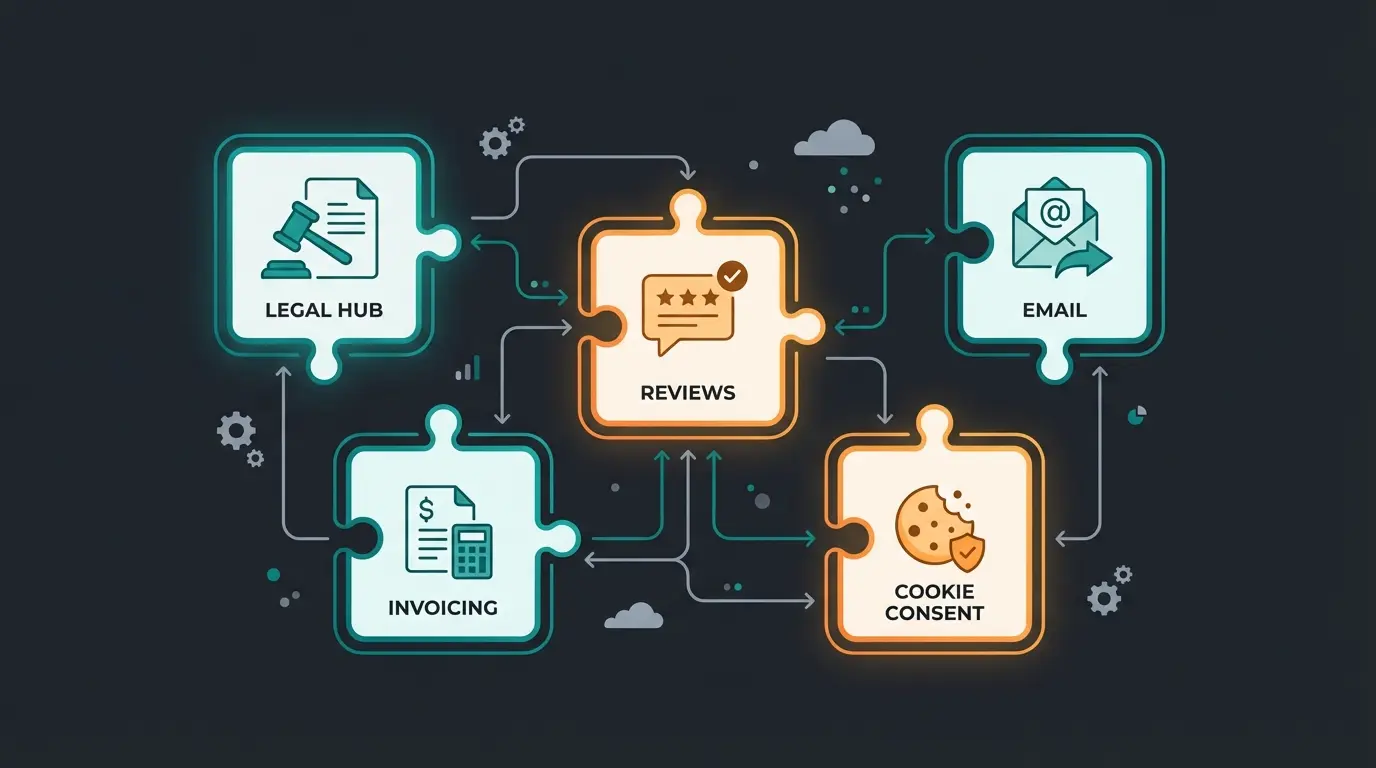
Phase 5: Essential Apps and Extensions
Don't install too many apps as they slow down your store and can create conflicts. However, these are essential for running a compliant, effective German Shopify store:
- Legal Compliance: IT-Recht Kanzlei or Händlerbund (for automatic legal text updates – they monitor law changes and update your pages automatically)
- Reviews: Judge.me (best value for money, free plan available, German language support)
- Email Marketing: Klaviyo (the standard for e-commerce, deeply integrated with Shopify, excellent segmentation)
- Invoice Generation: Order Printer Pro or Billbee (for German invoices with proper tax formatting and accounting export)
- Cookie Banner: Consentmo or Real Cookie Banner (ensures GDPR compliance with granular consent options)
Beyond these basics, you might explore AI Chatbots for E-Commerce to add conversational commerce capabilities to your store.
Phase 6: Pre-Launch Checklist
Before you remove the password protection and go live, run through this comprehensive checklist. Launching with issues can damage your reputation and lead to legal problems:
- ☑️ Test Order: Complete a real order (and refund it afterward) to verify checkout, confirmation emails, and invoice generation work correctly
- ☑️ Domain: Is the domain connected and SSL certificate active? (Look for the padlock icon)
- ☑️ Legal Pages: Are Impressum, AGB, and cancellation policy present and linked in footer? Is the OS link removed?
- ☑️ Mobile Check: Does the store look good and function properly on smartphone? (70% of traffic comes from mobile!)
- ☑️ Shipping: Are shipping costs calculated correctly in checkout for all zones you ship to?
- ☑️ Analytics: Is Google Analytics 4 (GA4) properly configured with enhanced e-commerce tracking?
- ☑️ Payment Methods: Test each payment method at least once to confirm they work
For stores with complex products, implementing AI consultation for higher rankings can boost both conversions and search visibility simultaneously.
Real-World Success: AI-Powered Product Consultation
Want to see how AI consultation works in practice? Check out our success story about AI Employee Flora, demonstrating how an AI product consultant can transform customer interactions and drive measurable results for e-commerce businesses.
The integration of AI into e-commerce is revolutionizing how stores interact with customers. From WhatsApp bot AI revolution in e-commerce to sophisticated product recommendation engines, the tools available today make it possible for even small stores to offer enterprise-level customer experiences.
FAQ: Common Questions About Starting with Shopify
Yes, Shopify has made significant improvements for European compliance. As confirmed by Latori and Büro Hügel, with the right settings (partially localized server locations), a proper cookie banner, and correct legal texts, operating a legally compliant store in Germany is entirely possible.
No. Thanks to the new Horizon Themes and the visual editor, you can build everything via drag-and-drop without writing a single line of code. The Theme Blocks system allows complete customization through an intuitive interface. For special customizations beyond that, there's the extensive App Store with thousands of ready-made solutions.
You can start very lean. Budget approximately €50-100 for the first month (Shopify Basic + domain + legal texts). The largest budget should go not to technology but to marketing and inventory. Many successful stores start with minimal product inventory and scale based on demand.
Sidekick is the new AI assistant in the admin area introduced with the Summer Editions 2025. You can ask it questions like 'Why did my sales drop last week?' or 'Create a discount code for the summer sale,' and Sidekick performs the analysis or executes the task. It's essentially your AI-powered business analyst and assistant combined.
Start with the Basic Plan (approximately €36/month or €27 with annual payment). It includes everything you need to launch and grow. Only consider upgrading to the Shopify Plan when you consistently exceed €10,000 in monthly revenue, at which point the lower credit card fees begin to offset the higher subscription cost.
Conclusion: Your Path to E-Commerce Success
Creating a Shopify store is easier than ever in 2025. The technical barrier is low, the tools are powerful, and the platform handles most of the complexity for you. However, the key to success lies not in technology alone, but in consultation quality.
Use Shopify's AI tools like Magic and Sidekick to boost efficiency, but go further by implementing guided selling solutions that offer your customers a shopping experience that understands and guides them. When you transform your store from a passive product catalog into an intelligent sales platform, you create the foundation for a successful e-commerce business that stands out from countless competitors.
The stores that will thrive in 2025 and beyond are those that combine technical excellence with genuine customer-centric experiences. Whether through interactive quizzes, AI chatbots, or personalized recommendations, the goal is always the same: help customers find exactly what they need, faster and with more confidence than they could on their own.
Turn your online store into a 24/7 AI-powered sales consultant. Our solution helps visitors find the perfect product, answers questions instantly, and significantly increases conversion rates.
Get Started Free
Lasse is CEO and co-founder of Qualimero. After completing his MBA at WHU and scaling a company to seven-figure revenue, he founded Qualimero to build AI-powered digital employees for e-commerce. His focus: helping businesses measurably improve customer interaction through intelligent automation.