Shopware and Spryker at a glance
Open the analytics dashboard of any mid-market German e-commerce company and the platform question comes up fast. Shopware or something bigger? For a growing number of enterprises, that "something bigger" means Spryker. But the comparison is not as straightforward as most agency websites make it seem.
Shopware is the leading German e-commerce platform for SMEs to enterprise. Founded in 2000 in Schoppingen, it powers over 100,000 shops and holds 11.5% market share among the highest-revenue 1,000 online shops in the DACH region. The ecosystem includes more than 3,000 extensions, Merchants on the platform process over USD 20 billion in combined GMV annually. Shopware has been profitable without relying on external venture capital, and in the 2025 Gartner Magic Quadrant for Digital Commerce, it was promoted from Niche Player to Visionary. That independence shapes how the platform evolves: driven by merchant needs rather than investor timelines.
Spryker is a Berlin-based scale-up founded in 2014, built for a completely different audience: large enterprises with complex B2B requirements, marketplace models, and multi-channel commerce. Customers include ALDI, Daimler Truck, Siemens Healthineers, BOSCH, and Hilti. Spryker has raised USD 152M in funding at a valuation exceeding USD 500M. In December 2025, Spryker secured additional funding led by TCV and One Peak. The company employs around 300 people (as of early 2026) and focuses its go-to-market entirely on enterprise accounts. For a broader view of what else is available beyond these two, our Shopware Alternatives guide covers the full landscape.
The core difference is not about quality. It is about fit. Shopware is a Swiss Army knife for growing e-commerce businesses. Spryker is a precision instrument for enterprises that have outgrown off-the-shelf solutions and need every component to be independently configurable.
| Criterion | Shopware | Spryker |
|---|---|---|
| Founded | 2000, Schoppingen (Germany) | 2014, Berlin (Germany) |
| Target audience | SMEs to upper mid-market | Enterprise and large corporations |
| Shops / customers | 100,000+ | 150+ enterprise customers |
| Market focus | DACH, expanding internationally | Global, focus on enterprise B2B |
| Funding | Private / profitable | USD 152M raised, USD 500M+ valuation |
| Architecture | Modular monolith, API-first | Composable commerce, headless |
| Open source | Community Edition (up to EUR 1M GMV) | No |
| Employees | 400+ | ~205 (as of early 2026) |
| Gartner MQ 2025 | Visionary (up from Niche Player) | Visionary (down from Leader) |
Architecture and technology
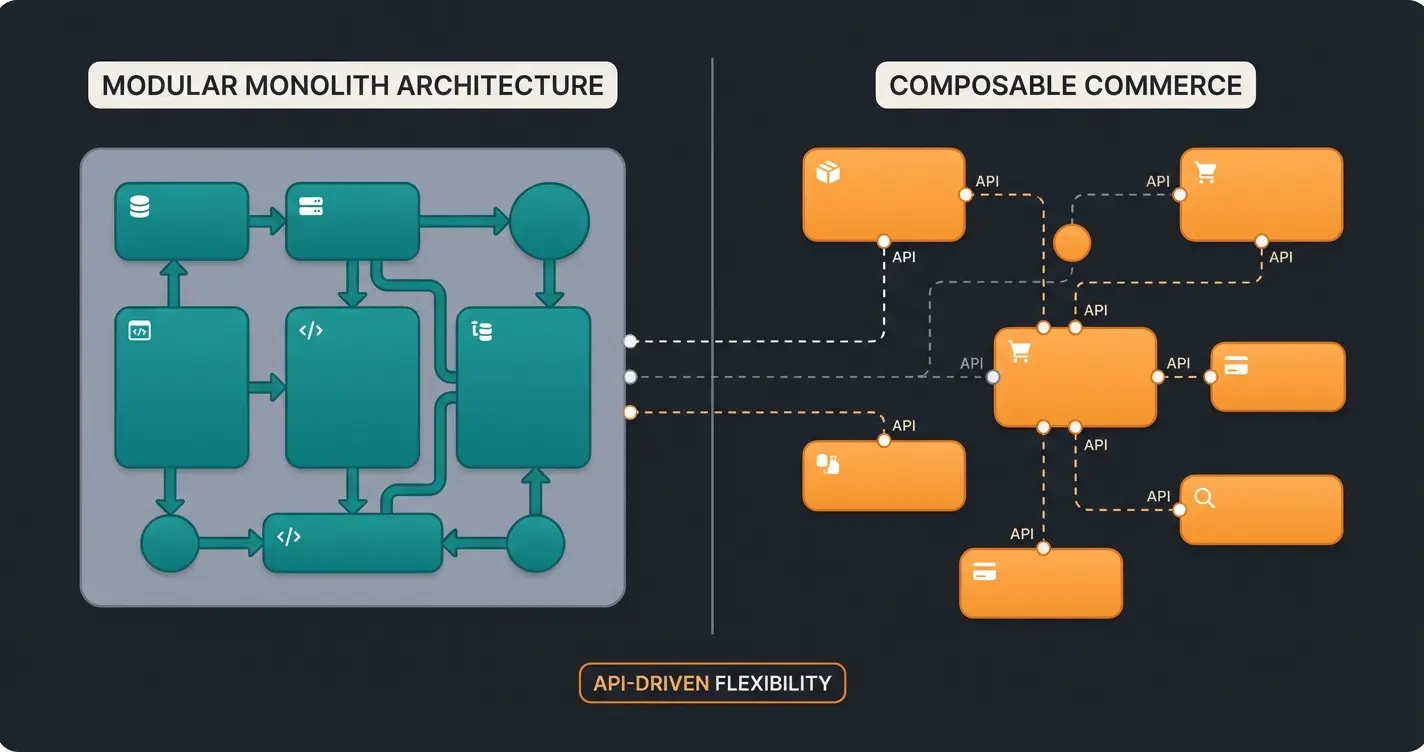
Shopware 6 runs on Symfony (PHP) with a Vue.js storefront and has been fully API-first since version 6. The architecture is a modular monolith: a cohesive system that adapts through APIs and extensions rather than decomposed microservices. This approach means faster initial development, simpler deployment, and a lower barrier to entry for development teams. The plugin system allows deep customization without touching core code, and the Store API exposes all commerce functionality for headless setups. For anyone evaluating the generational leap, our Shopware 5 vs 6 comparison covers what changed and why it matters.
Spryker takes a fundamentally different approach. The Commerce OS is a true composable commerce system with over 160 modules (called Packaged Capabilities) that can be deployed and combined independently. The Yves/Zed architecture separates frontend (Yves) and backend (Zed) by design, while the GLUE API orchestrates data communication between them. This separation is not an add-on feature; it is the foundation of the entire system. Each module can be replaced, extended, or removed without affecting others (source: Shopware Developer Docs for Shopware architecture details, Spryker public documentation for Commerce OS architecture).
In practice, this architectural split creates a clear trade-off. Shopware gets you to market faster. An experienced developer can have a production-ready shop live in weeks. The admin interface is intuitive enough that non-technical staff can manage products, content, and orders without training. Spryker needs a dedicated team and months of implementation, but delivers maximum flexibility for highly complex requirements where standard platforms hit their limits.
I had expected the flexibility advantage of composable commerce to matter more in practice. For most businesses I work with, it does not. The modular monolith approach handles 95% of real-world requirements without the operational overhead of managing dozens of independent services. That remaining 5% is where Spryker genuinely earns its complexity.
| Feature | Shopware 6 | Spryker Commerce OS |
|---|---|---|
| Architecture type | Modular monolith | Composable commerce |
| Technology stack | Symfony / PHP, Vue.js | PHP backend, Yves/Zed, GLUE API |
| Headless capability | Yes (since v6, API-first) | Yes (native, by design) |
| Extensions | 3,000+ plugins in store | 160+ Packaged Capabilities |
| Deployment | Cloud or self-hosted | Cloud-native (AWS) |
| Microservices | No (modular approach) | Yes (true decoupling) |
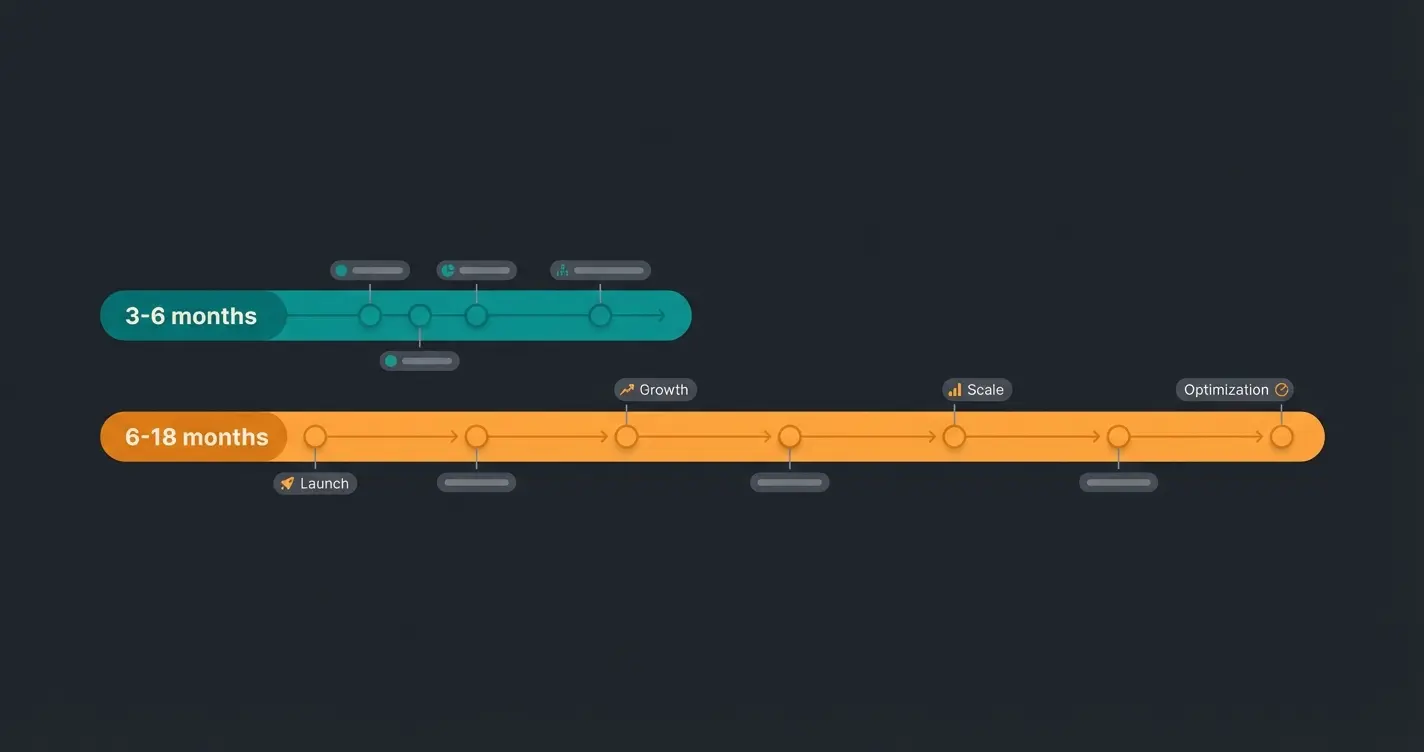
| Time-to-market | 3-6 months | 6-18 months |
B2B features compared
I have worked with over 25 e-commerce companies in the past two years, many of them with B2B requirements. The decisive question is not whether a platform can handle B2B, but how complex your requirements actually are. Most businesses overestimate their complexity and end up paying for enterprise infrastructure they never fully utilize.
Shopware offers solid B2B capabilities with its B2B Suite (available from the Evolve edition): role management, customer-specific pricing, budget management, and quote workflows. For most mid-market B2B merchants, this covers the ground entirely. Companies running standard wholesale operations, dealer portals, or simple B2B storefronts rarely hit the limits of what Shopware Evolve can do.
Spryker plays to its strengths in a narrow but important segment: highly complex B2B commerce. CPQ processes (Configure-Price-Quote), multi-level approval chains with custom business logic, customer-specific catalogs, automated reordering, and multi-cart functionality are all native capabilities. Daimler Truck, for example, uses Spryker for a B2B spare parts marketplace across Europe that combines real-time inventory transparency with customer-specific pricing across multiple warehouses. Gartner ranked Spryker #1 in its 2024 Critical Capabilities report for B2B Digital Commerce, complex business models, and combined B2C+B2B platforms. That is the kind of complexity where Spryker earns its price tag.
The honest assessment: if your B2B model involves fewer than 10,000 SKUs, straightforward pricing tiers, and approval workflows with two or three levels, Shopware handles it. If you need CPQ logic that dynamically prices thousands of product configurations based on customer contracts, volume tiers, and regional rules, Spryker was built for exactly that.
| B2B feature | Shopware (Evolve/Beyond) | Spryker |
|---|---|---|
| Customer-specific pricing | Yes | Yes, including CPQ |
| Role management | Yes | Yes, granular |
| Budget management | Yes | Yes |
| Quote workflows | Yes | Yes, multi-level |
| Approval processes | Basic | Complex, multi-level |
| Multi-cart / cart sharing | Limited | Fully supported |
| Automated reordering | Via plugin | Native |
| Customer-specific catalogs | Limited | Fully supported |
| B2B marketplace | Via extensions | Native |
| ERP integration | Via interfaces | Composable, deep integration |
Pricing and licensing models
The cost gap between both platforms is not subtle. It is structural, and understanding it early saves months of misaligned expectations. I have seen companies burn through six figures in consulting fees before realizing that Spryker's total cost of ownership exceeds their entire annual e-commerce budget.
Shopware offers a free Community Edition (capped at EUR 1M GMV since March 2025). Commercial editions start at approximately EUR 600/month (Rise), EUR 2,400/month (Evolve), and EUR 6,500/month (Beyond). Total first-year costs including agency, hosting, and maintenance typically land at EUR 70,000 and up. The pricing scales predictably, and there are no hidden module fees. For the full breakdown, see our Shopware Editions Comparison.
Spryker does not publish fixed list prices. Enterprise licenses start at approximately EUR 100,000 per year, depending on the number of modules, users, and support level. The minimum project budget for a Spryker implementation is around EUR 300,000. Realistic total first-year costs: EUR 400,000 to EUR 800,000. And that is before the ongoing operational cost of maintaining a dedicated development team with Spryker expertise.
Rise edition including agency, hosting, maintenance
Enterprise license + implementation + dedicated team
Entry-level commercial edition for growing shops
Custom pricing, minimum enterprise threshold
| Cost factor | Shopware | Spryker |
|---|---|---|
| License (annual) | EUR 0 (Community) to EUR 78,000 (Beyond) | From EUR 100,000 (custom) |
| Implementation | EUR 20,000 - 150,000 | EUR 300,000 - 800,000 |
| Ongoing maintenance (annual) | EUR 10,000 - 40,000 | EUR 50,000 - 150,000 |
| Team requirements | 1-2 developers or agency | Dedicated team (5-10 developers) |
| Hosting | From EUR 50/month (cloud) | AWS-based, from EUR 1,000/month |
| Break-even point | From EUR 500K annual revenue | From EUR 50M annual revenue |
Who should choose which platform?
After hundreds of conversations with e-commerce decision-makers, I see a clear pattern. The platform choice comes down to three factors: revenue volume, business complexity, and available developer resources. Get one of these wrong and you are either overpaying for infrastructure you do not need, or under-investing in a system that cannot keep up.
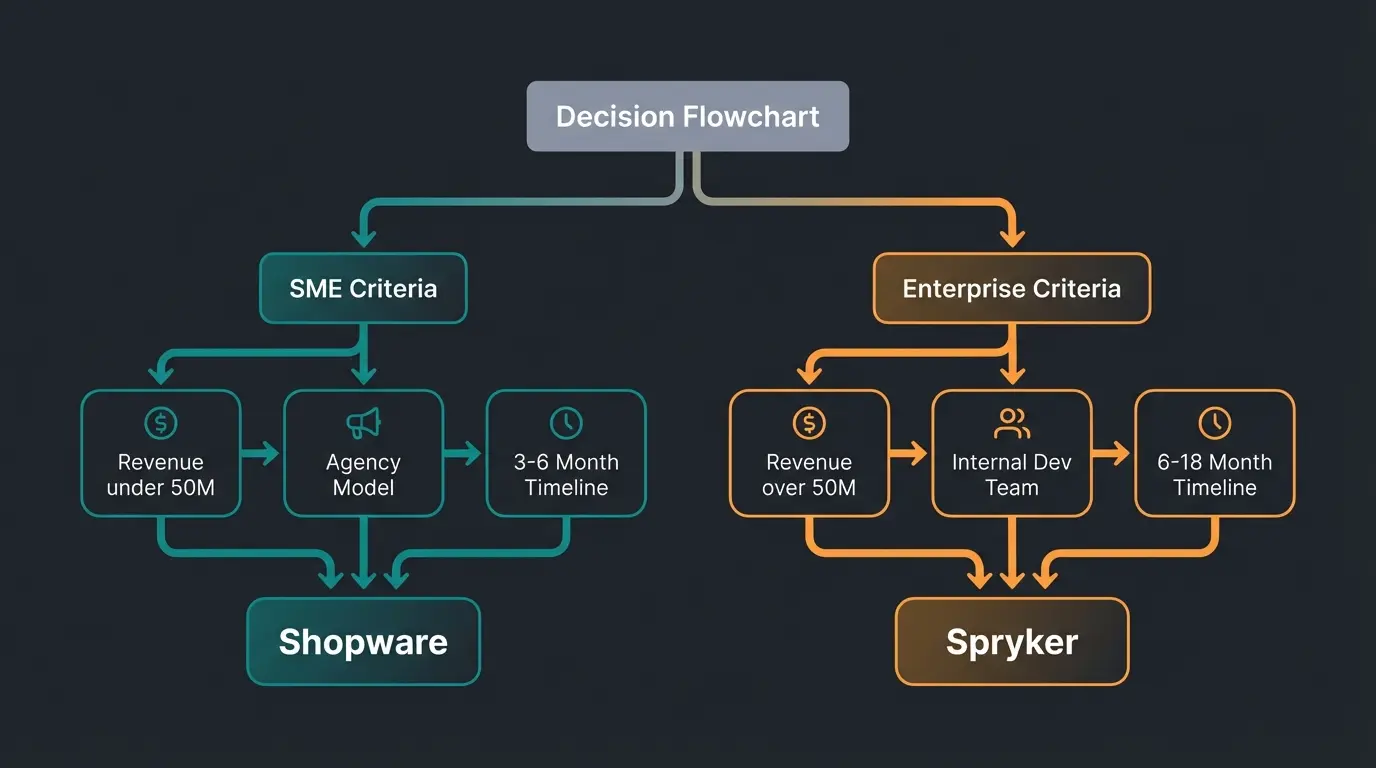
Shopware is the right choice if you
- generate under EUR 50M in annual revenue
- run B2C or straightforward B2B operations
- have an implementation budget of EUR 20,000 to 200,000
- work with an agency rather than an in-house dev team
- need to go live fast (3-6 months)
- want access to Shopware's ecosystem of 3,000+ extensions
Spryker is the right choice if you
- generate over EUR 50M in annual revenue
- have highly complex B2B processes (CPQ, multi-level approvals, multi-marketplace)
- can allocate a project budget of EUR 300,000+
- have an in-house dev team (5+ engineers) with composable commerce experience
- prioritize maximum flexibility and scalability above everything else
- need enterprise reference customers like ALDI, Daimler, or Siemens on the vendor list
For those evaluating additional platforms alongside these two: our Shopware vs Magento comparison covers the open-source alternative, and the Shopware vs Shopify guide addresses the hosted SaaS option. Each targets a different trade-off in the flexibility-simplicity spectrum.
Migration and implementation
Implementation timelines are an underestimated factor in the platform decision. A three-month delay in going live is not just a scheduling problem; it is lost revenue, extended parallel operations, and team fatigue. Shopware projects typically go live in 3 to 6 months with an agency and a clearly defined scope. Spryker projects require 6 to 18 months, depending on the number of integrated modules and the complexity of the existing system landscape.
The most common migration path in the DACH region: from Shopware 5 or Magento 1/2 to Shopware 6. The details on the generational shift are covered in our Shopware 5 vs 6 comparison. Migration to Spryker is almost exclusively seen at companies moving from SAP Commerce or custom-built legacy systems, with annual e-commerce project budgets exceeding EUR 1M.
Agency availability matters more than most companies realize during the evaluation phase. Shopware has over 100 certified agencies in the DACH region alone, plus a global network of partners. Spryker works with approximately 10 to 15 specialized implementation partners. If your preferred Spryker agency is at capacity, your project timeline can slip by months before it even starts. Even when you hire in-house, Spryker developer onboarding takes 3 to 6 months for senior engineers and up to 12 months for junior developers to reach full proficiency, a factor that directly impacts your implementation timeline and cost.
| Aspect | Shopware 6 | Spryker |
|---|---|---|
| Time-to-market | 3-6 months | 6-18 months |
| Minimum team size | 1-2 developers + agency | 5-10 developers (in-house) |
| Agency availability (DACH) | High (100+ agencies) | Low (10-15 specialized agencies) |
| Typical migration source | Shopware 5, Magento, WooCommerce | SAP Commerce, custom builds |
| Risk assessment | Low to medium | Medium to high |
| Training overhead | Low (intuitive admin UI) | High (technical onboarding required) |
| Developer onboarding time | Days to weeks (familiar PHP/Symfony stack) | 3-6 months (senior), up to 12 months (junior) |
Conclusion: Shopware or Spryker?
Shopware and Spryker are not direct competitors. They serve different segments with different requirements and budgets. Shopware is the platform for growing e-commerce businesses: accessible, cost-efficient, backed by a massive ecosystem and fast time-to-market. Spryker is the system for large enterprises that need maximum flexibility in complex B2B commerce and are prepared to invest six-figure annual budgets to get it.
For the vast majority of businesses, Shopware is the right call. Not because it is cheaper, but because it offers the better balance of functionality, ecosystem, and economics. Spryker pays off only when your requirements genuinely exceed the capabilities of Shopware Beyond. And most companies in that situation already know it. For the full overview of all platform options, see our Shopware Comparison Guide.
One thing neither platform solves on its own: the quality of customer interaction in your shop. More traffic does not automatically mean more revenue. The gap between a visitor and a buyer is often a single unanswered question about the product. An AI employee that advises visitors in real time increases cart values by up to 35% and checkout rates by 60%. Our clients see up to 16x ROI from AI-powered product advisory.
Whether Shopware or Spryker: an AI employee advises your customers in real time, increases cart values, and takes load off your team. Our clients achieve up to 16x ROI.
Book a free demoFrequently asked questions
Spryker does not publish fixed list prices. Enterprise licenses start at approximately EUR 100,000 per year, with a minimum project budget of EUR 300,000. Realistic total first-year costs, including implementation and a dedicated development team, range from EUR 400,000 to EUR 800,000.
Spryker is not better or worse, it is built for a different audience. Spryker suits large enterprises with complex B2B requirements and six-figure budgets. Shopware delivers better price-performance for SMEs and upper mid-market companies with annual revenues below EUR 50M.
Spryker is designed for enterprises generating over EUR 50M in annual revenue, with complex B2B processes like CPQ, multi-level approvals, or marketplace models. You also need a dedicated in-house development team of at least 5 engineers with composable commerce experience.
Technically yes, but it is rare and expensive. A migration from Shopware to Spryker typically requires a complete replatforming with a budget starting at EUR 300,000 and a timeline of 6 to 18 months. Most companies migrating to Spryker come from SAP Commerce or custom-built systems, not from Shopware.
Shopware is a modular monolith designed for SMEs to upper mid-market, with 100,000+ active shops and EUR 600/month entry pricing. Spryker is a composable commerce platform for large enterprises, with 150+ customers and EUR 100,000+/year licensing. They target fundamentally different market segments.
No. Spryker is fully proprietary with enterprise licensing. Shopware, by contrast, offers a free Community Edition for shops generating up to EUR 1M in GMV, making it accessible to early-stage businesses and developers who want to evaluate the platform before committing financially.
Our AI employees integrate with both Shopware and Spryker. See how real-time product advisory can boost your conversion, regardless of your platform choice.
Book a demo
Lasse is CEO and co-founder of Qualimero. After completing his MBA at WHU and scaling a company to seven-figure revenue, he founded Qualimero to build AI-powered digital employees for e-commerce. His focus: helping businesses measurably improve customer interaction through intelligent automation.