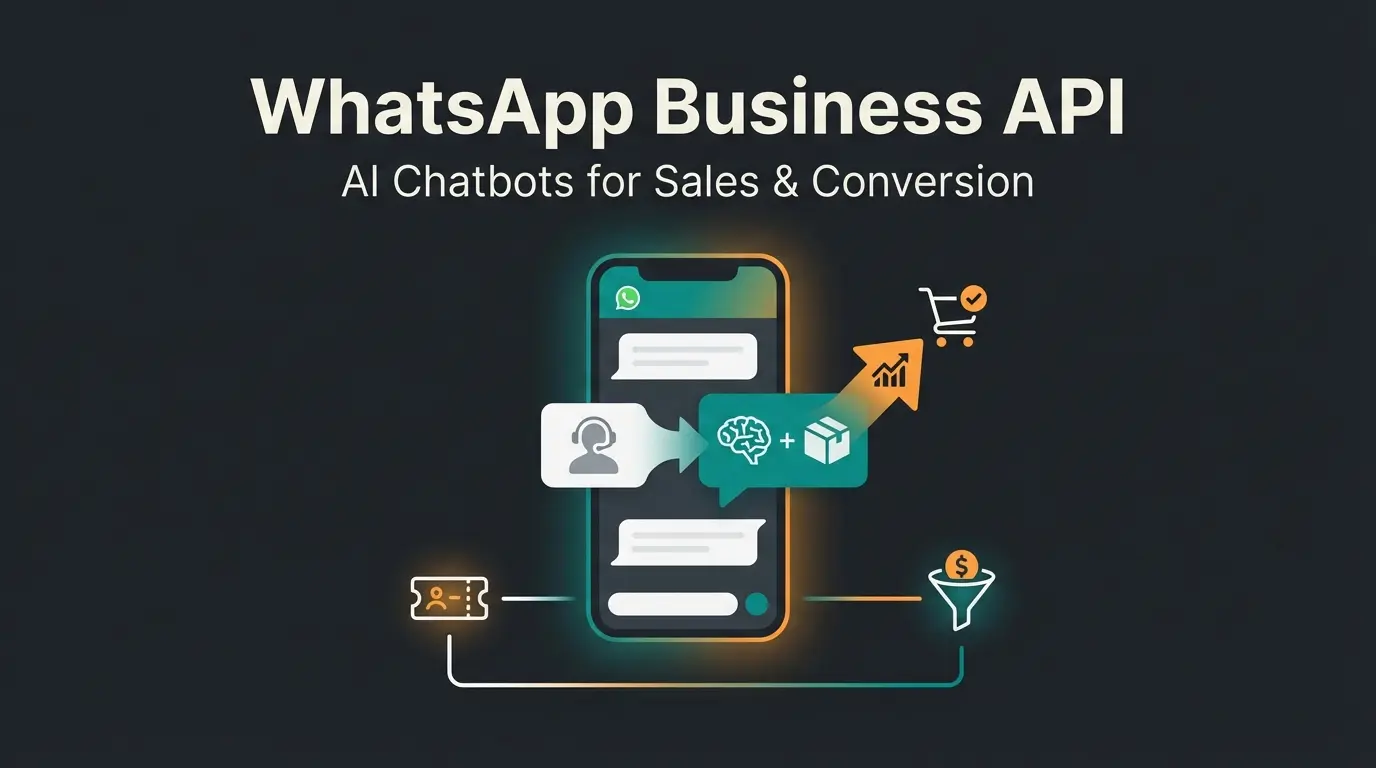
Introduction: The End of the Waiting Queue
Imagine walking into a store and instead of being greeted by a salesperson, you're met with a sign that reads: "Please take a number and wait 24 hours for an email." Absurd, right? Yet this is the reality of digital customer service for many businesses. Emails are slow, phone hotlines are frustrating, and contact forms feel like black holes.
Your customers have already moved on: They're on WhatsApp.
With over 60 million users in Germany alone, WhatsApp customer service is no longer a "nice-to-have" but the absolute foundation for modern customer retention, as reported by Superchat. But while most companies view WhatsApp merely as another channel for complaints ("Where's my package?"), a quiet revolution is happening behind the scenes.
Through the integration of advanced AI (Artificial Intelligence), the channel is transforming from a pure support hotline into a proactive sales advisor. We're not talking about dumb chatbots that ask you to "press 1." We're talking about AI agents that can explain complex products, understand needs, and close sales. This is how AI Chatbots transform customer interactions fundamentally.
In this comprehensive guide, you'll learn how to strategically leverage WhatsApp customer service, why GDPR doesn't have to be an obstacle, and how to keep your costs under control with the upcoming 2025 pricing update.
Why WhatsApp Is the Most Important Customer Service Channel
WhatsApp's dominance in German-speaking regions is undisputed. But for businesses, it's not just about user numbers—it's about the quality of interaction and the potential for meaningful WhatsApp customer communication.
The Power of Numbers
The statistics speak clearly in favor of using WhatsApp for customer communication. According to Lime Technologies and Chatarmin, the evidence is compelling:
Of German population aged 14+ uses WhatsApp
Of internet users in Germany, Austria, Switzerland
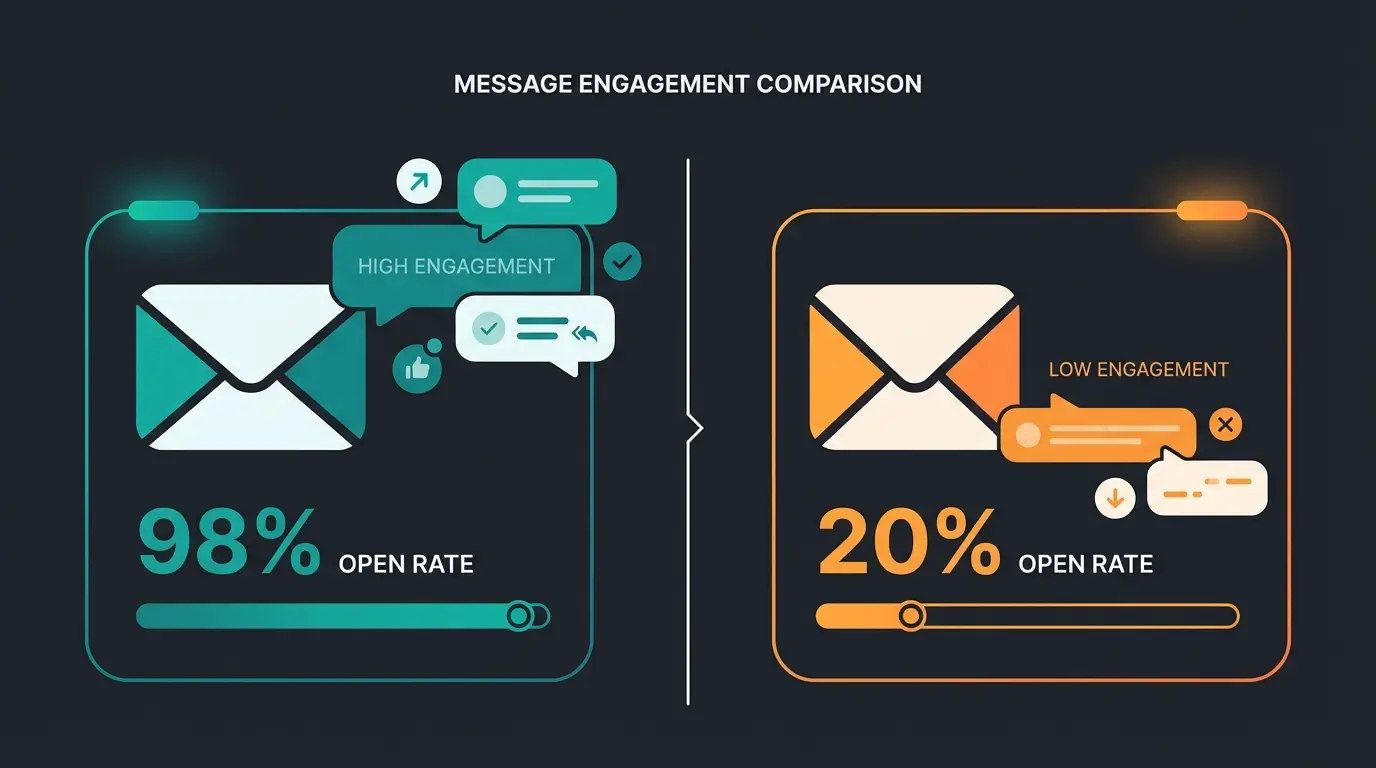
WhatsApp messages vs. 20% for emails
In Germany alone
- Market Penetration: Approximately 80% of the German population aged 14 and older uses WhatsApp. In the DACH region, penetration exceeds 94% of the internet-using population.
- Attention: While emails often land in spam folders or get ignored (open rates around 20%), WhatsApp messages are almost always read. The open rate stands at an impressive 98%.
- Speed: Response times on WhatsApp are drastically shorter. It's an asynchronous channel that adapts to the customer's life, not the other way around.
The Psychological Advantage
WhatsApp is the "intimacy channel." It's the place where users talk to family and friends. When a company gains access here, it's an enormous vote of confidence. Customer service via WhatsApp feels less like a business transaction and more like a conversation. This closeness lowers the barrier for follow-up questions—and these follow-up questions are often the last step before a purchase. Understanding this dynamic is essential as Conversational AI evolves to meet these expectations.
Business App vs. API: The Technical Foundation for Pros
A common misconception in the B2B sector is assuming you can simply buy a company phone, install the WhatsApp app, and get started. For professional businesses, this is not only impractical but often illegal. Before diving in, it's crucial to understand WhatsApp Business guide fundamentals.
There are two worlds in the WhatsApp ecosystem for businesses:
- WhatsApp Business App: A free app for small business owners (e.g., the local bakery).
- WhatsApp Business API (Platform): The interface for mid-sized and enterprise companies that enables software integrations and AI.
Comparison: App vs. API
| Feature | WhatsApp Business App | WhatsApp Business API (Platform) |
|---|---|---|
| Target Audience | Solo entrepreneurs, local small businesses | SMBs, Enterprise, Support Teams |
| Access | 1 smartphone (max. 4 linked devices) | Unlimited users & devices via software |
| Data Protection (GDPR) | Critical: Reads phone contacts, US server sync | Compliant: No contact sync, EU servers possible |
| Automation | Very limited (away messages, quick replies) | Full capabilities (AI agents, chatbots, ERP integration) |
| Costs | Free | Paid (software + Meta fees) |
| Green Tick | Difficult to obtain | Application possible (Official business account) |
| AI Integration | Not possible | Native integration of LLMs & RAG possible |
Understanding the cost implications is also essential. For a detailed breakdown, check out our guide on WhatsApp Business costs to plan your investment properly.
Customer Service vs. Product Consultation: The Key Difference
Here lies the biggest untapped potential. Most companies define "service" as reacting to problems.
- Customer: "My login doesn't work."
- Service: "Here's the link to reset it."
This is important, but it's a cost factor.
The future lies in customer consultation. This is where AI product consultation transforms the game:
- Customer: "I'm looking for running shoes, but I have wide feet and mostly run on asphalt."
- Consultation: "I recommend Model X or Y. Model X has a wider toe box and is cushioned for hard surfaces. Would you like me to send you the details?"
From Cost Center to Revenue Center
Traditional chatbots fail at consultation because they're rigid. A human consultant is expensive and not available 24/7. Modern AI closes this gap. By understanding WhatsApp customer service as a sales channel, your KPIs change:
- Instead of "Ticket Resolution Time" (How quickly can I get rid of the customer?)
- Measure "Conversion Rate" (How often does the customer buy after the chat?).
This shift represents the core of the conversational AI revolution that's reshaping how businesses think about customer interactions.
Slow response times, limited availability, high cost per interaction, customers wait on hold
Frustrating rigid menus, button-based navigation, limited understanding, no personalization
Personalized recommendations, fluid conversations, sales-driven outcomes, 24/7 availability
AI in WhatsApp Customer Service: More Than Just FAQs
The term "chatbot" is tarnished. It reminds us of frustrating experiences with dumb robots that don't understand nuances. But the technology has fundamentally changed through Large Language Models (LLMs) like GPT-4. Explore how WhatsApp chatbots in 2025 are redefining customer expectations.
The Evolution of Machine Dialogue
- Generation 1: The Button Bot - The user must click through menus ("Press 1 for shipping"). This isn't a conversation; it's a form in chat disguise.
- Generation 2: The Keyword Bot - Recognizes keywords like "invoice" and outputs a standard text. Understands no context.
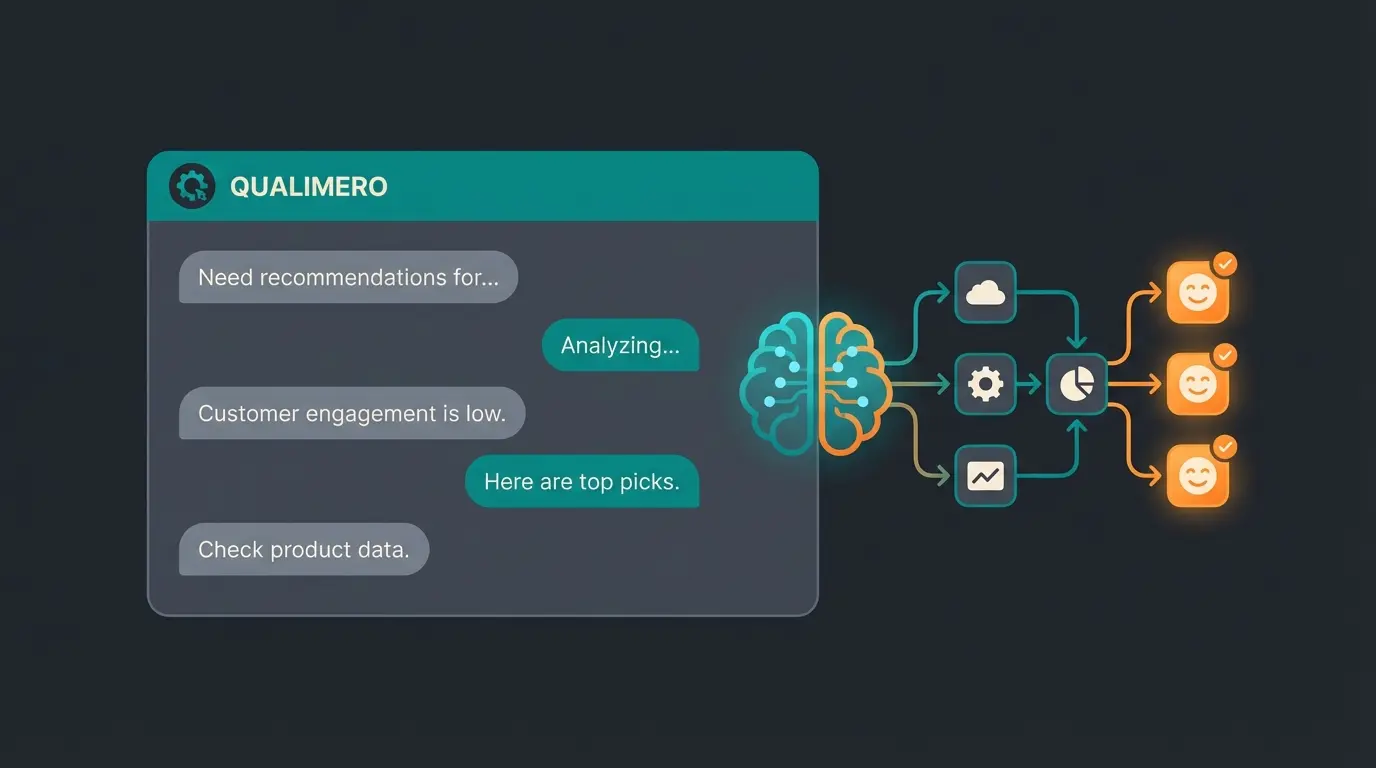
- Generation 3: The AI Product Consultant (State of the Art) - These systems understand natural language, context, and nuances. They can argue, compare, and recommend.
Solving the "Hallucination" Problem (RAG)
A major obstacle for German businesses is the fear that AI will make things up ("hallucinate"). What if the bot promises a discount that doesn't exist?
The solution is called RAG (Retrieval Augmented Generation).
This separates the AI's creative language ability (the "how" it speaks) from its knowledge (the "what" it says):
- The AI is not allowed to access its general internet knowledge to invent facts.
- It may only use information you provide in a database (Knowledge Base) such as PDFs, product catalogs, and website data.
This approach represents a fundamental shift in AI Customer Service capabilities, moving beyond simple automation to genuine consultation.
Standard Chatbot vs. AI Consultant Comparison
| Feature | Standard Bot | AI Consultant |
|---|---|---|
| Understanding Context | None - keyword matching only | Full contextual understanding |
| Product Knowledge | Pre-programmed FAQs | Dynamic access to entire catalog |
| Handling Typos/Slang | Fails or misinterprets | Natural language processing adapts |
| Response Type | Fixed templates | Personalized, conversational |
| Primary Goal | Ticket deflection | Sale conversion + satisfaction |
| Availability | 24/7 | 24/7 |
| Learning Capability | Manual updates required | Continuous improvement from interactions |
Stop treating WhatsApp as just another support ticket system. Our AI consultation platform turns every conversation into a potential sale with personalized product recommendations.
Start Your Free TrialGDPR and Data Protection with AI Solutions
In Germany, data protection is non-negotiable. Using WhatsApp in business often raises the question: "Is WhatsApp GDPR-compliant?"
The answer is: Yes, but only with the API.
Why the API Is Secure
When you use the WhatsApp Business API through a reputable German or European provider, several protection mechanisms apply, as documented by Sofortdatenschutz and HelloMateo:
- No Phone Book Upload: Unlike the app on a phone, the API doesn't upload contact data of uninvolved third parties to US servers.
- Data Processing Agreement (DPA): You sign a contract with your software provider, who in turn has contracts with Meta.
- Server Location: Many providers enable hosting of data and AI logic on EU servers, as confirmed by Timelines.ai.
- Encryption: Communication is end-to-end encrypted (when using the Cloud API, messages are briefly decrypted on Meta servers for processing, but under strict conditions).
The EU-US Data Privacy Framework
Since July 2023, the "Data Privacy Framework" has reestablished an adequacy decision for data transfers to the USA. WhatsApp LLC is certified under this framework, as verified by Chatarmin and the Data Privacy Framework official registry. This gives businesses additional legal certainty that was missing in the years after Privacy Shield was invalidated.
Costs & Pricing 2025: What's Changing
Meta regularly adjusts the pricing model for the WhatsApp Business API. A massive update is scheduled for July 1, 2025, which you need to know about now. According to Botbuz and iSlash, significant changes are ahead.
The New "Per-Message" Model (from July 2025)
Previously, businesses often paid per "24-hour conversation." From July 2025, Meta is switching to a per-message pricing model (Template Message), as detailed by Gallabox.
- Service Messages (User-Initiated): This is the best news for customer service. Since November 2024, service conversations are free, according to Facebook. When a customer contacts you and you respond within 24 hours, you pay no Meta fees for that response. This massively promotes the use of WhatsApp as a primary support channel.
- Utility Templates (Transactional): Messages like shipping confirmations are free from July 2025 when sent within an open 24-hour service window, as reported by Chat2Desk. Outside this window, they cost a small fee per message.
- Marketing Templates: These remain paid and are often the most expensive category. Here, the use of AI is worthwhile to ensure marketing messages are relevant enough to lead to purchases (ROI).
5 Steps to Implement WhatsApp Service in Your Business
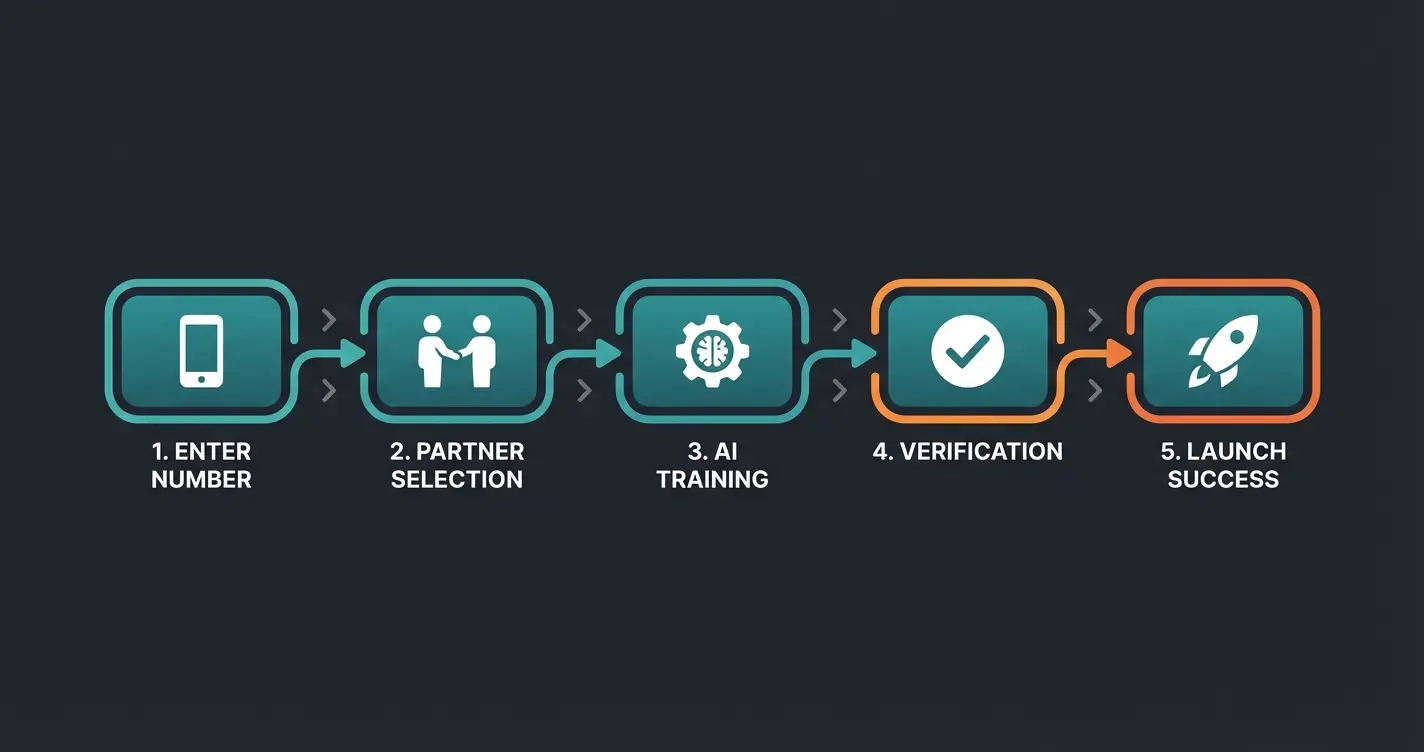
You want to introduce WhatsApp customer service with AI support? Here's your roadmap:
Step 1: Choose the Right Number
Don't use your private mobile number. You can verify a landline number (e.g., your existing hotline) or a new virtual mobile number for the WhatsApp API. This keeps the contact professional.
Step 2: Find the Right Partner (BSP)
Since the API doesn't have its own user interface, you need software. When selecting, pay attention to:
- German support & server location (GDPR).
- Focus on "Consultation" and AI (not just simple ticket systems).
- Integration with your shop (Shopify, Shopware) or CRM (Salesforce, HubSpot).
The right partner makes all the difference in successfully deploying an AI Chatbot for E-Commerce that actually converts browsers into buyers.
Step 3: Train the AI (Onboarding)
Upload your product catalogs, FAQs, manuals, and return policies to the system. Define your AI's "persona": Should it be casual ("you") or formal ("you" - formal)?
Step 4: The Green Tick and Verification
Apply for verification of your business in the Facebook Business Manager. A green checkmark next to the name creates massive trust, but it's not technically required to get started.
Step 5: Go-Live and Drive Traffic
A WhatsApp channel is useless if no one can find it.
- Integrate a "chat button" on your website (bottom right).
- Add a QR code to invoices or package inserts ("Questions about the product? Scan here!").
- Link WhatsApp in your email signature.
Discover more innovative approaches in our collection of AI consultation replaces traditional marketing strategies.
Conclusion: Service as a Revenue Driver
The term WhatsApp customer service actually falls short. What we're witnessing is the fusion of service, sales, and consultation in a single, fluid chat flow.
Companies that view WhatsApp only as a "ticket system" are leaving potential on the table. But those who invest in whatsapp customer service automation to provide every customer with excellent product consultation around the clock will be the winners. They not only save personnel costs in first-level support but actively increase their revenue and customer satisfaction.
The technology is ready. Customers are already waiting on WhatsApp. What are you waiting for?
Frequently Asked Questions (FAQ)
For the end customer, yes. For businesses, there are software costs. However, Meta fees for pure service responses are largely eliminated from late 2024/2025, making the channel very attractive.
Yes, through RAG technology, AI can access your specific product data and accurately reproduce details (dimensions, compatibility, materials)—often faster than a human employee who first has to flip through a manual.
A good system always offers a 'Human Handover.' When the AI is uncertain or the customer requests a human, the chat is seamlessly transferred to an employee.
Use only the WhatsApp Business API (not the app), work with a certified European BSP provider, ensure proper data processing agreements are in place, and always obtain explicit customer consent before initiating conversations.
The free Business App is designed for small local businesses with basic features. The API is the enterprise solution enabling unlimited users, full automation, AI integration, and GDPR-compliant operations—essential for any serious customer service operation.
Join leading e-commerce businesses using AI-powered WhatsApp consultation to boost conversions by 40%. Transform every support conversation into a sales opportunity.
Get Started Free
Lasse is CEO and co-founder of Qualimero. After completing his MBA at WHU and scaling a company to seven-figure revenue, he founded Qualimero to build AI-powered digital employees for e-commerce. His focus: helping businesses measurably improve customer interaction through intelligent automation.