Introduction: Why Your Shop Needs to Be More Than a Catalog
When we talk about e-commerce in 2025, there's one platform we simply cannot ignore: WooCommerce. It's the beating heart of millions of online shops worldwide and powers over 20% of all e-commerce websites according to current data from Doofinder and Mobiloud. But while this widespread adoption is impressive, a closer look at the German market reveals a fundamental problem: most of these shops are "silent."
Imagine walking into a specialty store in Berlin. The shelves are stocked, the products are first-class, but there's not a single salesperson in sight. You have a specific question, but all you find is a sign reading "Please use the search filter." Frustrating, right? That's exactly how 90% of WooCommerce shops feel today. They're passive catalogs waiting for the customer to do all the work.
In this comprehensive guide, I'll show you not only how to set up WordPress WooCommerce technically sound and legally compliant in Germany. We're going one crucial step further. We're bridging the gap between technical administration and actual selling. You'll learn how to transform your shop from a static product listing into an AI-driven sales consultant that actively guides, advises, and converts your customers. For a deeper understanding of how AI transforms online retail, check out our AI e-commerce consultation guide.
This article is for shop operators, agencies, and mid-sized businesses selling complex products who understand that "add to cart buttons" alone simply aren't enough in 2025.
Part 1: Why WooCommerce? The Strategic Choice for Germany
Before we look to the AI future, we need to understand the foundation. Why do German businesses in 2025 still (and increasingly) choose WooCommerce over closed systems like Shopify? The answer lies in three critical factors that matter deeply to German business owners.
1. Data Sovereignty and GDPR (The German Gold Standard)
In Germany, data protection isn't a "nice-to-have"—it's a hardcore business asset. With SaaS solutions (Software as a Service) like Shopify, your customer data often resides on servers in the USA or Canada. While there are legal frameworks for this, you only have full control with a self-hosted solution.
With a WooCommerce shop, the data belongs to you. You decide whether your server is located in Frankfurt or Munich. This is a massive trust signal for German buyers who are sensitive to cookies and data transfers. Our detailed WooCommerce 2025 comparison explores these differences in depth.
2. Cost Structure: Total Cost of Ownership (TCO)
A common misconception is that WooCommerce is "free" while other providers cost money. The truth lies in the TCO (Total Cost of Ownership) calculation.
- Shopify & Co: Attract with low entry prices (e.g., €29/month) but aggressively scale costs through transaction fees (up to 2% on top of payment fees) and monthly app costs according to AgentiveAIQ and LinearLoop
- WooCommerce: Requires initial investments (hosting, premium plugins, development), but ongoing costs remain stable as revenue increases. You don't pay a "success penalty" to the platform
WooCommerce charges no additional transaction fees on sales
Shopify and similar platforms add fees on top of payment processing
WooCommerce powers over 40% of all online stores globally
3. Scalability for Complex Catalogs
Standard shop systems love simple products: T-shirts in S, M, L. But what if you're selling industrial components, custom-built bicycles, or skincare products with 50 variables? Woo Commerce (often mistakenly written as Woocomerce) offers through its open-source nature the flexibility to adapt data structures as your product demands—not as the system dictates. For a detailed comparison with other platforms, see our WooCommerce vs Shopify analysis.
Part 2: The German Foundation – Legal Compliance & Tech
Before we ignite the "turbo," the engine needs to run smoothly. A WordPress WooCommerce setup in Germany differs massively from a US setup. Without adhering to specific compliance rules, you risk cease-and-desist letters before making your first sale.
1. The "Germanized" Necessity
A naked WooCommerce installation is not legally compliant in Germany. It lacks functions like base price display (important for food/cosmetics), legally compliant checkboxes at checkout, and correct VAT calculation for digital goods within the EU.
This is where two market leaders come into play—no German shop should go live without one of them:
- Germanized for WooCommerce (Vendidero): Offers excellent integration into the WooCommerce interface and is known for its modularity. It handles double opt-in, invoice PDFs, and delivery time displays as confirmed by WPTeam and Kinsta
- German Market (MarketPress): Also very strong, often praised for good support and integrated interfaces to accounting systems like Lexoffice or SevDesk according to AWEOS and Elbnetz
For comprehensive guidance on plugin setup and GDPR compliance, explore our WordPress plugin GDPR setup guide.
2. Hosting: Speed Equals Conversion
Forget budget hosting for €3 per month. WooCommerce is database-intensive. For the German market, I recommend specialized hosts like Raidboxes or HostPress.
- Server location: Germany (GDPR plus point)
- Caching: Server-side caching (Nginx/Varnish) is mandatory to achieve loading times under 1 second
- PHP Workers: Ensure your plan has enough PHP workers so checkout doesn't crash when multiple customers access simultaneously
3. Payment 2025: The Checkout Transformation
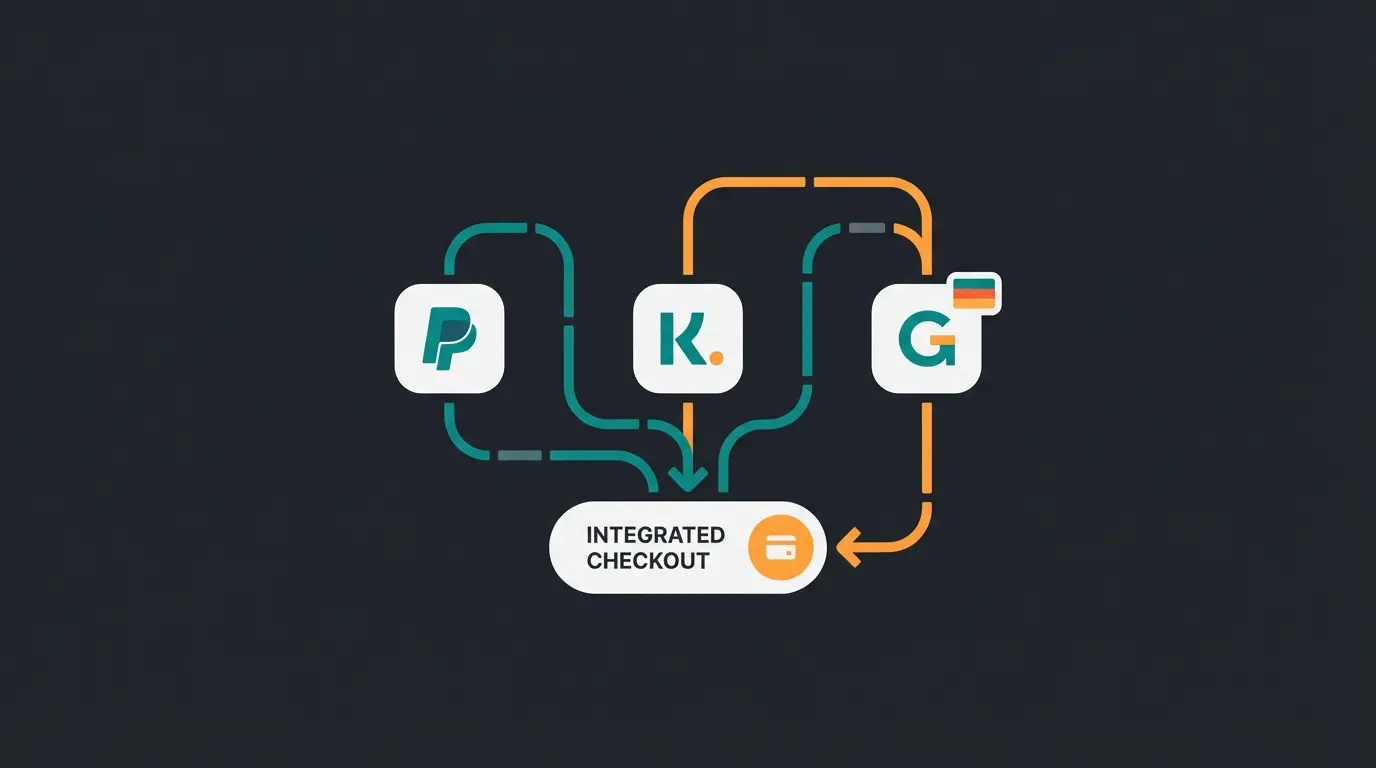
The payment landscape has changed. PayPal Plus (which was the standard in Germany for a long time) has been replaced by PayPal Checkout as noted by Integer-Net.
- What's new? PayPal Checkout integrates not just PayPal but also local heroes like Giropay (Germany), iDEAL (Netherlands), or Bancontact (Belgium) and credit cards in one interface
- Buy now, pay later: Still king in Germany. Solutions like Klarna or PayPal "Pay Later" are essential to capture conservative German buyers according to Cross-Border Magazine and Juspay
Part 3: The Problem with Standard WooCommerce
Here we arrive at the core problem that most tutorials ignore. You've installed your shop, it's legally compliant, the design is clean. But it's not selling as well as it could. Why?
The "Silent Shop" Syndrome
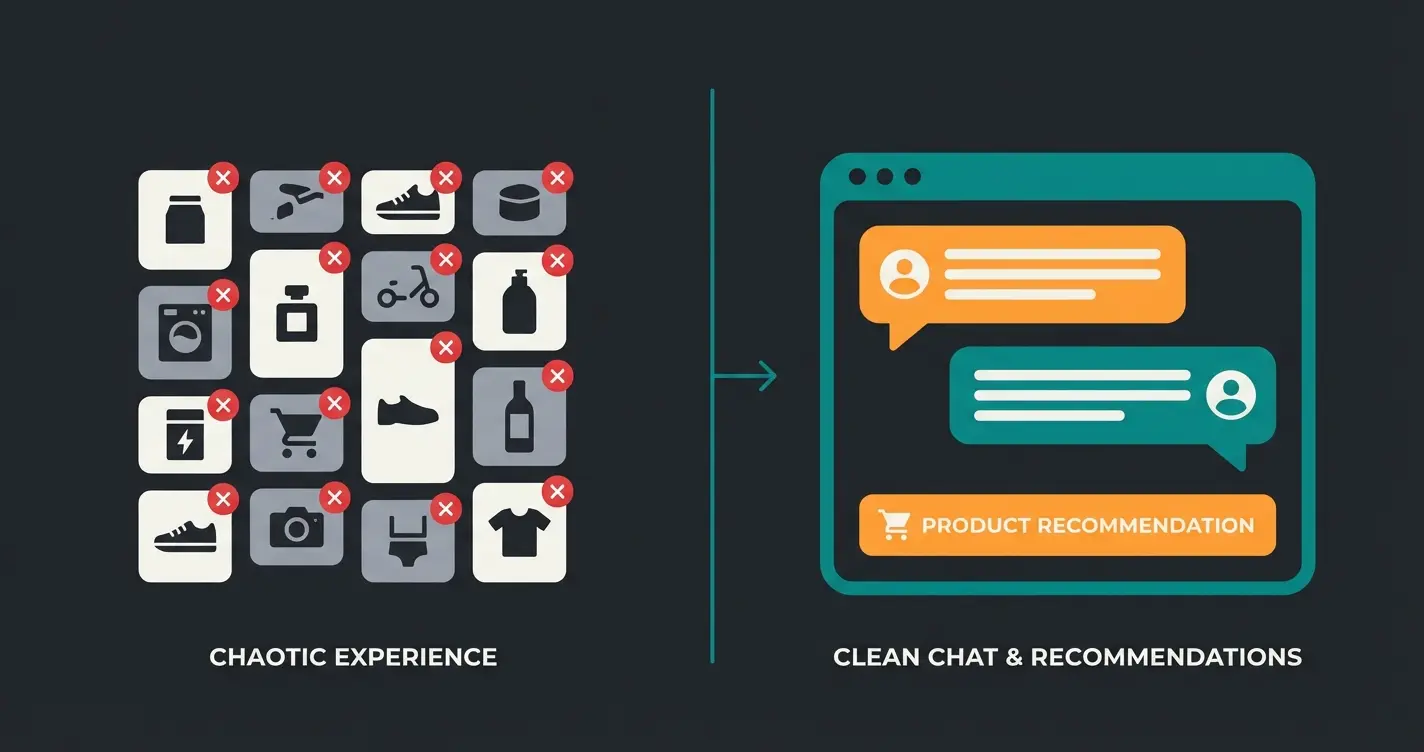
A standard WooCommerce shop is passive. It presents products and waits. This works well when the customer knows exactly what they want (e.g., "iPhone 15 case black"). But what about the customer who says: "I need running shoes, but I have slight knee problems and usually run on asphalt"?
The reality of standard search:
- The customer types "running shoes knee problems" into the search bar
- WooCommerce shows: "No results found"
- The customer uses filters: "Size 42", "Color Blue". They see 50 models
- They're overwhelmed (Analysis Paralysis) and leave the shop
The average conversion rate in e-commerce in 2025 is only between 2% and 4% worldwide according to SpeedCommerce and Red Stag Fulfillment. That means: Out of 100 visitors, 96 leave without purchasing. Usually not because the product is bad, but because they can't find it or aren't sure if it fits.
The Support Trap
To compensate for this consultation deficit, many shops offer live chat or a hotline. The problem: It doesn't scale.
- People sleep (no 24/7 support)
- People are expensive
- Old-generation chatbots (rule-based) don't understand context and frustrate customers with standard responses ("Where's my package?")
| Standard WooCommerce Shop | AI-Powered WooCommerce Shop |
|---|---|
| Keyword-based search (often inaccurate) | Intent-based search (understands purpose) |
| Static categories & filters | Dynamic dialogue / quiz |
| Customer must search themselves | AI takes customer by the hand |
| Reactive support (waiting for requests) | Proactive support (offers help) |
| Customer feels: "I have to do the work" | Customer feels: "I'm being advised" |
Part 4: The Future – WooCommerce as AI Sales Consultant
Here lies your opportunity to stand out from the competition in 2025. We're transforming WooCommerce from a warehouse manager into an active sales consultant. The magic word is Guided Selling supported by AI. Learn more about implementing these solutions in our comprehensive AI product consultation guide.
What is "Consultative AI"?
Unlike simple support bots that just recite FAQs, Consultative AI uses product data to actively question customers and suggest solutions. It's the digital twin of your best in-store salesperson.
How Does This Work Technically in WooCommerce?
Modern AI tools connect to your WooCommerce database. They "read" your product descriptions, attributes (size, material, intended use), and even customer reviews.
The "Hiking Boots" Scenario (Before vs. After):
| Standard WooCommerce (Passive) | AI-Powered WooCommerce (Active) |
|---|---|
| Customer searches "hiking boots" | AI: "Hello! Are you planning light day trips or multi-day alpine tours?" |
| Customer sees 200 products | Customer: "Alpine tours, often with heavy backpack." |
| Customer filters by "Price" | AI: "Understood. You need stability. Do you prefer leather or lightweight synthetic?" |
| Customer clicks random products | Customer: "Leather." |
| Result: Abandonment or return | Result: AI shows exactly 3 models, explains why they fit ("Model X has extra ankle support for heavy backpacks"). |
Benefits for the German Market
German customers especially love details and certainty ("Gründlichkeit" - thoroughness). They don't want marketing fluff; they want to know if the technical component is really compatible. See how this works in practice with our AI Employee E-Commerce success story.
- Reduced Returns: When AI clarifies whether the replacement part fits before ordering, the return rate drops drastically
- Higher Average Order Value (AOV): AI can recommend matching accessories during the conversation ("You chose the leather shoe—don't forget the matching care wax to keep it waterproof")
- 24/7 Consultation: Your "best salesperson" is also online Sunday evening at 11 PM when many purchase decisions are made
Implementation: AI for Product Discovery
There are now specialized plugins and SaaS solutions that integrate into WooCommerce to deliver exactly this. Explore the best options in our WooCommerce plugins AI consultation overview.
- Specialized Search Plugins: Tools like Doofinder or Algolia already use AI to better understand search queries (typo tolerance, synonyms)
- Guided Selling Tools: New solutions position themselves here that go beyond search and conduct a dialogue
- Data Hygiene: For AI to work, your WooCommerce data must be clean. Use attributes (color, size, material) consistently. An AI can only recommend what it "knows"
Stop losing 96% of your visitors. Our AI-powered consultation solution turns passive catalogs into active sales consultants that guide customers 24/7.
Start Your Free TrialPart 5: Visual Assets & Structure
To demonstrate value to your readers, we integrate visual concepts that clearly communicate the AI advantage over traditional e-commerce approaches.
The German WooCommerce Tech Stack
Visualize the perfect shop as a layered cake showing all essential components working together:
High-performance German hosting (e.g., Raidboxes, HostPress) with servers in Germany for GDPR compliance
WordPress + WooCommerce (latest version) as the flexible foundation
Germanized or German Market plugin for legal protection (Impressum, AGB, Button Solution)
WP Rocket + image optimization for Google Core Web Vitals compliance
AI consultation tools + analytics as the crown that drives conversions
For deeper integration possibilities including ERP and API connections, review our WooCommerce integration guide.
Part 6: Practical Tips for Implementation
How do you actually get started? Here's a roadmap for the transformation that will take your shop from silent catalog to intelligent sales machine.
Step 1: Polish the Foundation
Review your product descriptions. Are they just "copy-paste" from the manufacturer? Rewrite them. Add information that a salesperson in a store would use (e.g., "Runs small," "Ideal for beginners"). This data is the fuel for your AI.
Step 2: The Gap Analysis
Look at your analytics or search logs. What are people searching for but not finding?
- Are they searching for problems ("face pimples") instead of products ("face cream")?
- Are they searching for compatibility ("replacement part for 2018 model year")?
This is exactly where your AI needs to intervene. Our AI product consultation case study shows remarkable results from implementing this approach.
Step 3: Integration of Conversational Commerce
Don't just install a chatbot. Integrate a tool that has access to your product catalog.
- Placement: The "consultant" should appear not just on the homepage but prominently on category pages
- Trigger: Let the AI be proactive. If a customer lingers on a product page for 30 seconds, the AI can ask: "Are you unsure if the size fits?"
Step 4: Build Trust (Trust Signals)
Essential in Germany:
- Display Trusted Shops or eKomi seals prominently
- Integrate customer reviews directly into the AI dialogue ("Other customers with similar profiles found this product helpful")
Essential Plugins for a Modern German Shop
To maximize your shop's potential, you need the right plugin ecosystem. Here's the essential stack for German WooCommerce success:
- Compliance: Germanized or German Market (non-negotiable)
- Cookie Consent: Borlabs Cookie or similar GDPR-compliant solution
- Performance: WP Rocket, Autoptimize, or similar caching solutions
- SEO: Yoast or RankMath for search visibility
- Sales/AI: AI consultation tools positioned as the "brain" of your store
Learn how to maximize customer engagement through our WooCommerce email marketing strategies that complement your AI implementation.
Platform Comparison: Making the Right Choice
Understanding how WooCommerce stacks up against alternatives helps inform your decision. For German businesses prioritizing data control and long-term flexibility, WooCommerce consistently emerges as the superior choice. Our comprehensive Shopify vs WooCommerce comparison provides detailed analysis of both platforms.
Conclusion: Build an Expert, Not Just a Shop
The e-commerce market is saturated in 2025. It's no longer enough to just make products "available." Amazon can do "available" better and cheaper.
Your opportunity with WooCommerce lies in specialization and consultation depth. By linking the flexibility of WordPress with the power of modern AI, you're not building another interchangeable online shop. You're building a digital expert that's there for your customers 24/7.
WooCommerce is the engine. German compliance tools are the brakes and seatbelt. But AI is the driver that safely brings your customers to their destination (the purchase).
Are you ready to make your shop speak?
FAQ: Common Questions About WooCommerce in Germany
The plugin itself is open-source and free. However, professional operation in Germany incurs costs for: hosting (approx. €15-50/month), legal compliance plugins (approx. €70/year), payment fees, and possibly premium themes or AI tools. The total cost of ownership is often lower than SaaS alternatives at scale.
Not for basic setup. Thanks to setup wizards and page builders like Elementor or Gutenberg, getting started is simple. For individual customizations or deep AI integrations, technical understanding or an agency is advisable.
Shopify is easier to start with, but WooCommerce offers more flexibility and data sovereignty (GDPR) in the long term. Those selling complex products and not wanting to depend on US servers usually choose WooCommerce.
Absolute minimum: Germanized or German Market (legal), a cookie consent tool (e.g., Borlabs Cookie), and a caching plugin for performance. For AI-powered selling, add a consultative AI solution.
AI transforms passive product listings into active sales consultations. By understanding customer intent and guiding them through personalized questions, AI can reduce the typical 96% abandonment rate significantly while also decreasing returns and increasing average order value.
Join forward-thinking German e-commerce businesses using AI consultation to convert more visitors into customers. No transaction fees, full data control, 24/7 intelligent selling.
Get Started Free Today
Lasse is CEO and co-founder of Qualimero. After completing his MBA at WHU and scaling a company to seven-figure revenue, he founded Qualimero to build AI-powered digital employees for e-commerce. His focus: helping businesses measurably improve customer interaction through intelligent automation.