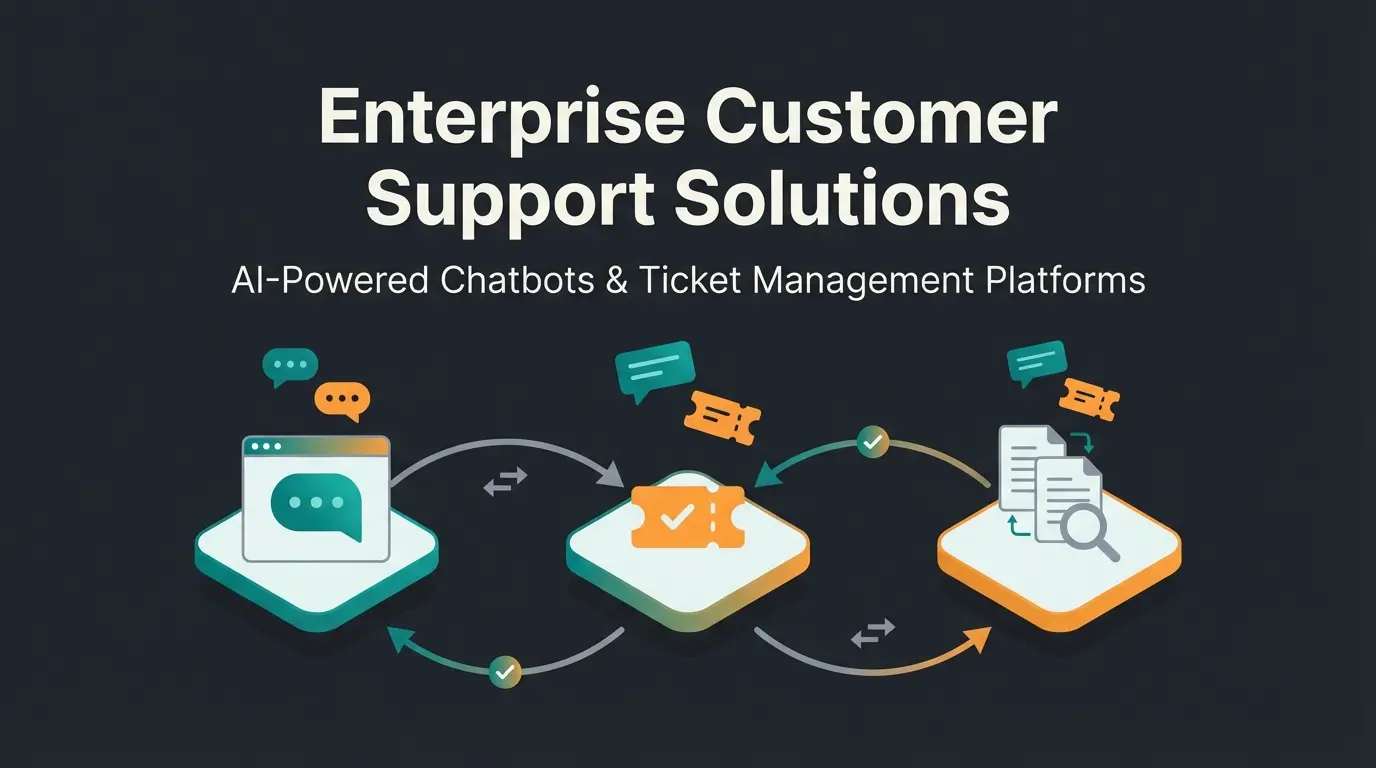
Why the Traditional Help Desk Has Become Obsolete
Imagine this scenario: A customer has a problem with your product. They send an email. They receive an automated response: "Thank you, your ticket number is #12345. We will get back to you within 48 hours."
In the world of 2025, this is no longer service—it's a business obstacle.
For decades, the helpdesk was viewed as a pure cost center. The primary task was to "process tickets," put out fires, and manage technical disruptions as cost-effectively as possible. The metrics were purely operational: How quickly can we close the ticket? How many tickets can an agent handle per hour?
But this perspective is outdated. In an era where 75% of CX leaders expect AI to soon resolve 80% of customer interactions without human involvement, according to Zendesk, the role of the helpdesk must fundamentally change. Today's customers no longer expect waiting queues—they expect immediate solutions and, more importantly, competent consultation. This is where AI customer service becomes essential for modern businesses.
This article is not another technical guide for installing ticketing software. It's a strategic manifesto for executives, support managers, and IT decision-makers who want to understand how to transform their helpdesk system from a reactive "repair shop" into a proactive product consultation machine. We will analyze why the rigid level-support model (1st/2nd/3rd level) is collapsing, how AI conducts genuine consultation conversations, and how you can use "Made in Germany" data protection as a trust anchor.
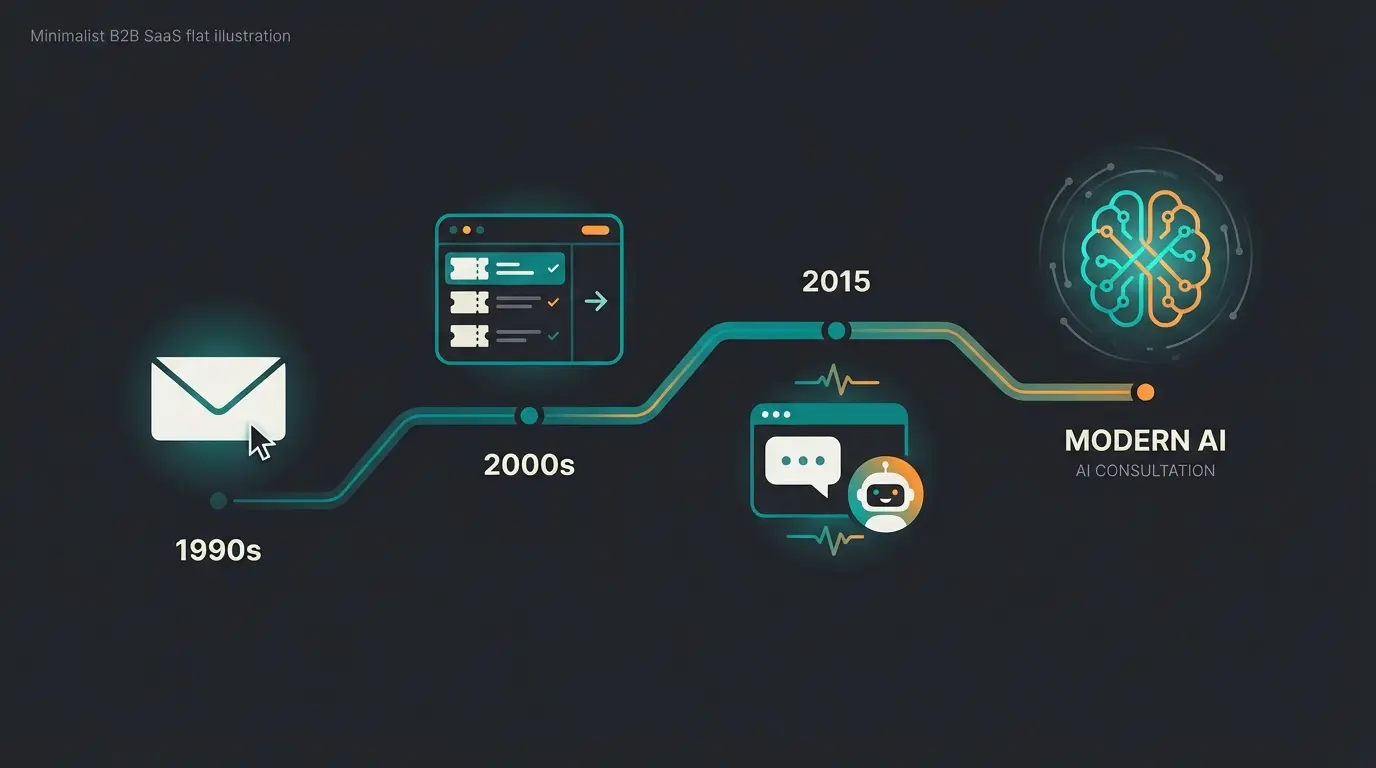
What Is a Helpdesk? Definition and Evolution
To understand the future, we need to briefly clarify the basics. But even the definition has evolved.
The Classic Definition
Traditionally, a helpdesk (often used synonymously with Service Desk, although ITIL distinguishes between them) is defined as a central contact point (Single Point of Contact - SPOC) that receives, manages, and resolves inquiries from users or customers. The focus lies on Incident Management—restoring normal operations after a disruption.
The Modern Definition: Customer Success Platform
In 2025, a helpdesk solution is much more. It's a technological ecosystem that consolidates communication channels, centralizes knowledge, and is enriched by artificial intelligence to not only solve problems but maximize the value of the product for the customer. Companies implementing AI in customer service are seeing dramatic improvements in both efficiency and customer satisfaction.
Comparison: Reactive vs. Proactive
| Feature | Classic Helpdesk (Past) | Modern AI Helpdesk (Future) |
|---|---|---|
| Primary Goal | Close tickets (Deflection) | Solve customer needs & consult (Retention) |
| Trigger | Customer reports a problem (Reactive) | System recognizes need/problem before customer (Proactive) |
| Structure | Rigid hierarchy (Level 1-3) | Fluid & Collaborative (Swarming & AI) |
| Metric | Average Handling Time (AHT) | Customer Lifetime Value (CLV) & Sentiment |
| Role of AI | Auto-responder & Chatbots | Product Consultant & Co-Pilot for agents |
| Data View | Silos (Support data separate from Sales) | 360° view (Support as Sales enabler) |
Why is this distinction important? Google search results are full of providers who simply want to sell you a "better email program." But the market is moving elsewhere. According to current studies from Zendesk, 64% of CX leaders plan to massively increase their investments in AI-powered chatbots and automation next year. Anyone still investing in purely reactive systems is buying yesterday's technology.
Core Functions of a Modern Help Desk System
A helpdesk system must serve three pillars today: Administration, Knowledge, and Intelligence. While the first two are standard, the third pillar is the decisive competitive advantage.
Ticket Management and Omnichannel Consolidation
This is the foundation. Whether email, phone, WhatsApp, live chat, or social media—all inquiries must land in a central interface.
- Consolidation: No switching between tabs
- Routing: Automatic assignment to the right expert (not just the next available person)
- Context: The agent must see what the customer purchased and when they last made contact
Dynamic Knowledge Base
Knowledge bases used to be static FAQ pages that were rarely updated. Today they are dynamic and serve as the foundation for AI consulting capabilities.
- Self-Service: 81% of customers want more self-service options, according to Khoros. They don't want to call if they can google the answer
- Internal Use: The Knowledge Base serves as the "brain" for AI. Without well-documented knowledge, even the best AI cannot provide correct answers
The Product Consultation Engine (PCE)
Here lies the actual innovation and your opportunity to stand out. Most competitors talk about "support bots." We're talking about a Product Consultation Engine powered by consultative AI.
What's the difference?
- Support Bot: "To reset your password, click here." (Functional)
- Consultation Engine: "I see you're using our tool for marketing project management. Did you know that with Feature X you can automate your campaign planning? That would solve your current problem and save you about 2 hours per week. Should I send you more information?" (Advisory)
This engine uses Generative AI to not just output text modules but understand the customer's context. It analyzes usage behavior and offers solutions the customer may not have even asked for but urgently needs. This transforms the helpdesk from a cost center into a revenue driver.
Companies leading in CX outperform competitors by up to 80% in revenue growth
Customers prefer self-service options over contacting support
CX leaders planning to increase AI chatbot and automation investments
CX leaders expect AI to resolve 80% of interactions without human involvement
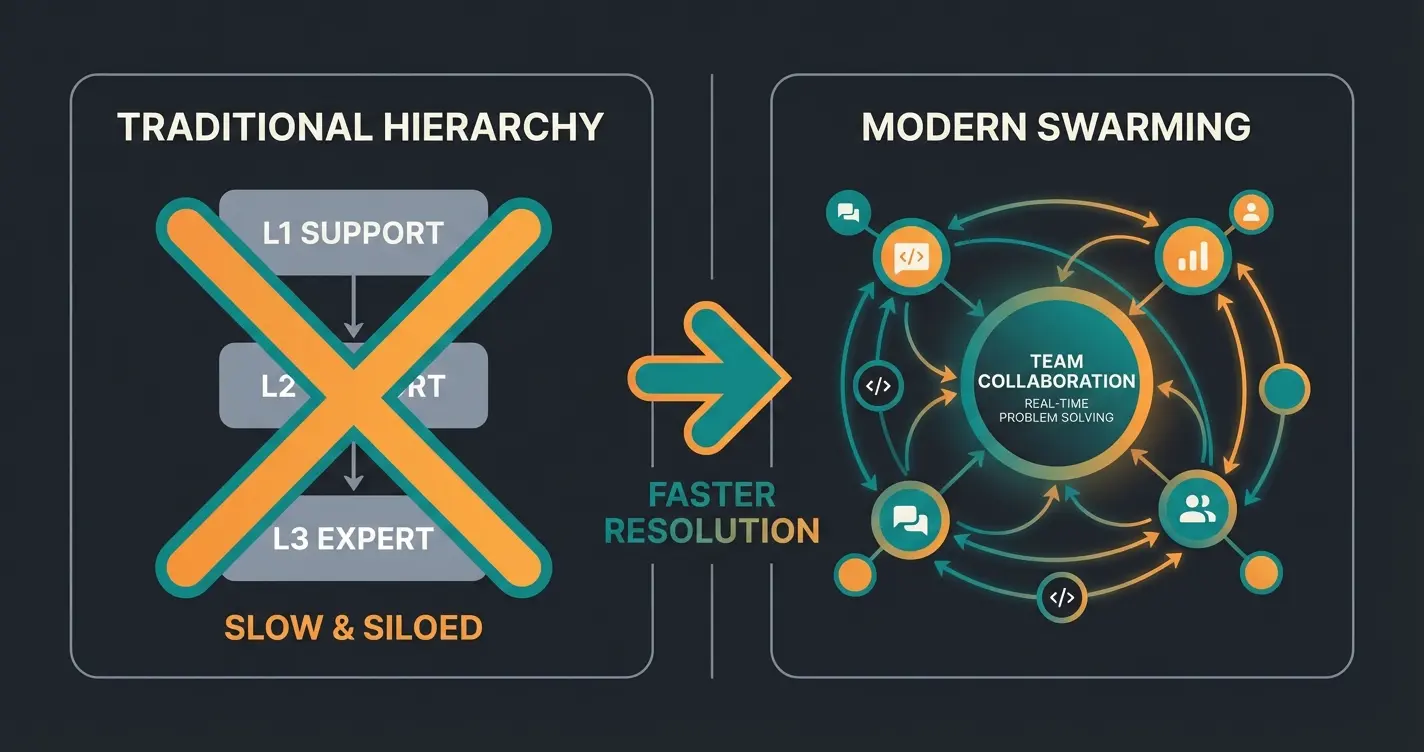
Why Classic Level Support Has Become Obsolete
If you google "helpdesk structure," you almost always find the ITIL model:
- 1st Level: Call center, receives tickets, solves trivial issues (password reset)
- 2nd Level: Experienced admins, solve more complex cases
- 3rd Level: Developers/specialists, solve bugs and architecture problems
This model comes from a time when knowledge was scarce and difficult to access. In 2025, however, it is inefficient, slow, and frustrating.
The Problem with Ping-Pong Bureaucracy
In the classic model, a ticket is often passed around like a hot potato.
- The customer explains their problem to Level 1
- Level 1 doesn't quite understand it, documents it half-heartedly, and escalates it
- Level 2 reads the ticket, has follow-up questions, sends it back
- Result: Long wait times (Resolution Time) and declining customer satisfaction (CSAT)
The Solution: Intelligent Swarming and Tier 0
The Rise of Tier 0 (AI)
Before a human is even involved, "Tier 0" takes action. Thanks to advanced AI, today 80% of routine inquiries (passwords, status queries, simple configurations) can be resolved immediately, as reported by usepylon.com. This makes the classic 1st Level Support in its pure "receptionist function" obsolete. Organizations implementing AI customer service automation are seeing dramatic improvements in response times.
Swarming Instead of Escalating
For the remaining 20% of complex cases (the "consultation" cases), the Swarming model is increasingly being adopted (known from ITIL 4 and DevOps), as explained by BeyondTrust and TOPdesk.
Instead of throwing a ticket up a hierarchy ladder, experts "swarm" around the problem.
- How it works: A ticket comes in. The system (or a dispatcher) recognizes: "This is a complex database problem."
- Action: Instead of giving it to a junior, the database expert is immediately involved together with the customer service representative
- Advantage: The problem is solved at first contact (First Contact Resolution). There's no telephone game
Why is this possible now? Previously, experts were too expensive to put directly in front of customers. Since AI now handles the trivial work, your experts finally have time for exactly these value-adding interactions. Swarming also promotes knowledge transfer: The junior learns directly from the expert while they solve the problem together.
Customer submits question via any channel (chat, email, phone)
AI instantly analyzes context, intent, and customer history
80% resolved instantly; complex cases routed to expert swarm
Relevant specialists collaborate in real-time on complex issues
Problem solved with potential consultation for additional value
Discover how AI-powered helpdesk solutions can turn your support team into a revenue-driving consultation engine. Start your free trial today.
Start Free TrialHelp Desk as a Sales Instrument: The Blue Ocean Strategy
Most companies see their helpdesk as a necessary evil. Here lies your opportunity for a "Blue Ocean Strategy"—a market space without competition. This is where AI product consultation becomes a game-changer.
From Cost Factor to Revenue Driver
Studies demonstrate a direct correlation between CX and revenue:
- Companies that are leaders in CX outperform laggards in revenue growth by almost 80%, according to research from Renascence and Neowork
- 67% of consumers are willing to pay more for a product if the service is excellent, as found by Convin.ai
- An increase in customer retention of just 5% can boost profits by 25% to 95%
The Scenario: Support as Pre-Sales
A modern helpdesk with AI consultation competence recognizes upsell potential that a human agent under stress would often overlook. Consider how AI agents can identify opportunities in real-time.
Example: A customer contacts the support of a software company: "I can't create any more users."
- Reactive Support: "You've reached your limit. Here's the link to upgrade." (Customer feels pushed to pay)
- Consultative Helpdesk (AI-powered): "I see your team has grown significantly in the last two months—congratulations! Your current plan is optimized for smaller teams. Based on your usage intensity, the 'Business Package' would not only allow more users but also give you access to the analytics dashboard, which is often very valuable for teams your size. Should I send you more information?"
Here, a "problem" (limit reached) becomes a "consultation" (supporting growth). The helpdesk becomes an extension of the sales team.
Data Protection and GDPR: The German Trust Factor
While US providers often impress with features, in Germany (and the EU) compliance is the "showstopper." If you implement a helpdesk solution that uses AI, you're entering a minefield if you're not careful.
The Problem of Unsolicited Data
A specific problem with AI chatbots in helpdesks is so-called "unsolicited data," as detailed by Datenschutzticker.
- Scenario: The chatbot asks: "How can I help you?"
- User: "I have diabetes and my device isn't working..."
- Problem: The user has entered health data (Art. 9 GDPR - specially protected) without being asked into a system that may not even be certified for health data
Solutions for GDPR-Compliant AI Helpdesks
To build trust with German customers, your helpdesk must meet the following criteria:
- Privacy by Design: The input field should contain clear notices ("Please do not enter sensitive personal data")
- Automated Sanitization: The system must be able to recognize and redact or delete such "unsolicited data" immediately before it enters the AI's training database
- Server Location & Data Processing Agreement: Use providers that guarantee hosting in the EU and offer transparent data processing agreements
- Right to be Forgotten: When a customer requests deletion of their data, the AI must be able to "forget." This is technically complex with Large Language Models (LLMs) but legally necessary, as explained by moin.ai
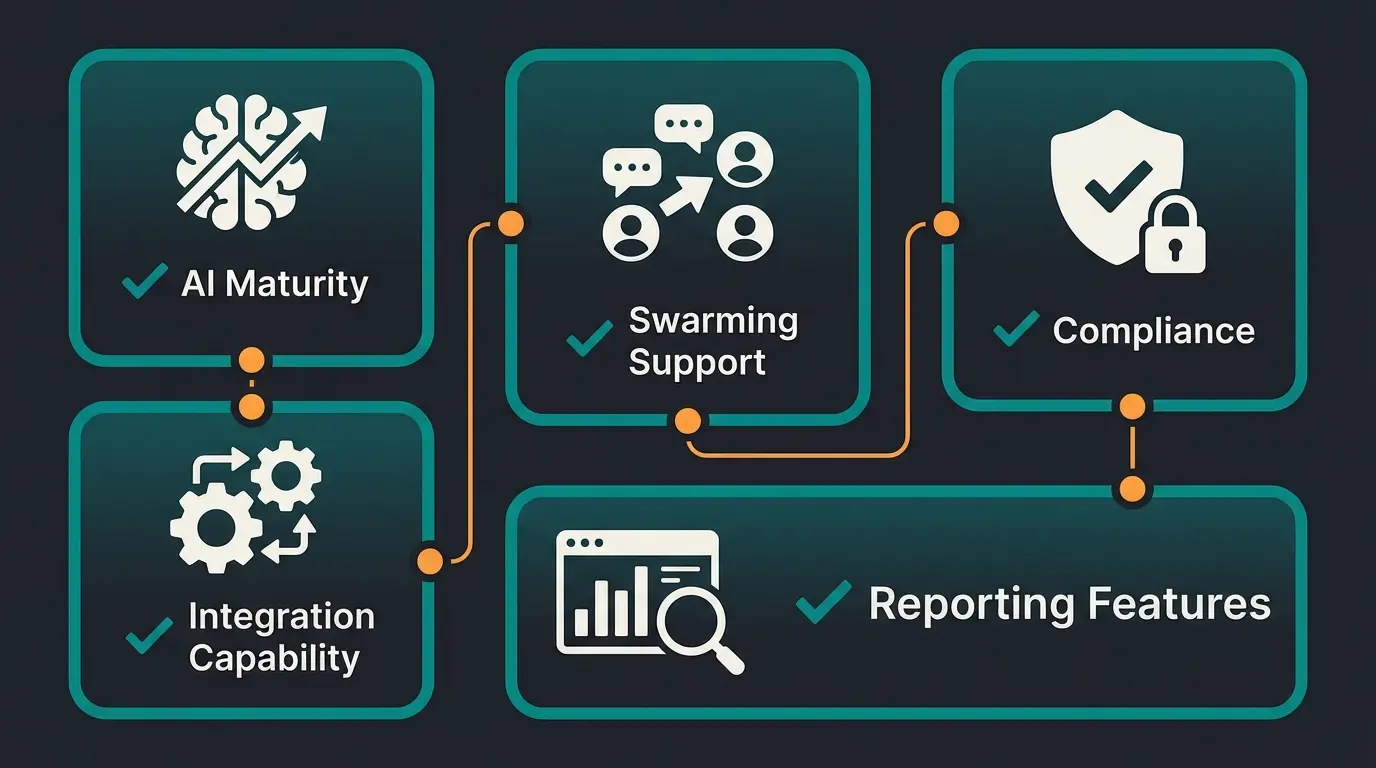
Selection Criteria: What to Look for in a Help Desk Solution
The market is flooded with tools (Zendesk, Freshdesk, Jira, OTRS). How do you find the solution that supports your transformation to "product consultation"? Here's a checklist beyond the standard features.
Checklist for 2025
AI Maturity (Consultation vs. Deflection):
- Can the AI only link to FAQ articles (old) or generate real, context-based answers (new)?
- Can the AI be trained to "speak" like a consultant (Tone of Voice)?
Integration Capability (Silo Buster):
- Does the helpdesk integrate seamlessly with your CRM (Salesforce, HubSpot)? (Support must see sales data and vice versa)
- Are there interfaces to your product (e.g., In-App Support)?
Swarming Support:
- Does the tool support collaboration within tickets (e.g., @mentions, internal chats) without formally forwarding the ticket?
- Can external partners (e.g., suppliers) temporarily "swarm" into a ticket?
Compliance & Security:
- Where are the servers located?
- How does the AI handle personal data (Training vs. Inference)?
Reporting & Insights:
- Does the tool only measure "time per ticket" or also "sentiment" (customer mood) and "recurring product issues"?
Real-World Success: AI Consultation in Action
The transformation from traditional support to intelligent consultation isn't just theory—businesses across industries are already experiencing remarkable results. Consider how companies are leveraging AI employee solutions to revolutionize their customer interactions.
One compelling example is how e-commerce businesses are implementing AI product consultation to handle complex customer inquiries about specialized products. Rather than simply deflecting questions to FAQ pages, these AI systems engage customers in genuine consultation conversations, understanding their specific needs and recommending tailored solutions.
Similarly, the implementation of an AI employee for product consultation demonstrates how businesses can scale personalized advice without scaling headcount. These AI consultants don't just answer questions—they understand context, remember customer preferences, and provide recommendations that human agents might miss during high-volume periods.
Conclusion: The Future Is Empathetic and Efficient
The term helpdesk may sound old-fashioned, but its function is more vital than ever. We're at a turning point. The era of "ticket processing" is ending. The era of intelligent product consultation is beginning.
Companies that cling to the old structures of 3-level support and only use AI to brush off customers ("Ticket Deflection") will lose. They may save personnel costs in the short term but will lose customer loyalty in the long run.
The winners will be those who:
- Deploy AI as a consultant that solves problems immediately and empathetically
- Use Swarming to bring expert knowledge directly to the customer
- Understand the helpdesk as a revenue engine rather than a cost center
- Use data protection as the foundation for customer trust
Review your current helpdesk solution. Is it just a mailbox for problems? Or is it ready for the future of customer consultation?
Frequently Asked Questions (FAQ)
According to ITIL, a helpdesk is often tactical and focused on quick troubleshooting (incidents), while a service desk is more strategic and manages the entire lifecycle of IT services (including requests, changes). In modern practice, however, both terms often merge into a "Customer Success Platform" that combines reactive support with proactive consultation.
Absolutely. SMBs in particular suffer from skills shortages. An AI that intercepts 80% of standard inquiries ("Tier 0") massively relieves the small team, allowing them to focus on complex customer projects and high-value consultations that drive revenue.
Yes, in compliance with GDPR (transparency obligation, data minimization, legal basis). It's important to inform customers that they're speaking with an AI and to ensure that no sensitive data is misused for training public AI models. GDPR-compliant solutions can actually become a competitive advantage in the DACH region.
A traditional chatbot follows scripted responses and redirects users to FAQ articles. A consultation engine uses generative AI to understand context, analyze customer behavior, and provide personalized recommendations—transforming support interactions into advisory conversations that can identify upsell opportunities.
Studies show that companies leading in CX outperform competitors by up to 80% in revenue growth. Additionally, reducing ticket resolution time, improving First Contact Resolution rates, and identifying upsell opportunities through AI consultation can dramatically improve the ROI of support operations within months of implementation.
Join leading businesses using AI-powered consultation to turn support costs into sales opportunities. See how intelligent product consultation can revolutionize your customer experience.
Get Started Free