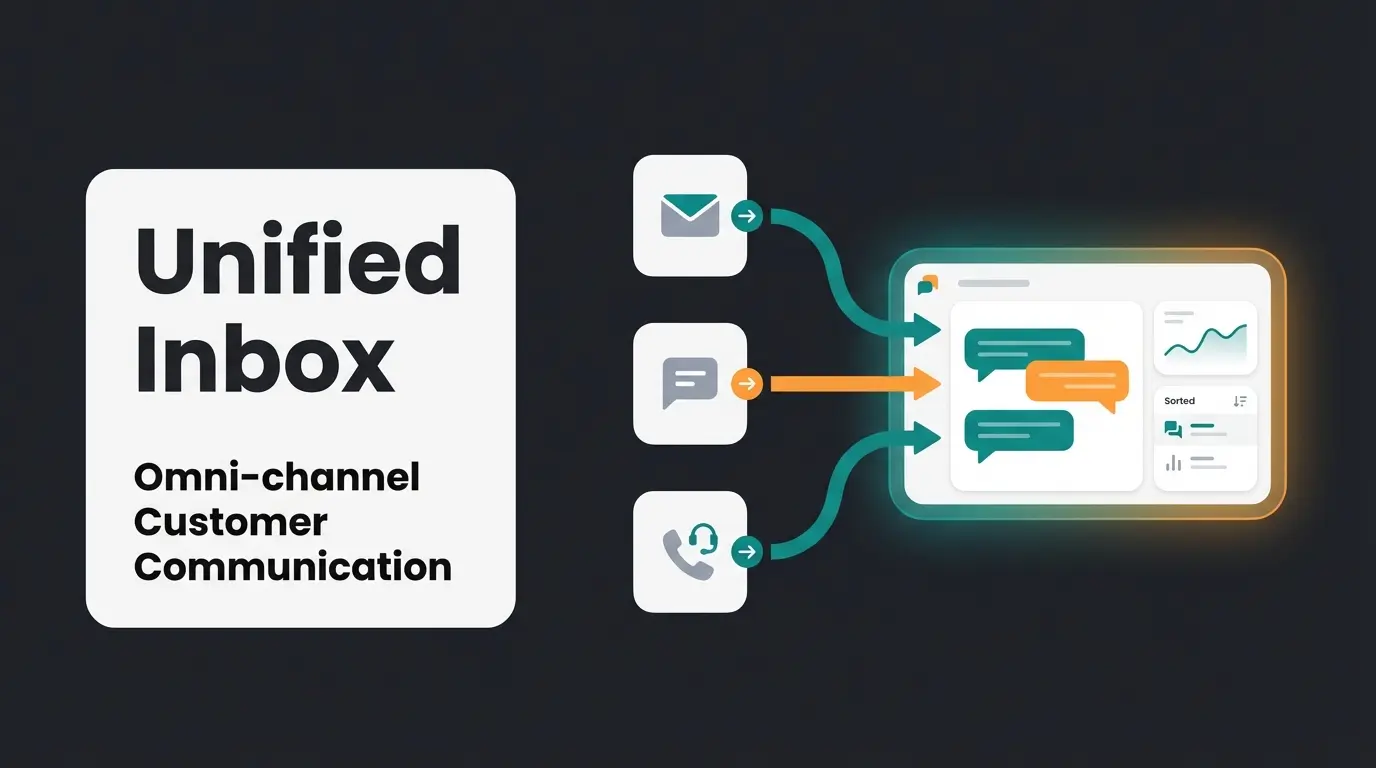
Why the Sticker Price at Intercom Is Misleading
Intercom undoubtedly ranks among the market leaders in customer messaging. However, for product teams and SaaS companies, the pricing structure often resembles an opaque puzzle. Those searching for Intercom Help Center pricing typically only find the basic per-user prices—the so-called "seat" costs.
The reality in 2026 looks quite different: The cost structure has evolved from a pure licensing model to a hybrid system of licenses + usage-based AI + add-ons. Understanding Intercom software's hidden costs is crucial before making any purchasing decision.
The critical distinction lies between the Help Center (where your articles are hosted) and Fin AI (the intelligence that delivers those articles to customers). While the Help Center is often marketed as "included," the real costs hide in the details—especially when you have requirements like multilingual content or GDPR-compliant hosting.
This article analyzes the Intercom knowledge base pricing structure in detail, uncovers hidden costs for international businesses, and reveals why this model works for pure support deflection but can become a cost trap for genuine product consultation.
How Intercom Actually Charges: Seats and Plans
To understand Help Center costs, we must first examine the base licenses. Intercom distinguishes between three main tiers. Important note: Prices are billed annually—monthly payments typically cost 20-30% more.
Pricing Tiers Overview (2026)
| Plan | Annual Price | Help Center Features | Best For |
|---|---|---|---|
| Essential | $29/seat/month | Public Help Center only. No multilingual support. | Startups, basic FAQ pages |
| Advanced | $85/seat/month | Private & Multilingual Help Center. Workflows. | Scale-ups, international teams |
| Expert | $132/seat/month | Multiple Help Centers (Multi-Brand). Enterprise Security. | Enterprises, complex setups |
This pricing data comes from current Intercom pricing structures and third-party analysis from SaaSGenie.
The Help Center Trap in the Essential Plan
Many teams start with the Essential Plan ($29) to save costs. However, here lies the first misunderstanding about Intercom Help Center pricing: The Essential Plan includes a Help Center, but no multilingual support and no private articles.
This limitation becomes especially problematic when AI customer service transforms your support operations but your knowledge base can't keep up with multilingual customer needs.
Fin AI Pricing: The $0.99 Cost Driver
The Help Center today is often just the database. The real value emerges through AI-powered content delivery. Intercom's solution for this is the Fin AI Agent, and understanding its pricing is essential for accurate budget planning.
The Pay-Per-Resolution Model
Unlike flat-rate models, Intercom charges $0.99 per "resolution" according to their official pricing documentation.
What counts as a resolution? Intercom defines this strictly: First, the AI provides an answer based on your Help Center content. Second, the customer confirms it helped (e.g., thumbs up) OR the customer leaves the chat without requesting a human agent. This definition comes from eesel.ai's analysis.
Why This Model Fails for Consultation
This pricing model works perfectly for simple support queries like "Where can I find my invoice?" The AI provides the link, the customer leaves, cost: $0.99. Simple and efficient.
However, for product consultation, this model becomes counterproductive. Consider this scenario: A potential customer asks, "How does your tool fit into my workflow?" Your goal is a long, engaged conversation that builds trust and guides them toward purchase.
Intercom's logic: Fin tries to provide a quick answer and close the chat ("deflection"). The cost risk: If the AI can't immediately "solve" the complex question and hands off to a human, you pay nothing for AI but consume expensive staff time. If the AI "solves" it (customer doesn't ask further), but the answer was too superficial (optimized for deflection), you lose the lead.
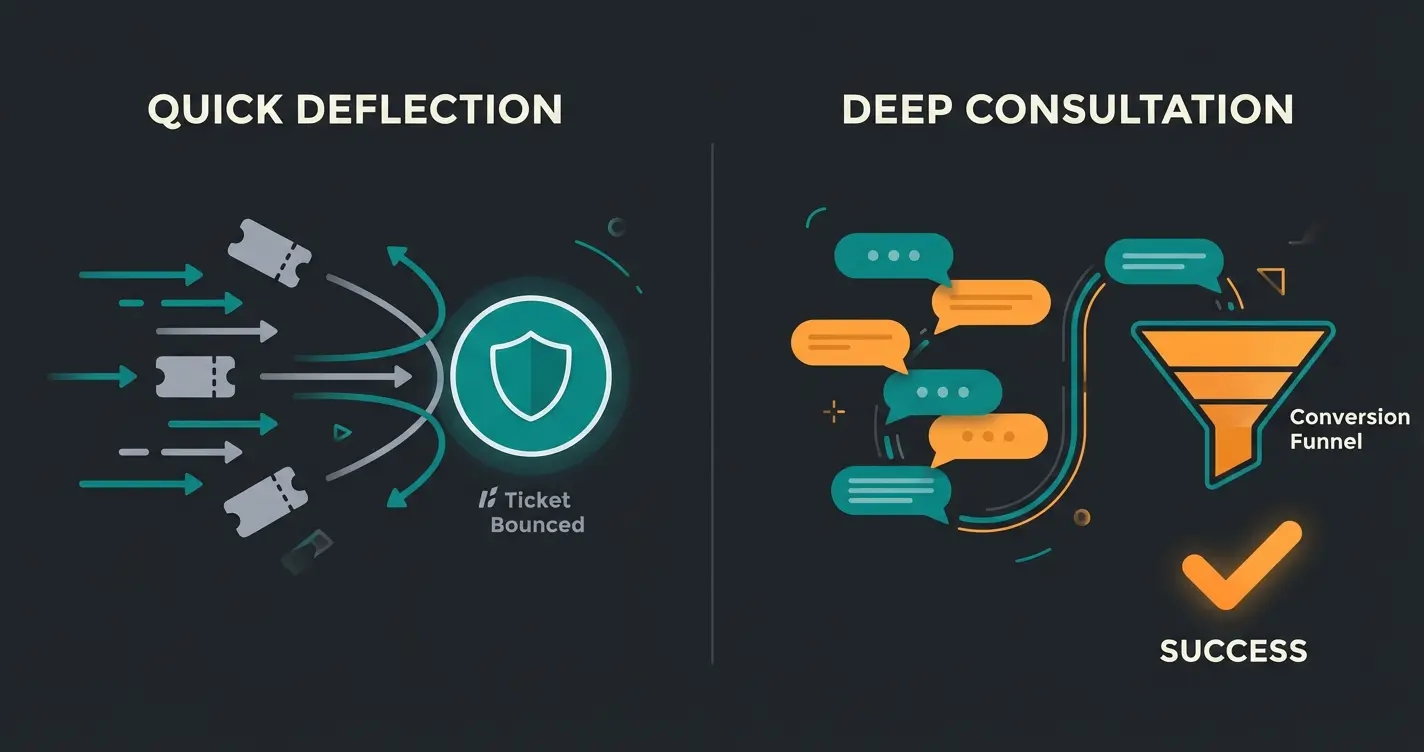
This is where KI-Produktberatung outperforms standard ticket deflection approaches by focusing on customer enablement rather than quick dismissal.
Hidden Costs for International Companies
Here's where finance departments often experience unexpected pain. Intercom's US-centric pricing policy carries specific risks for companies operating with non-dollar currencies.
Currency Risk: USD-Only Billing
Intercom bills exclusively in US Dollars (USD) according to their billing documentation. There is no option to pay in Euros, Pounds, or other currencies.
The problem: Your budget fluctuates with exchange rates. A weaker local currency automatically increases your support costs without providing any additional value. Tip: Plan a 5-10% buffer in your budget for currency fluctuations.
The GDPR Tax: EU Data Hosting Requirements
Data privacy is non-negotiable for European businesses. Intercom does offer Regional Data Hosting in the EU, but there are massive caveats according to their official documentation.
- Not available in Essential Plan: EU hosting is only available from the Advanced Plan ($85/seat) or Expert Plan onward. Small teams are forced into expensive tiers just to be data protection compliant.
- No migration path: If you already have a US workspace, you cannot simply move it to the EU. You must create a completely new workspace and manually migrate data—losing chat history in the process.
- Hidden effort: The manual migration consumes developer and admin resources that don't appear in the official price list.
Analysis from eesel.ai confirms these limitations create significant barriers for privacy-conscious organizations.
Add-ons That Accumulate
Beyond the base price and AI costs, additional fees often apply. According to Featurebase's analysis and Sparrowdesk's breakdown:
- Proactive Support Plus: $99/month (flat rate). Required for complex outbound messages and product tours.
- WhatsApp/SMS: Additional per-message fees apply for these channels.
- Copilot: An AI assistant for your staff (not customers). Cost: approximately $35 per seat/month extra.
Essential plan per seat, publicly advertised
Required for multilingual and EU hosting
Variable costs that can exceed license fees
For non-USD billing currency risk
Real-World Cost Scenarios: What Does It Actually Cost?
To make Intercom Help Center pricing tangible, let's calculate three scenarios for international businesses requiring professional features.
Scenario A: The Bootstrap Startup
- Profile: 2 support staff, English-only product, US hosting acceptable
- Requirement: Essential Plan
- Calculation: 2 Seats × $29 = $58 + AI usage (low): 50 Resolutions × $0.99 = $49.50
- Total: ~$107.50/month
- Verdict: Very affordable, but no multilingual capability possible
Scenario B: The Scale-up (The Price Jump)
- Profile: 5 support staff, German & English (multilingual required), EU hosting (GDPR)
- Requirement: Advanced Plan (mandatory for language & hosting)
- Calculation: 5 Seats × $85 = $425 + AI usage (medium): 500 Resolutions × $0.99 = $495 + Proactive Support Add-on (for onboarding): $99
- Total: ~$1,019/month
- Verdict: The price has increased tenfold, even though the team is only 2.5× larger
Scenario C: Consultation-Heavy (The AI Trap)
- Profile: Complex B2B product. Customers ask many questions. Goal is adoption, not just support.
- Requirement: Advanced Plan, high AI interaction
- Calculation: 5 Seats × $85 = $425 + AI usage (high): 2,000 Resolutions × $0.99 = $1,980
- Total: ~$2,405/month
- Verdict: Variable AI costs far exceed license costs. The model penalizes success (many resolved customer inquiries).
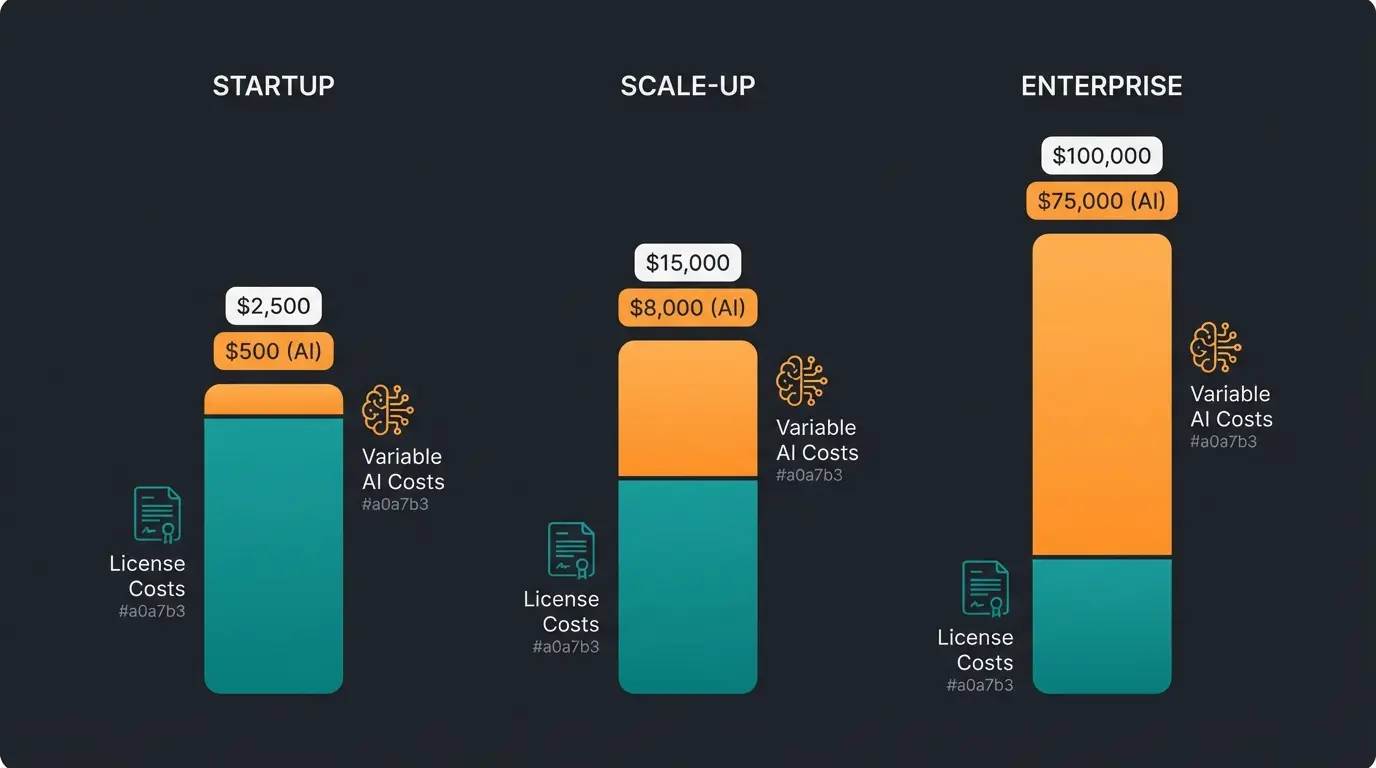
These scenarios highlight why understanding AI consulting in e-commerce requires looking beyond simple per-seat pricing models.
Get AI-powered product consultation with predictable costs that grow with your success, not against it.
Start Your Free TrialHelp Center vs. AI Consultation: A Critical Distinction
Here lies the biggest strategic gap in current discussions. Most teams compare features but not the underlying goal of their AI implementation.
The Deflection Approach (Intercom Fin)
Intercom's entire pricing model ($0.99 per resolution) is designed to prevent tickets—a strategy known as deflection.
- Ideal for: E-commerce, B2C, simple SaaS applications
- Typical question: "How do I change my password?"
- Answer: Link to article → Ticket closed → $0.99 well invested
This approach works well for AI Chatbots transform simple support operations, but falls short for complex products requiring deeper engagement.
The Consultation Approach (Product Advisory)
For complex products (e.g., DevTools, FinTech, Enterprise Software), deflection is often the wrong approach. You want customers to truly understand your product and make informed purchasing decisions.
- Ideal for: Products requiring explanation, Sales-Led Growth models
- Typical question: "Which API endpoints do I need for my use case?"
- Required answer: Here, a link isn't enough. It requires dialogic consultation, follow-up questions, and context.
The problem: A pure FAQ bot (as Fin is often deployed) fails here or comes across as dismissive. When it does "solve" the query, the interaction is often superficial and rushed. This is where Consultative AI comparison becomes essential for choosing the right approach.
This is precisely why AI product consultation takes a fundamentally different approach to customer engagement and pricing.
Quick answer, $0.99 cost, customer leaves satisfied—Intercom model works well
Multiple exchanges needed, potential for multiple resolutions charged, costs compound
Deep engagement required, Intercom charges per resolution OR hands off to human—expensive either way
Goal is conversion, not deflection—Intercom model fundamentally misaligned with business objective
Comparison: Intercom vs. Alternatives
How does Intercom compare when considering Total Cost of Ownership (TCO) and business objectives?
| Feature | Intercom (Advanced + Fin) | Classic Helpdesks | AI Consultation Solutions |
|---|---|---|---|
| Pricing Structure | High seat costs + Variable AI | Moderate seat costs + Add-ons | Often flat-rate or value-based |
| Multilingual Support | Expensive ($85/Seat minimum) | Often included in mid-tier | Varies by provider |
| AI Model | $0.99/Resolution (Volatile) | Often session-based or packages | Often included / flat-rate |
| Primary Focus | Support Deflection | Ticket Management | Product Adoption & Sales |
| Cost Predictability | Low (due to AI variance) | High | High |
When evaluating AI-powered sales consultants versus traditional support tools, the fundamental difference in pricing philosophy becomes clear. Similarly, understanding digital sales consultants helps clarify which approach fits your business model.
Checklist: Do You Need the Expensive Advanced Plan?
Before committing to Intercom, use this checklist. If you answer even one question with "Yes," you automatically land in the $85+/seat price segment (Advanced or higher):
- Multilingual Support: Do you need a Help Center in multiple languages (e.g., English AND German)?
- Privacy Requirements: Must certain articles be visible only to logged-in users (Private Knowledge Base)?
- Data Protection: Is hosting data on EU servers (Data Locality) a hard compliance requirement?
- Workflow Automation: Do you need complex if-then automations for incoming tickets?
For businesses requiring AI product consultants that go beyond simple FAQ deflection, alternative pricing models often provide better alignment with business goals.
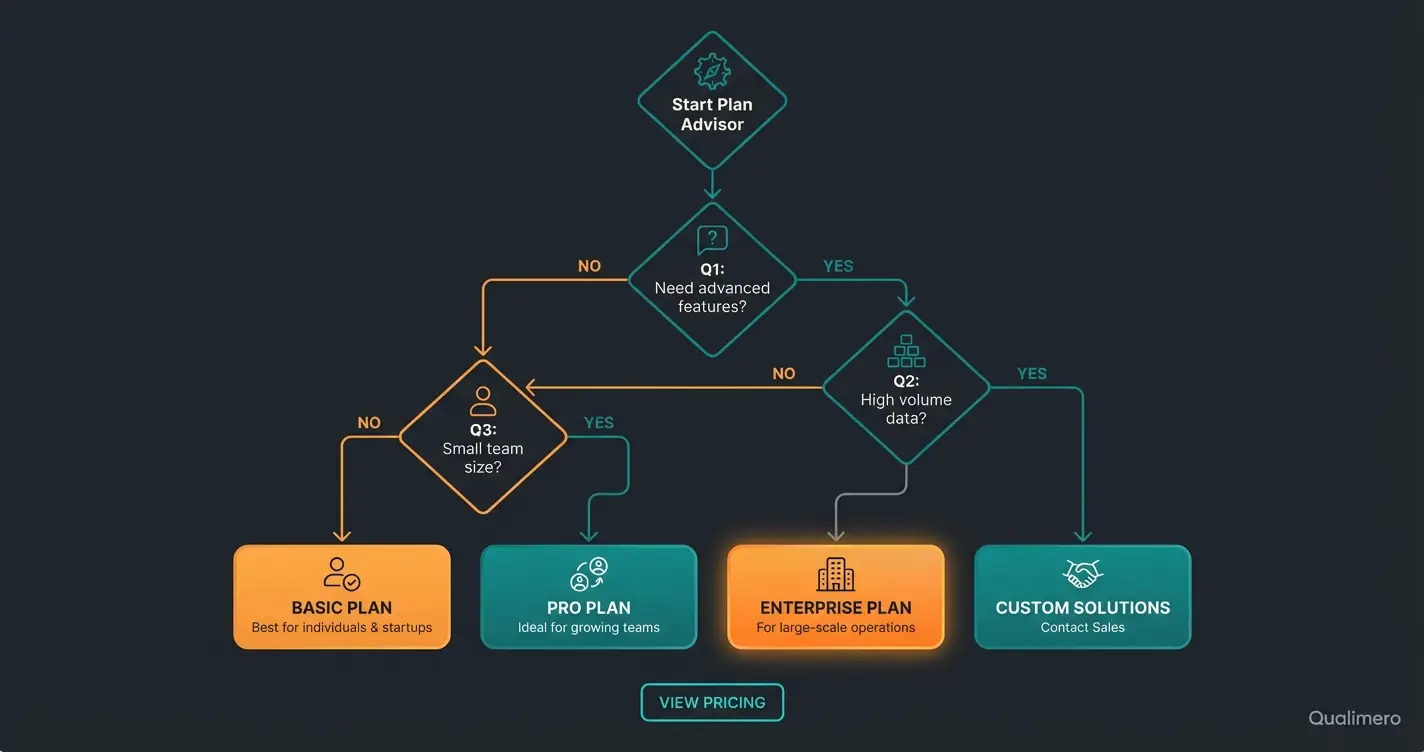
Conclusion and Strategic Recommendations
The analysis of Intercom Help Center pricing reveals a clear pattern: Intercom is a powerful tool, but for international businesses with professional requirements, it's often more expensive than initially apparent.
Key Takeaways
- Calculate with the Advanced Plan: For professional needs (multilingual content, GDPR compliance), the Essential Plan ($29) is usually not an option. Budget $85+ per user from the start.
- Caution with AI scaling: The "$0.99 per resolution" model is fair for support deflection but expensive for intensive product consultation. Monitor your resolution rates closely.
- Currency risk awareness: Since billing is in USD only, plan appropriate buffers for exchange rate fluctuations.
- Hidden migration costs: Factor in developer and admin time if you need to switch data regions or upgrade plans.
Our Recommendation
If you need an all-in-one support suite for a large team and budget is secondary, Intercom (Expert Plan) is excellent. The platform's depth and integration capabilities justify the premium for the right use case.
If you only need a simple FAQ solution, look at more affordable alternatives (e.g., HelpScout or dedicated Knowledge Base tools). Don't pay enterprise prices for basic functionality.
If your goal is product consultation and sales through AI (Consultation instead of Deflection), you should evaluate solutions that don't charge per "deflected ticket" but instead encourage deep dialogues without exploding costs. This is where understanding the difference matters most.
Frequently Asked Questions
The Essential plan costs $29 per seat per month (billed annually). However, it only includes a public Help Center—no multilingual support or private articles. For those features, you must upgrade to the Advanced plan at $85 per seat per month.
Intercom Fin AI charges $0.99 per resolution. A resolution counts when the AI provides an answer and the customer either confirms it helped or leaves without requesting human support. This variable pricing can become expensive for businesses with high customer engagement volumes.
No. EU data hosting (Regional Data Hosting) is only available from the Advanced plan ($85/seat) and higher. Additionally, existing US workspaces cannot be migrated to EU servers—you must create a new workspace and manually transfer data, losing chat history in the process.
Intercom's billing is exclusively in US Dollars with no option for other currencies. This creates exchange rate risk for non-US companies, as support costs fluctuate with currency movements. Planning a 5-10% budget buffer for currency fluctuations is advisable.
Not ideally. Intercom's $0.99 per resolution model is optimized for support deflection—quickly answering simple questions. For complex products requiring deep, consultative conversations that build trust and drive adoption, this model can be counterproductive and expensive, as it penalizes the engagement you actually want.
Stop paying per deflection. Start investing in AI that understands your product and converts visitors into customers with predictable pricing.
Get Started Free
Lasse is CEO and co-founder of Qualimero. After completing his MBA at WHU and scaling a company to seven-figure revenue, he founded Qualimero to build AI-powered digital employees for e-commerce. His focus: helping businesses measurably improve customer interaction through intelligent automation.