Introduction: Why Just Chatting Isn't Enough in 2026
Imagine walking into a store, and the salesperson ignores you until you shout for help. And even then, they simply hand you a manual. That's exactly how traditional online customer service feels to many visitors. But in 2026, the tables have turned.
Livechat is no longer just that little icon in the bottom right corner you click when an order goes missing. It has become the digital front door of your business. While traditional live chat software was designed to deflect tickets (essentially turning customers away), the new generation of chat solutions aims to generate revenue.
The data is crystal clear: customers who use live chat convert at a 40% higher rate, according to LiveChat. Yet the market remains overwhelming. Between established giants reinventing themselves (like Userlike's rebranding to Lime Connect) and new AI challengers, making the right choice is difficult.
This article isn't your typical comparison. We don't just analyze who writes the best support tickets—we examine which software transforms your website visitors into paying customers. We reveal why most businesses waste AI's potential in chat and how you can close the content gap between technical support and genuine digital consultation. Understanding the history of chatbots helps contextualize how dramatically this technology has evolved.
Why Live Chat Is Indispensable in 2026: Data & Trends
Before diving into the tools, we need to understand why investments in chat software are currently exploding. This isn't about hype—it's about fundamentally changed consumer behavior.
1. Customer Expectations: Instant Is the New Normal
Online shoppers' patience has hit historic lows. Statistics for 2025/2026 show that 69% of customers expect 24/7 availability, as reported by SalesGroup.ai.
- Email is too slow: Average email support response times often exceed 12 hours. In live chat, customers expect responses in under 2 minutes.
- Phone calls are unpopular: Especially Millennials and Gen Z (who now possess enormous purchasing power) avoid phone calls. 60% of Millennials prefer live chat over other channels.
2. Mobile Commerce Dominates (73% Market Share)
The desktop isn't dying, but it's losing purchasing dominance. According to forecasts from Cleverence and EcommerceBridge, by the end of 2025, 73% of all e-commerce revenue will be generated through mobile devices.
- The problem: Navigating complex menus or FAQ pages on smartphones is cumbersome.
- The solution: A chat button is the fastest path to information on mobile. Businesses not offering mobile-optimized chat software lose nearly three-quarters of their potential customers.
3. From Support to Guided Selling
Here lies the biggest gap in current market understanding. Most companies use chatbots to save costs (support automation). The winners of 2026 use AI to make money. This represents how AI Chatbots transform the entire customer journey.
- Status quo: A bot asks: 'Do you have a return?' (Reactive)
- The future: An AI asks: 'Are you looking for a beginner or professional mountain bike?' (Proactive/Consultative)
Companies deploying live chat proactively on product pages report a 20% increase in conversion rates.
Customers using live chat convert at significantly higher rates
Nearly 7 in 10 customers demand round-the-clock availability
Share of e-commerce revenue from mobile devices by 2025
Increase when using proactive chat on product pages
Comparison Table: Top Live Chat Providers at a Glance
To give you quick orientation, we've compared leading solutions based on their focus (support vs. sales), AI maturity, and data protection level. When selecting your customer service software, these factors should guide your decision.
| Provider | Focus | AI Level & Type | Data Protection (Server) | Pricing (Starting) | Key Feature |
|---|---|---|---|---|---|
| Qualimero AI Consultant | Sales & Consultation | High (Generative AI) – Product consultation focus | DE/EU – GDPR compliant | On request | Bridges gap between bot and salesperson (Guided Selling) |
| Lime Connect (formerly Userlike) | Support & Service | Medium – AI Automation Hub | DE – ISO certified | Free / from €90 | German market leader, strong privacy focus |
| LiveChat.com | All-rounder | Medium – Text Intelligence | USA/EU (selectable in Enterprise) | from $20/agent | Global standard, 200+ integrations |
| Zendesk | Enterprise Support | High – Comprehensive Suite | USA/EU (complex setup) | from €55/agent | Powerful but complex and expensive |
| Tidio | E-Commerce (SMB) | Medium – Lyro AI | EU/Global | Free / from €29 | Perfect for Shopify/WooCommerce, quick setup |
| Brevo (formerly Sendinblue) | Marketing & Chat | Basic | EU | Free / from €15 | Part of marketing suite, newsletter integration |
| HubSpot | CRM & Marketing | Medium – Chatflows | USA/EU | Free / from €45 | Excellent CRM integration, free starter tier |
Selection Criteria: What to Consider in 2026
Choosing the right live chat software no longer depends solely on price. In Germany and across Europe, legal frameworks and AI quality are decisive factors.
1. Data Protection (GDPR) & Server Location
In Germany, this is the knockout criterion. Since personal data (names, emails, order numbers) is frequently exchanged in chat, GDPR applies in full. According to Datenschutzticker.de, compliance isn't optional—it's mandatory.
- Server location: Hosting in Germany or the EU is ideal. US providers require strict Standard Contractual Clauses (SCCs) and often additional security measures.
- Unsolicited data: An often-overlooked risk with AI chatbots. When users voluntarily enter sensitive health information ('I need this ointment for my condition X'), the AI processes this data. GDPR-compliant tools must have mechanisms to detect such data or prevent its use in AI training.
- Data Processing Agreement (DPA): Ensure the provider offers a DPA compliant with German law, as noted by Lime Technologies.
2. Support Bot vs. Product Consultant (The Content Gap)
Most comparison portals lump all 'chatbots' together. This is a mistake when evaluating AI Chatbots for your business.
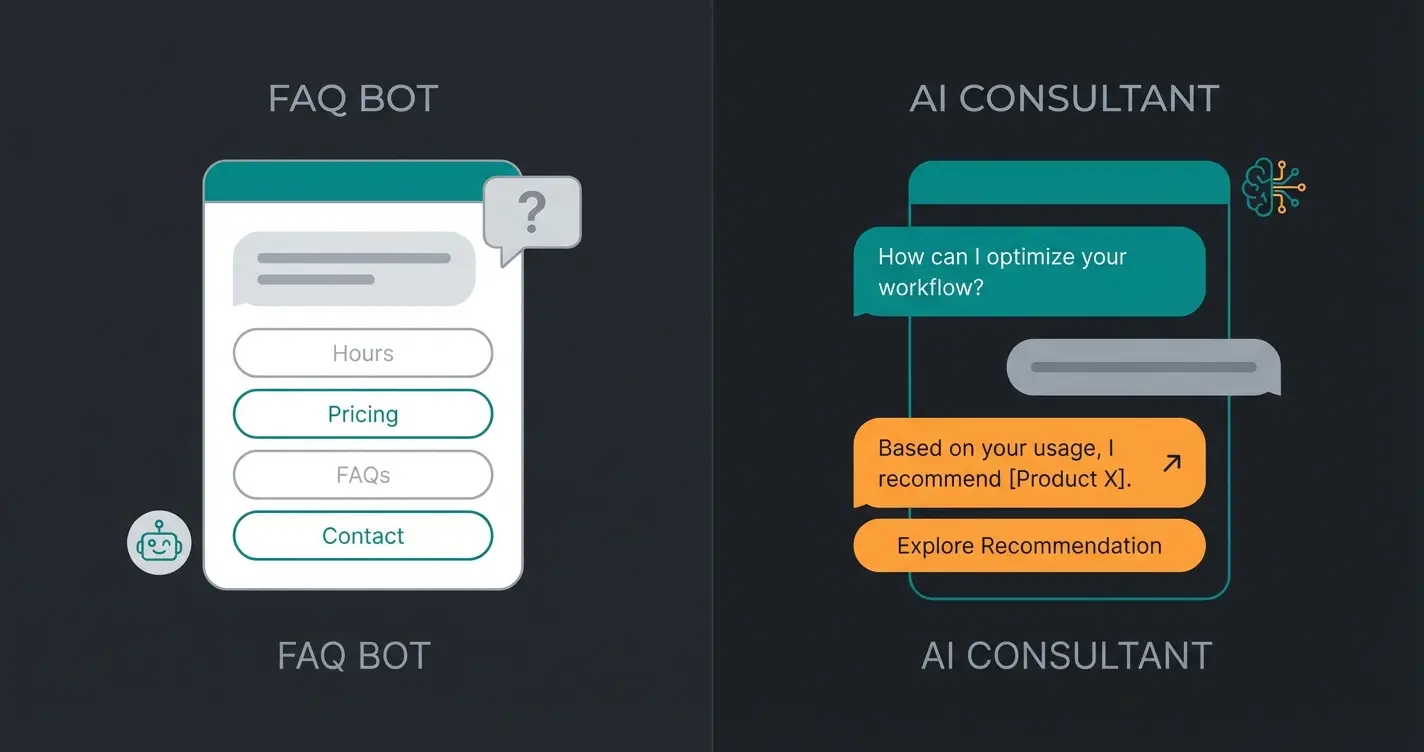
- The 'Gatekeeper' Bot: (Classic) Can send FAQ links or create tickets. Saves time but sells nothing.
- The 'Sales' Bot: (Modern/Your approach) Understands context. When a customer is on a 'running shoes' page, it doesn't ask 'How can I help?' but rather 'Do you run primarily on asphalt or trails?' Look for software supporting Guided Selling.
3. Integrations (Tech Stack)
A chat running in isolation is useless—it must know who the customer is. Whether you're using Shopify live chat or Shopware 6 chatbots, integration depth matters.
- Shop systems: Deep integration with Shopify, Shopware, or Magento is essential so the agent (or AI) can see the shopping cart.
- CRM: When a lead is generated in chat, it must automatically land in HubSpot, Salesforce, or Pipedrive.
- Messengers: In 2026, customers expect to continue the chat on WhatsApp. Providers like Lime Connect or Brevo have strong advantages through native WhatsApp integrations, as highlighted by EmailToolTester.
The Best Live Chat Providers in Detail
Here we analyze the strengths and weaknesses of market leaders and show where specialized solutions have their place.
1. Lime Connect (formerly Userlike) – The German Champion
Best choice for: German mid-market businesses & privacy focus
Background: Userlike has been an institution in Germany. Since the acquisition by Swedish company Lime Technologies and the rebranding to Lime Connect in September 2025, the tool positions itself even more strongly as a comprehensive 'Customer Engagement Platform,' as announced by Lime Technologies.
- Advantages: Servers in Germany, ISO certification, extremely GDPR-focused. Unified messaging bundles website chat, WhatsApp, Telegram, and SMS in one inbox. The AI Automation Hub offers solid AI features tightly linked to a knowledge base.
- Disadvantages: Focus lies heavily on support and service. Sales features are solid but not as aggressively conversion-optimized as specialized US tools. Pricing in the mid to upper segment (Team plan from approx. €90/month), according to ToolTester.
2. Zendesk – The Enterprise Giant
Best choice for: Corporations with massive ticket volumes
Background: Zendesk is far more than just chat—it's a complete helpdesk ecosystem. In 2025, Zendesk significantly adjusted its pricing structure and deeply integrated chat functions into the 'Zendesk Suite,' as analyzed by Eesel.ai.
- Advantages: Scalability to manage thousands of agents and millions of tickets. Omnichannel provides seamless switching between email, phone, chat, and social media. Powerful AI tools for sentiment analysis and routing.
- Disadvantages: Complexity: Often overkill for small teams—setup frequently requires external consultants. Costs: Suite prices start at €55 per agent, but meaningful AI features and add-ons quickly push prices above €100 per seat, according to HiverHQ. Focus: Clearly a support tool (ticket system), not a primary sales tool.
3. LiveChat.com – The Global Standard
Best choice for: Teams seeking a pure, polished chat solution
Background: LiveChat is one of the oldest and most stable providers in the market. They strictly separate 'LiveChat' (human) from 'ChatBot' (automation), which often must be purchased separately, as shown in their pricing.
- Advantages: Very clean UI/UX, extremely easy to use. Text Intelligence helps agents adjust tone or expand messages. Over 200 native integrations available, according to G2.
- Disadvantages: Pricing structure: You pay per 'logged-in' agent. ChatBot is a separate product (from $52/month), increasing total costs. Data protection: As a US company (despite EU server options in Enterprise plan), administrative effort for GDPR compliance is higher than with German providers.
4. Tidio – The E-Commerce Favorite
Best choice for: Small shops (Shopify/WooCommerce) & fast AI deployment
Background: Tidio has made a name through aggressive integration into Shopify and a very simple 'Lyro' AI. Lyro promises to resolve up to 67% of inquiries automatically, as stated by Tidio.
- Advantages: Lyro AI: Very easy to train (just enter FAQ URL). Price: Good free plan available, paid plans start affordably (from approx. €29), according to Desk365. Live-View: See what visitors are typing before they send (Ghost Typing).
- Disadvantages: Limitations: Lyro in the basic package is limited to 50 conversations—then it gets expensive, as noted by PagerGPT. Depth: Less suitable for complex B2B scenarios or enterprise routing.
5. HubSpot – The CRM Powerhouse
Best choice for: Marketing-focused teams with existing HubSpot ecosystem
Background: HubSpot offers live chat as part of its broader CRM and marketing suite, making it attractive for teams already invested in their ecosystem.
- Advantages: Seamless CRM integration—every chat automatically becomes a contact record. Free tier available for small teams. Chatflows allow rule-based automation without coding.
- Disadvantages: AI capabilities are less advanced than specialized providers. The best features require expensive Marketing Hub or Sales Hub subscriptions. Less focus on e-commerce-specific use cases.
See how AI-powered product consultation can increase your conversion rates by 40% while reducing support workload. Our solution bridges the gap between basic chatbots and expert human advisors.
Book Your Free Demo6. Brevo (formerly Sendinblue) – Marketing Suite Integration
Best choice for: Marketing teams wanting chat within their email platform
Background: Brevo offers chat as part of its comprehensive marketing suite, ideal for businesses already using their email marketing tools.
- Advantages: Excellent integration with email campaigns and marketing automation. Competitive pricing starting at €15/month. EU-based servers provide GDPR peace of mind.
- Disadvantages: Basic AI capabilities compared to dedicated chat solutions. Chat features feel secondary to the email marketing focus. Limited advanced routing and escalation options.
7. AI Product Consultants – The New Category
Best choice for: Businesses wanting to sell through chat
While the tools mentioned above excel at solving problems (support), a gap exists in the market for active consultation. This is where the new generation of AI solutions—including AI Product Consultation platforms—positions itself.
- The difference: Instead of waiting for questions ('Where's my package?'), AI proactively engages customers and conducts sales conversations.
- Technology: Deployment of LLMs (Large Language Models) that don't just run scripts but understand product catalogs and create semantic connections. These function as AI expert consultants for your online store.
- Goal: Not ticket reduction, but cart increase.
Deep Dive: AI in Live Chat – More Than Just FAQ Bots
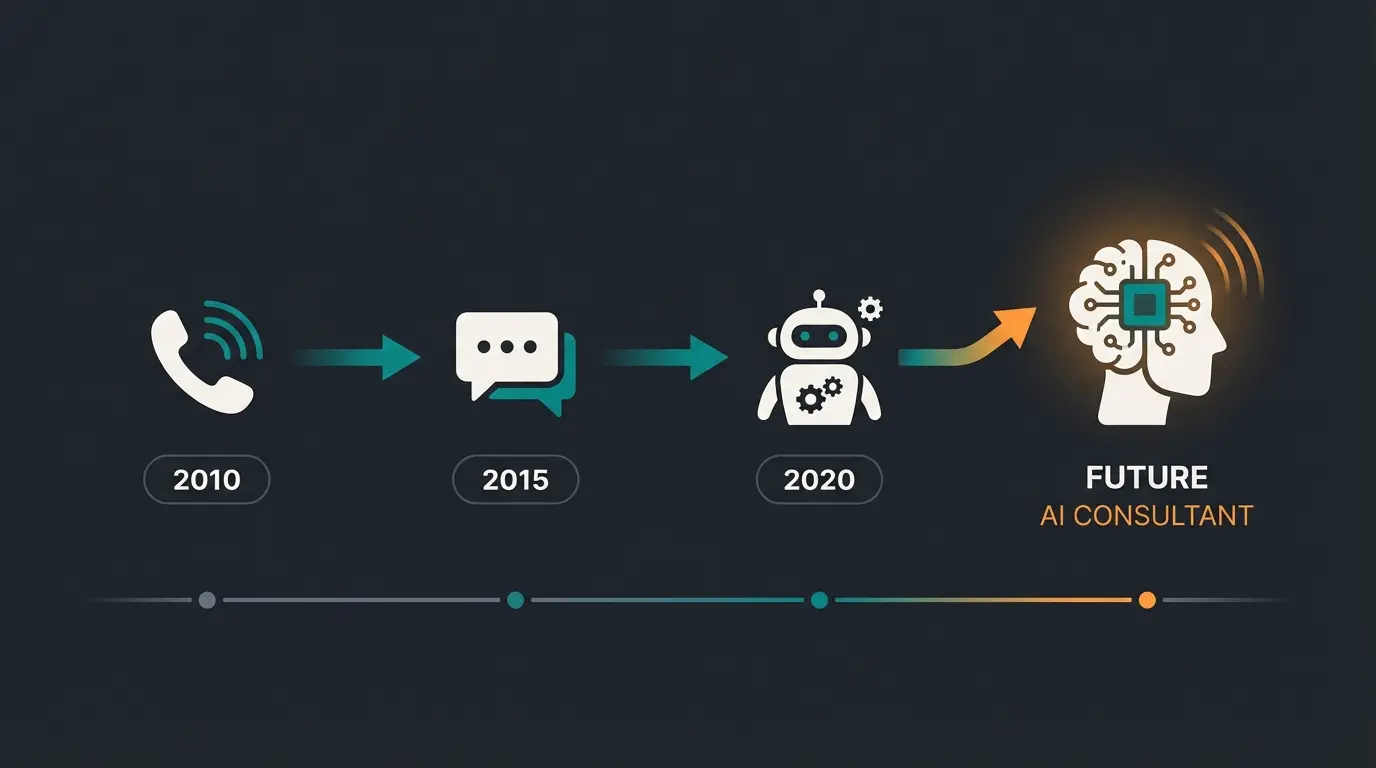
Many businesses are disappointed by 'chatbots' because they've only experienced dumb rule-based systems. In 2026, we must distinguish between Support Bots and AI Consultants. Understanding Consultative AI helps clarify these differences.
The Problem with Classic Chatbots
Classic bots (like those often included in basic HubSpot or Zendesk Starter packages) operate on a 'decision tree' model.
- Customer: 'I'm looking for a bicycle.'
- Bot: 'Please select: 1. Road bike, 2. MTB, 3. E-bike.'
- Customer: 'Actually one for commuting but also for forest trails sometimes.'
- Bot: 'I didn't understand you. Please select: 1. Road bike...'
This frustrates users. It's not a conversation—it's a form disguised as chat.
The Solution: Generative AI as Product Consultant
Modern AI solutions use vector databases and LLMs to truly understand the product catalog. AI consulting e-commerce implementations demonstrate this capability in action.
Example Scenario 2026:
- Customer: 'I'm looking for a bike for commuting but also need to go through the park.'
- AI Consultant: 'I understand, so you need an all-rounder. A gravel bike or trekking bike would be ideal. How long is your commute approximately? That helps me assess whether an e-assist would make sense.'
Why This Drives Revenue
- Qualification: The AI filters 'window shoppers' from genuine prospects.
- Trust: Through competent follow-up questions, customers feel consulted, not processed.
- Scalability: A top human salesperson can only advise one customer at a time. AI can serve 1,000 simultaneously—nights, weekends, and holidays.
Support bots recognize keywords; AI consultants understand intent and shopping context
Support bots deflect tickets; AI consultants drive sales and increase cart value
Support bots need complex decision trees; AI consultants learn from your product data
Support bots feel like forms; AI consultants feel like talking to an expert
Hybrid Model: The Perfect Symbiosis
The best strategy isn't 'human OR machine' but 'human AND machine.' This is where digital sales consultants shine.
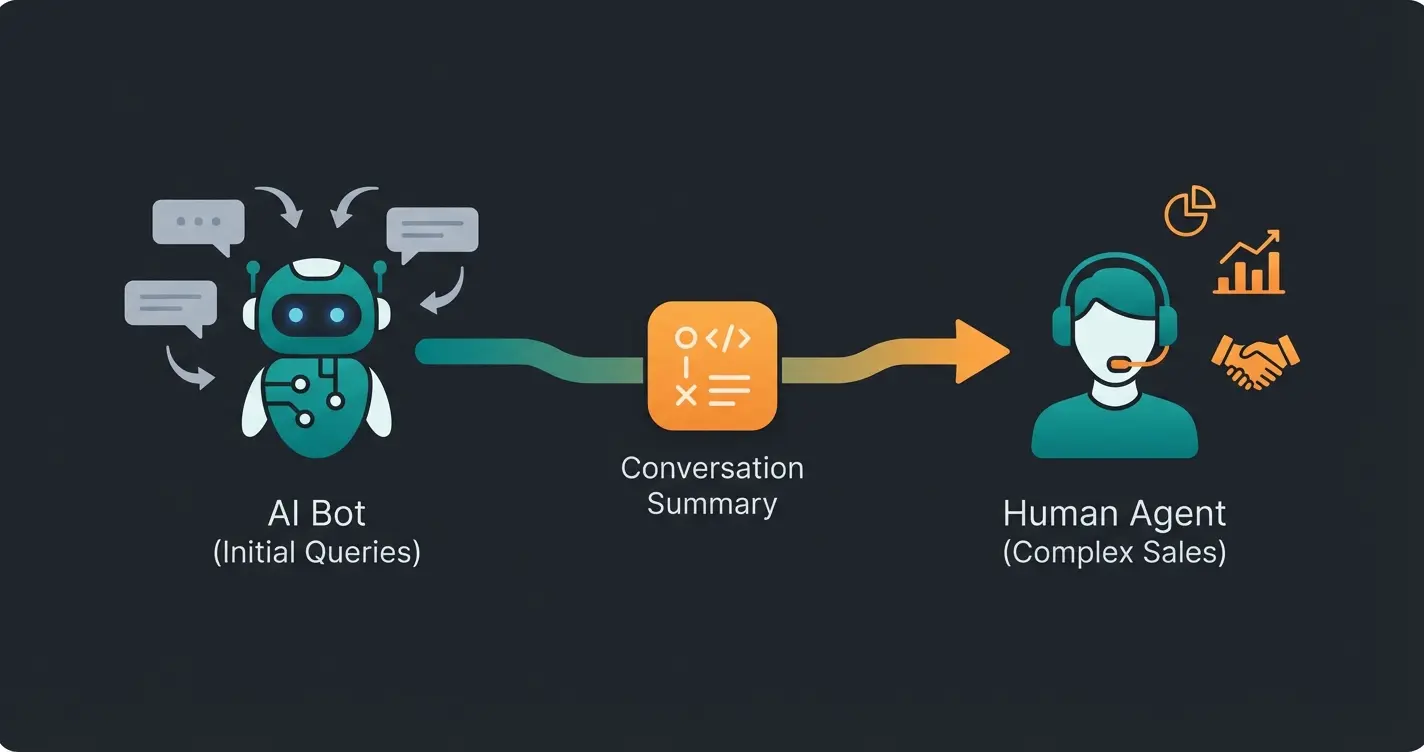
- Level 1: AI greets, qualifies, and advises on standard products.
- Level 2: When AI detects high purchase intent or complex questions (e.g., 'Is there a discount for ordering 50 units?'), it seamlessly hands off to a human sales agent.
- The advantage: The human receives a 'pre-warmed' lead including a summary of the conversation so far.
Practical Tips for Implementation
When implementing live chat software in 2026, avoid these three common mistakes:
1. The 'Hide and Seek' Mistake
Don't hide the chat in the footer or on the contact page. If you're using chat as a sales channel, it must be prominent on product pages. Use 'Proactive Triggers' (e.g., chat opens after 30 seconds of dwell time).
2. The 'Privacy Blind Flight' Mistake
Don't simply copy a US chat code into your site.
- To-Do: Update your privacy policy.
- To-Do: Enable 'Double Opt-In' in chat or the upstream cookie consent.
- To-Do: Check whether IP addresses are anonymized (standard with providers like Lime Connect).
3. The 'Set and Forget' Mistake
AI doesn't need to be 'programmed' but 'fed.' Analyze chat logs monthly. Where did the AI drop off? Which questions were missing from the knowledge base? AI training is an ongoing process. When implementing an AI Chatbot for E-Commerce, consistent optimization is key.
Frequently Asked Questions (FAQ)
The range is wide. Free: Tidio or Brevo offer good free plans for very small teams. Mid-market: Expect €30 to €90 per user/month for solid solutions like LiveChat or Lime Connect. Enterprise/AI: For advanced AI solutions and enterprise suites (Zendesk), costs can exceed €100+ per month, often plus setup fees.
Yes, but not automatically. The software is just the tool. You must: 1) Choose a provider with servers in the EU (or verify SCCs), 2) Execute a Data Processing Agreement, 3) Inform users about data processing before chat begins. German providers like Lime Connect make this easiest.
Yes, the technology made a quantum leap in 2025/2026. While old bots only recognized keywords, modern LLM-based systems (Large Language Models) understand context, handle objections ('Isn't that too expensive?'), and suggest alternatives. They don't replace key account managers for million-dollar deals, but they often outperform average salespeople when advising on standard products.
Live chat is synchronous (both parties online simultaneously) and session-based (close window = chat gone). Messaging (like WhatsApp or Lime Connect's web messenger) is asynchronous. Customers can respond whenever they want, and the history is preserved. The 2026 trend strongly favors messaging.
For small Shopify or WooCommerce stores, Tidio offers the quickest setup and best value. For German businesses prioritizing GDPR compliance, Lime Connect is the safest choice. For stores wanting to actively sell through chat (not just support), AI-powered consultation solutions that understand your product catalog deliver the highest ROI.
Conclusion: The Future Belongs to Consultation
The market for live chat software has transformed. Anyone in 2026 still believing chat exists only to send return labels is leaving money on the table.
- Use Zendesk if you need to manage a massive support operation.
- Use Lime Connect if you want a solid, German all-in-one solution for support.
- Use Tidio if you want to start quickly and affordably.
- Use HubSpot if you're already invested in their CRM ecosystem.
But: If you sell complex products and don't want to leave your website visitors alone, you need more than support software. You need intelligent product consultation.
The technology is ready. Your customers are already waiting. Are you?
Discover how AI-powered product consultation can boost your conversion rates while providing 24/7 expert guidance. Join the businesses already using intelligent chat to drive revenue, not just resolve tickets.
Start Your Free Trial
Lasse is CEO and co-founder of Qualimero. After completing his MBA at WHU and scaling a company to seven-figure revenue, he founded Qualimero to build AI-powered digital employees for e-commerce. His focus: helping businesses measurably improve customer interaction through intelligent automation.