Best Customer Service Software 2025: Complete Comparison Guide
Discover the best customer service software for 2025. Compare Zendesk, Freshdesk, Userlike & AI consultation tools. Includes GDPR compliance check & expert recommendations.

Why 'Solving Tickets' Is No Longer Enough in 2025
Customer service stands at a historic turning point. For years, the mantra was: 'How quickly can we fix the customer's problem and close the ticket?' Companies invested massively in customer service software to reduce wait times and automate processes. But in 2025, customer expectations have fundamentally changed.
Customers no longer just want to be fixed—they want to be advised.
According to current predictions from Gartner via CMSwire, proactive service interactions will overtake reactive ones by the end of 2025. This means: The classic 'helpdesk' that passively waits for complaints is becoming obsolete. The future belongs to intelligent systems that recognize needs before problems arise, and that don't just provide support, but offer genuine product consultation. Understanding the fundamentals of AI customer service is essential for businesses looking to stay competitive.
In this comprehensive guide, we compare the leading customer service tools on the market. For the first time, we strictly distinguish between two categories:
- Classic Support Software: Perfect for managing complaints and tickets (Reactive approach)
- AI-Powered Consultation Software: Developed for sales, product advice, and revenue growth (Proactive approach)
Find out which tool will truly transform your Customer Experience (CX) and help you optimize customer service for maximum impact.
What Is Customer Service Software? Definition & Overview
Customer service software refers to digital tools and platforms that help businesses manage, track, and optimize all customer interactions across multiple channels. These solutions centralize communication from email, phone, chat, social media, and messaging apps into a unified interface, enabling support teams to respond efficiently and maintain consistent service quality.
Modern customer service software has evolved far beyond simple email management. Today's solutions incorporate artificial intelligence, automation workflows, and analytics capabilities that transform how businesses interact with their customers. When exploring e-commerce customer service strategies, understanding these software categories becomes crucial for making informed decisions.
At a Glance: Top Customer Service Software Comparison
For those in a hurry, we've summarized the most important providers in an overview. Here you can immediately see which tool is suitable for support teams and which is designed for sales teams.
| Software | Type | Best Use Case | GDPR / Server | Pricing (approx.) |
|---|---|---|---|---|
| Qualimero AI | AI Consultation & Sales | Proactive product advice, revenue growth, 24/7 sales dialogues | 🇩🇪 Germany (Compliant) | Custom pricing |
| Zendesk | Support Suite | Enterprise ticketing, complex omnichannel structures | 🇺🇸 US (with EU option) | from $55/agent |
| Freshdesk | Helpdesk | SMBs, easy entry, cost-effective ticketing | 🇺🇸 US (with EU option) | Free / from $15 |
| Lime Connect (formerly Userlike) | Live Chat / Messaging | Privacy-focused companies, chat support | 🇩🇪 Germany (Compliant) | from €90/month |
| HubSpot Service Hub | CRM & Service | Companies wanting to connect marketing, sales & service | 🇺🇸 US (with EU option) | from $15-90/user |
Deep Dive: The 7 Best Customer Service Tools 2025
In this section, we analyze the strengths and weaknesses of market leaders and challengers. We evaluate not only by features but by the strategic value for your business.
1. Qualimero AI: The Evolution from Support to Consultation
While traditional customer support software is designed to manage complaints, Qualimero AI goes a step further. It's not just problem management software—it's an intelligent consultation platform that functions as an intelligent sales consultant for your business.
Why it's different: Most chatbots on the market are 'FAQ machines.' They react to keywords like 'return' or 'forgot password.' Qualimero AI, however, understands your product catalog. The AI acts like your best salesperson in the store: It asks about needs, preferred features, and budget, then proactively recommends the right product. This approach to AI product consultation represents the next generation of customer engagement.
Key Features:
- Generative AI Consultation: Conducts natural sales conversations instead of just executing scripts
- Proactive Engagement: Recognizes hesitant visitors and offers help before they bounce
- Sales Focus: Optimized for conversion rate and cart value, not just 'ticket-closing-time'
- Deep Product Knowledge: Understands complex product catalogs and relationships
Conclusion: The best choice for e-commerce and businesses that want to transform customer service from a cost factor into a revenue driver. Companies looking to implement AI chatbots for customer service find Qualimero AI particularly effective.
2. Zendesk: The Standard for Enterprise Ticketing
Zendesk is the market leader in customer service software. If you have a large team that needs to handle thousands of support requests daily via email, phone, and social media, Zendesk is often the default choice.
Strengths:
- Scalability: Zendesk grows with you, from 5 to 5,000 agents
- Omnichannel Power: All channels (WhatsApp, email, voice) flow into one central interface
- Reporting: Extremely detailed analytics on agent performance, as noted by Zendesk's own documentation
Weaknesses:
- Complexity: Setup can take months and often requires external consultants
- Costs: Prices escalate quickly, especially when you need AI features or advanced reports (add-ons), according to analysis from Eesel.ai
- Reactive Focus: Zendesk excels at managing existing problems but is less strong at proactively generating new sales
Conclusion: Ideal for enterprises looking for a pure 'ticket processing system.'
3. Freshdesk (Freshworks): The Flexible All-Rounder for SMBs
Freshdesk positions itself as the user-friendly alternative to Zendesk. It offers many similar features but is often quicker to set up and offers an attractive free entry model ('Freemium'), as highlighted by Desk365 in their comparison.
Strengths:
- User-Friendliness: Very intuitive interface that requires little training
- Price-Performance: The free plan for up to 10 agents is unbeatable for startups, confirmed by Helpshift's analysis
- Freddy AI: Freshworks increasingly integrates AI features ('Freddy') that help agents formulate responses and automatically classify tickets
Weaknesses:
- Customization Depth: For very complex enterprise workflows, Freshdesk reaches its limits sooner than Zendesk
- Integration Depth: While good for support, it often lacks deep connections to sales data unless you use the entire Freshworks suite
Conclusion: The best customer service software for small to medium-sized teams that want to start quickly.
4. Lime Connect (formerly Userlike): German Data Privacy Specialist
For many German companies, server location is the knockout criterion. This is where Lime Connect (known as Userlike) scores. The Cologne-based company has specialized in live chat and messaging, placing the highest value on GDPR compliance, as detailed on Lime Technologies and verified by E-Recht24.
Strengths:
- Made in Germany: Server locations in Germany, data processing agreements under German law—a must for banks, insurance companies, and government agencies
- Messaging Focus: Strong integration of WhatsApp, Telegram, and website chat
- Unified Messaging: Customers can leave the chat and continue later via WhatsApp without losing context
Weaknesses:
- Not a Full Helpdesk: Lime Connect is primarily a communication tool. It lacks the deep ticket logic (SLAs, complex escalation levels) of a Zendesk, as noted by Tooltester
- Focus: Less suitable for pure email support
Conclusion: The first choice for companies where data protection (GDPR) is paramount and the focus is on chat.
5. HubSpot Service Hub: The 360-Degree Solution
HubSpot is actually known for marketing and sales but has caught up massively with the Service Hub. The big advantage: There are no data silos. The support agent sees exactly which marketing emails the customer opened and what they last purchased, as explained by Nuacom and Atak Interactive.
Strengths:
- Unified Database: Support, sales, and marketing use one database (CRM). This enables extremely personalized service
- Automation: Strong workflow automations that go beyond support (e.g., 'When ticket resolved -> send discount code for next purchase')
- Breeze AI: HubSpot integrates AI deeply into the platform to generate responses and summarize data
Weaknesses:
- Price: HubSpot can become very expensive when you have many contacts or need enterprise features
- Generalist: In specific support niches (e.g., telephony routing), it's often not as deep as specialized tools
Conclusion: Perfect for companies already using HubSpot or wanting to break down silos between sales and service. For those exploring AI consulting for e-commerce, HubSpot's integrated approach can be valuable.
Customers still want to speak with a human for complex issues, according to Web2Profit research
Standard inquiries that can be resolved by AI-powered consultation systems
Year when proactive service interactions will outnumber reactive support (Gartner prediction)
Selection Criteria: What to Consider for German Markets
The software selection is enormous. But special rules apply in the German market. Don't ignore these criteria when choosing your customer service tools:
1. GDPR & Server Location (The German Compliance Seal)
Since the end of 'Privacy Shield' (Schrems II ruling), data transfer to the US is legally precarious. US providers like Zendesk or Salesforce do offer EU server options, but US parent companies can theoretically access data (CLOUD Act), as analyzed by Frame for Business.
2. Omnichannel vs. Specialist Solutions
Do you need the 'Swiss Army Knife' approach?
- Omnichannel (Zendesk, Freshdesk): Bundles email, phone, chat, social media. Good for efficiency, but often 'Jack of all trades, master of none'
- Specialists (Qualimero AI, Userlike): Focus on one channel (e.g., chat/AI consultation) and master it perfectly. Often a combination of a simple ticket system and a highly specialized AI solution is more effective than a giant suite
For businesses considering Shopware 6 chatbot integration, specialist solutions often provide better results than generic platforms.
3. AI Capabilities: Script vs. Generative Intelligence
This is where the wheat separates from the chaff in 2025.
- Old World (Chatbots): Based on decision trees ('Press 1 for invoice'). They often frustrate customers
- New World (Agentic AI): Tools like Qualimero AI use Large Language Models (LLMs). They understand context, irony, and complex product requirements. CMSwire calls this 'Agentic AI'—AI that acts independently and executes processes instead of just outputting text
The difference between scripted responses and true AI customer service automation can make or break your customer experience strategy.
The Consultation Gap: Why Standard Software Fails at Sales
This is the most important section for your 2025 strategy. Most companies have a gap in their customer journey.
They have tools for marketing (attracting customers) and tools for support (solving problems). But what happens in between? Who advises the customer when they're on the product page and unsure? This is where AI product consultants become essential.
Reactive Support vs. Proactive Consultation
| Feature | Classic Support Software | AI Consultation Software |
|---|---|---|
| Trigger | Customer has a problem (Reactive) | Customer shows purchase interest (Proactive) |
| Goal | Close ticket as quickly as possible | Guide customer to the best product |
| KPI | Average Handle Time (AHT) | Conversion Rate & Cart Value |
| Mentality | 'Cost Center' | 'Profit Center' |
| Technology | Ticket routing & macros | Product knowledge graph & LLMs |
The Problem: If you try to map sales consultation with a ticket system like Zendesk, you treat potential buyers like supplicants with a waiting number.
The Solution: A specialized AI solution that 'lives' on the website and actively addresses visitors—exactly like a good salesperson in retail. This approach to AI-powered product consultation transforms passive browsers into engaged buyers.
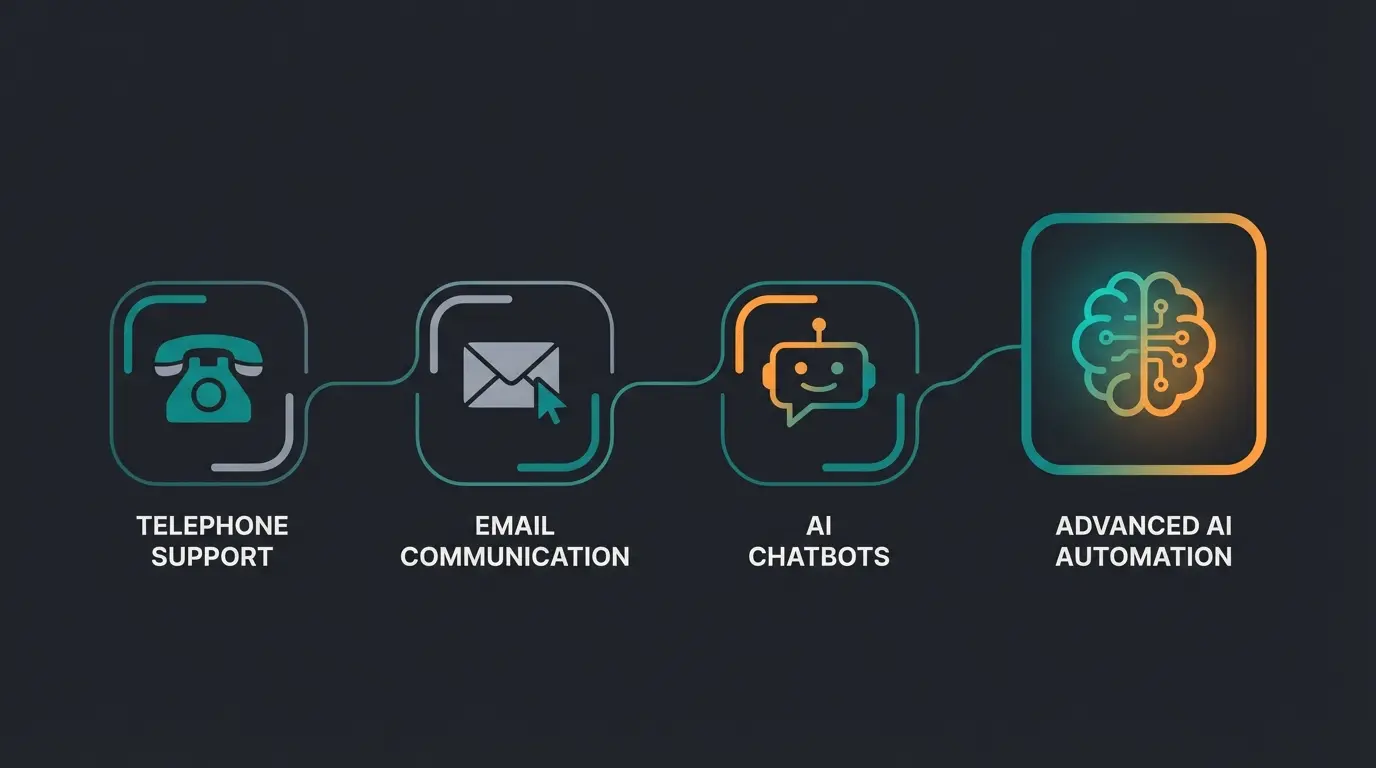
Slow response times, limited availability, high operational costs per interaction
Faster responses but often frustrating scripted interactions with limited understanding
Instant, intelligent, sales-focused engagement that understands complex customer needs—this is where leading companies are today
See how AI consultation can increase your conversion rates and turn support costs into revenue. Experience the difference between traditional support and intelligent product advice.
Start Free Trial2025 Trends: Where Is the Market Heading?
To invest future-proof, you should know these three trends that our research has confirmed:
1. From Support to Value Center
According to Gartner, service teams are moving 'upstream.' They're no longer just the 'fallback' for errors but actively involved in value creation. Leaders must shift focus from 'efficiency' (cost savings) to 'value creation' (strengthening customer loyalty). Understanding the future of AI consulting helps businesses prepare for this transition.
2. Hyper-Personalization Through Data
Customers expect in 2025 that the service knows their history. 'Hyper-personalization' means the software (or AI) knows what size you wear or when your last service appointment was, before you say it. According to Precisely's research, this level of personalization is becoming table stakes for competitive businesses.
3. The Hybrid Approach
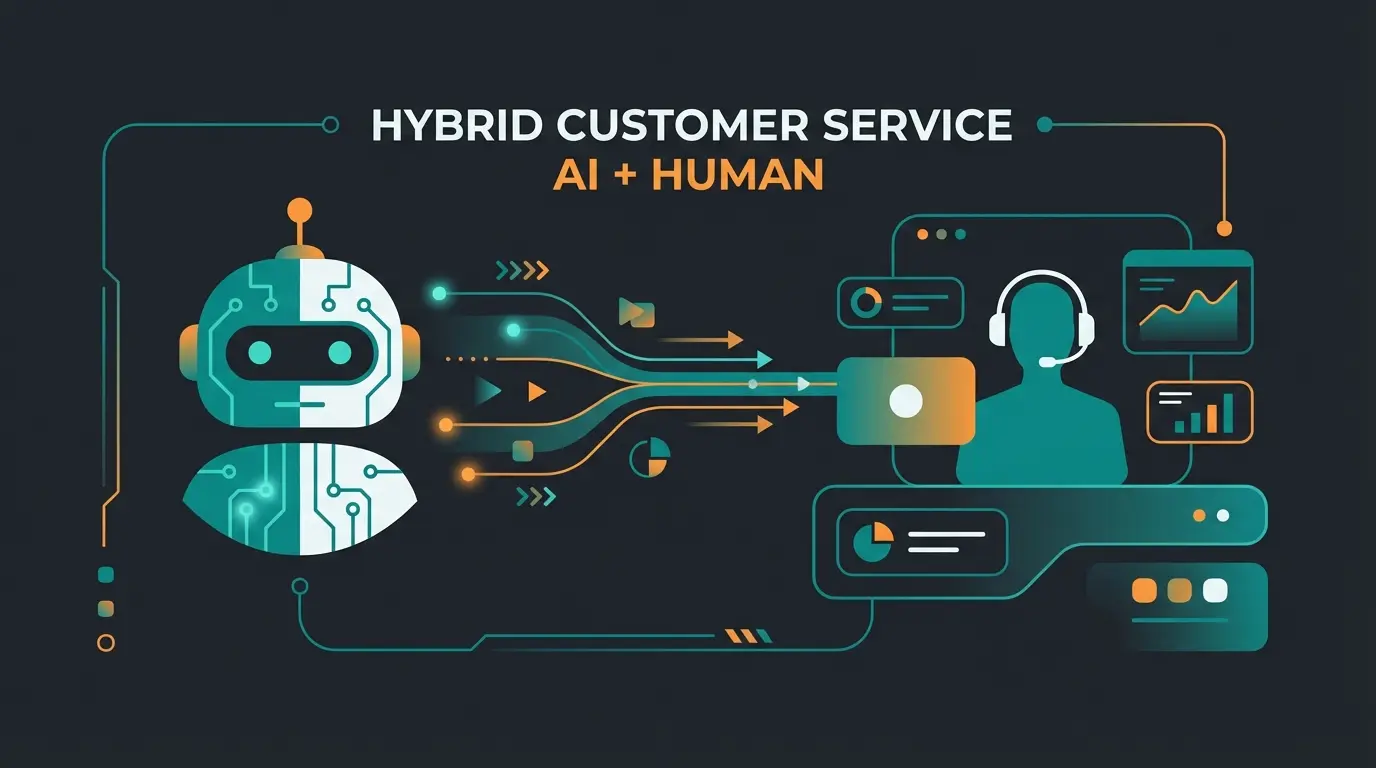
Despite AI, 71% of customers still want to speak with a human for complex problems, according to Web2Profit research. The best customer service software in 2025 is therefore hybrid: AI resolves 80% of standard inquiries and advises upfront, but seamlessly hands off to a human (with full history) when empathy is needed.
Implementation Best Practices for Maximum ROI
Selecting the right customer service software is only half the battle. Successful implementation requires strategic planning and execution. Here are key considerations based on industry best practices:
- Start with Clear KPIs: Define whether you're optimizing for ticket resolution time (support focus) or conversion rates (consultation focus) before selecting tools
- Plan for Integration: Ensure your chosen solution integrates smoothly with existing CRM, e-commerce platform, and analytics tools
- Train Your Team: Even the best AI requires human oversight and continuous optimization based on customer feedback
- Measure and Iterate: Implement A/B testing for AI responses and regularly review performance metrics
Companies exploring AI automated sales with Shopware should pay particular attention to platform-specific integration requirements.
Conclusion & Recommendation: Which Tool Do You Need?
Choosing the right customer service software in 2025 no longer depends just on features—it depends on your strategic direction.
Scenario A: You're Drowning in Complaints
If your main problem is the mass of support tickets, returns, and technical defects, reach for Zendesk or Freshdesk. These tools are masters of organization and efficiency.
Scenario B: You Need Privacy 'Made in Germany'
If you work in a regulated environment or your customers are sensitive about US cloud solutions, Lime Connect (Userlike) is your safest bet.
Scenario C: You Want to Sell More and Delight Customers
If you want to use customer service to increase conversion rates and proactively advise customers, a ticket system isn't enough. Here Qualimero AI is the logical choice. It closes the gap between marketing and support and turns visitors into buyers.
Frequently Asked Questions About Customer Service Software
Helpdesk software focuses on managing and resolving customer complaints reactively through ticketing systems. AI consultation tools proactively engage customers to provide product advice, answer pre-purchase questions, and drive sales. While helpdesk software measures success by ticket resolution time, AI consultation tools focus on conversion rates and customer satisfaction scores.
Yes, especially for German and EU businesses. Since the Schrems II ruling invalidated Privacy Shield, using US-based software requires additional legal safeguards. For companies handling sensitive data (healthcare, finance, government), German-hosted solutions are often mandatory. Non-compliance can result in significant fines and reputation damage.
No. Research shows 71% of customers still prefer human interaction for complex issues. The most effective approach is hybrid: AI handles 80% of routine inquiries and provides initial consultation, while seamlessly escalating complex cases to human agents with full conversation history. This maximizes efficiency while maintaining the human touch where it matters most.
Implementation time varies significantly by solution. Simple chat tools like Lime Connect can be operational within days. Enterprise solutions like Zendesk may require 3-6 months for full deployment with custom configurations. AI consultation platforms like Qualimero typically take 2-4 weeks, including product catalog integration and AI training.
ROI depends on your focus. Traditional helpdesk software typically reduces support costs by 20-40% through efficiency gains. AI consultation software can increase conversion rates by 15-35% and average order values by 10-25%. The key is selecting software aligned with your goals—cost reduction (support focus) or revenue growth (consultation focus).
Join leading e-commerce businesses using AI-powered consultation to drive sales and delight customers. Start your free trial today and see the difference intelligent customer engagement can make.
Get Started Free