Introduction: Why We Need to Rethink Customer Service
When you think of "customer service," what comes to mind first? Probably a call center, hold music, and a frustrated customer dealing with a billing issue or a defective product. This image is deeply ingrained in our minds. It's the picture of reactive support: something is broken, and someone needs to fix it.
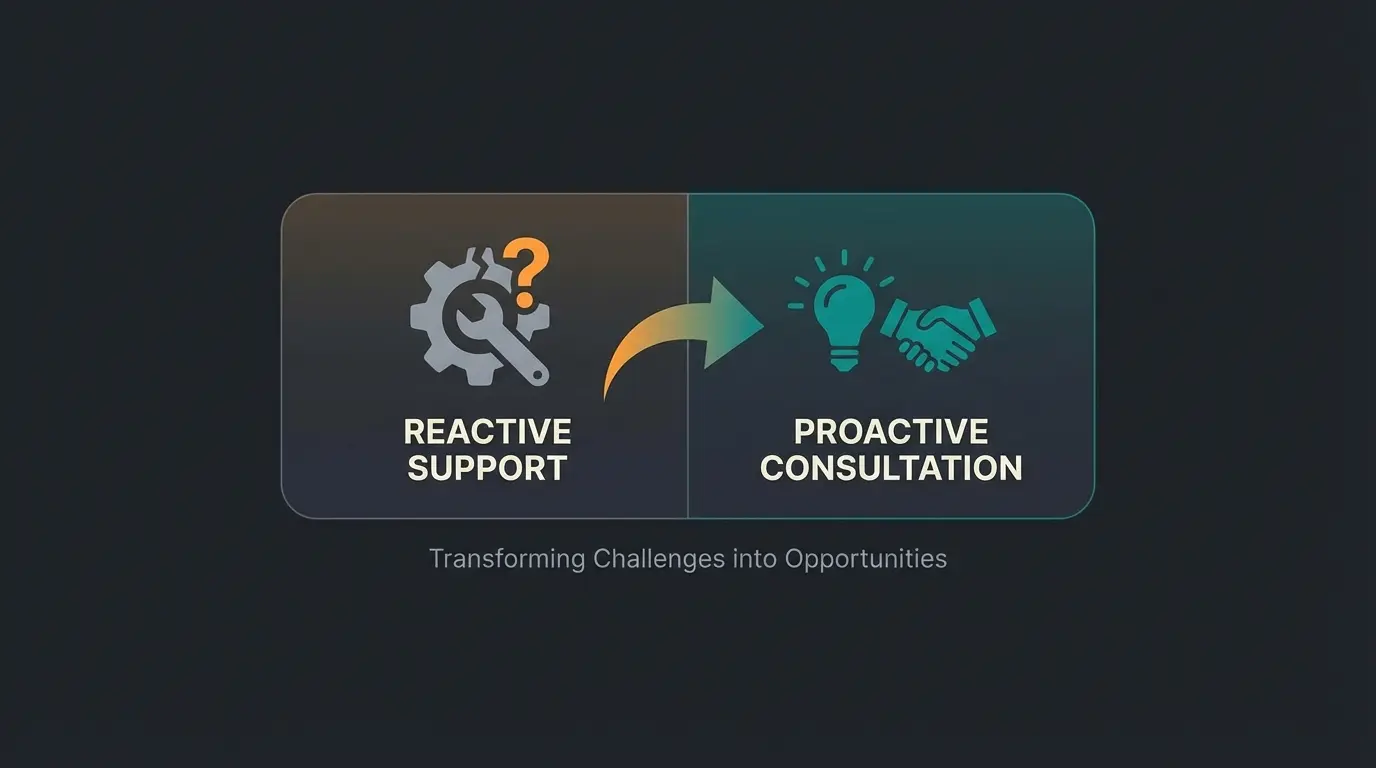
But this picture is outdated. In an era where products are becoming increasingly similar and prices more transparent, customer service has evolved into the only real differentiator. More than that: it's transforming from a "complaints department" into a revenue driver through consultation.
The reality today looks different: customers don't just seek help when there's a fire. They seek guidance before they buy. They don't just want to know how to repair a product, but which product fits their life in the first place. Here lies a massive gap in how many companies perceive their role. While customer support (fixing errors) has become a hygiene factor, the untapped potential for massive growth lies in consultative customer service.
In this comprehensive guide, we not only define what customer service means today. We draw a clear line to technical support, illuminate the role of customer care, and show how modern AI technology doesn't just process tickets but becomes a real product expert that drives your sales numbers upward. For those looking to optimize customer service into a genuine revenue driver, understanding these distinctions is essential.
Definition: What Does Customer Service Mean Today?
To understand where the journey is heading, we first need to clarify: What is customer service actually in 2024 and beyond?
The Classic Definition vs. Modern Reality
Traditionally, customer service (often used synonymously with the English term Customer Service) is defined as all interactions between a customer and a company aimed at ensuring customer satisfaction.
But this definition falls short. It often implies a passive stance. A modern definition that meets current market requirements must be broader:
The Evolution of Customer Service: From 1.0 to 4.0
To truly grasp the meaning of customer service, it's worth looking at its historical development. Based on current analyses of the service landscape from sources including Wichita University and Lumeer.io, a clear evolution can be recognized:
1950s-80s: Focus purely on the product. Service was physical (in-store) or telephone-based and purely functional.
1990s-2000s: Internet and email brought call centers and multichannel approaches. Focus on accessibility and efficiency.
2010s: Social media and smartphones brought the 'always-on' customer. Service became part of brand identity.
Now: Human empathy merges with AI-driven precision. Hyper-personalized consultation in real-time.
We're now at the transition to 4.0. Here, human empathy merges with AI-driven precision. It's no longer just about "fast answers" but about hyper-personalized consultation in real-time. The company knows what the customer needs before they know it themselves. Understanding AI customer service basics is crucial for this transition.
Why Consultation Is the New Standard
Most definitions on the web focus on "caring" after the purchase. But the biggest gap—and thus your greatest opportunity—lies in the pre-sales phase. When a customer wants to buy running shoes online, they're often overwhelmed by the selection.
- Old Service: Helps when the shoe doesn't fit (return)
- New Service: Proactively advises which shoe fits the running style to prevent the return in the first place
This shift from problem solver to trusted advisor is the core of modern customer service. Companies implementing AI product consultation are leading this transformation.
Customer Service vs. Customer Support: The Key Difference
One of the most misunderstood topics is the distinction between customer service and customer support. Many companies use the terms synonymously, but strategically speaking, they are two completely different disciplines requiring different skills and tools, as noted by LiveAgent and HubSpot.
The Distinction in Detail
While customer service looks at the big picture—the entire experience and relationship with the customer—customer support is a specialized subset that focuses on technical and functional problem-solving.
Here's a detailed comparison that we've expanded to include the often-forgotten third pillar—consultation:
| Attribute | Customer Support | Customer Service | Consultative Service |
|---|---|---|---|
| Primary Focus | Technical / Functional | Holistic / Relational | Strategic / Sales-oriented |
| Trigger | A problem occurs (Reactive) | A need arises (Interactive) | Uncertainty before purchase (Proactive) |
| Goal | Close ticket / Fix bug | Satisfaction / Retention | Purchase completion / Product success |
| Typical Question | Why doesn't X work? | Where is my order? | Which product solves my problem? |
| Timeframe | Short-term (Acute) | Medium-term (Customer Lifecycle) | Long-term (Customer Success) |
| Required Skills | Technical knowledge, Precision | Empathy, Patience, Friendliness | Product expertise, Sales psychology |
| KPIs | Resolution Time, Ticket Volume | NPS, CSAT, Retention Rate | Conversion Rate, Average Order Value |
Why This Distinction Matters for Your Strategy
If you only invest in "support," you're merely optimizing the costs of error correction. You might prevent customers from leaving angry, but you're not giving them a reason to stay enthusiastic.
- Customer Support is a hygiene factor: It must work. If it's bad, customers leave.
- Customer Care and service are motivators: They build emotional connection.
- Consultation is the growth engine: It converts prospects into buyers.
Most companies have the support part well in hand (often through ticketing systems like Zendesk or Freshdesk). Where they fail is the transition to customer care and consultation. Here, customers are often left alone with static FAQs instead of being guided through the process, as Defacto and Zendesk research indicates. Learn how KI-Produktberatung outperforms Zendesk in driving actual revenue growth.
The Core Tasks in Customer Service
The tasks in customer service are diverse and have expanded massively in recent years. It's no longer enough to just sit by the phone and take orders. We can divide the tasks into three main categories:
A. Reactive Tasks (The Foundation)
These are the classic tasks that must be completed for business operations to run smoothly.
- Complaint Management: Handling complaints, returns, and defective goods. De-escalation is the most important skill here.
- Technical Help (Support): Assistance with installation, setup, or troubleshooting of software and hardware.
- Knowledge Management: Maintaining FAQs and help center articles so customers can help themselves (self-service).
B. Relationship-Oriented Tasks (The Excellence)
This is where true customer care begins.
- Onboarding: Actively welcoming new customers and showing them how to optimally use the product. This is especially crucial in SaaS to prevent churn, as noted by SalesGroup.ai.
- Feedback Management: Actively collecting customer opinions (e.g., through NPS surveys) to improve products and processes.
- Community Management: Supporting customers on social networks and forums.
C. Advisory Tasks (The Growth Opportunity)
This is the area many companies neglect—the identified content gap.
- Product Consultation & Purchase Assistance: Proactively engaging customers who hesitate in the online shop. "I see you're looking at cameras. Are you looking for something more for portraits or landscapes?"
- Cross-Selling & Up-Selling: Not to push "something" on the customer, but to show them the better product for their needs. That's service, not aggressive sales.
- Customer Success Management: Proactively reaching out to customers before they have a problem. "We noticed you haven't used Feature X yet—it could save you time."
For merchants on specific platforms, understanding Shopware customer support requirements helps implement these tasks effectively within your ecosystem.
Why Excellent Customer Service Drives Revenue
For a long time, customer service was listed in balance sheets as a "cost center"—a department that costs money but doesn't bring any in. This view is now economically dangerous. Current data clearly proves: service is a profit center.
The Hard Facts: Service Influences Purchase Decisions
Studies from 2023 and 2024 paint a clear picture:
of consumers switch to a competitor after multiple bad experiences—more than half even after a single poor interaction, according to Zendesk and TCN research
of customers say the experience a company provides is just as important as its products or services, per Qualtrics findings
of buyers would pay more for a better customer experience, as JindalX research shows
possible profit increase from just 5% improvement in customer retention rate, according to Khoros
These statistics from Zendesk, Qualtrics, and Salesforce demonstrate that service quality directly impacts the bottom line.
The Service-Sales Link
How exactly does service generate revenue?
- Higher Conversion Rate: A customer who's uncertain during the purchase process (e.g., "Does this replacement part fit?") often abandons the purchase. A consultative service (human or AI) that eliminates this uncertainty in real-time closes the sale.
- Reduced Return Rate: In e-commerce, returns are a massive cost factor. If customer service advises well before the purchase (e.g., about fit), the likelihood of a return drops drastically.
- Customer Lifetime Value (CLV): Satisfied customers buy again. Increasing customer retention by just 5% can boost profits by 25% to 95%. Excellent service is the strongest lever for retention, as confirmed by Khoros and Armatis.
Consultation as a Differentiator
In a world where you can find almost any product on Amazon, often cheaper and with faster shipping, small and medium businesses cannot compete on price. They can only win through expertise.
If your customer service can answer questions that Amazon cannot ("Is this paint also suitable for children's toys and safe if mouthed?"), you win the customer and their trust. This is where AI sales agents are revolutionizing how businesses compete.
Discover how AI-powered product consultation can turn your customer service from a cost center into your strongest competitive advantage.
Start Free TrialChannels and Technologies: Beyond Phone and Email
The days when "multichannel" meant having a phone number and an email address are over. Today, customers expect omnichannel service—a seamless switch between channels without information loss.
The Standard Channels
- Phone: Still important for complex, emotional, or urgent problems. It creates trust through human voice, as Retail-News reports.
- Email: The standard for formal, less urgent inquiries.
- Live Chat: Popular for quick questions in between.
The Game Changer: AI and the New Generation of Chatbots
This is where the biggest innovation lies—and simultaneously the biggest misunderstanding in the current market.
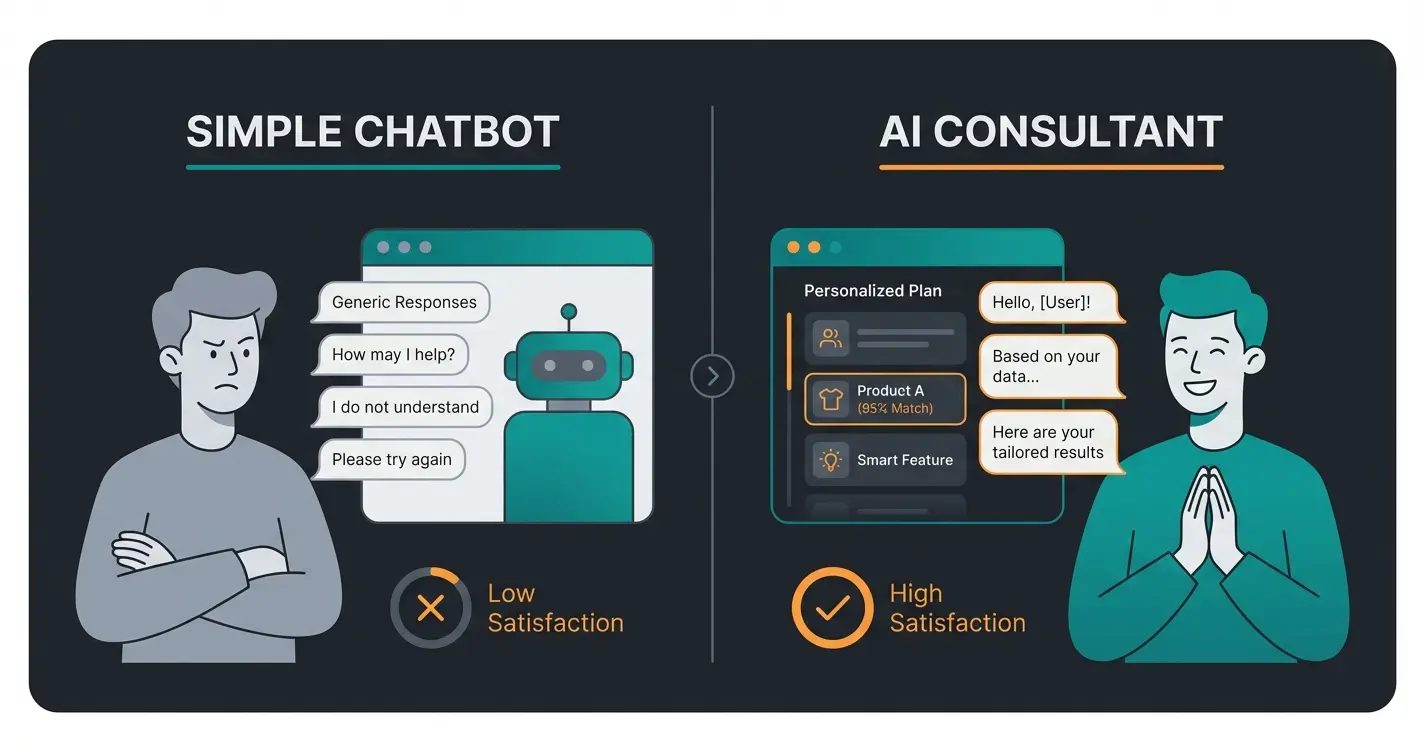
The Old Model (The Dumb Bot): Most people know chatbots as frustrating "FAQ deflection machines." They're based on rigid decision trees.
- Customer: "My package is missing."
- Bot: "Here's a link to our shipping terms."
- Result: Frustration.
The New Model (The AI Consultant): Thanks to Large Language Models (LLMs) and generative AI, we're witnessing the rise of AI agents. These systems understand context, nuances, and can provide real product consultation, as detailed in Zendesk's research.
- Customer: "I'm looking for a gift for my husband, he likes hiking but has knee problems."
- AI Consultant: "That's a great idea. For knee problems, hiking poles for support are very important, or specially cushioned shoes. Would you like me to show you our top models with extra cushioning?"
Why AI Scales Consultation
Human agents cannot provide in-depth purchase consultation 24/7 for every website visitor—that would be too expensive. An AI can. It closes the gap between the static webshop and the sales conversation in the store.
According to the Zendesk CX Trends Report 2024, 70% of CX leaders plan to use generative AI to redesign the customer journey, as reported by Zendesk. It's no longer about automation for cost reduction, but about automation for quality improvement. Explore how AI chatbots customer service is transforming this space.
Real-World Scenario: The Difference in Practice
To make the abstract concept of consultative service concrete, let's examine a practical scenario:
❌ The Classic Support Approach (Reactive):
- Customer: "Do you have this backpack in size L?"
- Bot/Agent: "Yes, it's in stock. Here's the link."
- Result: Customer might buy but remains uncertain. High return risk.
✅ The Consultative Service Approach (Proactive):
- AI Consultant/Expert: "Yes, size L is available. But may I ask how tall you are and what you're planning? For day trips, this model runs very large. Many customers your height are happier with the 'AlpinPro' in size M, as it fits better on the back."
- Result: Customer feels understood, buys the right product, return avoided, trust gained.
This is exactly the kind of AI product consultation that transforms browsers into buyers while reducing costly returns.
5 Tips for Better Customer Service (Human + AI)
How do you put this into practice? Here are five strategic tips that combine human strengths with technological efficiency.
1. Empathy Cannot Be Automated (Strengthen Soft Skills)
No matter how good AI becomes: when a customer is angry or sad, they need a human. Train your team in active listening and emotional intelligence. A sentence like "I understand that this is very frustrating for you, and we'll find a solution together now" can work wonders. Empathy is the key to de-escalation, as emphasized by Peaceful Leaders Academy and CPD Online. Learn more about effective AI training strategy for your team.
2. Speed Through Technology
Customers hate waiting. According to Zendesk research, 89% of consumers say a quick response is crucial for their purchase decision. Use AI to resolve standard requests (order status, invoice copy) immediately, so your human agents have time for complex cases.
3. Switch From Reactive to Proactive
Don't wait until the customer complains.
- Example: If you know a delivery is delayed, inform the customer before they wonder where their package is.
- Consultation Example: If a customer buys a technical device, automatically send them an email with the best setup tips after 2 days (onboarding).
4. Implement Consultative Service
Train your support staff in product knowledge as well. Give them permission to make recommendations. A support agent who says: "By the way, for your use case, accessory Y would be very helpful—it'll save you work" is perceived by the customer as an expert, not a salesperson. This approach is detailed in our guide on AI consulting e-commerce implementation.
5. Measure the Right KPIs
Stop evaluating your employees only by "Average Handle Time" (AHT). That only promotes quick dismissal. Instead, measure:
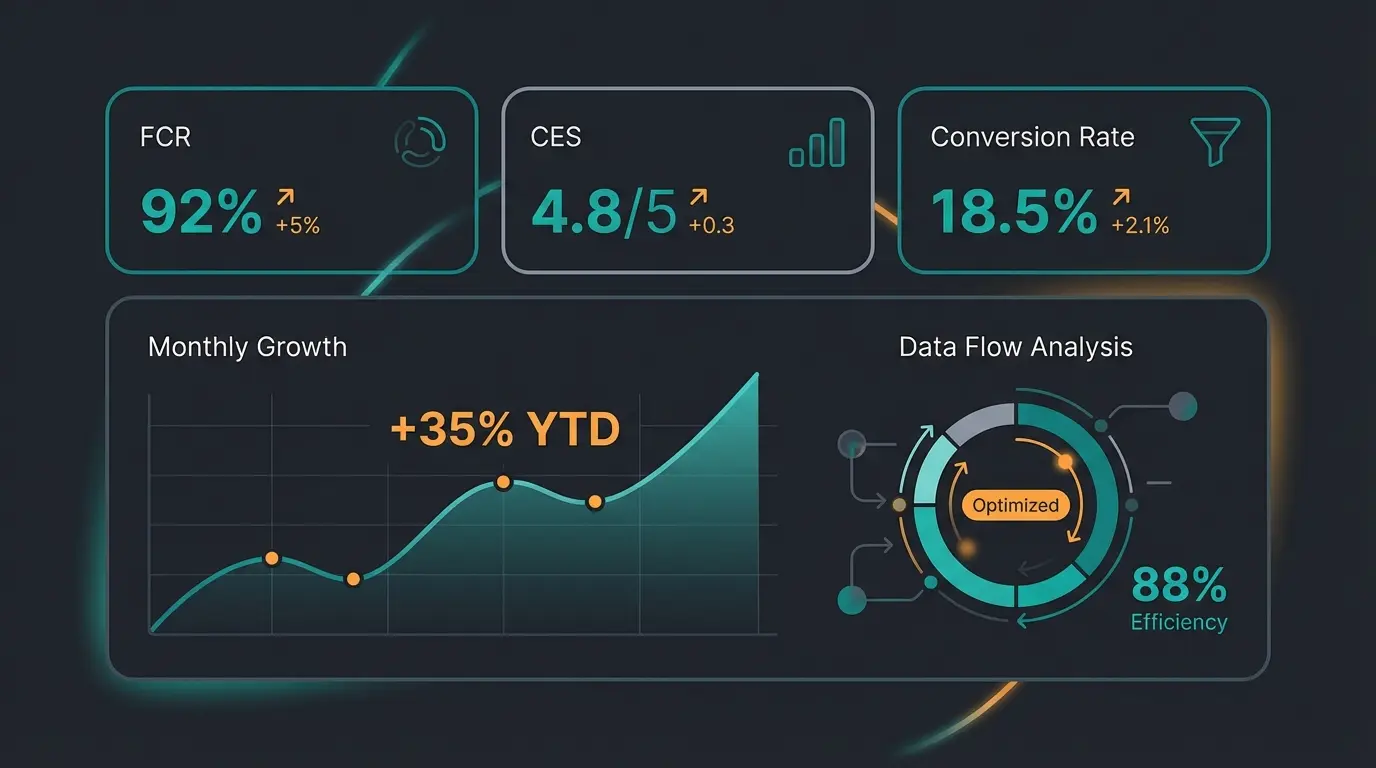
- First Contact Resolution (FCR): Was the problem solved on the first try?
- Customer Effort Score (CES): How easy was it for the customer? As Omniconvert explains.
- Conversion Rate After Contact: Did the consultation lead to a purchase?
The Hybrid Model: AI Agents and Human Experts
The future belongs to the hybrid model where technology and humanity work in concert:
- AI Agents take on the role of the 24/7 available product consultant and solve standard requests in seconds.
- Human Experts focus on complex problems, emotional connection, and in-depth strategic consultation.
Understanding the KI-Mitarbeiter AI Agents comparison helps businesses choose the right approach for their needs. For compliance considerations, review our guide on AI product consultant requirements under the EU AI Act.
By shifting focus from pure "support" to "consultation and success," you transform your service department from a cost factor into your strongest competitive advantage. This transformation through AI customer service automation is already happening across industries.
Conclusion: From Support Center to Consultation Hub
The term customer service is undergoing transformation. Companies that understand it only as "complaint management" will lose in the long run. Today's customers expect more: they expect a partner who not only solves their problems but understands and anticipates their needs.
It's time to see customer service not as an obligation, but as the heart of your business growth. The companies winning today aren't just fixing problems—they're building relationships through expertise and trust.
By making the strategic shift from reactive support to proactive consultation, you position your business not just to retain customers, but to convert browsers into buyers and one-time buyers into lifetime advocates. The technology exists today to make this transformation possible at scale.
Customer support usually focuses on technical help and troubleshooting specific problems. Customer service is the overarching term that encompasses all care, consultation, and relationship management with the customer throughout their entire journey.
Empathy (the ability to understand feelings), active listening, patience, clear communication, and problem-solving skills are essential. These human skills remain irreplaceable even as AI handles more routine tasks.
Good service increases customer retention (loyalty), promotes referrals, and through good consultation can directly boost conversion rates and cart values. Research shows 86% of buyers pay more for better experiences, and retention improvements of just 5% can increase profits by 25-95%.
Modern AI can not only answer standard questions but function as an intelligent product consultant, be available 24/7, and relieve human agents through information provision. Unlike old FAQ bots, AI agents understand context and can provide personalized recommendations.
Consultative customer service goes beyond reactive problem-solving to proactively help customers make purchase decisions. Instead of just answering 'Is this in stock?', consultative service asks about customer needs and recommends the best product—reducing returns and increasing satisfaction.
Join leading e-commerce brands using AI-powered product consultation to increase conversions, reduce returns, and build customer loyalty at scale.
Get Started Free
Lasse is CEO and co-founder of Qualimero. After completing his MBA at WHU and scaling a company to seven-figure revenue, he founded Qualimero to build AI-powered digital employees for e-commerce. His focus: helping businesses measurably improve customer interaction through intelligent automation.