The Digital Transformation of Customer Communication
The digital landscape is transforming rapidly. While a static contact form was considered standard just a few years ago, customers today expect real-time interaction. However, the term "live chat" has undergone a massive transformation. We are standing at the threshold of a new era: the transition from Live Chat 1.0 (pure support and problem-solving) to Live Advice 2.0 (active product consultation and sales enablement).
In this comprehensive guide, we analyze not only the current status quo but also take a well-founded look at the requirements for 2026. We examine why companies need to rethink their approach, how AI strengthens the role of human advisors (rather than replacing them), and why "Made in Germany" data protection is becoming the ultimate sales argument. As AI Chatbots transform the customer service landscape, understanding these shifts becomes crucial for business success.
What is Live Chat? The Modern Definition for 2026
Traditionally, live chat was defined as software that enables website visitors to exchange text messages with a customer service representative in real-time. However, this definition is outdated and too narrow in 2025/2026.
The modern definition of website chat or online chat encompasses a hybrid ecosystem. It is the interface where:
- Artificial Intelligence (AI) qualifies initial inquiries and solves routine tasks autonomously
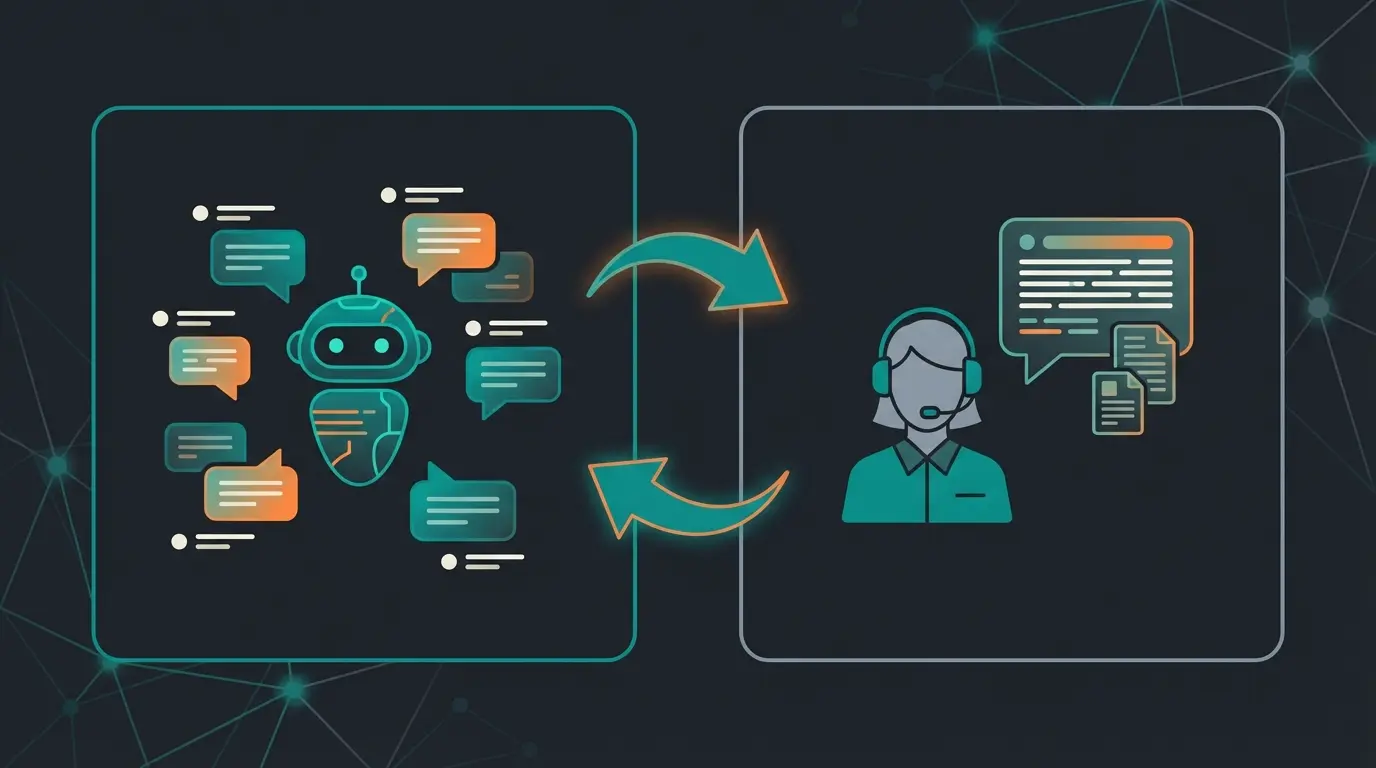
- Human experts conduct complex consultation conversations requiring empathy and expertise
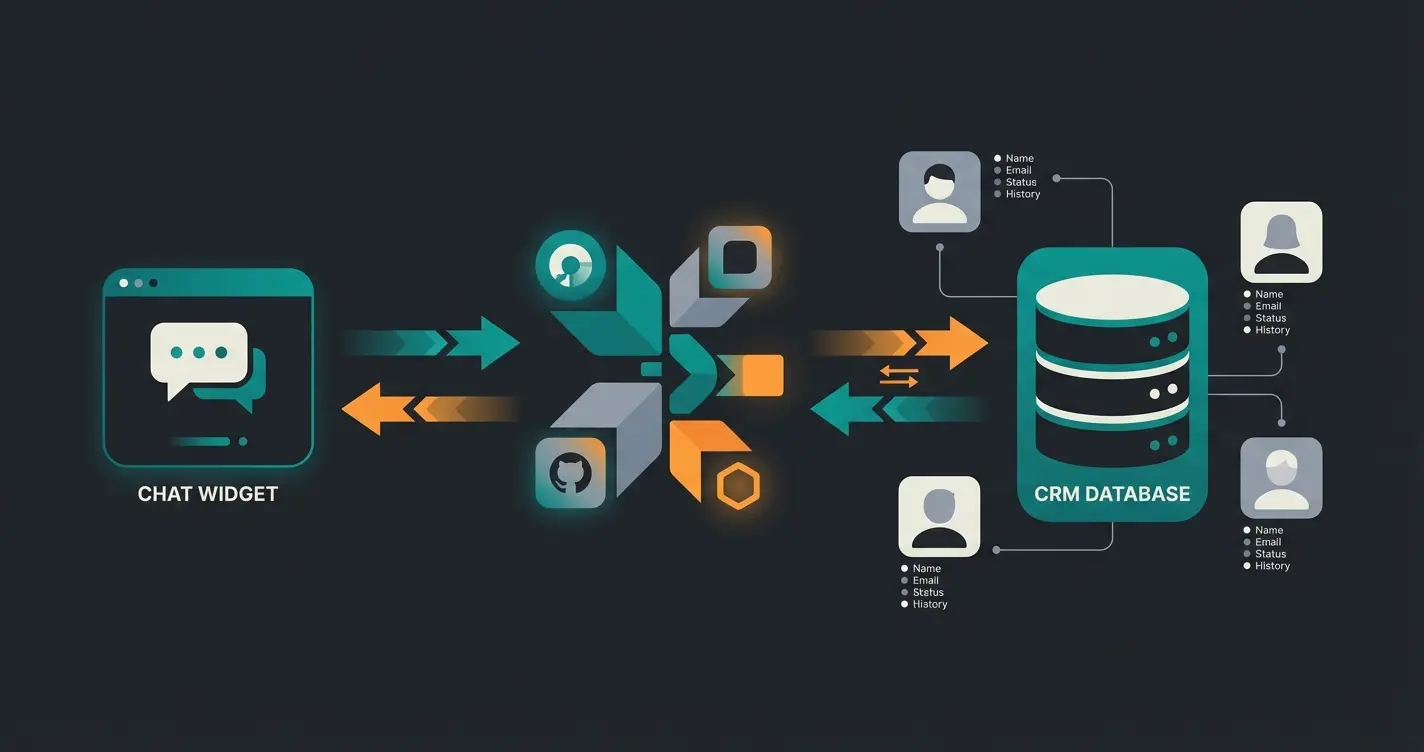
- Data streams (CRM, shopping cart contents, browsing behavior) converge to provide context-aware assistance
It's no longer just about "being there" when a problem occurs. It's about proactively guiding users—similar to an attentive salesperson in retail who notices a customer searching helplessly in front of a shelf. Understanding the history of chatbots helps contextualize how far this technology has come.
The Evolution of Customer Expectations
According to recent studies from salesgroup.ai, 79% of customers expect a response in live chat within seconds. The tolerance for "We will respond within 24 hours" (the standard for email) virtually no longer exists in modern e-commerce. Live chat has thus become synonymous with instant gratification in both B2B and B2C sectors.
Customers anticipate answers within seconds, not minutes
Growing preference for text-based communication channels
Simultaneous conversations vs. one phone call at a time
Standard inquiries that AI can handle autonomously
Why Companies Are Switching to AI-Enhanced Live Chat
Many markets have struggled with customer service quality, but competitive pressure from international players and increased consumer expectations are forcing transformation. The shift toward AI Customer Service automation is accelerating across all industries.
Overcoming the Labor Shortage Through Efficiency
Many labor markets suffer from a massive skilled worker shortage, including in customer service. For many companies, it's simply no longer financially viable to staff call centers around the clock with qualified native-speaking personnel.
This is where AI-enhanced live chat closes the gap. Research from sixthcitymarketing.com shows significant efficiency gains:
- Scalability: A human agent can only serve one customer at a time in phone support. In live chat, it's 4 to 6 parallel conversations
- Automation: AI solutions can autonomously resolve up to 80% of standard inquiries (business hours, return status, invoice copies), freeing the human team for high-value consultation conversations
Conversational Commerce: A Rapidly Growing Market
The market for "Conversational Commerce"—selling through chat interfaces—is growing rapidly. According to projections from retailcustomerexperience.com and grandviewresearch.com, the global market is expected to grow to over $41 billion by 2030, with an annual growth rate (CAGR) of over 23%.
Companies that don't invest now risk losing touch with a generation of buyers for whom messaging (WhatsApp, chat) is the primary communication channel. The AI selling revolution is already transforming how businesses engage with customers.
The Human Touch Despite Digitalization
Interestingly, a paradox emerges: while digitalization advances, the need for personal contact remains high. According to retail-news.de, 92% of consumers indicate that customer service quality is decisive for their brand loyalty.
A modern live chat solution solves this paradox by not attempting to rationalize away humans, but deploying them where they are most valuable: in consultation and empathy. This is where AI Product Consultation creates the perfect balance between efficiency and personal touch.
The 3 Types of Online Chat Solutions Explained
To choose the right strategy, companies must understand that "chat" is not just "chat." We distinguish three evolutionary stages that currently coexist on the web. Our comprehensive chatbot types comparison provides additional context for these categories.
Type 1: The Legacy Live Chat (Support 1.0)
This is the classic variant. A button on the website connects the user directly with a human agent.
- Advantage: High empathy, complex problem-solving possible
- Disadvantage: Expensive, not available 24/7 (unless with enormous personnel costs), wait times ("You are at position 5...")
- Status: Inefficient without pre-qualification
Type 2: The "Dumb" Chatbot (The Frustration Trap)
This generation of bots is based on rigid decision trees ("Press 1 for shipping"). They understand no context and fail at nuances.
- Advantage: Cheap, available 24/7
- Disadvantage: Extremely high abandonment rates, frustrated customers, damages brand image
- Status: An outdated model that often causes more harm than good
Type 3: The AI Product Consultant (The 2026 Solution)
Here, Large Language Models (LLMs) merge with company data. This agent doesn't act like a robot but like a trained salesperson. The emergence of AI Agents represents this new paradigm in customer interaction.
- Functionality: It understands questions like "I'm looking for a mountain bike for beginners under $800, but in red" and intelligently searches the product catalog
- Advantage: Scalable consultation (not just support), learns from interactions, seamlessly hands off to humans during emotional escalations
- Status: The new gold standard for competitive advantages
Human-only support with long wait times and limited availability during business hours
Frustrating decision trees with 'Press 1 for Support' loops that couldn't understand context
Simple NLP integration with keyword recognition but limited conversational ability
Fluid conversations, deep product knowledge, personalized recommendations, and seamless human handoff
Live Chat vs. Phone vs. Email: Customer Preferences
Phone support remains strong in many markets, yet chat is catching up massively, especially among younger demographics and in B2B sectors where efficiency counts. As Conversational AI evolves, the advantages of chat-based communication become increasingly clear.
| Feature | Live Chat / AI Agent | Phone | |
|---|---|---|---|
| Response Time | Instant (seconds) | Medium (hold queue) | Slow (hours/days) |
| Availability | 24/7 (via AI) | Usually business hours | 24/7 (receipt), not response |
| Cost per Contact | Low (via automation) | High (personnel-intensive) | Medium |
| Complexity Handling | High (co-browsing/links) | High (via dialogue) | Medium (ping-pong effect) |
| Customer Preference | Rising (41% prefer it) | High for escalations | Declining (too slow) |
| Data Capture | Automatic & Structured | Manual (error-prone) | Structured but slow |
Analysis: While phone remains unbeatable for emotional complaints or extremely complex matters (e.g., legal consultation), online chat wins the race in the "pre-sales" and "first-level support" areas. Customers don't want to switch channels (media break) while online shopping to clarify a question about product size. They want the answer where they're buying: on the website.
Discover how AI-powered live chat can increase conversions, reduce support costs, and deliver 24/7 personalized product consultation.
Start Your Free TrialEssential Features for 2026: Beyond Standard Support
When evaluating live chat software today, you should take features like "file sending" or "chat history" for granted. To stand out from the competition in 2026, you need advanced features that turn visitors into buyers. Understanding how AI chatbots in marketing drive results can inform your feature priorities.
Intent Recognition (Purpose Detection)
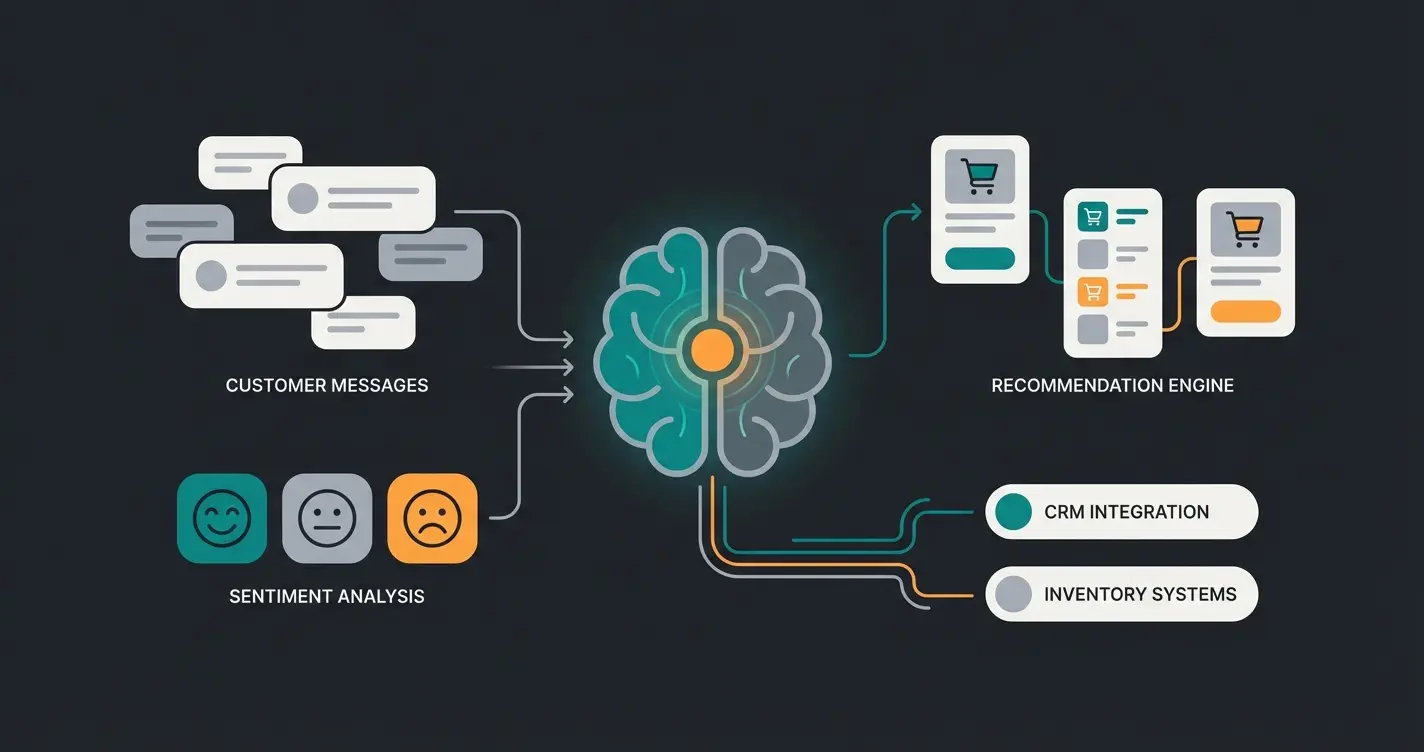
Modern systems analyze not just keywords but the intent behind customer messages.
- Example: A customer writes "That's too expensive"
- Dumb Bot: "Here are our prices."
- AI Consultant: Recognizes the objection and offers alternative products or points out installment payments/discount promotions
Sentiment Analysis (Mood Detection)
The software measures the emotional temperature of the conversation in real-time.
- Is the customer becoming angry or sarcastic? -> Immediate escalation to a human senior agent
- Is the customer enthusiastic? -> Upselling opportunity (e.g., offer matching accessories)
Proactive Engagement (Smart Triggers)
Don't wait for the customer to ask. Intelligent live chat systems recognize behavioral patterns.
- Scenario: A user lingers for 60 seconds on the "Pricing" page and moves the mouse toward "Close"
- Action: The chat opens automatically: "Do you have questions about our enterprise plans? I can send you a comparison."
- Impact: This can significantly increase conversion rates and prevent shopping cart abandonment
Deep Product Knowledge Integration
The chat must have access to your product catalog (PIM) and inventory. Nothing is more frustrating than a chat agent recommending a product that's been sold out for weeks. This is where AI product consultation transforms the entire customer journey.
The Compliance Factor: GDPR and Data Privacy
This is a critically important section for the European market. While US providers dominate search results, European companies face strict legal hurdles. A "We are secure" badge in the footer is no longer sufficient.
TDDDG: Beyond Basic GDPR Compliance
Since May 2024, the TDDDG (Telecommunications Digital Services Data Protection Act) has been in force in Germany, which replaced or renamed the previous TTDSG according to gesetz-tdddg.de.
According to niedersachsen.de, the core rule states that for storing information on the user's end device (e.g., cookies, local storage for chat history), explicit consent is required unless the service is "strictly necessary."
Server Location and Data Sovereignty
The "Schrems II" ruling complicated the use of US servers. Although there is now an adequacy decision with the EU-US Data Privacy Framework (since July 2023) according to activemind.legal and europa.eu, data protection activists (like NOYB) are already preparing lawsuits.
Safe Harbor: For European companies, especially in the healthcare or financial sector, hosting in the EU (better yet: locally) is often unavoidable to minimize risks. Providers like those mentioned in lime-technologies.com and chatarmin.com explicitly advertise with server locations in the EU.
Data Processing Agreements (DPA)
Every use of live chat software requires a Data Processing Agreement (DPA) according to Art. 28 GDPR. US providers often offer standard contracts that don't always meet European requirements or specify jurisdictions in the USA.
Implementation: Using Live Chat for Sales Success
Many companies fail when implementing live chat because they view it as a mere "ticket catch basin." To turn chat into a revenue driver, we recommend the following steps. The approach to AI consulting in e-commerce provides additional implementation insights.
Step 1: Define the Goal (Consultation vs. Support)
Do you want to reduce tickets or sell more?
- Support Focus: Metrics are "First Response Time" and "Resolution Rate"
- Sales Focus: Metrics are "Conversion Rate" and "Average Order Value"
- Tip: Start on high-intent pages (shopping cart, pricing page) with a sales focus
Step 2: The Human-in-the-Loop Design
Don't design a process that relies only on bots.
- Greeting: AI greets and asks about the concern (category selection)
- Qualification: AI asks about budget, timeframe, or product preference
- Routing: Simple question -> AI answers directly. Purchase intent detected -> Forward to sales team ("High Priority")
Step 3: Training the Knowledge Base
Your AI agent is only as smart as the data you give it. Feed it not just FAQs, but:
- Sales guides (How do we handle objections?)
- Product descriptions and technical data sheets
- Past successful chat conversations (best practices)
Implementing an AI Chatbot for E-Commerce requires this foundational knowledge base to deliver genuine value.
Step 4: CRM Integration
An isolated chat is worthless. When a lead leaves their email in the chat, that lead must immediately appear in the CRM (Salesforce, HubSpot, Pipedrive). The sales representative must be able to see: "Ah, this customer spent 10 minutes learning about Product X in the chat yesterday."
Support Bot vs. AI Sales Consultant: Feature Comparison
Understanding the difference between traditional chatbots and modern AI sales consultants is crucial for making the right technology investment.
| Feature | Traditional Chatbot | AI Product Consultant |
|---|---|---|
| Primary Goal | Deflect support tickets | Drive sales and conversions |
| Knowledge Base | FAQs and canned responses only | Deep product catalog knowledge with real-time inventory |
| Context Understanding | Session-based, no memory | Remembers user preferences and browsing history |
| Conversation Tone | Robotic and scripted | Empathetic and brand-aligned |
| Complex Queries | Fails and escalates immediately | Handles nuanced questions intelligently |
| Recommendation Engine | None or rule-based | AI-powered personalized suggestions |
| Learning Capability | Static, requires manual updates | Continuously improves from interactions |
| Integration Depth | Basic CRM connection | Full ecosystem integration (PIM, ERP, CRM) |
The Future: E-Commerce Becomes Conversational
The market for live chat and conversational commerce is facing a massive growth spurt. According to mordorintelligence.com, by 2030, the market volume is expected to double or triple. However, technology alone is no cure-all.
The key to success lies in balance:
- Technological Excellence: Using AI for speed and 24/7 availability
- Human Empathy: Deploying experts for genuine consultation, not for reading manuals
- Legal Security: Strict compliance with GDPR and local privacy laws as a trust signal to customers
Companies that still view live chat as a "nice extra" today will be overtaken tomorrow by competitors who use it as a central sales channel. It's time to switch from pure support thinking (Live Chat 1.0) to intelligent customer consultation (Live Advice 2.0).
Frequently Asked Questions About Live Chat
It's not an "either-or" decision. Live chat is more efficient and cost-effective for initial contacts and standard questions. Phone is better for complex escalations. A modern strategy offers both, but uses chat as the first filter. Research shows 41% of customers now prefer chat, according to sqmagazine.co.uk, while phone remains essential for emotionally charged situations.
Prices vary widely. Simple tools start at $0-20 per agent/month. Enterprise solutions with AI features, CRM integration, and EU server locations often range between $50 and $150 per user/month, but offer a significantly higher ROI through automation. The key is calculating the cost against conversion improvements and support ticket reduction.
Yes, under TDDDG (and similar regulations in other EU countries), consent is required for almost all live chat tools that are not technically essential for the operation of the website itself—which is usually the case for marketing/sales chats. The chat should only load after explicit user consent in your cookie banner.
No, and that shouldn't be the goal. AI replaces humans in repetitive tasks. It functions as an assistant that provides information to human consultants so they can focus on relationship building. The hybrid model combining AI efficiency with human empathy delivers the best results.
Key metrics include: Conversion Rate (percentage of chat users who purchase), Average Order Value of chat-assisted sales, Chat-to-Lead Ratio, Customer Satisfaction Score (CSAT), and First Response Time. Compare these against your non-chat baseline to calculate true ROI.
Join leading e-commerce businesses using AI-powered live chat to deliver exceptional product consultation, increase conversions by up to 30%, and provide 24/7 customer support.
Get Started Free Today