Introduction: The "Iceberg" of Intercom Costs
Intercom is undoubtedly one of the market leaders in customer messaging and helpdesk software. With a sleek design and powerful features, it has established itself as the standard for many SaaS companies. However, anyone searching for Intercom pricing in 2025 quickly encounters a phenomenon often referred to in the industry as the "iceberg effect."
At first glance, the entry-level prices appear moderate. An "Essential" plan at around $39 per seat sounds manageable for startups. But beneath the surface lurk variable costs that can quickly double or triple your monthly bill. From fees for AI solutions ("resolutions") to costs for WhatsApp messages to necessary upgrades for GDPR compliance—the structure is complex. According to discussions on Reddit, many users report being caught off guard by these escalating costs after committing to the platform.
This article analyzes not only the official Intercom pricing plans but uncovers the strategic implications for your business. In particular, we illuminate a critical gap missing from most comparisons: the difference between costs for support automation and costs for product consultation (sales). Is Intercom's model even suitable when your goal isn't ticket deflection but revenue growth? For businesses exploring AI customer service solutions, understanding this distinction is crucial before making a significant software investment.
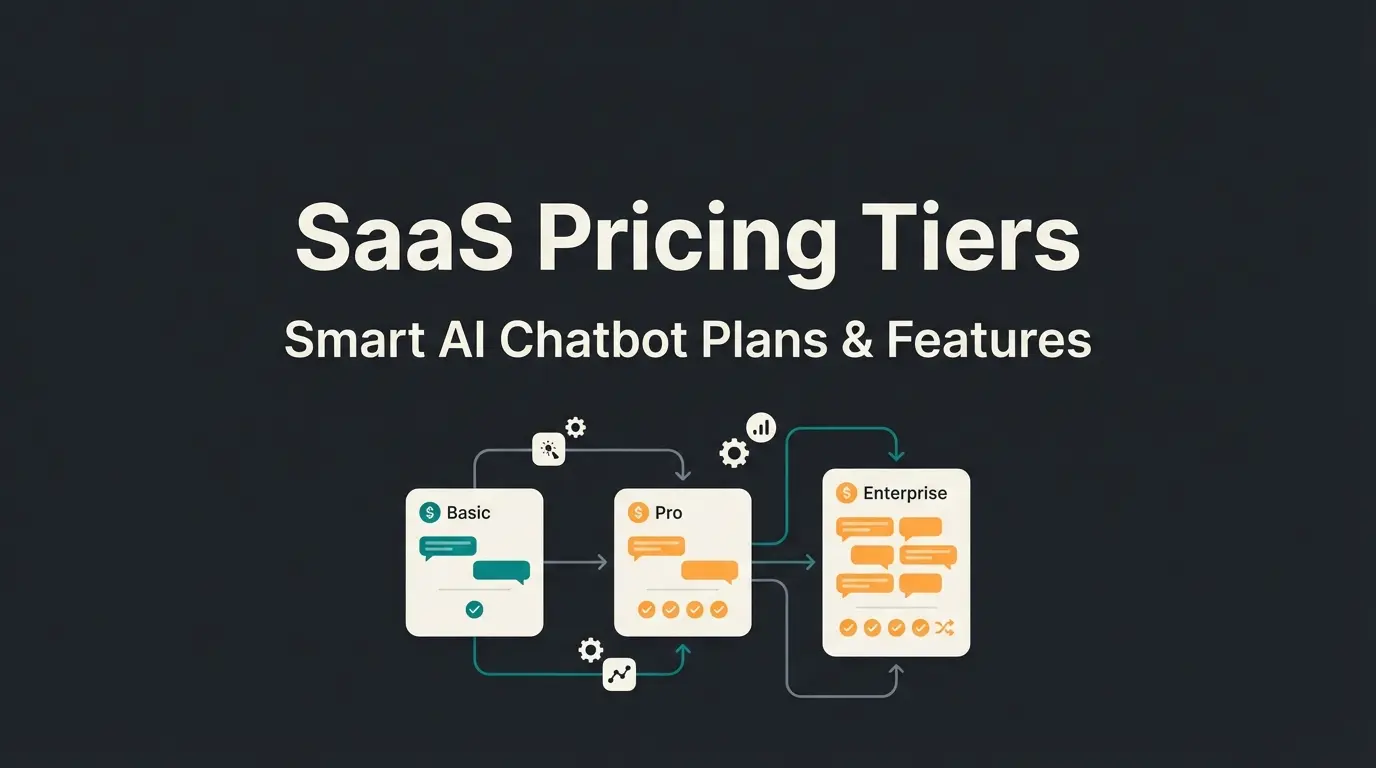
Intercom Pricing Tiers 2025: The Official Structure
Before diving into hidden costs, a clear look at the basic structure is necessary. Intercom has divided its model into three main categories. It's important to note that prices are typically calculated per "seat" (license/agent) and annual payments provide discounts. Analysis from SaaSGenie confirms that understanding this seat-based model is fundamental to accurate budgeting.
The Three Main Plans Compared
| Feature / Plan | Essential | Advanced | Expert |
|---|---|---|---|
| Price (annually) | $29 / Seat / Month | $85 / Seat / Month | $132 / Seat / Month |
| Price (monthly) | $39 / Seat / Month | $99 / Seat / Month | $139 / Seat / Month |
| Target Audience | Startups, small teams | Growing support teams | Enterprise & corporations |
| Lite Seats (free) | 0 (Everyone pays full) | 20 included | 50 included |
| Fin AI Agent | Available ($0.99/Res) | Available ($0.99/Res) | Available ($0.99/Res) |
| Workflows | Basic | Advanced (Visual Builder) | Advanced + Custom |
| Data Hosting | US (Standard) | EU Hosting Option | EU Hosting Option |
| Support Level | Standard | Priority | Premium / SLA |
Data sources include SparrowDesk, HiverHQ, and Cloudstride, which provide comprehensive breakdowns of these pricing tiers.
Analysis of the Tiers
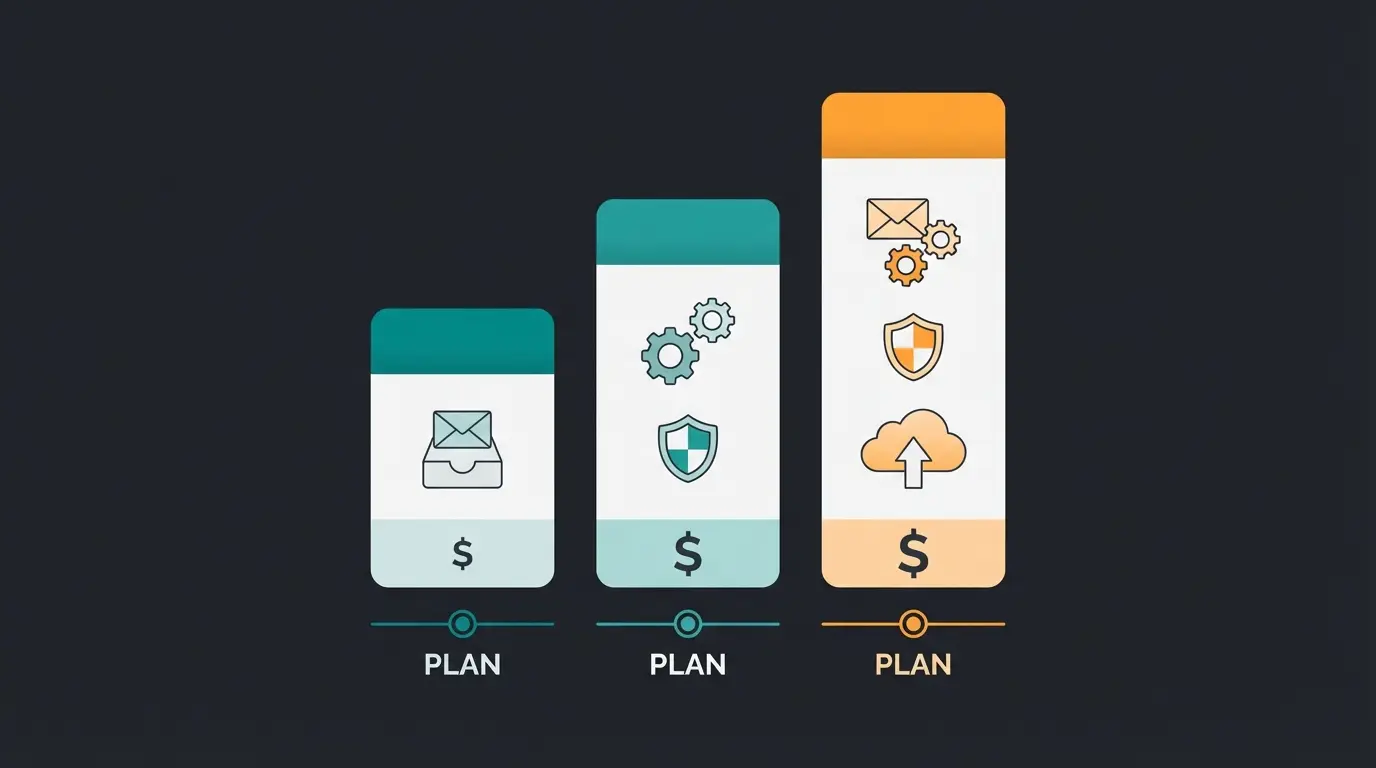
Essential Plan: This plan appears like the perfect entry point. It includes the Shared Inbox, Messenger, and basic reporting. But beware: There are no "Lite Seats." This means if your developer or product manager only needs to check a ticket once a week, you pay the full price of $39 for them. This limitation can significantly impact team collaboration costs.
Advanced Plan: This is where the biggest price jump occurs (from $29 to $85). The main reason for upgrading is often not the features but the limitations of the Essential Plan. If you need automation workflows or must host your data in the EU (for new workspaces), Intercom often forces you into this tier. As reported by eesel AI, this creates unexpected budget requirements for compliance-focused organizations. In exchange, you receive 20 free "Lite Seats," which somewhat cushions the price shock for larger teams.
Expert Plan: This is designed for enterprises that need enterprise security (SSO, HIPAA) and dedicated SLAs. EU hosting is also included here, making it the default choice for large organizations with strict compliance requirements.
Hidden Costs That Inflate Your Bill
The base fee for licenses is often the smallest part of the bill. The true dynamics of Intercom cost arise from variable usage components. This is where businesses—especially those in the DACH region—need to look very carefully. Understanding these hidden costs is essential for accurate budget forecasting.
The Fin AI Resolution Fee ($0.99 per Solution)
Intercom's AI bot "Fin" is heavily marketed. The pricing model is purely usage-based: you pay $0.99 per "resolution". According to GPTBots.ai analysis, this can add up quickly for high-volume operations.
What counts as a resolution? Intercom defines a resolution as a conversation where Fin delivers an answer and the customer either confirms that the problem is solved, or leaves the conversation (no further response), which counts as an "assumed resolution." The official Intercom documentation provides these definitions, but the practical implications often surprise users.
Research from Ibbaka on AI pricing models highlights how this per-resolution approach can create unpredictable monthly expenses, especially for businesses with fluctuating support volumes.
Variable Channel Costs: WhatsApp & SMS
For the German market, WhatsApp is often a crucial channel for sales and support. Unlike many all-in-one solutions, WhatsApp is not included in Intercom's seat price. This is particularly relevant for companies implementing AI guided selling strategies that rely on messaging channels.
- WhatsApp: Incoming messages are often free, but outgoing conversations (outbound) or company-initiated chats cost between $0.03 and $0.10 per conversation, depending on the target country.
- SMS: Here you pay per segment. Prices vary significantly but often range between $0.04 and $0.18 per message.
An e-commerce company wanting to send proactive shipping updates via WhatsApp must budget these costs separately. A budget of $500 for licenses can quickly rise to $1,500 through WhatsApp campaigns. According to Freshworks comparative analysis, this makes Intercom one of the more expensive options for multi-channel communication strategies.
Add-ons: Proactive Support Plus & Copilot
- Proactive Support Plus: Want to use product tours (onboarding guides) or complex surveys? That costs a flat $99 per month extra (including 500 messages, then usage-based). As noted by Customerly, this add-on is essential for proactive engagement strategies.
- Fin AI Copilot: This is the AI assistant for your human agents (not the bot for customers). It costs $29 to $35 per agent/month for unlimited usage, as detailed in Intercom's pricing documentation.
Charged each time Fin 'resolves' a conversation
Per outbound conversation initiated
Required for product tours and surveys
Monthly AI assistant for human agents
Cost Analysis: Support Bot vs. Product Consultation AI
This is the most important section for companies wanting to use Intercom not just as a "complaint box" but as a growth engine. Most Intercom pricing reviews ignore the difference between support (reducing costs) and consultation (increasing revenue). For businesses focused on AI sales consultants, this distinction fundamentally impacts ROI calculations.
The Dilemma of the Resolution Model in Sales
Intercom's pricing model ($0.99/resolution) is designed to end conversations as quickly as possible. In support, this is perfect: "How do I reset my password?" -> Answer -> End. Cost: $0.99. Savings: $10 (human work time). Analysis from Featurebase shows this model works exceptionally well for high-volume, simple support queries.
However, in sales and product consultation, this model is problematic. The very metric that makes support efficient—quick resolution—becomes counterproductive when your goal is to engage customers in meaningful purchasing decisions.
Scenario A: The Support Case (Intercom's Strength)
- Customer: "Where is my delivery?"
- Fin AI: "According to tracking, it will arrive tomorrow."
- Result: Customer satisfied, chat ended.
- Cost: $0.99
- ROI: Positive (agent time saved)
Scenario B: The Consultation Case (The Cost Trap)
- Customer: "Which CRM is best for my 5-person team?"
- Fin AI: Fin searches the help articles. Finds an article "Our CRM Integrations." Posts the link.
- Result: The customer received no consultation, just a link. They leave the chat ("resolution" counts since they left). They don't buy because the consultation was missing.
- Cost: $0.99 + Lost Revenue (Opportunity Costs)
Why Consultation AI Must Be Calculated Differently
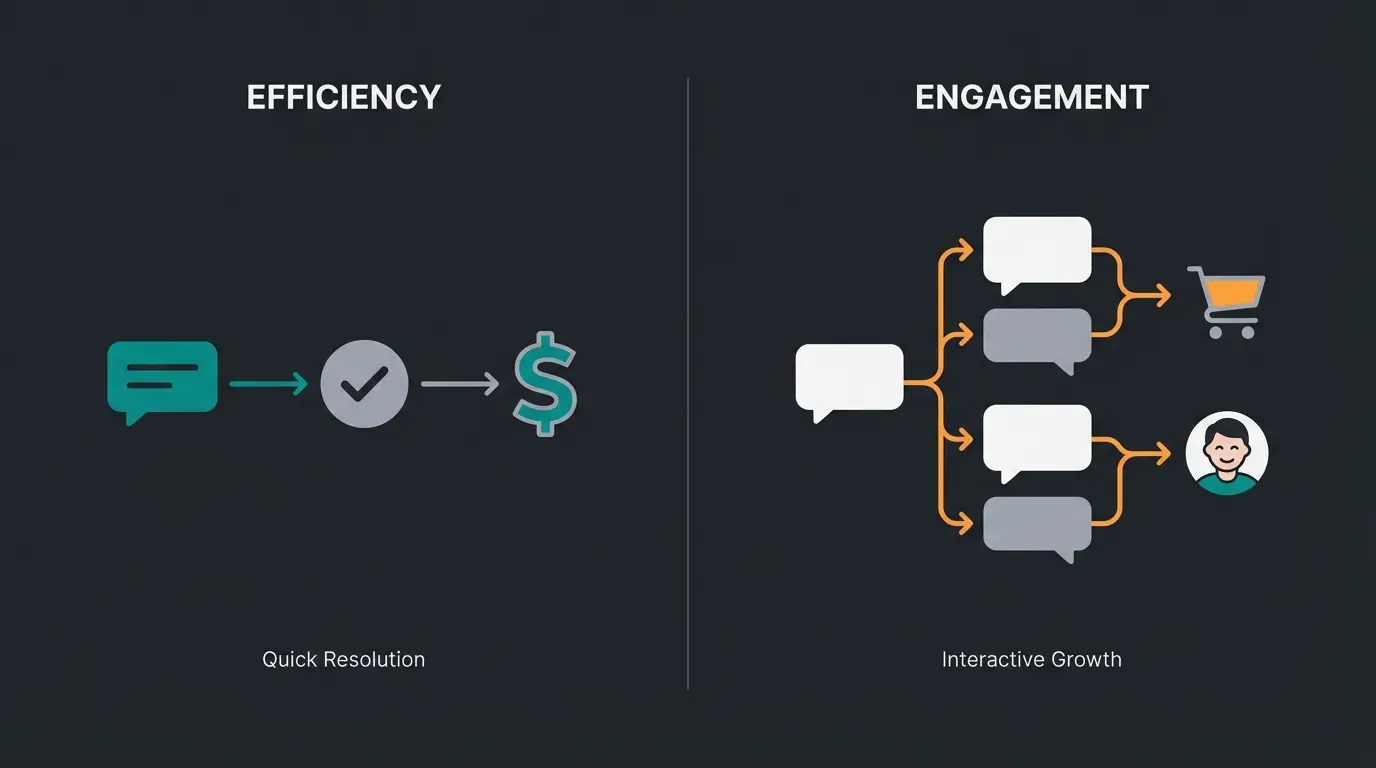
If you deploy an AI for sales, you don't want a "resolution" (conversation end). You want engagement. You want the AI to ask follow-up questions ("What tools do you currently use?"), conduct needs analysis, and guide the customer to purchase. This is where consultative AI approaches differ fundamentally from resolution-focused support bots.
A pricing model that charges per "resolved" conversation paradoxically penalizes you for long, intensive sales conversations—or incentivizes the AI (through its programming to "give an answer") to prematurely end conversations with links instead of deepening them. Research from eesel AI confirms that this creates a fundamental misalignment between pricing incentives and sales objectives.
Resolution-based ($0.99/end) vs. Flat rate or conversion-based
Deflect tickets and close conversations vs. Drive sales and extend engagement
Retrieves text from knowledge base vs. Understands context and guides decisions
Resolution rate and ticket closure vs. Conversion rate and revenue generated
Discover how specialized consultation AI can drive revenue without penalizing meaningful customer conversations. Our AI product consultation solutions focus on conversion, not conversation endings.
Explore AI ConsultationIntercom for German Businesses: Key Considerations
Companies from Germany, Austria, or Switzerland must consider two specific hurdles when evaluating Intercom pricing 2025 that are often missing from US-centric reviews. Understanding these regional factors is essential for accurate total cost of ownership calculations.
The GDPR Hurdle (EU Data Hosting)
Data protection in Germany is not a "nice-to-have" but a legal obligation. Intercom does offer EU data hosting (servers in Ireland via AWS), but there's a catch that significantly impacts pricing decisions:
- Only for Advanced & Expert: EU hosting is not available in the affordable Essential plan. You must choose at least the Advanced plan ($85/seat) to meet compliance requirements.
- No Migration: If you already have a US workspace, you cannot simply "move" it. You must open a completely new workspace and manually export/import data. This is a massive hidden cost factor in terms of work time and potential data integrity issues.
- Limited Integrations: Some apps and integrations don't work identically in the EU environment compared to the US version, which can impact workflow automation strategies.
For companies already investing in AI Customer Service infrastructure, these compliance requirements represent a significant consideration in platform selection.
Currency Risk and Taxes
Intercom primarily bills in US dollars (even when Euro prices are partially displayed, billing is often based on USD list prices, depending on the contract). Fluctuating exchange rates can vary your monthly costs by 5-10%. Additionally, you must ensure your accounting correctly handles reverse-charge procedures for software from abroad (Ireland/USA). This creates budget uncertainty that AI sales forecasting tools typically don't account for when projecting software costs.
Is Intercom Right for You? The Verdict
Based on our analysis of Intercom pricing plans and hidden costs, here's our decision guide to help you determine if Intercom aligns with your business needs and budget expectations.
Yes, Intercom Is Perfect for You If:
- Your main focus is customer support and you have thousands of repetitive "How do I X?" inquiries that need efficient handling.
- You have a SaaS product where support must be deeply integrated into the product (in-app messages) for seamless user experience.
- You have the budget for the Advanced plan ($85/seat) to operate GDPR-compliant and use automations without hitting Essential plan limitations.
- You're willing to pay for quality: Fin AI is expensive, but compared to simple chatbots, it's very capable at understanding support articles and providing relevant responses.
No, You Should Evaluate Alternatives If:
- Your focus is on sales and product consultation. The "pay-per-resolution" model consumes your margins (CAC) before a customer even buys.
- You're a small team that needs GDPR compliance but cannot pay $85 per employee for basic regulatory adherence.
- You need price predictability. The combination of seats, resolutions, WhatsApp fees, and add-ons makes the monthly bill extremely volatile and difficult to forecast.
- You have many "occasional users" on the team (e.g., developers) but don't want to book the expensive plan just for "Lite Seats" access.
For businesses prioritizing sales engagement, exploring AI product consultation providers may reveal more cost-effective alternatives aligned with revenue generation goals. Companies like Rasendoktor have seen success with AI Product Consultation approaches that prioritize conversion over resolution metrics.
Total Cost Calculator: What You'll Really Pay
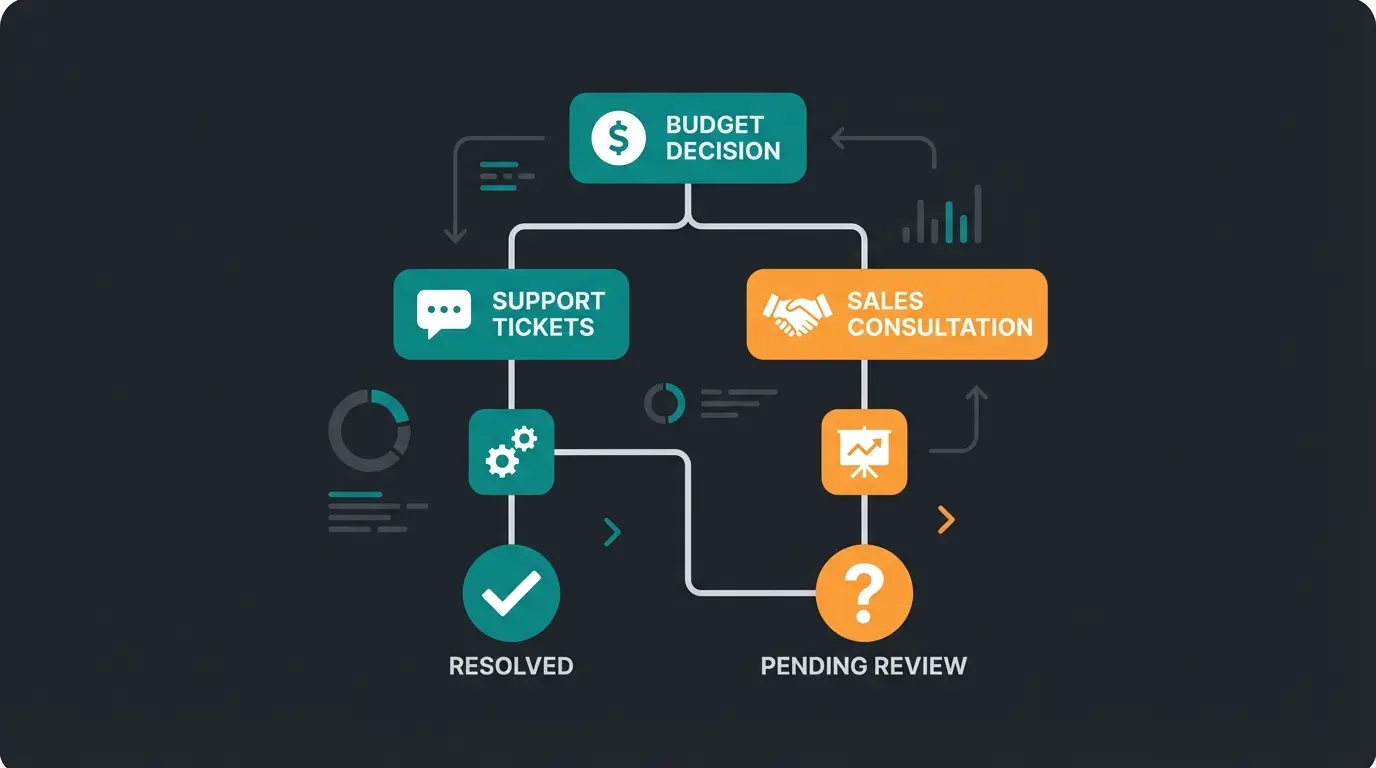
One of the most requested tools when researching Intercom pricing is a realistic cost calculator. Since Intercom's official pricing page emphasizes base costs, here's a practical framework to estimate your true monthly expenses based on typical usage patterns.
Sample Calculation: Mid-Sized Support Team
| Cost Component | Quantity | Unit Price | Monthly Total |
|---|---|---|---|
| Advanced Plan Seats | 5 agents | $85/seat | $425 |
| Fin AI Resolutions | 2,000 resolutions | $0.99/res | $1,980 |
| WhatsApp Conversations | 500 outbound | $0.05/conv | $25 |
| Proactive Support Plus | 1 add-on | $99 flat | $99 |
| Fin Copilot | 3 agents | $29/agent | $87 |
| Total Monthly Cost | $2,616 |
This example shows how a seemingly affordable $425 base cost balloons to over $2,600 when accounting for realistic AI and channel usage. The Vendr SaaS buying platform reports that negotiation can reduce these costs by 20-30%, but only for annual commitments with volume guarantees.
The Consultation AI Alternative Approach
Understanding the limitations of resolution-based pricing for sales scenarios, many forward-thinking companies are exploring specialized consultation AI solutions. These platforms are designed with fundamentally different pricing philosophies that align with revenue generation rather than conversation termination.
The key differentiator is the success metric: while Intercom's Fin measures success by ending conversations, consultation AI measures success by conversion rates, average order value increases, and customer satisfaction during the buying journey. This alignment creates incentives for the AI to engage deeply with customer needs rather than deflect them.
Organizations implementing AI expert consultants report that the shift from support-focused to sales-focused AI changes not just costs but fundamental customer experience outcomes. The AI Employee 'Kira' at Gartenfreunde demonstrates how consultation-focused AI can drive meaningful business results without the per-resolution cost concerns.
Similarly, the implementation of AI Employee Flora shows how businesses can leverage AI for product consultation without being penalized for extended, valuable customer conversations. These examples illustrate the paradigm shift from cost-center AI to revenue-driver AI.
The Future: How AI Employees Revolutionize Customer Engagement
The evolution from simple chatbots to sophisticated AI employees represents a fundamental shift in how businesses approach customer interaction costs. Rather than viewing each conversation as a cost to minimize, leading organizations now see customer engagement as an opportunity to maximize—with pricing models that reflect this philosophy.
As AI employees revolutionize workplace dynamics, the traditional metrics of support efficiency (tickets closed, resolutions achieved) are being supplemented or replaced by engagement metrics (consultation depth, conversion influence, customer lifetime value impact). This shift requires rethinking not just which tools to use, but how to evaluate their pricing models.
Understanding your specific use case—whether support automation or sales consultation—is the critical first step. From there, analyzing consultation conversations insights can help determine which pricing model will deliver the best ROI for your specific business objectives. The comprehensive guide to AI product consultation provides additional frameworks for this evaluation.
Frequently Asked Questions (FAQ)
It depends heavily on usage. A small team (3 agents) on the Essential plan pays approximately $117 base fee. With 500 Fin resolutions (+$495) and WhatsApp usage, the bill can quickly exceed $700 per month. Before committing, use a detailed Intercom cost calculator and project realistic usage volumes including AI resolutions, channel costs, and any required add-ons.
Yes, Intercom offers an 'Early Stage Program.' Eligible startups (typically < 2 years old, < $1M funding) can receive up to 90% discount in the first year. However, be cautious: after one year, costs jump to full price, which often creates a 'lock-in' effect as migrating away becomes costly and time-consuming.
A 'Full Seat' (full price) can communicate with customers—responding to tickets and initiating conversations. A 'Lite Seat' (free in higher plans) can only see internal notes and follow conversations but cannot reply to customers. In the Essential plan, you must pay for a Full Seat for every team member needing any access at all.
For support: Yes, if a human solution costs more than $1 (which in DACH is almost always the case). For sales: No, since here the value lies not in the 'solution' but in the 'dialogue.' For product consultation, specialized sales AIs with different pricing models are often more economical and better aligned with revenue generation goals.
Yes, especially for annual commitments and enterprise volumes. According to SaaS procurement data, discounts of 20-30% are commonly achievable. Focus negotiations on resolution bundle rates, seat volume discounts, and multi-year commitments. Engaging during end-of-quarter periods can also improve your negotiating position.
Conclusion: Making the Right Choice for Your Business
Intercom is the "Mercedes" among support tools—powerful, comfortable, but expensive to acquire and maintain. The platform excels at what it was designed for: efficient customer support ticket management with AI-powered deflection and resolution.
However, anyone wanting to use Intercom for sales consultation should calculate carefully: you often pay a premium fee for a tool that's actually optimized to end conversations rather than sell through them. The per-resolution model that makes support cost-effective becomes a liability when your goal is customer engagement and conversion.
For businesses focused on leveraging AI for revenue generation rather than cost reduction, exploring consultation-focused alternatives may reveal better alignment between pricing models and business objectives. The right choice depends entirely on your primary use case: support efficiency or sales effectiveness.
Stop paying to end conversations. Start investing in AI that engages, consults, and converts. Discover how consultation-focused AI can drive real business growth without resolution-based penalties.
Get Started Free
Lasse is CEO and co-founder of Qualimero. After completing his MBA at WHU and scaling a company to seven-figure revenue, he founded Qualimero to build AI-powered digital employees for e-commerce. His focus: helping businesses measurably improve customer interaction through intelligent automation.