Introduction: Finding the Needle in the Haystack
The German e-commerce market in 2026 faces a paradoxical situation. On one hand, Adobe Commerce (formerly Magento 2) offers one of the most powerful platforms for scalable online shops. On the other hand, it has never been more difficult—or expensive—to find qualified Magento developers who don't just 'keep the system running' but transform it into a genuine revenue engine.
Many shop operators fall into a classic trap when searching for developers: they define the role too narrowly. They look for someone who writes PHP code, customizes templates, and fixes bugs. But in an era where AI and automation dominate commerce, that's no longer sufficient. As Conversational AI evolves, the requirements for e-commerce development have fundamentally shifted.
This article isn't your typical recruiting guide. We don't just analyze current Magento developer costs and hourly rates for 2025/2026—we also show you why you're misallocating your budget if you try to have complex consultation logic 'hardcoded.' We'll guide you from expensive 'custom coding' to intelligent integration, demonstrating how AI integration cuts development time dramatically while improving results.
What Does a Modern Magento Developer Actually Do?
Before we discuss money, we need to sharpen the requirements profile. The term 'Magento developer' is often misleading because it covers a broad spectrum of disciplines. Magento 2 (Adobe Commerce) is a complex enterprise system, not a simple homepage builder.
Backend vs. Frontend: The Great Divide
In modern Magento development, there's rarely 'one' developer who masters everything perfectly. Specialization is increasing, and understanding this distinction helps you hire more effectively:
Backend Developers (The Architects): Their focus lies on PHP, MySQL, database architecture, API interfaces (REST/GraphQL), and server logic. They ensure that the shopping cart functions correctly, prices are calculated accurately, and the connection to your ERP system (such as SAP or Microsoft Dynamics) runs smoothly. A good backend developer writes clean, update-safe code that doesn't buckle under 100,000 products.
Frontend Developers (The Designers): Their focus is HTML, CSS (Tailwind), and JavaScript (Alpine.js, React, Vue.js). They implement the design and ensure optimal user experience (UX). The game-changer here is Hyvä Themes: Previously, the Magento frontend (Luma) was slow and cumbersome. Today, experience with Hyvä Themes is almost mandatory. According to Magecomp, Hyvä dramatically reduces complexity and delivers top performance scores (Google Core Web Vitals). A developer still working exclusively on the old Luma stack in 2026 is often no longer up to date with the latest technology.
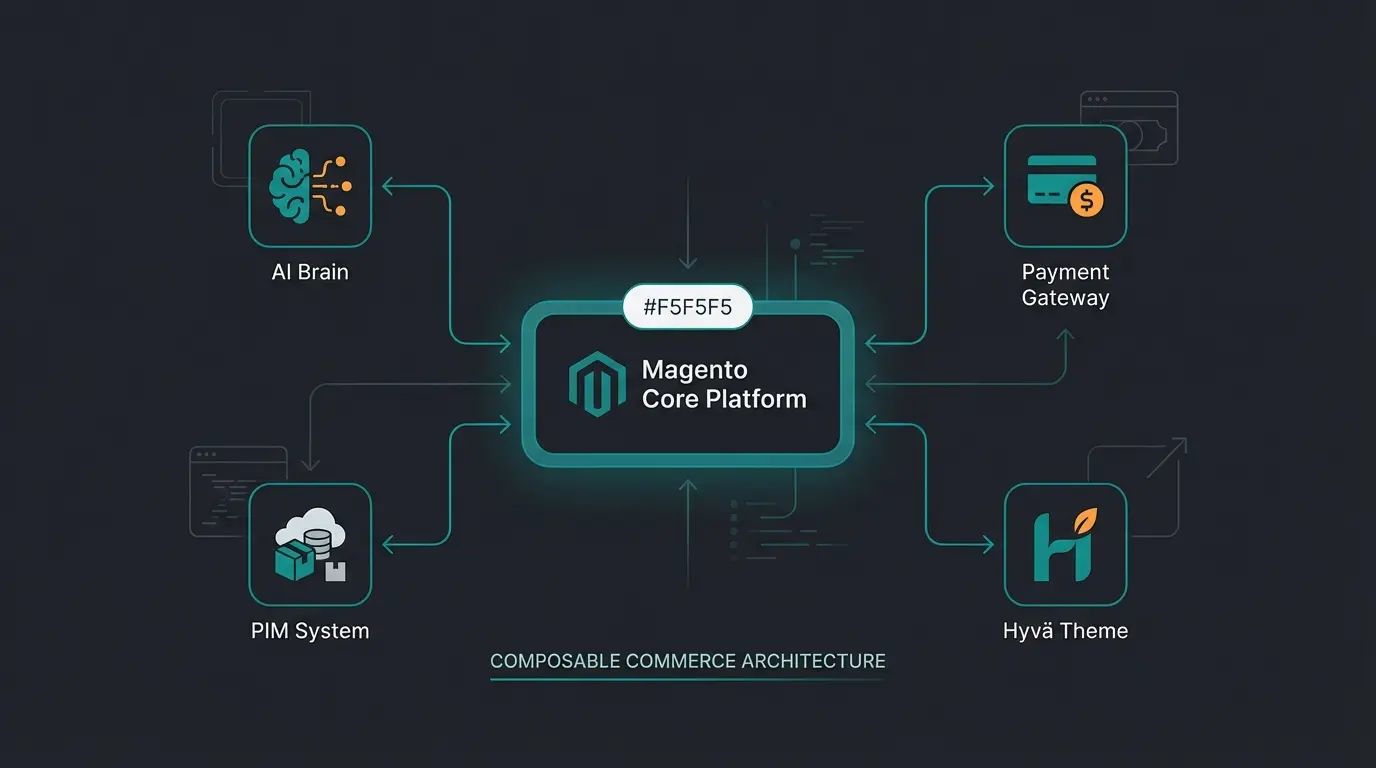
The Shift: From Coder to Integrator
Here lies the greatest leverage for your success. Understanding this shift is crucial for hiring the right talent and allocating your budget effectively.
The Old Way: The shop operator wants a feature (e.g., 'product finder'). The developer writes 5,000 lines of code, builds their own database table and logic. Result: Expensive, rigid, maintenance-intensive. Every product update requires manual rule adjustments.
The New Way: The developer uses an API to connect a specialized service (e.g., an AI-powered Product Consultation Engine). Result: Fast, flexible, low-maintenance. This is where AI product consultation solutions shine, offering dynamic product recommendations without custom code.
Magento Developer Costs & Hourly Rates (2025/2026)
The question about the Magento developer hourly rate is often the first one asked. The answer depends massively on location, contract type, and seniority level. Based on current market data from Germany and international comparisons, the following picture emerges.
Hourly Rates Comparison: DACH vs. Nearshore vs. Offshore
| Region | Experience Level | Hourly Rate (Freelance) | Hourly Rate (Agency) | Notes |
|---|---|---|---|---|
| Germany (DACH) | Junior (1-3 years) | €60 - €85 | €90 - €110 | Often lacking experience with complex M2 architectures |
| Germany (DACH) | Senior (5+ years) | €95 - €140 | €120 - €160+ | High availability reliability, no language barrier, legally secure |
| Eastern Europe (Nearshore) | Senior | €45 - €80 | €60 - €100 | Poland, Ukraine, Romania. Very high technical level, timezone compatible |
| India/Asia (Offshore) | Senior | €20 - €50 | €30 - €60 | Cost-effective, but often higher management effort and timezone difference |
Analysis of the Data: According to Freelancermap, the average hourly rate for Magento profiles lies between approximately €75 and €100, with top talent in Munich or Hamburg significantly higher. Agencies calculate with €120 to €150 due to overhead (project management, QA), as noted by various industry sources.
Salaries: According to Stepstone, permanent Magento developers in Germany earn between €46,000 (entry-level) and over €70,000 (senior) per year. This corresponds to employer gross costs of approximately €60-100k, which at full utilization is often cheaper than freelancers—if you can find them.
Typical hourly rate for experienced Magento developers in Germany
Permanent employment salaries from entry to senior level
Potential cost reduction with Eastern European developers
Hidden Costs in Development
The hourly rate is just the tip of the iceberg. When planning budgets, consider these factors that significantly impact your total cost of ownership:
- Setup & Onboarding: A new developer needs 10-20 hours to familiarize themselves with your existing codebase before they can be productive.
- Project Management: With freelancers, you must handle management. With agencies, you pay for it but get relieved of the burden.
- Maintenance of Custom Code: Every line of code written specifically for you must be reviewed with every Magento update (e.g., from 2.4.7 to 2.4.8). These are the so-called 'Technical Debt' costs.
- Bogus Self-Employment: In Germany, this is a massive issue. If you employ a freelancer permanently like an employee (subject to instructions, integration into the team), you face massive back payments to pension insurance, as outlined by Advocado and e-Recht24.
Skillset Checklist: How to Identify True Professionals
When reviewing applications or evaluating agencies, use this checklist. A developer who works with 2018 methods in 2026 will slow down your shop and create technical debt.
Must-Have Technical Skills
- PHP 8.1+ & MySQL: The foundation of all Magento development
- Magento 2 Architecture: Dependency Injection, Plugins (Interceptors), Events/Observers. Anyone who suggests 'core hacks' (directly modifying Magento files) should be immediately rejected
- Composer: Package management is standard practice
- Git Version Control: Without a clean Git workflow (branches, pull requests), no one should touch your shop
- Elasticsearch / OpenSearch: Essential for catalog performance at scale
Modern Stack Differentiators: Hyvä and AI
This is where the wheat separates from the chaff. These skills indicate a developer who stays current with industry evolution:
Hyvä Themes: Ask explicitly: 'Do you have experience with Hyvä?' Since Hyvä has revolutionized the market (faster, less code), this is an indicator of progressive developers. According to Aureate Labs, Hyvä themes can reduce frontend development time by up to 50%.
API-First Thinking: Can the developer connect systems via REST or GraphQL? This is crucial for integrating AI tools like AI product finder solutions and other modern SaaS services that enhance shop functionality.
PWA (Progressive Web Apps): Experience with PWA Studio or Vue Storefront is a plus, but Hyvä is often the more economical solution for many SMBs. Understanding when to recommend which approach shows business acumen.
Soft Skills and Business Understanding
A developer who blindly works through tickets costs you money. You need someone who asks: 'Why do we want to build this feature this way? Isn't there a standard module for that?' This questioning mindset, combined with understanding of AI in customer service, separates strategic partners from mere code executors.
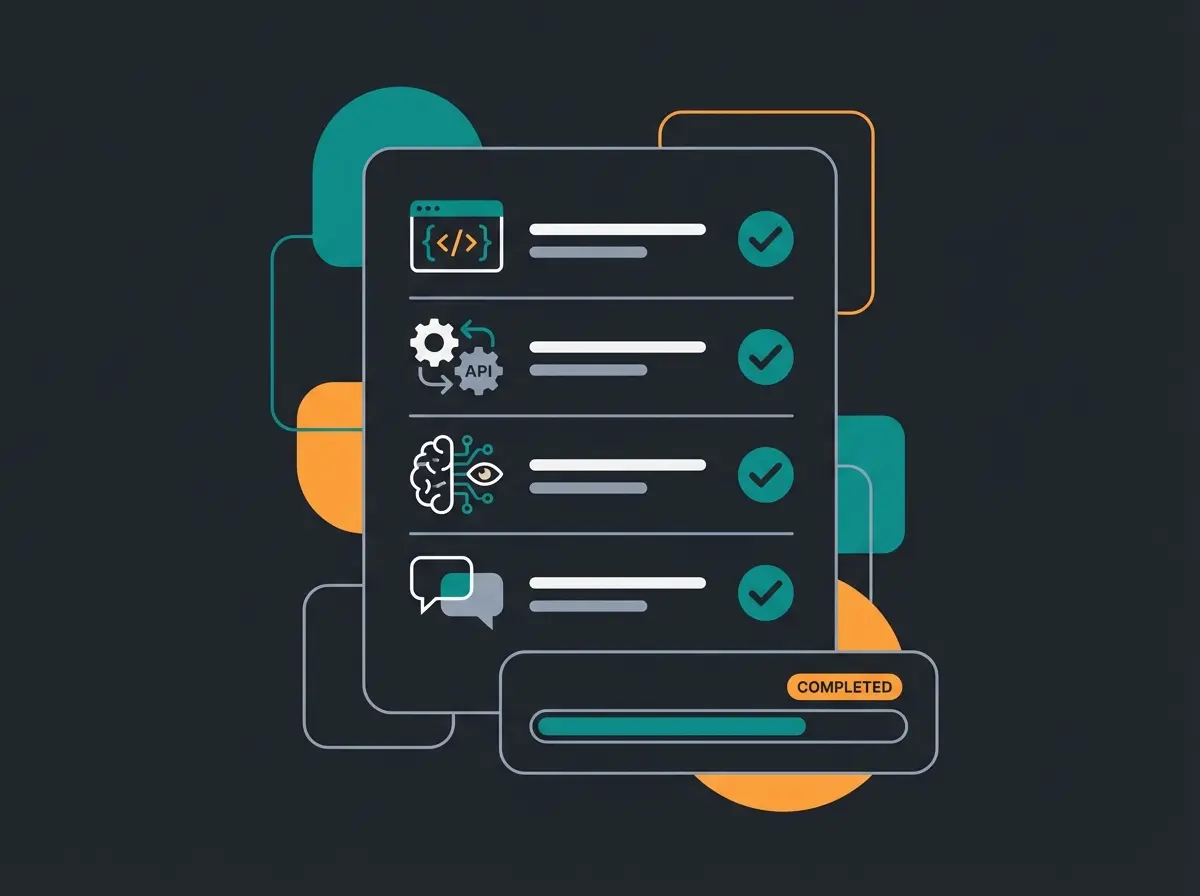
The Product Consultation Trap: Build vs. Buy
This is the most important strategic point of this article. Many shop operators approach a Magento developer with this request:
'I need a product advisor. The customer should answer 3 questions and then get the perfect product suggested.'
This seemingly simple request often leads to the most expensive mistakes in e-commerce development. Understanding the true costs and alternatives is crucial for smart budget allocation.
The Classic Mistake: Custom Coding
The developer says: 'No problem, I'll build that.' They create database attributes for 'questions' and 'answers.' They program logic: IF Answer A THEN show Product X. They build a frontend form. The project takes 2-3 months.
The Problems with this approach are significant:
- Static Logic: As soon as you have new products, you must manually adjust the rules. Product catalog changes become a development project.
- No Intelligence: The advisor doesn't learn. It doesn't understand synonyms. It can't handle unexpected queries. It's fundamentally 'dumb.'
- Cost Explosion: Development runs approximately 80-120 hours. At €100/hour, that's €8,000 to €12,000. Plus ongoing maintenance costs every time your catalog changes.
The Modern Solution: AI Integration
You commission the developer not with building the logic, but only with the integration of a specialized AI solution (SaaS). This approach leverages Consultative AI that already solves the complex product recommendation problem.
The Advantages are transformative:
- Dynamics: The AI scans your product catalog automatically and understands product relationships without manual rule creation
- Superior UX: The AI conducts real conversations (chat or dynamic quiz) instead of rigid filters, similar to how Conversational Commerce solutions work
- Dramatically Lower Costs: Integration often takes only 5-10 hours (API connection). That's €500 to €1,000 one-time, plus a monthly SaaS fee
Build vs. Buy: Cost Comparison for Product Consultation
| Feature | Custom Coding (Magento Dev) | AI Solution Integration |
|---|---|---|
| Development Time | 100-150 hours | 5-10 hours |
| Initial Costs | €10,000-€15,000 (@ €100/h) | €500-€1,000 (setup) |
| Ongoing Costs | Maintenance, bugfixes (~€200/month) | SaaS license fee (variable) |
| Quality / Logic | Static decision trees (If/Then) | AI, NLP, Self-learning |
| Time-to-Market | 2-3 months | 1-2 weeks |
| Conclusion | Expensive & Rigid | Efficient & Scalable |
Recognize that product consultation requires dynamic, intelligent logic—not static rules
Calculate true costs including maintenance, updates, and opportunity cost of delayed launch
Choose an AI product consultation tool that integrates via API with Magento 2
Have your Magento developer connect the API (5-10 hours of work)
Go live in weeks, not months, with AI that continuously improves
Strategic Recommendation: Use your developer budget for things that make Magento unique (checkout processes, ERP integration), and use ready-made AI solutions for user experience and consultation. This is exactly where digital product consultation technology creates the most value. Additionally, ensuring GDPR-compliant AI integration is essential for German market requirements.
Our AI product consultation integrates with Magento in days, not months. Get dynamic, intelligent product recommendations without the custom development costs and maintenance burden.
See AI Consultation in ActionWhere to Find Developers (and How to Brief Them)
The platforms are well-known, but your approach determines success. Understanding where to look—and what to ask—separates successful hires from costly mistakes.
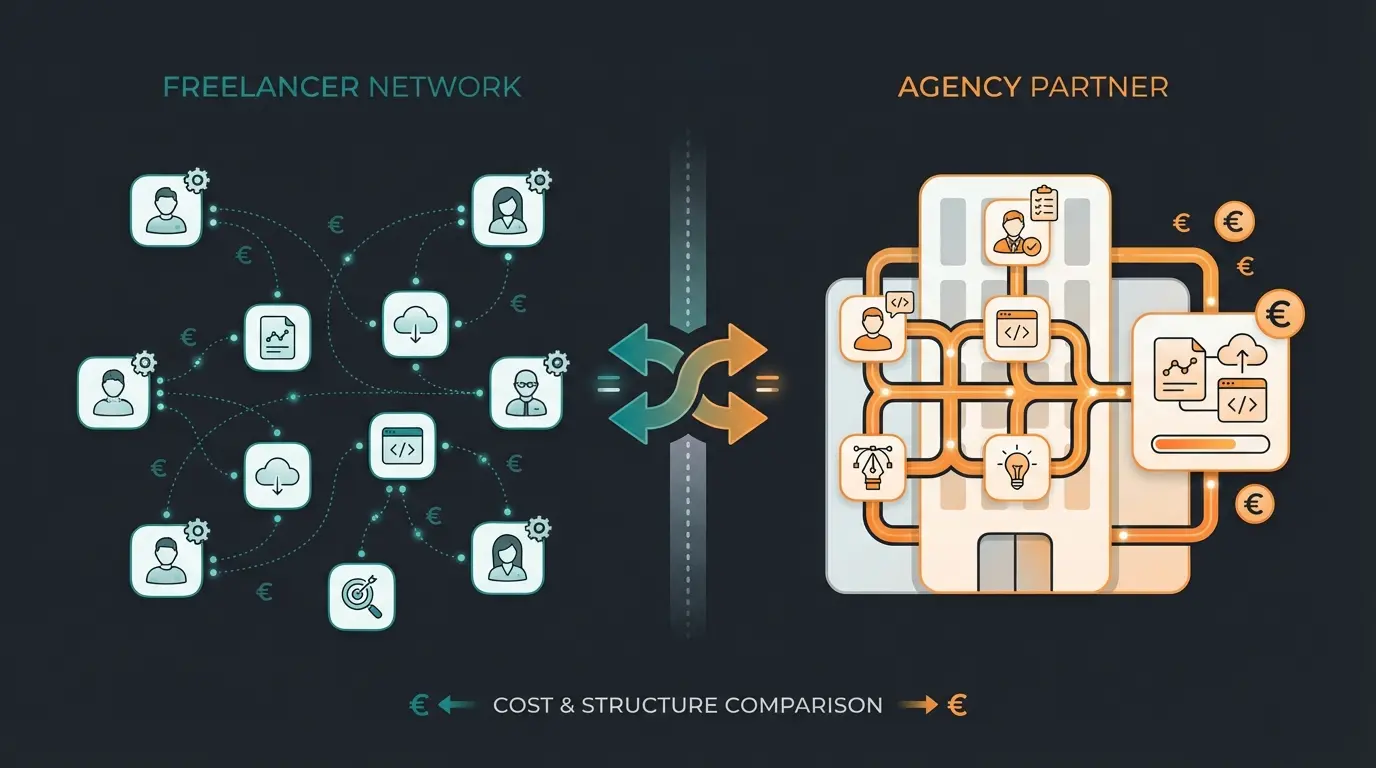
Option 1: Freelancer Portals
Platforms like Freelancermap, Malt, and Upwork offer access to individual developers.
- Good for: Specific tasks, bugfixes, temporary support, well-defined projects
- Risk: Quality fluctuations, unavailability risk (illness, other projects)
- Tip: Filter by 'Hyvä' and 'Magento 2 Certified Professional Developer.' Watch hourly rates—anyone offering under €60 (in DACH) is suspiciously cheap and may indicate quality or reliability issues
Option 2: Specialized Magento Agencies
Agencies like those mentioned in industry comparisons provide comprehensive services.
- Good for: Relaunches, complex architecture, long-term support, mission-critical projects
- Advantage: You buy a team, not a person. Vacation coverage is guaranteed, and knowledge doesn't walk out the door
- Disadvantage: Higher hourly rates (€120+), often less flexible with small changes
The Perfect Job Posting: Attracting Integrators
Your job posting determines the quality of applicants you receive. The difference between attracting coders versus integrators starts with how you describe the role.
Don't write: 'Looking for Magento developer for shop extension.'
Do write: 'Looking for Magento integrator for modernization (Hyvä stack) and connection of AI microservices. Experience with composable commerce architecture preferred.'
The ideal candidate understands that AI Agents and specialized SaaS tools handle certain problems better than custom code, and knows how to integrate them efficiently. They approach problems by asking 'what exists' before 'what do I need to build.'
The Modern Magento Tech Stack: Composable Commerce
Understanding modern architecture helps you evaluate developer competence and make smarter technology decisions. The shift to composable commerce is perhaps the most significant change in e-commerce development this decade.
The traditional 'monolithic' approach—where Magento handles everything from content to checkout to product recommendations—is giving way to a more flexible architecture. In this model, Magento serves as the core commerce engine (checkout, catalog management, order processing), while specialized microservices handle specific functions.
This is precisely where AI employees and AI-powered services fit in. Rather than building every feature into Magento, modern shops connect best-of-breed solutions via API. Your Magento developer's role shifts from 'building everything' to 'architecting connections' between specialized systems.
For product consultation specifically, this means connecting Magento's product catalog to an AI service that handles the complex logic of understanding customer needs and matching them to products. The developer's job becomes ensuring clean data flow and seamless UX—not reinventing recommendation algorithms. This integration approach, combined with solutions for AI for product consultation, represents the future of e-commerce development.
DACH Region Rate Map: Geographic Cost Differences
Developer costs vary significantly by location within the DACH region. Understanding these differences helps you optimize your hiring strategy and budget allocation.
Highest rates due to tech hub concentration and cost of living
Major markets with strong e-commerce presence
Developers outside major cities often offer competitive rates
High-quality alternative with significant cost savings
Geographic arbitrage remains a powerful strategy. Many German companies successfully combine local senior architects (for strategy, code review, and client communication) with nearshore implementation teams (for development execution). This hybrid model can reduce overall costs by 30-40% while maintaining quality standards.
Interview Checklist: Questions That Reveal True Expertise
Use these questions to evaluate candidates beyond their resume claims. The answers reveal whether you're hiring a forward-thinking integrator or a coder stuck in outdated methodologies.
- Technical Foundation: 'Explain how you would implement a custom shipping method in Magento 2 without modifying core files.' (Tests understanding of proper extension development)
- Modern Stack: 'What's your experience with Hyvä Themes, and why would you recommend them over Luma?' (Tests awareness of current best practices)
- API Integration: 'Describe a project where you integrated a third-party SaaS service via API.' (Tests integration experience crucial for AI tools)
- Problem-Solving Mindset: 'We need intelligent product recommendations. How would you approach this?' (The key question—look for 'integrate existing solutions' vs. 'build custom')
- Business Understanding: 'How do you balance feature development speed with long-term maintenance costs?' (Tests strategic thinking beyond pure coding)
The best candidates will reference specific tools, acknowledge trade-offs, and demonstrate understanding that AI consultation closes feature gaps that would otherwise require extensive custom development. They understand that modern e-commerce success comes from smart tool selection, not just coding skill.
Conclusion: Invest in Intelligence, Not Lines of Code
The search for a Magento developer in 2026 is more than just recruitment; it's a directional decision for your e-commerce architecture. The days when developers had to hand-code every pixel and every piece of logic are over.
The shortage of skilled professionals and high Magento developer costs force greater efficiency. You don't achieve this efficiency through cheaper hourly rates, but through smarter architecture. The paradigm shift from 'coder' to 'integrator' represents the most important hiring criterion of this decade.
Your Roadmap to Success
- Accept Market Rates: Good developers in DACH cost €100+/hour. That's acceptable when they work efficiently and make smart technology decisions.
- Embrace Modern Tech: Hyvä Themes save hundreds of hours in frontend development and deliver better performance. Require this expertise.
- Buy Logic, Don't Build It: Don't have your expensive developer build product advisors or search algorithms from scratch. Have them integrate these systems using proven AI solutions.
- Hire Integrators: Look for developers who ask 'what exists' before 'what should I build.' This mindset saves thousands.
- Think Long-Term: Consider total cost of ownership, not just initial development. Custom code requires perpetual maintenance; SaaS solutions include updates.
The best Magento developer for your project is the one who tells you which code they don't need to write because an AI has already solved the problem better. This isn't laziness—it's strategic intelligence that maximizes your return on every development euro spent.

Frequently Asked Questions
Senior Magento developers in Germany (DACH region) typically charge €95-140/hour as freelancers and €120-160+ through agencies. Junior developers range from €60-85/hour freelance and €90-110 through agencies. Nearshore developers in Eastern Europe offer high-quality alternatives at €45-80/hour, making them attractive for implementation work while keeping German senior developers for architecture and review.
It depends on your project scope. Freelancers work well for specific tasks, bugfixes, and temporary support, but carry risk of unavailability. Agencies cost more (€120+/hour) but provide team redundancy, vacation coverage, and project management. For complex projects like relaunches or long-term maintenance, agencies typically offer better reliability. Consider a hybrid approach: agency for architecture and critical systems, freelancers for defined implementation tasks.
Essential skills include PHP 8.1+, MySQL, Magento 2 architecture (Dependency Injection, Plugins, Events), Composer, Git, and Elasticsearch. The key differentiator in 2026 is experience with Hyvä Themes and API-first thinking—developers who can integrate AI and SaaS solutions rather than building everything custom. Avoid developers who suggest 'core hacks' or lack experience with modern composable commerce architecture.
Custom-coding a product advisor typically costs €10,000-15,000 (100-150 hours) with 2-3 months development time, plus ongoing maintenance. The result is static If/Then logic that requires manual updates for new products. AI solutions integrate in 5-10 hours (€500-1,000) and offer dynamic, self-learning recommendations with natural language understanding. The AI approach is 10x cheaper initially, requires less maintenance, and delivers superior user experience.
Three strategies work best: First, use German senior developers for architecture and code reviews while nearshore developers handle implementation. Second, invest in Hyvä Themes upfront—they dramatically reduce frontend development time. Third, adopt 'buy vs. build' thinking: use specialized AI solutions for complex features like product consultation rather than custom development. This approach can reduce total development costs by 40-60% while improving outcomes.
See how AI integration delivers intelligent product recommendations at a fraction of custom development costs. Join forward-thinking e-commerce teams who've already made the switch.
Start Your Free Trial
Lasse is CEO and co-founder of Qualimero. After completing his MBA at WHU and scaling a company to seven-figure revenue, he founded Qualimero to build AI-powered digital employees for e-commerce. His focus: helping businesses measurably improve customer interaction through intelligent automation.