
Why Magento Maintenance is Non-Negotiable in 2025
A Magento shop is comparable to a high-performance sports car. It's powerful, scalable, and capable of leaving your competition far behind. But just like a Formula 1 car can't survive three laps without a pit crew, a Magento system without continuous Magento maintenance will eventually break down.
Many shop operators view maintenance contracts as a form of "insurance"—an annoying necessity to avoid the dreaded "White Screen of Death." However, this is an outdated perspective. In the modern e-commerce landscape, technical Magento care isn't just a shield—it's the foundation for growth.
Why? Because we're at a technological turning point. With the introduction of AI-powered sales tools, stricter legal requirements like accessibility laws, and new security standards like PCI DSS 4.0, simply "keeping the lights on" is no longer enough. When comparing platforms like Magento vs Shopware, maintenance strategy becomes a decisive factor.
In this comprehensive guide, you'll discover why professional maintenance is the prerequisite for your next revenue leap, how to make your shop ready for Artificial Intelligence, and why 2025 is a make-or-break year for many inadequately maintained shops.
The Security Imperative: PCI DSS 4.0 Changes Everything
Before we discuss AI and revenue optimization, we must secure the foundation. Neglecting Magento maintenance today is no longer a calculated risk—it's gross negligence. The threat landscape and technical requirements have intensified dramatically.
Security is the most obvious argument for maintenance, but the rules have changed. It's no longer just about closing simple security gaps. According to BDO, PCI DSS 4.0 takes full effect on March 31, 2025. This new version of the credit card data security standard brings massive changes for shop operators.
PCI DSS 4.0 compliance becomes mandatory
Browser script monitoring now required
Multi-factor authentication requirements drastically increased
As DataDome explains, client-side security has become paramount. Previously, the focus was on the server. PCI DSS 4.0 now requires monitoring of scripts in the customer's browser to prevent attacks like "Magecart" or "Digital Skimming." According to TwoSense, the requirements for Multi-Factor Authentication (MFA) for admin access have been drastically increased.
An outdated Magento shop without current patches will not be able to meet these compliance requirements. The risk isn't just fines—it's the revocation of acceptance agreements by payment providers.
Legal Compliance: Accessibility Law (BFSG/EAA)
A point that many agencies forget in their maintenance offerings is the legal component beyond GDPR. From June 28, 2025, the accessibility strengthening law takes effect, implementing the European Accessibility Act (EAA). As Recite Me reports, this significantly impacts e-commerce businesses.
A shop that's technically stuck in 2023 often doesn't meet these requirements. Outdated frontend themes or checkout processes can be subject to legal action or substantial fines from June 2025 onward. According to Demoup Cliplister, businesses must prepare now to avoid costly last-minute modifications.
As part of modern Magento care, we regularly check the frontend's conformity with these new legal standards. This approach to technical maintenance ensures your shop remains compliant across all regulatory requirements.
Performance & Core Web Vitals Impact
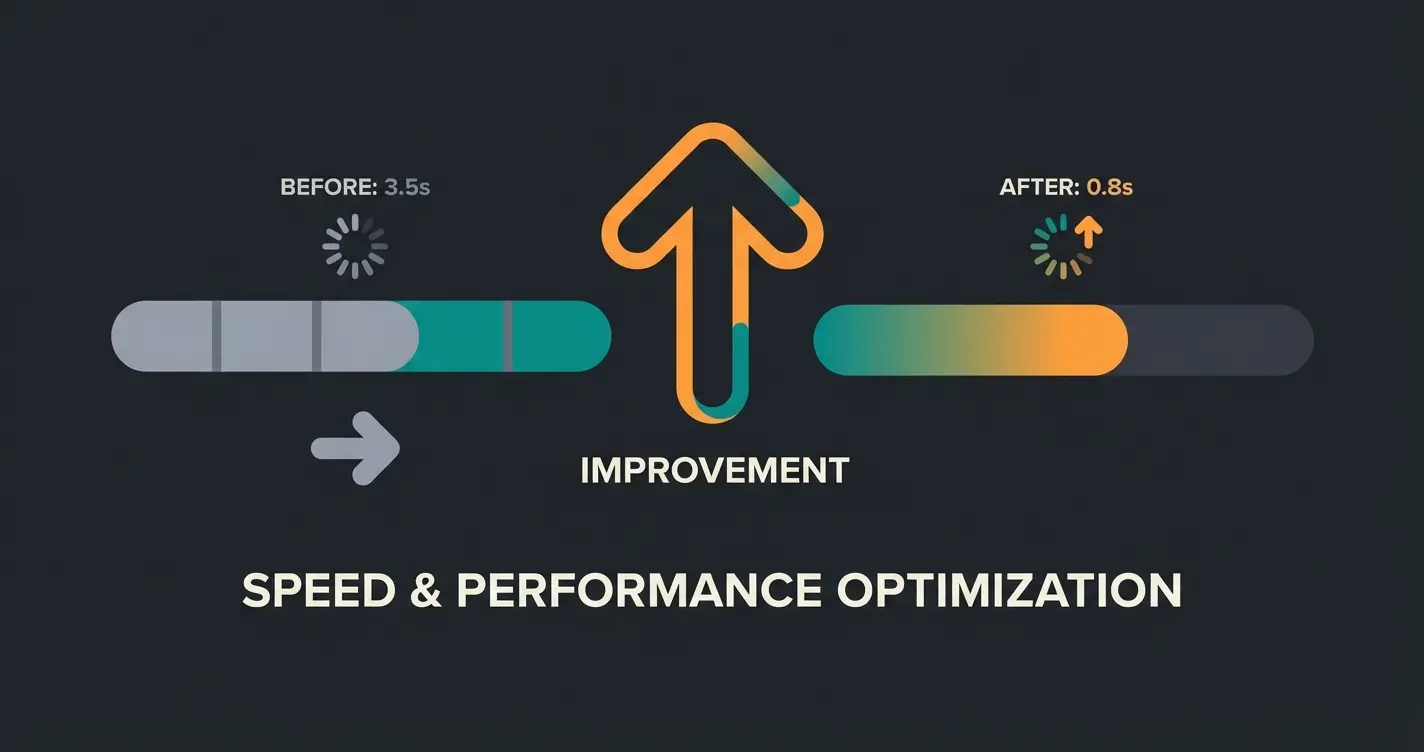
Google has long made "Core Web Vitals" a ranking factor. Outdated Magento versions often run on outdated PHP versions (e.g., PHP 7.4 or 8.1), which are significantly slower than modern standards.
With the release of Magento 2.4.8 in April 2025, PHP 8.4 is supported, as confirmed by MGT Commerce. This version offers significant performance advantages through more efficient code execution (JIT compiler improvements). According to Liquid Web, these improvements can significantly boost shop performance.
Without regular maintenance, log tables and indexes bloat, drastically worsening loading times (Time to First Byte). Choosing the right Magento Cloud hosting solution complements your maintenance strategy for optimal performance.
What Belongs in a Professional Magento Maintenance Contract
Many agencies offer "maintenance" but actually mean "we'll call when the server is on fire." A proactive Magento maintenance contract must cover much more today. Here's a checklist of what you should expect from a modern service provider.
Technical Core & Updates
The heart of maintenance is keeping the system current. This includes security patches within 24-48 hours of Adobe Security Bulletin releases, plus version upgrades for minor and patch releases.
- Security patches applied within 24-48 hours of release
- Version upgrades to Magento 2.4.8 (released April 2025) as essential updates
- Migration from PHP 8.1/8.2 to PHP 8.3 or 8.4, as PHP 8.1 is already End of Life
- Extension compatibility checks after each update
- Custom code review for deprecated functions
As MGT Commerce confirms, support for Magento 2.4.4 and 2.4.5 ends in 2025. Shops on these versions will no longer receive security updates and are acutely at risk. Understanding the full scope of a Magento shop guide helps you plan your upgrade path effectively.
Monitoring & Prevention
Reaction is good, but prevention is better. A comprehensive monitoring setup should include 24/7 uptime monitoring, transaction monitoring that alerts when orders suddenly stop coming in (even though the shop technically appears "online"), and SSL certificate monitoring to avoid expired certificates.
When seeking expertise, consider working with a Magento freelancer in Germany who understands local compliance requirements alongside technical maintenance needs.
Data Security & Recovery
Data security forms another critical pillar. This includes offsite backups with daily backups of the database and file system to a separate server, plus disaster recovery tests. A backup is worthless if restoring it hasn't been tested. A good maintenance contract includes at least one annual "restore test."
Database & Performance Care
- Log cleaning: Purging old entries from the database
- Index optimization: Ensuring re-indexing runs cleanly
- Varnish & Redis tuning: Adjusting caching parameters to new traffic patterns
- Query optimization: Identifying and fixing slow database queries
- Image optimization: Compressing and serving images efficiently
From Maintenance to Optimization: The AI Advantage
Here's where the wheat separates from the chaff. Most agencies stop at the points mentioned above. We're just getting started here. Our thesis: Technical maintenance is the prerequisite for content intelligence.
You cannot install advanced AI-powered product consultation or personalized search on a shop whose data structure is inconsistent or whose codebase is outdated. A "Smart Maintenance" approach integrates AI preparation into the monthly cycle.
The Problem: Garbage In, Garbage Out
Many shop operators want to use AI to generate product texts or deploy chatbots. But if the attributes in Magento aren't maintained (e.g., missing size specifications, inconsistent color names), the AI hallucinates or delivers incorrect results.
This is where AI consulting in e-commerce becomes invaluable. Understanding how AI tools interact with your product data helps you prepare your shop for intelligent automation.
Our Solution: AI-Powered Health Checks
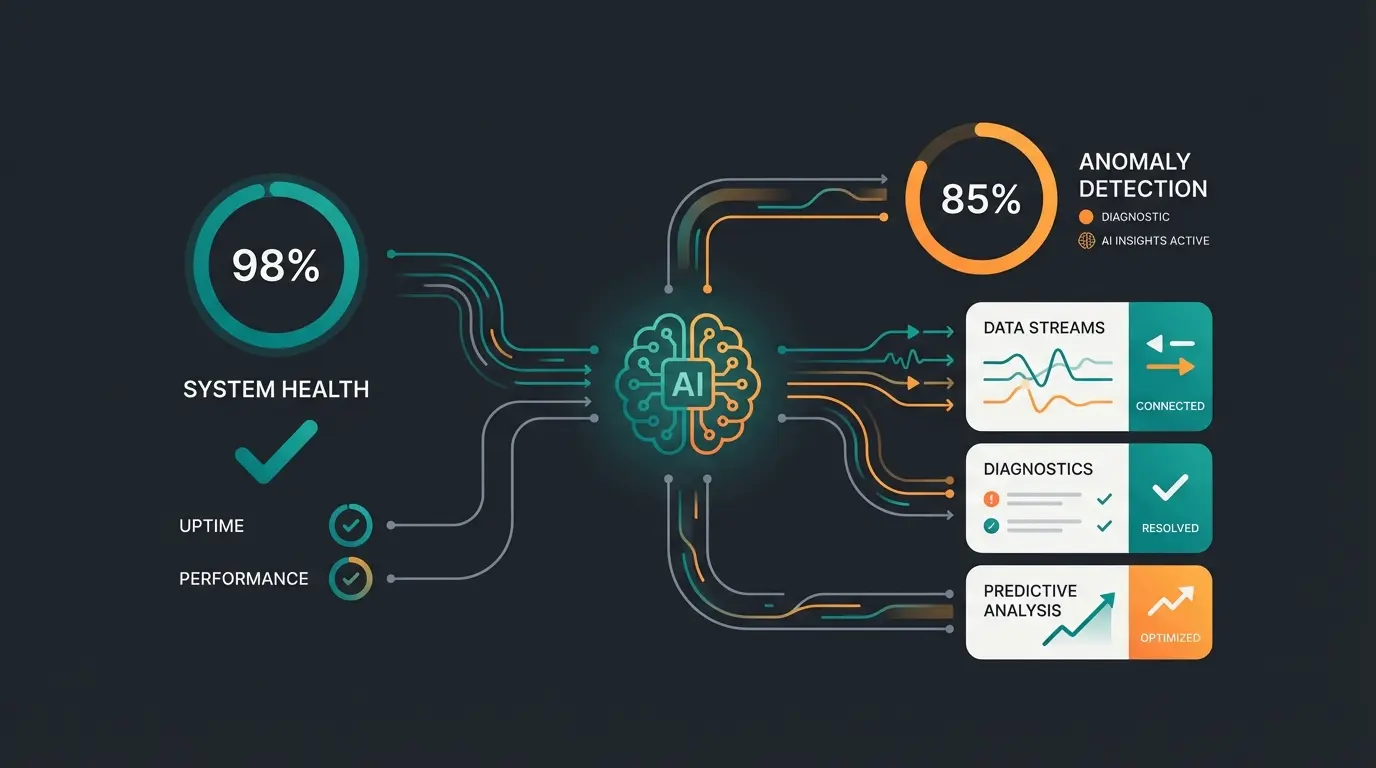
As part of our Magento care, we don't just perform code updates—we use AI tools to analyze your shop's health:
- Data consistency checks: Our scripts verify whether product attributes are optimized for indexing by search engines and AI bots
- Automated SEO monitoring: We detect soft 404 errors or orphaned categories that jeopardize your visibility index
- Performance anomaly detection: AI-powered monitoring recognizes patterns (e.g., 'The checkout is 200ms slower on Saturdays') that would escape a human admin
The added value: We transform your shop from a static catalog into a dynamic sales machine. Secure code + Clean data + AI = Higher conversion rate. When combined with AI-guided selling, this approach maximizes your revenue potential.
Secure daily offsite backups of database and files
Apply updates to isolated test environment
Automated tests verify all critical functions
Zero-downtime deployment during low-traffic hours
24/7 performance and security monitoring
Continuous AI-driven improvements and refinements
Discover hidden optimization potential with our free Magento Health Check. Our experts analyze your shop's security, performance, and AI readiness.
Request Free Health CheckThe Process: How We Guarantee Zero Downtime
The biggest concern with Magento updates is that the shop won't work after the update or will be offline for an extended period. To prevent this, we rely on modern CI/CD (Continuous Integration / Continuous Deployment) pipelines.
Step 1: Local Development & Staging Environment
No change ever touches your live system directly. We mirror your live shop to an exact copy (staging environment). Here, updates (e.g., to Magento 2.4.8) are installed and conflicts with third-party modules are resolved.
This staging approach is essential regardless of whether you're considering Shopware alternatives or staying with Magento—proper testing environments prevent costly production issues.
Step 2: Automated Tests (MFTF)
Here's where technology comes into play that many competitors ignore. We use the Magento Functional Testing Framework (MFTF). Instead of manually clicking through the shop, automated scripts run hundreds of test orders. Does the shopping cart work? Does PayPal function? Are shipping costs calculated correctly? Only when all lights are green is the update approved.
This level of technical rigor is what separates professional Shopware 6 support and Magento maintenance from amateur operations. The AI integration beats manual testing in both speed and accuracy.
Step 3: Deployment & Zero-Downtime
We use deployment strategies that reduce downtime to fractions of a second. The new code is loaded onto the server while the old one is still running. Only when everything is ready is the "switch flipped" (symlink switch). The customer notices nothing about the update—except that the shop might be faster afterward.
Costs & ROI: Maintenance as an Investment
The question about Magento maintenance costs is legitimate. But it must be viewed in relation to the costs of an outage.
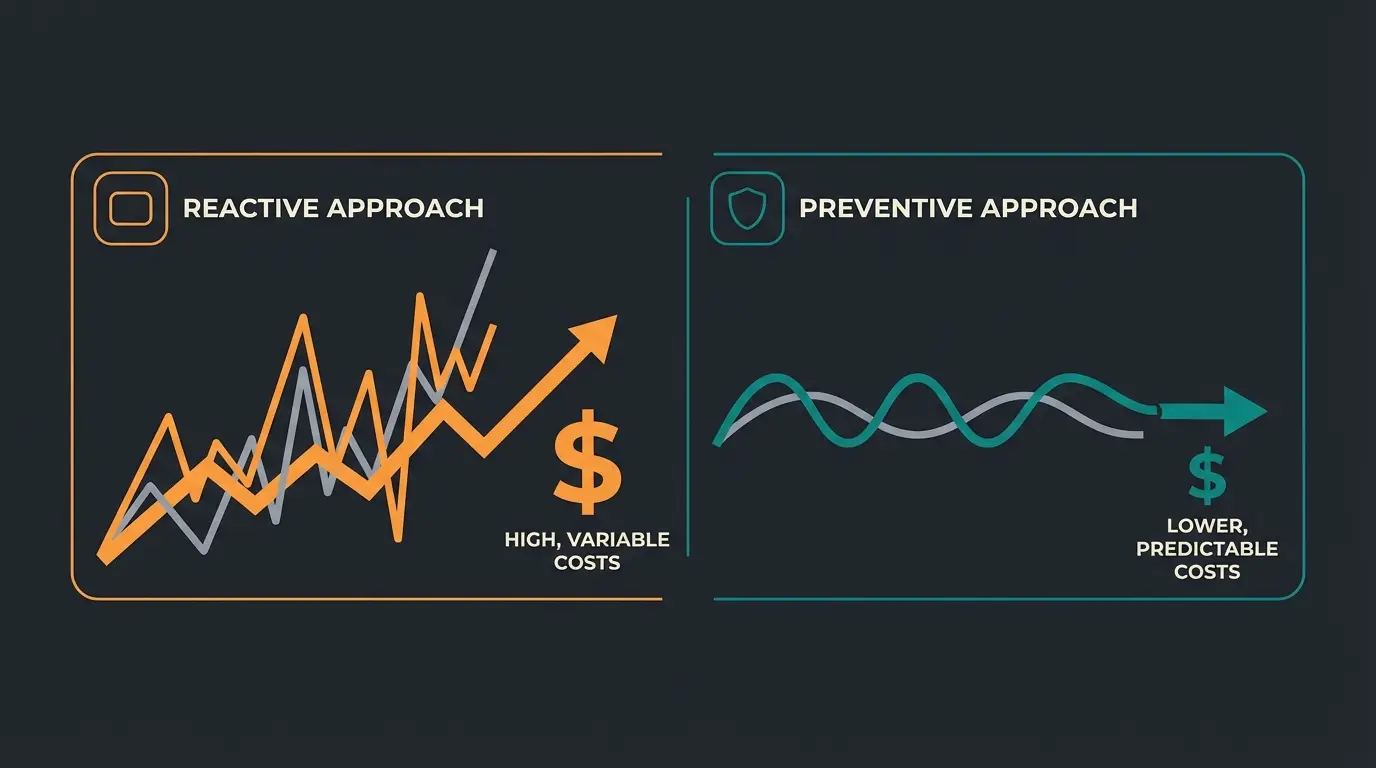
The Break-Fix Model (Expensive & Risky)
You don't pay a monthly flat rate. But when the shop gets hacked or stops working after a server update, you pay emergency hourly rates. Costs are unpredictable—a hack cleanup can quickly cost €5,000 to €15,000, plus lost revenue. The risk is extremely high.
The Retainer Model (Predictable & Secure)
You pay a fixed monthly amount (e.g., starting from €450 to €2,000, depending on complexity). All updates, monitoring, and small optimizations are included. A single prevented outage day (e.g., on Black Friday) often pays for the annual contract. Additionally, continuous performance optimization ensures a steadily improving conversion rate.
| Feature | Standard 'Firefighter' Agency | Our Smart Maintenance |
|---|---|---|
| Security Updates | Only on request / in emergencies | Proactively within 48 hours |
| Cost Structure | Unpredictable invoices | Predictable monthly flat rate |
| Performance Tuning | No | Included (Core Web Vitals) |
| Product Data Hygiene | No | Yes (AI-Ready Check) |
| Legal Compliance (EAA) | Often ignored | Ongoing verification |
| Deployment | Often with downtime | Zero-downtime pipeline |
| AI Integration Support | No | Yes (Full preparation) |
For shops leveraging AI-powered sales consultation, proper maintenance becomes even more critical as these systems require clean, consistent data to function effectively.
Looking Ahead: Adobe's New Release Calendar
It's important to understand that the way Adobe maintains Magento is fundamentally changing. Those without a strategy now will soon be left behind.
The End of Quarterly Updates
Previously, there were major updates every three months. From January 2026, Adobe is switching to a monthly patch cycle, as confirmed by Adobe.
- Monthly security fixes: Isolated security patches appear every month
- Annual feature updates: New features come only once a year (usually in May)
- Increased maintenance frequency required for security compliance
- Legacy update approaches become unsustainable
According to Ayko, this transition requires shops to fundamentally rethink their maintenance approach.
The shift toward more frequent updates also impacts how you approach AI enhanced design implementations—ensuring your frontend stays current while maintaining visual consistency.
FAQ: Common Questions About Magento Maintenance
At minimum four times yearly for security patches. With the 2026 transition, a monthly rhythm is recommended. For major versions (e.g., from 2.4.7 to 2.4.8), we recommend one update per year to avoid falling behind technically.
A patch is a small update (e.g., 2.4.7-p1) that only closes security gaps. It doesn't change functionality and is low-risk. An upgrade is a version jump (e.g., 2.4.7 to 2.4.8). Here, new features are introduced, PHP versions are updated, and performance is improved. This requires more testing.
We strongly advise against it. Magento is a complex ecosystem. An error in the command line (CLI) or an incompatibility with an extension can paralyze the entire shop and corrupt the database. Without a staging environment and backup strategy, the risk of revenue-relevant downtime is too high.
After an update, caches (Varnish, Full Page Cache) are often cleared. The shop must rebuild these ('cache warming'). A good maintenance process includes an automated 'crawler script' that warms up the cache before real customers access the shop, ensuring they immediately experience fast loading times.
An AI-ready shop has clean, consistent product data, optimized attributes for search and filtering, up-to-date technical infrastructure (PHP 8.3+, Magento 2.4.7+), and proper API configurations. Our health check evaluates all these factors and provides a detailed readiness report.
Conclusion: Prepare Your Shop for the Future
Magento maintenance in 2025 is far more than installing security updates. It's the strategic decision to make your e-commerce channel legally compliant (accessibility laws), data protection compliant (PCI DSS 4.0), and technologically leading (AI-ready).
Don't wait until the next hack happens or the warning letter about inadequate accessibility arrives in your mailbox. According to Kiwi Commerce, proactive maintenance is the only sustainable approach for modern e-commerce.
The shops that thrive in 2025 and beyond will be those that view maintenance not as a cost center, but as a strategic investment in growth. With clean technical foundations, your shop is ready for the next generation of e-commerce tools—from AI-powered product consultation to intelligent search and personalized recommendations.
Let's check together whether your shop is ready for the next level. Request our free Magento Health Check now and discover what hidden potential lies dormant in your system.
Request Free Health Check
Kevin is CTO and co-founder of Qualimero. As an AI architect with over 15 years of experience as CTO and CPO in the tech industry, he designs the AI systems that automate tens of thousands of customer interactions daily for Qualimero's clients — reliably, securely, and at scale.