
Cloud Is Not Just Cloud: Understanding the Differences
When searching for Magento Cloud, you'll quickly find yourself in a jungle of marketing terms. Before we compare providers, we need to distinguish between the three fundamental architecture types that dominate the market in 2026. This distinction is crucial because choosing the wrong model can cost you thousands in unnecessary expenses or leave you with infrastructure that can't scale when you need it most.
1. Adobe Commerce Cloud (PaaS)
This is Adobe's official product. It's a Platform-as-a-Service (PaaS) solution that runs on Microsoft Azure or AWS infrastructure but is completely managed by Adobe. According to NetSolutions, Adobe Commerce Cloud offers a single-tenant architecture that provides high security standards and integrated enterprise tools.
- Target audience: Large enterprise customers with massive budgets
- Advantage: Everything from one source, integrated tools (e.g., Fastly CDN, New Relic), single-tenant architecture for high security as noted by LitExtension
- Disadvantage: Very high costs (license fees based on gross merchandise value/GMV, starting price often >$40,000/year according to BSSCommerce and Magestore), less flexibility for server-side customizations, vendor lock-in
2. Managed Cloud Hosting (The 'Sweet Spot')
Here you host Magento Open Source or Adobe Commerce on the cloud infrastructure of specialized providers (in Germany, for example, Maxcluster or Mittwald). This approach is similar to what many businesses explore with Shopware cloud hosting, where managed solutions provide the optimal balance of control and convenience.
- Target audience: The upper mid-market and ambitious e-commerce projects in the DACH region
- Advantage: Excellent price-performance ratio, German server location (GDPR), specialized Magento support, high flexibility through custom container solutions
- Disadvantage: You still need an agency or internal developers for application management
3. Hyperscaler Self-Hosted (AWS, Google Cloud, Azure)
You rent raw computing power (IaaS) and build your stack yourself. This is the path for tech corporations with their own DevOps teams.
- Target audience: Tech corporations with dedicated DevOps teams
- Advantage: Unlimited scalability, pay-per-use pricing model
- Disadvantage: You're responsible for everything—from Linux kernel security to database clustering. For 95% of shop operators, this is not recommended, as maintenance costs (TCO) explode according to analysis by Abbacus Technologies
If yes, self-hosted hyperscaler options become viable. If no, move to the next question.
If yes, Adobe Commerce Cloud offers enterprise-grade managed services. If no, continue to the next step.
If yes, choose German managed hosting providers like Maxcluster or Mittwald for GDPR compliance.
For 80% of businesses, managed cloud hosting offers the best balance of performance, cost, and flexibility.
Magento Hosting Comparison for Germany (2026 Edition)
For the German market, specialized managed hosting providers have established themselves as the gold standard. They offer cloud performance but with a service level that hyperscalers cannot provide. Understanding Shopware hosting costs can help you benchmark what to expect in the broader managed hosting landscape.
Here's a direct comparison of the top options, considering performance, costs, and AI-readiness for the cloud vs on-premise Magento decision.
| Feature | Adobe Commerce Cloud | Maxcluster (Managed) | Mittwald (Managed) | AWS / Self-Hosted |
|---|---|---|---|---|
| Type | PaaS (Full Service) | Managed Cloud Cluster | Managed Cloud / Container | IaaS (Infrastructure) |
| Entry Costs | Very High (from ~$40k/yr) | Medium (from ~€50-100/mo) | Affordable/Medium (from ~€35/mo) | Variable (Pay-as-you-go) |
| Server Location | Global (selectable) | Germany (Paderborn/Frankfurt) | Germany (Espelkamp) | Global (Frankfurt possible) |
| Tech Stack | Fixed (Adobe Stack) | Optimized (Linux, Nginx, Varnish) | Flexible (mStudio, Custom Container) | Complete DIY |
| Performance | High (Fastly included) | Excellent (NVMe, Redis optimization) | Excellent (Varnish, LiteSpeed) | Depends on setup |
| AI-Readiness | Integrated (Adobe Sensei) | High (Strong hardware, Cluster) | Very High (Python/AI Container Support) | Unlimited (but complex) |
| Support | Ticket System (SLA) | 24/7 Expert Support | 24/7 Personal Support | Community / No Support |
Deep Dive: The German Market Leaders
Maxcluster
Maxcluster is considered a performance specialist. With features like their proprietary Application Center and hardware that relies on NVMe SSDs and optimized CPU clock rates, they target high-traffic shops.
- Specialty: Focus on stability and scalability through cluster technology. Services like Varnish, Redis, and Elasticsearch/OpenSearch are pre-configured
- AI Factor: Due to massive computing power and scalability, even load-intensive search queries (vector search) can be handled efficiently
Mittwald
Mittwald has reinvented itself with mStudio. The architecture allows you to easily spin up other services (like Node.js or Python) alongside the classic Magento PHP container.
- Specialty: The flexibility. For AI applications (e.g., a chatbot), you can simply start a Python container in the same network
- AI Factor: Mittwald actively positions itself in the 'AI Hosting' space and offers infrastructure that goes beyond pure web hosting
Why 'Speed' Alone Is No Longer Enough: The AI Factor
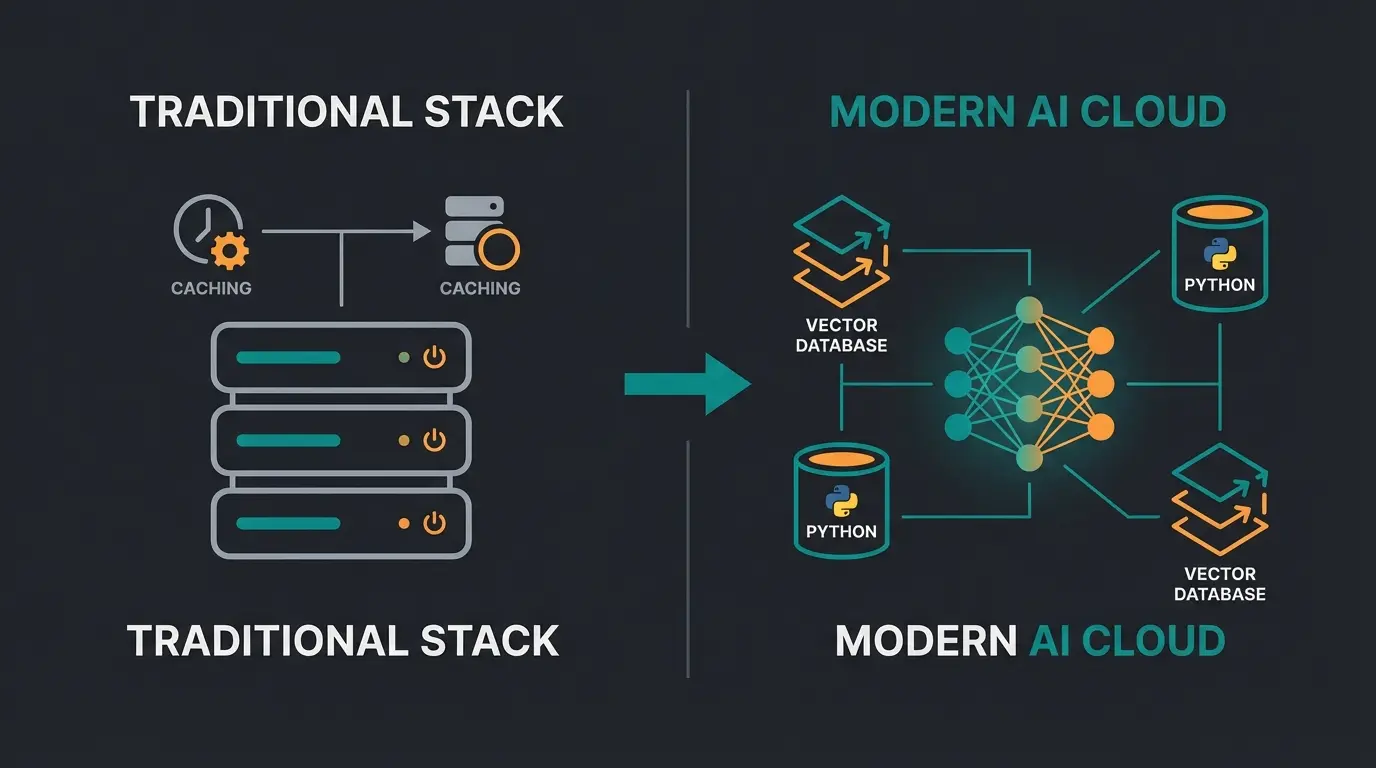
In the last ten years, the main goal in any Magento hosting comparison was: How fast does the category page load? (TTFB - Time to First Byte). In 2026, a loading time of under 0.5 seconds is no longer special—it's a prerequisite. The new competitive advantage lies in the intelligence of the shop.
The Problem: Static vs. Dynamic
Classic hosting is designed to deliver static content extremely fast (Varnish Cache). Modern e-commerce strategies, however, rely on AI-powered product consultation as explored in our guide on AI e-commerce:
- "Which bicycle fits my height and my commute to work?"
- "Show me pants that match this shirt."
- "What's the best laptop for video editing under €1,500?"
These queries cannot be cached. They require real-time computation (inference) on the server. This is why many businesses are exploring AI Product Consultation solutions that fundamentally change how customers interact with online stores.
The Solution: AI-Ready Infrastructure
When you choose to self-host Magento or select a provider, you must pay attention to the following components in 2026. These requirements mirror what we've documented in our AI-ready infrastructure guide:
1. Vector Databases (Vector Search)
Classic search (MySQL/Elasticsearch) hits its limits with semantic queries. Modern shops use vector search (e.g., via OpenSearch k-NN Plugin or Milvus). According to Maxer, vector-based search has become essential for AI-driven product discovery.
- Requirement: Your host must support the installation of OpenSearch in current versions and provide enough RAM, as vectors are memory-intensive
2. Python Support & Containers
Most AI models and RAG pipelines (Retrieval-Augmented Generation) run on Python. This is essential for implementing AI Chatbots E-Commerce solutions effectively.
- Hosting Check: Does your host allow running Python scripts or Docker containers alongside Magento? With Adobe Commerce Cloud, you're often limited to the integrated (and expensive) Adobe Sensei features. With Managed Hosting (like Mittwald's mStudio), you can deploy your own microservices
3. Scalability for 'Thinking Time'
When an AI agent generates an answer, it consumes CPU cycles. A shared hosting package would immediately buckle under this load. You need guaranteed vCPUs or dedicated cores.
Fast loading with static caching, but limited to pre-cached content
Real-time consultation requires scalable compute for dynamic answers
AI-powered product recommendations can dramatically increase sales
AI workloads require significantly more compute than traditional hosting
On-Premise vs. Cloud: The Cost Check (TCO)
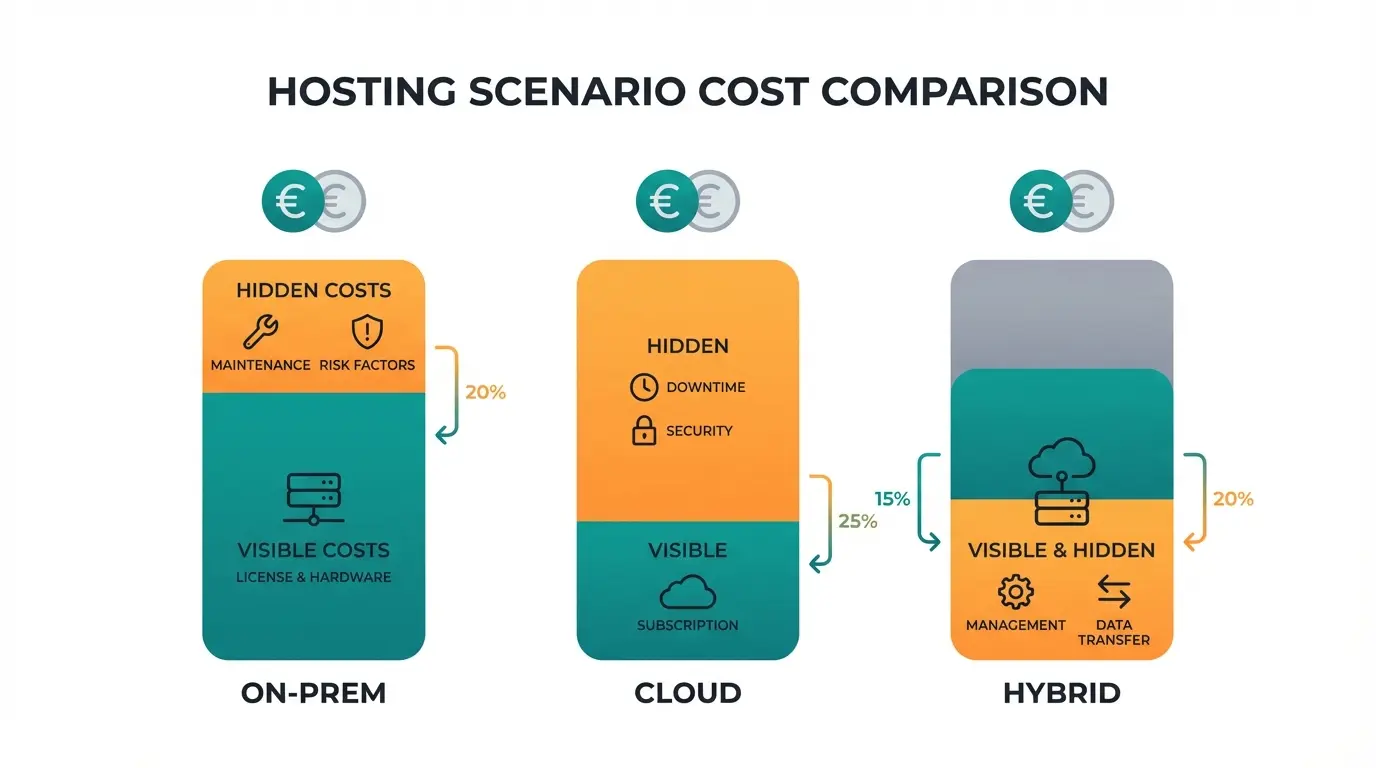
A common mistake is purely comparing monthly hosting bills. A sound decision requires examining the Total Cost of Ownership (TCO). This is a crucial consideration when evaluating cloud vs on-premise Magento options, similar to what we've analyzed in our AI product consultation TCO guide.
Scenario A: Adobe Commerce Cloud (PaaS)
- License: High (revenue-dependent)
- Hosting: Included
- Maintenance: Infrastructure updates included, application updates by agency
- Hidden Costs: Expensive add-on features, higher agency hourly rates for specialized cloud development
Scenario B: Managed Cloud Hosting + Magento Open Source
Using providers like Maxcluster or Mittwald:
- License: €0 (Open Source)
- Hosting: Approx. €300 - €800/month for a performant shop
- Maintenance: Infrastructure by host (included), Magento updates by agency
- Hidden Costs: Costs for extensions (which are often included with Adobe Commerce, e.g., B2B modules)
Scenario C: Self-Hosted (AWS/Root Server)
- License: €0
- Hosting: Approx. €100/month (hardware)
- Maintenance: Extremely High. You need internal know-how or an external sysadmin (min. €150/hr) for security updates, firewall configuration, backups, monitoring
- Risk: In case of an outage on Black Friday, you alone are responsible
TCO Conclusion: For shops with revenue between €1 million and €20 million, Scenario B (Managed Cloud Hosting) is almost always the most economical solution in Germany. The costs for Adobe Commerce Cloud often only pay off with very complex B2B requirements or extremely high revenues, where the license costs become relative according to analysis by IronPlane.
Discover how intelligent product consultation can transform your Magento store. Our AI solutions work seamlessly with leading cloud hosting providers to maximize your conversion rates.
Get Started FreeGDPR and Data Security in Cloud Solutions
A topic that international comparisons often ignore, but is mission-critical in Germany: The General Data Protection Regulation (GDPR/DSGVO). This consideration is just as important for AI online shop implementations as it is for hosting decisions.
The Problem with US Clouds
Even though AWS and Google have data centers in Frankfurt, the parent companies are subject to the US CLOUD Act. This can theoretically allow access by US authorities to data stored on their infrastructure, regardless of physical location.
The Advantage of Local Hosts
Providers like Mittwald or Maxcluster are German companies with data centers in Germany.
- Legal Security: Contracts under German law
- Certification: Look for ISO 27001 certifications of the data centers
- AI & Data Protection: When using AI models, ensure that customer data (e.g., from chat) is not sent to OpenAI in the USA for training purposes
Solution: Host open-source LLMs (like Llama 3 or Mistral) directly on your managed cloud infrastructure in Germany. This requires strong GPU/CPU power but guarantees 100% GDPR compliance. This approach is increasingly important as AI-readiness needed becomes a standard requirement for modern e-commerce.
Practical Checklist: How to Choose the Right Host
Practical Checklist: Selecting Your Hosting Provider
Before you sign a contract, clarify these points. Understanding these requirements is similar to evaluating Shopware vs Shopify where infrastructure capabilities can make or break your AI commerce strategy:
- Tech Stack: Are Varnish, Redis, and Elasticsearch/OpenSearch (min. version 2.x) included in the standard and pre-configured?
- Scalability: Can I scale up RAM/CPU at the push of a button (or automatically) for the holiday shopping season? (Auto-Scaling)
- Backup Strategy: Are backups stored geo-redundantly? How fast is a restore possible?
- AI Support: Can I deploy Docker containers (for Python/Node.js) myself?
- Support Level: In an emergency, am I talking to a call center agent or a Linux admin who knows Magento?
The Intelligence Layer: Beyond Traditional Hosting
While competitors focus entirely on server speed (TTFB, uptime), there's a massive gap in the conversation: What do you do with all that computing power after the page loads? They stop at 'the shop loads fast.' They miss 'the shop sells better.'
This is where implementing an AI product finder becomes a game-changer. Instead of a static FAQ, an AI agent guides the user through complex product selections. This requires scalable cloud infrastructure, not shared hosting.
The traditional hosting metrics measured static page delivery. Modern e-commerce demands dynamic customer interaction. Your hosting infrastructure must support both—blazing-fast static content delivery AND resource-intensive real-time AI consultation.
| Capability | Traditional Hosting | AI-Ready Cloud Hosting |
|---|---|---|
| Content Delivery | Static cached pages | Static + Dynamic real-time responses |
| Search Type | Keyword-based MySQL/Elasticsearch | Vector search with semantic understanding |
| Customer Interaction | Pre-written FAQ pages | Conversational AI product consultation |
| Personalization | Basic rules-based recommendations | ML-powered real-time recommendations |
| Infrastructure | PHP-only stack | Hybrid PHP + Python/Node.js containers |
Understanding the Shopware AI guide principles can help you appreciate how AI integration fundamentally changes infrastructure requirements across all major e-commerce platforms.
Conclusion & Recommendations
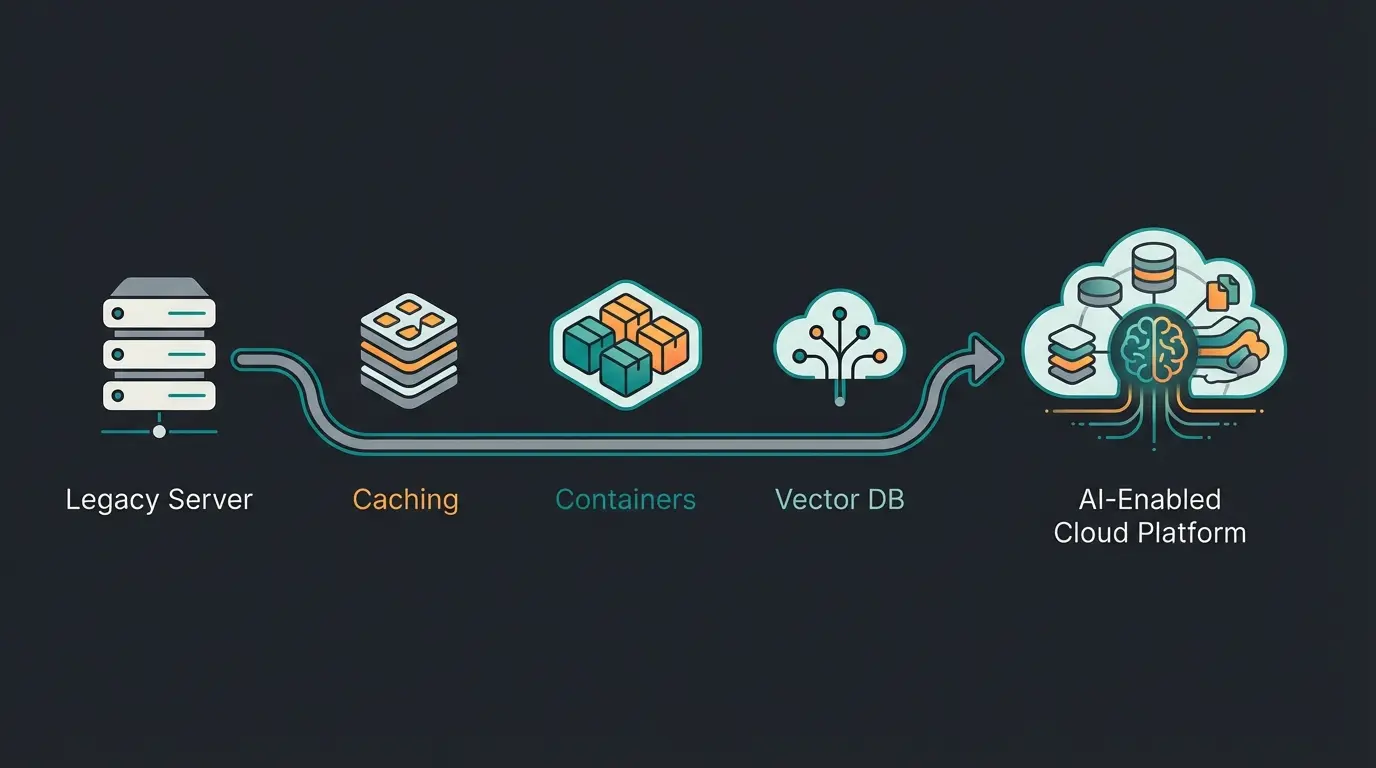
The market for Magento Cloud hosting has transformed. It's no longer just about who provides the fastest Nginx server—all top providers can do that now.
Our Recommendations for 2026
For Startups & Small Shops: A solid managed vServer (e.g., Mittwald proSpace) offers the best entry point without DevOps headaches. You get German data residency, excellent support, and room to grow.
For Growing SMBs & Hidden Champions: A Managed Cluster (e.g., Maxcluster) provides the necessary performance reserve and failover security. The combination of German data protection and specialized Magento support is unbeatable here.
For AI Pioneers: Look for a host that understands 'container hosting.' The future of e-commerce is hybrid—classic PHP for the shop, Python/vector databases for the intelligence. Providers that bridge this gap are the partners of choice.
Don't wait until your competition overtakes you with intelligent consultation. Check not only your loading times now, but your entire infrastructure for 'Intelligence Readiness.'
Frequently Asked Questions
Adobe Commerce Cloud is a complete Platform-as-a-Service (PaaS) solution directly from Adobe, starting at around $40,000/year with everything managed for you. Managed cloud hosting means hosting Magento Open Source or Adobe Commerce on specialized providers like Maxcluster or Mittwald, typically costing €300-800/month, giving you more flexibility and control while still having expert support for infrastructure.
Yes. AI features like product consultation chatbots, vector search, and real-time recommendations require infrastructure that goes beyond traditional PHP hosting. You need support for Python containers, adequate RAM for vector databases, and scalable CPU resources for inference calculations. Traditional shared hosting will buckle under these workloads.
While not strictly legally required, hosting with German providers significantly simplifies GDPR compliance. German companies with German data centers operate under German law, avoiding complications from the US CLOUD Act that affects American cloud providers. This also serves as a trust signal for German customers.
For a performant shop with AI-readiness, expect to invest €300-800/month with managed providers like Maxcluster or Mittwald. Self-hosting on AWS might seem cheaper at €100/month for hardware, but factor in €150+/hour for DevOps expertise. Adobe Commerce Cloud starts around $40,000/year for enterprise needs.
Yes, migration is possible but requires careful planning. You'll need to recreate any Adobe-specific integrations, potentially replace Adobe Sensei with alternative AI solutions, and work with a qualified agency for the technical migration. The cost savings can be substantial for mid-market businesses, often 50-70% annually.
Additional Resources
For those ready to dive deeper into optimizing their e-commerce infrastructure, we recommend exploring the Official Magento System Requirements from Adobe, the OpenSearch Documentation for understanding vector search capabilities, and the Hyvä Themes Performance Guide for frontend optimization strategies.
Stop losing customers to decision paralysis. Our AI product consultation seamlessly integrates with your cloud infrastructure to guide customers to the perfect purchase—just like having your best sales expert available 24/7.
Start Your Free Trial
Kevin is CTO and co-founder of Qualimero. As an AI architect with over 15 years of experience as CTO and CPO in the tech industry, he designs the AI systems that automate tens of thousands of customer interactions daily for Qualimero's clients — reliably, securely, and at scale.