Shopware Developer 2025: Costs, Skills & Why You Should Stop Coding Product Consultation
Shopware developer rates 2025: €80-€160/hour. Learn when to hire programmers vs. using AI for product consultation. Complete guide with cost analysis.

Finding a Shopware Developer: A Guide for Shop Owners (2025)
If you're searching for a Shopware developer today, you're likely facing a concrete problem: your shop needs to be faster, an ERP system needs integration, or—and this is the most common case—you want to increase revenue through better user experience. The classic reflex is understandable: "I need someone to program this for me."
But 2025 marks a turning point in e-commerce development. The role of the Shopware developer is changing radically. It's no longer just about who writes the cleanest PHP code, but who builds the most intelligent architecture. While job boards and agency directories present you with mere lists of people and their hourly rates, they often lack the crucial strategic advice: When is custom development even worthwhile anymore?
This article isn't an ordinary directory. It's a strategic guide that helps you deploy your budget efficiently. We analyze current costs, compare freelancers with agencies, and show you why you shouldn't pay a developer for revenue-driving features like digital product consultation anymore. Instead, you should focus on AI-powered e-commerce integration. According to Qualimero, the shift from traditional coding to AI integration represents one of the most significant changes in e-commerce development this decade.
What Does a Good Shopware Developer Cost? (2025 Market Analysis)
The question of costs is often the first filter when searching. But be careful: a low hourly rate can end up being the most expensive solution if development time explodes or technical debt accumulates.
Based on current market data from Germany, Austria, and Switzerland (DACH region) for 2025, we've analyzed realistic hourly rates. Data from Freelancermap shows significant variations based on experience level and project complexity.
Hourly Rates Comparison: Freelancer vs. Agency
| Experience Level / Type | Hourly Rate (Net) | Typical Tasks | Risk Factor |
|---|---|---|---|
| Junior Freelancer | €60 - €80 | Simple template adjustments, updates | High (quality fluctuations, often lacking best practices) |
| Senior Freelancer | €90 - €125 | Plugin development, performance optimization, migrations | Medium (availability is often the main issue) |
| Shopware Agency | €125 - €160 | Complex projects, enterprise solutions, 24/7 support | Low (team backup, certified processes) |
| Specialist (Architect) | €150+ | System architecture, high-performance setups, AI integration | Very Low (strategic planning saves costs long-term) |
These rates align with data from Kilian Shopware Freelancer, confirming that specialized expertise commands premium pricing in the current market.
The Hidden Cost Trap: Project Costs vs. Hourly Rate
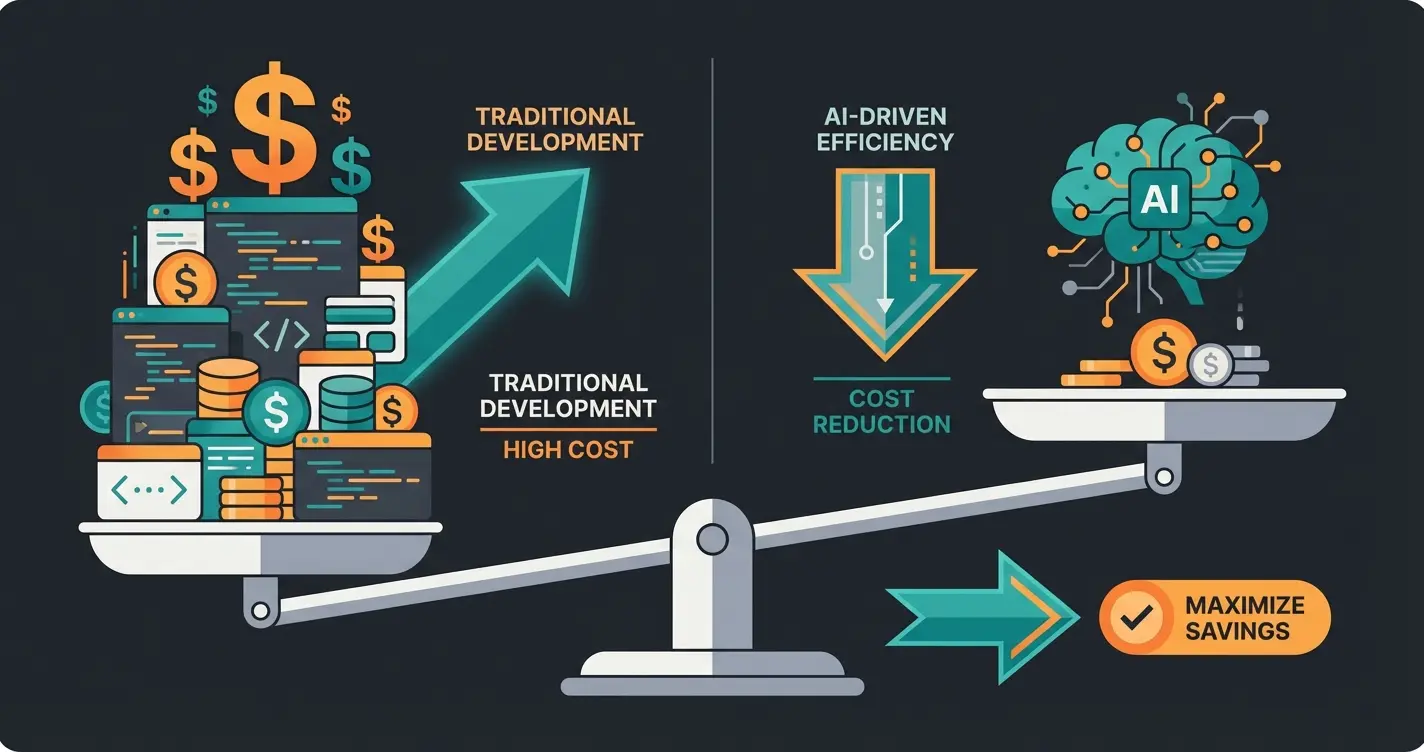
The hourly rate is only half the truth. What matters is how many hours are needed for a solution. This is where the massive difference between the "old world" (coding everything yourself) and the "new world" (using AI and standard solutions) becomes apparent.
Example Calculation: Integrating Digital Product Consultation
Imagine you want to integrate a "product finder" into your shop that asks customers: "What are you looking for?" and suggests products based on their responses.
Requirements analysis, concept development, wireframing - typically 10+ hours
Building decision trees, database queries, API endpoints - typically 40+ hours
User interface design, animations, responsive layout - typically 20+ hours
Quality assurance, bug fixes, edge cases - typically 10+ hours
The Classic Way (Custom Code): A developer builds a plugin and codes decision trees (`if selection == 'red' then show product_A`). Frontend design must be created. Effort: approximately 80-120 hours. Cost: approximately €10,000 - €15,000. The major disadvantage: every change to your product range requires new programming or complex maintenance.
The Modern Way (AI Integration): A developer (or you yourself) integrates an AI solution such as the Shopware AI features or specialized apps. The AI reads product data automatically. Effort: approximately 5-10 hours (setup & prompting). Cost: approximately €1,000 setup plus monthly license fee. The advantage: dynamic, low-maintenance, and immediately ready for deployment.
Freelancer or Agency? Advantages and Disadvantages
The decision between a freelance Shopware developer and a dedicated agency depends heavily on your company size and risk tolerance. Both options have distinct merits that align with different business needs.
Shopware Freelancers
Freelancers are often highly specialized experts who work deep in the code. According to Freelancermap, platforms show an average hourly rate of approximately €103 in Germany for 2025.
- Advantages: Direct contact with the executor (no project manager in between), more cost-efficient for smaller adjustments, often very high flexibility
- Disadvantages: Bus factor risk—if the freelancer gets sick or is on vacation, your project stands still
- Scaling limitations—a solo fighter cannot provide 24/7 support for enterprise shops
- Technology tunnel vision—freelancers tend to solve problems with code, even when strategic tools would be better
Shopware Agencies
Agencies offer security and breadth. They cover not only programming but often also design, SEO, and marketing. Many work with AI product consultants to deliver comprehensive solutions.
- Advantages: Fail-safety through teams, broad knowledge (backend, frontend, DevOps, AI), certified partnerships with Shopware (access to beta features like those in Shopware 6.7)
- Disadvantages: Higher hourly rates (overhead costs), longer lead times and more bureaucratic processes
Recommendation: For core updates, complex interfaces (ERP/PIM), and long-term maintenance, an agency is often safer. For specific features or temporary bottlenecks, senior freelancers are ideal. The key is understanding which problems require human expertise and which can be solved through AI-powered consultation.
When Is Custom Development Worthwhile? (The Pivot)
This is where most shop owners make the mistake: they commission developers for tasks that no longer require programming. To protect your budget, you must distinguish between Infrastructure and Experience.
Case A: Infrastructure & Core Logic (Here You Need a Developer)
When it comes to the foundation of your shop, clean code is essential. There's no room for improvisation here.
- Checkout Processes: Individual discount logic that deeply integrates with the shopping cart
- Interfaces (API): Connection to SAP, Microsoft Dynamics, or proprietary warehouse systems
- Performance: Optimization of caching strategies (Varnish, Redis) and database queries
- Theme Development: Pixel-perfect implementation of your corporate design in the frontend (Twig/Vue.js)
Case B: Product Consultation & Sales (Programming Is a Waste of Money)
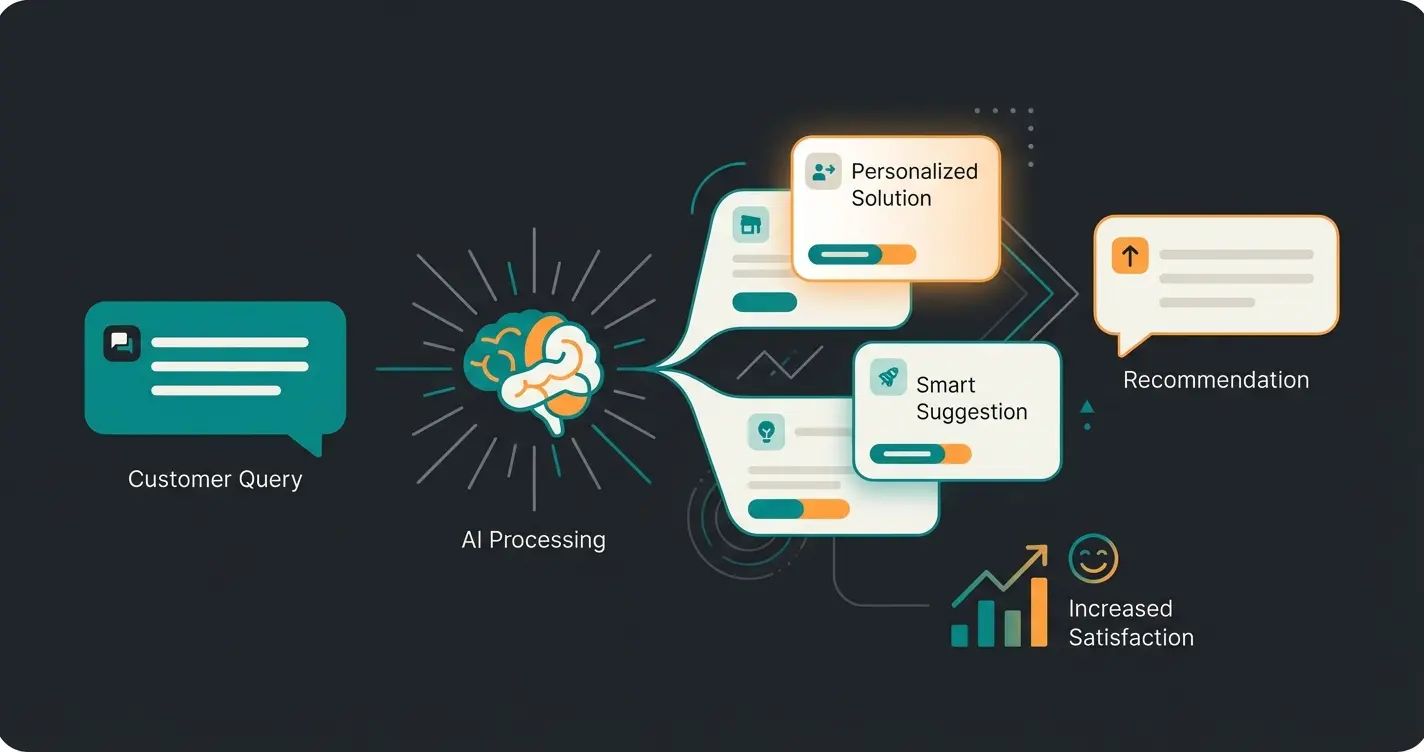
Previously, "product advisors" or "gift finders" were laboriously programmed. The result was rigid question-and-answer games. Today, Artificial Intelligence takes over these functions. Modern Shopware 6 chatbots deliver vastly superior results compared to hard-coded solutions.
Why you shouldn't have consultation coded:
- Maintenance Hell: A hard-coded advisor must be adjusted with every new product attribute. According to Shopware, this ongoing maintenance represents a significant hidden cost for merchants.
- No Context: A script doesn't understand what the customer really wants—it only checks checkboxes and predefined filters.
- Costs: As calculated above, development costs ten times more than integration with modern AI solutions.
Discover how AI-powered product consultation delivers 10x ROI compared to custom development. Our solution integrates with Shopware in hours, not weeks.
Start Your Free TrialThe New Standard: AI-Powered Product Consultation Instead of Code
The year 2025 is defined by Shopware 6.7 and the AI Copilot. Shopware itself has recognized that the future lies not in static rules but in dynamic intelligence. The introduction of Shopware KI features represents a paradigm shift in how merchants approach customer interaction.
The Problem with "Hard-Coded" Consultation
A classic developer would build a product advisor like this:
The Solution: AI Integration
A modern Shopware developer integrates an AI solution instead (e.g., via Shopware AI Copilot or external services like AI Product Consultation platforms).
Example AI Prompt: "Analyze the customer's shopping cart and search query. Recommend matching accessories from the catalog and explain why they fit."
Advantages of the AI Solution:
- Understands Natural Language: "I'm looking for something red for summer" is understood without programming filters. This is where AI eliminates waiting times and friction in the customer journey.
- Upselling: The AI recognizes connections (e.g., "This sleeping bag pairs well with this tent") that you could never manually maintain.
- Data Utilization: Shopware 6.7 offers "Data Insights" and "Agentic Commerce" features that deeply access the data structure without writing code, as documented by Shopware.
Traditional coded product advisors require extensive planning and development
Modern AI solutions can be deployed and optimized in days
Initial investment for hard-coded consultation features
Setup and first-year licensing for AI-powered solutions
AI solutions deliver significantly higher returns on investment
| Feature | Custom Coded Advisor (Old Way) | AI Solution (New Way) |
|---|---|---|
| Setup Time | 4-8 weeks | Few hours to days |
| Initial Costs | €10,000+ | < €2,000 (integration) |
| Maintenance | Manual adjustment with every product change | Learns automatically / Reads live data |
| User Experience | Static, click-based | Conversational, intuitive |
| Conversion Impact | Medium (only if filters match exactly) | High (through personal approach) |
Checklist: Skills of a Modern Shopware Developer
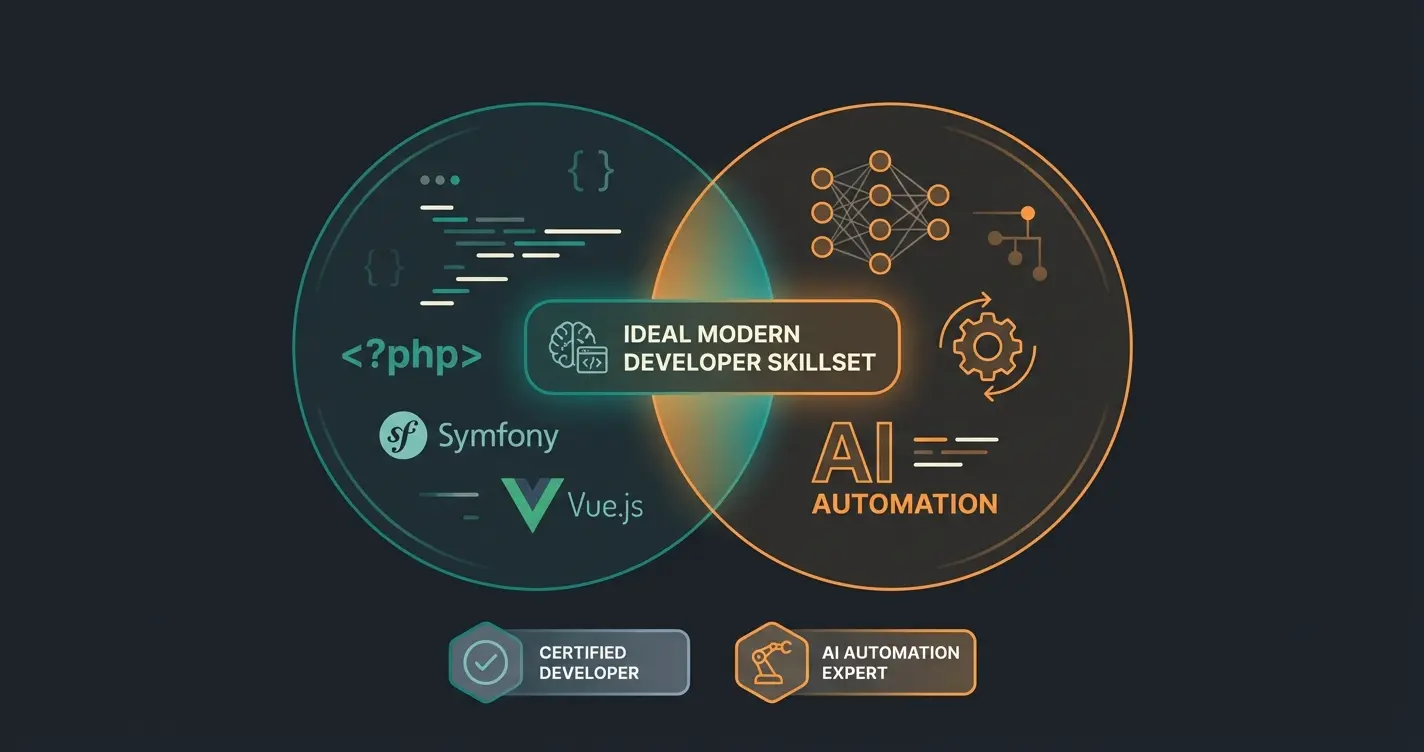
If you decide to hire a developer—whether for core infrastructure or AI tool integration—you must ensure they're up to 2025 standards. A developer who only knows Shopware 5 or ignores AI is a poor investment. According to Dev.to, the most sought-after e-commerce developers now combine traditional programming skills with AI competencies.
Use this checklist for your interviews or agency briefings:
1. The "Hard Skills" (The Foundation)
Without these technical fundamentals, nothing works:
- Shopware 6 Architecture: Deep understanding of DAL (Data Abstraction Layer) and the plugin system
- PHP 8.2+ & Symfony: Shopware 6 is based on the Symfony framework. Outdated PHP knowledge is a security risk, as noted by Qualimero
- Vue.js & Twig: For customizations in the admin area (Vue.js) and frontend (Twig), as detailed in Shopware documentation and EXWE developer guides
- API-First Thinking: Shopware 6 is API-driven. The developer must know how to efficiently use the Admin API and Store API
2. The "New School" Skills (The Competitive Advantage)
This is where the wheat separates from the chaff. Look for these capabilities to be future-proof:
- AI & LLM Integration: Experience connecting OpenAI, Anthropic, or specialized e-commerce AIs to Shopware. Understanding KI E-Commerce principles is essential.
- Prompt Engineering: Can the developer configure the Shopware Copilot to deliver useful product descriptions or export data?
- Vector Databases: Understanding of how to prepare product data for AI searches (Semantic Search)
- Agentic Commerce: Knowledge of the new possibilities of autonomous AI agents that Shopware is pushing from version 6.7/6.8, as outlined by Shopware
3. Business Understanding
A top developer asks you: "Why do you want to have this programmed? There's a plugin for that which costs only €50 per month." They protect your budget from unnecessary custom code and understand when to recommend solutions like AI product consultants instead.
Build vs. Buy: The Decision Flowchart
To help you make the right choice for your specific situation, consider this decision framework. Understanding when to invest in custom development versus leveraging existing solutions like AI-powered guided selling can save you thousands of euros and months of development time.
What specific outcome are you trying to achieve? Revenue increase, efficiency, or technical capability?
If yes → Hire a qualified Shopware developer. Custom code is essential here.
If yes → Hire a developer or specialized agency. System integrations require technical expertise.
If yes → Use an AI solution. Custom development is wasteful for these features.
If yes → Implement AI chatbots. They outperform coded solutions consistently.
Conclusion: Program the Foundation, Automate the Sales
Searching for a Shopware developer in 2025 requires a mindset shift. The days when you needed an individual plugin written for every function in the shop are over. The best developers today understand both when to write code and when to integrate existing AI solutions.
Your strategy should look like this:
- Invest in Developers for Stability: Use your budget for experienced developers (whether freelancers or agencies) to build a clean, fast, and secure infrastructure. Every euro of hourly rate is worthwhile here.
- Use AI for Growth: When it comes to product consultation, content creation, translations, or customer service, don't commission the developer to develop a solution—commission them to integrate an AI. This approach aligns with the latest trends documented by Qualimero.
The best Shopware developer for your project is the one who honestly tells you when they shouldn't code. They understand that modern e-commerce success comes from strategic tool selection, not maximum lines of code.
Further Resources & Tools
Before commissioning any development work, leverage these resources to make informed decisions:
- Shopware Roadmap: Check the features of Shopware 6.7 before commissioning development at Shopware
- Hourly Rate Calculator: Use tools like Freelancermap to check current rates in your region
- AI Check: Before commissioning a feature, check the Shopware Store or AI providers for a "plug & play" solution
Frequently Asked Questions
Shopware developer hourly rates in the DACH region (Germany, Austria, Switzerland) range from €60-€80 for junior freelancers to €125-€160 for agencies. Senior freelancers typically charge €90-€125 per hour, while specialized architects command €150 or more. The key is not finding the lowest rate but rather the developer who can deliver the most efficient solution for your specific needs.
Choose a freelancer for specific, short-term tasks or when you need deep specialization at a lower cost. Opt for an agency when you need reliability, team backup, comprehensive services (development, design, SEO), or long-term support. For core infrastructure like checkout systems or ERP integration, agencies provide more security. For temporary capacity needs, senior freelancers are often ideal.
For product consultation features, AI solutions are almost always the better choice. Custom-coded product advisors cost €10,000-€15,000 and require ongoing maintenance with every product change. AI solutions cost under €2,000 for integration, learn automatically from your product data, understand natural language, and deliver higher conversion rates. Only invest in custom code for core shop functions like checkout or system integrations.
Beyond traditional skills like PHP 8.2+, Symfony, Vue.js, and Twig, modern Shopware developers need AI integration experience, prompt engineering knowledge, understanding of vector databases for semantic search, and familiarity with Shopware's Agentic Commerce features. Crucially, they should also have the business acumen to recommend when NOT to code and use existing AI tools instead.
Shopware 6.7 introduces 'Agentic Commerce' with AI Copilot features, shifting the developer role from writing static logic to integrating intelligent AI systems. Developers now focus more on system architecture and AI integration rather than coding every feature manually. Features like Data Insights and autonomous AI agents mean many traditional development tasks are becoming obsolete.
Stop paying developers for features that AI handles better. Our intelligent product consultation solution integrates seamlessly with Shopware and starts converting visitors into customers from day one.
Get Started Free Today