Introduction: Why Fast Shipping Is No Longer Enough
When you think about online shop customer service, what image comes to mind? Probably an employee with a headset patiently explaining where a package ended up or how a return works. This image is outdated. Or rather: it's incomplete.
In 2026, online retailers face a paradoxical situation. On one hand, technology is more advanced than ever before. On the other hand, customers often feel more abandoned than they have in years. While logistics and checkout processes are highly optimized, there's a massive gap in the middle of the shopping experience: expert consultation.
In physical retail, we visit specialty stores because we don't know which running shoe fits our knee problem or which skin cream helps with allergies. In e-commerce, we're instead left alone with filters like "price ascending" and "color: blue." The result? We order three variants and return two.
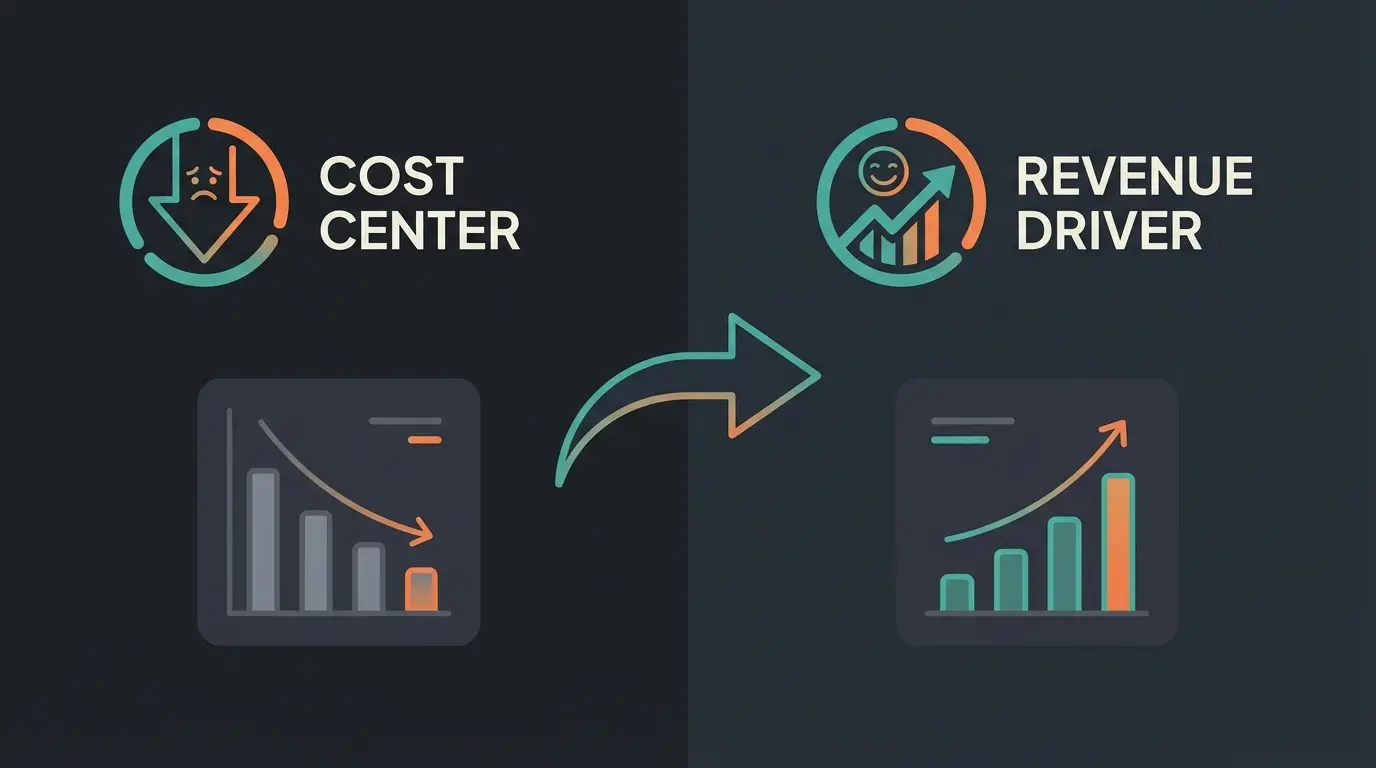
This article isn't another guide on how to answer emails faster (although that's important). It's a strategic manifesto on how to transform your customer service from an expensive cost center into a profitable revenue driver. We'll show you how to use pre-sales service and intelligent automation to not just avoid support tickets, but actively drive sales. As AI customer service technology matures, the opportunities for transformation have never been greater.
The Basics: What Customers Expect Today (Table Stakes)
Before we discuss AI-powered sales consultation, the fundamentals must be in place. If the basics aren't right, even the best algorithm won't help. The expectations of consumers regarding support in online shops are high and unforgiving.
Speed Is Not Optional—It's Mandatory
The tolerance threshold for wait times is dropping rapidly. According to kundenservicedesjahres.com, studies show that customers today expect real-time responses:
- Phone: One-third of customers expect an answer within one minute.
- Social Media: Expectations here often fall under one hour.
- Email: The classic "we'll respond within 24 hours" phrase is often already too slow. Customers with purchase intent are fleeting. If the answer to a product question only comes the next day, the customer has often already ordered from a competitor.
Omnichannel: Seamless Accessibility
Customers don't think in channels—they think in solutions. A customer might start an inquiry in live chat during work but wants to continue exactly where they left off on the phone later, without having to explain their problem again.
- Must-Have Channels: Email and phone remain the trust anchors in Germany and across Europe.
- Growth Channels: Live chat and messengers (WhatsApp) are becoming increasingly important for Gen Z and Millennials, as they enable synchronous communication without hold music.
Empathy and Consumer Concerns
In many markets, especially in Germany, trust plays a paramount role. An online shop customer service that consists only of template responses will be quickly penalized.
- Data Privacy: Concerns about data are real. A reputable service must be transparent about what happens to the data (more on this in the EU AI Act section).
- Language: Even in times of AI, customers expect correct, polite, and culturally appropriate communication. Consistency is crucial.
The Blind Spot: Why Service Starts Before the Purchase
Most online shops define customer service as a post-sales activity: complaints, returns, delivery status. This is a fatal mistake that costs businesses millions in lost revenue and unnecessary returns.
The Pre-Sales Gap
Analyze your support tickets. How many inquiries essentially say: "Does this replacement part fit my model?", "How does this pair of pants fit?", or "Which cable do I need for this?" These aren't support cases in the traditional sense. These are buying signals.
When a customer has to contact customer service to understand a product, the shop has actually already failed. The problem is that product descriptions are often technical and emotionless, while FAQs are static and hard to search. The consequence? The customer abandons the purchase or orders multiple variants on a hunch. This is exactly where AI guided selling solutions can make a transformative difference.
Europe's Return Rate Challenge
The neglect of pre-sales consultation has expensive consequences. Germany leads Europe in return rates, creating a massive opportunity for improvement. According to retourenforschung.de, the statistics are striking:
Nearly one in four B2C e-commerce packages is returned
Return rate in the fashion sector reaches up to 50%
Selection orders ('Does it fit?', 'Do I like it?') - not defective goods
Research from the EHI Retail Institute proves that detailed product information and personal consultation can significantly reduce return rates. Those who provide better advice before the purchase have less to process after the purchase.
From Support to Success
Here lies your opportunity for differentiation. While your competitors are still trying to reduce their ticket costs, you can use service to increase revenue. This represents a fundamental mindset shift:
- Old Mindset: Service = Cost center (must be minimized)
- New Mindset: Service = Sales channel (must be optimized)
By viewing pre-sales inquiries not as a disturbance but as leads, your entire strategy changes. According to salesgroup.ai, companies that improve their pre-sales capabilities can increase their conversion rates by 50% or more. This is where understanding how chatbot AI transforms customer interactions becomes essential.
Automating Product Consultation: More Than Just Chatbots
The problem with excellent consultation is scalability. You can't assign a human salesperson to every website visitor. This is where modern technologies come into play—and we're not talking about the dumb chatbots of the past that failed at simple questions.
The End of Dumb Bots
Classic chatbots are often based on rigid decision trees. When the customer types a keyword the bot doesn't know, the frustrating response comes: "I'm sorry, I didn't understand that." This damages the brand more than it helps. The AI consulting e-commerce landscape has evolved dramatically beyond these limitations.
Guided Selling: The Digital Expert Salesperson
The solution lies in guided selling (guided sales consultation) and AI-powered assistants. Think of it like a salesperson in a store. They don't ask: "What keyword are you searching for?" Instead, they ask: "What do you want to use the product for?"
How does this work technically?
- Needs Analysis: An interactive dialogue specifically asks about the intended use, preferences, or problems (e.g., "Are you looking for running shoes for asphalt or trails?")
- Matching: In the background, the AI compares the answers with the product data.
- Recommendation: The customer doesn't receive 500 search results, but 3 perfectly fitting products with an explanation ("Because you often run in the forest...")
The Benefits of AI-Powered Consultation
According to research from bluebarry.ai, the advantages are substantial:
- Revenue Increase: Guided selling can increase conversion rates by up to 40% and boost average order value (AOV) by 15-30%.
- Relief: Standard questions ("What size do I need?") are automated, giving human agents time for complex cases.
- Data: You learn enormously about your customers. You don't just know what was purchased, but why (e.g., "Customer has sensitive skin"). This "zero-party data" is invaluable for future marketing.
Implementing AI customer service automation allows you to scale these benefits across your entire customer base without proportionally increasing costs.
Visitor arrives with uncertainty about which product fits their requirements
Intelligent pre-sales service asks targeted questions and provides personalized guidance
Increased conversion through confident purchase decision
Post-sales support load dramatically reduced
Loyalty established through exceptional experience
Discover how AI-powered product consultation can increase your conversion rates by up to 40% while reducing support tickets. See why leading e-commerce brands choose intelligent guided selling.
Start Your Free Trial5 Strategies for Excellent Customer Service (The Hybrid Approach)
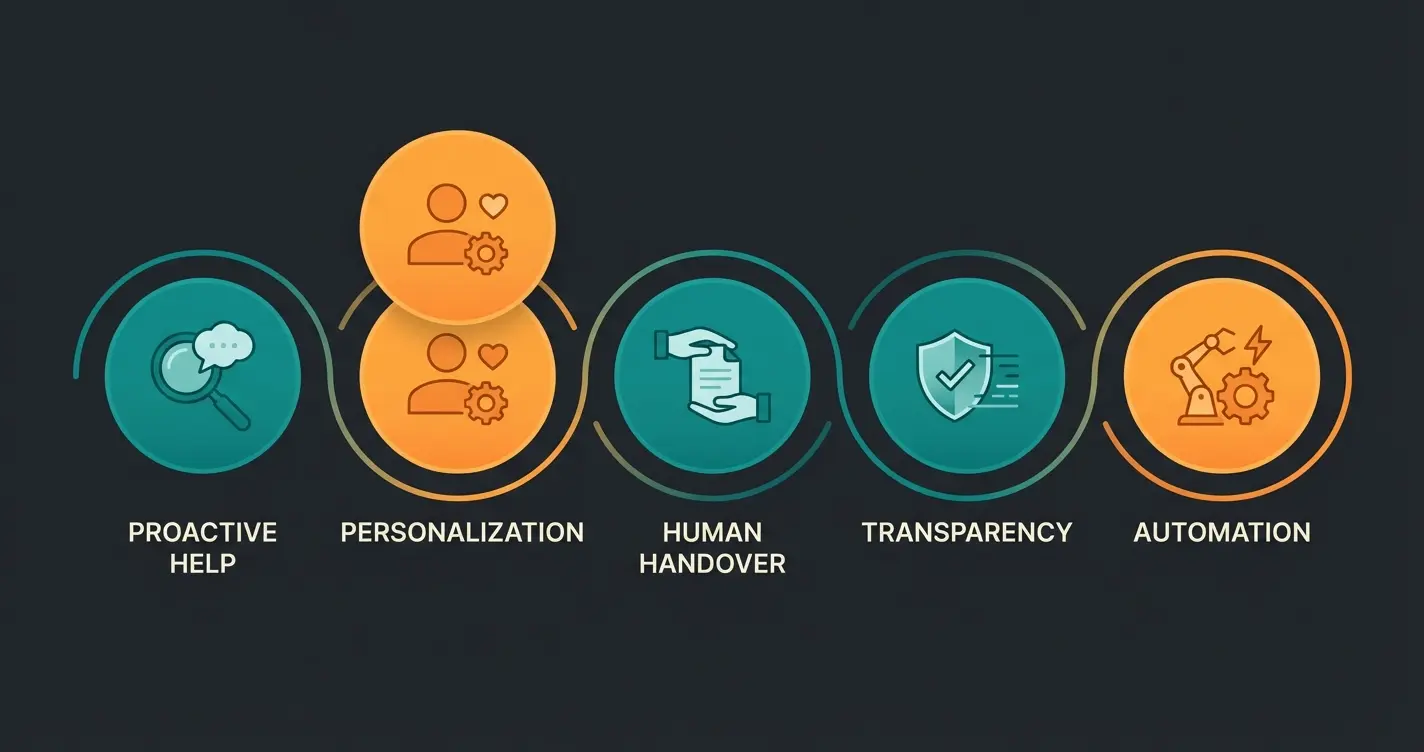
How do you implement this concretely? A successful online shop customer service combines human empathy with machine efficiency. Here are 5 strategies for 2026 and beyond.
Strategy 1: Proactive Help (The Virtual Store Owner)
Don't wait for the customer to ask. When a visitor lingers on a product page for 30 seconds or switches back and forth between two items, the service should actively engage.
- Implementation: A chat window opens with a context-related question: "Torn between Model A and B? Would you like me to briefly explain the differences?"
- Effect: This pulls the customer out of decision paralysis (analysis paralysis).
This proactive approach is exactly what KI-Produktberatung outperforms Zendesk in head-to-head comparisons—traditional support tools wait for problems, while AI consultation prevents them.
Strategy 2: Hyper-Personalization Instead of Template Responses
Customers hate being treated like a number. According to sellbery.com, 71% of buyers are frustrated when the shopping experience is impersonal.
- Implementation: Use CRM data. When a customer calls, the agent should immediately see: "Ah, Mr. Smith, you bought the running shoes last week. Is it about that?"
- AI Application: AI can generate product recommendations in real-time based on previous click behavior—far beyond the simple "Other customers also bought" approach.
Learn more about implementing AI product consultation that delivers truly personalized experiences at scale.
Strategy 3: The Seamless Transition (Human Handover)
AI is great, but not infallible. There must always be an "emergency exit."
- Best Practice: When the bot notices that the customer is frustrated (sentiment analysis) or the problem becomes too complex, it must seamlessly hand over to a human.
- Important: The human agent must see the previous chat history. Nothing is more annoying than having to explain everything again.
This seamless handover is a hallmark of AI Chatbots customer service implementations that prioritize customer experience over cost savings.
Strategy 4: Transparency & Legal Compliance (EU AI Act)
A critical point for the European market: Starting August 2026, the full labeling requirements of the EU AI Act take effect. According to ecovis.com and eevolution.de:
- The Requirement: Users must be able to clearly recognize that they are interacting with an AI.
- The Opportunity: Use this for trust-building. Label your bot honestly as "Digital Assistant" or "AI Advisor." Studies show that customers reward honesty. Don't hide the AI—sell it as an innovative service.
Strategy 5: After-Sales Automation (Self-Service)
While we focus on pre-sales, post-sales must not suffer. Here, automation is the key to efficiency.
- Self-Service Portals: Let customers create return labels themselves and change delivery addresses.
- Proactive Updates: Inform about delivery delays before the customer asks. This drastically reduces ticket volume ("Where is my order" - WISMO inquiries).
Classic Chatbot vs. AI Sales Consultant: A Comparison
To truly understand the difference between traditional support tools and modern AI consultation, let's examine them side by side. This comparison illustrates why AI product consultation represents such a fundamental shift in customer service e-commerce.
| Feature | Classic Chatbot (Old School) | AI Sales Consultant (Guided Selling) |
|---|---|---|
| Trigger | Reacts to keywords ("return") | Acts proactively & context-aware |
| Goal | Avoid tickets (reduce costs) | Drive purchases (increase revenue) |
| Understanding | Rigid, often doesn't understand context | Understands intent & preferences (NLP) |
| Result | Link to FAQ article | Personalized product recommendation |
| Customer Feeling | "I'm being brushed off" | "I'm being consulted" |
The fundamental difference is that AI product consultants are designed to create value, not just deflect inquiries. They bring consultative intelligence to every customer interaction, treating each visitor as a potential conversion rather than a potential ticket.
KPIs: How to Measure Success in Modern Service
If you want to improve your customer service, you need to measure the right things. The old metrics are no longer sufficient for capturing the full picture.
The Classics (Efficiency Metrics)
- First Response Time (FRT): How quickly do you respond?
- Average Handling Time (AHT): How long does the resolution take?
- CSAT (Customer Satisfaction Score): How satisfied was the customer?
The New Metrics (Effectiveness & Revenue)
To prove the shift to a "profit center," you need new KPIs:
- Conversion Rate After Contact: How many customers buy after interacting with the chat/bot?
- Consultation Quality: Measurable through the reduction of return rates in categories with high consultation intensity.
- Zero-Contact Resolution: How many issues could be resolved through self-service or AI without human intervention?
These metrics shift the conversation from "How do we reduce costs?" to "How do we maximize value?"—a fundamental reframing that drives better business outcomes.
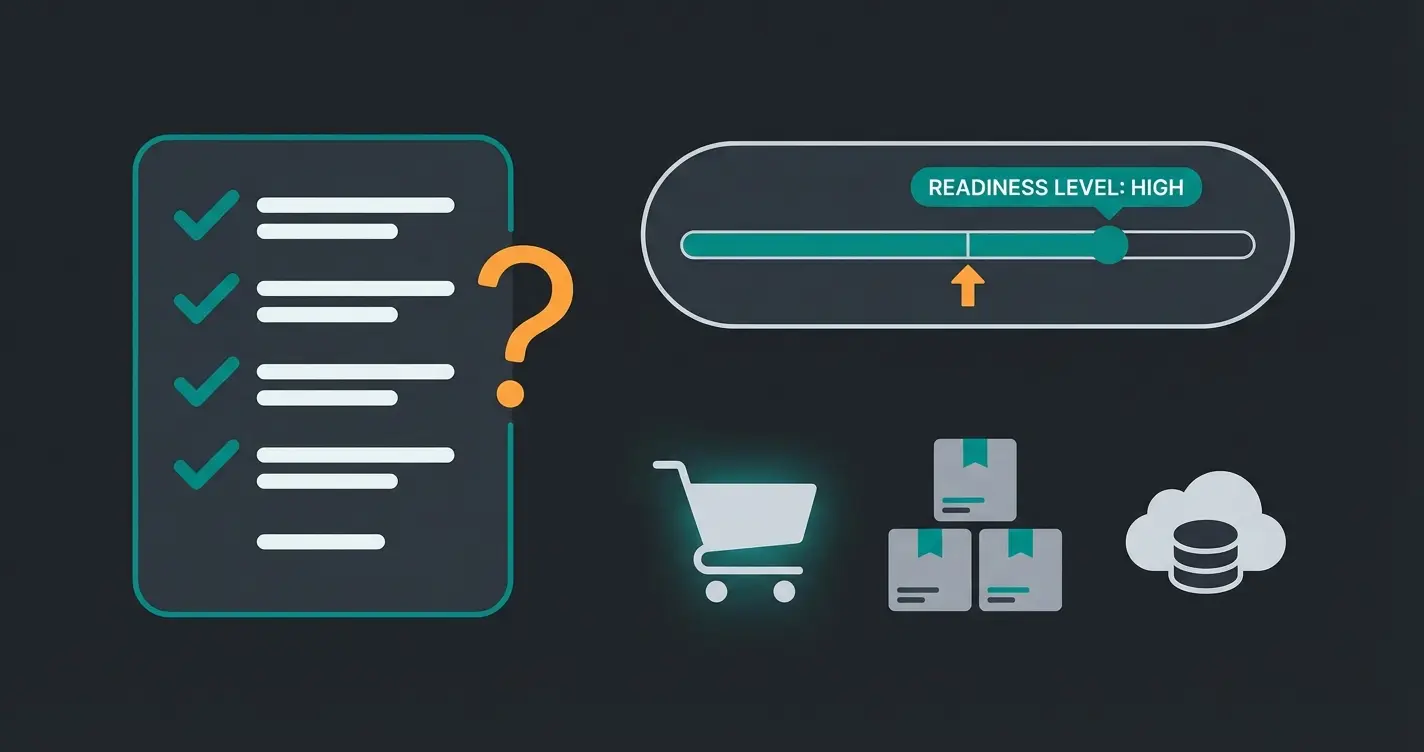
Is Your Shop Ready for AI Consultation? A Self-Assessment
Answer these questions honestly. If you say "Yes" more than twice, you should seriously consider implementing guided selling solutions.
- Do you have a complex assortment with many variants?
- Do you often receive recurring questions like "Does X fit with Y?"
- Is your return rate higher than 15%?
- Do many visitors leave your shop on category pages without clicking on a product?
- Are your product descriptions very technical and not application-oriented?
- Do you have difficulty finding qualified personnel for support?
See how real businesses have transformed their customer service. The AI Employee success story from Gartenfreunde demonstrates how a garden supply retailer dramatically improved their consultation capabilities with AI implementation.
Discover the detailed results in the AI Employee Flora case study, which shows measurable improvements in both customer satisfaction and conversion rates.
Conclusion: The Future of Service Is Advisory
Online shop customer service is facing a revolution. The times when support teams were hidden as mere cost factors in dark offices are over. In a world where products and prices are comparable, the quality of consultation becomes the decisive competitive advantage.
Those who in 2026 still wait for customers to wade through FAQs will lose. But those who use AI and human expertise to take customers by the hand and guide them safely to a purchase decision will not only reduce their customer service costs but also win loyal repeat customers.
Action Recommendation: Don't start with the question "How can I reduce tickets?" but rather "How can I help my customers shop better?" The rest—revenue, satisfaction, efficiency—follows almost automatically. The transformation from support to sales is not just possible—it's essential for survival in the increasingly competitive e-commerce landscape.
Frequently Asked Questions
Traditional customer service focuses on solving problems after a purchase (returns, complaints, delivery status). AI-powered consultation proactively helps customers make the right purchase decision before they buy, reducing returns and increasing conversions by up to 40%.
Starting August 2026, the EU AI Act requires that customers must be able to clearly recognize when they're interacting with an AI. This means labeling your chatbot or AI assistant transparently. However, this can be a trust-building opportunity when framed as offering innovative, helpful service.
Yes, studies show that detailed product information and personalized consultation significantly reduce return rates. Germany's ~24% average return rate (up to 50% in fashion) is largely driven by selection orders—customers ordering multiple variants because they lack proper guidance. AI consultation addresses this directly.
Beyond traditional metrics like First Response Time and CSAT, track conversion rate after customer contact, consultation quality (measured by return rate reduction), and zero-contact resolution rate. These metrics capture the revenue impact of your service, not just the cost.
Consider AI consultation if you have a complex product assortment, frequently receive 'which product fits me' questions, have return rates above 15%, see high bounce rates on category pages, or struggle to find qualified support staff. If two or more apply, AI consultation could significantly impact your business.
Stop just answering tickets—start driving sales. Discover how AI-powered product consultation can reduce your support costs while increasing revenue. Join the e-commerce leaders who've made the shift from cost center to profit center.
Get Started Free