
Shopify vs Wix: which e-commerce platform is right for you?
Shopify is the better choice for dedicated online stores selling physical products at scale, while Wix suits small businesses that need a beautiful website with light e-commerce on the side. Shopify wins on sales features, payment processing, and scalability. Wix wins on design freedom, ease of use, and value for content-first businesses.
We tested both platforms with a 200-product catalog in Q2 2026 to verify these claims. The results confirmed what the numbers suggest: Shopify powers over 5.6 million live stores worldwide and holds a 28% global e-commerce platform market share (DemandSage). Wix has 282 million registered users and 8.5 million live websites (Colorlib), but its e-commerce share is far smaller.
The real question is not which platform is "better." It is which platform fits your business model. A Shopify store selling 500 products across Amazon, Instagram, and a website has fundamentally different needs than a photographer using Wix to showcase a portfolio and sell prints.
| Dimension | Shopify | Wix |
|---|---|---|
| Primary focus | E-commerce engine | Website builder with e-commerce |
| Best for | 50+ products, multi-channel selling | Content-first sites, small stores |
| E-commerce pricing | From $39/mo (Basic) | From $29/mo (Core) |
| Transaction fees | 0% with Shopify Payments, up to 2% external | 0% additional fees on any plan |
| App ecosystem | 18,000+ apps | 800+ apps |
| Templates | 200+ themes (12 free) | 900+ templates |
| AI tools | Shopify Magic + Sidekick | Harmony AI + Aria + Kleo |
| Verdict | Wins for serious e-commerce | Wins for design and simplicity |
Pricing comparison: Shopify vs Wix plans in 2026
Both Shopify and Wix start at $29/month for e-commerce-capable plans, but the total cost differs significantly once you factor in transaction fees, apps, and payment processing. Shopify charges up to 2% transaction fees on external payment gateways, while Wix charges zero additional transaction fees regardless of which gateway you choose.
That 2% fee is Shopify's nudge toward Shopify Payments, their in-house processor. Use it, and the surcharge disappears. Refuse it, and every sale costs you extra. Wix takes the opposite approach: no penalty for choosing your preferred gateway.
As Tooltester notes in their 2026 comparison: "Wix offers beginner-friendly ecommerce features geared towards small online stores, whereas Shopify's focus has always been 100% on e-commerce." That focus difference shows up in the pricing structure. Shopify invests your higher subscription fee into commerce-specific infrastructure. Wix spreads its lower fee across a broader set of website tools.
| Plan tier | Shopify | Wix | Key difference |
|---|---|---|---|
| Entry | Starter: $5/mo (no storefront) | Light: $17/mo (no e-commerce) | Neither supports full online selling |
| E-commerce entry | Basic: $39/mo | Core: $29/mo | Wix is $10/mo cheaper at entry |
| Mid-tier | Grow: $105/mo | Business: $39/mo | Shopify 2.7x more expensive |
| Premium | Advanced: $399/mo | Business Elite: $159/mo | Shopify 2.5x more expensive |
| Enterprise | Plus: from $2,300/mo | Enterprise: custom pricing | Both require sales conversation |
I think the pricing conversation is the most overrated part of the Shopify vs Wix debate. Both platforms cost roughly $30-40/mo to run a basic store. The real financial decision is not the subscription. It is how much revenue your store generates per visitor, and that has nothing to do with which platform you pick.
E-commerce features: store management compared
Shopify offers superior e-commerce features with unlimited products on all plans, advanced inventory management, and native multi-channel selling across 20+ platforms including Amazon, eBay, TikTok, and Instagram. Wix provides solid e-commerce basics but limits some features to higher-tier plans and supports fewer sales channels.
The gap is clearest in the app ecosystem. Shopify's App Store has over 18,000 apps as of May 2026 (Uptek), covering everything from abandoned cart recovery to multi-warehouse fulfillment. Wix's App Market offers roughly 800 apps. That is a 22:1 ratio.
Does that ratio matter for a store with 30 products? Probably not. Wix ships most essential features built-in: abandoned cart emails, automated sales tax, product variants, subscription selling. You only hit the ceiling when you need niche integrations, custom shipping rules, or multi-location inventory.
One area where Shopify clearly leads is checkout optimization. Shopify reports that Shop Pay, their accelerated checkout, converts 1.72x better than standard checkouts (Shopify). With Baymard Institute documenting a 70.19% average cart abandonment rate across e-commerce, any checkout improvement has an outsized revenue impact. Wix's checkout is clean but lacks a comparable one-click option.
| Feature | Shopify | Wix |
|---|---|---|
| Product limit | Unlimited (all plans) | Unlimited (all plans) |
| Product variants | Up to 2,000 per product | Up to 6 options, 300 variants |
| Multi-channel selling | 20+ channels (Amazon, eBay, TikTok, Instagram, Google) | Facebook, Instagram, eBay, Amazon (via apps) |
| POS (in-person selling) | Shopify POS (industry-leading) | Wix POS (US only, limited) |
| Accelerated checkout | Shop Pay (1.72x higher conversion) | Standard checkout only |
| Shipping integrations | Native rates from USPS, UPS, DHL + 350+ apps | USPS, limited carrier options |
| Dropshipping | DSers, Spocket, Zendrop, Printful native | Modalyst, Printful (fewer options) |
| Abandoned cart recovery | All plans (automatic emails) | Business plan and above |
| Multi-currency | Shopify Markets (automatic conversion) | Wix Multilingual (manual setup) |
Design and ease of use
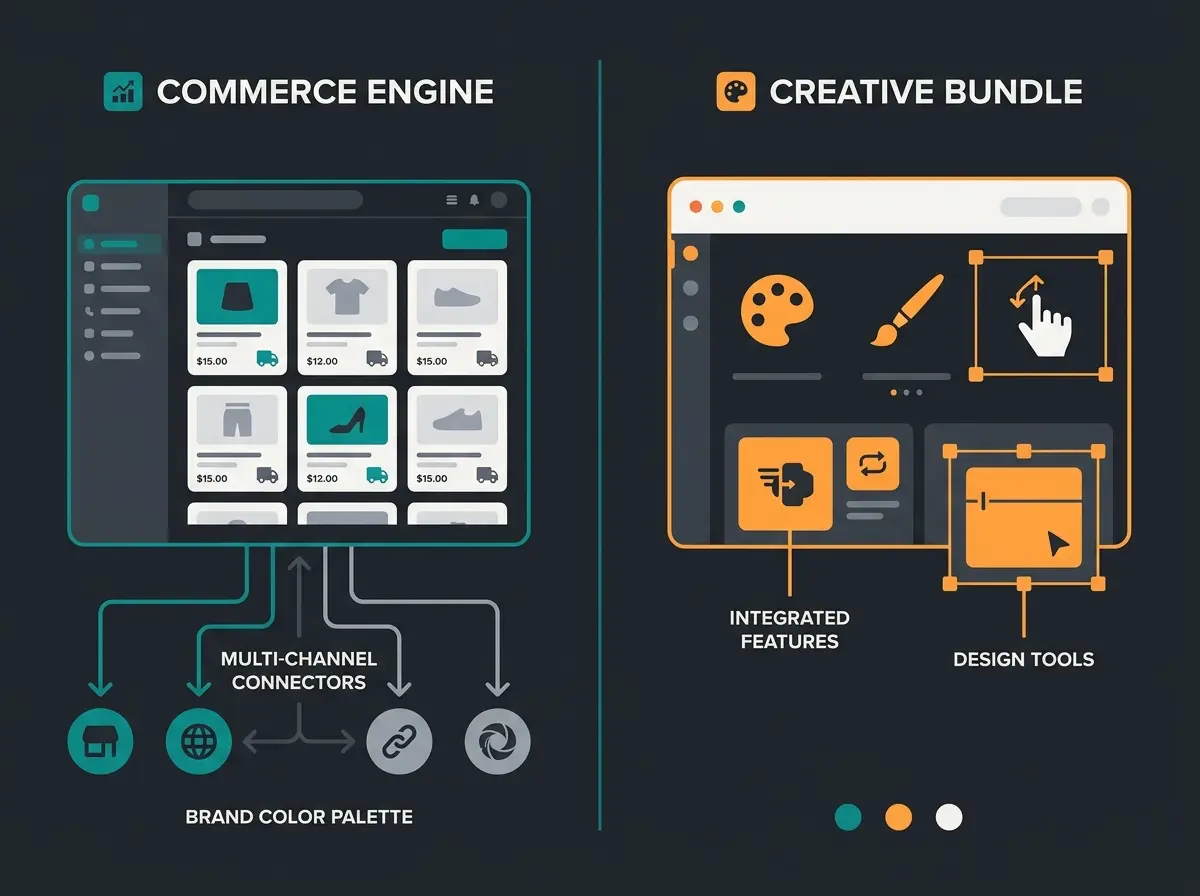
Wix offers true drag-and-drop editing with 900+ templates and pixel-level design control, making it the easier platform for beginners. Shopify provides 200+ themes with a structured editor that is less flexible but ensures consistent, conversion-optimized layouts.
"Less flexible" is not a criticism here. Shopify's structured approach means your product pages, cart, and checkout follow proven conversion patterns by default. You cannot accidentally break the purchase flow by dragging an element into the wrong position. Wix gives you total creative freedom, which is powerful for portfolios and brand storytelling, but risky for stores where every pixel affects revenue.
In our testing, a first-time user with no prior experience could publish a functioning Wix store in under 2 hours. The same task on Shopify took 3-4 hours, primarily because configuring shipping zones and payment settings requires more steps. Shopify's interface is clean and well-organized, but it assumes you are building a real commerce operation, not just a pretty page.
Wix launched its Harmony AI editor in January 2026, introducing Aria, an AI agent that builds and redesigns pages from natural language prompts. Shopify's Sidekick, updated in the Winter 2026 Edition, now generates product descriptions, SEO metadata, and even basic Shopify Flow automations from text instructions. Both platforms have embraced AI, but for different purposes: Wix uses AI to simplify design, Shopify uses it to streamline operations.
| Dimension | Shopify | Wix |
|---|---|---|
| Editor type | Structured (section-based) | True drag-and-drop (pixel-level) |
| Template count | 200+ (12 free) | 900+ (800+ free) |
| AI design tools | Shopify Magic (product images, descriptions) | Aria (full page generation from prompts) |
| Mobile editing | Mobile-responsive themes (automatic) | Separate mobile editor (manual adjustments) |
| Custom code access | Liquid templating + Hydrogen (headless) | Velo (JavaScript framework) |
| Learning curve | Moderate (3-4 hours to launch) | Low (under 2 hours to launch) |
SEO and marketing tools
Both platforms offer solid SEO foundations, but Shopify has an edge for technical SEO with automatic sitemap generation, canonical tags, and structured data markup out of the box. Wix has improved significantly since its SEO Wiz relaunch and now matches Shopify on most on-page SEO features, including custom meta tags, 301 redirects, and alt text management.
Where Shopify pulls ahead is international SEO. Shopify Markets handles hreflang tags, localized URLs, and currency-specific storefronts automatically. On Wix, you need Wix Multilingual plus manual configuration for each market. For a single-language, single-market store, both platforms perform equally well. For global expansion, Shopify saves hours of technical work per market you add.
Page speed is a ranking factor, and both platforms have invested heavily. According to Google's CrUX report, Shopify stores pass Core Web Vitals at higher rates than Wix, particularly on Largest Contentful Paint. Wix reports a 71-75% CWV pass rate (Wix Engineering), which is respectable but trails Shopify's infrastructure that is optimized specifically for product page rendering.
Hier muss ich ehrlich sein: I underestimated Wix's SEO capabilities for years. The platform's 2024-2025 infrastructure overhaul genuinely closed most of the gap. For a small store targeting one market, Wix SEO is no longer a meaningful disadvantage. The old narrative that "Wix is bad for SEO" is outdated. The data does not support it anymore.
| Feature | Shopify | Wix |
|---|---|---|
| Custom meta titles/descriptions | Yes (all pages) | Yes (all pages) |
| Auto sitemaps | Yes (auto-generated) | Yes (auto-generated) |
| 301 redirects | Yes (bulk import available) | Yes (manual) |
| Structured data | Product schema built-in | Basic schema, expandable via apps |
| International SEO (hreflang) | Automatic via Shopify Markets | Manual via Wix Multilingual |
| Blogging | Basic (functional, not feature-rich) | Strong (Wix Blog is a full CMS) |
| Email marketing | Shopify Email (built-in) | Wix Email Marketing (built-in) |
| Built-in analytics | Shopify Analytics (all plans) | Wix Analytics (all plans) |
AI and automation: the 2026 differentiator
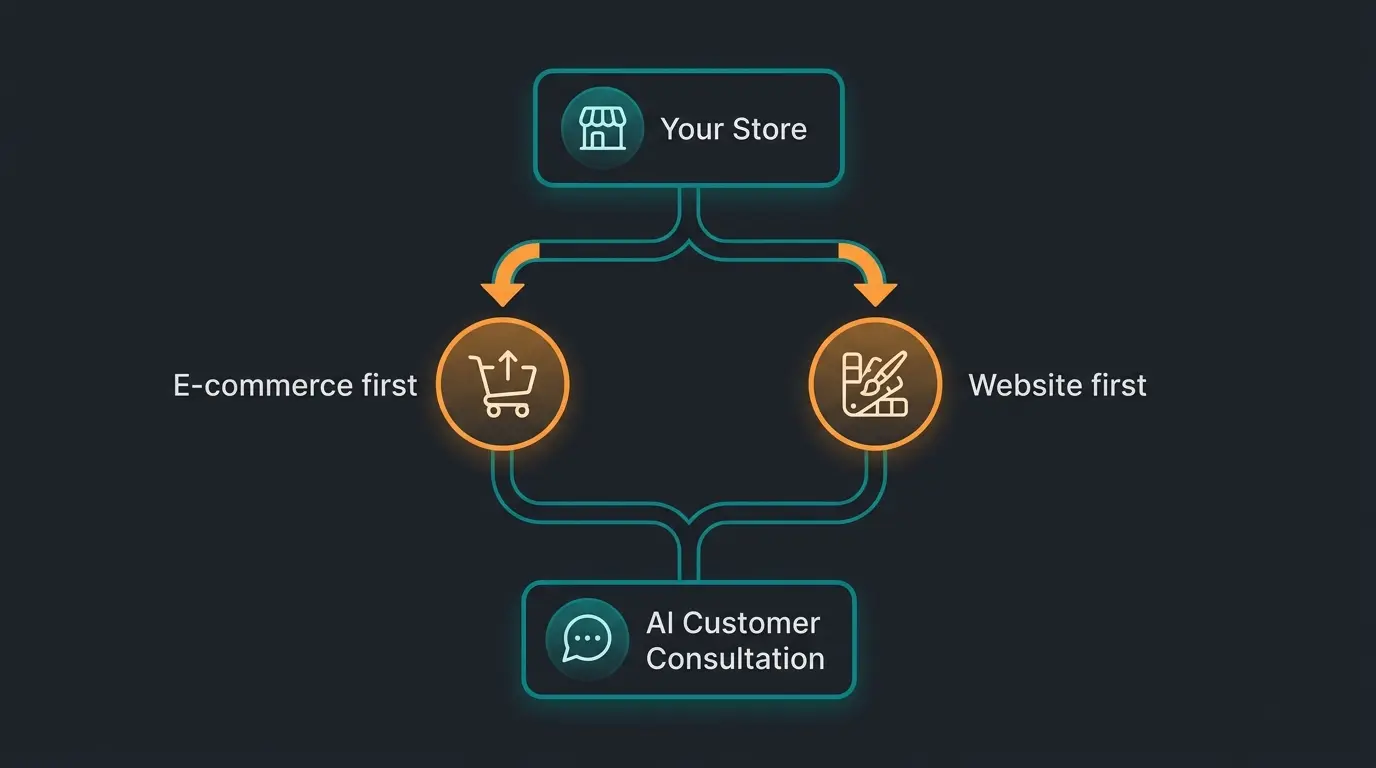
Both Shopify and Wix have added AI features in 2026, but neither platform offers native AI-powered customer consultation that understands your product catalog and guides buyers to the right purchase. This is the gap that separates basic online stores from intelligent commerce.
Shopify Magic generates product descriptions, blog posts, and email subject lines. Sidekick answers merchant questions, builds automations, and surfaces business insights through the new Pulse feature. According to Shopify, Sidekick can now "build Shopify Flow automations from natural language descriptions and proactively surface business insights." These tools help merchants run their store more efficiently.
Wix's Harmony AI, launched January 2026, takes a different approach. Aria, the design agent, builds and redesigns entire pages from prompts. Kleo drafts marketing content. Omni automates multi-step workflows. Wix CEO Avishai Abrahami described it as "merging human and artificial intelligence" to reinvent web creation.
Notice what is missing from both platforms. None of these AI tools talk to your customers. None understand your full product catalog in context. None guide a hesitant buyer from "I need something for my garden" to "this is the right product, here is why, add it to cart." That customer-facing layer is where the conversion gap lives.
We have seen this gap close dramatically when merchants add an AI product consultation layer. Retailers using it report a 35% higher average cart value and a 60% increase in checkout completion rates. Signed, a retailer running on Shopify, achieved an 18x return on investment with an AI product advisor that recommends products based on customer needs, not just browsing history.
Across Qualimero merchant base
When to choose Shopify
Choose Shopify if you are building a dedicated e-commerce business with more than 50 products, need multi-channel selling, plan to scale internationally, or require advanced inventory management and shipping integrations.
Shopify is the right fit if your business matches any of these profiles:
- Product brands selling physical goods across their own store, Amazon, and social channels. Shopify's multi-channel sync keeps inventory accurate across 20+ platforms
- Dropshippers who need native integration with suppliers like Zendrop, Spocket, or Printful. Shopify's app ecosystem dwarfs Wix's options here
- High-volume stores processing hundreds of orders daily. Shopify's checkout is built for throughput. Shop Pay converts 1.72x better than standard checkouts, and Shopify Plus handles enterprise-scale traffic
- International sellers who need automatic currency conversion, localized storefronts, and duty/tax calculation. Shopify Markets handles this natively, while Wix requires manual configuration per market
- Omnichannel retailers with physical stores. Shopify POS syncs in-person and online inventory, reporting, and customer data in real time
When to choose Wix
Choose Wix if you primarily need a beautiful website for your brand, portfolio, or service business, and want to add a small online store as a secondary feature without the complexity of a dedicated e-commerce platform.
Wix is the better choice for these business profiles:
- Service businesses (consultants, photographers, coaches) who need booking, member areas, and a polished website more than they need a product catalog
- Artists and creators selling limited editions, prints, or digital downloads. Wix's design freedom lets you build a brand experience that Shopify's structured themes cannot match
- Small local businesses with fewer than 50 products that sell primarily through one channel. Wix's built-in features cover most needs without paid apps
- Content creators whose primary traffic comes from blogs, portfolios, or media galleries. Wix's CMS is genuinely more capable than Shopify's blog. Scheduling, member-only content, category management, all native
The verdict: Shopify vs Wix for your online store
For serious e-commerce, Shopify is the clear winner with its purpose-built selling tools, massive app ecosystem, and superior scalability. For small businesses that prioritize design and simplicity over e-commerce power, Wix is the smarter investment.
But here is what both platforms avoid in their marketing: the platform is infrastructure. It handles products, payments, and pages. What it does not handle is the customer experience gap between "browsing" and "buying." Baymard Institute reports an average cart abandonment rate of 70.19% across all e-commerce, with 48% of shoppers citing unexpected costs and lack of guidance as primary reasons. Neither Shopify nor Wix solves that problem natively.
The stores we work with that outperform their category averages share one trait: they added an intelligent customer consultation layer on top of their platform. Pooldoktor, a pool supply retailer, saw a 33x ROI after deploying an AI product advisor. Revenue per user increased 18.75% compared to the control group. The platform choice mattered for operations. The experience layer mattered for revenue.
If you are still deciding between platforms, start with the question that actually drives business outcomes: how will your customers find the right product? The answer to that question matters more than whether you pick Shopify or Wix. For more platform options beyond these two, explore our full Shopify alternatives overview.
FAQ: Shopify vs Wix
No, you do not need both. Wix handles e-commerce for stores with fewer than 50 products selling through one or two channels. Switch to Shopify when you need multi-channel selling across Amazon, eBay, and social platforms, or when your product catalog exceeds what Wix's variant system supports (300 variants per product vs Shopify's 2,000).
Shopify is significantly better for dropshipping. Its app ecosystem includes DSers, Spocket, Zendrop, and Printful with native integrations. Wix supports Modalyst and Printful, but the selection is far more limited. If dropshipping is your primary business model, Shopify is the industry standard.
Yes, thousands of Shopify stores exceed $10,000/month. Shopify processed over $67.5 billion in gross merchandise volume in Q1 2026 alone (DemandSage). The platform is not the bottleneck. Product-market fit, traffic acquisition, and conversion optimization determine revenue.
Shopify is hosted and managed, WooCommerce is self-hosted on WordPress. Shopify is simpler to operate but less customizable at the code level. WooCommerce is free but requires hosting, security, and ongoing maintenance. We cover this in detail in our Shopify vs WooCommerce comparison.
Squarespace sits between Wix and Shopify: stronger design than Shopify, better e-commerce than Wix, but neither the best at design nor at selling. Read our full Shopify vs Squarespace breakdown for a detailed analysis.
Adobe Commerce (formerly Magento) targets enterprises with complex B2B requirements, multi-store architectures, and deep ERP integration needs. Shopify Plus is simpler to operate but less customizable at the infrastructure level. See our Adobe Commerce vs Shopify analysis for the full technical comparison.
Shopify or Wix, the platform handles your store. An AI employee handles your customers. Merchants using Qualimero see 35% higher cart values and 7x conversion rates. See what that looks like on your store.
Book a free demo
Kevin is CTO and co-founder of Qualimero. As an AI architect with over 15 years of experience as CTO and CPO in the tech industry, he designs the AI systems that automate tens of thousands of customer interactions daily for Qualimero's clients — reliably, securely, and at scale.