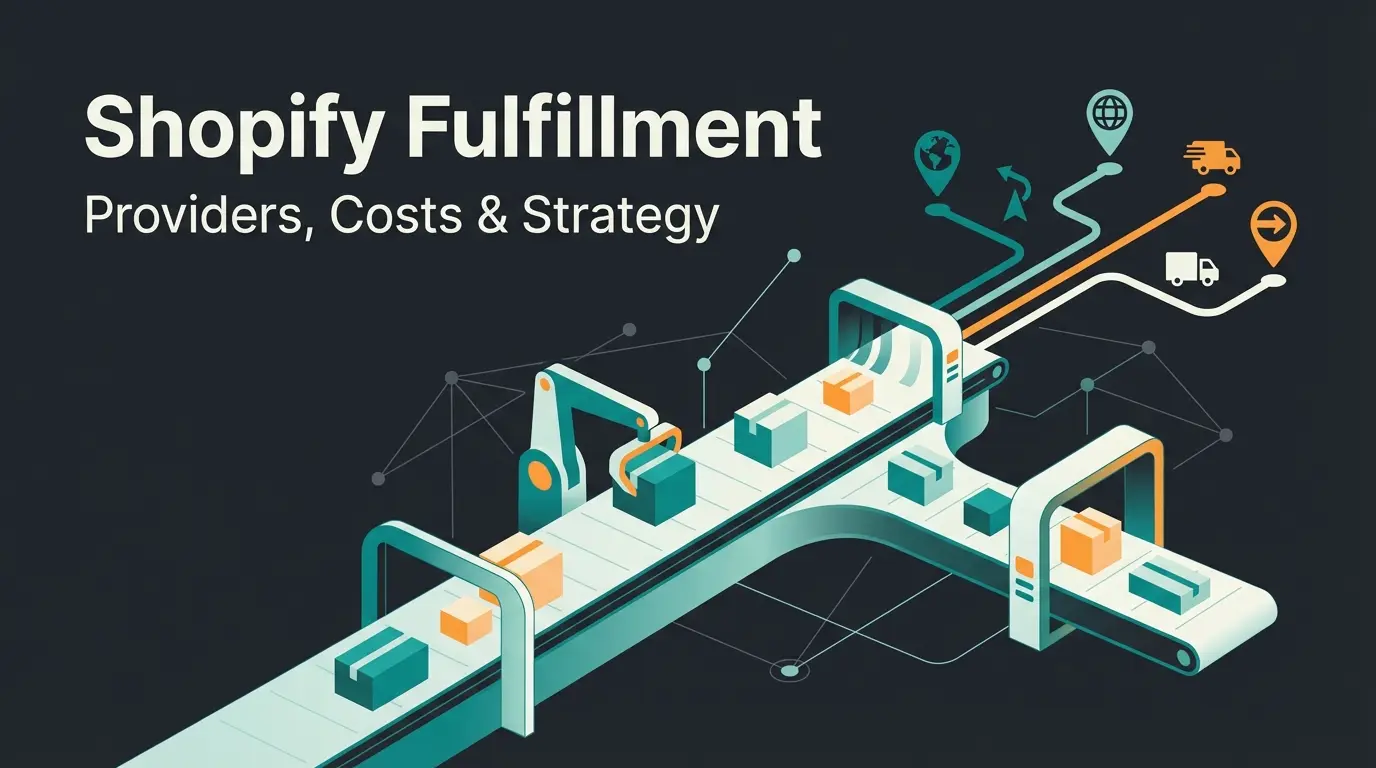
What is Shopware fulfillment?
Shopware fulfillment is the end-to-end process of storing, picking, packing, shipping, and handling returns for orders placed in a Shopware store, run either in-house or through a connected third-party logistics (3PL) provider. It covers inventory sync, carrier integration, and returns management as one connected workflow.
Fulfillment is not the same as shipping. Shipping is one step: handing a parcel to a carrier. Fulfillment is the whole chain behind it, from the second an order lands in Shopware to the moment a refund clears after a return. Get one stage wrong and the customer feels it before you do.
Shopware is the commerce layer, not a warehouse system. The Shopware platform guide covers the catalog, checkout, and order data; the physical handling lives in your warehouse or your 3PL. According to Shopware's developer documentation, "Shopware is an API-first, open-source E-commerce platform that provides a wide range of features to help businesses build and manage online stores." That API-first design is exactly what makes deep fulfillment integration possible.
Outsourcing is the norm here, not the exception. Roughly 57% of e-commerce companies now outsource fulfillment to some degree, and full outsourcing reaches about 37% of online retailers (Red Stag Fulfillment, 2025). Returns sit on top of all of it: the average e-commerce return rate ran near 20% in 2025 (eCommerce return data).
How Shopware fulfillment works: the order-to-delivery flow
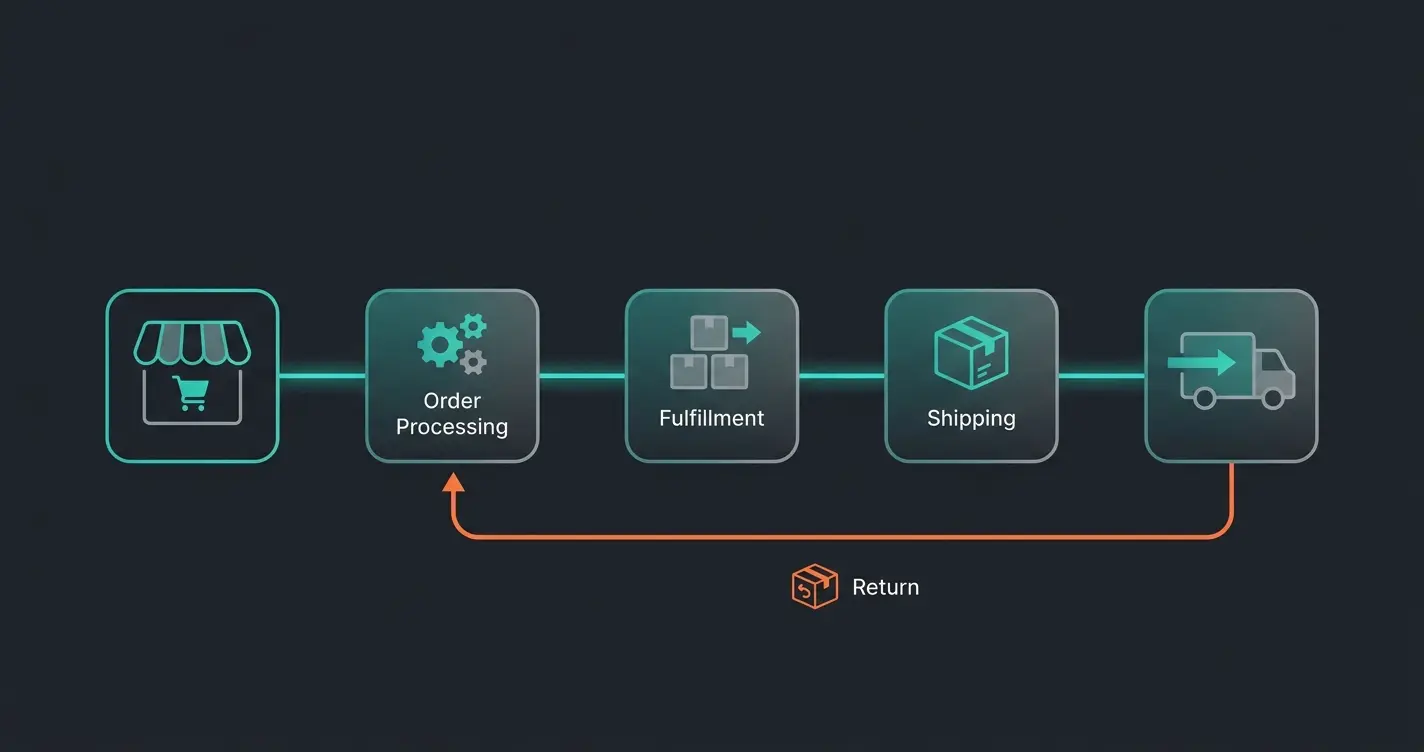
A Shopware order moves through five stages: order capture in Shopware, inventory allocation, picking and packing in the warehouse, carrier handover with label and tracking generation, and delivery plus returns handling. Shopware syncs each stage through its REST API or a fulfillment plugin, so stock and order status stay current.
The mechanism matters. Shopware writes the order, then a connector pushes it to the warehouse or 3PL system, which reports back stock changes, tracking numbers, and status updates. As logistics provider DCL describes it, a fulfillment operation handles "receiving inventory, picking individual items, kitting and assembly, packing, printing shipping labels, shipping orders, and managing returns." In Shopware, all of that hangs off the order record.
Shopware records the order, customer, and payment status.
Stock is reserved and synced to the warehouse or 3PL.
Items are picked from the shelf and packed for dispatch.
Label and tracking are generated, the parcel goes to DHL or DPD.
The customer receives the order; returns flow back through the same pipe.
You have two routes to wire this up. Route one is a native warehouse system like Pickware, which sits inside Shopware as a combined ERP, WMS, and POS layer and keeps stock in one place. Route two is a connector to an external 3PL or ERP, where Shopware stays the storefront and the order data flows out over the REST API. The first route suits merchants who run their own warehouse; the second suits anyone outsourcing the physical work.
The weak point is almost always the sync, not the warehouse. If stock in Shopware lags behind the shelf, you oversell and cancel, which is worse for trust than a slow ship. A clean integration writes stock back in near real time. That single detail separates a fulfillment setup that scales from one that generates support tickets.
In-house vs 3PL vs hybrid fulfillment for Shopware
Shopware merchants run fulfillment in one of three ways: in-house with full control and higher fixed cost, 3PL outsourcing that scales on per-order pricing, or a hybrid that keeps core SKUs in-house and pushes overflow to a 3PL. The right model depends on order volume, SKU complexity, and growth stage.
The trade-off is control against scaling. In-house gives you full command of packaging, timing, and brand experience, while a 3PL trades that control for elastic capacity you do not have to staff. 3PL pricing is per-order plus storage, whereas in-house cost is dominated by fixed labor and warehouse overhead that you pay whether 50 or 5,000 orders ship that month. Hybrid splits the difference: you keep your best-selling, margin-heavy SKUs close and hand seasonal spikes or cross-border volume to a partner.
| Dimension | In-house | 3PL | Hybrid |
|---|---|---|---|
| Control | Full control over packing, timing, branding | Limited, defined by the provider's SLAs | High on core SKUs, lower on outsourced volume |
| Cost structure | Fixed: labor, rent, equipment | Variable: per-order plus storage | Mixed fixed and variable |
| Scalability | Limited by your own capacity | Elastic, scales with the provider | Elastic for overflow, fixed for core |
| Setup effort | High: build the operation yourself | Moderate: connector plus onboarding | High: two systems to keep in sync |
| Best for | Low volume or brand-critical packaging | Growing volume, seasonal peaks, cross-border | Mixed catalogs with a stable core and spiky demand |
Where is the tipping point? Most Shopware merchants lean toward a 3PL once they pass roughly 500 to 1,000 orders per month, the band where per-order pricing starts to beat the fixed overhead of running your own warehouse. Below that, in-house often stays cheaper. If your packaging is part of the brand, like a curated unboxing, that argument shifts again. There is no universal answer, just a volume-and-margin calculation you have to run for your own catalog. Seeing how merchants pair logistics with smarter pre-sale advice is worth a look at AI product consultation before you lock in a model.
Connecting carriers: DHL, DPD and shipping integrations
Shopware connects to carriers like DHL and DPD through shipping plugins that automate label creation, tracking sync, and shipment status updates. Each carrier has its own integration path covering account setup, rate selection, and return labels, so the configuration differs even when the workflow looks similar.
DHL and DPD are the two defaults for German and DACH Shopware shops, and each has a dedicated setup. The Shopware DHL integration walks through account linking, label printing, and DHL's return-label flow, while the Shopware DPD integration covers DPD's pickup scheduling and tracking sync. The practical difference: DHL leans on its dense parcel-locker network for returns, while DPD competes on predictable B2B and parcel-shop drop-off. Pick the carrier your customers already trust, then automate the label flow rather than printing by hand.
Beyond the big two, Shopware shops also connect GLS, UPS, Hermes, and DHL Express for international lanes, usually through the same plugin model or a multi-carrier connector. The logic for choosing is the same every time: match the carrier to where your customers are and what they ship. A bulky-goods shop and a small-parcel apparel brand will not pick the same lineup, even on identical software. If you ship across borders, run at least two carriers so a single network outage does not freeze your dispatch.
Returns management in Shopware
Returns management in Shopware covers the reverse flow: the return request, return-label generation, restocking, and the refund. High return rates erode margin fast, so cutting returns matters as much as processing them quickly. The economics are blunt here, and most shops underestimate them.
Processing a single return costs roughly 21 to 27% of the order value once you count return shipping, inspection, and restocking (Pitney Bowes BOXpoll and Optoro data, 2025). Category matters too: clothing is the most-returned online category at around 26%, far above electronics at 8 to 15%, according to Statista. So a fashion shop and a tools shop are not running the same business, even on the same platform.
The reverse workflow has four moving parts in Shopware: the customer requests a return, a return label is issued, the item is inspected and restocked, and the refund is released. Each part is a place where money or goodwill leaks. A slow refund triggers a chargeback; a sloppy inspection puts a damaged item back into sellable stock. Restocking is the quiet cost here, because an item that comes back used or out of season may never resell at full price.
Once a return is in motion, speed and clarity protect the relationship. Automating status updates and refund timing through AI customer service for returns keeps the customer informed without tying up your team on "where is my refund" messages. That handles the symptom well. The bigger lever is stopping the return from happening at all.
How AI product consultation cuts returns and fulfillment costs
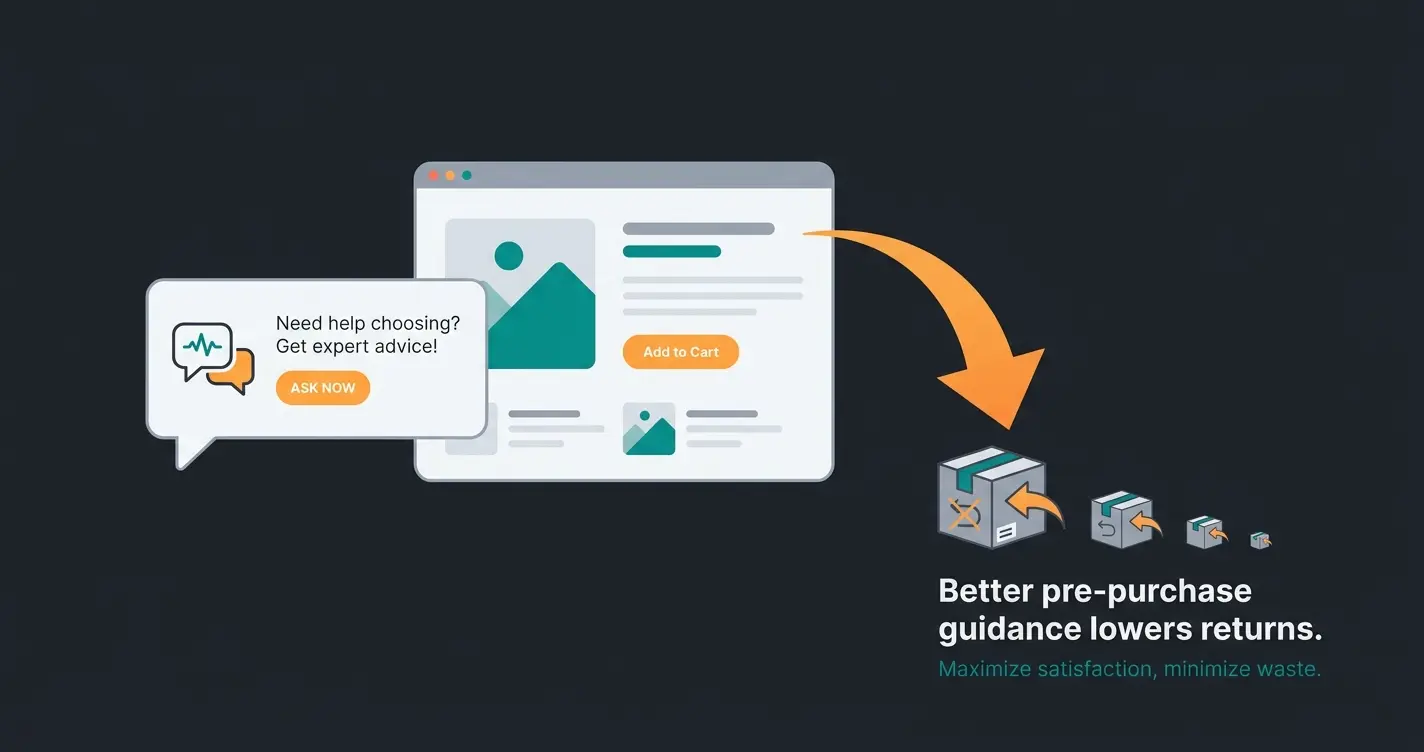
AI product consultation reduces returns by guiding customers to the right product before they buy, cutting wrong-item and size-mismatch returns at the source. Fewer returns means lower reverse-logistics and restocking cost, which improves the entire fulfillment equation rather than just speeding up the part that hurts.
This is the angle every 3PL sales page misses. They optimize the warehouse; the return was already lost at the product page. A KI-Mitarbeiter that understands your catalog answers the pre-purchase questions a customer would otherwise guess at: fit, compatibility, the right variant for their use case. Guess wrong, and the parcel comes back. Answer well, and it does not ship in the first place.
A concrete example: lawn-care specialist Rasendoktor handled 2,000 to 3,000 consultation-heavy inquiries per season, with technically demanding products that drove wrong-fit orders and support overload. After deploying Hektor, an AI employee trained on their own product expertise, they reached a 100% automation rate on webchat inquiries, 40% support savings, and a 16x return on investment. Read the full Rasendoktor case study for the setup detail. Across our product-advisory accounts, the same mechanism lifts average cart value by up to 35%, because the right recommendation sells more and returns less.
Shopware fulfillment costs and pricing factors
Shopware fulfillment cost is driven by five factors: storage fees, pick-and-pack charges, packaging, shipping rates, and returns processing. 3PL pricing is typically per-order plus storage, while in-house cost is dominated by labor and warehouse overhead. The numbers below are 2025 to 2026 market ranges, useful for a first model, not a quote.
| Cost factor | Typical range | Notes |
|---|---|---|
| Pick and pack | $1.50 to $3.50 per order | Plus a small fee per additional item (Red Stag) |
| Storage | $20 to $40 per pallet / month | Long-term storage often charged at 1.5 to 3x after 90 days |
| Shipping | Carrier rate + surcharges | Negotiated volume rates via the 3PL or your own DHL/DPD contract |
| Packaging | Per-order materials | Branded packaging costs more but supports the unboxing experience |
| Returns processing | 21 to 27% of order value | Return shipping, inspection, restocking combined |
Watch the fees that do not show up in the headline rate. Long-term storage penalties kick in after 90 days of idle stock, often at 1.5 to 3x the standard pallet rate, which punishes slow movers and overstock. Receiving fees, account minimums, and per-pick surcharges on multi-item orders all add up. When you compare 3PL quotes, model your actual order profile, not the cheapest single line, because the provider with the lowest pick fee can still be dearer once storage and returns are in.
Read the table as a system, not a price list. Pick-and-pack looks cheap at a few dollars per order, but returns processing at a quarter of order value is the line that quietly decides your margin. That is why the cost question and the returns question are the same question. Lower your return rate and you move the most expensive factor in the whole table.
Frequently asked questions
A fulfillment service stores your inventory and handles picking, packing, shipping, and returns on your behalf. For a Shopware shop, it connects to your store, imports orders automatically, and ships them from its own warehouse. About 57% of e-commerce companies outsource fulfillment this way (Red Stag, 2025).
In shipping, fulfillment is the full process around getting an order to the customer, not just the transport leg. It includes inventory allocation, picking, packing, label and tracking generation, and returns handling. Shipping is one stage inside fulfillment, the carrier handover.
Shopware manages orders, stock, and customer data natively, but the physical fulfillment runs through plugins or a connected 3PL. Its API-first architecture lets warehouse and carrier systems sync stock and tracking in near real time. You choose the warehouse layer; Shopware provides the order data it runs on.
Expect roughly $1.50 to $3.50 per order for pick and pack, plus $20 to $40 per pallet per month for storage with a 3PL (Red Stag, 2025). Returns are the hidden line at 21 to 27% of order value. In-house cost is driven instead by labor and warehouse overhead.
Faster fulfillment trims cost after the sale. A KI-Mitarbeiter from Qualimero cuts returns before they happen by advising customers to the right product in real time. Rasendoktor reached a 16x ROI and a 100% automation rate. See what that looks like in your Shopware shop.
Book a demo
Kevin is CTO and co-founder of Qualimero. As an AI architect with over 15 years of experience as CTO and CPO in the tech industry, he designs the AI systems that automate tens of thousands of customer interactions daily for Qualimero's clients — reliably, securely, and at scale.