What is Shopify fulfillment?
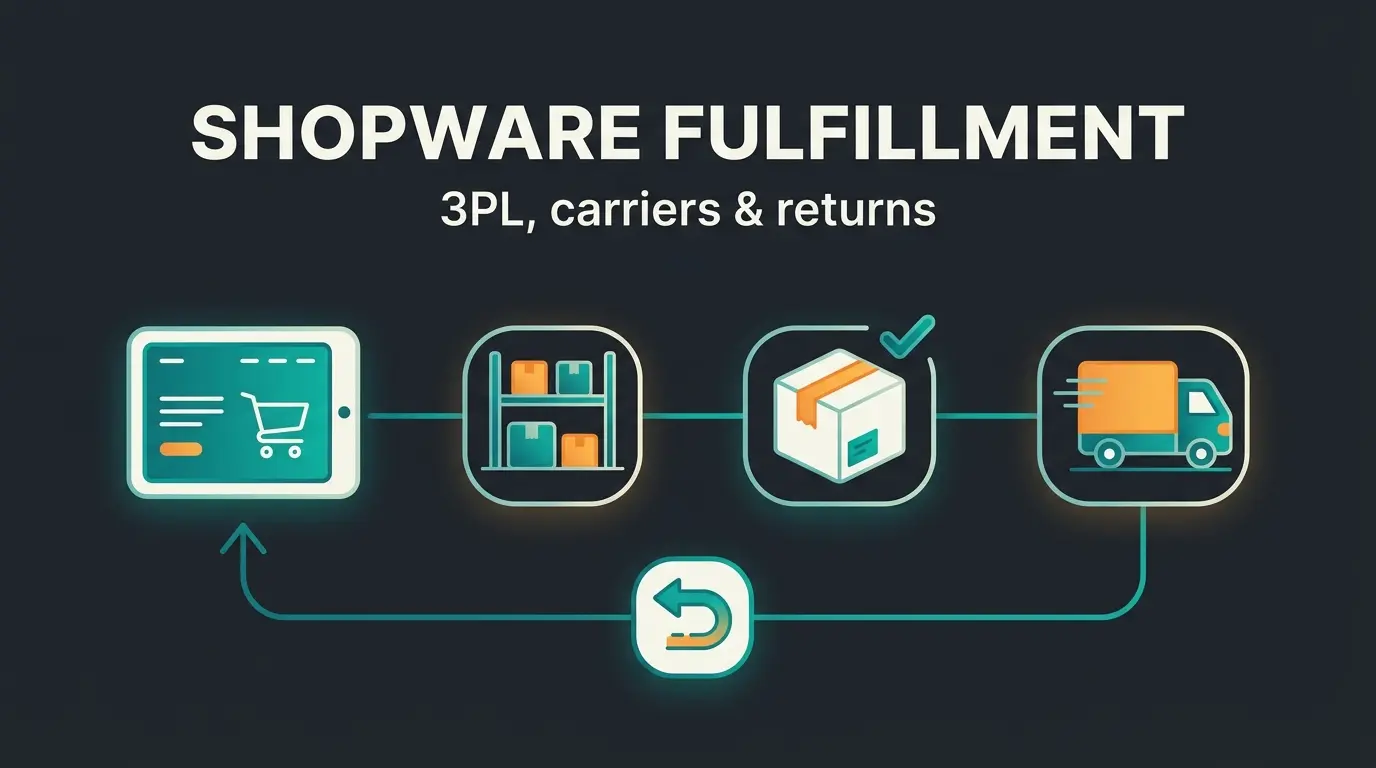
Shopify fulfillment is the entire process of receiving, processing, and delivering customer orders placed through a Shopify store. It covers warehousing, inventory management, picking and packing, shipping, and returns handling. Every step between a customer clicking "Buy" and receiving their package falls under fulfillment.
The US processes roughly 50 million package deliveries every day. That number keeps climbing. According to Statista, US e-commerce sales grew 14.2% in 2025, pushing the market past $1.17 trillion. For Shopify merchants, this growth means more orders, higher customer expectations, and less room for fulfillment mistakes.
Here is the reality I see with store owners every week: 42% of online shoppers now expect a two-day shipping option. The average expected click-to-delivery window has shrunk to 2.5 days. Miss that window consistently, and customers switch to a competitor who hits it. The National Retail Federation tracks these shifting expectations closely, and the trend only moves in one direction: faster.
Across all carriers and platforms
Average customer click-to-delivery expectation
Fulfillment models compared
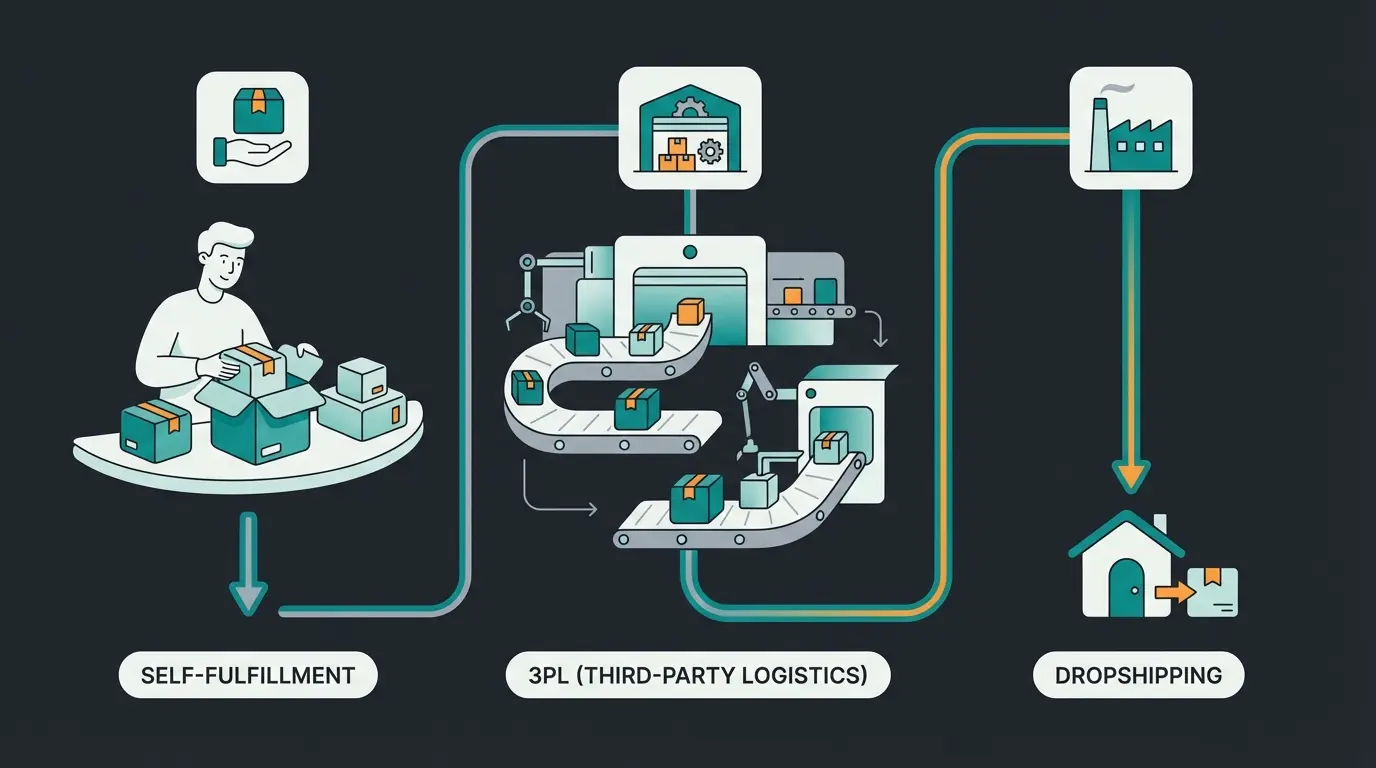
Open the back-office dashboard of any growing Shopify store, and the first real decision is not about products or marketing. It is about how orders get out the door. Three models dominate: self-fulfillment, third-party logistics (3PL), and dropshipping. Each works, but for different stages, budgets, and product types.
| Factor | Self-Fulfillment | 3PL / Outsourced | Dropshipping |
|---|---|---|---|
| Setup Effort | High (warehouse, staff, tech) | Medium (onboarding, inventory transfer) | Low (no inventory needed) |
| Control | Full | Partial (shared operations) | Minimal |
| Cost Per Order | $3-8 (labor + materials) | $2.50-5.00 (pick/pack) + shipping | Built into product cost |
| Scalability | Limited by space and staff | High (multi-warehouse networks) | Very high (no physical limits) |
| Best For | Under 50 orders/day, custom packaging | 50-1,000+ orders/day, standard products | Testing products, low capital |
| Biggest Risk | Bottlenecks during peaks | Less brand control | Long transit times, quality issues |
Dropshipping sits in its own category. It eliminates inventory risk but introduces transit time problems (often 7-21 days from overseas suppliers) and removes quality control entirely. One store owner I worked with described it well: "It was good for proving out an early concept, but we had no quality control." For a deeper look at how dropshipping works with Shopify specifically, see our Shopify Dropshipping guide.
Shopify Fulfillment Network and partners
The Shopify Fulfillment Network launched in 2019 as Shopify's attempt to build an in-house logistics operation. In 2023, Shopify sold that infrastructure, including Deliverr, to Flexport. What remains is fundamentally different from the original vision.
As of 2026, SFN operates as a partner marketplace rather than a fulfillment provider. Through the SFN app, merchants connect with vetted 3PL partners: Flexport (preferred partner status), ShipBob, DHL Fulfillment Network, Amazon MCF, Bigblue, GoBolt, and others. Shopify provides the coordination layer, including demand planning powered by Network Intelligence and predictive inventory placement. The physical warehousing and shipping happen through the partner network.
Top 3PL fulfillment providers for Shopify
I have talked to Shopify merchants using every major 3PL on this list. The differences are real, and they matter more than most comparison articles suggest. Provider choice is not just about cost per order. It is about integration depth with Shopify, warehouse locations relative to your customers, and whether the provider handles your specific product category well.
| Provider | Pick and Pack | Warehouse Locations | Shopify Integration | Best For |
|---|---|---|---|---|
| ShipBob | $2.50-5.00/order | 50+ globally (US, CA, UK, EU, AU) | Shopify Plus Certified Partner, native app | DTC brands, multi-channel sellers |
| Flexport (SFN) | Weight-based pricing | US only | Preferred SFN partner, Shop Promise badge | High-volume US-only merchants |
| ShipMonk | $2.50-4.00/order | US (FL, CA, NV, PA), UK, Mexico | Native Shopify app | Subscription boxes, small and light items |
| Red Stag | $3.00-6.00/order | US only (TN, UT) | Custom API + Shopify app | Heavy and oversized items, B2B |
| Amazon MCF | $4.00-6.00/unit (standard) | 100+ US fulfillment centers | ByteStand app or native | Merchants already on Amazon |
| ShipHero | Custom pricing | US (multiple locations) | Native Shopify app | Brands wanting own WMS control |
Two things stand out across all these providers. First, Shopify integration quality varies significantly. ShipBob and ShipMonk offer the smoothest native connections, while Amazon MCF requires a third-party app like ByteStand for reliable order syncing. Second, geographic coverage matters more than price per order. A provider with warehouses near your customer base saves more on shipping than any pick-and-pack discount.
Setting up shipping and automation
Shopify's built-in shipping tools handle the basics well. You configure shipping zones, set carrier rates, purchase discounted labels, and automate fulfillment workflows directly in the admin. Shopify Shipping offers carrier discounts of 40-80% off retail rates with USPS, UPS, FedEx, and DHL, depending on your plan tier.
- Configure shipping zones in Settings > Shipping and Delivery. Group countries or regions by delivery speed and cost structure.
- Set carrier rates using Shopify Shipping's calculated rates or define flat rates per zone. Calculated rates update automatically based on package weight and dimensions.
- Enable automatic fulfillment under Settings > Checkout to process paid orders without manual intervention. Combine with a 3PL integration for hands-off operation.
- Purchase shipping labels directly in Shopify at discounted rates. One merchant reported saving $25,454 in 30 days through Shopify's shipping program.
- Set up shipping rules for specific products, such as free shipping over $50 or expedited options for high-value items.
This covers the foundation, but shipping setup gets more complex with multiple warehouses, international zones, and carrier-specific requirements. For the full walkthrough, including carrier comparison and label configuration, see our Shopify Shipping Setup guide.
Order management and processing
Shopify tracks every order through a clear lifecycle: pending, fulfilled, partially fulfilled, and returned. For stores with multiple warehouse locations, Shopify routes orders to the nearest fulfillment location by default, using first-match logic. This works for simple setups but lacks cost-optimized routing across warehouses.
The gap between what Shopify handles natively and what growing stores need is worth understanding. Shopify manages fulfillment location assignment, label generation, and partial fulfillment tracking. It does not handle intelligent routing by cost or speed, warehouse management (WMS functions), or multi-warehouse cost optimization. For stores processing 200+ orders daily across multiple locations, a dedicated WMS or 3PL platform fills that gap.
- Multi-location inventory syncs stock levels across warehouses, retail stores, and 3PL partners
- Partial fulfillment allows shipping available items first while backordered products follow separately
- ERP integration connects order data with accounting, procurement, and supply chain systems
- Bulk actions process hundreds of orders simultaneously for high-volume stores
For a detailed breakdown of order lifecycle management, see our Shopify order management guide. If inventory tracking across locations is your primary challenge, our Shopify Inventory Management guide covers that in depth.
Tracking and shipment visibility
Tracking is where fulfillment becomes visible to your customer. Shopify assigns tracking numbers automatically when labels are purchased through Shopify Shipping or synced from a 3PL. Customers receive email and SMS notifications at key milestones: shipped, in transit, out for delivery, and delivered. Adding WhatsApp Business to that mix puts delivery updates on the channel most customers actually open.
Branded tracking pages are an underused conversion tool. Instead of sending customers to a generic carrier page, branded pages keep them in your ecosystem, display product recommendations alongside delivery updates, and drive repeat visits. For the complete setup, see our Shopify Order Tracking guide.
Returns and reverse logistics
US online return rates hit 16.9% in 2025. In fashion, that number exceeds 30%. Returns are not a failure of fulfillment. They are a structural part of e-commerce that needs its own strategy and dedicated workflows.
Shopify handles returns through manual processing by default: the merchant reviews the request, approves it, generates a return label, and restocks upon receipt. For stores processing more than a handful of returns daily, self-service return portals automate this workflow and reduce support ticket volume significantly.
- Self-service portals let customers initiate returns without contacting support, reducing response times to zero
- Return label automation generates prepaid labels based on return reason and product category
- Restocking workflows distinguish between resellable returns, damaged goods, and items for disposal
- Return analytics identify patterns in specific products, sizing issues, or misleading descriptions driving returns
- Cost control: average 3PL return processing fee runs $3-5 per return, plus shipping costs
For the full playbook on reducing return rates and managing reverse logistics efficiently, see our Shopify Returns Management guide.
Fulfillment apps and integrations
The Shopify App Store has hundreds of fulfillment-related apps. Most fall into five categories: shipping label creation, warehouse management, multi-carrier rate shopping, tracking and notifications, and returns management. Choosing the right combination depends on whether you fulfill in-house or through a 3PL.
| App | Category | Key Feature | Best For |
|---|---|---|---|
| ShipStation | Multi-carrier shipping | Rate comparison across 50+ carriers | High-volume multi-carrier shippers |
| Shippo | Label creation | Discounted USPS, UPS, DHL rates | Small to medium stores, domestic shipping |
| Easyship | International shipping | Automated duties and tax calculation | Cross-border sellers |
| Ordoro | Inventory + shipping | Multi-channel inventory sync | Stores selling on multiple platforms |
| AfterShip | Tracking | Branded tracking pages + analytics | Stores focused on post-purchase experience |
How to evaluate a fulfillment app: check the Shopify integration method (native Fulfillment Service API is cleanest), volume pricing tiers, carrier partnerships, and whether it supports your specific shipping zones. For our full review of essential Shopify apps across all categories, see the Shopify Apps guide.
Fulfillment cost calculator
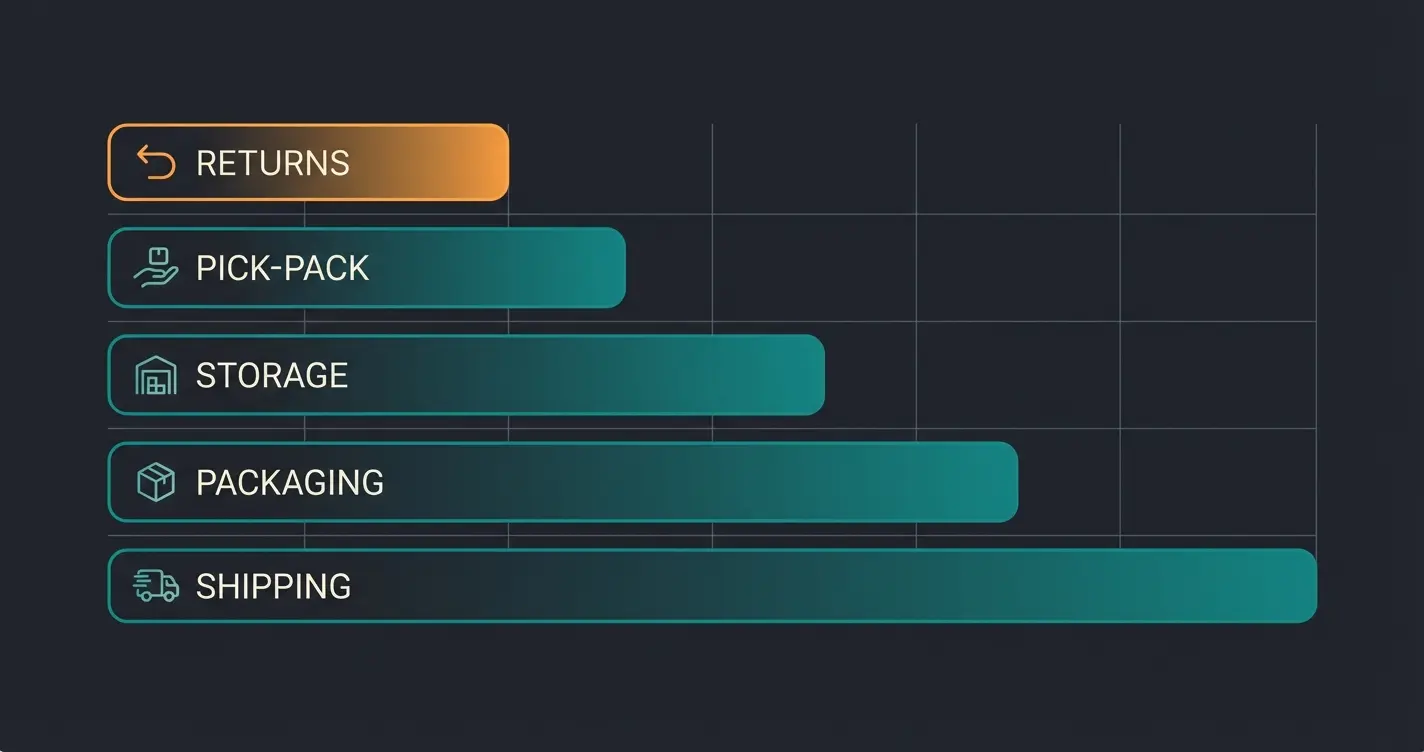
Fulfillment costs break down into five components: pick and pack, storage, shipping, packaging, and returns processing. The total cost per order varies dramatically based on product size, order volume, and fulfillment method. Here is what the numbers actually look like for a typical Shopify store using a 3PL.
| Cost Component | 100 Orders/Month | 500 Orders/Month | 1,000 Orders/Month |
|---|---|---|---|
| Pick and Pack ($3.50 avg.) | $350 | $1,750 | $3,500 |
| Storage ($15/pallet/mo.) | $45 | $150 | $300 |
| Shipping ($5.50 avg.) | $550 | $2,750 | $5,500 |
| Packaging ($0.75 avg.) | $75 | $375 | $750 |
| Returns (~17% x $4 avg.) | $68 | $340 | $680 |
| Total | $1,088 | $5,365 | $10,730 |
| Cost Per Order | $10.88 | $10.73 | $10.73 |
These are baseline estimates using US averages. Actual costs vary by product weight, dimensions, shipping distance, and carrier. Shopify Shipping discounts (40-80% off retail carrier rates) significantly reduce the shipping line item for stores using Shopify's built-in label purchasing. Volume commitments above 750 orders/month typically unlock preferred pricing tiers with most 3PLs.
AI-powered fulfillment communication
The most time-consuming part of fulfillment is not packing boxes. It is answering the same questions about those boxes. Where is my order? Can I change my shipping address? How do I return this? These inquiries account for 40-60% of all customer service volume in e-commerce stores.
An AI employee handles these conversations automatically, across all channels, around the clock. Not a basic FAQ page, and not a scripted Chatbot as a Service subscription either. A digital team member that accesses real-time order data, checks tracking status, initiates returns, and answers product questions in the same conversation. The retailer Signed automated 70% of customer inquiries on Instagram and TikTok with their AI employee Alex, achieving an 18x ROI and a 30% increase in upselling.
Rasendoktor, an online specialist for lawn care products, faced 2,000-3,000 consultation-intensive inquiries per season. Their AI employee Hektor now handles 100% of webchat inquiries automatically with precise product recommendations, delivering a 16x ROI and 40% support savings. For fulfillment-heavy stores, the impact is even more direct: fewer "where is my order" tickets means your team focuses on issues that actually need a human. Learn more about how this works on our AI Customer Service page.
An AI employee answers order status, shipping, and return inquiries automatically, across every channel, around the clock. Our clients see 16x ROI and 70%+ automation rates.
Book a demoFAQ
A Shopify fulfillment service is a third-party logistics (3PL) company that integrates with your Shopify store to handle warehousing, picking, packing, and shipping. It allows you to outsource the physical logistics of getting orders to customers while managing everything through the Shopify admin.
No. Shopify sold its logistics infrastructure to Flexport in 2023. The Shopify Fulfillment Network (SFN) now operates as a partner marketplace, connecting merchants with vetted 3PL providers like Flexport, ShipBob, and DHL. Shopify provides the coordination software, not the physical warehouses.
Total fulfillment cost per order typically ranges from $8-12, including pick and pack ($2.50-5.00), shipping ($4-7), storage, packaging, and returns processing. Exact costs depend on product size, weight, shipping distance, and your chosen 3PL provider. Volume discounts typically unlock above 750 orders/month.
When you fulfill an order, Shopify marks it as shipped and sends the customer a notification with the tracking number. If you use a 3PL, this happens automatically when the provider scans the package. For manual fulfillment, you mark the order as fulfilled and enter the tracking information in the Shopify admin.
It depends on your needs. ShipBob is the best all-around choice for DTC brands with 50+ global warehouse locations and Shopify Plus certification. Red Stag specializes in heavy and oversized items. Amazon MCF works best if you already sell on Amazon. Evaluate based on warehouse proximity to your customers, product type, and integration quality.
Enable automatic fulfillment in Settings > Checkout so paid orders process without manual intervention. Connect a 3PL through their Shopify app to automate picking, packing, and shipping. Use Shopify Flow (available on Plus plans) to create custom automation rules for order routing, fraud flagging, and customer notifications.
Yes. Shopify supports multiple fulfillment locations and providers simultaneously. You can assign specific products or geographic zones to different 3PLs. This is common for stores with international customers, where a US-based 3PL handles domestic orders and a European provider handles EU shipments.
Conclusion
Fulfillment strategy comes down to three variables: your daily order volume, your product type, and where your customers are. Below 50 orders a day, self-fulfillment gives you control and keeps costs predictable. Between 50 and 200, a single 3PL partner removes the operational bottleneck. Above 200, multi-warehouse distribution is not optional. It is the difference between competitive shipping costs and margin erosion.
The logistics piece is solvable. The harder problem is what happens after the package ships: the tracking questions, the return requests, the address change messages that pile up in your inbox. That is where an AI employee turns fulfillment from a cost center into a competitive advantage. For the full picture of building a Shopify store that scales, head to our Shopify Guide.
More orders mean more questions about shipping, tracking, and returns. A Qualimero AI employee handles them all, in real time, on every channel.
See it in action
Lasse is CEO and co-founder of Qualimero. After completing his MBA at WHU and scaling a company to seven-figure revenue, he founded Qualimero to build AI-powered digital employees for e-commerce. His focus: helping businesses measurably improve customer interaction through intelligent automation.